
2027 Best PsyD Programs in Nevada: APA Accredited Online & Campus

Co-Founder and Chief Data Scientist
If you want to become a licensed psychologist in Nevada and prefer a practice-focused doctorate, your first question is probably simple: Are there APA-accredited PsyD programs in Nevada? The short answer matters because APA accreditation can affect internship options, postdoctoral training, employer confidence, and licensure review. Choosing the wrong doctoral program can create delays, extra documentation, or limited career mobility.
This guide explains what Nevada students should know for 2027: whether APA-accredited PsyD programs exist in the state, which doctoral psychology alternatives are available, how to compare PsyD and PhD routes, what admissions committees usually expect, how internships work, and what career and salary outcomes may look like after licensure. It is written for prospective doctoral psychology students, career changers, and Nevada residents trying to choose a legitimate path toward clinical psychology practice.
Quick Answer: APA-Accredited PsyD Programs in Nevada
- There are currently no APA-accredited PsyD programs located in Nevada. Students who specifically want a PsyD with APA accreditation must look outside the state or consider a hybrid/out-of-state option that meets Nevada licensure requirements.
- Nevada does have APA-accredited clinical psychology PhD options. The University of Nevada, Reno and the University of Nevada, Las Vegas are the main in-state alternatives for students who want APA-accredited doctoral clinical psychology training.
- Program format matters, but accreditation matters more. Online and hybrid study can help working adults, but supervised practica, internship requirements, and state licensure rules still determine whether a program is a sound choice.
- Are there APA-accredited PsyD programs in Nevada?
- What are the strongest doctoral psychology options for Nevada students?
- Who should apply to PsyD or clinical psychology doctoral programs?
- What admissions requirements should applicants expect?
- Which psychology specializations are relevant in Nevada?
- What courses appear in APA-accredited doctoral psychology programs?
- How do students secure psychology internships in Nevada?
- How do online, hybrid, and campus formats compare?
- What jobs can a PsyD or clinical psychology doctorate lead to?
- How much do psychology doctorate graduates earn in Nevada?
How many APA accredited PsyD programs are available in Nevada?
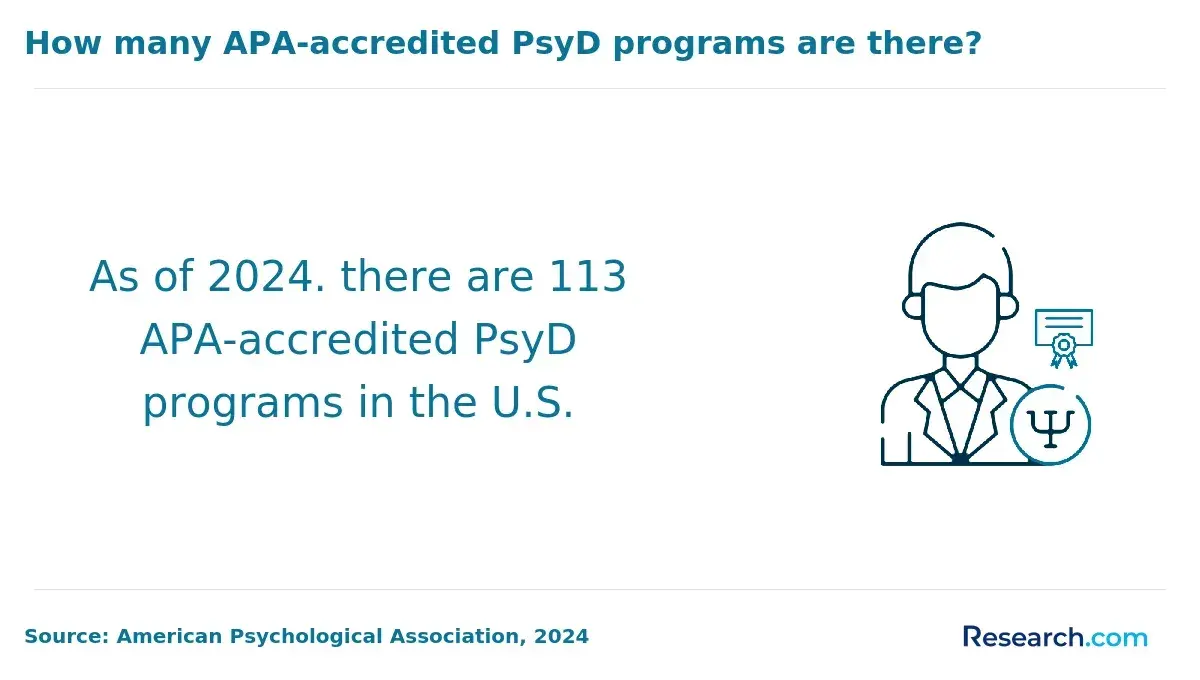
Nevada currently has no APA-accredited Doctor of Psychology programs. That includes both campus-based PsyD programs and online or hybrid PsyD programs physically based in the state. For students pursuing psychologist licensure, this is a major planning issue because the American Psychological Association evaluates doctoral programs for curriculum quality, faculty qualifications, supervised training, student support, and professional preparation.
In practice, many licensure boards, internship sites, postdoctoral programs, and employers view APA accreditation as an important quality signal. It may not be the only factor in every licensure decision, but graduating from a program without APA accreditation can create additional review steps. Students should confirm requirements directly with Nevada’s psychology licensing authority before enrolling in any doctoral program.
Students who want to stay in Nevada should look closely at the University of Nevada, Reno and the University of Nevada, Las Vegas, both of which offer APA-accredited PhD programs in Clinical Psychology on campus. UNLV also offers a PhD in Experimental Psychology, which may be appropriate for research-focused students but is not APA-accredited. Students committed to the PsyD model may need to review out-of-state programs, including institutions such as National University in California and Regent University in Virginia.
The important distinction is this: Nevada offers APA-accredited doctoral clinical psychology training, but not through an in-state PsyD program. If your goal is clinical licensure, evaluate whether an APA-accredited PhD, an out-of-state PsyD, or a different mental health credential is the best fit for your timeline, budget, and career goals.
| Option for Nevada Students | APA Accreditation Status | Best Fit | Main Caution |
| In-state PsyD program | No APA-accredited PsyD programs are currently available in Nevada | Not currently an option for students who require an in-state APA-accredited PsyD | Do not assume a doctoral psychology program is APA-accredited without checking the APA directory |
| University of Nevada, Reno clinical psychology PhD | APA-accredited PhD option | Students open to a research-informed clinical science model | PhD programs may be more research-intensive than a typical PsyD |
| University of Nevada, Las Vegas clinical psychology PhD | APA-accredited PhD option | Students seeking in-state doctoral clinical psychology training | Admission can be highly competitive |
| Out-of-state APA-accredited PsyD | Depends on the program | Students committed to the PsyD model and willing to relocate or travel | Confirm Nevada licensure eligibility before enrolling |
| Non-APA-accredited online or hybrid PsyD | May hold institutional accreditation but not APA accreditation | Students who understand the licensure risks and have verified requirements | May require extra documentation and may limit internship or employment options |
What are the best APA accredited PsyD programs in Nevada?
Because Nevada does not currently offer an APA-accredited PsyD, the better question is: Which doctoral psychology programs should Nevada applicants compare? Students should evaluate accreditation, licensure alignment, clinical placement support, funding, faculty fit, internship outcomes, and whether the program’s training model matches their professional goals.
- University of Nevada, Reno — PhD in Clinical Psychology: This campus-based clinical psychology PhD has been APA accredited since 1972. It uses a clinical science model, emphasizes research and evidence-based practice, reports a 93% licensure success rate, offers full funding, and provides hands-on experience through an on-site Psychological Services Center.
- University of Nevada, Las Vegas — PhD in Clinical Psychology: APA accredited since 2005, this program emphasizes multicultural psychology and diversity. It reports a 94% licensure rate and offers tuition waivers and assistantships, though applicants should expect a selective admissions process.
- National University — Doctor of Clinical Psychology (PsyD): This APA-accredited PsyD option may interest Nevada students willing to consider an out-of-state program. It offers online and hybrid formats for working professionals and is typically completed in 5-7 years, with clinical training requirements designed to support licensure preparation.
- Regent University — PsyD in Clinical Psychology: This APA-accredited hybrid PsyD combines online coursework with required campus training. Nevada students should verify whether the program’s practica, internship expectations, and supervised experience meet Nevada licensure standards.
- Capella University — PsyD in Clinical Psychology: Capella offers a hybrid model with online classes and in-person residencies and is accredited by the Higher Learning Commission but not APA. Nevada applicants should expect possible additional documentation if using a non-APA-accredited route. Students considering behavior-focused alternatives can also compare BCBA and RBT career paths before committing to a psychology doctorate.
| Program | Degree Type | Format | Key Strength | Decision Point |
| University of Nevada, Reno | PhD in Clinical Psychology | Campus-based | APA accredited since 1972; full funding; Psychological Services Center | Best for students comfortable with a clinical science and research emphasis |
| University of Nevada, Las Vegas | PhD in Clinical Psychology | Campus-based | APA accredited since 2005; multicultural and diversity focus | Best for students seeking in-state APA-accredited training in Las Vegas |
| National University | Doctor of Clinical Psychology (PsyD) | Online and hybrid formats | APA-accredited PsyD option for students considering out-of-state programs | Confirm residency, practicum, internship, and Nevada licensure fit |
| Regent University | PsyD in Clinical Psychology | Hybrid | APA-accredited hybrid structure with campus training requirements | Best for students who can manage travel or residency expectations |
| Capella University | PsyD in Clinical Psychology | Hybrid | Online coursework with in-person residencies | Not APA accredited; licensure review may be more complex |
Who is eligible to apply to APA accredited PsyD programs in Nevada?
Since there are no in-state APA-accredited PsyD programs in Nevada, eligibility depends on the type of doctoral path you choose. Applicants to APA-accredited clinical psychology PhD programs in Nevada are usually recent psychology graduates, research assistants, mental health workers, or career changers with strong academic preparation and a clear commitment to doctoral-level clinical training.
Campus-based clinical psychology programs tend to fit students who can study full time, participate in faculty-led research, complete supervised clinical practica, and build professional relationships through in-person training. These students usually want intensive mentorship and are prepared for a long admissions and training timeline.
Out-of-state online or hybrid PsyD programs may fit working professionals, parents, and students who cannot easily relocate. However, flexibility does not remove the need for in-person clinical hours, practica, internship placement, and supervised experience. Applicants must be self-directed, organized, and willing to travel if the program requires residencies or campus-based training.
Some students discover that another behavioral health credential fits their goals better than a PsyD. For example, those interested in applied behavior analysis can review how to become a board certified behavior analyst as a separate career route with different education, supervision, and certification expectations.
| Applicant Type | Best-Fit Path | Why It May Work | What to Verify |
| Recent psychology graduate | APA-accredited clinical psychology PhD in Nevada or out-of-state PsyD | Strongest fit if the applicant has psychology coursework, research experience, and clear clinical goals | Faculty fit, admissions competitiveness, and funding |
| Working mental health professional | Hybrid or out-of-state PsyD, or part-time-compatible route if available | May allow continued employment while completing didactic coursework | Residency requirements, local practicum access, and internship eligibility |
| Research-focused student | Clinical psychology PhD or Experimental Psychology PhD | Better match for students interested in research, teaching, or academic careers | Whether the degree supports the desired licensure outcome |
| Student focused on behavior intervention | ABA-related graduate study or BCBA pathway | May be more targeted than a full clinical psychology doctorate | Certification requirements and state practice rules |
What are the requirements to get into an APA accredited PsyD program in Nevada?
Applicants should prepare for doctoral-level admissions standards even though Nevada does not currently house an APA-accredited PsyD. APA-accredited clinical psychology PhD programs and out-of-state PsyD programs typically look for evidence that an applicant can handle advanced coursework, ethical clinical training, research expectations, and supervised practice.
- Educational background: A bachelor’s degree from a regionally accredited institution is normally required. Psychology or a related field is preferred, while applicants from other majors may need at least 18 semester hours in psychology coursework.
- Minimum GPA: A 3.0 or higher on a 4.0 scale is commonly expected, though competitive applicants often show especially strong performance in psychology, statistics, and research-focused courses.
- Relevant experience: Admissions committees value research assistantships, clinical volunteering, crisis work, behavioral health employment, internships, or other experience that shows maturity and readiness for doctoral training.
- Prerequisite coursework: Common prerequisites include Introduction to Psychology, Research Methods, Abnormal Psychology, and Developmental Psychology.
- Standardized tests: Many programs no longer require the GRE, but some may still review scores, particularly when an applicant’s GPA or experience needs additional context.
- Letters of recommendation: Most programs request at least three letters from faculty members, supervisors, or professionals who can evaluate academic ability, research potential, clinical judgment, and professionalism.
- Personal statement: Applicants should explain their clinical interests, long-term goals, fit with the program, and reasons for pursuing doctoral psychology rather than another mental health degree.
- Interview or assessment: Finalists are often evaluated on communication skills, ethical reasoning, emotional maturity, cultural awareness, and alignment with faculty training priorities.
At present, the main APA-accredited doctoral psychology option in Nevada is the PhD in Clinical Psychology at the University of Nevada, Reno, with UNLV also offering an APA-accredited clinical psychology PhD. Students exploring non-psychologist behavioral health credentials can compare doctoral psychology with BCBA degree and certification programs before choosing a long and costly path.
Questions to ask before applying
- Is the program listed in the APA-accredited program directory?
- Does the curriculum meet Nevada psychologist licensure requirements?
- Where do students complete practicum and internship training?
- What percentage of students match to APA-accredited internships?
- What funding, assistantships, or tuition waivers are available?
- How many students graduate, become licensed, and work in clinical roles?
- If the program is online or hybrid, what travel or residency obligations are required?
What PsyD specializations are available in Nevada?
Because Nevada does not currently offer an in-state APA-accredited PsyD, specialization planning should focus on what is available through Nevada’s clinical psychology PhD programs, out-of-state PsyD programs, internships, practica, and postdoctoral training. A specialization should support your intended clients, work setting, and licensure goals rather than simply sounding interesting on paper.
- Clinical Psychology: This is the broadest pathway for students who want to assess, diagnose, and treat mental health conditions across populations. Training often includes psychotherapy, psychological testing, case conceptualization, and evidence-based intervention.
- Health Psychology and Integrated Care: This area connects mental health with medical care, chronic illness, behavioral medicine, and interdisciplinary treatment. Graduates may work in hospitals, clinics, or integrated behavioral health settings.
- Forensic Psychology: This focus involves psychological assessment and consultation in legal, correctional, and court-related settings. Students should verify whether a program provides appropriate forensic practica and supervision.
- Child and Adolescent Psychology: This specialization emphasizes assessment and treatment for children, adolescents, and families. It may lead to work in schools, pediatric clinics, community agencies, or private practice after appropriate licensure.
- Marriage and Family Therapy: This area emphasizes relational, couple, and family systems work. Students should distinguish psychologist licensure from marriage and family therapist licensure, since they are separate professional routes.
- Substance Abuse and Addiction Counseling: This specialization covers addiction assessment, relapse prevention, treatment planning, and co-occurring mental health conditions. Licensure and scope of practice can vary by credential.
- Online and Hybrid Specializations: Some programs advertise flexible tracks, but students should not choose based on convenience alone. Full APA accreditation is often unavailable in fully online formats, and hybrid programs may still require residencies, in-person supervision, and approved clinical placements.
A useful way to choose a specialization is to work backward from the job you want. If you want private practice, prioritize broad clinical training and assessment competence. If you want hospital work, look for integrated care and health psychology opportunities. If you want forensic work, confirm that the program has supervisors and practicum sites with legal-system experience.
| Specialization Interest | Typical Training Need | Possible Work Settings | Key Risk to Avoid |
| Clinical Psychology | Assessment, diagnosis, psychotherapy, ethics, supervised practica | Private practice, hospitals, community clinics | Choosing a program without strong licensure alignment |
| Health Psychology | Medical psychology, integrated care, interdisciplinary practice | Hospitals, primary care, rehabilitation settings | Ignoring practicum access in healthcare environments |
| Forensic Psychology | Risk assessment, legal standards, court-related evaluation | Courts, corrections, forensic hospitals, consulting | Assuming coursework alone is enough without supervised forensic training |
| Child and Adolescent Psychology | Developmental assessment, family intervention, youth therapy | Schools, pediatric clinics, agencies, private practice | Confusing psychologist training with school psychology licensure |
| Addiction Counseling | Substance use assessment, relapse prevention, co-occurring disorders | Rehabilitation centers, community mental health, hospitals | Overlooking separate addiction counseling credential rules |
What courses are typically included in APA accredited PsyD programs in Nevada?
APA-accredited doctoral psychology curricula are designed to produce clinicians who can integrate science, ethics, assessment, intervention, supervision, and cultural competence. Even though Nevada does not have an APA-accredited PsyD, students can expect similar core content in APA-accredited clinical psychology PhD programs and accredited PsyD programs outside the state.
- Advanced Psychopathology: Students examine mental disorders, diagnostic systems, differential diagnosis, and case formulation, including the use of DSM-5 criteria in treatment planning.
- Psychotherapy Techniques: Coursework introduces evidence-based interventions such as CBT and DBT, helping students select and deliver appropriate treatments for different client needs.
- Psychological Assessment: Students learn to administer, score, interpret, and communicate results from standardized psychological tests used in diagnosis, treatment planning, and progress monitoring.
- Ethical and Professional Issues: Training covers APA ethics, legal responsibilities, informed consent, confidentiality, mandated reporting, professional boundaries, and culturally responsive practice.
Students should also expect research methods, statistics, multicultural psychology, lifespan development, supervision, consultation, and practicum seminars. The strongest programs connect classroom learning to supervised clinical work rather than treating practicum as a separate requirement.
How do PsyD students find internships in Nevada?
A doctoral psychology internship is not just a graduation requirement; it is a major bridge between student training and independent practice. For Nevada students, the internship search should begin early because placement options, APA accreditation status, specialization fit, and geographic flexibility can affect both graduation timing and licensure preparation.
Students commonly use the following resources and strategies:
- APPIC Match System: The APPIC Match is the main national process for many psychology internships, including APA-accredited sites. Students usually apply to multiple placements and use the APPIC Directory to identify sites that fit their training goals.
- Nevada Psychology Internship Consortium (NV-PIC): NV-PIC coordinates training opportunities across agencies and community organizations and can be relevant for students seeking Nevada-based supervised experience.
- University-Based Internship Programs: UNLV and UNR offer structured clinical training environments, and students should review each institution’s eligibility rules, application process, and training model carefully.
- VA Sierra Nevada Health Care Internship: This APA-accredited site is known for veteran-focused clinical training and accepts applicants from a national pool.
- Nevada Psychological Association Internship Listings: Professional association listings can help students identify Nevada-based training opportunities, including options that may not be obvious through a basic web search.
- Program-Specific Placement Support: Strong doctoral programs help students prepare internship applications, refine CVs, practice interviews, select appropriate sites, and understand match strategy.
- Post-Match Vacancy Service (PMVS): Students who do not initially match may use this service to identify unfilled internship positions.
- Networking and Professional Associations: APA, NPA, faculty mentors, supervisors, conferences, and alumni networks can help students learn about training cultures, site expectations, and hidden opportunities.
Practical internship planning steps
- Start tracking practicum hours, assessment experience, therapy cases, supervision, and populations served from the beginning of training.
- Choose practicum sites that support your intended internship specialization.
- Meet with faculty mentors before selecting APPIC sites.
- Apply broadly enough to reduce match risk, especially if you are geographically limited.
- Confirm whether each site is APA-accredited, APPIC-member, or otherwise acceptable for your licensure plan.
- Prepare interview examples that show ethical judgment, cultural humility, clinical reasoning, and readiness for intensive training.
What are the pros and cons of online and campus PsyD programs in Nevada?
Online, hybrid, and campus-based psychology doctorates differ in flexibility, cost structure, training access, faculty interaction, and licensure risk. Since Nevada does not currently offer an APA-accredited PsyD, students comparing formats should focus less on convenience and more on whether the program can lead to internship eligibility and Nevada licensure.
Pros and Cons of Online PsyD Programs for Nevada Students
- Flexible scheduling: Online coursework may help students manage employment, caregiving, or family responsibilities.
- Access beyond Nevada: Students who live far from Reno or Las Vegas may be able to consider programs without immediate relocation.
- Reduced commuting and relocation expenses: Online study may lower travel, housing, and daily transportation costs, although tuition can still be substantial.
- Digital learning tools: Recorded lectures, virtual libraries, discussion boards, and simulation-based resources can support different learning styles.
- Clinical training remains in person: Practica and internships require real supervised experience, which can create travel or placement challenges.
- Less informal mentorship: Students may need to work harder to build faculty, peer, and supervisor relationships.
- APA accreditation is limited in fully online formats: Nevada students should verify accreditation directly rather than relying on marketing language.
- Self-management is essential: Online study requires strong time management, organization, and communication habits.
Pros and Cons of Campus-Based Doctoral Psychology Programs in Nevada
- More direct clinical training access: Campus programs often have established practicum sites, service centers, and supervision structures.
- Stronger faculty and peer contact: In-person training can make mentorship, collaboration, and professional identity development easier.
- Campus resources: Students may access research labs, psychological service centers, assistantships, and structured advising.
- Licensure preparation: Some campuses report EPPP pass rates above 80%-100%, reflecting structured preparation and supervision.
- Less schedule flexibility: Fixed courses, assistantships, practica, and campus expectations can be difficult for working adults.
- Location constraints: Students may need to live near Reno or Las Vegas.
- Living costs can rise: Relocation, rent, commuting, and reduced work hours can increase the real cost of attendance.
- Limited seats: Nevada has few APA-accredited doctoral psychology options, so applicants should expect strong competition.
| Format | Best For | Main Advantage | Main Drawback |
| Campus-based PhD in Nevada | Students seeking in-state APA-accredited clinical psychology training | Structured mentorship, practica, research, and campus support | Highly competitive and less flexible |
| Out-of-state APA-accredited PsyD | Students committed to a practice-focused doctoral model | PsyD training model with APA accreditation when verified | May require relocation, travel, or higher personal cost |
| Hybrid PsyD | Working adults who can attend required residencies | Combines online coursework with in-person training | Clinical placement and licensure fit must be verified carefully |
| Fully online non-APA PsyD | Students who have confirmed their specific licensure path | Maximum coursework flexibility | Higher risk of licensure, internship, or employer limitations |
What jobs can you get with a PsyD in Nevada?
A PsyD or APA-accredited clinical psychology doctorate can prepare graduates for assessment, therapy, consultation, supervision, and leadership roles, provided they complete all licensure requirements. The exact job options depend on training, internship type, supervised postdoctoral experience, specialization, and Nevada licensing approval.
- Licensed Clinical Psychologist: Provides psychotherapy, diagnostic assessment, treatment planning, and consultation in private practice, hospitals, community clinics, and behavioral health organizations.
- School Psychologist or Child and Adolescent Specialist: Works with youth, families, educators, and care teams to address learning, behavioral, developmental, and emotional concerns. Students should distinguish this from separate school psychology credentialing requirements.
- Behavioral Health Supervisor or Administrator: Leads clinical teams, oversees service delivery, supports compliance, and helps organizations improve mental health programs.
- Forensic or Correctional Psychologist: Conducts evaluations, risk assessments, treatment planning, and consultation for legal or correctional settings.
- Faculty Member or Clinical Educator: Teaches, supervises trainees, develops curriculum, contributes to research, and supports future mental health professionals.
Some students interested in behavioral intervention, autism services, or organizational behavior supports may compare psychology doctorate careers with applied behavior analysis PhD programs to see which training route better matches their intended work.
What is the average salary of PsyD graduates in Nevada?
Salary outcomes depend on licensure status, setting, specialization, experience, location, and whether the psychologist works for an employer or operates a private practice. The U.S. Bureau of Labor Statistics reports an annual mean wage of $144,390 for psychologists in Nevada. Other reported figures for PsyD graduates in Nevada place average annual salaries between $100,232 and $128,977, with clinical psychologists at about $100,232 and counseling psychologists around $104,020. National benchmarks are near $106,600, according to BLS and APA workforce reports.
These numbers should not be read as guaranteed earnings. A graduate’s income can be lower during supervised training or early career roles and higher after licensure, specialization, and practice development.
- Licensure Status: Independent practice generally requires licensure. Completing an appropriate doctoral program, internship, and supervised experience is central to reaching higher-earning roles.
- Years of Experience: Entry-level salaries may start around $65,000-$85,000, while professionals with 10 years of experience may exceed $110,000-$150,000; senior experts can surpass $144,000.
- Specialization: Industrial-organizational psychology and neuropsychology may pay more in some settings, sometimes over $120,000 annually.
- Employer Type: Private practice may offer higher upside but also carries business risk, while hospitals, agencies, and public systems may provide more predictable compensation.
- Regional Demand: Las Vegas and Reno may offer higher pay because of demand and cost-of-living differences.
Students deciding between psychologist licensure and behavior analysis credentials can also review the difference between LBA and BCBA credentials before choosing a doctoral program.
What prospective students should verify before trusting program claims
Student testimonials and program marketing can be helpful, but they should never replace independent verification. Nevada applicants should be especially careful because some schools may use terms such as “doctoral psychology,” “clinical psychology,” “online PsyD,” “hybrid PsyD,” or “accredited” without meaning APA-accredited PsyD training that clearly supports Nevada psychologist licensure.
- Verify APA accreditation directly: Use the APA-accredited program directory rather than relying only on a school website or admissions representative.
- Confirm the exact degree: A PhD in Clinical Psychology, PsyD in Clinical Psychology, Experimental Psychology PhD, counseling degree, and behavior analysis degree can lead to very different outcomes.
- Ask about Nevada licensure history: Request information on graduates who successfully became licensed in Nevada, especially if the program is online, hybrid, or outside the state.
- Review internship outcomes: Strong programs should be able to discuss APPIC match results, APA-accredited internship placement, and practicum support.
- Be cautious with non-APA programs: Institutional accreditation is important, but it is not the same as APA accreditation for doctoral psychology training.
Common mistakes to avoid when choosing a PsyD path in Nevada
- Assuming Nevada has an APA-accredited PsyD: It does not currently have one, so students must compare in-state PhD programs or out-of-state PsyD options.
- Confusing institutional accreditation with APA accreditation: A school can be institutionally accredited while its PsyD program is not APA-accredited.
- Choosing based only on online convenience: Clinical psychology training still requires supervised in-person experience.
- Ignoring licensure rules until graduation: Students should verify Nevada requirements before enrolling, not after completing coursework.
- Underestimating internship competitiveness: APPIC applications, practicum fit, assessment hours, and supervisor recommendations matter.
- Looking only at tuition: Total cost includes fees, residencies, travel, lost work time, relocation, internship application costs, and postdoctoral supervision.
- Relying only on rankings or advertisements: Accreditation, outcomes, faculty fit, funding, and licensure alignment are more important than marketing claims.
Key Insights
- Nevada currently has no APA-accredited PsyD programs. Students who want an APA-accredited PsyD must consider out-of-state or hybrid options and verify Nevada licensure fit.
- In-state students should compare APA-accredited clinical psychology PhD programs. UNR and UNLV are the main Nevada-based doctoral clinical psychology alternatives.
- APA accreditation can affect licensure, internship access, and employer confidence. Always check the APA directory and Nevada licensing requirements before applying.
- Online flexibility does not remove clinical training obligations. Practica, internships, residencies, and supervised experience remain central to becoming a psychologist.
- Salary can be strong but is not automatic. Nevada psychologists may earn high wages, including the reported annual mean wage of $144,390, but actual income depends on licensure, specialization, employer, location, and experience.
- The safest next step is verification. Before enrolling, ask each program for accreditation status, internship outcomes, Nevada licensure history, total cost, funding options, and supervised training support.
Related Articles for Nearby States
- 2027 Best PsyD Programs in California: APA Accredited Online & Campus
- 2027 Best PsyD Programs in Oregon: APA Accredited Online & Campus
- 2027 Best PsyD Programs in Idaho: APA Accredited Online & Campus
- 2027 Best PsyD Programs in Arizona: APA Accredited Online & Campus
- 2027 Best PsyD Programs in Utah: APA Accredited Online & Campus
- 2027 Best PsyD Programs in Washington: APA Accredited Online & Campus
- 2027 Best PsyD Programs in Montana: APA Accredited Online & Campus
- 2027 Best PsyD Programs in Wyoming: APA Accredited Online & Campus
- 2027 Best PsyD Programs in Colorado: APA Accredited Online & Campus
- 2027 Best PsyD Programs in New Mexico: APA Accredited Online & Campus
References:
- University of Nevada, Reno Psychology Student Resources https://www.unr.edu/psychology/student-resources
- Discussion of PsyD options for Nevada licensure https://www.degreeinfo.com/index.php
- PsyD program directory and accreditation information https://psydprograms.org/
- Student Doctor Network discussion on psychology internships https://forums.studentdoctor.net/threads/making-waves-as-an-intern.1469722/
- APA-accredited psychology programs directory https://accreditation.apa.org/accredited-programs
- National University Doctor of Clinical Psychology program information https://www.nu.edu/degrees/jfk-psychology/programs/doctor-of-clinical-psychology/
- Clinical psychology faculty job posting in Las Vegas https://careercenter.abpsi.org/job/assistant-director-of-clinical-training-and-core-faculty-positions/80438725/
- California Southern University Doctor of Psychology program page https://www.calsouthern.edu/online-degree-programs/behavioral-sciences/doctor-psychology-psyd/
- Nevada psychologist licensure overview https://www.psychology.org/online-degrees/nevada/
Other Things You Should Know About PsyD Programs in Nevada
The application deadline for APA-accredited PsyD programs in Nevada typically falls between December and February for the 2027 intake. However, specific dates may vary by institution, so it's important to check with the particular program you are interested in.
Most APA-accredited PsyD programs require at least 600 to 1,000 supervised practicum hours before internship application. Students must also complete documented assessment, diagnosis, and intervention training, with hours verified by the program and training site.


