
2027 LBA vs. BCBA: Explaining The Difference

Co-Founder and Chief Data Scientist
Choosing between LBA and BCBA is not really a choice between two competing job titles. It is a decision about certification, state permission to practice, mobility, scope of work, and long-term career options in applied behavior analysis. Many professionals eventually need both: the BCBA credential to demonstrate national-level competency and the LBA license to legally provide behavior analysis services in states that regulate the profession.
This guide explains how Licensed Behavior Analyst (LBA) licensure and Board Certified Behavior Analyst (BCBA) certification differ, where they overlap, what they cost, how they affect salary and job mobility, and what to check before enrolling in a behavior analysis program. It is designed for students, career changers, ABA technicians, educators, and psychology graduates who want a practical path into behavior analysis without misunderstanding state rules or certification requirements.
Quick Answer: LBA vs. BCBA
A BCBA is a professional certification granted by the Behavior Analyst Certification Board (BACB). An LBA is a state-issued license that authorizes a behavior analyst to practice within that state. The BCBA credential is widely recognized and portable as a professional qualification, while the LBA is tied to state law. In states that require licensure, holding a BCBA alone may not be enough to practice legally. As of the cited BACB data, about 74,125 BCBAs have been granted, and over 30 states require behavior analysts to hold a license.
| Factor | BCBA | LBA |
| What it is | Professional certification issued by the BACB | Legal license issued by a state licensing board |
| Main purpose | Shows that the professional has met BACB education, fieldwork, and exam standards | Allows legal practice of behavior analysis in the issuing state |
| Portability | Recognized broadly, but does not override state licensure laws | Usually limited to the state that issued the license |
| Typical education level | Graduate degree with approved behavior analysis coursework | Often similar to BCBA requirements, but state rules may add requirements |
| Best for | Professionals seeking a recognized behavior analysis credential and supervisory roles | Professionals who need legal authorization to practice in a regulated state |
Key Things You Should Know About LBA vs. BCBA
- The BCBA credential is a widely recognized certification in behavior analysis, while the LBA is a state license. This distinction matters because a professional may be certified but still need state approval before serving clients in a licensed state.
- Many states connect LBA eligibility to BCBA-level preparation. In general, candidates need a master's degree in behavior analysis or a closely related field, approved coursework, supervised experience, and an exam. Some states also require state-specific forms, background checks, or jurisprudence-related steps.
- Many states require at least 1,500 supervised experience hours for both credentials, making fieldwork planning one of the most important parts of the career timeline.
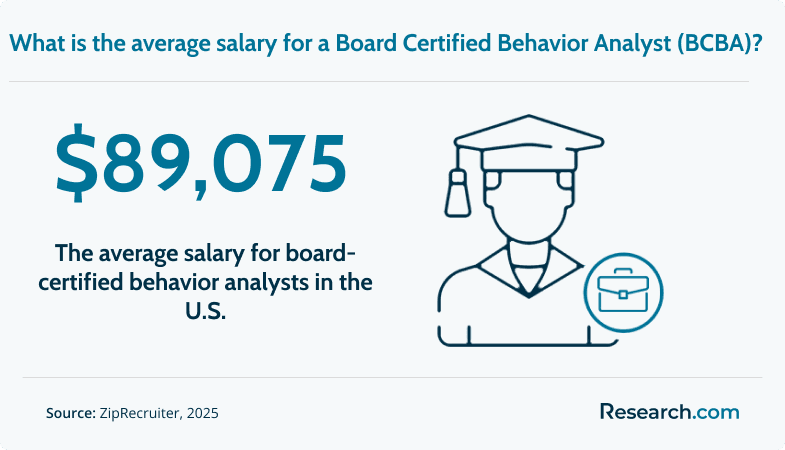
- The average annual pay for a BCBA in the U.S. is $89,075. LBA salary information is less consistently reported, but LBA salaries often range from $60,000 to $75,000.
- LBA fees vary by state. New York charges a $300 application fee. Connecticut charges a $350 initial application fee and a $175 renewal fee.
- The number of BCBAs increased from roughly 16,376 in 2014 to about 74,125 in 2024, reflecting major growth in behavior analysis employment and certification activity.
- LBA vs. BCBA: role, scope, and practical differences
- Education and supervised fieldwork requirements
- Certification and licensure costs
- Continuing education and renewal rules
- Scope-of-practice limits and service restrictions
- Demand for BCBAs and LBAs
- Work settings for behavior analysts
- How state markets affect compensation
- Whether an advanced degree can improve career options
- How doctoral study can support senior behavior analysis roles
- Trends changing behavior analysis practice
- Expanding into child psychology work
- Salary factors for LBAs and BCBAs
- How to judge behavior analysis program quality
- Whether accelerated study can shorten your timeline
- Moving your LBA license or BCBA credential to another state
- Online programs for future BCBAs and LBAs
- How to choose the right LBA or BCBA path
- Financing options for behavior analysis education
LBA vs. BCBA: What are their job roles and key differences?
The clearest way to understand LBA vs. BCBA is to separate credentialing from legal authority. A BCBA has met BACB certification standards. An LBA has met the legal requirements of a state licensing board. In many real-world jobs, employers prefer or require both because certification supports clinical credibility and licensure supports legal practice.
Job duties can overlap significantly. BCBAs and LBAs may assess behavior, develop intervention plans, supervise staff, consult with families, and review client progress data. The exact scope depends on state law, employer policy, payer requirements, and the professional's training.
Typical BCBA Responsibilities
- Behavior assessment: BCBAs often complete functional behavior assessments to identify why a behavior occurs and what supports may reduce harmful or disruptive behavior.
- Intervention planning: They design individualized treatment plans that may include behavior-reduction strategies, skill-building goals, caregiver training, and data collection procedures.
- Supervision: BCBAs frequently supervise Registered Behavior Technicians (RBTs), trainees, and other direct-service staff. Graduates of the best ABA programs are typically trained to connect theory, supervision, and ethical practice.
- Collaboration: They coordinate with parents, teachers, physicians, speech-language pathologists, occupational therapists, and mental health professionals when client care requires a team approach.
- Data-based decision-making: BCBAs monitor client progress, review behavior data, and adjust interventions when evidence shows a change is needed.
- Documentation: They maintain assessment notes, treatment plans, supervision records, progress updates, and service documentation required by employers, funders, and regulators.
Typical LBA Responsibilities
- State-authorized practice: LBAs provide behavior analysis services within the boundaries set by their state license. In some states, this may closely mirror BCBA practice; in others, restrictions may be narrower.
- Client services: LBAs may work directly with clients in schools, clinics, homes, and community settings using applied behavior analysis strategies.
- Program implementation and monitoring: Depending on state rules and employer structure, LBAs may implement, supervise, or modify treatment plans and track client progress through data.
- Team coordination: LBAs often communicate with families, educators, technicians, and healthcare providers to keep treatment goals consistent across environments.
| Question | What it means for your career |
| Do I need a BCBA, an LBA, or both? | If your state licenses behavior analysts, you may need LBA approval even after earning BCBA certification. |
| Can a BCBA practice across state lines? | The credential may be recognized, but the professional must follow the law where the client is located. |
| Can an LBA move easily to another state? | Not automatically. Each state decides whether to accept another state's license or require a new application. |
| Which has more employer recognition? | BCBA is often used in job postings and payer requirements; LBA is essential where state law requires licensure. |
LBA vs. BCBA: What are their educational requirements?
Education requirements are similar because many state licensing boards use BCBA standards as a benchmark. However, students should never assume that a degree program automatically qualifies them for both certification and licensure. The safest approach is to verify BACB eligibility and state licensing rules before enrolling.
BCBA Educational Requirements
To become a Board Certified Behavior Analyst BCBA, candidates typically complete a bachelor's degree, earn a graduate degree in behavior analysis or a related field, complete Association for Behavior Analysis International (ABAI)-verified coursework, finish 1,500 to 2,000 hours of supervised fieldwork, and pass the BCBA exam.
Students trying to shorten the academic portion of the journey may compare accelerated psychology pathways. Research.com has reviewed options for learners looking for the fastest degree in psychology, but students should still confirm that any program aligns with BACB and state licensure requirements.
LBA Educational Requirements
LBA requirements depend on the state. Many states require a master's degree in behavior analysis, psychology, education, or a related field, along with supervised experience and proof of competency. Some states license professionals who already hold the BCBA credential, while others add state-specific steps such as an application review, background check, jurisprudence requirement, or separate exam.
Certification and Licensure
The BCBA certification is issued by the BACB and signals that a candidate has met the board's professional standards. The LBA is granted by a state and is tied to that state's practice act. Over 30 states require behavior analysts to be licensed, so licensure planning should begin before graduation rather than after a job offer.
| Step | BCBA Path | LBA Path |
| Graduate education | Graduate degree with approved behavior analysis coursework | Often a graduate degree in behavior analysis or a related area, depending on the state |
| Fieldwork | 1,500 to 2,000 hours of supervised fieldwork | May follow BCBA standards or state-specific supervised experience rules |
| Exam | BCBA exam | May require BCBA certification, a state exam, or both |
| Authority to practice | Professional certification only | State permission to practice within that jurisdiction |
How much does it cost to get LBA licensure and BCBA certification?
The cost of becoming a behavior analyst includes more than tuition. Candidates may need to budget for application fees, exam fees, background checks, supervision-related costs, study materials, renewal fees, and continuing education. State licensure costs also vary, so applicants should check the licensing board in the state where they plan to practice.
LBA Licensure Costs
- New York lists a $300 application fee for LBA licensure.
- Connecticut charges a $350 initial application fee and a $175 renewal fee.
- Maryland lists a $200 application cost, with renewal required every two years.
- Mississippi charges a $250 application fee plus a $35 criminal background check fee.
BCBA Certification Costs
- The BCBA exam fee is approximately $195, and the certification application fee is around $50. Together, those fees total about $245 before optional exam preparation, textbooks, supervision expenses, or other program-related costs.
Cost Questions to Ask Before You Enroll
- Does the tuition include BACB-aligned coursework, or are additional courses required?
- Will the school help arrange supervised fieldwork, or must students find placements independently?
- Are supervision fees included in tuition, billed separately, or paid to an outside provider?
- Does the program meet the requirements of the state where you plan to become licensed?
- How often will you need to pay renewal or continuing education fees after earning the credential?
What are the continuing education requirements for maintaining LBA and BCBA credentials?
Earning the credential is only the beginning. Behavior analysts must keep their knowledge current, maintain ethical standards, and renew credentials on schedule.
- BCBAs must complete 32 Continuing Education Units (CEUs) every two years. These must include at least four (4) ethics CEUs and, when applicable, three (3) supervision CEUs. CEUs may come from approved workshops, teaching, publishing peer-reviewed research, and other qualifying activities.
- LBA continuing education requirements are set by state licensing boards. Some states align closely with BCBA requirements, while others use their own renewal cycles, CEU categories, documentation standards, and fees.
Are there any restrictions on the services LBAs and BCBAs can provide?
Yes. Both LBAs and BCBAs must practice within their competence, follow ethical standards, and comply with state law. The most common mistakes occur when professionals assume that certification alone authorizes practice everywhere or that telehealth can be provided across state lines without checking the client's location.
- Scope of practice: LBAs must follow the practice boundaries established by the state that issued the license. Evidence-based practice, competency, and professional ethics still apply even when services are unpaid or pro bono.
- Client populations and diagnoses: Some states limit which clients LBAs may serve. New York, for example, limits LBAs to clients with autism, which can restrict access for individuals with other behavioral needs.
- Supervision and recordkeeping: LBAs may have detailed supervision documentation requirements, especially when overseeing technicians or trainees. One example is a requirement for at least one hour of face-to-face individual supervision monthly and documentation retained for seven years after services end.
- Telehealth and virtual services: BCBAs can provide virtual services, but they must comply with licensing rules in the state where the client is located.
- Interstate practice: There is generally no automatic reciprocity between states. A professional licensed in one state should not assume the right to practice in another state without verifying the new state's rules.
- Ethical practice: Both LBAs and BCBAs are expected to follow BACB ethical guidelines, including avoiding services when personal circumstances or conflicts could impair professional judgment.
Are BCBAs in higher demand than LBAs?
BCBA demand is easier to measure because national certification data and job postings often reference the BCBA credential directly. LBA demand exists in licensed states, but job postings may still use “BCBA” as the primary keyword even when state licensure is also required.
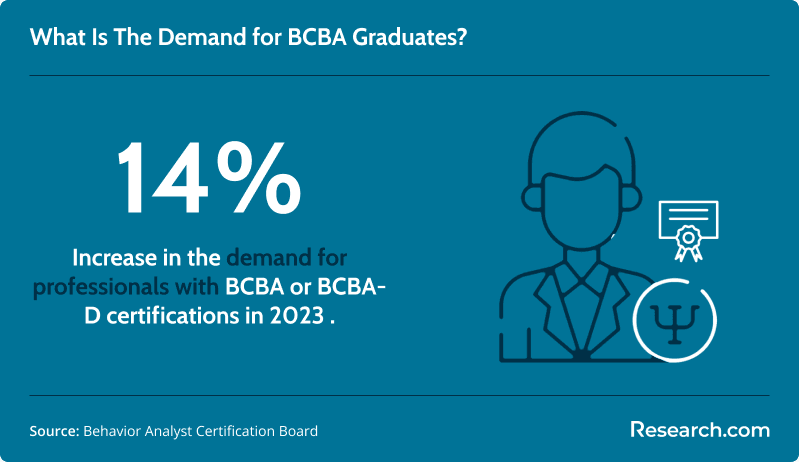
- Strong BCBA job-posting growth: Demand for BCBAs has increased annually since 2010, including a 58% jump from 2023 to 2024.
- High-demand states: In 2024, California, Massachusetts, Texas, New Jersey, and Florida had the highest demand, in descending order. These five states accounted for 40% of 2024 demand, and California alone represented 19%.
- Growth in certificants: The number of BCBAs rose from about 16,376 in 2014 to roughly 74,125 in 2024.
- Insurance and service access: Expanded insurance coverage for ABA therapy has helped increase the need for qualified behavior analysts as more families seek covered services.
- LBA demand depends on state law: In states with licensure requirements, the LBA can be essential for employment. However, the job market often advertises BCBA as the core qualification and then lists state licensure as an additional requirement.
The chart below displays BCBA certificate recipients by year from 2020 to 2024.
Where can LBAs and BCBAs work?
Behavior analysts work anywhere behavior change, skill development, safety planning, or performance improvement is needed. The best setting depends on the population you want to serve, your tolerance for travel, your interest in supervision, and whether you prefer clinical, school-based, home-based, research, or organizational work.
- Healthcare facilities: Hospitals, outpatient clinics, and rehabilitation centers may employ behavior analysts to support clients with developmental, behavioral, or mental health-related needs.
- Schools: Behavior analysts may support special education teams, assist with behavior intervention plans, contribute to IEP-related services, and train educators.
- Mental health clinics: Clinics may use behavior analytic approaches with children, adolescents, and adults facing behavioral, social, or adaptive functioning challenges.
- Residential treatment centers: These settings may serve individuals with autism, eating disorders, severe behavioral needs, or other complex conditions.
- Private practice: Some BCBAs operate or join private practices that provide assessment, treatment planning, caregiver consultation, and supervision.
- Home-based services: Many behavior analysts provide ABA services in clients' homes, where behavior can be addressed in natural routines.
- Government agencies: Public health, education, developmental disability, and social service agencies may hire behavior analysts.
- Nonprofit organizations: Community-based nonprofits may use behavior analysts in family support, disability services, and public health initiatives.
- Corporate environments: In organizational behavior management, behavior analysts may help improve employee performance, safety, training, and workplace systems.
- Research and higher education: Some BCBAs teach, publish, supervise graduate students, or conduct applied and experimental research.
| Work setting | Best fit for professionals who want... | Trade-off to consider |
| Schools | Predictable schedules, collaboration with educators, and child-focused work | School systems may have complex policies and limited resources |
| Clinics | Structured service delivery, team supervision, and regular data review | Caseloads and documentation demands can be high |
| Home services | Natural-environment intervention and close caregiver involvement | Travel, scheduling, and safety planning may be significant |
| Private practice | Autonomy, specialization, and business ownership | Requires payer knowledge, compliance systems, and administrative capacity |
| Research or academia | Teaching, publishing, and advancing behavior science | May require doctoral preparation and a strong research record |
The chart below shows the top five best-paying related BCBA LBA jobs in the U.S.
Do state-specific market trends influence BCBA and LBA compensation?
Yes. Behavior analyst pay can differ by state and city because employers respond to local demand, insurance reimbursement patterns, cost of living, licensure rules, and competition for qualified clinicians. A BCBA or LBA in a high-demand metropolitan area may receive a different compensation package than a professional in a lower-cost market with fewer providers or less payer coverage.
State-level salary research is especially important if you are deciding where to practice after graduation. For a more detailed look at regional differences, review Research.com's BCBA salary resource.
Can an advanced degree boost my career in behavior analysis?
A graduate degree is already central to many BCBA and LBA pathways, but additional advanced study can support leadership, specialization, research, and teaching roles. The value depends on the role you want. A clinician focused on direct ABA services may gain more from supervised experience and specialization, while a professional aiming for university teaching, research leadership, or senior clinical administration may benefit from doctoral-level training.
Students interested in combining advanced psychology training with applied practice can compare options such as a Psych D degree online, while confirming whether the curriculum aligns with their intended behavior analysis, psychology, or licensure goals.
How can a doctoral degree enhance my LBA or BCBA career?
A doctoral degree can help behavior analysts move into advanced research, clinical leadership, policy, university teaching, program design, and specialized supervision. It may also strengthen a professional's ability to evaluate evidence, publish research, lead interdisciplinary teams, and develop services for complex client populations.
Doctoral study is not necessary for every BCBA or LBA role, so the return on investment should be evaluated carefully. Cost-conscious learners may want to compare options such as the cheapest online doctorate in psychology and then verify accreditation, clinical fit, and whether the program supports their long-term licensing or professional goals.
What emerging trends are reshaping behavior analysis practice and research?
Behavior analysis is being affected by technology, telehealth, data systems, payer requirements, and interdisciplinary care models. Digital tools can support data collection and remote supervision, but they also raise questions about privacy, quality control, client safety, and compliance with state practice laws.
Telehealth has expanded access for some clients, especially in areas with provider shortages, but behavior analysts must still follow the licensing rules where the client receives services. Research training is also becoming more important for professionals who want to evaluate interventions, improve outcomes, and lead program development. Learners interested in research-heavy roles may compare online doctoral programs in psychology as part of a broader academic plan.
How can LBAs and BCBAs expand their role in child psychology?
Many LBAs and BCBAs work with children, especially those with autism, developmental disabilities, communication challenges, or school-related behavior concerns. Expanding into child-focused practice requires more than ABA coursework. Professionals need strong collaboration skills, knowledge of child development, caregiver coaching ability, and respect for the roles of psychologists, educators, pediatricians, speech-language pathologists, and occupational therapists.
Behavior analysts who want broader child-focused career options can explore related pathways in psychology jobs working with children. However, they should distinguish behavior analysis from licensed psychology practice, since state psychology licensure has separate education and supervision requirements.
What factors influence the salary of an LBA and a BCBA?
BCBAs in the United States earn an average annual salary of $89,075. LBA salary data is less widely reported, but LBA salaries often range from $60,000 to $75,000. These figures should be treated as market indicators, not guaranteed outcomes. Actual pay depends on location, employer type, caseload, supervision duties, experience, credentials, and specialization.
- Education: Graduate education is common for BCBAs and LBAs. Professionals with advanced preparation in behavior analysis, psychology, education, or leadership may qualify for higher-responsibility roles. Students asking "What can I do with a master's in applied behavior analysis?" should compare clinical, supervisory, school-based, and administrative options.
- Experience: More experienced behavior analysts may move into senior clinical, supervisory, director-level, training, or consulting positions.
- Specialization: Expertise in autism services, severe behavior, early intervention, school consultation, feeding, organizational behavior management, or supervision can affect earning potential.
- Location: Salaries vary by city and state. Higher-cost areas and markets with more competition for BCBAs may offer higher pay, but living costs can offset the difference.
- Licensure status: In regulated states, employers may require an LBA or equivalent state license in addition to BCBA certification.
- Employer type: Clinics, schools, hospitals, private practices, government agencies, nonprofits, and corporate organizations may use different pay structures.
The chart below shows the top five highest-paying cities for BCBA LBA jobs.
How can I assess program quality and outcomes in behavior analysis education?
A behavior analysis program should be judged by whether it helps you meet certification, licensure, and employment goals—not just by convenience or brand recognition. Before applying, confirm that the coursework supports BACB eligibility and that the program's structure fits the licensing rules in the state where you plan to practice.
- Accreditation and approval: Check institutional accreditation and whether the behavior analysis coursework is aligned with recognized standards.
- Fieldwork support: Ask whether the program helps students secure supervised fieldwork or expects them to arrange it independently.
- Faculty qualifications: Review whether instructors have behavior analysis credentials, clinical experience, research expertise, or supervision experience.
- Outcome transparency: Look for clear information about retention, graduation, exam preparation, and career support.
- State fit: Ask the program directly whether graduates are eligible for LBA licensure in your target state.
- Student support: Online learners should evaluate advising, supervision coordination, library access, technical support, and faculty availability.
Students comparing related doctoral psychology pathways can also review APA accredited online psychology PsyD programs, while noting that psychology accreditation and behavior analysis certification are separate issues.
Can an accelerated program expedite my behavior analysis career?
An accelerated program can reduce time in school, but speed should not come at the expense of certification eligibility, supervised experience quality, or state licensure alignment. The fastest option is not always the best option if it leaves you with missing coursework or weak fieldwork support.
Some students consider intensive graduate options, such as a 1 year masters in psychology program, to move faster toward career entry. Before choosing an accelerated route, verify the program's accreditation, behavior analysis coursework, supervision opportunities, exam preparation, and state licensing fit.
| Accelerated program may work well if... | Use caution if... |
| You already have relevant undergraduate preparation | You need extensive prerequisite coursework |
| You can handle a heavy course load while completing fieldwork | You are working full time and cannot manage intensive deadlines |
| The program clearly supports BCBA and state licensure requirements | The school gives vague answers about certification eligibility |
| Supervised fieldwork is well organized | You must find supervision on your own with little guidance |
How do I transfer my LBA license to a different state? What about my BCBA certification?
Moving between states requires careful planning because BCBA certification and LBA licensure are handled differently. BCBA certification remains tied to the BACB, while LBA authority comes from a specific state licensing board.
Transferring an LBA License
- Start with the new state board: Every state sets its own licensure standards. Review the new state's requirements before accepting a job or beginning telehealth services there.
- Ask about reciprocity: Some states may recognize an existing license if the original requirements are substantially similar. Others require a full new application.
- Prepare documentation: Common requirements include license verification, transcripts, proof of supervised experience, continuing education records, background checks, and fees.
- Expect processing time: Even when requirements are similar, board review can take time. Plan ahead so employment start dates and client services are not disrupted.
Using BCBA Certification in Another State
- Remember the difference: BCBA certification is not the same as a state license. A BCBA may still need an LBA or equivalent license to practice in a regulated state.
- Verify certification: States commonly require applicants to confirm current BCBA certification with the BACB.
- Check for extra requirements: Some states streamline licensing for BACB-certified applicants. Others may require additional exams, background checks, supervised hours documentation, or state-specific forms.
- Budget for fees: New-state applications usually require fees and supporting documents, even if the applicant already holds BCBA certification elsewhere.
What are the best online programs to become a BCBA or LBA?
The best online program is the one that fits your schedule while also meeting certification and state licensure requirements. For future BCBAs and LBAs, convenience is only useful if the coursework, supervision structure, faculty support, and state eligibility are strong.
When comparing online options, ask whether the program includes BACB-aligned coursework, how supervised fieldwork is arranged, whether online students receive the same advising as campus students, and whether graduates have a clear path to licensure in your state. Research.com has compiled affordable behavior analyst programs online for students comparing cost-conscious pathways into the field.
What are the key factors to consider when choosing an LBA or a BCBA career?
Before committing to the LBA or BCBA path, think beyond the credential name. The right choice depends on where you want to practice, which populations you want to serve, how much supervision responsibility you want, and whether you are willing to manage ongoing licensure and continuing education requirements.
- State requirements: If you plan to practice in a licensed state, determine whether you need an LBA, BCBA, or both.
- Education path: Most BCBA and LBA roles require graduate-level preparation in Applied Behavior Analysis, psychology, education, or a related field. Students researching easy master's degrees that pay well should still prioritize programs that meet professional requirements rather than choosing only by convenience.
- Population served: Decide whether you want to work with children, adults, schools, autism services, severe behavior, mental health, organizations, or research settings.
- Work environment: Home-based work, schools, clinics, hospitals, and private practice have different schedules, documentation requirements, and stressors.
- Compensation: Pay varies by location, role, employer, experience, and specialization. Salary data can help with planning, but it should not be treated as a guaranteed outcome.
- Career growth: Continuing education, supervision experience, specialization, and professional networking can improve long-term opportunities.
- Personal fit: Behavior analysis requires patience, data discipline, ethical judgment, communication skills, and comfort working with vulnerable clients and families.
Common Mistakes to Avoid
- Choosing a program without confirming that it supports BCBA eligibility and state licensure.
- Assuming BCBA certification automatically permits practice in every state.
- Comparing tuition only, while ignoring supervision costs, exam fees, application fees, and renewal expenses.
- Starting supervised fieldwork too late and delaying eligibility for the exam or license.
- Relying only on rankings instead of checking curriculum, faculty, fieldwork support, and graduate outcomes.
- Assuming an online program is acceptable in every state without checking state-specific rules.
- Treating salary averages as guaranteed pay rather than market estimates affected by location and employer type.
Are there affordable financing options for behavior analysis education?
Behavior analysis training can be expensive, especially when graduate tuition, supervision, exam preparation, application fees, and renewal costs are added together. Students should compare total cost, not just per-credit tuition.
- Scholarships: Search for school-based, professional association, disability services, psychology, and education-related scholarships.
- Federal and state aid: Eligible students should review grant and loan options through accredited institutions.
- Employer tuition support: ABA clinics, school systems, healthcare organizations, and social service agencies may offer tuition reimbursement or supervision support.
- Payment plans: Some schools allow installment billing or deferred payment arrangements.
- Lower-cost online options: Students comparing broader psychology pathways can review a cheap online psychology degree while checking whether the program meets behavior analysis requirements.
Key Insights
- BCBA and LBA are not interchangeable. BCBA is a professional certification; LBA is state permission to practice.
- In states that license behavior analysts, many professionals need both BCBA certification and LBA licensure.
- BCBA preparation usually includes a graduate degree, approved coursework, 1,500 to 2,000 supervised fieldwork hours, and the BCBA exam.
- LBA rules vary by state, so students should check the licensing board where they plan to work before choosing a program.
- Costs include more than tuition. Application fees, exam fees, background checks, supervision, renewals, and CEUs can all affect the total investment.
- BCBAs have strong measurable demand, including a 58% demand increase from 2023 to 2024 and growth from about 16,376 certificants in 2014 to roughly 74,125 in 2024.
- Salary depends on location, role, specialization, experience, and licensure status. The reported average annual BCBA pay is $89,075, while LBA salaries often range from $60,000 to $75,000.
- The safest career strategy is to choose an accredited, certification-aligned program, plan supervised fieldwork early, verify state licensure requirements, and budget for renewal and continuing education from the start.
References:
- Behavior Analyst Certification Board. (2025). BACB Certificant Data. https://www.bacb.com/bacb-certificant-data
- Behavior Analyst Certification Board. (2025). US Employment Demand for Behavior Analysts. Retrieved from https://www.bacb.com/wp-content/uploads/2025/02/Lightcast2025_250204-a.pdf
- Behavior Analyst Certification Board. (n.d.). U.S. licensure of behavior analysts. Retrieved from https://www.bacb.com/u-s-licensure-of-behavior-analysts
- Connecticut Department of Public Health. (n.d.). Behavior Analyst Licensing. Retrieved from https://portal.ct.gov/dph/practitioner-licensing--investigations/behavioral-analyst/behavioral-analyst-licensing https://www.ziprecruiter.com/Salaries/Senior-Behavioral-Analyst-Salary
- Maryland OneStop. (n.d.). Licensed Behavior Analyst. Retrieved from https://onestop.md.gov/licenses/licensed-behavior-analyst-5d1540a654f24d03e9997e95
- New York State Education Department. (n.d.). License Requirements for Licensed Behavior Analysts. Retrieved from https://www.op.nysed.gov/professions/licensed-behavior-analysts/licensecertification-requirements
- Salary.com. (2025). Behavioral Health Director Salary in the United States. Retrieved from https://www.salary.com/research/salary/benchmark/behavioral-health-director-salary
- ZipRecruiter. (2025). BCBA LBA salary. Retrieved from https://www.ziprecruiter.com/Salaries/Bcba-Lba-Salary
- ZipRecruiter. (2025). BCBA salary. Retrieved from https://www.ziprecruiter.com/Salaries/Bcba-Salary
- ZipRecruiter. (2025). Senior Behavioral Analyst Salary. Retrieved from https://www.ziprecruiter.com/Salaries/Senior-Behavioral-Analyst-Salary
Other Things You Should Know About LBA vs BCBA
The Behavior Analyst Certification Board (BACB) regulates the BCBA credential in 2027. BCBAs must meet BACB coursework, supervised fieldwork, and exam requirements, then maintain certification through renewal and continuing education rules set by the BACB.
The certification for LBAs requires a master's degree, supervised experience, and passing a state-specific exam, while BCBAs need a master's degree, completion of supervised experience hours, and passing the BCBA exam administered by the Behavior Analyst Certification Board in 2027.


