2027 Best ABA Programs in the USA

Co-Founder and Chief Data Scientist
Choosing an applied behavior analysis (ABA) program is not just a school-search decision. It affects whether you can qualify for BCBA-related pathways, complete supervised fieldwork efficiently, meet state requirements, and build the practical skills employers expect in schools, clinics, healthcare organizations, community agencies, and private practice. The best ABA programs combine rigorous behavioral science coursework with ethical training, assessment practice, intervention design, and real-world supervision opportunities.
This guide is for prospective graduate students, educators, behavior technicians, psychology majors, and working professionals comparing ABA master’s programs, online ABA options, BCBA-aligned coursework, costs, timelines, and career outcomes. You will learn what ABA programs include, how online and campus formats differ, what to ask before enrolling, and which programs stand out in the USA for 2027.
Quick Answer: What should you look for in an ABA program?
The strongest ABA programs are accredited or verified by the Association for Behavior Analysis International Accreditation Board (ABAI), align with BCBA coursework expectations, provide supervised fieldwork or clear fieldwork guidance, and offer training in assessment, intervention planning, ethics, research methods, and data-based decision-making. A good fit also depends on your schedule, budget, preferred learning format, state licensing requirements, and career goal.
What are the benefits of getting an ABA degree?
- An ABA degree can prepare you for service-focused roles in healthcare, schools, autism services, social services, behavioral health organizations, and private practice.
- Online and campus-based ABA programs can both provide strong academic training when they include qualified faculty, applied projects, ethical practice, and supervised learning opportunities.
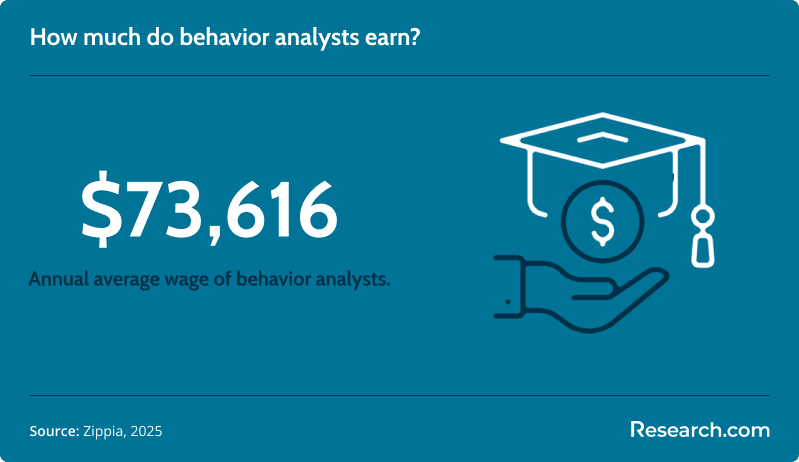
- ABA training may lead to competitive earnings. Behavior analysts averaged $73,616 annually in the US as of 2025.
What can I expect from ABA programs?
ABA programs teach students how behavior is learned, measured, assessed, and changed using evidence-based methods. Coursework usually covers behavioral principles, functional behavior assessment, intervention design, ethics, research, data collection, and treatment evaluation. The goal is to prepare students to make decisions from observable evidence rather than guesswork.
Most programs include applied assignments, such as writing behavior intervention plans, analyzing behavioral data, conducting assessments, and practicing ethical decision-making. Programs that prepare students for BCBA-related pathways may also include supervised practicum, internships, or guidance for completing fieldwork outside the university.
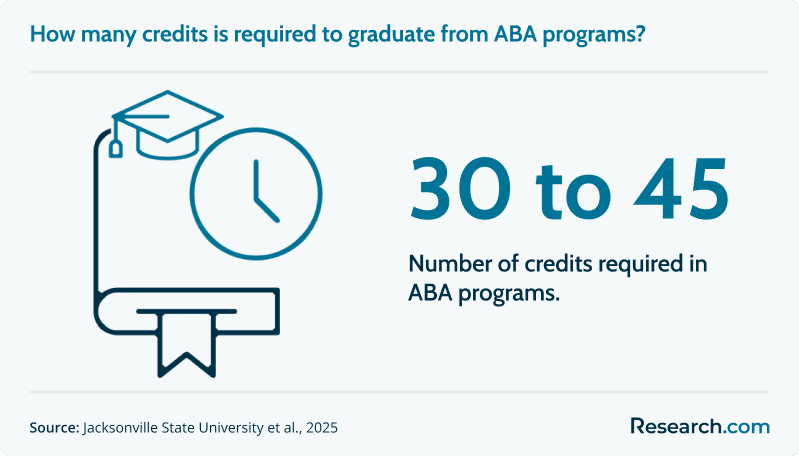
Costs vary widely. On average, tuition for ABA programs costs between $400 and $1,200 per credit hour, depending on the institution, residency status, and delivery format. Most programs require 30 to 45 credit hours, so total tuition can differ substantially by school. Full-time students commonly finish in one to two years, while part-time students may take longer.
| What to compare | Why it matters | Questions to ask before enrolling |
| ABAI accreditation or verified coursework | It helps confirm that the curriculum follows recognized behavior analysis standards. | Is the program accredited by ABAI or does it include an ABAI-verified course sequence? |
| Fieldwork structure | Supervised experience is essential for many certification and employment pathways. | Does the school place students, provide supervision, or require students to find their own sites? |
| Program format | Online, campus, and hybrid programs differ in flexibility, networking, and hands-on access. | Can I complete classes and fieldwork around my work schedule? |
| Total cost | Tuition is only one part of the price; fees, books, supervision, and exam preparation may add costs. | What is the full estimated cost through graduation? |
| State requirements | Licensure and certification expectations can vary by state and employer. | Will this program meet requirements in the state where I plan to work? |
Where can I work with an ABA degree?
An ABA degree can lead to roles in education, autism services, clinical programs, residential services, behavioral health, research, and organizational behavior management. Many graduates support individuals with autism, developmental disabilities, learning challenges, or behavioral needs, while others apply ABA principles in workplaces, community programs, or research settings.
Common roles include:
- Board Certified Behavior Analyst (BCBA)
- Clinical supervisor or program manager
- Special education consultant
- Behavior interventionist
- Behavior analysis researcher
In 2024, the BACB reported the highest number of BCBA job postings in these states:
- California – 12,084 postings
- Massachusetts – 4,178 postings
- Texas – 3,644 postings
- Florida – 3,245 postings
- Georgia – 3,028 postings
These figures can help you think strategically about where to complete fieldwork, build professional contacts, and search for jobs after graduation. High-posting states may offer more openings, but they may also have higher living costs and stronger competition for preferred roles.
How much can I make with an ABA degree?
According to 2025 data from Zippia, behavior analysts in the U.S. earn an average annual salary of $73,616. Entry-level positions typically start around $55,000 per year, while experienced professionals can earn $100,000 or more annually.
Pay depends on location, experience, certification, employer type, specialization, and scope of responsibility. Behavior analysts in California and Massachusetts may see higher wages because of demand and cost-of-living differences. Leadership roles, consulting work, and clinical director positions often pay more than entry-level behavior intervention or assistant roles. BCBA or BCBA-D certification can also improve access to higher-responsibility positions, although salary outcomes are never guaranteed.
- Best ABA Programs in the USA for 2027
- How long does it take to complete an ABA program?
- How does an online ABA program compare to an on-campus program?
- What is the average cost of an ABA program?
- What are the financial aid options for students enrolling in ABA programs?
- What are the prerequisites for enrolling in an ABA program?
- What courses are typically in an ABA program?
- How do ABA programs compare to marriage and family therapy programs?
- Can an ABA program equip you for roles in addiction counseling?
- How can integrating counseling insights enhance an ABA career?
- What types of specializations are available in an ABA program?
- What are the certification and licensing requirements for ABA professionals?
- How to choose the best ABA program?
- How can a fast track psychology degree complement an ABA education?
- What accreditation and quality standards should I expect from an ABA program?
- Can an accelerated psychology degree enhance my ABA credentials?
- What career paths are available for graduates of ABA programs?
- How do ABA career salaries compare with health psychology earnings?
- Do ABA programs provide comprehensive career support and networking opportunities?
- How can ABA be integrated with complementary counseling approaches?
- What is the job market for graduates with an ABA degree?
How do we rank schools?
Research.com ranks programs using data from established education sources, including the IPEDS database, Peterson’s database, the College Scorecard, and the National Center for Education Statistics. These sources help evaluate institutions using transparent and comparable information. You can learn more about the ranking process on the Research.com methodology page.
List of the Best ABA Programs in the USA for 2027
1. Jacksonville State University
Jacksonville State University delivers a science-centered ABA curriculum that emphasizes both experimental and applied behavior analysis. Students can build research and practicum experience through human and animal research facilities as well as local practice sites. The program covers behavioral principles, research methods, and ethical service delivery, preparing graduates for BCBA exam readiness and roles in education, developmental disabilities, and related fields.
- Program Format: In-Person
- Required Credits to Graduate: 39
- Cost: $410 per credit hour for residents, $665 per credit hour for non-residents
- Accreditation: Association for Behavior Analysis International Accreditation Board (ABAI)
2. Utah State University
Utah State University offers an ABAI-verified course sequence within a three-year master’s pathway that includes clinical and research experiences. Students who want a less intensive route may choose a coursework-only option. The program is designed to strengthen behavior analysis knowledge and prepare graduates for BCBA exam eligibility and applied roles in schools, healthcare, and community settings.
- Program Format: In-Person
- Required Credits to Graduate: 30
- Cost: $1,800 per 3 credits
- Accreditation: ABAI
3. Western Michigan University
Western Michigan University prepares students for doctoral study and employment in areas such as mental health, education, and substance abuse. The curriculum integrates ethics, diversity, applied behavior analysis skills, and BACB task-list alignment. Students participate in research communities, supervised practicum, conferences, workshops, and leadership development opportunities.
- Program Format: In-Person
- Required Credits to Graduate: 36
- Cost: $798.10 per credit hour for residents, $1,197.15 per credit hour for non-residents
- Accreditation: ABAI
4. Ball State University
Ball State University offers a fully online master’s program with an autism focus and small class sizes. Its ABAI-verified course sequence helps students develop intervention skills for individuals with autism and developmental disabilities. Coursework emphasizes ethics, evidence-based practice, communication, social development, motor skills, and behavioral support in schools, mental health centers, and residential facilities.
- Program Format: Online
- Required Credits to Graduate: 30
- Cost: $464 per credit hour for residents, $696 per credit hour for non-residents
- Accreditation: ABAI
5. University of North Carolina Wilmington
The University of North Carolina Wilmington focuses on behavioral assessment and intervention for people with developmental disabilities. Students complete coursework, practicum, and internships while learning ABA foundations, research methods, and ethical practice. Graduates are prepared for practitioner and research roles in clinical, educational, and global service settings.
- Program Format: In-Person
- Required Credits to Graduate: 48
- Cost: $293.23 per credit hour for residents, $1,186.89 per credit hour for non-residents
- Accreditation: ABAI
6. Arizona State University
Arizona State University provides an online master’s program with an ABA concentration. The program meets BCBA exam requirements and includes optional supervised fieldwork. Students study behavioral principles, ethics, and intervention design while receiving feedback from certified professionals. Graduates may apply ABA skills in education, consulting, program management, autism services, ADHD support, and workplace performance improvement.
- Program Format: Online
- Required Credits to Graduate: 30
- Cost: $12,939 per 9 credit hours
- Accreditation: ABAI
7. Purdue Global University
Purdue Global University teaches students to address behavioral challenges using evidence-based ABA methods. The curriculum covers behavioral principles, assessment, ethics, and applied intervention. Students may complete supervised fieldwork through their workplace or Purdue partner organizations, preparing for BCBA exam pathways and roles in education, mental health, and organizational behavior.
- Program Format: Online
- Required Credits to Graduate: 30
- Cost: $420 per credit hour
- Accreditation: ABAI
8. Vanderbilt University
Vanderbilt University combines coursework with field-based preparation and specialization options such as early childhood education and severe disabilities. Students complete two internships and ABAI-verified coursework aligned with BACB expectations. The program emphasizes ethical practice, research participation, fieldwork collaboration, and professional networking for careers in schools, clinics, and home-based services.
- Program Format: In-Person
- Required Credits to Graduate: 30-31
- Cost: $2,324 per credit hour
- Accreditation: ABAI
9. University of Cincinnati
The University of Cincinnati offers a 100% online Master of Education in ABA for students interested in behavior analysis services, especially for individuals with autism and learning disabilities. The 10-course, 30 semester hour curriculum can be completed in about 20 months and follows ABAI standards for BCBA certification. Students may begin in fall, spring, or summer without required campus visits.
- Program Format: Online
- Required Credits to Graduate: 30
- Cost: $746 per credit hour for residents, $761 per credit hour for non-residents
- Accreditation: ABAI
10. Westfield State University
Westfield State University offers a 48-credit BACB-approved master’s program in ABA. Full-time students can complete it in 2 years, while part-time students may take longer. The program includes core ABA coursework, practicum experiences, and either a comprehensive exam or thesis. Graduates may work in schools, homes, community programs, developmental disabilities, behavioral gerontology, or substance abuse-related settings.
- Program Format: In-Person
- Required Credits to Graduate: 48
- Cost: $418 per credit hour
- Accreditation: ABAI
11. Simmons University
Simmons University offers MS and EdS programs in Behavior Analysis for students pursuing clinical, educational, and private practice roles. The Boston location gives students access to a major medical and research environment. The program emphasizes behavior science, experiential learning, small interactive classes, research participation, and publication opportunities.
- Program Format: In-Person, Online
- Required Credits to Graduate: 40
- Cost: $1,125 per credit hour
- Accreditation: ABAI
12. University of Houston–Clear Lake
The University of Houston–Clear Lake offers an ABAI-accredited M.A. in Behavior Analysis with coursework, practicum, and research. The program focuses on interventions for individuals with developmental disabilities. Graduates may qualify for BCBA certification and Texas licensure, and students complete a major research project while gaining experience across practice settings.
- Program Format: In-Person
- Required Credits to Graduate: 39
- Cost: $9,920 per year for residents, $19,352 per year for non-residents
- Accreditation: ABAI
13. Pepperdine University
Pepperdine University offers an online Master of Science in Applied Behavior Analysis for students seeking a flexible route toward BCBA preparation. Students complete foundational coursework and supervised clinical experience in areas such as education, autism care, and organizational behavior management. The format blends live online learning with self-paced coursework.
- Program Format: Online
- Required Credits to Graduate: 30
- Cost: $1,945 per credit hour
- Accreditation: ABAI
14. Southern Illinois University
Southern Illinois University offers a Master of Science in Behavior Analysis and Therapy that combines coursework, research, and clinical experience. Students may study online or on campus while developing skills for serving diverse populations, including individuals with disabilities. The 45-hour program satisfies BCBA certification requirements and stresses practical application.
- Program Format: In-Person, Online
- Required Credits to Graduate: 45
- Cost: $7,710 per year
- Accreditation: ABAI
15. Northeastern University
Northeastern University offers an online Master of Science in Applied Behavior Analysis with ABAI-verified coursework. Students study behavior analysis foundations, clinical procedures, ethics, fieldwork, and project-based applications. The flexible format supports professionals applying ABA in schools, hospitals, and community settings while preparing for BCBA certification.
- Program Format: Online
- Required Credits to Graduate: 30
- Cost: $1,390 per credit hour
- Accreditation: ABAI
16. Northern Illinois University
Northern Illinois University offers an M.S.Ed. in Special Education with a Behavior Analysis specialization. The ABAI-verified coursework prepares educators and professionals for BCBA-related pathways. Students learn to address behavioral and learning needs in schools and communities, and the specialization may also support doctoral-level study.
- Program Format: Online
- Required Credits to Graduate: 30
- Cost: $509.75 per credit hour
- Accreditation: ABAI
17. University of Texas at Austin
The University of Texas at Austin offers master’s options specializing in Autism and Developmental Disabilities (A&DD). Students may pursue M.Ed. or M.A. pathways with BACB-approved courses. The program teaches students to design and evaluate evidence-based practices for individuals with autism, with online and in-person options, ethical training, research emphasis, and exposure to tools such as assistive technology.
- Program Format: In-Person, Online
- Required Credits to Graduate: 36
- Cost: $1,257 per credit hour for residents, $1,897 per credit hour for non-residents
- Accreditation: ABAI
18. University of Arizona
The University of Arizona offers a Special Education: ABA program focused on behavioral strategies that support communication, adaptive skills, and individualized planning. The BACB-approved curriculum includes core courses for BCBA exam eligibility and applied projects instead of a thesis. Students build practical skills for classrooms, clinics, and home-based settings.
- Program Format: Online
- Required Credits to Graduate: 36
- Cost: $653 per credit hour
- Accreditation: ABAI
19. Baylor University
Baylor University trains students to use behavioral science to create measurable outcomes. The program includes classroom instruction, internships, and applied research through Baylor CARE. A fast-track MSEd option can be completed in 15 months, and tuition discounts are available for eligible students. Graduates gain experience supporting individuals with developmental challenges, including autism and Down syndrome.
- Program Format: In-Person
- Required Credits to Graduate: 36
- Cost: $2,421 per credit hour
- Accreditation: ABAI
20. Russell Sage College
Russell Sage College offers an online master’s program in ABA and autism that meets BCBA exam and New York licensure standards. The curriculum emphasizes ethical, respectful, and evidence-based autism treatment. Students complete applied coursework and may add an optional practicum to help satisfy fieldwork requirements.
- Program Format: Online
- Required Credits to Graduate: 30
- Cost: $685 per credit hour
- Accreditation: ABAI
21. Saint Joseph’s University
Saint Joseph’s University provides a fully online ABA master’s program for working professionals. The 30-credit curriculum teaches evidence-based behavioral strategies and meets coursework requirements for the BCBA exam. Students learn to design, implement, and evaluate interventions in education, healthcare, and business environments. Supervision hours may be available through a clinical practice course.
- Program Format: Online
- Required Credits to Graduate: 30
- Cost: $960 per credit hour
- Accreditation: ABAI
22. The Chicago School
The Chicago School offers an M.S. in Applied Behavior Analysis that combines theory, research, and practice. Students develop skills in assessment, intervention planning, ethical service delivery, cultural competence, collaboration, and research. The coursework covers core ABA domains and prepares graduates for the BCBA exam.
- Program Format: In-Person, Online
- Required Credits to Graduate: 49
- Cost: $1,409 per credit hour
- Accreditation: ABAI
23. Capella University
Capella University offers an online M.S. in ABA with specializations in Autism Spectrum Disorder, Behavior Analysis in Education, and Organizational Behavior Management. Designed for working professionals, the program teaches assessment, intervention, supervision, and evidence-based strategies that can be applied in schools, workplaces, and community settings. Graduates prepare for the BCBA exam and ABA career paths.
- Program Format: Online
- Required Credits to Graduate: 40
- Cost: $510 per credit hour
- Accreditation: ABAI
24. University of Washington
The University of Washington offers a master’s program in ABA that focuses on ethical, effective interventions for individuals with developmental disabilities. Students study evidence-based practice, cultural competence, family and school collaboration, inclusion, and social justice. The program prepares graduates for BCBA certification and roles in education, clinical practice, and community settings.
- Program Format: In-Person, Online
- Required Credits to Graduate: 67
- Cost: $19,584 per year for residents, $35,352 per year for non-residents
- Accreditation: ABAI
25. University of Colorado Denver
The University of Colorado Denver offers a Master of Arts in Special Education with an ABA focus. The program includes ABA certification coursework and practicum experience that supports BCBA certification requirements. Students learn behavioral assessment, data interpretation, and research-based intervention for diverse populations in education, therapy, and clinical environments.
- Program Format: Online
- Required Credits to Graduate: 30
- Cost: $557 per credit hour
- Accreditation: ABAI
26. Florida Institute of Technology
Florida Institute of Technology offers three M.S. pathways: Applied Behavior Analysis (ABA), Organizational Behavior Management (OBM), and ABA+OBM. Students gain research-based knowledge and applied experience in clinical, educational, and business settings. The programs meet BCBA certification requirements and provide hands-on learning through facilities such as the Scott Center for Autism Treatment.
- Program Format: In-Person, Online
- Required Credits to Graduate: 30
- Cost: $21,380 for the total in-campus programs, $970 per credit hour for online students
- Accreditation: ABAI
27. Auburn University
Auburn University offers a two-year Master of Science in Applied Behavior Analysis that combines coursework with practicum training. Students receive clinical supervision, research opportunities, and exposure to faculty expertise across several behavior analysis areas. The program emphasizes ethical standards and prepares graduates for BCBA certification or advanced academic study.
- Program Format: In-Person
- Required Credits to Graduate: 45
- Cost: $5,346 per semester for residents, $16,038 per semester for non-residents
- Accreditation: ABAI
28. University of South Florida
The University of South Florida offers an online Master of Arts in Applied Behavior Analysis that prepares students for certified behavior analyst pathways. The curriculum combines theory and applied practice, helping students meet BCBA certification requirements and use ABA principles in schools, clinics, and organizations.
- Program Format: In-Person, Online
- Required Credits to Graduate: 41-45
- Cost: $600 per credit hour for online students, $431.43 per credit hour for in-person residents, $877.17 per credit hourfor in-person non-residents
- Accreditation: ABAI
29. Texas State University
Texas State University offers a Master of Education in Special Education with an ABA concentration. The 36-credit program includes eight specialized courses in ABA and autism, plus an option to earn a Texas State University Certificate in Autism. Graduates prepare for BCBA certification, state licensure, and roles in special education and autism treatment.
- Program Format: In-Person
- Required Credits to Graduate: 36
- Cost: $600 per credit hour for residents, $1,758.67 per credit hour for non-residents
- Accreditation: ABAI
30. University of North Texas
The University of North Texas offers a Bachelor of Science in Applied Behavior Analysis that examines how environmental conditions affect learning and behavior. The ABAI-verified course sequence can support students who later pursue BCBA certification after completing additional requirements. Graduates may work in clinics, schools, autism services, developmental disability programs, or animal behavior settings.
- Program Format: In-Person
- Required Credits to Graduate: 120
- Cost: $12,092 per semester for residents, $24,392 per semester for non-residents
- Accreditation: ABAI
31. Drexel University
Drexel University offers an online M.S. in Applied Behavior Analysis for working professionals. The ABAI-verified curriculum includes 31.5 credits of core coursework, advanced study, and capstone projects. Students learn data-driven, research-based approaches to behavioral support while emphasizing collaboration, ethics, and academic rigor.
- Program Format: Online
- Required Credits to Graduate: 46
- Cost: $1,111 per credit hour
- Accreditation: ABAI
32. Shenandoah University
Shenandoah University offers an online M.S. in Applied Behavior Analysis for professionals who need schedule flexibility. The 33-credit program includes an ABAI-verified course sequence, electives, and a capstone project. Students arrange their own supervision with faculty guidance and prepare for the BCBA exam and roles in schools, clinics, and organizations.
- Program Format: Online
- Required Credits to Graduate: 33
- Cost: $595 per credit hour
- Accreditation: ABAI
What ABA graduates say about their degree experience
-
: "
"My ABA training showed me how to turn behavioral science into practical support for children with autism at school and at home. The hands-on work made the transition into practice much easier." – Priya
"
-
: "
"The program gave me a strong scientific foundation while still emphasizing compassion. Learning to assess behavior and build evidence-based plans helped me feel ready for my first behavior therapist role." – Jamal
"
-
: "
"ABA coursework was demanding, but supportive faculty and applied assignments helped me build skills I now use every day. Seeing families recognize real progress makes the work meaningful." – Mei
"
Key Findings
- Most ABA programs take 18 to 24 months, though accelerated routes may shorten the timeline.
- The average cost for full-time graduate students at public institutions is $11,827 per year, while private institutions average $20,515 per year.
- Graduates with an ABA degree earn an average annual salary of $73,616.
- Demand for behavior analysts increased by 14% from 2022 to 2023.
- Most ABA master’s programs require 30 to 45 credit hours.
How long does it take to complete an ABA program?
Most full-time students complete ABA or BCBA masters programs in about 1 to 2 years. Students who attend part-time while working may need 3 years or more. Program length depends on credit requirements, course availability, fieldwork expectations, and whether the school offers accelerated scheduling.
Credit requirements commonly fall between 30 to 45 credit hours. Fieldwork, practicum, or internship requirements can also affect completion time because students must coordinate supervision, worksite approval, and client-service schedules. Accelerated programs may help students finish sooner, but they often require a heavier weekly workload.
If you want a shorter or more flexible credential, the best online ABA certificate programs may be worth comparing. Certificate pathways can help students add BCBA-aligned coursework or specialized ABA training without committing to a full master’s program, but students should confirm whether a certificate alone meets their career and certification goals.
| Study path | Typical fit | Main trade-off |
| Full-time master’s program | Students who can prioritize school and fieldwork | Faster completion, but less schedule flexibility |
| Part-time master’s program | Working professionals and caregivers | More manageable pace, but longer time to graduate |
| Online certificate | Students adding ABA coursework or specialization | Lower commitment, but may not replace a full degree |
| Accelerated program | Students who can handle intensive coursework | Quicker graduation, but heavier workload |
How does an online ABA program compare to an on-campus program?
Online and on-campus ABA programs can both be academically strong. The better choice depends on how you learn, whether you need flexibility, how you will complete fieldwork, and how much in-person interaction matters to you.
| Factor | Online ABA program | On-campus ABA program |
| Flexibility | Often easier to balance with work, family, and fieldwork schedules. | Usually follows fixed class times and campus-based requirements. |
| Cost considerations | May reduce commuting, relocation, and campus-related expenses. | May include commuting, parking, housing, and campus fees. |
| Networking | Depends on virtual advising, discussion boards, online events, and alumni networks. | Offers more face-to-face access to faculty, peers, labs, and campus events. |
| Fieldwork | Students may need to secure local supervision or approved sites. | May offer established local practicum partnerships. |
| Best for | Self-directed learners and working professionals. | Students who prefer structured classes and in-person mentorship. |
Before choosing an online program, ask exactly how supervision works. Some programs provide fieldwork placement support, while others expect students to locate supervisors independently. Before choosing a campus program, calculate the full cost of attendance, including transportation and time away from work.
What is the average cost of an ABA program?
ABA program costs depend on school type, residency status, credit load, format, and whether the program includes practicum or fieldwork fees. For full-time graduate students in the 2023-24 academic year, average tuition and fees were about $11,827 at public postsecondary institutions and $20,515 at private institutions.
Students should budget beyond tuition. Additional expenses may include textbooks, technology fees, application fees, student fees, background checks, certification exam preparation, supervision costs, and travel to fieldwork sites. These costs can change the true price of a program, especially for online students who must arrange local supervision.
A PhD pathway can cost more than a master’s degree, but it may make sense for students pursuing university teaching, research leadership, advanced clinical administration, or specialized consulting. If you are evaluating doctoral study, compare the tuition and career implications of a PhD in ABA salary against your expected debt and long-term goals.
The chart below shows tuition and fee trends for graduate students by institution type and year.
What are the financial aid options for students enrolling in ABA programs?
ABA students may be able to reduce out-of-pocket costs through federal aid, institutional scholarships, employer benefits, state programs, and careful program selection. Availability depends on enrollment status, school eligibility, financial need, academic profile, and employer policies.
- Federal Financial Aid: Many students start with the Free Application for Federal Student Aid (FAFSA). Depending on eligibility, aid may include grants, loans, and work-study. Pell Grants may be available to students with exceptional need and do not need to be repaid.
- Scholarships: Schools and professional organizations may offer awards for ABA students. Some are based on merit, financial need, career goals, or commitment to underserved communities.
- Employer Assistance: If you already work as a behavior technician, educator, paraprofessional, or human services employee, ask whether your employer offers tuition reimbursement, paid supervision, or schedule flexibility.
- Accelerated Degrees: Shorter programs can reduce the time you spend paying tuition and delaying full-time employment. For students comparing psychology-based routes, a 1 year master's in psychology online may be useful to review alongside ABA-specific pathways.
- State and Local Programs: Some states or local agencies may offer aid, loan forgiveness, or workforce incentives for behavioral health, special education, or service shortage areas.
What are the prerequisites for enrolling in an ABA program?
Most ABA master’s programs require a bachelor’s degree, academic transcripts, recommendations, and a statement of purpose. Requirements differ by school, so always check the current admissions page before applying.
- Bachelor's Degree: Many programs prefer applicants with backgrounds in psychology, education, social work, human services, or related fields. Applicants from other majors may need additional foundational coursework.
- GPA Requirements: A minimum GPA is common, and many programs expect a GPA of 3.0 or higher. Some schools may review applicants with lower GPAs if they have strong professional experience or other evidence of readiness.
- Relevant Experience: Experience with individuals with autism, developmental disabilities, behavioral needs, or educational support can strengthen an application. Paid work, internships, and volunteer experience may all be relevant.
- Letters of Recommendation: Programs often request recommendations from faculty, supervisors, or professionals who can speak to your academic ability, maturity, and readiness for graduate-level ABA training.
- Personal Statement or Essay: This essay should explain your career goals, interest in ABA, experience with behavioral services, and fit with the program.
- Prerequisite Coursework: Some schools require prior coursework in psychology, statistics, research methods, or behavior analysis. Missing prerequisites may need to be completed before or during admission.
What courses are typically in an ABA program?
ABA programs prepare students for roles such as board certified behavior analyst, behavioral therapist, clinical supervisor, special education consultant, or research assistant. Exact course titles vary, but most programs include the following areas:
- Foundations of Applied Behavior Analysis: Introduces core ABA concepts, behavioral principles, terminology, and professional expectations.
- Behavioral Assessment and Intervention: Teaches students to identify behavioral functions, collect data, and design evidence-based intervention plans.
- Research Methods in ABA: Covers single-case research design, measurement, data analysis, and evaluation of intervention effectiveness.
- Ethics in Behavior Analysis: Prepares students to make responsible decisions involving consent, dignity, confidentiality, supervision, cultural responsiveness, and professional boundaries.
- Advanced ABA Techniques: Examines more complex strategies, including reinforcement, punishment, stimulus control, skill acquisition, and behavior reduction procedures.
- Supervised Fieldwork or Practicum: Gives students structured opportunities to apply ABA methods under qualified supervision in real-world environments.
How do ABA programs compare to marriage and family therapy programs?
ABA and marriage and family therapy prepare students for different types of client work. ABA focuses on measurable behavior, assessment, data collection, and intervention plans. Marriage and family therapy focuses on relationships, family systems, communication patterns, emotional dynamics, and counseling processes. Students drawn to behavioral measurement and intervention may prefer ABA, while students interested in relational counseling may want to compare MFT programs online.
Can an ABA program equip you for roles in addiction counseling?
ABA training can be relevant to substance abuse and behavioral health because it emphasizes functional assessment, reinforcement, behavior change, and data-informed intervention. However, addiction counseling usually has its own education, supervised experience, and licensing requirements. Students who want to work directly in substance use treatment should review the requirements for how to become an addiction counselor and determine whether additional credentials are necessary.
How can integrating counseling insights enhance an ABA career?
ABA professionals often work with clients, families, educators, and interdisciplinary care teams. Counseling knowledge can strengthen communication, rapport-building, motivational interviewing awareness, and sensitivity to emotional and social factors. Students who want a broader behavioral health foundation may compare ABA training with CACREP online counseling programs, especially if they are considering counseling licensure in addition to behavior analysis.
What types of specializations are available in an ABA program?
ABA specializations help students focus on the populations, settings, or behavior-change goals that match their career plans. Not every program offers formal concentrations, so review the curriculum carefully before enrolling.
- Autism Spectrum Disorder (ASD): Focuses on evidence-based strategies for individuals with autism, including early intervention and individualized behavior plans.
- Intellectual and Developmental Disabilities (IDD): Prepares students to support people with developmental delays, cognitive challenges, and adaptive skill needs.
- Organizational Behavior Management (OBM): Applies ABA principles to workplace performance, productivity, safety, training, and employee behavior.
- Pediatric ABA: Emphasizes child-focused services in schools, clinics, early intervention programs, and home-based therapy.
- Forensic Behavior Analysis: Applies behavior analysis to legal, correctional, rehabilitation, and justice-related settings.
- Behavioral Health: Uses ABA strategies to support individuals with behavioral health concerns, including anxiety, depression, and addiction-related behavior patterns.
The chart below lists the most common majors for behavior analysts, as reported by Zippia in 2025.
What are the certification and licensing requirements for ABA professionals?
ABA professionals often need to complete an approved graduate degree or qualifying coursework, supervised fieldwork, and a recognized certification exam such as the BCBA. State licensure rules may add additional requirements, and employers may set their own standards for hiring and supervision. Because requirements can change, students should confirm rules with the BACB, their state licensing board, and prospective employers before enrolling.
Do not assume that every online ABA program automatically meets licensure requirements in every state. Ask the program whether its coursework and fieldwork model support the state where you plan to practice. Students comparing counseling and therapy licensure timelines can also review the fastest way to become a licensed therapist to understand how requirements differ across helping professions. Continuing education is also important for maintaining credentials and staying current with ethical, legal, and practice standards.
How to choose the best ABA program?
The best ABA program is the one that meets recognized quality standards, fits your schedule and budget, supports your fieldwork needs, and aligns with your target role and state requirements. Use the following checklist before applying.
- Verify accreditation and coursework: Prioritize programs approved by the ABAI or those with ABAI-verified coursework when BCBA preparation is your goal.
- Clarify fieldwork support: Ask whether the school provides placements, helps identify supervisors, or expects you to arrange supervision independently.
- Compare online and campus formats: Online programs may offer flexibility, while campus programs may provide easier access to local practicum networks and faculty interaction.
- Review faculty expertise: Look for faculty with research and practice experience in your intended area, such as autism, OBM, pediatric ABA, or developmental disabilities.
- Check specialization options: Choose a program with electives, placements, or projects related to your career goal.
- Calculate total cost: Include tuition, fees, books, supervision, travel, exam preparation, and lost work time.
- Ask about outcomes: Review job placement support, alumni roles, exam preparation resources, and local employer partnerships. You can also compare broader compensation data using Research.com’s guide to ABA salary.
| Common mistake | Why it creates problems | Better approach |
| Choosing a program only because it is cheap | Low tuition does not guarantee BCBA alignment, fieldwork support, or strong outcomes. | Compare accreditation, supervision, total cost, and career support together. |
| Assuming online means easier | Online ABA programs can be rigorous and require strong self-management. | Ask about weekly workload, live sessions, deadlines, and practicum expectations. |
| Ignoring state licensure | A program may not meet requirements where you plan to work. | Confirm state rules before enrolling, especially if studying online across state lines. |
| Waiting too long to plan fieldwork | Supervision shortages or site delays can extend your timeline. | Ask about fieldwork planning during admissions, not after classes begin. |
| Relying only on rankings | A highly ranked program may still be a poor fit for your schedule, budget, or specialization. | Use rankings as a starting point, then evaluate fit and requirements. |
How can a fast track psychology degree complement an ABA education?
Psychology training can strengthen an ABA professional’s understanding of development, learning, cognition, assessment, and human behavior. Students who need a quicker psychology foundation may compare ABA programs with a fast track psychology degree. This can be useful for career changers or students who want broader preparation before specializing in ABA, but it should not replace ABA-specific coursework when BCBA preparation is the goal.
What accreditation and quality standards should I expect from an ABA program?
A quality ABA program should show clear alignment with recognized behavior analysis standards, qualified faculty, current course content, ethical training, and supervised practice expectations. Accreditation or verified coursework can help students identify programs with structured quality controls. Students considering broader doctoral or clinical psychology pathways may also compare educational standards in the best APA accredited PsyD programs, but APA accreditation and ABAI accreditation serve different professional purposes.
Can an accelerated psychology degree enhance my ABA credentials?
An accelerated psychology program can add useful background in psychological theory, human development, research, and assessment. For students who want a broader behavioral science foundation, a masters in psychology one year option may be worth comparing. However, students pursuing ABA roles should still verify whether the program includes ABAI-aligned coursework and supports certification or licensure goals.
What career paths are available for graduates of ABA programs?
ABA graduates most often pursue roles tied to behavior analysis, autism services, education, developmental disability support, behavioral health, or organizational performance. Some students also compare ABA with other degree pathways to understand how analytical, communication, and service skills transfer. For example, students researching broader public service options may review homeland security degree jobs, while those comparing communication-centered careers may ask what can you do with a communications degree. These are different paths, but comparing them can clarify whether ABA’s client-service and data-driven focus is the right fit.
Common ABA-related career options include:
- Board-Certified Behavior Analyst (BCBA): Assesses behavior, designs intervention plans, supervises services, and monitors client progress.
- Mental Health Counselor: With additional credentials, graduates may become a mental health counselor and apply behavioral strategies within a counseling framework.
- Behavioral Therapist: Provides direct services to clients with behavioral needs, often including children with autism or developmental disabilities.
- Organizational Behavior Specialist: Applies ABA principles to workplace safety, training, productivity, and performance improvement.
- Special Education Teacher: Uses behavior analysis strategies to support students with learning or behavioral challenges.
- Forensic Behavior Analyst: Works in legal, correctional, rehabilitation, or justice-related settings.
How do ABA career salaries compare with health psychology earnings?
ABA earnings are shaped by certification, state demand, employer type, specialization, and years of experience. Health psychology earnings follow a different structure because roles may involve clinical practice, research, hospitals, universities, or institutional work. Students comparing behavioral science careers can review current information on health psychologist salary to understand how compensation differs across psychology and behavior analysis roles.
Do ABA programs provide comprehensive career support and networking opportunities?
Career support can be a major differentiator between ABA programs. Strong programs may offer fieldwork advising, employer partnerships, alumni networks, exam preparation, career coaching, mentorship, and professional development workshops. Ask whether support is available to online students as well as campus students. If you are considering interdisciplinary behavioral health roles, comparing ABA with the cheapest online master's in counseling can also help you evaluate cost and networking options across related fields.
How can ABA be integrated with complementary counseling approaches?
ABA can be combined with counseling-informed skills when professionals work in integrated care teams, schools, family support settings, or behavioral health programs. ABA contributes measurement and intervention planning, while counseling approaches can strengthen rapport, communication, and emotional support. Some students may also compare ABA training with specialized counseling routes, including Christian counseling programs, depending on their career goals and ethical practice framework.
What is the job market for graduates with an ABA degree?
The ABA job market remains strong because schools, clinics, healthcare organizations, autism service providers, community agencies, and employers continue to seek behavior analysis expertise. Demand grew by 14% from 2022 to 2023, and 2024 data showed steady annual increases in demand for professionals with BCBA or BCBA-D certification every year since 2010.
Still, students should evaluate the market realistically. Job availability varies by state, certification status, supervision experience, population served, and employer setting. Graduates with strong fieldwork, BCBA preparation, ethical training, and data-based intervention experience are generally better positioned than students who complete coursework without a clear supervision or licensure plan.
Key Insights
- The best ABA program is not automatically the cheapest or highest-ranked option; it is the one that aligns with ABAI standards, your state requirements, your fieldwork plan, and your career target.
- Most ABA master’s programs require 30 to 45 credit hours and can often be completed in 18 to 24 months, but fieldwork and part-time enrollment may extend the timeline.
- Online ABA programs can be excellent for working adults, but students must confirm how supervision, practicum, and state licensure requirements are handled.
- Behavior analysts averaged $73,616 annually in the US as of 2025, but earnings vary by location, certification, setting, and experience.
- Before enrolling, ask about ABAI accreditation or verification, BCBA exam preparation, supervised fieldwork support, total cost, state eligibility, faculty expertise, and graduate outcomes.
References:
- Behavior Analyst Certification Board (BACB). (2024). US employment demand for behavior analysts: 2010–2023. BACB.
- Moller, R. (2024). The Numbers Don't Lie: Revealing Autism Therapy Statistics. Above & Beyond Therapy.
- National Center for Education Statistics (NCES). (2024a). Student Charges: What is the average amount of tuition and required fees for full-time graduate students at private postsecondary institutions operating on an academic year calendar system?. Trend Generator. NCES.
- National Center for Education Statistics (NCES). (2024b). Student Charges: What is the average amount of tuition and required fees for graduate students at public postsecondary institutions operating on an academic year calendar system?. Trend Generator. NCES.
- Zippia. (2025a). Behavior Analyst Education Requirements. Zippia.
- Zippia. (2025b). Behavior Analyst Salary. Zippia.
Other Things You Should Know About ABA Programs
Admission requirements for top ABA programs in 2027 typically include a bachelor's degree with a minimum GPA of 3.0, prerequisite coursework in psychology or education, letters of recommendation, and a personal statement. Some programs may also require relevant work experience or an interview process.
Yes. To qualify for the Board Certified Behavior Analyst exam, an ABA program should be a Verified Course Sequence approved by ABAI and aligned with BACB coursework requirements. Students also need supervised fieldwork and a graduate degree before taking the BACB certification exam.