2027 Best PsyD Programs in Virginia: APA Accredited Online & Campus

Co-Founder and Chief Data Scientist
Choosing a PsyD program in Virginia is a licensure decision, not just a school-choice decision. The right program must prepare you for supervised clinical practice, internship matching, psychological assessment, ethics, and eventual eligibility to become a licensed psychologist. This matters because over 15% of Virginia’s population experiences mental health issues annually, creating ongoing need for well-trained clinicians across schools, hospitals, community agencies, private practices, and public systems.
This guide explains how APA-accredited PsyD programs in Virginia work, how many options are available, what applicants should compare, and how to evaluate curriculum, practicum access, internship support, cost, specialization fit, and career outcomes. It is written for prospective doctoral students who want a practical way to decide whether a Virginia PsyD program is the right path—or whether a nearby regional program, a PhD, or another psychology-related route may be a better fit.
Quick Answer: Are there APA-accredited online PsyD programs in Virginia?
Virginia currently has two APA-accredited PsyD programs, and both are campus-based. As of 2025, there are no fully online or hybrid APA-accredited PsyD programs based in Virginia. Students who need flexibility may be able to compare regional or hybrid options outside the state, but clinical practica, internship training, and licensure preparation still require substantial in-person supervised experience.
| Decision point | What Virginia applicants should know |
| Number of in-state APA-accredited PsyD options | Two programs are available in Virginia. |
| Online availability in Virginia | No fully online or hybrid APA-accredited PsyD programs are available in Virginia as of 2025. |
| Main in-state programs | Regent University and James Madison University. |
| Why APA accreditation matters | It signals that the program has been reviewed for curriculum, faculty qualifications, clinical training, student support, and professional preparation. |
| Best-fit student | Someone seeking psychologist licensure who can commit to intensive in-person clinical training. |
Key Benefits of APA-Accredited PsyD Programs in Virginia
- Licensure-focused preparation: APA-accredited PsyD programs are built around clinical competencies, assessment, ethics, supervised practice, and internship readiness, which are central to becoming a licensed psychologist.
- Structured clinical training: Campus-based programs give students direct access to faculty supervision, peer consultation, practicum coordination, and in-person skill development.
- Professional credibility: APA accreditation is widely recognized by internship sites, employers, licensing boards, and postdoctoral training programs.
- Applied career focus: PsyD programs generally emphasize clinical service delivery more than research-heavy doctoral pathways, making them a strong fit for students who want to practice psychology rather than primarily pursue academic research.
- Support for working adults who need flexibility: Although Virginia does not currently offer a fully online APA-accredited PsyD, flexible doctoral education remains important because 75% of working adults seeking graduate education must weigh school against employment, family, and financial responsibilities.
- How many APA-accredited PsyD programs are available in Virginia?
- What are the best APA-accredited PsyD programs in Virginia?
- Who is eligible to apply to APA-accredited PsyD programs in Virginia?
- What are the requirements to get into an APA-accredited PsyD program in Virginia?
- What PsyD specializations are available in Virginia?
- What courses are typically included in APA-accredited PsyD programs in Virginia?
- How do PsyD students find internships in Virginia?
- What are the pros and cons of online and campus PsyD programs in Virginia?
- What jobs can you get with a PsyD in Virginia?
- What is the average salary of PsyD graduates in Virginia?
How many APA accredited PsyD programs are available in Virginia?
Virginia has two APA-accredited PsyD programs. Both are delivered on campus, and neither is fully online or hybrid as of 2025. Regent University offers a PsyD in Clinical Psychology with scientific, professional, and ethical training. James Madison University offers a PsyD in Clinical and School Psychology and is known for an accelerated structure.
APA accreditation is important because doctoral psychology programs are reviewed for the quality of their curriculum, faculty, clinical training model, student support, institutional resources, and professional outcomes. For Virginia students, this is especially important because licensure, internships, and employer expectations often depend heavily on whether the doctoral program meets recognized professional standards.
Students who want a doctoral psychology route but are not committed to a PsyD can also compare APA-accredited Clinical Psychology PhD programs in Virginia. Current in-state options include the University of Virginia, Virginia Commonwealth University, and Old Dominion University, which is expected to seek independent APA accreditation through a site visit in 2026.
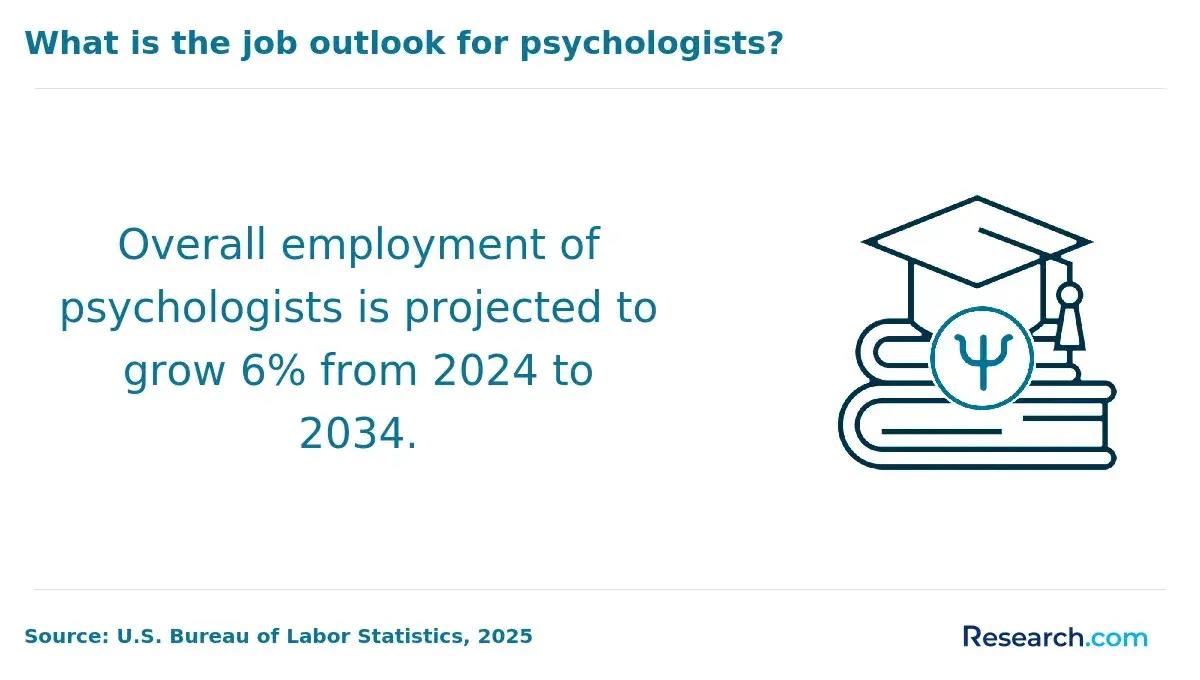
The broader labor market also supports careful program evaluation. Psychology employment is projected to grow 7% through 2033 nationally, but that does not mean every doctoral path has the same return. Students should compare admissions selectivity, tuition, funding, internship match support, licensure alignment, and the type of clinical populations served by each program.
Even as online psychology education expands nationally, PsyD training remains difficult to move fully online because assessment, therapy skills, practicum supervision, crisis response, and internship performance require direct clinical observation and supervised in-person experience.
What are the best APA accredited PsyD programs in Virginia?
The best APA-accredited PsyD program is the one that fits your licensure goal, clinical interests, budget, learning style, and ability to complete in-person training. In Virginia, students should begin with the two in-state APA-accredited PsyD programs, then compare nearby regional options only if relocation, commuting, or out-of-state study is realistic.
| Program | Location | What stands out | Best for |
| James Madison University | Virginia | APA-accredited PsyD in Clinical and School Psychology with a three-year coursework model plus a one-year internship; in-state tuition is $573 per credit. | Students interested in clinical and school-based practice who want an accelerated structure. |
| Regent University | Virginia | APA-accredited Clinical Psychology PsyD with integrative training and electives such as child and forensic psychology. | Students seeking broad clinical psychology preparation with elective flexibility. |
| Western Carolina University | North Carolina | APA-accredited, three-year, full-time, fully in-person regional option with clinical training emphasis. | Virginia students willing to study outside the state for a nearby campus-based program. |
| George Washington University | District of Columbia | APA-accredited PsyD with an accelerated format and some flexible coursework delivery, while still requiring in-person clinical training. | Students near Northern Virginia or Washington, DC who can manage campus and clinical attendance. |
| Duquesne University | Pennsylvania | APA-accredited program that allows transfer credits and includes hybrid coursework options while maintaining in-person clinical requirements. | Students comparing regional programs with some coursework flexibility. |
When comparing programs, do not rely only on name recognition. Ask how the program supports practicum placement, APPIC internship preparation, dissertation or applied research completion, EPPP preparation, and postdoctoral planning. Students interested in behavior-focused clinical work may also want to review related behavioral psychology career paths before deciding whether a PsyD is the most direct route.
How to compare PsyD programs before applying
- Check APA accreditation directly: Confirm current status through the APA rather than relying only on marketing materials.
- Review licensure alignment: Make sure the curriculum, supervised hours, internship structure, and postdoctoral expectations fit Virginia requirements.
- Ask about internship outcomes: Strong programs should explain how students prepare for the APPIC match and what support is available if a student does not match initially.
- Compare total cost: Look beyond tuition and include fees, commuting, relocation, books, testing, internship travel, and lost income.
- Evaluate faculty fit: Faculty expertise should match your clinical interests, such as child assessment, forensic evaluation, trauma, health psychology, or school-based practice.
Who is eligible to apply to APA accredited PsyD programs in Virginia?
APA-accredited PsyD programs in Virginia are designed for applicants who want doctoral-level clinical training and intend to pursue psychologist licensure. Strong candidates usually have a psychology or behavioral science background, evidence of academic readiness, exposure to research or clinical settings, and a clear understanding of what doctoral training requires.
Recent psychology graduates may be a good fit if they already have prerequisite coursework, faculty references, and experience in labs, clinics, schools, crisis programs, or community mental health settings. Career changers can also be competitive if they show that they understand the profession and have completed the foundational psychology coursework required by the program.
Students who need a fully online format should be cautious. Virginia’s APA-accredited PsyD options are campus-based, and even programs outside the state that offer online or hybrid coursework still require in-person clinical work. Anyone balancing employment or caregiving responsibilities should map out travel, practicum schedules, internship mobility, and financial limits before applying.
Applicants comparing psychology with behavior analysis should also understand that PsyD training and BCBA preparation are not the same pathway. If your goal is behavior-analytic certification rather than psychologist licensure, review the requirements to become a BCBA before committing to a doctoral clinical psychology program.
| Applicant profile | PsyD fit | What to confirm first |
| Recent psychology graduate | Often a strong fit if prerequisites, research exposure, and clinical interests are clear. | Minimum GPA, psychology credits, faculty recommendations, and interview expectations. |
| Career changer | Possible fit with strong prerequisite preparation and relevant helping-profession experience. | Whether additional psychology coursework is required before admission. |
| Working adult | Possible but challenging because clinical training is time-intensive and campus-based in Virginia. | Class schedule, practicum timing, internship relocation expectations, and financial feasibility. |
| Student seeking a fully online doctorate | Not a good fit for Virginia’s current APA-accredited PsyD options. | Whether an out-of-state hybrid or online program meets licensure requirements where you plan to practice. |
What are the requirements to get into an APA accredited PsyD program in Virginia?
Admission to an APA-accredited PsyD program in Virginia is competitive because programs must select students who can handle doctoral coursework, supervised clinical practice, ethical responsibilities, and the demands of internship training. Requirements vary by school, but most programs evaluate academic preparation, psychology coursework, professional maturity, and fit with the program’s training model.
| Requirement | What applicants should prepare |
| Educational background | A bachelor’s degree from a regionally accredited institution, usually in psychology or a related behavioral science field. Applicants from other majors may need to show foundational psychology coursework. |
| Minimum GPA | A competitive GPA is important. Regent University expects at least a 3.0 undergraduate GPA, reports an average of 3.57 for admitted students, and typically expects a 3.5 GPA in graduate coursework. |
| Prerequisite coursework | Programs commonly expect at least 18 semester hours in psychology, including general psychology, abnormal psychology or psychopathology, and research methods or statistics. |
| Relevant experience | Research, clinical, volunteer, crisis, school, or mental health experience can strengthen an application and show readiness for applied training. |
| Standardized tests | GRE policies vary, and many programs have moved away from mandatory testing. Applicants should verify the current policy for each program. |
| Recommendation letters | Most programs request three letters from faculty members, supervisors, or professionals who can speak to academic ability, ethics, interpersonal skill, and readiness for doctoral work. |
| Personal statement | The statement should explain clinical interests, relevant experience, long-term goals, and why the program’s training model fits those goals. |
| Interview or assessment | Finalists are usually evaluated for communication skills, emotional maturity, ethical judgment, and fit with faculty and program expectations. |
A strong application does more than list accomplishments. It should show that you understand the difference between a practice-oriented PsyD, a research-intensive PhD, counseling licensure pathways, and applied behavior analysis careers. If you are still comparing behavioral science options, review the career uses of an applied behavior analysis degree before choosing a doctoral psychology route.
Common admissions mistakes to avoid
- Applying without checking accreditation: Always verify the program’s APA status before investing time and application fees.
- Assuming any psychology doctorate leads to the same license: Licensure rules depend on the degree type, curriculum, supervised training, and jurisdiction.
- Submitting a generic personal statement: Faculty want to see why their program fits your goals, not just why you like psychology.
- Ignoring practicum realities: You need to know where students train, how placements are assigned, and whether transportation or relocation will be necessary.
- Focusing only on acceptance: Admission is only the first step; internship match, dissertation completion, and licensure preparation matter just as much.
What PsyD specializations are available in Virginia?
PsyD specializations help shape your practicum placements, elective choices, internship strategy, and eventual career niche. In Virginia, students should confirm whether a specialization is a formal track, an elective concentration, a practicum emphasis, or simply an area of faculty expertise. Those categories are not interchangeable.
| Specialization area | What it focuses on | Common work settings |
| Clinical Psychology | Assessment, diagnosis, psychotherapy, treatment planning, and evidence-based intervention for mental, emotional, and behavioral disorders. | Hospitals, outpatient clinics, community mental health centers, private practices, and integrated care settings. |
| Child and Adolescent Psychology | Developmental concerns, youth assessment, trauma, behavioral challenges, and interventions for children and teenagers. | Schools, pediatric clinics, youth programs, hospitals, and community agencies. |
| School Psychology | Student mental health, learning challenges, behavioral assessment, family-school collaboration, and educational intervention. | K-12 schools, school districts, educational agencies, and clinical settings serving children. |
| Couneling Psychology | Psychotherapy, adjustment concerns, diversity, advocacy, rural mental health, and support for underserved communities. | University counseling centers, community clinics, employee assistance programs, and outreach settings. |
| Health Psychology and Behavioral Medicine | The connection between psychological processes and physical health, including chronic illness, coping, adherence, and integrated care. | Hospitals, medical practices, rehabilitation programs, and interdisciplinary healthcare teams. |
| Marriage and Family Therapy | Relationship systems, couples therapy, family intervention, and communication patterns. | Private practices, family service agencies, community clinics, and therapy centers. |
| Forensic Psychology and Consulting | Psychological assessment in legal contexts, court-related evaluation, expert consultation, and organizational assessment. | Courts, correctional settings, forensic clinics, government agencies, and consulting practices. |
Because Virginia’s APA-accredited PsyD programs are campus-based, specialization choice should be tied to available practicum sites. For example, a student interested in forensic psychology should ask whether students can access court-related assessments or forensic placements. A student interested in child psychology should ask about school, pediatric, and youth-serving clinical sites.
Questions to ask before choosing a specialization
- Is this a formal specialization, or is it mostly supported through electives and practicum choices?
- Which faculty members supervise students in this area?
- What practicum sites are available for this specialty?
- Do recent graduates enter jobs or postdoctoral positions related to this focus?
- Will this specialization support licensure in the state where I plan to practice?
What courses are typically included in APA accredited PsyD programs in Virginia?
APA-accredited PsyD curricula combine clinical theory, assessment, intervention, research literacy, ethics, diversity, practicum training, and internship preparation. The goal is not simply to complete coursework; students must demonstrate professional competence with real clients under supervision.
| Course or training area | Why it matters |
| Behavioral Psychology | Builds understanding of observable behavior, intervention planning, and outcome evaluation for behavioral concerns. |
| Clinical Assessment and Diagnosis | Develops skill in diagnostic interviewing, standardized testing, case formulation, and treatment planning. |
| Research Methods and Statistics | Helps students evaluate evidence, interpret data, and apply research findings to clinical decisions. |
| Ethics in Psychology | Prepares students to handle confidentiality, informed consent, boundaries, mandated reporting, documentation, and legal responsibilities. |
| Practicum and Internship | Provides supervised clinical experience and is essential for developing applied competence and preparing for licensure. |
Students should also expect training in multicultural practice, psychological testing, psychotherapy techniques, psychopathology, consultation, supervision, professional development, and dissertation or applied research work. The exact curriculum depends on the program, so applicants should review course sequences rather than relying only on the program title.
How do PsyD students find internships in Virginia?
PsyD students usually secure internships through a structured combination of faculty advising, program placement support, clinical networking, and the APPIC match process. Internship is one of the most important phases of doctoral psychology training because it connects classroom and practicum learning to full-time supervised clinical work.
Virginia students should begin planning early. A strong internship application depends on practicum quality, assessment experience, therapy hours, supervisor evaluations, clinical writing samples, professional references, and fit with each site’s population and training model.
| Internship pathway | How it helps PsyD students |
| APPIC Match Process | The Association of Psychology Postdoctoral and Internship Centers provides a national matching system that standardizes applications and helps students apply to appropriate internship sites. |
| University Placement Support | Program staff and faculty can help students identify sites, prepare materials, track deadlines, and practice interviews. |
| Regional Internship Consortia | Groups such as the Mid Atlantic Internship Consortium can expand access to training settings across nearby areas. |
| Hospital and Health System Programs | Hospitals and VA Medical Centers may offer structured rotations that support licensure preparation and provide exposure to complex clinical populations. |
| Online Career Platforms | University portals and professional job boards can help students identify openings by location, population, specialty, and training emphasis. |
| Professional Networking | State associations, conferences, supervisors, alumni, and faculty contacts can reveal opportunities that may not be obvious from public listings. |
| Urban Center Focus | Areas such as Richmond and Fairfax may offer more clinical sites because of the concentration of hospitals, agencies, schools, and mental health facilities. |
Practical internship planning steps
- Ask each program for recent internship match information before enrolling.
- Keep detailed records of practicum hours, populations served, assessments completed, and supervision received.
- Build relationships with supervisors who can write strong, specific recommendation letters.
- Apply to sites that match your actual experience, not only your ideal specialty.
- Prepare for possible relocation during internship year.
- Use faculty feedback to improve essays, case examples, interview answers, and site rankings.
What are the pros and cons of online and campus PsyD programs in Virginia?
The most important distinction is that Virginia’s current APA-accredited PsyD programs are campus-based. Online or hybrid PsyD options may exist outside Virginia, but applicants must verify APA accreditation, practicum expectations, internship eligibility, and licensure alignment in the state where they plan to practice.
Online PsyD Programs in Virginia: Pros and Cons
Virginia does not currently offer a fully online APA-accredited PsyD, so the “online” comparison is mainly relevant to students considering out-of-state programs with online or hybrid coursework.
| Potential advantage | Important limitation |
| Online coursework can help working adults manage study, employment, and family responsibilities. | Clinical practica and internships still require in-person supervised training. |
| Remote classes may reduce relocation pressure during the coursework phase. | Students may still need to travel for residencies, assessment training, practicum, or internship. |
| Some accredited programs outside Virginia may offer academic flexibility. | Licensure boards and internship sites may scrutinize whether training experiences meet professional standards. |
| Self-paced or asynchronous elements can support independent learners. | Students must be highly organized because doctoral clinical training involves strict deadlines, evaluations, and hour tracking. |
| Clinical hour planning can be tailored to the student’s region in some programs. | Coordinating 2,000-3,000 clinical hours can be difficult without strong local placement support. |
Campus-Based PsyD Programs in Virginia: Pros and Cons
| Advantage | Trade-off |
| Students receive direct faculty mentorship, live skills training, and regular peer consultation. | Campus attendance can be difficult for students with full-time jobs or major caregiving obligations. |
| Practicum coordination may be more integrated with the program’s local clinical network. | Students may need to commute, relocate, or limit employment during intensive training periods. |
| In-person learning supports development of clinical presence, interviewing skills, and assessment practice. | Geographic flexibility is limited compared with online coursework. |
| Campus programs often provide structured academic and student support services. | Total cost can rise when housing, transportation, fees, and reduced work hours are included. |
| Networking with faculty, supervisors, alumni, and classmates can support internship and job planning. | Students who need maximum schedule flexibility may find the format restrictive. |
Which format makes the most sense?
- Choose a Virginia campus-based PsyD if you want APA-accredited in-state training and can commit to in-person classes, practicum, and internship preparation.
- Consider an out-of-state hybrid program only if it is APA-accredited, clearly supports clinical placement, and aligns with licensure where you plan to practice.
- Consider a PhD instead if you want stronger research preparation, university teaching, grant-funded research, or an academic career.
- Consider another master’s-level path if your goal is counseling, social work, school counseling, marriage and family therapy, or applied behavior analysis rather than psychologist licensure.
What jobs can you get with a PsyD in Virginia?
A PsyD prepares graduates for advanced clinical, assessment, consultation, and leadership roles, provided they complete the required supervised training and licensure steps. In Virginia, PsyD graduates may work in healthcare systems, schools, private practices, correctional settings, community clinics, universities, and government agencies.
| Job role | Typical responsibilities | Where PsyD graduates may work |
| Clinical Psychologist | Provides psychotherapy, psychological testing, diagnosis, treatment planning, and consultation. | Hospitals, outpatient clinics, private practices, community health centers, and VA settings. |
| Counseling Psychologist | Helps clients manage stress, transitions, mental health concerns, relationships, and adjustment issues using evidence-based therapy. | University counseling centers, employee assistance programs, clinics, and private practices. |
| School Psychologist | Assesses student needs, supports behavioral and emotional interventions, and collaborates with teachers and families. | Schools, districts, educational agencies, and child-focused clinical settings. |
| Forensic Psychologist | Conducts evaluations, prepares reports, consults with legal professionals, and may provide expert testimony. | Courts, correctional facilities, forensic clinics, and government agencies. |
| Healthcare Administrator or Clinical Director | Leads programs, supervises staff, improves care processes, and supports policy or compliance decisions. | Hospitals, behavioral health organizations, public agencies, and integrated care systems. |
Students interested in doctoral-level behavioral training outside the PsyD model may also compare the best ABA PhD programs, especially if they are more interested in behavior analysis research, intervention systems, or academic work than broad clinical psychology practice.
What is the average salary of PsyD graduates in Virginia?
PsyD-trained psychologists in Virginia earn between $91,500 and $153,000 annually, while clinical and counseling psychologists average around $94,000 to $98,000. Reported figures also indicate no significant salary difference between graduates of online and traditional APA-accredited programs when licensure requirements are met.
For context, the national median salary reported by the BLS is $85,330, and the APA reports a $95,830 median clinical psychologist wage. Virginia’s reported salary range is competitive, but individual earnings depend heavily on licensure status, specialization, employer type, location, and years of experience.
| Salary factor | How it can affect earnings |
| Licensure status | Fully licensed psychologists generally have stronger earning potential than those who are provisionally licensed or still completing supervised requirements. |
| Years of experience | Entry-level salaries may start at $50,000-$70,000, mid-career practitioners may earn $80,000-$100,000, and experienced professionals can exceed $130,000 annually. |
| Specialization | Clinical, forensic, and neuropsychology roles may command higher pay, with some salaries reaching $152,000. |
| Employer type | Private sector, hospital, and government roles may pay more than some academic or school-based positions. |
| Location and demand | Urban areas such as Richmond may offer higher pay, while rural areas may use incentives to recruit psychologists. |
Students who want to broaden their behavioral health credentials may also review online master’s in applied behavior analysis programs, though ABA credentials serve a different professional purpose than psychologist licensure.
How to evaluate whether a Virginia PsyD is worth it
A PsyD can be worth it for students who want to become licensed psychologists and are prepared for several years of intensive coursework, practicum training, internship applications, supervised experience, and licensure exams. It may not be the best choice for students who primarily want a shorter counseling credential, a fully online program, or a research-heavy academic career.
| Ask this before enrolling | Why it matters |
| Is the program currently APA-accredited? | Accreditation affects internship competitiveness, licensure preparation, and employer confidence. |
| What is the full cost of attendance? | Tuition is only part of the cost; include fees, commuting, relocation, internship travel, and reduced work hours. |
| Where do students complete practica? | Clinical placement quality directly affects skill development and internship readiness. |
| How does the program support the APPIC match? | Internship placement is a major milestone in doctoral psychology training. |
| What are recent graduate outcomes? | Ask about licensure, employment settings, postdoctoral placements, and time to completion. |
| Does the program fit your intended specialty? | Faculty expertise, electives, and practicum sites should match your clinical goals. |
| Can you realistically manage the schedule? | Campus-based PsyD training is difficult to combine with full-time employment. |
Common mistakes when choosing a PsyD program
- Choosing based on convenience alone: A flexible schedule is useful, but it cannot replace supervised clinical training and licensure alignment.
- Assuming online coursework means online clinical training: Doctoral psychology practice requires in-person supervised experience.
- Looking only at tuition per credit: Total cost should include living costs, fees, transportation, books, testing, application expenses, and potential relocation.
- Ignoring internship competitiveness: Internship planning should begin early, not in the final year.
- Assuming salary outcomes are guaranteed: Earnings vary by license, specialty, employer, region, and experience.
- Relying only on rankings: A highly visible program is not automatically the best fit for your licensure state, specialty, budget, or support needs.
Key Insights
- Virginia has two APA-accredited PsyD programs, and both are campus-based as of 2025.
- There are no fully online or hybrid APA-accredited PsyD programs based in Virginia, so students needing flexibility should compare regional options carefully and verify licensure alignment.
- APA accreditation matters because it supports internship eligibility, licensure preparation, and professional credibility.
- James Madison University and Regent University are the primary in-state PsyD options; nearby regional programs may be useful only if relocation or travel is realistic.
- Admissions decisions usually depend on GPA, psychology prerequisites, relevant experience, recommendation letters, a strong personal statement, and interview fit.
- Specialization choice should be tied to real practicum access, not just course titles or marketing language.
- Internship planning is central to PsyD success; students should ask about APPIC support, practicum sites, and recent match outcomes before enrolling.
- Reported PsyD-trained psychologist salaries in Virginia range from $91,500 to $153,000 annually, but earnings vary by licensure, specialization, setting, location, and experience.
- A Virginia PsyD is best for students committed to becoming practicing psychologists; students seeking shorter, lower-cost, or fully online routes should compare counseling, social work, school psychology, or ABA pathways.
Related Articles for Nearby States
- 2027 Best PsyD Programs in West Virginia: APA Accredited Online & Campus
- 2027 Best PsyD Programs in Maryland: APA Accredited Online & Campus
- 2027 Best PsyD Programs in North Carolina: APA Accredited Online & Campus
- 2027 Best PsyD Programs in Tennessee: APA Accredited Online & Campus
- 2027 Best PsyD Programs in Kentucky: APA Accredited Online & Campus
- 2027 Best PsyD Programs in Pennsylvania: APA Accredited Online & Campus
- 2027 Best PsyD Programs in South Carolina: APA Accredited Online & Campus
- 2027 Best PsyD Programs in Ohio: APA Accredited Online & Campus
- 2027 Best PsyD Programs in Delaware: APA Accredited Online & Campus
- 2027 Best PsyD Programs in New Jersey: APA Accredited Online & Campus
References:
- APA job search guidance: https://www.apa.org/education-career/job-search
- Online doctoral psychology overview from All Psychology Schools: https://www.allpsychologyschools.com/online-degrees/clinical-psychology/
- Chestnut Hill College PsyD practicum and internship information: https://www.chc.edu/academics/academic-centers/center-for-professional-psychology/psyd-practicums-and-internships/
- Virginia Tech doctoral internship information: https://ucc.vt.edu/training/doctoral_internship.html
- PsyD salary guide: https://psydprograms.org/salary-outlook-psyd-degree/
- APA-accredited program search: https://accreditation.apa.org/accredited-programs
- Discussion of VA practicum and APA internships at VA hospitals: https://forums.studentdoctor.net/threads/va-practicum-and-influence-on-obtaining-apa-internships-at-va-hospitals.810044/
- University of Virginia mentoring program information: https://med.virginia.edu/faculty-affairs/development/mentoring-program/
- Hybrid APA-accredited PsyD program overview: https://www.counselingdegreesonline.org/apa-accredited-hybrid-psyd-programs
- Touro Doctor of Psychology program example: https://shs.touro.edu/programs/doctor-of-psychology/
Other Things You Need to Know About The Best PsyD Programs in Virginia
Virginia requires 1,500 supervised internship hours as part of doctoral training for licensure. The internship must be completed in an APA-accredited, APPIC-member, or otherwise board-acceptable setting before a graduate can apply to the Virginia Board of Psychology for licensure review.
Most top PsyD programs in Virginia require applicants to submit GRE scores as part of their admission process. However, some programs may waive this requirement if applicants have a strong academic background or relevant work experience.