2027 What Can I Do with a Social Work Degree?

Co-Founder and Chief Data Scientist
A social work degree can lead to direct client service, clinical mental health practice, school-based support, healthcare navigation, community advocacy, program leadership, and policy work. The best path depends on three decisions: the population you want to serve, the level of responsibility you want, and whether you are willing to complete graduate education and licensure.
This guide is for students comparing social work majors, BSW graduates planning their first job, MSW candidates weighing clinical versus nonclinical paths, and working professionals considering advanced credentials. You will learn what jobs are available, which roles require a bachelor’s or master’s degree, how licensing works, what salary ranges have been reported, and how to choose a path that fits your goals for 2027 and beyond.
Quick answer: What can you do with a social work degree?
With a social work degree, you can work in child welfare, schools, hospitals, mental health and substance use programs, community agencies, hospice care, military and veterans services, nonprofit leadership, public policy, and social service administration. A BSW usually prepares graduates for entry-level case management, advocacy, and support roles. An MSW is commonly needed for advanced practice, clinical roles, supervision, and many leadership positions. Independent clinical practice typically requires an MSW, supervised experience, a passing ASWB exam, and state licensure.
- Social workers help people and communities respond to problems such as poverty, family instability, trauma, mental health concerns, disability, substance use, and unequal access to services.
- Work settings include hospitals, schools, behavioral health centers, child welfare agencies, government offices, community organizations, and nonprofits.
- Individual and family services are the largest employers of social workers in the U.S., accounting for 18% of the workforce.
- The median annual salary of entry level social worker in the United States is $69,864.
- Overall employment of social workers is projected to grow 7% from 2023 to 2033.
- Best social work career paths for 2027
- Is a social work degree worth choosing?
- Can you become a social worker with only a bachelor’s degree?
- Which skills matter most in social work?
- What certifications and licenses do social workers need?
- How do social work licensing rules vary by state?
- Can an online DSW improve a social work career?
- Is macro social work a strong career option?
- How can you find affordable online MSW programs?
- How much does location affect social worker pay?
- What challenges should students expect in field placements?
- How are school social workers responding to new student needs?
- How does the MSW versus LCSW distinction affect advancement?
- How are social work and psychology different?
- What trends are changing social work practice and education?
- Can clinical psychology knowledge strengthen social work practice?
- Can organizational psychology help social work leaders?
- How do social workers protect themselves from emotional strain?
- How can continuing education support career growth?
- How can doctoral degrees shape policy and innovation?
- Why consider accredited online BSW programs?
Best Social Work Career Paths for 2027
Social work is not one job. It is a profession with multiple practice areas, and each area has different education, supervision, emotional demands, and salary expectations. The table below summarizes major options using the salary ranges provided in the source material.
| Career path | Typical degree or credential | Common work settings | Career level | Salary range |
| Child and family social worker | BSW or MSW, depending on role and state | Child welfare agencies, family service organizations, foster care, adoption services | Entry to Mid-level | $52,296 - $65,082 per year |
| Medical social worker | Usually MSW for many hospital-based roles | Hospitals, clinics, rehabilitation centers, long-term care facilities | Mid-level | $65,361 - $79,101 per year |
| Clinical social worker | MSW plus clinical licensure | Private practice, mental health clinics, hospitals, community agencies | Advanced | $76,000 - $90,400 per year |
| School social worker | BSW or MSW, with state and district requirements | K-12 schools, alternative education programs, district offices | Entry to Mid-level | $60,511 - $75,220 per year |
| Mental health and substance abuse social worker | BSW, MSW, or license depending on scope | Treatment centers, outpatient programs, crisis services, community agencies | Mid-level | $38,500 - $115,000 per year |
| Community social worker | BSW or MSW | Nonprofits, public agencies, neighborhood organizations, advocacy groups | Entry to Mid-level | $60,327 - $88,028 per year |
| Hospice and palliative care social worker | Often MSW, especially for complex care coordination | Hospice agencies, hospitals, palliative care programs, home health settings | Mid to Advanced | $81,000 - $151,000 per year |
| Social work administrator | Often MSW or MBA | Social service agencies, healthcare organizations, nonprofits, government programs | Advanced | $40,062 - $61,383 per year |
| Military social worker | Often MSW; clinical roles may require licensure | Military bases, VA-connected services, veteran support organizations, counseling programs | Mid to Advanced | $34,500 - $117,000 per year |
| Public policy analyst | MSW or related graduate degree may be preferred | Government agencies, think tanks, advocacy organizations, research groups | Advanced | $77,890 - $98,790 per year |
1. Child and Family Social Worker
Child and family social workers help protect children, support parents and caregivers, connect families with services, and participate in foster care or adoption processes when needed. This path can suit people who want direct contact with families and are comfortable navigating difficult, high-stakes situations. If your interests are more focused on assessment and therapy for children, learning how to become a child psychologist can help you compare psychology and social work routes.
- Career Level: Entry to Mid-level
- Salary Range: $52,296 - $65,082 per year
2. Medical Social Worker
Medical social workers help patients and families understand treatment plans, prepare for discharge, locate benefits, manage stress related to illness, and coordinate community resources. They often serve as the bridge between patients, clinicians, insurers, and family caregivers. Readers interested in healthcare support roles outside social work may also compare affordable online medical assistant programs.
- Career Level: Mid-level
- Salary Range: $65,361 - $79,101 per year
3. Clinical Social Worker
A licensed clinical social worker provides therapy, mental health assessment, treatment planning, crisis intervention, and ongoing counseling for individuals, couples, families, or groups. This is one of the clearest paths for social workers who want independent clinical practice, but it requires graduate study, supervised clinical hours, and licensure.
- Career Level: Advanced (Requires MSW and Licensure)
- Salary Range: $76,000 - $90,400 per year
4. School Social Worker
School social workers address barriers that interfere with learning, including attendance problems, bullying, family instability, behavioral concerns, disability-related needs, trauma, and crisis events. They work with students, families, teachers, administrators, and community agencies. If you are comparing school-based mental health careers, review options such as NASP accredited online school psychology programs.
- Career Level: Entry to Mid-level
- Salary Range: $60,511 - $75,220 per year
5. Mental Health and Substance Abuse Social Worker
Mental health and substance abuse social workers help clients manage behavioral health symptoms, recovery goals, treatment plans, relapse risks, family challenges, and access to community supports. A social work degree can also help you evaluate related counseling roles, including the path to becoming a licensed mental health counselor.
- Career Level: Mid-level
- Salary Range: $38,500 - $115,000 per year
6. Community Social Worker
Community social workers focus less on one-on-one clinical treatment and more on improving access, building programs, identifying service gaps, organizing local initiatives, and advocating for underserved groups. This path may fit people who prefer outreach, coalition building, and systems-level work.
- Career Level: Entry to Mid-level
- Salary Range: $60,327 - $88,028 per year
7. Hospice and Palliative Care Social Worker
Hospice and palliative care social workers support people with serious illness and their families through emotional counseling, advance care planning, grief support, care coordination, and practical decision-making at the end of life. The work can be deeply meaningful, but it requires strong emotional boundaries and comfort with loss.
- Career Level: Mid to Advanced
- Salary Range: $81,000 - $151,000 per year
8. Social Work Administrator
Social work administrators supervise teams, manage budgets, evaluate programs, handle compliance obligations, and improve service delivery. This path is usually a better fit after gaining frontline experience. Social workers who want broader healthcare management skills may compare social work administration with an accelerated healthcare administration degree online.
- Career Level: Advanced (Often Requires MSW or MBA)
- Salary Range: $40,062 - $61,383 per year
9. Military Social Worker
Military social workers serve active-duty service members, veterans, and families dealing with trauma, deployment stress, reintegration, disability, grief, housing instability, and access to benefits. Clinical roles may involve PTSD treatment, crisis response, and family therapy, depending on credentials and setting.
- Career Level: Mid to Advanced
- Salary Range: $34,500 - $117,000 per year
10. Public Policy Analyst
Public policy analysts with social work training examine how laws, funding decisions, and public programs affect families, communities, and service providers. They may write policy briefs, evaluate programs, analyze data, and advocate for reforms that improve social systems.
- Career Level: Advanced (May Require MSW or Related Degree)
- Salary Range: $77,890 - $98,790 per year
Is a Social Work Degree Worth Choosing?
A social work degree can be worth it if you want a career centered on service, advocacy, crisis response, behavioral health, public systems, or community change. It is not the right fit for everyone. The work can involve heavy caseloads, complex documentation, emotionally intense situations, and licensing rules that vary by state.
Reasons social work may be a strong fit
- You want practical impact. Social workers do not only study social problems; they help people find housing, safety, treatment, benefits, education support, and long-term stability.
- You want several career options from one field. A social work background can lead to child welfare, schools, healthcare, mental health, aging services, corrections, military support, nonprofit leadership, and policy work.
- You care about social justice and systems. The profession connects individual support with broader advocacy for fair access to resources.
- You are willing to keep learning. Many career moves in social work require field experience, supervision, continuing education, and sometimes graduate study.
Reasons to think carefully before enrolling
- You want fast access to independent therapy practice. Clinical social work generally requires an MSW, post-graduate supervision, exams, and state licensure.
- You are uncomfortable with documentation and compliance. Case notes, care plans, eligibility rules, and mandated reporting are common parts of the job.
- You need a predictable emotional environment. Social workers often support people during trauma, illness, family conflict, crisis, and loss.
- You are choosing based only on job meaning. Purpose matters, but you should also compare tuition, licensure costs, supervision requirements, salary expectations, and local hiring demand.
Social workers held about 751,900 jobs in 2023. The chart below shows the largest employers of social workers in that year according to the Bureau of Labor Statistics:
Can You Become a Social Worker With Only a Bachelor’s Degree?
Yes. A Bachelor of Social Work can qualify graduates for many entry-level social service jobs, especially in case management, community outreach, family support, intake coordination, advocacy, and resource navigation. However, a BSW usually does not qualify someone for independent clinical practice or advanced therapy roles.
| Degree level | What it can prepare you for | What it usually does not cover by itself | Best for |
| BSW | Entry-level social work and human service roles, direct client support, case coordination, agency work | Independent clinical therapy, many advanced supervisory roles, LCSW eligibility | Students who want to enter the field sooner or continue later into an MSW |
| MSW | Advanced practice, clinical preparation, specialized fieldwork, leadership pathways, eligibility for many licenses | Automatic independent practice without exams and supervised experience | People aiming for clinical, supervisory, healthcare, school, or advanced agency roles |
| DSW or doctoral study | Advanced leadership, applied research, policy innovation, teaching or high-level program development | Entry-level preparation for first social work jobs | Experienced professionals moving into executive, policy, education, or innovation-focused work |
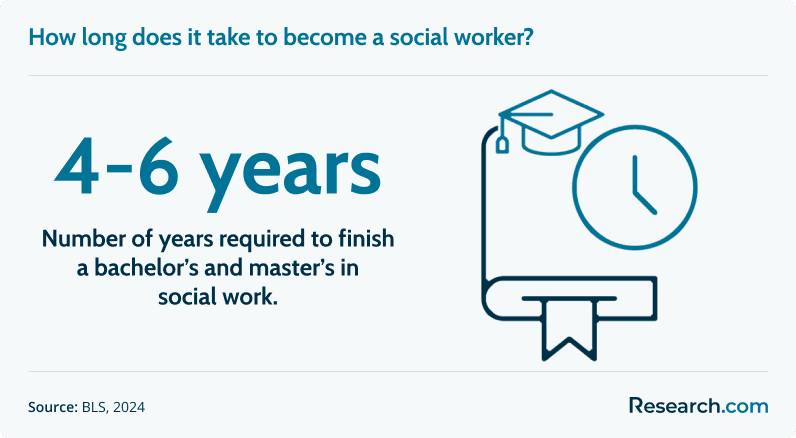
- BSW curriculum: A BSW, whether campus-based or completed through an online social work degree, typically includes about 120 credit hours, combining courses in human behavior, social welfare, ethics, research, policy, and supervised field experience.
- Entry-level roles: Graduates may work in child welfare, substance use programs, public health initiatives, community agencies, family services, and nonprofit organizations.
- Licensure limits: A BSW can support entry-level practice, but becoming a Licensed Clinical Social Worker usually requires an MSW and additional state licensure steps.
A BSW can also be useful for students considering law-adjacent careers because social work builds interviewing, documentation, advocacy, and systems-navigation skills. If you are comparing legal career options, review the difference between a paralegal and a lawyer, including the role of a juris doctor degree and the bar exam.
Which Skills Matter Most in Social Work?
Strong social workers combine empathy with structure. Listening matters, but so do documentation, ethics, crisis judgment, cultural humility, and the ability to work within imperfect systems. The most effective professionals can support clients while also meeting agency, legal, and licensing expectations.
| Skill | Why it matters | How to build it |
| Active listening | Clients often need to share sensitive information before meaningful support is possible. | Practice reflective listening, motivational interviewing, and trauma-informed communication. |
| Assessment and judgment | Social workers must identify risk, strengths, urgent needs, and appropriate services. | Use field placement feedback, supervision, case simulations, and evidence-based assessment tools. |
| Boundary setting | Clear boundaries protect clients, reduce burnout, and support ethical practice. | Review codes of ethics, discuss difficult cases in supervision, and document decisions carefully. |
| Cultural humility | Clients’ experiences are shaped by culture, identity, language, disability, immigration status, income, and community context. | Seek training, reflect on bias, use interpreters appropriately, and learn from community partners. |
| Documentation | Case notes, treatment plans, reports, and referrals affect care continuity and legal compliance. | Ask supervisors for examples, learn agency standards, and write notes promptly and objectively. |
| Collaboration | Social workers often coordinate with schools, courts, hospitals, insurers, shelters, and public agencies. | Develop professional communication habits and learn how each system makes decisions. |
| Emotional resilience | The work can involve grief, crisis, violence, neglect, poverty, and repeated exposure to trauma. | Use supervision, peer support, self-care routines, manageable caseload planning, and continuing education. |
What Certifications and Licenses Do Social Workers Need?
Social work licensing is controlled by states, so requirements are not identical nationwide. In general, the pathway includes an accredited degree, the correct Association of Social Work Boards exam, supervised experience for clinical practice, a state application, and continuing education after licensure.
Education requirements
- Bachelor’s Degree: A BSW from a CSWE-accredited program is commonly the foundation for baccalaureate-level licensure or entry-level social work positions. Coursework usually includes social welfare policy, human behavior, ethics, research, and field education.
- Master’s Degree: An MSW is generally required for advanced, specialized, and clinical social work pathways. MSW students complete advanced coursework and supervised field placements in settings aligned with their practice interests.
Licensing examinations
After completing the required degree, candidates typically take the ASWB exam that matches their education level and licensing goal.
- Bachelors Exam: Commonly used for BSW graduates pursuing Licensed Baccalaureate Social Worker status.
- Masters Exam: Commonly used for MSW graduates pursuing Licensed Master Social Worker credentials.
- Clinical Exam: Commonly required for Licensed Clinical Social Worker licensure and independent clinical practice.
Supervised experience
- During the degree: Social work programs include supervised field education so students can apply classroom learning in agencies, schools, healthcare settings, or community organizations.
- After graduation: For clinical licensure, most states require 2,000 to 4,000 hours of supervised clinical practice after graduation.
State application and renewal
- Application materials: State boards may require transcripts, exam results, supervision records, background checks, fees, and professional references.
- Continuing education: Most states require licensed social workers to complete continuing education during each renewal period.
How Do Social Work Licensing Rules Vary by State?
State licensing rules can differ in license titles, degree requirements, supervision hours, approved supervisors, exam levels, renewal cycles, and continuing education topics. Before enrolling in a program or moving to another state, verify the requirements directly with the state social work board.
Common license categories
- Licensed Bachelor Social Worker: Often tied to a BSW and used for baccalaureate-level practice.
- Licensed Master Social Worker: Typically tied to an MSW and used for advanced nonclinical or supervised practice.
- Licensed Clinical Social Worker: Usually requires an MSW, post-graduate supervised clinical experience, and a clinical licensing exam.
Education expectations
- A BSW is usually required for LBSW licensure.
- An MSW from an accredited program is necessary for LMSW and LCSW licensure.
Examples of supervised practice differences
- Alabama: LCSW candidates must complete at least 24 months of supervised practice.
- Arkansas: LCSW candidates must complete 4,000 hours over 24 months.
- Delaware: Candidates must complete 3,200 hours under supervision, and supervision can be provided by various licensed professionals.
Exams and continuing education
All states require the appropriate Association of Social Work Boards exam. Some jurisdictions may also require state-specific components. Continuing education rules also vary. Illinois requires 30 hours every two years, including topics such as ethics and cultural competence. Arkansas also requires 30 continuing education credits every two years.
If you are considering a related counseling career, a social work degree may help you understand family systems, crisis intervention, and client advocacy. You can compare that route with guidance on how to become a marriage counselor online.
Can an Online DSW Improve a Social Work Career?
An online Doctorate of Social Work can be useful for experienced practitioners who want to move into advanced clinical leadership, agency administration, applied research, program design, teaching, or policy innovation. It is not usually the first credential a new social worker needs. Professionals who already have practice experience and want a flexible doctoral route can compare online DSW programs to understand admission expectations, delivery formats, and career alignment.
Is Macro Social Work a Strong Career Option?
Macro social work is a legitimate and important career path for people who want to improve systems rather than focus only on individual counseling. Macro practitioners may work on policy advocacy, community organizing, grant-funded programs, nonprofit strategy, research, equity initiatives, or public agency planning. This path requires strong writing, data interpretation, stakeholder communication, and policy knowledge. To explore roles beyond direct practice, review macro social work careers.
How Can You Find Affordable Online MSW Programs?
An online MSW can help working adults advance without relocating, but affordability should not be judged by tuition alone. Compare accreditation, total fees, field placement support, transfer credit policies, part-time options, technology requirements, and whether the program meets licensing expectations in your state. A low advertised cost can become less attractive if field placement support is weak or if courses do not align with your licensing plans. Students comparing cost-conscious options can start with affordable online MSW programs.
How Much Does Location Affect Social Worker Pay?
Geography can have a major effect on social worker pay because wages are shaped by cost of living, local budgets, population needs, employer type, union agreements, and competition for licensed professionals. A higher salary in one metro area may not always mean better purchasing power after housing, transportation, taxes, and student loan payments are considered.
- Cost of living: Higher-cost areas may offer higher wages, but expenses can absorb much of the difference.
- Demand for services: Areas with high need for behavioral health, child welfare, aging services, or healthcare support may compete more aggressively for qualified workers.
- Funding sources: Government budgets, Medicaid reimbursement, grants, hospital systems, and nonprofit funding all influence compensation.
- Education and experience: An MSW, clinical license, specialized training, and supervisory experience can improve salary prospects in many regions.
The chart below shows the top paying metropolitan areas in the U.S. for social workers.
What Challenges Should Students Expect in Field Placements?
Field education is one of the most important parts of a social work degree because it turns classroom concepts into supervised practice. It can also be stressful. Students are entering real agencies with real clients, limited resources, time pressure, documentation standards, and ethical complexity.
Common field placement problems and better responses
| Challenge | Why it happens | What students can do |
| Feeling underprepared | Classroom learning may not fully reflect the pace and ambiguity of agency practice. | Ask for orientation materials, review policies early, and bring specific questions to supervision. |
| Weak supervision or communication | Field instructors may be overloaded, or expectations may not be clearly stated. | Request a regular supervision schedule and summarize expectations in writing. |
| Heavy workload | Agencies often face staffing shortages and high service demand. | Clarify student responsibilities, track hours carefully, and tell the school liaison if duties exceed learning goals. |
| Boundary confusion | Students may want to help beyond their role or may struggle with emotionally intense cases. | Use supervision to discuss boundaries, mandated reporting, confidentiality, and self-care. |
| Equity and access barriers | Transportation, unpaid hours, disability accommodations, technology access, and agency culture can affect student success. | Discuss needs early with the program and document placement barriers before they become urgent. |
| University-agency mismatch | Schools and agencies may define student learning, productivity, and evaluation differently. | Use the learning contract as a shared reference point and involve the field office when expectations conflict. |
| External disruptions | Remote service delivery, online learning shifts, public health events, and agency staffing changes can reshape placements. | Stay flexible, document changes, and confirm how modified duties still meet field education requirements. |
How Are School Social Workers Responding to New Student Needs?
School social workers are adapting to changing educational environments by combining crisis response, family engagement, attendance support, behavioral interventions, digital communication tools, and collaboration with teachers and mental health partners. Their work increasingly includes helping students affected by trauma, anxiety, bullying, housing instability, family stress, and learning disruptions. If this setting interests you, compare your background with current school social worker requirements.
How Does the MSW Versus LCSW Distinction Affect Advancement?
An MSW is a graduate degree. An LCSW is a license that usually comes after the MSW, supervised clinical experience, and a clinical exam. This distinction matters because many employers reserve independent therapy, diagnosis-related responsibilities, clinical supervision, and certain leadership roles for licensed clinical social workers. Earning an MSW can expand your qualifications, but LCSW status may be the credential that allows broader clinical authority. For a deeper comparison, review the difference between an MSW and an LCSW.
How Are Social Work and Psychology Different?
Social work and psychology overlap in mental health support, but they are not the same profession. Social work emphasizes clients within families, communities, institutions, policies, and resource systems. Psychology is more centered on assessment, diagnosis, behavioral science, testing, and psychological treatment models. If you are deciding between the two, compare scope of practice, training length, licensure, and daily work. A helpful starting point is this explanation of what psychologists can do that social workers cannot.
What Trends Are Changing Social Work Practice and Education?
Social work is being reshaped by telehealth, digital case management, data-informed service planning, workforce shortages in behavioral health and social services, integrated care models, and employer demand for licensed or specialized professionals. Education programs are also placing more emphasis on trauma-informed practice, interprofessional collaboration, technology use, ethics in virtual care, and evidence-based interventions. Students considering adjacent graduate study can also compare social work with affordable online master's in psychology programs.
Can Clinical Psychology Knowledge Strengthen Social Work Practice?
Clinical psychology concepts can help social workers understand assessment, diagnosis, treatment planning, behavioral patterns, and evidence-based interventions. Social workers still bring a distinct systems perspective, focusing on social conditions, family context, community resources, and advocacy. Professionals who want to broaden their understanding of clinical theory can compare advanced psychology training options such as online clinical psychology PsyD programs, while remembering that each profession has separate licensure standards.
Can Organizational Psychology Help Social Work Leaders?
Social work leaders manage teams under pressure, often in resource-limited environments. Organizational psychology can strengthen leadership by improving supervision, staff motivation, change management, conflict resolution, hiring, evaluation, and workplace culture. Administrators who want more formal preparation in these areas may compare social work leadership training with an affordable online master's program in organizational psychology.
How Do Social Workers Protect Themselves From Emotional Strain?
Social workers often support clients during crisis, grief, trauma, poverty, abuse, illness, housing instability, and family conflict. Emotional stress is not a personal failure; it is an occupational risk that requires professional habits, supervision, and organizational support.
- Use consistent self-care routines: Sleep, movement, nutrition, medical care, and time away from work help sustain long-term practice.
- Maintain professional boundaries: Clear professional boundaries can reduce burnout risk by helping social workers define appropriate roles, availability, and emotional limits.
- Rely on supervision and peer support: Discussing hard cases with supervisors and colleagues helps social workers process emotions, reduce isolation, and make better decisions.
- Practice grounding and mindfulness techniques: Breathing exercises, brief reflection, and intentional transitions between cases can help regulate stress during demanding days.
- Keep building competence: Continuing education can reduce helplessness by giving practitioners better tools for crisis intervention, documentation, risk assessment, and specialized populations.
- Identify personal stress triggers: Recognizing patterns in workload, client situations, administrative pressure, or personal history helps social workers create more realistic coping plans.
The chart below shows the Maslach Burnout Inventory (MBI) scores for social workers:
How Can Continuing Education Support Career Growth?
Continuing education helps social workers keep licenses active, stay current with practice standards, and prepare for new responsibilities. It is especially important for professionals in clinical practice, supervision, school settings, healthcare, child welfare, and specialized populations. Even graduates from the easiest social work programs to get into must continue building competence after graduation.
The National Association of Social Workers offers continuing education in formats such as webinars, podcasts, and live presentations. Members can access discounted options, and NASW provides more than 400 accredited courses covering topics that support professional growth. Tools such as the CE Tracker can also help practitioners organize licensing renewal requirements.
Social workers may also complete continuing education through universities, professional associations, online providers, conferences, and state-approved organizations. Before paying for a course, confirm that it is accepted by your licensing board and that it covers required topics such as ethics, cultural competence, supervision, trauma, or clinical practice when applicable.
Questions to ask before choosing continuing education
- Will my state licensing board accept this course?
- Does it meet a required topic area for my renewal cycle?
- Will it help me move toward a promotion, specialty, or new license level?
- Is the provider reputable and transparent about approval status?
- Does the format fit my schedule, learning style, and documentation needs?
How Can Doctoral Degrees Shape Policy and Innovation in Social Work?
Advanced doctoral study can help experienced social workers connect practice knowledge with applied research, organizational strategy, and policy development. A DSW may be useful for professionals who want to lead programs, evaluate interventions, influence systems, teach practitioners, or design service models for complex community needs. Students looking for flexible doctoral options can compare online DSW programs.
Why Consider Accredited Online BSW Programs?
Accredited online BSW programs can make social work education more accessible for students who need flexibility because of work, family, geography, or scheduling constraints. A strong online BSW should still include rigorous coursework, faculty support, ethical training, community engagement, crisis response preparation, and supervised field education. Prospective students should prioritize accreditation and field placement support before convenience. To compare cost-conscious options, review online BSW programs.
How to Choose the Right Social Work Path
The right path depends on your preferred population, work environment, tolerance for crisis work, interest in therapy, willingness to pursue licensure, and financial plan. Use the questions below before choosing a degree or specialization.
| If you want... | Consider... | Think carefully about... |
| To start working quickly after college | BSW-level case management, child welfare, family services, community outreach | Lower advancement ceiling without an MSW in some settings |
| To provide therapy independently | MSW followed by clinical supervision and LCSW licensure | Time, exam preparation, supervision availability, and state rules |
| To work in hospitals or healthcare | Medical social work, hospice, palliative care, behavioral health integration | Fast-paced environments, discharge pressure, insurance and benefits systems |
| To support children and students | Child welfare, school social work, family services | Mandated reporting, family conflict, school district requirements |
| To change systems and policy | Macro social work, public policy analysis, nonprofit leadership | Need for writing, research, data, coalition building, and political awareness |
| To lead organizations | Administration, program management, doctoral study, healthcare administration | Budgeting, supervision, compliance, staff burnout, and measurable outcomes |
Common Mistakes to Avoid
- Choosing a program without checking accreditation: Accreditation can affect licensure eligibility, transfer options, and employer recognition.
- Assuming every online program works for your state: Online delivery does not guarantee that a program meets your state’s field placement or licensure requirements.
- Looking only at tuition: Include fees, textbooks, travel to field placements, lost work hours, exam fees, supervision costs, and license renewal costs.
- Ignoring field placement support: Field education can determine how prepared you are and whether you can complete the degree on schedule.
- Confusing MSW and LCSW: The MSW is a degree; the LCSW is a license with additional requirements.
- Assuming salaries are guaranteed: Pay varies by region, employer, license level, funding source, experience, and specialization.
- Underestimating emotional demands: Meaningful work can still be stressful. Build support systems early.
- Relying only on rankings: Rankings can be useful, but your best program is the one that fits accreditation, cost, field placement, licensure, schedule, and career goals.
Graduate Perspectives on Social Work Careers
-
: "
Social work gave me a career where I can see the effect of my work in real time. Some days are difficult, but helping families find stability or watching clients regain confidence keeps me grounded in why I chose this field. — Harold
"
-
: "
I chose social work because I wanted advocacy and direct service in the same profession. Working with different communities has pushed me to become more patient, more practical, and more aware of how systems affect everyday life. — Meghan
"
-
: "
The work is emotionally demanding, but it is also deeply human. Supporting someone through a hard season and seeing them move toward safety or healing is the kind of purpose I was looking for. — Sophia
"
Key Insights
- A social work degree can lead to many careers, but the strongest choice depends on whether you want direct service, clinical therapy, school support, healthcare coordination, community advocacy, administration, or policy work.
- A BSW can qualify graduates for entry-level roles, while an MSW is usually needed for advanced practice and is commonly required before clinical licensure.
- Independent clinical practice typically requires more than a degree: candidates usually need supervised post-graduate experience, the appropriate ASWB exam, and state licensure.
- Salary ranges vary widely by specialization, location, employer, education, license level, and experience. Do not treat any salary figure as guaranteed.
- Accreditation, field placement quality, licensing alignment, total cost, and state requirements are more important than convenience alone when choosing a program.
- Social work can be highly meaningful, but students should prepare for documentation, crisis exposure, complex systems, and emotional stress.
- Continuing education, supervision, boundaries, and peer support are essential for long-term career sustainability.
References:
- Bureau of Labor Statistics, U.S. Department of Labor. Occupational Outlook Handbook, Social Workers. https://www.bls.gov/ooh/community-and-social-service/social-workers.htm
- Glassdoor. (2024). Hospice and palliative care social worker salary. Retrieved December 26, 2024, from https://www.glassdoor.com/Salaries/hospice-and-palliative-care-social-worker-salary-SRCH_KO0,41.htm
- Iosim, I., Runcan, P., Dan, V., Nadolu, B., Runcan, R., & Petrescu, M. (2021). The role of supervision in preventing burnout among professionals working with people in difficulty. International Journal of Environmental Research and Public Health, 19(1), 160. https://doi.org/10.3390/ijerph19010160
- Salary.com. (2024). Child, family, or school social worker salary in the United States. Retrieved December 26, 2024, from https://www.salary.com/research/salary/posting/child-family-or-school-social-worker-salary
- Salary.com. (2024). Clinical social worker - LCSW salary in the United States. Retrieved December 26, 2024, from https://www.salary.com/research/salary/alternate/clinical-social-worker-lcsw-salary
- Salary.com. (2024). Community social worker - MSW salary in the United States. Retrieved December 26, 2024, from https://www.salary.com/research/salary/alternate/community-social-worker-msw-salary
- Salary.com. (2024). Entry-level social worker. Retrieved December 26, 2024, from https://www.salary.com/tools/salary-calculator/entry-level-social-worker
- Salary.com. (2024). Medical social worker (MSW) salary in the United States. Retrieved December 26, 2024, from https://www.salary.com/research/salary/benchmark/medical-social-worker-msw-salary
- Salary.com. (2024). Public policy analyst I salary in the United States. Retrieved December 26, 2024, from https://www.salary.com/research/salary/alternate/public-policy-analyst-i-salary
- Salary.com. (2024). School social worker salary in the United States. Retrieved December 26, 2024, from https://www.salary.com/research/salary/recruiting/school-social-worker-salary
- Salary.com. (2024). School social worker salary in the United States. Retrieved December 26, 2024, from https://www.salary.com/research/salary/recruiting/school-social-worker-salary
- Salary.com. (2024). Social work administrator salary in the United States. Retrieved December 26, 2024, from https://www.salary.com/research/salary/hiring/social-work-administrator-salary
- ZipRecruiter. (2024). Mental health and substance abuse social worker salary. Retrieved December 26, 2024, from https://www.ziprecruiter.com/Salaries/Mental-Health-And-Substance-Abuse-Social-Worker-Salary
- ZipRecruiter. (2024). Military social worker salary. Retrieved December 26, 2024, from https://www.ziprecruiter.com/Salaries/Military-Social-Worker-Salary
Other Things You Should Know About What One Can Do With a Social Work Degree
In 2027, social workers face challenges like increasing case complexity, resource limitations, and adapting to digital technologies. They can navigate these by seeking continuous education, embracing technology, and advocating for systemic changes to enhance service delivery and access.
In 2027, social workers can pursue roles such as clinical social workers, child and family social workers, school social workers, community social workers, and medical social workers. They can also specialize in mental health, substance abuse, eldercare, policy advocacy, or research, depending on their areas of interest and expertise.
In 2027, a social work degree equips students with skills in counseling, case management, and advocacy. Graduates can pursue careers in healthcare, education, or community services, addressing diverse issues such as mental health, substance abuse, and family dynamics. The degree emphasizes adaptability and cultural competency relevant to today's complex social challenges.