2027 Micro, Mezzo, Macro Social Work: Definitions, Differences & Levels

Co-Founder and Chief Data Scientist
Choosing between micro, mezzo, and macro social work is one of the first major decisions an aspiring social worker makes. The choice affects the clients you serve, the degree you may need, the license you pursue, the settings where you can work, and the kind of change you will create. It also matters for 2026 career planning because employers increasingly look for social workers who understand direct service, community systems, data-informed practice, telehealth, program evaluation, and policy advocacy—not just one narrow task.
This guide explains how the three levels of social work practice differ, where they overlap, what education and licensing usually apply, and how to decide which path fits your strengths. It is designed for students comparing social work degrees, BSW and MSW graduates planning a specialization, and working professionals considering a shift from clinical practice to community leadership or policy work. The high level of credentialing in the field shows why this decision matters: in 2023, 93% of National Association of Social Worker (NASW) members held a license, certification, or registration in their states.
Quick Answer: Micro vs. Mezzo vs. Macro Social Work
Micro social work serves individuals, families, and small groups through counseling, therapy, crisis support, and case management. Mezzo social work serves groups, organizations, schools, neighborhoods, and communities through programs, support groups, outreach, and resource coordination. Macro social work addresses large-scale problems through policy, research, advocacy, systems reform, and organizational leadership.
| Practice level | Main focus | Common work | Best fit for people who want to... |
| Micro social work | Individuals, families, and small groups | Counseling, therapy, assessment, case management, crisis intervention | Work directly with clients and see individual-level progress |
| Mezzo social work | Groups, organizations, and communities | Program coordination, group facilitation, school or community initiatives, outreach | Build programs and strengthen community support systems |
| Macro social work | Policies, institutions, systems, and populations | Advocacy, research, policy analysis, community development, leadership | Change rules, systems, funding priorities, and public responses to social problems |
Key Things You Should Know About Micro, Mezzo, Macro Social Work
- Micro practice is the most client-facing level. It centers on helping individuals, families, and small groups manage challenges such as trauma, mental illness, addiction, family conflict, illness, abuse, housing instability, and school-related concerns. Strong listening skills, empathy, boundaries, documentation habits, and clinical judgment are essential.
- Mezzo practice connects people through programs and community structures. Social workers at this level may lead support groups, design prevention programs, coordinate school or nonprofit services, manage volunteers, or help communities respond to shared needs. Useful skills include facilitation, partnership building, program design, community engagement, and evaluation.
- Macro practice works on the causes and systems behind social problems. Macro social workers influence policy, conduct research, analyze programs, advocate for legislation, and organize large-scale change. This path requires comfort with data, writing, public communication, coalition building, and social justice advocacy.
- What does social work mean in practice?
- What are the three levels of social work practice?
- How are micro, mezzo, and macro social work different?
- Can one social worker practice at more than one level?
- What degree do you need for each social work level?
- How should you choose a social work practice level?
- How can continuing education strengthen social work skills?
- How can social workers reduce burnout and build resilience?
- How should you compare affordable online BSW programs?
- Which specialized social work roles are becoming more visible?
- How does licensing affect career growth and salary?
- How is a social worker different from a psychologist?
- What ethical issues appear across practice levels?
- What jobs align with micro, mezzo, and macro social work?
- What salaries can social workers expect by practice level?
- How do social workers measure outcomes?
- What trends are shaping social work careers?
- How can interdisciplinary graduate study expand social work impact?
- How can organizational psychology support social work leadership?
- What are the key insights for choosing a practice level?
What does social work mean in practice?
Social work is a licensed helping profession focused on improving well-being, protecting vulnerable people, connecting clients to resources, and changing conditions that create harm. Social workers help individuals, families, groups, organizations, and communities respond to problems such as poverty, illness, addiction, abuse, trauma, mental health needs, discrimination, disability, family instability, and social injustice.
The profession is broad. Social workers are employed in schools, hospitals, behavioral health clinics, child welfare agencies, courts, correctional systems, nonprofits, community organizations, government agencies, military and veterans services, aging services, policy organizations, and private practice. During the 2021-22 academic year, 479 programs granted 17,972 social work bachelor's degrees, averaging 37 degrees per program.
People drawn to social work often compare it with other service-centered careers. If you are also considering education-focused work, Research.com’s guide to the benefits of being a teacher can help you compare how advocacy, support, and public service appear in another profession.
Core responsibilities of social workers
- Assessment: Identifying a person’s needs, risks, strengths, supports, and environmental barriers.
- Counseling and therapy: Helping clients process experiences, build coping skills, improve relationships, and manage symptoms when the role and license allow it.
- Case management: Coordinating services such as housing, health care, food assistance, disability supports, education services, transportation, or legal referrals.
- Advocacy: Helping clients and communities access rights, benefits, accommodations, and fair treatment.
- Community organizing: Working with residents, agencies, schools, faith groups, and local leaders to respond to shared problems.
- Policy and systems work: Researching problems, improving programs, advising decision-makers, and supporting laws or institutional changes that reduce inequity.
What are the three levels of social work practice?
The three levels of social work practice describe the scale of intervention: micro, mezzo, and macro. They are not rigid boxes. Instead, they help students and professionals understand whether the primary target of change is a person, a group or community, or a larger system. Among populations served by social workers, mental health settings were most common at 38%, followed by social services/child welfare at 32%, and hospitals at 29%.
These levels also help clarify specialization. Just as healthcare careers often require focused preparation—such as the pathway described in Research.com’s guide on what do you need to become a women's health np—social work careers often require intentional choices about population, setting, license, and practice level.
Micro Social Work
Micro social work involves direct service with individuals, families, couples, and small groups. This is the level many people picture first: a social worker sitting with a client, assessing needs, developing a plan, providing counseling or therapy, coordinating services, and helping the client move through a difficult period.
- A clinical social worker provides therapy to a client experiencing depression.
- A hospital social worker helps a family plan care after a child’s diagnosis.
- A substance abuse counselor supports a client working toward recovery.
Mezzo Social Work
Mezzo social work focuses on groups, organizations, schools, neighborhoods, and communities. The work is still people-centered, but the intervention is designed for a group rather than a single client. Mezzo practitioners often build or improve programs that help many people with a shared need.
- A school social worker creates a bullying prevention initiative.
- A nonprofit social worker organizes a community health fair.
- A group facilitator leads a support group for caregivers, survivors, parents, students, or people in recovery.
Macro Social Work
Macro social work targets laws, policies, funding systems, institutions, research agendas, and social structures. Rather than providing direct counseling, macro practitioners work to change the conditions that shape client outcomes across entire populations.
- A policy advocate works for stronger affordable housing protections.
- A researcher studies how poverty affects child development.
- A systems advocate pushes for reform in the criminal justice system.
How are micro, mezzo, and macro social work different?
The main difference is the size and target of the intervention. Micro practice asks, “What does this person or family need?” Mezzo practice asks, “What does this group, organization, or community need?” Macro practice asks, “What policy, institution, or social condition must change?” Among baccalaureate degree students in 2022-2023 academic year, the top certificate program focused on micro social work, which was child welfare with 572 enrollees.
Students exploring social work education should pay close attention to field placements, electives, and licensure preparation because those elements often determine whether a program is strongest for direct practice, community practice, or policy-oriented work.
| Decision factor | Micro social work | Mezzo social work | Macro social work |
| Primary client or target | Individual clients, families, couples, and small groups | Groups, schools, agencies, neighborhoods, and community networks | Policies, systems, institutions, laws, and population-level problems |
| Typical methods | Clinical assessment, therapy, case planning, crisis response, referrals | Program development, group work, outreach, coalition building, resource coordination | Research, policy analysis, legislative advocacy, systems planning, organizational leadership |
| Common settings | Clinics, hospitals, schools, child welfare agencies, private practice, behavioral health programs | Community centers, schools, nonprofits, public health programs, social service agencies | Government agencies, advocacy organizations, research centers, foundations, universities, policy groups |
| Success looks like | A client stabilizes, gains resources, improves functioning, or reaches treatment goals | A program reaches the right people, improves access, strengthens support, or reduces community-level barriers | A policy changes, a system improves, funding shifts, or inequities are addressed at scale |
| Strongest fit | People who want direct client contact and clinical problem-solving | People who enjoy group dynamics, program work, and community collaboration | People who want to influence laws, institutions, research, and structural change |
Micro practice is usually the most individualized. It is often linked to counseling, therapy, diagnostic assessment, crisis support, and case management. In many states, clinical micro practice requires an MSW, supervised experience, and licensure.
Mezzo practice sits between direct care and systems change. A mezzo social worker may notice patterns across individual cases—such as recurring food insecurity, school absenteeism, or limited transportation—and respond by developing a support group, referral network, school program, or community partnership.
Macro level social work takes the broadest view. It focuses on the rules, funding systems, research evidence, and institutional practices that shape outcomes for many people at once. This level can also overlap with data, measurement, and behavioral science; Research.com’s psychometrician career guide offers a related look at how assessment and research can inform broader social and policy decisions.
Can one social worker practice at more than one level?
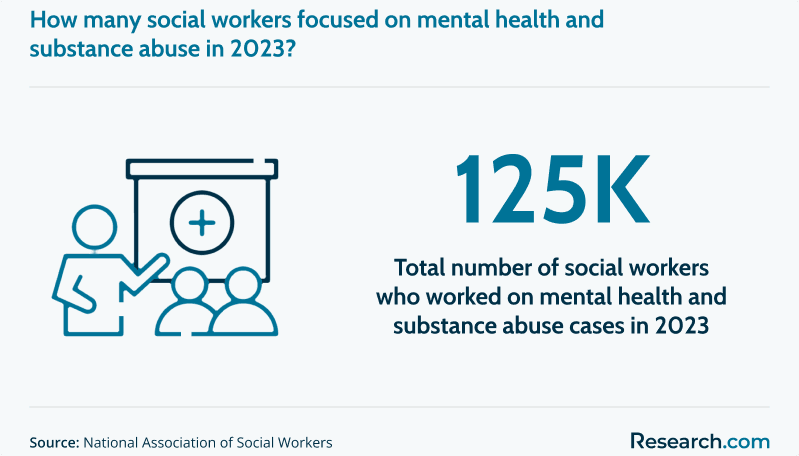
Yes. Many social workers move across practice levels in the same job or over the course of their careers. Social problems do not stay neatly separated. A client’s mental health concern may be tied to housing, transportation, discrimination, family stress, school policies, medical access, or employment instability. In 2023, more than 125,000 social workers focused on mental health and substance abuse to help individuals, families, and communities find ways to recover, illustrating how one practice area can involve micro, mezzo, and macro concerns.
Why cross-level practice is common
- Client problems are connected to systems. A family experiencing homelessness may need direct counseling, community shelter referrals, and policy advocacy for affordable housing.
- Effective practice often requires multiple interventions. A school social worker may counsel a student, facilitate a parent group, and help revise school discipline procedures.
- Career growth often expands the scope of impact. Many social workers begin with direct practice, then move into supervision, program management, community leadership, research, or advocacy.
Examples of blended practice
- Micro plus mezzo: A therapist offers individual counseling and later starts a support group for clients facing similar challenges.
- Mezzo plus macro: A community organizer documents local service gaps and uses that evidence to advocate for policy changes.
- Micro plus mezzo plus macro: A social worker counsels clients, develops a community program, and supports legislation related to the same issue.
Why this flexibility matters
Social workers who understand all three levels can diagnose problems more accurately. They are less likely to blame clients for barriers created by systems, and they are better prepared to design interventions that address immediate needs and root causes. Cross-level experience can also make professionals more competitive for supervisory, administrative, and policy roles.
What degree do you need for each social work level?
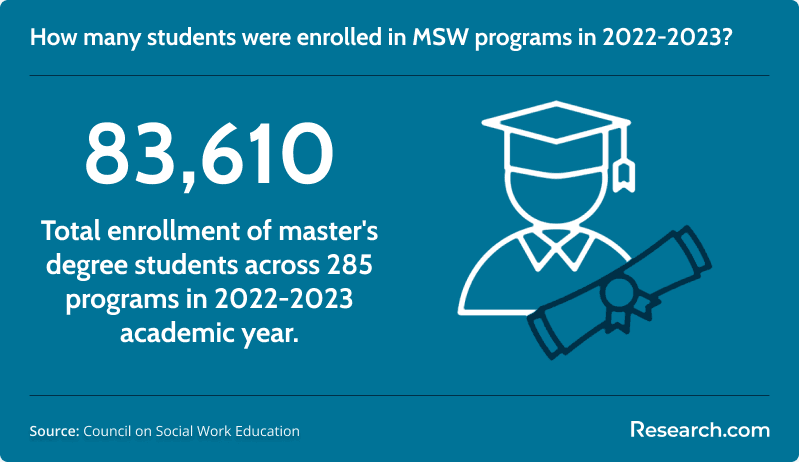
Degree requirements depend on the job, state rules, employer expectations, and whether the work involves clinical diagnosis or therapy. A bachelor’s degree can support some entry-level and community-based roles, but the typical requirement among social workers who carry out many professional interventions is a master's degree. In the 2022-2023 academic year, there was a total enrollment of 83,610 master's degree students across 285 programs.
If speed matters, some students compare accelerated options such as a fast track social work degree online. However, speed should never be the only factor. Accreditation, field placement quality, licensure alignment, and total cost are often more important than finishing quickly.
| Practice goal | Common degree path | Licensure considerations | Important caution |
| Clinical micro practice | MSW is typically required, especially for therapy and clinical casework | Most jurisdictions require licensure, supervised clinical experience, and a licensing exam | Confirm that the program supports clinical licensure in the state where you plan to work |
| Entry-level mezzo practice | BSW may be sufficient for some roles in agencies, schools, nonprofits, and community programs | Some states offer BSW-level licensure, such as LBSW | Program coordination or group clinical roles may prefer or require an MSW |
| Advanced mezzo leadership | MSW is often preferred for program development, supervision, administration, and advanced group work | Licensure needs vary based on duties and state rules | Field placements should match the kind of organization or population you want to serve |
| Macro policy, research, or leadership | BSW can be a starting point; MSW is often preferred or required for advanced roles | Licensure may be less central than in clinical work, but credentials can still strengthen credibility | Some roles may value public administration, public health, law, research, or doctoral training |
Micro Social Work Degree Path
Students who want to provide therapy, counseling, clinical assessment, or advanced case management usually need an MSW. A clinical social work masters can prepare students for direct practice, but graduates must still follow their state’s licensure process before practicing independently in clinical roles.
Mezzo Social Work Degree Path
A BSW can qualify graduates for some entry-level positions in social services, community programs, schools, and nonprofit agencies. Some mezzo roles, especially those involving program leadership, group clinical services, or supervision, may require an MSW. Students interested in disability services can review the steps to become a disability social worker, since disability practice often blends individual advocacy, family support, organizational coordination, and policy awareness.
Macro Social Work Degree Path
A BSW may open the door to advocacy, outreach, and entry-level policy-related work, but many advanced macro positions require an MSW or another graduate degree. Research, leadership, and policy roles may also benefit from public administration, public health, law, or doctoral study. Research on macro-level positions has also emphasized the importance of how macro content is taught and valued in social work education.
Doctoral study, such as a DSW or PhD, may be appropriate for social workers interested in university teaching, advanced research, executive leadership, or large-scale systems innovation.
How should you choose a social work practice level?
The best practice level depends on the kind of problem you want to solve, how close you want to be to direct client contact, what credentials you are willing to pursue, and which work environment fits your personality. If you are at the beginning of your education, an online degree in social work can be a starting point, but you should compare programs with your intended practice level in mind.
Choose micro social work if you want direct client impact
- You are comfortable with emotionally intense conversations and complex personal histories.
- You want to build long-term helping relationships with clients or families.
- You are interested in therapy, mental health, substance abuse, child welfare, healthcare, school services, trauma work, or crisis response.
- You are willing to meet licensure requirements if your goal is clinical practice.
Choose mezzo social work if you want to build programs and community support
- You enjoy facilitating groups and bringing people together around shared needs.
- You want to work in schools, nonprofits, public health programs, community agencies, or local coalitions.
- You are interested in prevention, outreach, group interventions, program design, and service coordination.
- You like seeing patterns across clients and turning those patterns into practical community responses.
Choose macro social work if you want systems-level change
- You are motivated by policy, research, legislation, funding, organizational change, or social justice campaigns.
- You enjoy writing, data analysis, public speaking, advocacy, and coalition work.
- You want to address root causes rather than only respond to immediate crises.
- You are comfortable with impact that may take longer to measure but can affect many people.
Questions to ask before choosing a path
- Do I want most of my workday to involve direct client contact, group coordination, or systems-level strategy?
- Am I prepared to earn an MSW and complete supervised hours if clinical licensure is required?
- Which populations do I most want to serve: children, families, older adults, people with disabilities, people in recovery, students, veterans, immigrants, or communities affected by poverty or discrimination?
- Would I rather help one person deeply, build a program for a community, or change policies that affect many people?
- What field placements, internships, or volunteer roles can help me test this choice before committing?
How can continuing education strengthen social work skills?
Continuing education helps social workers keep their knowledge current, meet licensing requirements when applicable, and build specialized skills. For micro practitioners, continuing education may focus on trauma-informed care, telehealth ethics, substance abuse treatment, family therapy, crisis response, or culturally responsive practice. Mezzo practitioners may study program evaluation, grant writing, group facilitation, community engagement, and nonprofit leadership. Macro practitioners may pursue training in policy analysis, research methods, advocacy strategy, data interpretation, and organizational change.
Professionals who want additional graduate preparation while managing work obligations may compare online MSW programs affordable options. Cost matters, but students should also review accreditation, field placement support, licensure alignment, faculty expertise, and whether the curriculum matches their intended practice level.
How can social workers reduce burnout and build resilience?
Social work can involve high caseloads, secondary trauma, crisis exposure, administrative pressure, limited resources, and moral distress. Burnout prevention should be treated as a professional responsibility, not a personal weakness. Useful strategies include regular supervision, peer consultation, manageable boundaries, realistic caseload planning, reflective practice, mental health support, time away from work, and clear escalation procedures for crisis cases.
Resilience also depends on the workplace. A social worker can practice self-care and still burn out in a poorly staffed or poorly supervised environment. When evaluating jobs, ask about caseload expectations, documentation time, crisis coverage, safety procedures, supervision frequency, training support, and turnover. Social workers pursuing leadership roles may consider advanced preparation such as online DSW programs, especially if they want to improve systems that contribute to burnout.
How should you compare affordable online BSW programs?
An affordable online BSW can be a practical route into social work, but price alone is not enough. The first question is accreditation. Then evaluate whether the curriculum, field education, student support, and state authorization align with your career goals. If you plan to pursue licensure or an MSW later, the wrong program can cost more in delays than it saves in tuition.
| What to check | Why it matters | Question to ask the school |
| Accreditation | Accreditation can affect MSW admission, licensure pathways, employer recognition, and field placement quality | Is the social work program accredited, and where can I verify that status? |
| Field placement support | Social work education depends heavily on supervised practice experience | Does the school help online students secure placements near where they live? |
| Total cost | Tuition is only one part of affordability | What are the full costs, including fees, books, technology, travel, and placement requirements? |
| Transfer credit policy | Accepted credits can reduce time and cost | How many credits can I transfer, and how will they apply to the major? |
| Career and licensure alignment | State rules and employer expectations vary | Does this program support my intended state and career path? |
Students comparing low-cost options can use Research.com’s affordable social work bachelor degree online resource as one starting point, then verify details directly with each institution.
Which specialized social work roles are becoming more visible?
Specialization is increasingly important because social workers serve complex populations in complex systems. Emerging and expanding areas include forensic social work, telehealth counseling, school-based mental health support, disability advocacy, immigrant and refugee services, substance abuse prevention, gerontology, integrated healthcare, and community violence prevention.
School settings remain a major pathway for social workers who want to combine micro and mezzo practice. Students interested in education-based services can review how to become a school social worker to understand how preparation, licensure, and school responsibilities may differ from other social work roles.
How does licensing affect career growth and salary?
Licensing can shape what services a social worker may legally provide, whether they can practice independently, which jobs they qualify for, and how employers classify compensation. Clinical licensing is especially important for micro social workers who want to provide therapy or diagnose and treat mental health conditions where state law allows. Licensing can also support advancement into supervision, private practice, healthcare roles, and specialized clinical positions.
Licensure requirements differ by state, so students should not assume that one program or credential works everywhere. Before enrolling, ask whether the program’s curriculum and field education meet the requirements in the state where you plan to work. To understand how credentials can affect compensation, compare the discussion of MSW vs LCSW salary.
How is a social worker different from a psychologist?
Social workers and psychologists both support mental and emotional well-being, but their training and professional emphasis differ. Social workers are trained to view clients in context: family, school, neighborhood, culture, policy, income, housing, health systems, discrimination, and access to services. Psychologists often focus more heavily on psychological assessment, diagnosis, testing, research, and therapy.
In practice, both professions may provide therapy depending on license and setting, but social work tends to place stronger emphasis on resource connection, advocacy, case management, and systems change. For a fuller comparison, review Research.com’s guide to the social worker vs psychologist difference.
What ethical issues appear across practice levels?
Ethical judgment is central to every level of social work. At the micro level, common issues include confidentiality, informed consent, boundaries, mandated reporting, dual relationships, documentation, and client self-determination. At the mezzo level, ethical concerns may involve group confidentiality, fair access to programs, conflicts among stakeholders, and representation of community interests. At the macro level, social workers must avoid using data or advocacy strategies in ways that misrepresent affected populations or reinforce inequity.
Interdisciplinary learning can sharpen ethical reasoning, especially for social workers working closely with mental health systems. Students comparing adjacent fields may explore affordable online master's in clinical psychology programs, while remembering that psychology and social work have different training models and licensure paths.
What jobs align with micro, mezzo, and macro social work?
Job titles do not always map perfectly to one practice level. A school social worker, for example, may counsel students, run groups, and advise on school policy. Still, the following categories can help you compare common career directions.
Micro Social Work Careers
- Clinical Social Worker: Provides therapy, assessment, counseling, and treatment planning for individuals, families, or groups, often in mental health, substance abuse, healthcare, or child welfare settings.
- Case Manager: Coordinates services and helps clients access housing, benefits, medical care, behavioral health services, transportation, or other supports.
- Therapist: Offers individual, couples, family, or group therapy when properly licensed and qualified.
- Child Welfare Social Worker: Responds to concerns involving abuse, neglect, safety, family preservation, foster care, or permanency planning.
- Medical Social Worker: Supports patients and families in hospitals or healthcare settings, including discharge planning, crisis support, and resource coordination.
- School Social Worker: Helps students and families address attendance, behavior, mental health, family stress, academic barriers, and school-based support needs.
Mezzo Social Work Careers
- Community Organizer: Works with residents and local partners to identify needs, mobilize resources, and advocate for community improvements.
- Program Coordinator: Designs, implements, tracks, and improves services within an agency, school, nonprofit, or community setting.
- Group Facilitator: Leads support groups, educational groups, prevention workshops, or therapeutic groups when qualified.
- Community Health Worker: Connects people with health resources and provides education that supports prevention and access.
- Youth Development Specialist: Supports young people through school, community, mentoring, prevention, and enrichment programs.
Macro Social Work Careers
- Policy Analyst: Studies social policies, evaluates their effects, and recommends improvements.
- Community Development Specialist: Helps communities plan and implement social and economic development strategies.
- Advocate: Works to influence public policy, institutional decisions, or funding priorities for a population or issue.
- Researcher: Studies social problems, evaluates programs, and produces evidence that can guide practice or policy.
- Program Director: Leads social service programs, manages staff, oversees budgets, and evaluates outcomes.
- Lobbyist: Communicates with policymakers and coalitions to support specific legislative or regulatory changes.
What salaries can social workers expect by practice level?
Social worker salary depends on location, employer type, education, license, years of experience, specialization, and job responsibilities. Clinical licensure, supervisory duties, healthcare settings, government roles, private practice, and leadership positions can all affect pay. The figures below are broad salary expectations, not guarantees.
- Location: Pay often reflects local cost of living, agency funding, and demand for social workers.
- Experience: New graduates usually earn less than licensed, specialized, or supervisory professionals.
- Education: An MSW generally creates access to more advanced roles than a BSW alone.
- Credentials: Licensure and specialized certifications can improve eligibility for higher-responsibility roles.
- Employer: Nonprofits, hospitals, schools, government agencies, and private practices may use different compensation structures.
| Entry-level | Mid-career | Experienced | |
| Micro Social Work | $30,000 - $45,000 | $50,000 - $70,000 | $80,000+ |
| Mezzo Social Work | $35,000 - $50,000 | $55,000 - $80,000 | $90,000+ |
| Macro Social Work | $40,000 - $60,000 | $65,000 - $90,000 | $100,000+ |
How do social workers measure outcomes?
Outcome measurement helps social workers know whether an intervention is working and whether changes should be made. At the micro level, outcomes may include symptom reduction, improved safety, stable housing, treatment adherence, school attendance, family functioning, or client-defined goals. At the mezzo level, social workers may track program participation, retention, satisfaction, referral completion, community engagement, or service access. At the macro level, outcomes may involve policy adoption, funding changes, population-level indicators, implementation quality, or measurable reductions in barriers.
Good evaluation uses both numbers and lived experience. Surveys, validated assessment tools, administrative data, interviews, focus groups, case reviews, and community feedback can all be useful when applied ethically. Students who want practical training in assessment and evaluation may compare options such as the easiest MSW online program, while also reviewing quality, accreditation, and field placement fit.
What trends are shaping social work careers?
Social work demand is influenced by mental health needs, substance abuse treatment, aging populations, healthcare integration, school-based services, housing instability, child welfare, community violence, policy debates, and the growth of telehealth. Interest in social work education is also rising, with bachelor's degree enrolment climbing by 73.1% and master's degree enrollment increasing by 64.7% in the academic year 2022-2023.
Micro Social Work Trends
Micro practice is being shaped by demand for mental health and substance abuse services, telehealth, trauma-informed care, integrated healthcare, and culturally responsive practice. Social workers in healthcare and behavioral health settings may increasingly collaborate with nurses, physicians, psychologists, peer specialists, and community health workers. For comparison with another interdisciplinary healthcare path, students can review a functional medicine nurse practitioner career guide.
Mezzo Social Work Trends
Mezzo practice is increasingly tied to prevention, community health, school-based supports, social determinants of health, coalition building, and program evaluation. Employers may expect social workers to understand how to coordinate partners, use data to improve programs, and build trust with communities that have experienced service gaps or institutional harm.
Macro Social Work Trends
Macro practice is becoming more important as social problems require policy, funding, and institutional responses. Macro social workers are vital in shaping policies related to poverty, inequality, resource access, healthcare, housing, child welfare, criminal justice, and civil rights. Strong writing, research, communication, and coalition-building skills are central to this work.
How can interdisciplinary graduate study expand social work impact?
Some social workers strengthen their impact by combining social work with another field, such as public health, education, psychology, law, public administration, data analysis, or organizational leadership. Interdisciplinary study can be especially useful for professionals moving into research, policy, healthcare leadership, school systems, behavioral health administration, or program evaluation.
Clinical social workers interested in deeper psychological training may compare options such as the best PsyD programs online, while keeping in mind that PsyD and MSW programs prepare graduates for different professional identities, licenses, and scopes of practice.
How can organizational psychology support social work leadership?
Organizational psychology can help social workers improve team communication, staff morale, supervision, change management, leadership, workplace culture, and program performance. These skills are valuable for mezzo and macro social workers who manage programs, lead agencies, evaluate services, or respond to burnout and turnover.
Professionals interested in leadership and workplace systems can explore affordable online masters organizational psychology programs as a related path. This kind of preparation can complement social work by strengthening skills in organizational assessment, evidence-based management, and workforce development.
Common mistakes to avoid when choosing a social work path
| Mistake | Why it can hurt your career | Better approach |
| Choosing a program without checking accreditation | It may limit licensure options, MSW admission, field placements, or employer recognition | Verify accreditation before applying and ask how it supports your state and career goal |
| Assuming every online program meets licensure requirements | Licensure rules vary by state and role | Ask the program and your state licensing board before enrolling |
| Focusing only on tuition | Fees, placement travel, lost work time, and delayed graduation can raise total cost | Compare full cost, transfer credits, time to completion, and field support |
| Ignoring field placement quality | Weak placements can limit skills, networking, and job readiness | Ask where students are placed and whether placements match micro, mezzo, or macro goals |
| Assuming salary outcomes are guaranteed | Pay varies by state, employer, license, experience, and specialization | Use salary ranges as planning tools, not promises |
| Choosing a level based only on personality | Interests matter, but credentials, work conditions, and licensure also matter | Test your preference through internships, volunteering, informational interviews, and coursework |
Graduate perspectives on micro, mezzo, and macro work
-
: "
Micro practice gave me the chance to sit with people during some of the hardest moments of their lives. The work is demanding, but seeing a client regain stability or confidence makes the effort feel deeply meaningful. Lisa
"
-
: "
In mezzo practice, I learned that change often happens when people stop feeling isolated. Groups, community programs, and local partnerships can turn individual struggles into shared action. Mark
"
-
: "
Macro social work taught me to think beyond one case at a time. Policy and systems work can be slow, but it can also change the conditions affecting thousands of people. Rachel
"
Key Insights
- Micro, mezzo, and macro social work differ mainly by the scale of intervention: individuals and families, groups and communities, or systems and policies.
- Micro practice is usually the best fit for students who want direct counseling, therapy, case management, crisis work, or clinical specialization.
- Mezzo practice fits professionals who want to design programs, facilitate groups, coordinate services, and strengthen community support networks.
- Macro practice is the right direction for social workers interested in policy, research, advocacy, organizational leadership, and structural change.
- Many social workers combine all three levels. Direct practice often reveals community needs, and community needs often point to policy problems.
- Education and licensure decisions should be made early. Clinical micro practice commonly requires an MSW, supervised experience, and state licensure, while mezzo and macro roles vary more by employer and responsibility.
- Do not choose a program based only on cost or speed. Accreditation, field placement support, licensure alignment, and career fit are critical.
- Salary varies widely by location, employer, degree, license, and experience. The listed salary ranges are planning estimates, not guaranteed outcomes.
- The demand for social work education is increasing, with bachelor's degree enrolment climbing by 73.1% and master's degree enrollment increasing by 64.7% in the academic year 2022-2023.
- A strong 2026 social work career plan should include cross-level awareness, technology readiness, ethical judgment, cultural responsiveness, outcome measurement, and a realistic strategy for preventing burnout.
References:
- Agents of Change Prep. (2024). 2024 State of social work report infographic.
- Bureau of Labor Statistics. (n.d.). Social workers. U.S. Department of Labor.
- Council on Social Work Education. (n.d.). CSWE 2022-2023 summary of the U.S. annual survey of social work programs.
- National Association of Social Workers. (n.d.). Types of social work.
- ZipRecruiter. (n.d.). Highest paying social worker jobs.
Other Things You Should Know About Micro, Mezzo, and Micro Social Work
In 2027, micro social work focuses on individual or small group support like counseling; mezzo targets larger groups or organizations, such as schools or communities; macro involves policy development, advocacy, and systemic change on a broad scale.
CSWE accreditation does not set a single fixed direct practice hour total for every program. Schools must meet CSWE Educational Policy and Accreditation Standards, which require field education but leave exact hour totals to the program and state licensure rules, often ranging from 400 to 900 supervised hours.
Advancing in micro, mezzo, and macro social work in 2027 often requires certifications such as the Licensed Master Social Worker (LMSW) and Licensed Clinical Social Worker (LCSW). Certification requirements vary by state, and it's important to check local regulations to ensure compliance.