
2027 Social Work Jobs & Careers for Social Workers

Co-Founder and Chief Data Scientist
Choosing a social work career is not just a question of “Do I want to help people?” It is a decision about the population you want to serve, the level of responsibility you want, the education and licensure you are willing to complete, and the kind of work environment you can sustain long term.
Social work jobs can involve direct client support, therapy, school-based services, child welfare, addiction recovery, healthcare coordination, community program leadership, criminal justice support, and policy advocacy. Some roles require only entry-level training or a bachelor’s degree, while clinical and advanced practice roles often require graduate education, supervised experience, and state licensure.
This guide explains major social work career paths, salary and demand information, education requirements, useful certifications, skills employers look for, and practical ways to decide whether this field fits your goals. If you are comparing social work with counseling, psychology, human services, or public policy, you will also find decision-focused guidance to help you choose your next step. Readers considering counseling-focused roles may also want to review how to become a counselor.
Social Work Jobs and Careers Table of Contents
- Quick answer: what can you do with a social work background?
- Social work job outlook and salary snapshot
- Core skills needed in social work roles
- Specialized and emerging social work fieldsSkills to build before specializing
- 15 common social work career options
- How to decide if social work is the right fit
- Qualities that support long-term success
- How advanced clinical education can expand practice optionsProfessional qualities to strengthen
- Social work versus psychology
- Affordable education routes in social work
- Online social work program quality and accreditation
- How to compare online MSW programs
- Is a social work career worth the cost?
- Career advancement opportunities
- Ethical and legal responsibilities
- How to pursue higher-paying social work jobs
- Burnout prevention and professional well-beingEducation planningSkill developmentCareer fit
Quick answer: what can you do with a social work background?
A social work education can lead to roles in case management, community services, school support, healthcare, addiction recovery, child welfare, corrections, family services, program management, and clinical mental health practice. The best path depends on your preferred population, desired salary range, tolerance for emotionally demanding work, and willingness to meet degree and licensing requirements.
For many people, social work is appealing because it combines direct service with broader systems change. You may work one-on-one with clients, coordinate benefits and community resources, advocate for policy improvements, or manage programs that serve families and neighborhoods. If you want a broad view of related occupations, Research.com’s guide to social work career paths can help you compare options.
| If your goal is... | Consider roles such as... | Education path to investigate |
| Helping clients access services and stabilize daily needs | Case manager, community outreach worker, social and human service assistant | Certificate, associate’s degree, bachelor’s degree, or related training depending on employer and state rules |
| Working with children, families, or students | Child welfare worker, school social worker, school counselor | BSW, MSW, school counseling graduate study, and state-specific credentials |
| Providing therapy or clinical intervention | Licensed clinical social worker, mental health therapist, marriage and family counselor | MSW or related master’s degree, supervised clinical hours, and licensure |
| Leading community programs | Social and community service manager, program coordinator, policy analyst | Bachelor’s or graduate-level preparation in social work, human services, public administration, policy, or a related field |
| Working in addiction, behavioral health, or recovery services | Substance use and recovery treatment counselor, addiction recovery specialist | Degree, certification, supervised experience, and state-specific requirements depending on role |
Why pursue a career in social work?
Social work is built around helping people manage problems that are often connected to family systems, poverty, trauma, illness, discrimination, housing instability, substance use, disability, and gaps in public support. It may be a strong fit if you want your work to combine practical problem-solving, advocacy, and sustained interaction with people facing difficult circumstances.
Social workers and related professionals are employed across child welfare, mental health, healthcare, education, criminal justice, nonprofit services, and public policy. A human services degree can also prepare students for adjacent support and service-coordination roles, especially when they want to work in community-based settings.
The National Association of Social Workers notes that the profession includes more than 708,000 social work job. That size matters because it reflects the range of settings where social work skills are used, from local government agencies and hospitals to schools, nonprofits, courts, and private practices.
Still, this field is not for everyone. Social work can be emotionally intense, paperwork-heavy, and affected by limited funding or high caseloads. The best candidates usually care about client dignity, can work within complex systems, and are willing to balance compassion with boundaries.
Social Work Career Outlook
Career options in social work often expand as your education and credentials increase. Entry-level support jobs may be available with certificates, associate’s degrees, or bachelor’s degrees, while clinical practice and some supervisory roles usually require graduate education and licensure. Students comparing graduate options can start with cheapest CSWE-accredited online MSW programs to understand lower-cost pathways.
An MSW can be especially important for people who want clinical authority, advanced casework responsibilities, leadership roles, or specialized practice. If you are still clarifying the credential, this overview of what an MSW is explains how the degree can connect to different practice areas.
Available salary and demand figures show meaningful variation by occupation. Social and human service assistance professionals earn a median salary of $37,610, with demand expected to grow by 12% through 2031. Social workers have a median salary of $50,390, with projected demand growth of 9%. Social and community service managers earn a median salary of $74,000, and demand for these roles is projected to rise by 12%.
In behavioral health, substance abuse, behavioral disorder, and mental health counselor salary information shows a median salary of $48,520 and a projected 22% demand increase. Marriage and family therapists earn a median salary of $49,880, with demand expected to grow by 14%. Probation officers and correctional treatment specialists, which are also connected to some criminology career paths, have a median salary of $60,250, with projected demand showing little or no change at 0%.
| Role | Salary | Demand |
| Social and Human Service Assistance | $37,610 | 12% |
| Social Workers | $50,390 | 9% |
| Social and Community Service Managers | $74,000 | 12% |
| Substance Abuse, Behavioral Disorder, and Mental Health Counselors | $48,520 | 22% (much faster than average) |
| Marriage and Family Therapists | $49,880 | 14% (much faster than average) |
| Probation Officers and Correctional Treatment Specialists | $60,250 | 0% (little or no change) |
Can you get a social work job with only a certificate?
A certificate can help you qualify for some entry-level or support-oriented positions, but it typically will not replace a degree or license for regulated social work practice. Certificate holders may pursue roles such as program support, outreach, peer support, or substance-use-related positions depending on employer requirements and state rules.
A GED or certificate can also be a starting point if you are not ready to commit to a degree. However, if your long-term goal is clinical social work, school social work, advanced case management, or leadership, you should plan for additional education and supervised experience.
What certification is best for social work?
The strongest certification depends on your role, state, and client population. As of 2026, the majority of social work professionals (59%) are studying for the Association of Social Work Boards (ASWB) exam, according to the yearly survey for the State of Social Work Report, which included social work respondents across different ages, experience levels, and locations.
Common credentials include the following:
- Licensed Clinical Social Worker (LCSW): This pathway commonly requires an MSW, supervised clinical experience, and a passing ASWB exam score before state licensure can be granted. Requirements vary by state, so students should verify rules with their licensing board.
- Certified Social Work Case Manager (C-SWCM): This NASW credential signals case management competence, including client assessment, service coordination, and advocacy. A BSW and relevant employment experience are commonly required.
- Certified Advanced Children, Youth, and Family Social Worker (C-ACYFSW): This credential is designed for social workers focused on child welfare, foster care, adoption, and family services. It requires an MSW plus two years or 3,000 hours of paid and supervised post-MSW work.
| Credential | Best suited for | Important requirement to confirm |
| LCSW | Clinical social workers who want to provide therapy or clinical services | MSW, supervised clinical hours, ASWB exam, and state licensure rules |
| C-SWCM | Social workers focused on case management and service coordination | BSW, employment experience, and NASW credential standards |
| C-ACYFSW | Professionals serving children, youth, families, foster care, or adoption systems | MSW and two years or 3,000 hours of supervised paid post-MSW work |
Required Skills for Social Work Jobs
Social work requires more than good intentions. Effective professionals need to assess complex needs, communicate with clients in crisis, document services accurately, coordinate with agencies, understand policy constraints, and make ethical decisions under pressure.
Essential Skills for Social Work
The following skills are especially important for direct service, case management, policy, and clinical-adjacent work:
- Cultural competence: Social workers must serve people whose experiences may differ by race, ethnicity, gender, age, class, disability, religion, language, immigration background, or family structure. Cultural competence helps professionals avoid assumptions and provide more respectful support.
- Policy analysis and development: Many client problems are shaped by housing rules, benefit systems, healthcare access, school policies, and local regulations. Strong policy skills help social workers identify barriers and recommend practical improvements.
- Understanding of social systems: Social work often requires seeing the connection between individual needs and larger systems such as schools, courts, healthcare providers, employers, and public agencies.
- Communication: Professionals need clear speaking, writing, interviewing, and documentation skills. Nonverbal awareness also matters because clients may communicate distress, hesitation, or fear through body language.
- Organization: Social workers often manage multiple cases, deadlines, referrals, records, meetings, and reporting requirements. Poor organization can affect client care and compliance.
- Professional commitment: Social workers are expected to follow the code of ethics and values of social work, including service, dignity, confidentiality, professional boundaries, and social justice.
General Skills for Social Work
Some abilities are not unique to social work, but they strongly affect performance and job satisfaction:
- Empathy: Clients often seek support during stressful, unsafe, or life-changing situations. Empathy helps professionals build trust without minimizing what clients are experiencing.
- Active listening: Good social workers listen for facts, emotions, risks, strengths, and unmet needs. This makes interventions more accurate and client-centered.
- Self-care: Burnout prevention is part of professional responsibility. Social workers need boundaries, supervision, rest, and support systems to remain effective.
- Advocacy: Advocacy may involve helping one client access benefits, supporting a family through a school system, or pushing for broader community-level change.
| Skill area | Why it matters | How to strengthen it |
| Client communication | Builds trust and improves assessment quality | Practice interviewing, reflective listening, and clear documentation |
| Ethical judgment | Protects clients and reduces professional risk | Study ethics codes, seek supervision, and document decisions carefully |
| Case organization | Helps manage deadlines, referrals, and service plans | Use structured notes, task systems, and regular case reviews |
| Boundary setting | Reduces burnout and protects client relationships | Clarify role limits, use supervision, and avoid overpromising |
| Systems navigation | Connects clients with the right resources | Build local referral knowledge and understand agency eligibility rules |
Emerging Opportunities in Specialized Social Work Fields
Social work continues to branch into specialized roles as communities face complex needs in behavioral health, healthcare access, addiction recovery, school support, aging services, crisis response, and reentry after incarceration. Specialization can help professionals focus their training and become more competitive for roles that require deeper expertise.
Addiction recovery is one area where social work skills are especially relevant. Professionals in this field may combine counseling support, case coordination, prevention education, family engagement, referral planning, and advocacy. The work can be challenging because substance misuse often overlaps with trauma, housing insecurity, mental health conditions, unemployment, and family stress.
If you are interested in serving individuals and families affected by substance use, review potential careers in addiction to compare role expectations, educational requirements, and long-term opportunities in recovery-focused work.
15 Common Career Choices in Social Work
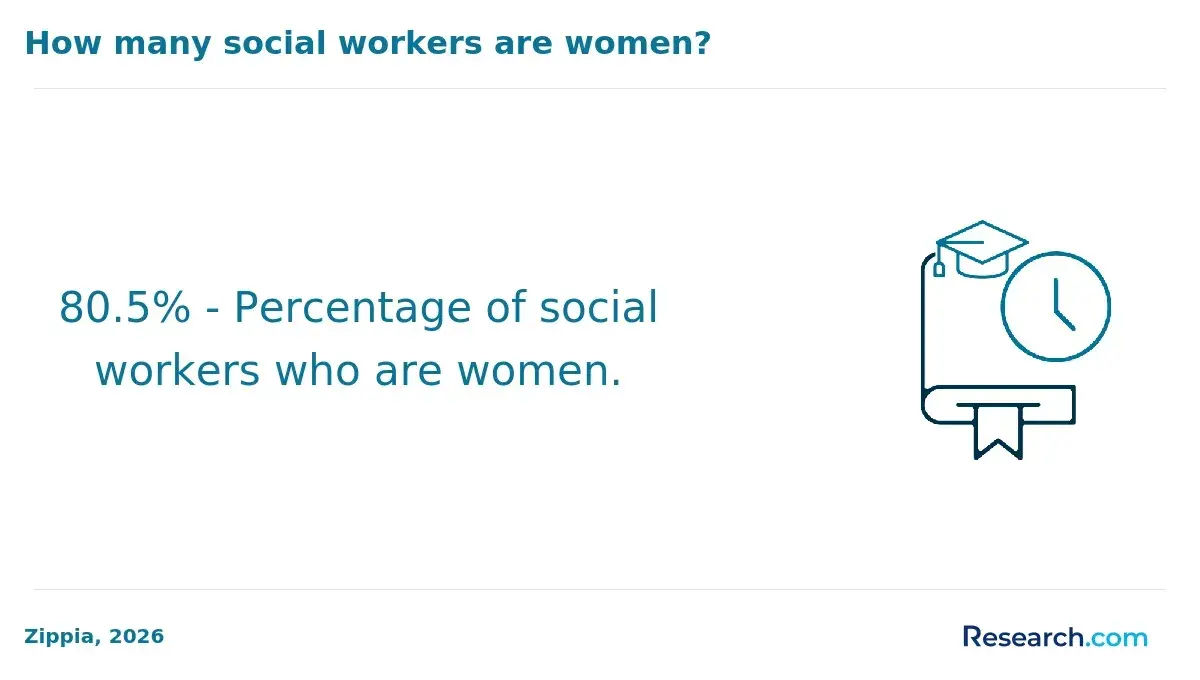
Social work-related careers vary widely in daily duties, salary, education requirements, and emotional demands. According to Zippia, 2025 figures cited here, there were 192,571 employed licensed social workers, 115,041 mental health counselors, 71,960 substance abuse counselors, 128,435 marriage and family therapists, and 36,942 employed school counselors in the United States.
The roles below show how broad the field can be. Unless otherwise stated for a specific job title, salary data in this section is drawn from the U.S. Bureau of Labor Statistics.
| Career option | Average salary | Typical education listed | Best fit for people who want to... |
| Social and Community Service Manager | $74,000 | Bachelor’s degree | Lead programs, manage teams, and evaluate community services |
| School Counselor | $60,510 | Master’s degree | Support students’ academic, career, social, and emotional development |
| Licensed Clinical Social Worker (LCSW) | $50,390 | Bachelor’s degree | Work directly with clients, assess needs, and provide clinical support where licensed |
| Probation Officer | $60,250 | Bachelor’s degree | Support rehabilitation and monitor people under court supervision |
| Behavior Analyst | $134,635 | Master’s degree | Assess behavior and design intervention plans |
| Medical Social Worker | $60,280 | Bachelor’s degree | Help patients and families manage illness, care transitions, and healthcare barriers |
| School Social Worker | $50,820 | Bachelor’s degree | Support student well-being through school, family, and community coordination |
| Human Resources Coordinator/Specialist | $62,290 | Bachelor’s degree | Apply people-centered skills in recruitment, benefits, training, and employee relations |
| Substance Use and Recovery Treatment Counselor | $48,520 | Bachelor’s degree | Help clients address addiction, behavioral challenges, and recovery planning |
| Community Outreach Worker | $46,054 | Bachelor’s degree | Connect underserved communities with services and basic supports |
| Mental Health Therapist | $75,895 | Master’s degree | Provide therapy, crisis support, and mental health interventions |
| Social Work Teacher | $66,510 | Master’s or doctorate degree | Teach, mentor, and prepare future social work professionals |
| Marriage and Family Counselor | $49,880 | Master’s degree | Help couples and families address relationship and emotional concerns |
| Child Welfare Worker | $59,271 | Associate’s or bachelor’s degree | Protect children and support families through safety planning and services |
| Policy Analyst | $47,000 | Bachelor’s degree | Research social issues and recommend policy improvements |
Social and Community Service Manager
Average Salary: $74,000
Educational Requirement: Bachelor’s degree
Social and community service managers oversee programs delivered by nonprofits, government agencies, and community organizations. Their work often involves supervision, budgeting, reporting, program improvement, and coordination with funders or public stakeholders.
Other job responsibilities:
- Determine which services are most needed by a community or client group.
- Manage administrative operations so programs meet stakeholder goals.
- Review data to judge whether services are producing useful outcomes.
School Counselor
Average Salary: $60,510
Educational Requirement: Master’s degree
School and career counselors help students build academic, social, emotional, and career-readiness skills. They may guide course planning, career exploration, college preparation, and interventions for students facing behavioral or social challenges.
Other job responsibilities:
- Support students dealing with social, emotional, or behavioral concerns.
- Use data to identify issues that may be affecting academic performance.
- Work with teachers and families to support student goals.
- Use assessments and interviews to understand student strengths and needs.
Licensed Clinical Social Worker (LCSW)
Average Salary: $50,390
Educational Requirement: Bachelor’s degree
Licensed clinical social workers and social workers in related client-facing roles support individuals, families, and groups dealing with mental health concerns, crisis situations, disability, illness, family conflict, or resource gaps. Clinical licensure requirements should always be checked with the state board because advanced education and supervised practice are commonly required for clinical authority.
Other job responsibilities:
- Identify clients or groups who need urgent or ongoing assistance.
- Assess client circumstances to determine suitable services and interventions.
- Locate and advocate for community resources that support client stability.
- Respond to crises and mental health emergencies when the role requires it.
- Provide psychotherapy services when legally qualified to do so.
Probation Officer
Average Salary: $60,250
Educational Requirement: Bachelor’s degree
Probation officers and correctional treatment specialists work with people on probation, parole, or in custody. Their role blends public safety, rehabilitation planning, monitoring, reporting, and referrals to services that may reduce recidivism.
Other job responsibilities:
- Evaluate probationers or parolees to monitor progress and identify rehabilitation needs.
- Refer individuals to services that support reintegration after incarceration or supervision.
- Provide courts with reports about client progress and background.
- Maintain case records and prepare required documentation.
Behavior Analyst
Average Salary: $134,635
Educational Requirement: Master’s degree
Behavior analysts assess behavior patterns and design plans to improve functioning, communication, learning, or daily living skills. They may work in clinics, schools, hospitals, workplaces, group homes, or other service environments. Professionals must become a board-certified behavior analyst before independently delivering behavior-analytic services.
Other job responsibilities:
- Identify factors that influence treatment needs and behavior patterns.
- Design individualized plans to improve client outcomes.
- Train caregivers or support teams on intervention strategies.
- Collect and interpret data to measure client progress.
Medical Social Worker
Average Salary: $60,280
Educational Requirement: Bachelor’s degree
Medical or healthcare social workers help patients and families cope with acute, chronic, or terminal illness. They may coordinate care, support discharge planning, provide psychosocial education, and help address barriers to healthcare access.
Other job responsibilities:
- Provide case management and care coordination.
- Help patients understand resources available during illness or recovery.
- Guide family caregivers on effective support strategies.
- Connect clients to services that improve health, stability, and quality of life.
School Social Worker
Average Salary: $50,820
Educational Requirement: Bachelor’s degree
School social workers support students by working with families, teachers, counselors, administrators, and community agencies. Their focus often includes attendance concerns, family stress, behavioral issues, mental health needs, crisis response, and access to services. Students exploring this route can review how to become a school social worker.
Other job responsibilities:
- Deliver school-based social services that support student functioning.
- Help strengthen family stability and academic participation.
- Assist parents and coordinate child welfare-related services when needed.
- Address school issues such as behavioral problems and teenage pregnancy.
Human Resources Coordinator/Specialist
Average Salary: $62,290
Educational Requirement: Bachelor’s degree
Human resources professionals use communication, conflict resolution, policy knowledge, and people-centered skills in workplace settings. Their duties may involve hiring, employee relations, benefits, training, and employment documentation.
Other job responsibilities:
- Recruit, screen, interview, and help onboard employees.
- Advise employers about staffing needs and candidate qualifications.
- Maintain employment records and process personnel paperwork.
- Support orientation and training for new hires.
Substance Use and Recovery Treatment Counselor
Average Salary: $48,520
Educational Requirement: Bachelor’s degree
Substance use, behavioral disorder, and mental health counselors help clients address addiction, depression, alcoholism, behavioral challenges, and recovery barriers. Many work in community health centers, mental health facilities, treatment programs, or nonprofit service settings.
Other job responsibilities:
- Assess whether clients are ready for treatment and what support they need.
- Develop recovery-focused plans for addiction or behavioral concerns.
- Conduct outreach that helps vulnerable groups recognize harmful substance-use patterns.
- Refer clients to support groups, treatment programs, and recovery resources.
Community Outreach Worker
Average Salary: $46,054
Educational Requirement: Bachelor’s degree
Community outreach workers connect people with public education, housing support, food resources, hygiene supplies, violence-prevention programs, and other community services. This role is often field-based and relationship-driven.
Other job responsibilities:
- Link residents to programs that meet basic needs.
- Coordinate with agencies serving people experiencing homelessness.
- Distribute food, hygiene supplies, or other essentials.
- Create programs for people at risk of homelessness.
- Support fundraising or public campaigns that build community resources.
Mental Health Therapist
Average Salary: $75,895
Educational Requirement: Master’s degree
Mental health therapists help clients work through trauma, major life changes, mental illness, grief, stress, identity concerns, and relationship problems. Some specialize in youth services, LGBTQ+ communities, crisis care, or specific mental health conditions.
Other job responsibilities:
- Use research-informed strategies to address client concerns.
- Help clients change harmful thoughts, behaviors, or coping patterns.
- Facilitate individual or group therapy sessions.
- Diagnose and treat mental disorders when licensed to do so.
- Provide crisis intervention for clients in immediate distress.
Social Work Teacher
Average Salary: $66,510
Educational Requirement: Master’s or doctorate degree
Social work teachers prepare students for professional practice in social work, social services, and related fields. Their work may include teaching, curriculum planning, assessment, advising, and research.
Other job responsibilities:
- Record attendance and evaluate student performance.
- Support students as they prepare for social work roles.
- Conduct research and collect data related to social work practice or education.
Marriage and Family Counselor
Average Salary: $49,880
Educational Requirement: Master’s degree
Marriage and family counselors help couples and families discuss emotions, conflict patterns, communication problems, trauma, and major life transitions. The goal is often to improve relationships, safety, coping, and family functioning.
Other job responsibilities:
- Help clients process difficult emotions and adjust to life challenges.
- Support clients in changing damaging behaviors or relationship patterns.
- Refer clients to inpatient treatment or community services when needed.
- Protect confidential records and client privacy.
Child Welfare Worker
Average Salary: $59,271
Educational Requirement: Associate’s or bachelor’s degree
Child welfare workers support children and families through government agencies, nonprofits, and related service organizations. Their work can involve assessing safety, responding to abuse or neglect concerns, supporting family plans, and coordinating emergency services.
Other job responsibilities:
- Evaluate situations that may place children at risk.
- Work with families affected by trauma or instability.
- Create plans that improve safety for children and family members.
- Promote the child’s safety, health, and well-being as much as possible.
Policy Analyst
Average Salary: $47,000
Educational Requirement: Bachelor’s degree
Policy analysts study social, economic, and political issues that affect communities. In social work-adjacent policy roles, they may evaluate laws, program rules, public benefits, service systems, and the ethical effects of policy decisions.
Other job responsibilities:
- Assess whether policies are meeting their intended goals.
- Work with stakeholders to define community-centered policy objectives.
- Research solutions for social problems and present findings.
- Identify policy options that are realistic, effective, and sustainable.
How do I know if social work jobs are for me?
Social work may fit you if you are motivated by service, can stay calm in complicated situations, and are willing to work with people whose problems may not have fast or simple solutions. It is also a good match for people who care about both individual support and broader social systems.
Before choosing this field, ask yourself whether you can handle documentation, difficult conversations, crisis situations, ethical gray areas, and collaboration with agencies that may be underfunded or slow to respond. Interest alone is not enough; you also need stamina, boundaries, and a realistic view of the work.
Students drawn to justice-related systems may compare social work with corrections, public safety, or legal-system roles. An affordable criminal justice online degree may be worth exploring if your interests lean toward courts, corrections, probation, or victim services.
Location can also affect program choice, field placement options, and licensing rules. If you plan to study or work in a particular state, reviewing options such as social work programs in Ohio can help you understand state-specific pathways.
| You may thrive in social work if... | You may want another path if... |
| You can listen without judgment while still setting boundaries. | You expect every client problem to be quickly solvable. |
| You are comfortable working with agencies, schools, hospitals, courts, or public systems. | You strongly dislike paperwork, documentation, and compliance tasks. |
| You care about advocacy, equity, and practical support. | You prefer work with minimal emotional intensity. |
| You can manage stress and seek supervision when needed. | You tend to absorb client crises as personal failures. |
| You are willing to meet licensing or credential requirements for advanced roles. | You want to enter independent clinical practice without graduate education or supervised experience. |
What are the skills and qualities needed for a successful social work career?
A degree can teach social policy, human behavior, assessment, ethics, and intervention models. Long-term success, however, also depends on how well you apply those concepts in real situations with clients, colleagues, and community partners.
- Communication: Social workers need to write clearly, speak with care, interview effectively, and explain complex information in plain language.
- Empathy and compassion: A sincere concern for people’s experiences helps professionals build trust while supporting client dignity.
- Critical thinking and problem-solving: Many cases involve overlapping risks, limited resources, and changing circumstances. Social workers must adjust plans as new information appears.
- Cultural competency: Effective practice requires respect for different values, identities, family structures, languages, and community norms.
- Organization and time management: Managing several clients, reports, deadlines, and referrals requires structure and follow-through.
Considering an affordable online BSW program?
A Bachelor of Social Work can prepare students for many social service and casework-oriented roles, and online options may help working adults or place-bound students reduce commuting and relocation barriers. If cost is a major concern, compare tuition, fees, field placement support, transfer credit policies, and accreditation before enrolling. Research.com’s guide to the cheapest online BSW programs can help you begin that comparison.
How can advanced clinical education transform your social work practice?
Advanced clinical education can move a social worker from general support roles toward deeper assessment, diagnosis-informed practice, therapy models, crisis intervention, and evidence-based treatment planning. It can also strengthen supervision, interdisciplinary collaboration, leadership, and complex case management skills.
Clinical education is especially important for professionals who want to work in mental health, healthcare, trauma services, private practice, or advanced behavioral health roles. Flexible formats may help working professionals continue their education while meeting field or practicum expectations. Students comparing options can review masters clinical social work online for program-focused information.
What distinguishes social work from psychology?
Social work and psychology overlap in mental health and human behavior, but they are not the same profession. Social work generally places stronger emphasis on person-in-environment assessment, resource access, advocacy, social systems, and community well-being. Psychology more often centers on psychological assessment, research, diagnosis, and therapy-focused models of mental health treatment.
The right choice depends on whether you are more interested in social systems and service coordination, clinical treatment and psychological research, or a combination of both. For a deeper comparison, review psychology vs social work.
Affordable Educational Paths in Social Work
Education costs can shape whether social work feels financially realistic. Before enrolling, compare total program cost, fees, transfer credit policies, field placement requirements, financial aid, employer tuition support, and whether the degree supports your intended license or credential.
Graduate education is often important for advanced and clinical roles, but students should not assume every online program has the same value. Look for programs that align with licensure needs, offer meaningful field experience, and provide enough advising support to help you complete placement requirements. Students focused on cost can compare cheap online MSW programs USA.
Online learning may reduce commuting or relocation costs, but it does not remove the need for field education, supervision, or state-specific licensure planning. The most affordable program is not always the best choice if it delays licensure, lacks placement support, or does not match your career goal.
| Education option | When it may make sense | What to verify first |
| Certificate or short training | You want an entry-level support role or an introduction to the field | Whether the credential is recognized by employers in your area |
| Associate’s degree | You want a lower-cost starting point for human services or support roles | Transferability into a BSW or related bachelor’s program |
| BSW | You want stronger preparation for casework, social services, or future MSW study | Accreditation, field placement quality, and state requirements |
| MSW | You want advanced practice, clinical preparation, leadership, or specialized work | CSWE accreditation, practicum support, licensure alignment, and total cost |
| Doctorate | You are interested in teaching, research, senior leadership, or advanced policy work | Career return, funding options, faculty expertise, and research fit |
Are online social work programs accredited and of high quality?
Some online social work programs are strong, accredited, and designed for licensure preparation; others may not meet the standards you need. Accreditation is critical because it can affect degree recognition, financial aid eligibility, transfer opportunities, and whether the program supports your licensing goals.
Prospective students should confirm accreditation directly, review field placement expectations, and ask whether the program’s curriculum satisfies requirements in the state where they plan to practice. Students considering related social science routes may also review the cheapest online sociology degree to compare how sociology differs from professional social work preparation.
What should I consider when choosing an online MSW program?
An online MSW should be evaluated by more than convenience. The most important questions involve accreditation, field placement support, curriculum fit, faculty expertise, licensure outcomes, technology support, student services, and total cost.
Ask admissions and advising teams direct questions before applying. Does the program help arrange field placements in your area? Does it prepare students for your state’s licensing process? Are online students eligible for the same support services as campus students? Are there hidden fees? Students comparing less selective options can review easy online MSW programs to get into, but admissions flexibility should never be the only deciding factor.
| Question to ask | Why it matters |
| Is the program properly accredited for social work? | Accreditation can affect licensure eligibility, employer recognition, and financial aid access. |
| How are field placements arranged? | Practicum requirements are central to social work training and can be difficult to coordinate alone. |
| Does the curriculum match my intended license or specialization? | Clinical, school, policy, and community practice paths may require different preparation. |
| What is the full cost after fees and required expenses? | Tuition alone does not show the full financial commitment. |
| What support is available for online students? | Advising, career services, tutoring, and technical support can affect completion and readiness. |
Is Pursuing a Career in Social Work Worth the Investment?
A social work career can be worth the investment if your chosen role aligns with your values, salary expectations, education budget, and capacity for emotionally demanding work. The return is not only financial; many people choose social work because they want meaningful, service-oriented careers. But financial planning still matters.
Before committing to a degree, compare projected salaries for the roles you want, required credentials, licensure timelines, loan amounts, and local job openings. If you are deciding whether the major itself is a good fit, this guide on is social work a good major can help you evaluate the trade-offs.
What are the opportunities for career advancement in social work?
Career growth in social work usually comes from a combination of experience, graduate education, licensure, specialization, supervision skills, and professional networking. Advancement may mean becoming a clinical practitioner, program director, supervisor, policy specialist, consultant, educator, or agency leader.
Professionals who want to move up should identify their target role early and work backward. Ask what degree, license, supervised experience, and certifications are required. If you are still mapping the basic route into the profession, review how to become a social worker.
| Advancement goal | Common next step |
| Move from support work into professional social work | Complete a BSW or MSW aligned with your state and career goals |
| Enter clinical practice | Earn an MSW, complete supervised clinical hours, and meet state licensing rules |
| Become a supervisor or manager | Build program experience, leadership skills, budgeting knowledge, and staff supervision experience |
| Specialize in child welfare, addiction, healthcare, or schools | Pursue targeted field placements, certifications, and continuing education |
| Teach or conduct research | Consider advanced graduate study, publication, teaching experience, or doctoral preparation |
What are the ethical and legal responsibilities in social work?
Social workers handle sensitive information, vulnerable clients, mandated reporting questions, crisis situations, and conflicts between client choice and safety concerns. Ethical practice requires confidentiality, informed consent, professional boundaries, accurate documentation, cultural humility, and respect for client dignity.
Legal responsibilities vary by state and role. Social workers must understand licensing laws, scope of practice, reporting obligations, supervision rules, privacy requirements, and agency policies. Programs that move quickly through graduate training can be useful for some students, but they should still provide serious preparation in ethics, law, and field practice. Students comparing faster options can review accelerated MSW programs online.
How can I secure high paying social work jobs?
Higher-paying social work roles are more likely when professionals combine advanced education, licensure, specialization, leadership experience, and strong local labor-market awareness. Clinical expertise, program management, behavioral health specialization, healthcare experience, and supervisory ability can all improve competitiveness depending on the employer.
To position yourself for better compensation, choose field placements strategically, document measurable accomplishments, pursue credentials that match your target role, and build relationships with supervisors and professional associations. For a focused look at compensation-oriented paths, explore high paying social work jobs.
Common mistakes to avoid when planning a social work career
- Choosing a program without checking accreditation: Accreditation can affect licensure, financial aid, and employer recognition.
- Looking only at tuition: Fees, field placement costs, commuting, technology, books, and lost work time can change the real cost.
- Assuming every online program meets licensure requirements: State rules differ, especially for clinical and school-based roles.
- Ignoring field placement support: A program may be online, but supervised practice still has to happen in an approved setting.
- Expecting salary outcomes to be guaranteed: Pay depends on role, location, employer type, credentials, and experience.
- Skipping burnout planning: Emotional resilience, supervision, boundaries, and manageable workloads are central to staying in the field.
- Waiting too long to specialize: Field placements, electives, certifications, and networking are more useful when they align with a clear career direction.
How can social workers maintain well-being and prevent burnout?
Social work can involve trauma exposure, high caseloads, crisis response, administrative pressure, and emotional labor. Burnout prevention is not a luxury; it affects judgment, client care, job retention, and personal health.
- Prioritize self-care: Build regular time for rest, exercise, hobbies, relationships, and activities that help you recover from work stress.
- Set boundaries: Know the limits of your role, avoid overpromising, and learn when to say no or escalate a concern.
- Seek support: Use supervision, peer consultation, counseling, or support groups to process difficult cases and maintain perspective.
- Improve time management: Organize documentation, referrals, appointments, and follow-ups so your workload remains more manageable.
- Practice mindfulness: Grounding, breathing exercises, and other mindfulness strategies can help reduce stress during intense workdays.
- Continue professional development: Training can increase confidence, update your practice skills, and help you respond more effectively to complex cases.
- Use employee assistance programs: If available, EAPs may offer counseling, stress-management resources, or other support services.
Key Insights
- Social work is a broad career field, not one job. Roles can involve clinical care, school support, child welfare, healthcare, addiction recovery, program management, community outreach, policy, or corrections.
- Education requirements depend heavily on the role. Entry-level support jobs may require less formal education, but clinical practice and many advanced roles usually require graduate study, supervised experience, and licensure.
- Salary and demand vary by specialization. The salary figures listed here range from $37,610 for social and human service assistance to $134,635 for behavior analyst roles, with demand projections differing by occupation.
- Accreditation and licensure planning are essential. Before choosing an online or campus program, confirm whether it supports your state’s requirements and your intended career path.
- Skills matter as much as credentials. Communication, ethics, cultural competence, documentation, advocacy, and boundary-setting are central to effective practice.
- Specialization can improve career direction. Fields such as clinical social work, healthcare, addiction recovery, child welfare, and school services require targeted preparation and experience.
- Burnout prevention should be planned early. Social workers need supervision, realistic boundaries, peer support, self-care, and manageable systems to sustain long-term practice.
- The best social work path is the one that matches your values, finances, credentials, and work environment preferences. Do not choose a degree or job title based only on salary, convenience, or general interest.
References:
- Association of Social Work Boards. (2025). Social Work Workforce Study Series. https://www.aswb.org/wp-content/uploads/2025/07/Social-Work-Workforce-Study-Series-Report-2.pdf
- Centers for Medicare & Medicaid Services. (2025). Mental health workforce data. https://www.cms.gov/mental-health-workforce
- Health Resources and Services Administration. (2025). Workforce data: social services. https://bhw.hrsa.gov/data-research
- National Institute of Mental Health. (2025). Mental health services data. https://www.nimh.nih.gov/research/statistics
- National Association of Social Workers. (2025). Social work salaries overview. https://www.socialworkers.org/careers/career-center/kickstart-your-job-hunt/social-work-salaries
- National Association of Social Workers. (2025). Career resources for social workers. https://www.socialworkers.org/Careers
- National Association of Social Workers. (2025). Professional practice guidelines. NASW career guidance and https://www.socialworkers.org/Practice
- Substance Abuse and Mental Health Services Administration. (2025). Behavioral health workforce. https://www.samhsa.gov/workforce
- U.S. Bureau of Labor Statistics. (2025). Social workers: Occupational outlook handbook. SAMHSA workforce resource, HRSA workforce data, and https://www.bls.gov/ooh/community-and-social-service/social-workers.htm
- U.S. Bureau of Labor Statistics. (2025). Career outlook: Social workers. https://www.bls.gov/ooh/community-and-social-service/social-workers.htm#tab-6
- U.S. Bureau of Labor Statistics. (2025). Community and social service occupations. https://www.bls.gov/ooh/community-and-social-service/
- Zippia. (2025). Licensed social worker demographics and statistics in the US. https://www.zippia.com/licensed-social-worker-jobs/demographics/
Other Things You Should Know About Social Work Jobs & Careers for Social Workers
In 2027, social workers can explore careers in fields like corporate social responsibility, advocacy roles within nonprofits, and policy analysis. These areas leverage social workers' skills in communication and empathy while offering diverse career paths outside traditional social work roles.
Most MSW programs require at least 900 to 1,200 hours of supervised field placement, often split across foundation and advanced practicums. Placements are completed in approved agencies and are usually assessed by a field instructor and faculty liaison before graduation.
Essential skills for social work include cultural competence, policy analysis, knowledge of social systems, communication, organization, and professional commitment. Social workers must also possess empathy, active listening, self-care practices, and advocacy skills.
Educational requirements vary by role. Most entry-level positions require a bachelor’s degree, while advanced roles like licensed clinical social workers (LCSWs) and social work teachers typically require a master’s or doctorate degree.
Yes, you can find entry-level social work jobs with a certificate, such as program coordinator or substance abuse counselor. However, more advanced positions usually require higher education degrees.
Salaries vary by role. For example, social and community service managers earn around $74,000, social workers earn about $50,390, and substance abuse counselors earn approximately $48,520. Advanced roles like probation officers earn $60,250, and behavior analysts can earn up to $134,635.
In 2027, social workers must typically hold at least a Master’s in Social Work (MSW) and pass the Association of Social Work Boards (ASWB) exam to obtain licensure. Requirements vary by state, so checking with local licensing boards is essential.
In 2027, social workers are required to complete 30 hours of continuing education every two years, including 5 hours in ethics. These requirements are regulated by state licensing boards to ensure social workers maintain competence and adhere to updated professional standards.


