2027 Child Welfare Social Work Careers: Guide to Career Paths, Options & Salary

Co-Founder and Chief Data Scientist
Child welfare social work is a career for people who want to protect children, support families in crisis, and work inside systems such as foster care, adoption, schools, courts, healthcare, and public agencies. The field is changing: cited foster care figures show a decline from 360,560 children in 2022 to 340,000 in 2024, and other cited ACF figures report 328,947 children in foster care in 2024. At first glance, fewer foster care placements may make the career appear less stable.
That conclusion would be too simple. Lower foster care counts do not mean children and families no longer need services. Child welfare agencies still need professionals who can investigate safety concerns, coordinate family support, manage court-involved cases, help children transition into safe placements, and work with schools, healthcare providers, and community organizations. This guide explains what child welfare social workers do, how to enter the field, what education and licensure may be required, how much workers earn, and how to decide whether this demanding career fits your goals.
Quick answer: Is child welfare social work a good career path?
Child welfare social work can be a worthwhile career if you want mission-driven work with children and families and are prepared for high-stakes decisions, emotional stress, documentation requirements, and collaboration with courts and public agencies. A bachelor’s degree in social work or a related field is commonly the entry point, while an online master’s in social work (MSW) or traditional MSW can improve eligibility for licensure, clinical roles, supervision, and leadership opportunities.
The field is not ideal for everyone. It requires resilience, sound judgment, comfort with conflict, careful documentation, and the ability to work within legal and ethical constraints. For students comparing helping professions, related paths such as counseling, school social work, child psychology, mental health counseling, and human services may be worth exploring before committing to child welfare.
Child Welfare Social Worker Table of Contents
- What is a child welfare social worker?
- How do you become a child welfare social worker?
- What career paths are available in child welfare social work?
- How can child welfare social workers advance?
- How much do child welfare social workers earn?
- What is the employment outlook for child welfare social workers?
- Why does professional development matter in child welfare social work?
- Who should consider becoming a child welfare social worker?
- How do child welfare social workers work with other professionals?
- How can technology support child welfare practice?
- What ethical issues do child welfare social workers face?
- How are policy changes affecting child welfare social work?
- When does an accelerated MSW make sense?
- How can mentorship and networking support career growth?
- When is an online MSW a practical option?
- What are the rewards and challenges of child welfare social work?
- What educational resources can help child welfare social workers grow?
- How can an MSW broaden career options in child welfare?
- What strategies help child welfare social workers manage difficult work?
The adoption and foster care environment directly affects child welfare staffing, caseloads, and service priorities. The cited ACF data report 328,947 children in foster care in 2024 and 46,935 adoptions, suggesting that agencies may see shifts in placements, reunification planning, permanency work, and family preservation services rather than a simple drop in need.
Experts cited in the source material also warn that pandemic-related disruptions, including delayed school reopenings, may have reduced the visibility of abuse and neglect concerns. Schools often serve as a key reporting pathway, so fewer recorded cases can sometimes reflect underreporting rather than safer conditions for every child.
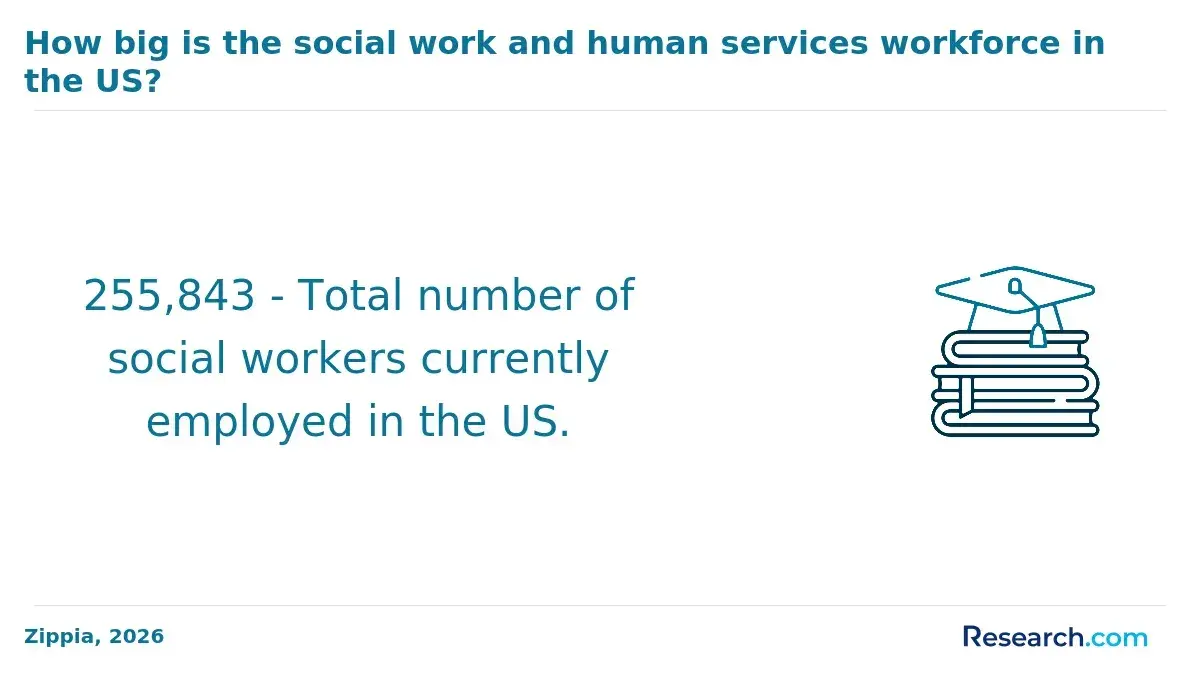
The central workforce question is not just how many children are formally in foster care. It is whether the 399,900 child, family, and school social workers in the United States in 2024 are positioned, trained, and supported well enough to identify risk early, stabilize families, and respond to complex trauma.
What is a child welfare social worker?
A child welfare social worker is a trained professional who helps protect children from abuse, neglect, exploitation, unsafe living conditions, and family crises. The work often involves assessing risk, supporting parents and caregivers, coordinating services, preparing reports, appearing in court, and helping children remain safely at home or move to another safe placement when necessary.
Child welfare refers to the laws, services, agencies, and interventions designed to keep children safe and help families function more effectively. It includes prevention services, child protective investigations, foster care, adoption, kinship care, permanency planning, and connections to healthcare, education, housing, counseling, and community support. Research and public health organizations continue to emphasize the importance of protecting children’s safety and well-being, especially when family stressors increase.
What does a child welfare social worker do?
Daily responsibilities vary by agency and role, but most child welfare social workers combine direct service, investigation, case planning, documentation, and collaboration. Common duties include:
- Assessing child safety and family needs: Reviewing home conditions, caregiver capacity, risk factors, protective factors, and immediate safety concerns.
- Responding to reports of abuse or neglect: Interviewing children, caregivers, mandated reporters, and other relevant parties while following agency and legal protocols.
- Creating case plans: Setting goals for safety, stability, treatment, parenting support, visitation, reunification, permanency, or placement changes.
- Connecting families to services: Referring clients to counseling, substance use treatment, parenting education, housing support, healthcare, food assistance, legal aid, or school-based services.
- Managing documentation: Maintaining case notes, risk assessments, court reports, service referrals, contact logs, and compliance records.
- Supporting children in placement: Coordinating foster care, kinship care, residential treatment, adoption, or other safe arrangements when children cannot remain at home.
- Working with multidisciplinary teams: Communicating with teachers, therapists, doctors, attorneys, judges, law enforcement, foster parents, and community organizations.
Types of child welfare social workers
The Bureau of Labor Statistics (2025) reports more than 747,100 practicing social workers in the United States, with more than 360,500 working with children. Within child welfare, titles differ by state, agency, and service setting.
| Role | Primary focus | Best fit for someone who wants to... |
| Child and Family Social Worker | Support families through assessment, planning, referrals, and ongoing services. | Work directly with children and caregivers across a range of needs. |
| Child Protective Services Social Worker | Investigate alleged abuse, neglect, or maltreatment and recommend safety actions. | Handle urgent, investigative, and legally sensitive cases. |
| Foster Care Social Worker | Coordinate placements, monitor child well-being, and support foster families. | Help children achieve stability while permanency plans are developed. |
| Adoption Social Worker | Prepare adoptive families, complete assessments, provide counseling, and support permanency. | Focus on long-term family placement and post-adoption support. |
| School Social Worker | Address social, emotional, behavioral, and family-related barriers to learning. | Work in education settings and connect students with community resources. |
| Juvenile Justice Social Worker | Support youth involved in the justice system through counseling, advocacy, and reintegration planning. | Work at the intersection of youth services, courts, and rehabilitation. |
| Hospital Social Worker | Help children and families navigate medical crises, care coordination, discharge planning, and resources. | Practice in healthcare environments with children and caregivers. |
| Residential Treatment Social Worker | Support children in structured care settings and coordinate treatment and transitions. | Work with youth who need intensive behavioral or therapeutic support. |
| Child Advocacy Social Worker | Advocate for children’s safety, services, legal representation, and system-level rights. | Focus on systems advocacy and child-centered decision-making. |
| Early Intervention Social Worker | Support infants, toddlers, and families dealing with developmental delays or disabilities. | Help families access early services during critical developmental periods. |
How do you become a child welfare social worker?
Most child welfare positions require at least a bachelor’s degree, commonly a Bachelor of Social Work or a closely related major. Students can choose from more than 900 BSW programs accredited by the Council on Social Work Education (CSWE) across the United States.
Enrollment interest remains meaningful, but the cited CSWE survey reported 13,045 BSW degree conferrals in the most recent full census year, which may affect the future supply of new social work graduates entering child and family services.
Education alone is rarely enough to feel prepared. Students should seek field placements, internships, volunteer roles, or entry-level human service jobs that expose them to children, families, crisis response, mandated reporting, trauma-informed care, and community resources. If you are comparing adjacent helping careers, reviewing the steps to become a counselor can help you understand how counseling and social work pathways differ.
Typical pathway into child welfare social work
| Step | What to do | Why it matters |
| Choose an accredited degree path | Prioritize a CSWE-accredited BSW or MSW program when possible. | Accreditation can affect licensure eligibility, field placement quality, and employer recognition. |
| Build child and family experience | Look for internships, volunteer roles, school-based work, shelter programs, youth services, or family support agencies. | Employers often value practical exposure to vulnerable children and families. |
| Understand mandated reporting | Learn your state’s child abuse and neglect reporting rules. | Child welfare workers must know when and how to report safety concerns. |
| Consider an MSW | Use a campus-based or online MSW to deepen clinical, policy, supervision, and leadership skills. | An MSW may improve licensure options and open advanced roles. |
| Check state licensing rules | Review your state board’s education, exam, supervised practice, and continuing education requirements. | Licensure rules vary, and assumptions can delay career progress. |
Skills child welfare social workers need
Successful child welfare practice depends on more than compassion. Workers must combine interpersonal skills, legal awareness, crisis judgment, administrative discipline, and self-management.
| Skill category | Key skills | How they show up on the job |
| Interpersonal skills | Empathy, active listening, communication, patience, cultural competence. | Interviewing children and caregivers, building trust, explaining difficult decisions, and working across cultural contexts. |
| Analytical skills | Critical thinking, risk assessment, problem-solving, data interpretation. | Evaluating safety concerns, identifying patterns, and recommending appropriate interventions. |
| Practice skills | Case management, crisis intervention, advocacy, community outreach, knowledge of child welfare law. | Coordinating services, responding to emergencies, supporting families, and documenting compliance. |
| Technical skills | Case management software, electronic records, telehealth tools, research skills, secure communication practices. | Maintaining accurate records, coordinating with partners, and protecting confidential information. |
| Personal sustainability | Resilience, boundaries, time management, organization, supervision use. | Managing high caseloads, emotionally difficult cases, and urgent deadlines without losing professional judgment. |
Some professionals later move toward counseling or clinical practice. With the right education, licensing, and certification, child welfare experience can support a transition toward work as a professional mental health counselor, though counseling licensure has separate requirements.
How much does education for child welfare social work cost?
The annual cost of preparing for a child welfare social work career can range from $7,500 to $60,000, depending on school type, residency status, delivery format, and degree level. The cited figures also report median in-state public tuition of $12,012 for the 2024-2025 academic year and typical out-of-state private tuition of $43,198 for the same period.
A Business Insider report cited in the source material lists average annual tuition for BSW out-of-state as $30,780 and in-state tuition as $9,000-$15,000 for the academic year 2024-2025.
How to compare program costs realistically
- Look beyond tuition: Include fees, books, commuting, technology, field placement travel, background checks, licensure exam costs, and lost work hours.
- Ask about field placement support: A lower-cost program may become harder to complete if you must find placements without strong school support.
- Check transfer credit policies: Generous transfer rules can reduce total cost, especially for students starting at community colleges.
- Compare online and campus requirements: Online programs may still require in-person fieldwork, local supervision, or scheduled live sessions.
- Confirm accreditation: For social work licensure and MSW admission, CSWE accreditation can be a major factor.
Scholarships and funding options to investigate
Students interested in child welfare should search broadly for scholarships, loan repayment options, agency tuition assistance, state workforce grants, and university-based awards. Examples cited in the source material include:
- Council on Social Work Education Minority Fellowship Program: Provides support for underrepresented social work students, including a stipend of up to $12,500 and additional benefits.
- Meme Heineman Scholarship: Awards $4,000 to students in CSWE-accredited programs who have a 3.0 or higher GPA and demonstrate commitment to children and families.
- National Health Service Corps Scholarship Program: Covers full tuition, fees, and a living stipend for eligible students who commit to service in Health Professional Shortage Areas.
- American Indian Education Fund Scholarships: Provides $2,000 scholarships for Native American social work students with a GPA of 2.5 or higher and financial need.
- National Association of Black Social Workers Scholarship: Offers $2,500 to African-descent social work students with a GPA of 2.5 or higher and financial need.
- Point Foundation Scholarship: Awards up to $50,000 to LGBTQ+ students pursuing social justice careers based on academic achievement, leadership, and financial need.
- NASW Foundation Eileen Blackey Doctoral Fellowship: Provides a $4,000 fellowship for doctoral social work students conducting health or mental health practice research in a CSWE-accredited program.
What career paths are available in child welfare social work?
Child welfare can lead to frontline practice, investigations, foster care coordination, adoption work, school services, clinical practice, policy, supervision, or agency leadership. The United States had more than 399,900 child, family, and school social workers in 2024, and roles can differ substantially by employer.
| Career path | Typical responsibilities | Salary information cited | Possible advancement |
| Case Worker | Assesses child and family needs, develops plans, coordinates services, and monitors child safety. | $47,332 average annual salary. | Child Welfare Supervisor, with compensation typically 20% greater than a case worker’s. |
| Child Protective Investigator | Investigates abuse reports, gathers evidence, interviews involved parties, and recommends interventions. | Roughly $63,329 average annual pay. | Child Protective Services Manager, with roles paying around 30% more than a child protection investigator due to greater responsibility. |
| Child Welfare Specialist | Works with children and families in the system, conducts assessments, implements interventions, and advocates for child well-being. | Annual pay typically around $51,294. | Child Welfare Director, with positions often paying roughly 40% more than a child welfare specialist. |
When comparing career paths, think about the type of pressure you handle best. Investigative roles may involve urgent safety decisions and conflict. Foster care and adoption roles may involve long-term relationship management and permanency planning. School and healthcare settings may involve more interdisciplinary coordination. Clinical roles may require additional graduate education and licensure.
How can child welfare social workers advance?
Career growth in child welfare usually comes from a combination of field experience, graduate education, licensure, specialized training, supervision skills, and strong professional judgment. Advancement does not always mean leaving direct service; some professionals become senior practitioners, trainers, court specialists, or clinical consultants.
- Pursue targeted continuing education: Prioritize training in trauma-informed care, family systems, domestic violence, substance use, child development, cultural humility, safety assessment, documentation, and courtroom testimony.
- Earn an advanced degree when it fits your goals: An MSW can support movement into supervision, clinical practice, policy, program management, and specialized roles.
- Specialize deliberately: Child protection, foster care, adoption, family preservation, school social work, juvenile justice, and behavioral health each build different expertise.
- Seek supervision and leadership exposure: Volunteer for quality improvement projects, mentoring new workers, training responsibilities, or multidisciplinary team coordination.
- Document outcomes and competencies: Keep records of trainings, case accomplishments, committee work, language skills, certifications, and leadership tasks for promotion applications.
What are the licensing requirements?
As of January 2024, the United States had more than 797,872 licensed social workers (ASWB, 2024a). The Association of Social Work Boards states that licensure generally involves a degree from an accredited program, passing the appropriate licensing examination, and meeting state or provincial moral character standards (ASWB, 2024b).
- Earn at least a BSW, while recognizing that some states require an MSW from a CSWE-accredited program for full licensure.
- Complete the required supervised fieldwork or supervised practice hours for your state.
- Pass the appropriate ASWB licensure examination for the level of practice you are pursuing.
- Complete continuing education to keep the license active and maintain current knowledge.
Licensure by reciprocity may be available for professionals who already hold a social work license in another state and have passed the ASWB exam at a comparable level (ASWB, 2024). Requirements differ by state, so always verify rules with the relevant licensing board before enrolling in a program, accepting supervision, or assuming a credential will transfer.
Certifications that may strengthen a child welfare career
Certifications do not replace state licensure, but they can show focused training and may help with role transitions.
- Certified Rehabilitation Counselor: Recognizes expertise in supporting individuals with disabilities as they pursue goals and improve quality of life.
- Child Welfare Certification Programs: Provide specialized preparation for professionals working in child protective services, foster care, family preservation, or related systems.
- School Social Worker Certification: Supports practice in education settings with students, families, teachers, and school administrators.
- Academy of Certified Social Workers: Available to eligible master’s-level social workers who meet supervised practice requirements.
- Licensed Clinical Social Worker: Requires substantial supervised clinical experience and a licensing examination; it can support entry into a clinical social worker career.
How much do child welfare social workers earn?
Social workers overall earn $58,380 on average yearly, while the cited median annual wage for child, school, and family social workers is $55,140, with a mean hourly wage of $26.78 (BLS, 2024). Salary depends on employer type, location, education, licensure, union coverage, supervision responsibilities, and whether the role is clinical, investigative, administrative, or frontline case management.
Licensed social workers may earn higher pay, with cited average salaries of $67,523 for licensed social workers and around $68,829 for clinical social workers (Zippia, 2024). Among states cited as top-paying for child, family, and school social workers, California, New Jersey, and Connecticut reported average yearly salaries of $87,410, $82,640, and $81,390, respectively (BLS, 2024).
Salary factors to evaluate before choosing this career
| Factor | Why it affects pay | Question to ask |
| Location | State and local budgets, cost of living, and labor demand vary widely. | What do child welfare agencies pay in the region where I plan to work? |
| Licensure | Licensed and clinical roles may qualify for higher-paying positions. | Which license level is needed for the jobs I want? |
| Degree level | An MSW may open supervisory, clinical, and policy roles. | Will the salary increase justify the cost of graduate school? |
| Employer type | Government, nonprofit, school, hospital, and private agencies may offer different pay and benefits. | How do salary, benefits, caseload, and work-life expectations compare? |
| Role intensity | Investigative, emergency response, and supervisory roles can carry greater responsibility. | Does higher pay come with on-call work, court deadlines, or larger caseloads? |
What is the employment outlook for child welfare social workers?
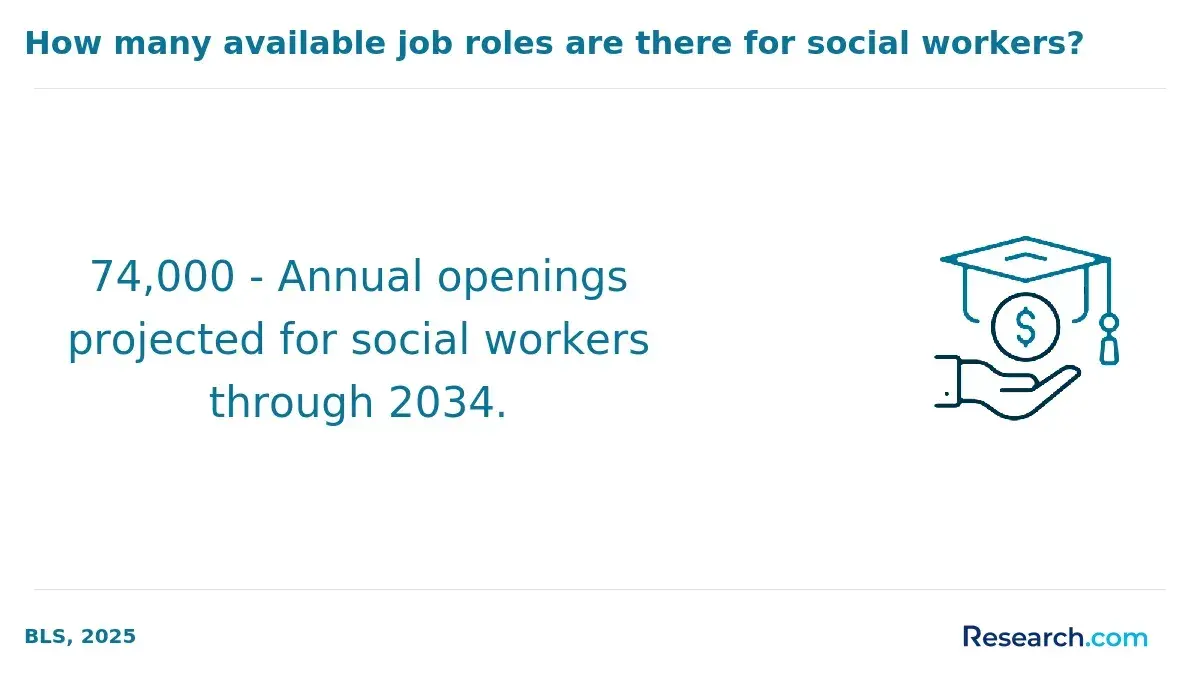
The broader social work occupation is projected to grow 6% until 2034, producing approximately 74,000 new jobs each year (BLS, 2025). For child welfare caseworkers specifically, Zippia (2026) projects 10% job growth until 2031 and reports around 17,733 active child welfare caseworker job listings in the United States.
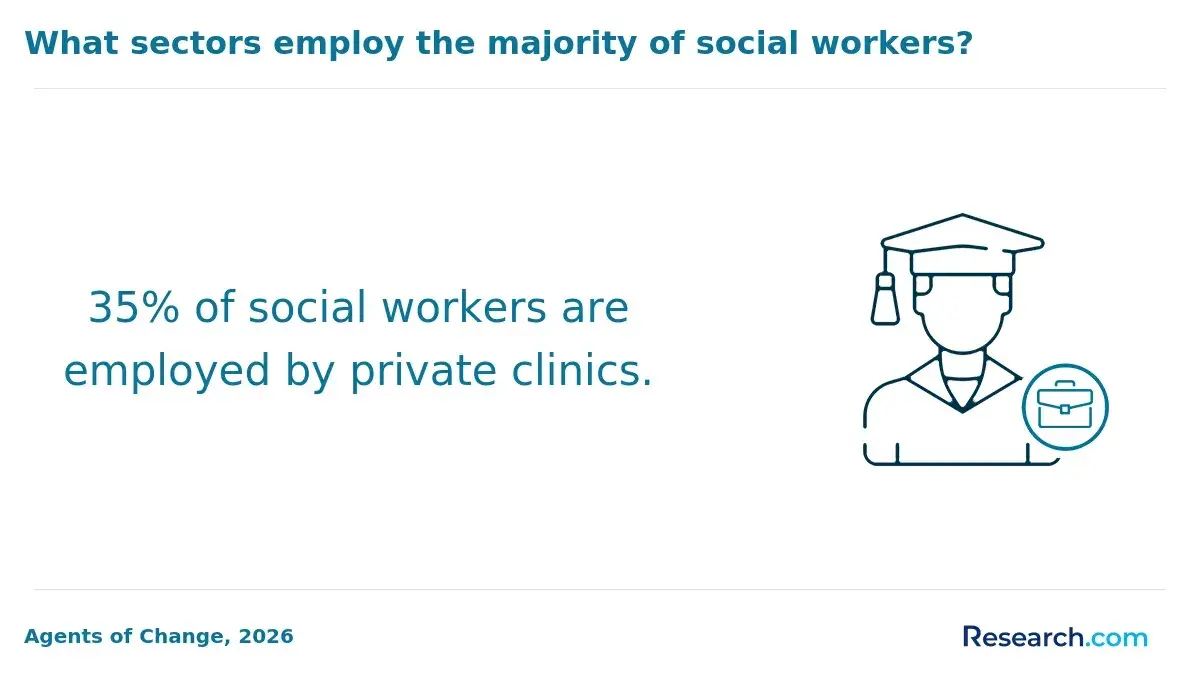
Zippia (2026) also reports that nearly half of child welfare caseworkers are employed by government, while about a third work in the private and nonprofit sectors. This matters because public agencies, contracted nonprofits, schools, hospitals, and community providers may offer different pay structures, caseload expectations, advancement ladders, and benefits.
Job outlook should not be evaluated only by the number of children in foster care. Prevention work, family stabilization, behavioral health needs, court compliance, school reporting, kinship placements, adoption support, and policy changes can all affect workforce demand.
Why does professional development matter in child welfare social work?
Child welfare practice changes as laws, agency protocols, court expectations, technology, family needs, and evidence-based interventions evolve. Ongoing professional development helps workers make safer decisions, communicate more effectively, avoid ethical errors, and reduce preventable burnout.
High-value training areas include trauma-informed practice, forensic interviewing, child development, substance use, domestic violence, family engagement, kinship care, permanency planning, crisis intervention, cultural responsiveness, and documentation quality. Workers who want to understand broader mobility across the profession can also review different social work career paths.
Professional development is also a career signal. Supervisors often look for workers who can train peers, interpret policy, mentor new staff, coordinate complex cases, and manage risk. Joining professional associations, attending workshops, and participating in peer consultation can expand both skill and visibility.
Who should consider becoming a child welfare social worker?
Child welfare social work is best suited for people who want direct impact, can tolerate ambiguity, and can make careful decisions under pressure. It may appeal to students pursuing a campus-based or online social worker degree who are committed to child safety, family preservation when appropriate, and advocacy for vulnerable populations.
The cited NASW (2024) survey found that social workers are viewed favorably by the public, with 80% of respondents recognizing their ability to help people and families with difficulties. That public trust can be meaningful, but the job still requires emotional stamina and professional boundaries.
| This career may fit you if... | You may want another path if... |
| You want to work with children and families facing urgent needs. | You prefer predictable tasks and low-conflict work environments. |
| You can document carefully and follow legal procedures. | You dislike paperwork, compliance requirements, or court involvement. |
| You are comfortable collaborating with schools, courts, healthcare providers, and agencies. | You want to work independently without frequent coordination. |
| You can manage emotional stress with supervision and self-care. | You are not ready for exposure to trauma, neglect, or family crisis. |
| You value public service and advocacy even when outcomes take time. | You need immediate, visible results in most cases to feel motivated. |
How do child welfare social workers work with other professionals?
Child welfare social workers rarely solve cases alone. Children and families often need coordinated support from educators, healthcare providers, mental health clinicians, attorneys, judges, law enforcement, foster parents, relatives, and community organizations. Effective collaboration improves risk assessment, service planning, and follow-through.
For example, a school may notice attendance changes, a pediatrician may identify medical neglect, a therapist may support trauma recovery, and a court may set legal timelines. Social workers must synthesize these perspectives while keeping the child’s safety and legal requirements central. Understanding related fields, including child psychologist education requirements, can help social workers communicate more effectively with mental health professionals.
How can technology support child welfare practice?
Technology can help child welfare workers organize information, communicate with teams, track services, and reach families who face transportation or scheduling barriers. Secure case management systems, electronic records, telehealth platforms, data dashboards, and digital referral tools can make work more efficient when implemented responsibly.
Technology also creates risks. Confidentiality, data security, informed consent, digital access gaps, and overreliance on automated tools must be managed carefully. Social workers need training on both digital efficiency and ethical safeguards. Some graduate options, including cheapest online MSW programs, may include coursework or applied learning related to digital practice, telehealth, and technology-supported case management.
What ethical issues do child welfare social workers face?
Ethical practice is central to child welfare because decisions can affect family unity, child safety, legal rights, privacy, and placement stability. Workers must balance empathy for families with a legal and professional duty to protect children.
- Confidentiality: Workers must protect sensitive information while also sharing necessary details when required by law, court order, agency policy, or child safety concerns.
- Informed consent: Families and children should understand services, assessments, risks, limits of confidentiality, and possible outcomes whenever possible.
- Cultural competence: Social workers must avoid assumptions and adapt practice to family culture, language, community context, and lived experience.
- Mandatory reporting: Suspected abuse or neglect must be reported according to law, even when it may strain the helping relationship.
- Professional boundaries: Dual relationships and conflicts of interest can impair judgment and undermine trust.
- Advocacy: Workers have an ethical obligation to challenge barriers that harm children or prevent families from accessing appropriate services.
How are policy changes affecting child welfare social work?
Policy changes can reshape child welfare practice by altering funding priorities, reporting standards, family preservation services, foster care rules, adoption procedures, data requirements, and cross-agency coordination. Social workers need to understand not only direct practice but also how laws and agency policies influence what services families can receive.
Professionals who want to move into policy analysis, agency leadership, research, or program design may benefit from advanced education. For doctoral-level leadership preparation, some readers may compare options such as the cheapest online DSW degree.
When does an accelerated MSW make sense?
An accelerated MSW can be useful for workers who already know they need graduate-level preparation and want to move more quickly toward licensure, supervision, leadership, or specialized practice. It may also reduce opportunity cost if the shorter schedule allows earlier entry into advanced roles.
Speed should not be the only selection factor. Before choosing the fastest MSW program, verify CSWE accreditation, field placement support, state licensure alignment, workload expectations, graduation requirements, and whether the schedule is realistic alongside employment or caregiving responsibilities.
How can mentorship and networking support career growth?
Mentorship helps child welfare social workers learn how experienced professionals manage caseloads, testify in court, handle ethical tension, communicate with families, and protect their own well-being. Networking can also lead to training opportunities, job leads, peer consultation, and leadership visibility.
Useful networking options include professional associations, alumni groups, agency committees, interdisciplinary case conferences, continuing education workshops, and online communities for social workers. Students still comparing broader human services roles can also review options such as an affordable human services degree online.
When is an online MSW a practical option?
An online MSW can be a strong fit for working adults, caregivers, rural students, and professionals who need more scheduling flexibility. Online study can allow students to apply coursework directly to current roles, especially in child welfare, school services, behavioral health, and community agencies.
However, online does not mean less demanding. Fieldwork is still required, and some programs include live sessions, campus visits, or strict placement rules. If admissions accessibility is a concern, reviewing the easiest online MSW program options can be a starting point, but applicants should still prioritize accreditation, licensure alignment, placement quality, and graduate outcomes.
What are the rewards and challenges of child welfare social work?
Child welfare social work can be deeply meaningful, but it is also one of the more emotionally demanding areas of social work. The same factors that make the work important—child safety, family trauma, legal consequences, and urgent decisions—also make it difficult.
| Rewards | Challenges |
| Direct impact: Helping children reach safer and more stable environments can change the course of their lives. | Emotional strain: Cases may involve abuse, neglect, family separation, trauma, and grief. |
| Varied career options: Workers can specialize in foster care, adoption, investigations, schools, advocacy, or clinical services. | Heavy caseloads: Workers may face long hours, urgent deadlines, and extensive documentation. |
| Professional growth: The field builds skills in crisis response, advocacy, law, family systems, and interdisciplinary practice. | Legal complexity: Court requirements, agency rules, and policy changes can be difficult to navigate. |
| Educational mobility: Further study, including the cheapest online BSW programs or MSW programs, can support advancement. | Safety concerns: Home visits and crisis situations can sometimes involve domestic violence, threats, or unsafe environments. |
Is child welfare social work worth it?
Child welfare social work is worth considering if your main goal is to protect children, strengthen families, and work in a public-service role where the stakes are high. The career can provide purpose, broad experience, and long-term advancement opportunities, especially for workers who pursue licensure or graduate education.
It may not be worth it if you are seeking low-stress work, fast emotional closure, minimal paperwork, or limited contact with legal systems. Before committing, speak with current child welfare workers, review job postings in your state, ask about caseload expectations, and compare degree costs against realistic salary outcomes.
If your interests lean toward legal systems, victim advocacy, and behavioral science, you may also want to compare jobs with forensic psychology degree. If location matters, state-specific research such as MSW programs in Texas can help you understand local program options. Readers interested in service members and military families may also explore work as an army social worker.
What educational resources can help child welfare social workers grow?
Educational growth can come from MSW programs, continuing education, employer training, professional associations, certifications, workshops, supervision, and specialized child welfare institutes. Students who need flexibility may compare best online MSW programs CSWE-accredited to find options that align with licensure and field placement needs.
Useful training topics include trauma-informed care, family therapy, crisis intervention, child development, substance use, cultural responsiveness, policy advocacy, court practice, and ethical decision-making. Staying current matters because child welfare practice is shaped by changing law, research, funding, technology, and community needs.
How can an MSW broaden career options in child welfare?
An MSW can expand a child welfare career beyond frontline casework. Depending on licensure and experience, MSW graduates may qualify for clinical practice, supervision, program management, policy analysis, research, training, consultation, or agency leadership. The degree can also strengthen skills in assessment, evidence-based intervention, systems thinking, and ethical decision-making.
For readers deciding whether graduate school is the right next step, Research.com’s guide on what to do with a MSW degree can help connect degree choices to specific roles.
What strategies help child welfare social workers manage difficult work?
Child welfare workers cannot eliminate every stressor, but they can use practical strategies to improve decision-making, protect well-being, and serve families more effectively.
- Build trust early: Clear communication with children, caregivers, foster parents, schools, and partner agencies can reduce resistance and improve cooperation.
- Prioritize urgent risk: Separate immediate safety threats from longer-term service goals so the most serious concerns are addressed first.
- Use supervision consistently: Regular consultation helps workers process difficult cases, reduce bias, and maintain sound judgment.
- Keep documentation current: Accurate notes protect clients, support court decisions, and reduce professional risk.
- Continue skill development: Advanced coursework, including a licensed clinical social worker degree online, may support clinical advancement for eligible students.
- Practice realistic self-care: Use boundaries, peer support, counseling when needed, physical activity, rest, and manageable routines to reduce burnout risk.
- Coordinate with other agencies: Work with schools, healthcare providers, law enforcement, courts, and nonprofits so families do not receive fragmented support.
Common mistakes to avoid when choosing this career path
| Mistake | Why it can hurt you | Better approach |
| Choosing a program without checking accreditation. | It may create licensure, transfer, or graduate admission problems. | Confirm CSWE accreditation for BSW and MSW programs when social work licensure is a goal. |
| Comparing schools by tuition only. | Fees, field placement support, commute costs, and lost work time can change the real price. | Calculate total cost of attendance and ask about placement logistics. |
| Assuming online programs are automatically easier. | Online MSW and BSW programs still require rigorous coursework and field education. | Review weekly workload, live session requirements, and local placement rules. |
| Ignoring state licensure rules. | Requirements differ, and an unsuitable program can delay licensing. | Check your state board before enrolling or moving states. |
| Relying only on salary averages. | Pay varies by state, employer, licensure, and role intensity. | Review local job postings and ask agencies about caseloads, benefits, overtime, and promotion paths. |
| Underestimating emotional demands. | Exposure to trauma and conflict can lead to burnout. | Ask current workers about supervision, safety protocols, training, and workload culture. |
Questions to ask before becoming a child welfare social worker
- Am I comfortable making decisions that may affect child placement, family contact, or court outcomes?
- Can I handle difficult conversations with parents, children, attorneys, and agency partners?
- Do I have a plan for managing stress, secondary trauma, and boundaries?
- Which degree level is required for the jobs I want in my state?
- Will my preferred program help me secure relevant field placements?
- What licensure do I need for long-term advancement?
- How do local agencies handle caseloads, safety, supervision, and turnover?
- Does the expected salary in my area justify the education cost I am considering?
Key Insights
- Foster care counts are changing, but the need remains complex: Cited figures show declines in foster care, including 360,560 in 2022, 340,000 in 2024, and 328,947 in 2024, but lower counts do not eliminate the need for prevention, investigation, reunification, adoption, and family support services.
- The work is broader than case management: Child welfare social workers assess safety, investigate reports, coordinate services, support placements, prepare documentation, and collaborate with courts, schools, healthcare providers, and community agencies.
- Education and accreditation matter: A BSW is a common entry point, while an MSW can expand options for licensure, clinical practice, supervision, and leadership. CSWE accreditation should be checked before enrolling.
- Licensure rules are state-specific: Requirements can include an accredited degree, supervised hours, an ASWB exam, and continuing education. Never assume one state’s rules apply everywhere.
- Salary varies by role and location: The cited median annual wage for child, school, and family social workers is $55,140, while licensed and clinical roles may pay more depending on qualifications and setting.
- Job outlook is positive but not effortless: Social work overall is projected to grow 6% until 2034, while Zippia cites 10% growth for child welfare caseworkers until 2031.
- This career requires resilience: The rewards can be substantial, but workers must be prepared for trauma exposure, heavy documentation, legal requirements, safety concerns, and emotionally difficult cases.
- The best next step is practical research: Compare accredited programs, local job postings, state licensure rules, field placement support, total degree cost, and agency working conditions before committing.
References:
The sources below are retained from the original source set and should be reviewed directly for the most current details, eligibility rules, and data definitions.
References
- Association of Social Work Boards. (2024a). 2024 ASWB environmental scan: Looking to the future. https://www.aswb.org/wp-content/uploads/2024/04/2024_ASWB_Environmental_Scan_Looking_to_the_Future.pdf
- Association of Social Work Boards. (2024b). Social work workforce demographics: United States and Canada, January 1, 2024. https://www.aswb.org/wp-content/uploads/2024/04/ASWB-Workforce-Demographics-Report-2024.pdf
- Council on Social Work Education. (n.d.). Master's Minority Fellowship Program (MSW MFP). https://cswe.org/Centers-Initiatives/CSWE-Minority-Fellowship-Program/Fellowship-Opportunities/Master-s-Minority-Fellowship-Program-(MSW-MFP)
- Glassdoor. (n.d.). Child welfare caseworker salaries in United States. https://www.glassdoor.com/Salaries/child-welfare-caseworker-salary-SRCH_KO0,28.htm
- Indeed. (2026). Social worker supervisor salary in the United States. https://www.indeed.com/career/social-worker-supervisor/salaries
- NASW Foundation. (n.d.). Meme Heineman Scholarship. https://www.naswfoundation.org/our-work/scholarships-awards/meme-heineman-scholarship
- National Association of Black Social Workers. (n.d.). NABSW National Scholarship. https://nabsw.org/page/Scholarships
- National Association of Social Workers Foundation. (n.d.). Eileen Blackey Doctoral Fellowship. https://www.naswfoundation.org/our-work/fellowships/eileen-blackey-doctoral-fellowship/
- Point Foundation. (n.d.). Point Flagship Scholarship. https://pointfoundation.org/scholarships/flagship-scholarship/
- United Nations. (n.d.). Goal 16: Peace, justice and strong institutions. Sustainable Development Goals. https://sdgs.un.org/goals/goal16
- U.S. Bureau of Labor Statistics. (2026). Social workers: Occupational outlook handbook. https://www.bls.gov/ooh/community-and-social-service/social-workers.htm
- U.S. Bureau of Labor Statistics. (2026). Occupational employment and wages: 21-1021 Child, family, and school social workers. https://www.bls.gov/oes/current/oes211021.htm
- U.S. Department of Health and Human Services, Administration for Children and Families. (2025). The Adoption and Foster Care Analysis and Reporting System (AFCARS) report #34. https://www.acf.hhs.gov/cb/report/afcars-report-34
- Zippia. (n.d.-a). Child welfare caseworker demographics, education & employment. https://www.zippia.com/child-welfare-caseworker-jobs/demographics/
Other Things You Should Know About Child Welfare Social Work Careers
To become a child welfare social worker in 2027, a Bachelor of Social Work (BSW) is typically required, though a Master of Social Work (MSW) is often preferred. Programs should be accredited by the Council on Social Work Education (CSWE) to meet state licensure requirements.
Most agencies require a state and federal criminal background check, a fingerprint-based FBI check, and child abuse registry screening before hiring. Some employers also verify driving records and prior employment. These checks are mandatory because workers serve children in sensitive and legally regulated settings.
Career paths for child welfare social workers include roles such as Child Protective Services (CPS) Social Worker, Foster Care Social Worker, Adoption Social Worker, School Social Worker, Juvenile Justice Social Worker, and more. Each role has unique responsibilities and focuses on different aspects of child welfare.
To become a child welfare social worker in 2027, earn a Bachelor's in Social Work or a related field, then pursue a Master's in Social Work for advanced roles. Obtain state licensure, which typically involves passing an exam. Gaining relevant experience through internships or volunteer roles is also crucial for entry into the field.
The median annual wage for child, family, and school social workers is $56,680. Salaries can vary based on experience, industry, and location, with higher earnings potential for licensed and specialized social workers.
Certifications that can enhance a child welfare social worker's career include Certified Rehabilitation Counselor (CRC), Child Welfare Certification Programs, School Social Worker Certification, Academy of Certified Social Workers (ACSW), and Licensed Clinical Social Worker (LCSW). These certifications demonstrate expertise and can open up advanced career opportunities.