2027 How to Become an Art Teacher in New Jersey: Requirements & Certification

Co-Founder and Chief Data Scientist
Becoming an art teacher in New Jersey means preparing for two connected responsibilities: meeting the state’s teacher certification rules and learning how to run an engaging, standards-aligned art classroom. The opportunity is meaningful because New Jersey has broad participation in arts education, with over 81% of public school students taking part annually and a 25% increase over the past decade according to the New Jersey School Boards Association (NJSBA). At the same time, districts need qualified educators who can teach visual arts, manage studio-based classrooms, use digital tools, and support diverse learners.
This guide is for high school students planning an education major, college students in art or art education programs, career changers with an art background, and current educators considering an additional endorsement or specialization. You will learn the education requirements, certification steps, field experience expectations, salary considerations, job-market realities, professional development options, and practical ways to choose the right path.
Quick Answer: How do you become an art teacher in New Jersey?
To become an art teacher in New Jersey, you generally need a bachelor’s degree, approved teacher preparation, required art coursework, student teaching or clinical practice, passing Praxis exam results, a background check, and New Jersey teacher certification. Most candidates complete an art education degree or an art-related degree with an approved teacher preparation pathway. Career changers may be able to use an alternative route if they already hold a degree and meet state requirements.
Key Things You Should Know About Becoming an Art Teacher in New Jersey
- New Jersey’s arts participation is strong. The state is described as the first to provide universal access to arts education for all public school students, and over 81% participate annually.
- Demand is tied to both enrollment and staffing needs. The number of art teachers in New Jersey grew by 5.4% from 2013-14 to 2022-23 according to the New Jersey Department of Education, while student participation has also increased.
- Pay can be competitive, but location matters. New Jersey ranks second in the nation for starting teacher salaries, with an average of $56,434 according to 2024 educator pay data. District, seniority, contract terms, and cost of living can change the practical value of an offer.
- Budget carefully if relocating. New Jersey’s cost of living index is about 20% higher than the national average, so compare salary against housing, commuting, health benefits, pension contributions, and certification costs.
- Certification is not automatic after earning a degree. Candidates must complete the state’s certification process, which may include exams, clinical practice, background checks, mentoring, and district-supported paperwork.
- Steps to become an art teacher in New Jersey
- Education requirements for New Jersey art teachers
- Certification and licensing process
- Student teaching, internships, and field experience
- New Jersey art standards and curriculum expectations
- Job market, salaries, and benefits
- Professional development and continuing education
- Classroom management and teaching strategies
- What aspiring art teachers should confirm before enrolling
- Using digital tools in the art classroom
- Career advancement and specializations
- Resources for new art teachers
- Special education strategies in art instruction
- STEM and STEAM connections in art education
- Additional certifications for New Jersey teachers
- Collaboration and interdisciplinary teaching
- Common challenges and how to handle them
- Music integration in visual arts teaching
- Financial aid, grants, and funding options
- Mentorship and professional networking
- Parent and community engagement
- Private school art teaching opportunities
Steps to Become an Art Teacher in New Jersey
The most reliable route is to combine strong studio-art preparation with state-approved teacher training. New Jersey districts need art teachers who can do more than demonstrate techniques; they must design lessons, assess student work, manage materials safely, align instruction with state standards, and support students with different learning needs.
| Step | What You Need to Do | Why It Matters |
| 1. Choose the right degree path | Earn a bachelor’s degree in art education, visual arts, fine arts, or a related field with teacher preparation. | Your degree and coursework must support certification eligibility. |
| 2. Complete required art coursework | Plan for at least 30 credits in art, including at least 12 advanced credits. | New Jersey uses coursework to confirm subject-matter preparation. |
| 3. Enter an approved teacher preparation program | Use a program that includes education coursework, clinical practice, and certification support. | Approved preparation is usually the easiest route to meeting state requirements. |
| 4. Meet academic benchmarks | Maintain a minimum GPA of 3.0 and at least a B- in education courses when your program requires it. | Programs use these standards to determine whether candidates can advance to clinical practice. |
| 5. Pass required exams | Prepare for Praxis CORE exams in Math, Reading, and Writing unless qualifying SAT, ACT, or GRE scores apply; also complete the Praxis II Art: Content Knowledge exam, often with a score around 158. | Exam results help verify basic academic skills and art-content knowledge. |
| 6. Complete clinical practice | Finish student teaching or clinical practice, including capstone experiences such as Clinical Practice I and II where required. | Schools want evidence that you can teach real students, not only create artwork. |
| 7. Build a teaching portfolio | Include original artwork, lesson plans, student-teaching reflections, assessment samples, and a clear teaching philosophy. | A strong portfolio can help you stand out in interviews. |
| 8. Apply strategically | Search district postings, attend job fairs, network with mentor teachers, and tailor each resume to the grade level and school setting. | Hiring committees look for classroom readiness, creativity, and alignment with district needs. |
New Jersey City University is one example of an institution offering a combined pathway that connects degree study with art teacher certification. If you already have a degree, look for certification-only or alternative-route options that fit your transcript and career timeline.
If you are still comparing education careers, reviewing related childhood development careers can help you decide whether visual arts teaching, elementary education, counseling, or another student-centered role fits your strengths best.
Education Requirements for Becoming an Art Teacher in New Jersey
New Jersey art teachers need both content preparation and teacher preparation. A strong artist is not automatically ready to teach, and a strong educator still needs enough art coursework to qualify for the endorsement. Your program should help you satisfy both sides.
- Bachelor’s degree: You need at least a bachelor’s degree. This may be a Bachelor of Arts, Bachelor of Fine Arts, art education degree, or another related undergraduate credential. Over 28% of K-12 art teachers have a BA or BFA.
- Art coursework: Candidates should complete at least 30 credits in art, including at least 12 credits at the advanced level. Coursework commonly includes drawing, painting, sculpture, ceramics, art history, design, media, or related visual arts fields.
- Teacher preparation: An approved teacher preparation program teaches lesson design, assessment, child and adolescent development, classroom management, inclusive instruction, and supervised teaching practice.
- Accredited institution: Choose a college or university recognized by the appropriate accrediting body. Accreditation affects credit transfer, financial aid eligibility, employer confidence, and certification review.
- Praxis Art Content Knowledge: Candidates must demonstrate art subject competency through the Praxis II Art: Content Knowledge test or the state-required equivalent at the time they apply.
- Graduate study: A master’s degree is not required for initial certification, but it may support salary advancement, leadership roles, curriculum work, or specialization.
| Path | Best For | Main Advantage | Watch For |
| Art education bachelor’s degree | Students who know early that they want to teach art | Usually combines studio art, pedagogy, and student teaching in one plan | Confirm that the program is approved for New Jersey certification |
| BA or BFA plus teacher preparation | Students focused heavily on studio art who also want certification | Can provide deeper portfolio development | You may need extra education coursework or clinical requirements |
| Certification-only pathway | Degree holders who already completed substantial art coursework | Can be shorter than earning a second degree | Transcript review is essential before enrolling |
| Alternative route | Career changers with a bachelor’s degree in another field or related field | May allow entry after meeting state conditions | Requirements can be complex and should be checked directly with the state |
Students looking for a lower-cost education pathway may also compare inexpensive online elementary education degrees, especially if they are deciding between general elementary teaching and a subject-specific art endorsement.
Certification and Licensing Process for New Jersey Art Teachers
Certification is the legal credential that allows you to teach in New Jersey public schools. Completing a degree is only one part of the process. According to a New Jersey Department of Education report, out of 4,052 students enrolled in education programs, only more than 23% completed certification and became teachers. That gap shows why candidates should understand requirements early, track deadlines, and keep records organized.
- Earn a qualifying bachelor’s degree. Complete an art education or related degree that satisfies state and program requirements.
- Finish approved teacher preparation. Your preparation should include education coursework and supervised clinical practice.
- Apply for the appropriate credential. Depending on your route, you may apply for a Certificate of Eligibility (CE) or another credential through the New Jersey Department of Education.
- Pass required exams. Complete the Praxis exams required for your pathway, including Praxis Art Content Knowledge. Always verify the current passing score before registering.
- Complete background clearance. New Jersey requires fingerprinting and a background check before teaching. Fingerprinting typically costs around $65.
- Secure employment. After hire, your district may help with additional certification steps and paperwork.
- Move toward the Standard Certificate. New teachers must satisfy mentoring and employment-based requirements before receiving the full Standard Certificate.
- Budget for fees. Certification-related application fees for the CE and Standard Certificate total around $200.
- Monitor rule changes. Certification rules can change, so rely on the New Jersey Department of Education for current forms, deadlines, scores, and route-specific requirements.
| Requirement | Typical Evidence | Common Mistake |
| Degree completion | Official transcript | Assuming any art degree automatically meets endorsement requirements |
| Art coursework | Transcript showing required credits | Counting education courses toward the art-credit requirement |
| Exam completion | Praxis score report | Waiting until student teaching or job applications to schedule exams |
| Clinical practice | Program documentation and evaluations | Treating student teaching as observation instead of active practice |
| Background check | Fingerprinting and clearance record | Underestimating processing time before employment |
Student Teaching, Internships, and Field Experience for Art Teachers
Teaching experience is where future art teachers learn how a studio classroom actually works. You will practice giving demonstrations, managing supplies, supporting students at different skill levels, assessing creative work fairly, and adjusting lessons when time, materials, or behavior challenges change the plan.
- Student teaching: New Jersey candidates generally complete a supervised student teaching experience that typically lasts a full semester. This is often the most important evidence of classroom readiness.
- Pre-teaching fieldwork: Candidates may need at least 60 hours of field experience before student teaching. Useful options include volunteering in schools, assisting community art programs, helping in after-school programs, or supporting museum and youth arts activities.
- Internships: Colleges, local districts, arts organizations, and education job boards can help candidates find internships or related field placements. University-school partnerships are especially valuable because they usually align with certification requirements.
- Alternative experience: Art camps, community classes, youth workshops, private lessons, and nonprofit arts programs can strengthen your resume, even when they do not replace formal student teaching.
- Mentor relationships: Ask mentor teachers how they plan units, order materials, handle cleanup, grade creative work, and communicate with parents. These practical systems often matter as much as lesson ideas.
During student teaching, collect artifacts for your portfolio: lesson plans, rubrics, photos of classroom displays where permitted, reflections, examples of differentiated instruction, and feedback from supervisors. Be careful with student privacy and follow district rules before sharing any student work.
New Jersey Art Standards and Curriculum Requirements
New Jersey art instruction should align with the New Jersey Student Learning Standards for Visual and Performing Arts. These standards help teachers move beyond “make a project” lessons toward artistic literacy, creative process, critique, historical and cultural context, and meaningful student reflection.
- Degree and GPA expectations: Art teachers must hold at least a bachelor’s degree from an accredited college and maintain a GPA of 3.0 or higher. If a GPA is lower, a strong Praxis exam score may help offset the gap when state rules allow.
- Required art credits: Candidates need at least 30 credits in art-related courses, with at least 12 credits at an advanced level. Drawing, painting, sculpture, ceramics, design, art history, and related visual arts courses may be part of this preparation.
- Standards alignment: Lessons should connect to creating, performing or presenting, responding, and connecting. These categories help students make art, explain artistic choices, analyze work, and link art to culture and society.
- Assessment: Effective assessment includes formative feedback during the creative process and summative evaluation after final work, critiques, artist statements, or portfolios.
- Cultural and historical connections: New Jersey’s standards emphasize art as a way to understand identity, community, history, and contemporary issues.
| Standard Area | What It Looks Like in Class | Example Teacher Action |
| Creating | Students generate, develop, and refine original work. | Use sketchbook planning, drafts, peer critique, and revision days. |
| Presenting | Students prepare work for display or sharing. | Teach mounting, digital portfolios, artist statements, and exhibition choices. |
| Responding | Students interpret and evaluate art. | Use guided critique, vocabulary, comparison, and reflective writing. |
| Connecting | Students relate art to culture, history, community, and personal meaning. | Pair projects with artists, local issues, historical movements, or interdisciplinary themes. |
If you want to deepen your teaching credentials beyond initial preparation, compare options such as online education degrees that may support curriculum design, instructional leadership, or advanced classroom practice.
Job Market, Salaries, and Benefits for Art Teachers in New Jersey
Salary expectations should be evaluated by school type, district contract, years of experience, education level, and location. According to 2024 data from Salary.com, art teachers in New Jersey earn between $54,406 and $91,661 annually. Salary.com also reports an average salary around $65,697 per year. For postsecondary art teachers, New Jersey is the fourth highest-paying state, with an average annual wage of $107,440 based on data from the U.S. Bureau of Labor Statistics.
The job market is influenced by district arts funding, student enrollment, teacher retirements, certification supply, and whether schools offer elementary, middle school, high school, or specialized arts programming. The New Jersey Department of Labor projects steady demand for teachers over the next decade, particularly in the arts and STEM fields.
| Factor | How It Can Affect Your Job Search | Question to Ask |
| District location | Urban, suburban, and rural districts may differ in pay, workload, commute, and resource levels. | How does the salary compare with housing and commuting costs? |
| Grade level | Elementary art teachers may serve many classes; high school teachers may teach advanced electives and portfolio courses. | How many students and preps will I teach each week? |
| Facilities and supplies | Studio space, storage, kilns, technology, and supply budgets shape what you can teach. | What is the annual art supply budget and who manages purchasing? |
| Benefits | Health insurance, retirement plans, paid time off, and professional development can add significant value. | What benefits are included in the contract? |
| Professional growth | Some districts support workshops, graduate coursework, mentoring, and leadership roles. | Does the district fund professional development or tuition reimbursement? |
Benefits commonly associated with New Jersey teaching positions include health insurance, retirement plans, paid time off, and professional development opportunities. Because the state’s cost of living is about 20% higher than the national average, compare total compensation rather than salary alone.
-
: "
One New Jersey art teacher described the trade-off this way: after graduating from Montclair State University, she found that some urban districts paid more, but she chose a suburban school where the role, community, and impact aligned better with her goals.
"
Professional Development and Continuing Education for New Jersey Art Teachers
Professional development helps art teachers keep instruction current, maintain certification, improve classroom practice, and prepare for leadership or specialization. Strong professional learning is practical: it should help you teach better lessons, assess creative work more clearly, use technology responsibly, support students with disabilities, and align instruction with New Jersey standards.
- Workshops and seminars: Topics often include technology integration, inclusive instruction, creativity research, assessment, portfolio development, and classroom management.
- The College of New Jersey: The College of New Jersey offers credit and non-credit professional development courses connected to research-based instructional practice.
- Teaching Artist Certificate Program: The New Jersey Performing Arts Center, in partnership with Rutgers University-Newark, offers a Teaching Artist Certificate Program for educators and artists who want specialized training.
- Continuing education credits: New Jersey teachers must complete continuing education to maintain and improve professional practice.
- Arts Ed NJ and the New Jersey State Council on the Arts: These organizations offer programs, resources, and professional learning opportunities, including initiatives such as the Arts Professional Learning Institute.
- New Jersey Art Education Association: NJAEA supports teachers through conferences, networking, resources, and professional learning materials.
- District training: Local districts often provide in-service days and targeted sessions based on curriculum, technology, student needs, or state standards.
- Online learning: Webinars and virtual courses can be useful for teachers balancing full-time work, lesson planning, grading, and family commitments.
Some art teachers also expand into adjacent education fields. For example, a library science degree online may be relevant for educators interested in media literacy, school library roles, digital collections, or interdisciplinary learning resources.
Classroom Management and Teaching Methods for Art Teachers in New Jersey
Art rooms are active learning spaces. Students move, share materials, use tools, collaborate, critique, experiment, and clean up. That makes classroom management different from many traditional classrooms. More than 59% of K-12 art teachers report that behavior management is their biggest challenge, so new teachers should build systems before problems escalate.
| Challenge | Better Practice | Why It Works |
| Messy transitions | Teach entry, supply pickup, cleanup, drying rack, and exit routines explicitly. | Students know what to do without repeated verbal reminders. |
| Off-task behavior | Use short demonstrations, visible timers, checkpoints, and active circulation. | Clear pacing keeps students engaged and accountable. |
| Wide skill differences | Offer tiered supports, choice options, exemplars, and extension tasks. | Beginners and advanced students can both make meaningful progress. |
| Unclear grading | Use rubrics that assess process, craftsmanship, concept, effort, and reflection. | Students understand that art assessment is not based only on natural talent. |
| Unsafe tool use | Demonstrate tools, post safety rules, and require supervised practice. | Studio safety protects students and reduces disruptions. |
- Model before expecting independence. Demonstrate techniques, thinking processes, cleanup routines, and critique language.
- Use guided practice. Let students try a technique while you circulate, correct misconceptions, and praise specific behaviors.
- Build critique skills gradually. Start with sentence frames, observation prompts, and respectful vocabulary before expecting advanced peer feedback.
- Connect projects to student voice. Choice within boundaries often increases effort and reduces copying.
- Plan for inclusion. Modify tools, time, workspace, instructions, or media when students need support.
- Reflect after each unit. Record what worked, what materials ran out, where students struggled, and what you would change next time.
What Aspiring Art Teachers in New Jersey Should Confirm Before Enrolling
Before committing to a degree or certification pathway, verify how the program connects to New Jersey teacher requirements. A broad guide on how to become a teacher in New Jersey can help you understand the state’s general expectations, but art teachers must also confirm subject-specific coursework and endorsement rules.
- Is the program approved for New Jersey teacher certification?
- Will the transcript include at least 30 art credits and at least 12 advanced art credits?
- Does the program include student teaching in an art classroom?
- Does the school help with Praxis planning, fingerprinting, certification applications, and placement?
- Are online courses accepted for the requirements you need?
- Will the pathway work if you want to teach in public schools, private schools, or both?
- How does the program support career changers, transfer students, or candidates with a BA or BFA?
How Art Teachers in New Jersey Can Use Digital Tools and Technology
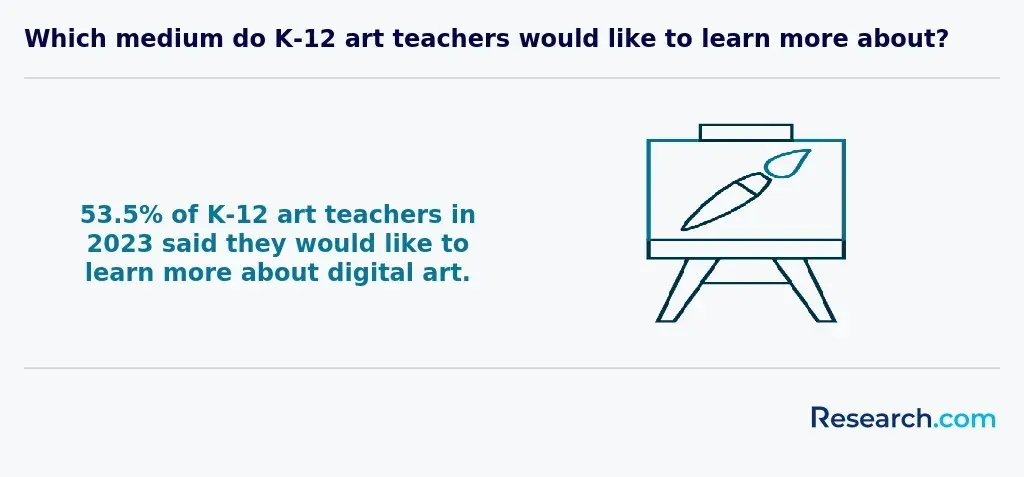
Digital art tools are now part of many visual arts programs. Teachers may use design software, tablets, online galleries, digital portfolios, interactive boards, video demonstrations, and collaborative platforms. The goal is not to replace drawing, painting, sculpture, or craft; it is to expand how students create, revise, present, and critique work.
- Digital portfolios: Students can document process work, final pieces, artist statements, and growth over time.
- Virtual galleries: Teachers can showcase student work for families and communities when district privacy rules allow.
- Design and media tools: Software can introduce illustration, graphic design, animation, photography, layout, and digital storytelling.
- Hybrid learning supports: Demonstration videos and online resources help students review techniques outside class time.
- Cross-disciplinary methods: Art teachers can borrow storytelling strategies from language arts; reviewing how to become an english teacher in New Jersey can offer useful perspective on literacy-rich instruction.
Use technology with clear learning goals. A digital tool is valuable when it improves creativity, access, critique, documentation, or career readiness—not when it merely makes a project look modern.
Career Advancement and Specializations for Art Teachers in New Jersey
Art teaching can lead to many long-term paths. Nearly 4% of K-12 teachers say career advancement opportunities would motivate them to pursue an advanced degree. In New Jersey, advancement may involve higher-level teaching assignments, curriculum leadership, department roles, district committees, or graduate study.
| Advancement Option | What It Involves | Preparation That Helps |
| Art department chair | Supports curriculum, budgeting, scheduling, and teacher collaboration. | Strong teaching record, leadership skills, and district trust. |
| Curriculum coordinator | Develops standards-aligned units, assessments, and district arts programming. | Graduate coursework, curriculum experience, and committee work. |
| Digital media specialist | Teaches or supports digital art, design, photography, animation, or media arts. | Technology training and a digital portfolio. |
| Art history or museum education focus | Connects visual culture, history, exhibitions, and community learning. | Art history coursework and partnerships with cultural institutions. |
| Therapeutic or inclusive arts focus | Uses adaptive strategies and expressive arts approaches to support diverse learners. | Special education training and careful attention to role boundaries. |
| Administration | Moves into supervisor, principal, or district leadership roles. | Additional endorsements such as Supervisor or Principal, when required. |
A master’s degree in art education or a related area can strengthen leadership options. Teachers who want a studio-focused graduate path may also compare affordable online MFA in visual arts programs.
-
: "
A New Jersey teacher described beginning as a middle school art teacher after Montclair State University, then taking on workshops and extra curriculum responsibilities before moving into an art curriculum coordinator role.
"
Resources and Support for New Art Teachers in New Jersey
New teachers need more than lesson ideas. They need mentors, standards guidance, supply systems, classroom routines, assessment tools, and a professional community that understands the realities of art education.
- New Jersey Art Education Association: NJAEA offers workshops, conferences, networking, and support from experienced art educators.
- New Jersey Department of Education resources: State portals provide standards, certification guidance, data, and curriculum-related information.
- District mentors: Many districts pair new teachers with experienced educators who can explain local expectations, grading systems, parent communication, and observation processes.
- Lesson-sharing platforms: Teachers Pay Teachers, Pinterest, and similar sites can provide ideas, but always adapt resources to New Jersey standards, your students, and your district policies.
- Professional communities: Social media groups, forums, and educator networks can help with quick problem-solving, material recommendations, and project inspiration.
- Local arts organizations: Museums, galleries, community art centers, and local artists can support field trips, guest talks, exhibitions, and community projects.
How Special Education Strategies Improve Art Instruction in New Jersey
Inclusive art teaching gives students multiple ways to participate, communicate, and demonstrate learning. Special education strategies can help art teachers support students with disabilities, English learners, students with sensory needs, and students who need extra structure without lowering artistic expectations.
- Break projects into smaller visual steps.
- Offer adapted tools, grips, templates, or alternative media when appropriate.
- Use demonstrations, written directions, icons, and exemplars together.
- Provide choices that preserve the learning goal while allowing different access points.
- Coordinate with special education teachers, paraprofessionals, occupational therapists, and families.
Teachers who want to specialize further may explore jobs with special education degree to understand how inclusive education credentials can expand career options.
How STEM and STEAM Connections Can Strengthen Art Instruction
Art and STEM connect naturally through design, geometry, color theory, architecture, engineering challenges, product design, data visualization, and digital media. STEAM lessons work best when both the art and STEM goals are clear—not when one subject is added as decoration.
- Use geometry to explore pattern, symmetry, perspective, and composition.
- Connect science to color mixing, light, materials, texture, and environmental art.
- Use engineering design cycles for sculpture, packaging, structures, or installation work.
- Collaborate with math or science teachers on shared vocabulary and assessment.
Teachers interested in cross-curricular planning may also review how to be a middle school math teacher in New Jersey to understand how math educators structure skill development and standards-based instruction.
How Additional Certifications Can Expand Your Teaching Expertise
Additional certifications can make an art teacher more versatile, but they should match a clear career goal. Do not add credentials only because they sound useful. Choose endorsements or graduate programs that support the students you want to serve, the roles you want to pursue, or the instruction you want to improve.
| Credential Direction | When It Makes Sense | Career Value |
| Special education | You want stronger skills for inclusive classrooms or co-teaching. | Can improve support for diverse learners and broaden school-based roles. |
| Supervisor or administration | You want department, curriculum, or school leadership. | May be required for formal leadership positions. |
| Technology or digital media | You want to teach digital art, design, photography, or media production. | Supports modern arts programming and portfolio-based electives. |
| Graduate art education | You want deeper pedagogy, curriculum design, or salary-lane advancement. | Can support advanced practice and long-term career growth. |
For example, a special education teacher certification in New Jersey can help art educators better understand accommodations, individualized supports, and inclusive instructional planning.
Benefits of Collaboration and Interdisciplinary Teaching for Art Educators
Collaboration helps art teachers avoid isolation and gives students richer learning experiences. Interdisciplinary projects can connect art with history, science, language arts, music, math, community issues, and technology.
- With history teachers: Students can create visual storytelling projects connected to historical events, movements, or cultural artifacts.
- With science teachers: Students can investigate natural forms, color, light, structures, sustainability, or scientific illustration.
- With language arts teachers: Students can pair artist statements, visual narratives, poetry, or critique writing with artwork.
- With elementary teachers: Art can reinforce observation, fine motor skills, vocabulary, and creative problem-solving.
If you are early in your education career and want a broader understanding of classroom foundations, this guide on how to become an elementary school teacher in New Jersey can help you compare generalist and specialist teaching roles.
How Mentorship and Professional Networking Shape an Art Teaching Career
Mentorship can shorten the learning curve for new art teachers. A good mentor helps with pacing, grading, parent communication, observation preparation, supply ordering, classroom layout, and district culture. Networking can also lead to exhibition opportunities, professional learning, curriculum projects, and job leads.
- Join state and local art education organizations.
- Attend district, regional, and statewide professional development events.
- Build relationships with art teachers at nearby schools.
- Connect with museums, libraries, galleries, and community arts organizations.
- Maintain a professional portfolio that includes teaching evidence as well as your artwork.
Art teachers who want to strengthen resource-based learning or interdisciplinary programming may find useful comparisons in how to become a librarian in New Jersey.
How Parent and Community Engagement Can Improve Art Education Outcomes
Art programs become stronger when families and communities see student work and understand its academic value. Community engagement can also help with materials, exhibitions, guest speakers, field experiences, and student motivation.
- Host student exhibitions in schools, libraries, municipal buildings, or local galleries.
- Invite local artists, designers, museum educators, or craftspeople to speak or demonstrate.
- Share curriculum goals with families so projects are understood as standards-based learning.
- Use community themes to connect artwork with local history, culture, or civic issues.
- Collaborate with other departments for schoolwide showcases and interdisciplinary events.
Community-based projects often connect naturally with social studies and historical inquiry. Educators interested in that connection may review what it takes to become a history teacher in New Jersey.
Private School Art Teaching Opportunities in New Jersey
Private schools can offer a different teaching environment from public districts. Some provide smaller classes, flexible curricula, strong parent involvement, or specialized arts programming. However, pay scales, benefits, certification expectations, and job security can vary widely by school.
| Public School Art Teaching | Private School Art Teaching |
| Requires New Jersey public school certification for most roles. | Certification expectations vary by school. |
| Salary and benefits often follow district contracts. | Compensation structures differ by institution. |
| Curriculum must align with state standards and district requirements. | Curriculum may be more flexible, depending on the school mission. |
| Hiring may be tied to district posting systems and union rules. | Hiring may rely more on direct applications, portfolios, and school fit. |
If you are considering this route, review how to become a private school teacher in New Jersey and ask each school directly about certification, benefits, teaching load, and curriculum expectations.
Common Challenges for Art Teachers in New Jersey and How to Handle Them
Art teachers often face challenges that are specific to studio-based education: limited budgets, large numbers of students, cleanup time, safety concerns, inconsistent skill levels, and pressure to prove that art is academically rigorous. These challenges are manageable when teachers plan systems instead of relying only on creativity.
| Common Mistake | Why It Causes Problems | Better Approach |
| Choosing a program without checking certification alignment | You may graduate without meeting New Jersey endorsement requirements. | Confirm approval, coursework, exams, and clinical practice before enrolling. |
| Looking only at tuition | Fees, transportation, supplies, exam costs, and lost work time affect total cost. | Compare full cost, financial aid, transfer credits, and completion time. |
| Assuming all online programs meet New Jersey rules | Online coursework may not automatically satisfy local certification or clinical requirements. | Ask the program and the state how the pathway applies to New Jersey. |
| Relying only on rankings or reputation | A well-known school may not be the best fit for your route, budget, or schedule. | Prioritize approval status, placement support, affordability, and outcomes. |
| Underestimating classroom management | Creative lessons can fail without routines for tools, movement, noise, and cleanup. | Teach procedures as deliberately as artistic techniques. |
| Assuming salary outcomes are guaranteed | Pay depends on district, contract, experience, education level, and openings. | Review actual district salary guides before accepting a position. |
Teachers who want to expand their understanding of child development and early learning may compare graduate options such as the cheapest online master's degree in early childhood education, especially if they work with younger students or want broader instructional expertise.
How Integrating Music Education Can Enhance Art Teaching
Music and visual art can work together in lessons about rhythm, mood, pattern, movement, culture, performance, and interpretation. A visual arts teacher might ask students to create abstract compositions inspired by sound, design album covers, study visual culture in music movements, or collaborate with music teachers on performances and exhibitions.
- Use rhythm and repetition to teach pattern and composition.
- Pair music from a historical period with visual artwork from the same era.
- Let students translate sound into line, color, texture, or motion.
- Collaborate with music educators on school showcases or interdisciplinary units.
For teachers interested in deeper cross-arts planning, this guide on how to become a music teacher in New Jersey provides a useful comparison of another arts education pathway.
Financial Aid, Grants, and Funding Opportunities for Future Art Teachers
Future art teachers should plan for both education costs and classroom material needs. Tuition, fees, commuting, supplies, Praxis exams, fingerprinting, certification applications, and unpaid or reduced-work student teaching can all affect affordability.
- Federal aid: Complete the FAFSA if you are eligible and compare grants, loans, and work-study options.
- Institutional scholarships: Ask colleges about education scholarships, art scholarships, transfer awards, and graduate assistantships.
- State and local arts grants: Arts organizations and public agencies may support arts education programming or classroom projects.
- District support: Some employers support professional development, tuition reimbursement, or classroom supplies.
- Loan forgiveness research: Teachers should review eligibility rules carefully before borrowing based on expected forgiveness.
If you are comparing funding across education pathways, review how to become a kindergarten teacher in New Jersey for another example of planning certification, costs, and employment steps.
What Graduates and New Teachers Often Say About the Path
- Many new art teachers say the most rewarding part is watching students gain confidence as they learn to express ideas visually. Jenny
- Teachers who work with diverse student groups often describe the classroom as a place where many cultural perspectives, styles, and personal stories come together. Amber
- Early-career educators frequently point to professional development, exhibitions, and collaboration with other teachers as major sources of growth. Simon
Data Points to Review Carefully Before Deciding
Several reported figures can help candidates understand the New Jersey art teaching landscape, but they should be verified against current state, district, and program sources before making financial or career decisions.
- As of 2023, about 80% of art teachers in the state hold a bachelor’s degree in art education or a related field.
- Salary.com reports that the average salary for an art teacher in the state is around $65,697 per year, with some teachers earning upwards of $90,000 depending on experience, location, and district.
- In 2023, New Jersey had a teacher shortage in the arts, with a reported 15% of art teaching positions unfilled.
- Aspiring art teachers must pass the Praxis II exam in Art Content Knowledge, and the pass rate for this exam in New Jersey is approximately 75%.
- As of 2023, about 20% of new art teachers in the state have used an alternative route to certification.
Related Articles for Nearby States
- 2027 How to Become an Art Teacher in Delaware: Requirements & Certification
- 2027 How to Become an Art Teacher in Pennsylvania: Requirements & Certification
- 2027 How to Become an Art Teacher in New York: Requirements & Certification
- 2027 How to Become an Art Teacher in Maryland: Requirements & Certification
- 2027 How to Become an Art Teacher in Connecticut: Requirements & Certification
- 2027 How to Become an Art Teacher in Rhode Island: Requirements & Certification
- 2027 How to Become an Art Teacher in Virginia: Requirements & Certification
- 2027 How to Become an Art Teacher in Massachusetts: Requirements & Certification
- 2027 How to Become an Art Teacher in West Virginia: Requirements & Certification
- 2027 How to Become an Art Teacher in Ohio: Requirements & Certification
References:
- Art of Education University. (2024). The state of art education 2024. The Art of Education University. Retrieved September 26, 2024.
- Morrison, R. (2020, February 3). State of the arts. New Jersey School Boards Association. Retrieved September 26, 2024.
- National Education Association. (2023, April 24). Educator pay data 2024. National Education Association | NEA. Retrieved September 26, 2024.
- New Jersey Department of Education. (2020, June). 2020 New Jersey student learning standards – Visual and performing arts. Official Web Site for the State of New Jersey. Retrieved September 26, 2024.
- New Jersey Department of Education. (2024). Data tables for New Jersey’s teacher workforce landscape 2024 annual report. Official Web Site for the State of New Jersey. Retrieved September 26, 2024.
- New Jersey Department of Education. (n.d.). Grant opportunities in arts education. Official Web Site for The State of New Jersey. Retrieved September 26, 2024.
- NJ Arts Standards. (2020). 2020 New Jersey student learning standards visual and performing arts. New Jersey Arts Standards. Retrieved September 26, 2024.
- Salary.com. (2024, September 1). Art teacher salary in New Jersey. Salary.com - Salary Calculator, Salary Comparison, Compensation Data. Retrieved September 26, 2024.
Key Insights
- The standard route is degree plus certification. Plan for a bachelor’s degree, required art credits, teacher preparation, exams, clinical practice, background clearance, and state certification.
- Coursework details matter. Do not assume any art degree qualifies. Confirm the 30 art-credit expectation, the 12 advanced-credit expectation, and the program’s New Jersey certification alignment before enrolling.
- Student teaching is a career test, not just a requirement. Use it to build classroom routines, assessment tools, mentor relationships, and a portfolio that proves you can teach art effectively.
- Salary should be evaluated by district and total compensation. New Jersey pay can be competitive, but the state’s cost of living is about 20% higher than the national average, so benefits, commute, salary guide placement, and advancement rules matter.
- Strong art teachers combine creativity with systems. The best candidates can design meaningful projects, manage materials and behavior, align lessons with standards, support diverse learners, and use technology when it improves learning.
- Career growth is possible. Art teachers can move into digital media, curriculum leadership, department chair roles, arts administration, inclusive education, STEAM collaboration, or advanced graduate study.
Other Things You Should Know About Becoming an Art Teacher in New Jersey
New Jersey-approved art teacher programs usually include at least 100 hours of early fieldwork before student teaching. These placements must be supervised and completed in schools, so candidates can practice classroom management, lesson planning, and art instruction before applying for certification through the New Jersey Department of Education.
Aspiring art teachers in New Jersey must complete a student teaching experience, typically lasting one semester, in a K-12 art classroom setting. This involves working under a certified teacher and gaining hands-on experience, which is essential for obtaining certification by the state's education department.