2027 How to Become a Care Case Manager: Salary & Career Paths

Co-Founder and Chief Data Scientist
Care case management is a career for people who want to solve one of healthcare’s biggest problems: patients often need help from many providers, programs, insurers, and community services, but those systems do not always communicate well. A care case manager helps close that gap by assessing needs, coordinating services, advocating for the patient, and making sure care plans are realistic after discharge or between appointments.
The role matters more as healthcare becomes harder to navigate for older adults, people with chronic conditions, patients with behavioral health needs, and families managing complex insurance or social service requirements. More than 112,432 case managers currently work across the U.S. (Zippia, 2025), and many employers look for professionals who combine clinical knowledge, communication skills, documentation accuracy, and resource coordination.
This guide explains how to become a care case manager, what the job involves, which degrees and certifications can help, where case managers work, how salaries vary, and how to decide whether this career path fits your goals. It also covers practical steps, common mistakes, and career options if you want to move into nursing, social work, administration, consulting, or advanced healthcare roles.
Quick Answer: How Do You Become a Care Case Manager?
Most care case managers enter the field with a bachelor’s degree in nursing, social work, healthcare administration, psychology, human services, or a related area. Many employers also prefer case management experience and a recognized certification. Depending on the credential, candidates may need 2,000 to 4,500 hours of paid case management work before they qualify for certification. Nurses, social workers, and healthcare professionals can all become care case managers, but the best path depends on the work setting and population they want to serve.
| Decision Point | What to Know |
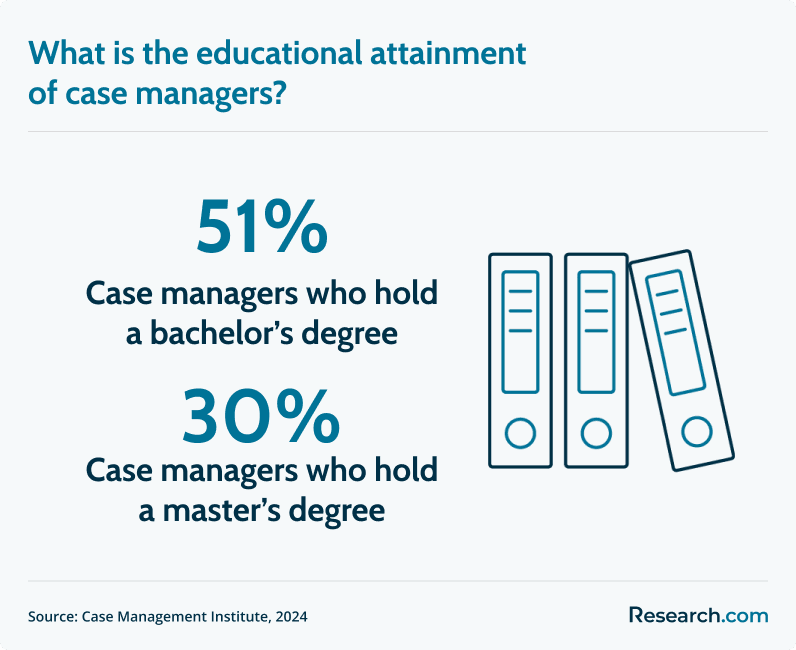
| Typical education | A bachelor’s degree is common, especially in nursing, social work, healthcare administration, or a related field. 51% of case managers in the workforce possess a bachelor’s degree (Gillingham, 2024). |
| Common employers | Hospitals, insurance companies, home health agencies, rehabilitation centers, nursing homes, community health organizations, and social service agencies hire case managers. |
| Certification value | Certification can improve credibility, support advancement, and may be required or preferred by employers in clinical and healthcare settings. |
| Salary range | Annual pay often falls between $70,000 and $100,000, but wages depend on role type, credentials, location, employer, and experience. |
| Best fit | This career suits people who are organized, patient, comfortable with documentation, and able to communicate with patients, families, clinicians, insurers, and community providers. |
Key Things You Should Know About Becoming a Care Case Manager
- Care case managers usually need education in nursing, social work, healthcare administration, human services, or a closely related field. Certification is not always mandatory, but it can make a candidate more competitive.
- Compensation varies by specialization and employer, but many care case managers earn wages in the $70,000 to $100,000 annual range.
- The job is not limited to hospitals. Case managers also work for insurance companies, rehabilitation providers, home health agencies, long-term care organizations, and community-based programs.
- The role requires both empathy and structure. A care case manager must understand the person’s needs while also managing documentation, care plans, deadlines, approvals, referrals, and transitions.
- What does a care case manager do?
- How do you become a care case manager for 2027?
- What are the different types of case managers?
- What are the best certifications for care case managers?
- Where do care case managers work?
- What is the career progression for a care case manager?
- How much do care case managers make?
- How can you balance certification expenses with career advancement?
- Can affordable education accelerate a care case manager's career?
- What are the benefits of continuous professional development for care case managers?
- Can interdisciplinary studies enhance the effectiveness of care case managers?
- What role does nutritional expertise play in comprehensive case management?
- Can a biology background boost my effectiveness as a care case manager?
- How can digital innovation empower care case managers?
- What challenges do care case managers typically face?
- What are the differences between care case managers vs similar roles?
- What career paths can care case managers take?
- What is the job outlook for care case managers?
What does a care case manager do?
A care case manager coordinates medical, behavioral, social, and practical support for people who need help navigating care. The work can include reviewing patient needs, building care plans, communicating with providers, arranging services, monitoring progress, and helping patients move safely from one care setting to another.
At its core, the job is about making care more organized and less fragmented. Case managers often act as the person who keeps everyone aligned: the patient, family, physicians, nurses, social workers, therapists, insurers, discharge planners, and community agencies.
Research summarized by Giardino and De Jesus identifies six core tasks of a care case manager from Lukersmith et al. (2016):
- Finding eligible patients: Case managers review referrals, records, risk factors, and service criteria to identify people who may benefit from case management support.
- Completing a patient assessment: They collect information about health status, functional limitations, behavioral health needs, family support, living conditions, transportation barriers, finances, and other factors that affect care.
- Creating a care plan and setting goals: After the assessment, they develop a plan with measurable short- and long-term goals. The plan may address treatment adherence, safety, independence, quality of life, follow-up care, or access to community resources.
- Putting the plan into action: Case managers coordinate referrals, appointments, transportation, equipment, authorizations, home care, therapy, medication access, or other services needed to carry out the plan.
- Tracking progress: They monitor notes, outcomes, patient feedback, service utilization, and provider updates to decide whether the care plan is working or needs adjustment.
- Managing transitions and discharge: They help patients move between hospitals, rehabilitation facilities, home care, outpatient services, or long-term care while reducing confusion, missed follow-ups, and avoidable complications.
The role can be emotionally demanding because case managers often work with patients during stressful, high-risk, or resource-limited situations. It can also be highly meaningful for professionals who want to improve access, reduce gaps in care, and help people follow through on treatment plans.
| Daily Responsibility | What It Looks Like in Practice | Why It Matters |
| Assessment | Reviewing records, interviewing patients, and identifying clinical and social barriers | Helps the team understand what the patient actually needs beyond the diagnosis |
| Care planning | Setting goals, documenting interventions, and assigning next steps | Creates a practical roadmap for the patient, family, and care team |
| Coordination | Scheduling services, confirming referrals, and communicating across providers | Reduces delays, duplication, and missed care |
| Advocacy | Helping patients understand options, benefits, and available resources | Supports informed decisions and better access to care |
| Monitoring | Following outcomes and updating the plan as conditions change | Keeps care responsive instead of static |
How do you become a care case manager for 2027?
The path to becoming a care case manager usually combines formal education, supervised or paid experience, and professional certification. The exact requirements depend on whether the role is clinical, social service-based, insurance-focused, or administrative.
- Choose the right educational foundation. Many employers expect at least a bachelor’s degree in nursing, social work, healthcare administration, psychology, public health, human services, or a related field. 51% of case managers in the workforce possess a bachelor’s degree (Gillingham, 2024). People who already have a non-nursing degree but want a clinical nursing route may compare online ABSN programs as a faster transition into registered nursing.
- Build experience with patients, clients, or healthcare systems. Entry-level healthcare, social service, counseling, patient advocacy, insurance, discharge planning, or community service roles can help candidates learn how care coordination works. Depending on the certification, candidates may need 2,000 to 4,500 hours of paid work experience in case management services.
- Learn documentation, benefits, and care coordination systems. Case managers spend significant time writing notes, updating care plans, reviewing eligibility, communicating with payers, and tracking outcomes. Strong documentation habits are essential.
- Select a certification that matches your background. A nurse case manager, social work case manager, and general healthcare case manager may pursue different credentials. The best certification depends on your degree, license, work setting, and career goals.
- Consider graduate study if you want leadership or specialization. A master’s degree in nursing, social work, public health, healthcare administration, or healthcare management may support movement into supervision, program management, utilization review leadership, policy, or executive roles.
| Path | Best For | Typical Next Step |
| Nursing route | People who want clinical credibility and roles in hospitals, managed care, utilization review, or complex medical coordination | Earn RN preparation, gain clinical experience, then pursue nurse case management roles or certification |
| Social work route | People interested in behavioral health, community resources, discharge planning, housing, family systems, and vulnerable populations | Earn a social work degree, gain supervised experience, and pursue case management or social work credentials |
| Healthcare administration route | People interested in operations, insurance coordination, quality improvement, and care delivery systems | Build experience in healthcare coordination, benefits, operations, or program support |
| Human services or psychology route | People focused on mental health, disability services, substance use, aging services, or community-based support | Start in client-facing support roles and gain experience with assessments, referrals, and service plans |
This career is not a single-track profession. A candidate with a nursing license may qualify for different roles than a candidate with a social work background. Before choosing a degree or certificate, review job postings in your target setting and note the required degree, license, experience, and preferred credential.
What are the different types of case managers?
Case management is used across healthcare, insurance, behavioral health, rehabilitation, disability services, and social services. The title may be similar across settings, but the work can differ significantly depending on the population served and the employer’s goals.
- Hospital case managers: These professionals support care from admission through discharge. They coordinate services, prepare discharge plans, communicate with families, arrange follow-up care, and help reduce avoidable readmissions.
- Health insurance case managers: These case managers work with members, claims, authorizations, benefits, utilization review, and care access. Their role often includes helping patients use covered services efficiently while meeting payer requirements.
- Disability case managers: These specialists help people with disabilities access medical care, accommodations, benefits, assistive services, and community supports. Advocacy and knowledge of public programs are often important.
- Nurse case managers: Nurse case managers are registered nurses who use clinical training to evaluate care needs, coordinate treatment, support transitions, and communicate with providers. Nurses who want advanced preparation may compare the cheapest MSN programs if graduate study fits their career plan.
- Substance abuse case managers: These professionals connect clients with treatment programs, counseling, recovery resources, housing support, and community services. They may also help monitor recovery goals and coordinate crisis support.
- Mental health case managers: These case managers help clients access therapy, medication management, psychiatric care, peer support, social services, and crisis resources. They often collaborate with psychiatrists, therapists, social workers, and community agencies.
Choosing a specialty should start with two questions: which population do you want to support, and what type of work environment can you sustain? Hospital work can be fast-paced and discharge-driven, while community-based roles may involve deeper work with housing, family systems, behavioral health, and long-term support needs.
What are the best certifications for care case managers?
Certification can help demonstrate that a case manager understands assessment, planning, care coordination, ethics, transitions, resource management, and patient advocacy. Some employers require certification after hire, while others use it as a preferred qualification for promotion or specialized roles.
The best certification is the one that matches your degree, license, and work setting. A registered nurse working in a hospital may not need the same credential as a social worker in a community program or a case manager working for an insurance company.
| Certification | Best Fit | What It Signals |
| American Case Management Association (ACMA) – Accredited Case Manager-RN | Registered nurses in hospital or health system case management | Competence in acute care case management, transitions, and patient-centered coordination. The latest Case Management Institute Report notes that 86% of case managers are nurses while 9.4% are social workers (Gillingham, 2024). |
| ACMA – Accredited Case Manager-SW | Social workers in hospital or health system case management | Ability to apply social work knowledge, ethics, and care coordination in acute care environments. Candidates often have preparation from accredited MSW online programs or relevant licensure, although bachelor’s degrees may also qualify in some cases. |
| National Association of Social Workers – Certified Social Work Case Manager (C-SWCM) or Certified Advanced Social Work Case Manager (C-ASWCM) | Social workers at different experience levels | Professional preparation for client advocacy, complex service coordination, and social work-based case management. |
| Commission for Case Manager Certification (CCMC) – Certified Case Manager | Case managers across multiple healthcare and service settings | Broad competency in managing complex cases, coordinating services, and applying case management principles. |
| American Nurses Credentialing Center (ANCC) Case Management Nurse – Board Certified CMGT-BC | Registered nurses who want a nursing-specific case management credential | Knowledge of clinical assessment, care coordination, interventions, and patient advocacy from a nursing perspective. |
Before paying for an exam or review course, confirm eligibility rules directly with the certifying organization. Requirements can include degree type, professional license, supervised experience, paid work hours, and agreement to ethical standards.
Where do care case managers work?
Care case managers work wherever patients or clients need help connecting services, benefits, treatment, and follow-up care. The setting strongly affects the pace, documentation style, patient population, and advancement options.
- Hospitals: Hospital case managers focus on admissions, discharge planning, care transitions, insurance coordination, and post-discharge support. This environment is often fast-moving and deadline-driven.
- Insurance companies: Case managers in insurance settings may review needs, coordinate covered services, support utilization management, and help members understand benefits. Around 37% of case managers are employed by insurance companies (Gillingham, 2024).
- Home health agencies: These case managers coordinate care for patients receiving services at home, such as nursing, therapy, medication support, chronic disease management, or safety monitoring.
- Rehabilitation centers: Case managers in rehabilitation settings help patients recovering from injuries, surgeries, strokes, or serious illness transition through therapy, equipment needs, family education, and discharge planning.
- Social service agencies: Case managers with social work preparation may work in government or nonprofit agencies serving people who need housing, food support, disability services, behavioral health care, benefits assistance, or family support. Graduates of both high-cost and cheapest online social work degree programs may pursue these roles if they meet employer and state requirements.
Work arrangement also varies. A large share of case managers work from home, with 49% providing services from home. Meanwhile, 26% work in hospital settings, and 14% work in hybrid setups (Gillingham, 2024).
| Work Setting | Advantages | Trade-Offs |
| Hospital | Strong exposure to interdisciplinary teams, acute care, and discharge planning | Fast pace, urgent timelines, and heavy documentation demands |
| Insurance company | Remote or hybrid opportunities may be available, with structured processes and benefits knowledge | Work may involve utilization criteria, authorization rules, and payer-focused documentation |
| Home health | Direct view of patient living conditions and long-term care needs | Travel, safety considerations, and coordination across multiple home-based providers |
| Rehabilitation | Meaningful work with recovery goals, therapy teams, and functional improvement | Requires careful transition planning and family education |
| Community or social service agency | Strong focus on advocacy, access, and social determinants of health | Resource shortages and high caseloads can make the work challenging |
This chart displays the biggest categories of employment of case managers.
What is the career progression for a care case manager?
Care case managers can advance by gaining experience, earning credentials, specializing in a population, moving into leadership, or expanding into healthcare administration, quality improvement, utilization management, education, consulting, or policy. Progression is not automatic; it usually depends on measurable outcomes, strong documentation, certification, leadership ability, and knowledge of healthcare systems.
- Entry-level case manager: Early roles usually involve assessments, service coordination, referrals, patient communication, and routine care plan updates. This stage builds the foundation for understanding patient barriers and system workflows.
- Experienced or mid-level case manager: With experience, professionals may manage more complex cases, mentor new staff, work with high-risk populations, or coordinate across multiple service systems.
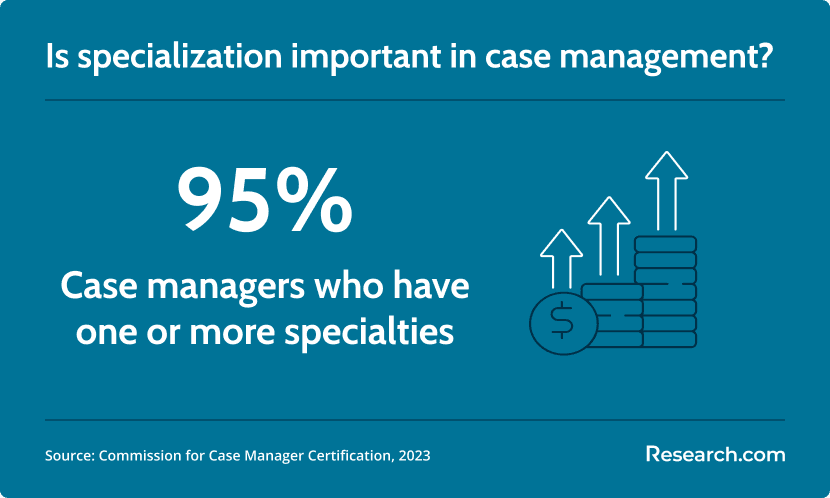
- Specialist case manager: Some professionals focus on areas such as behavioral health, transplant, oncology, workers’ compensation, geriatrics, rehabilitation, disability services, substance use, or chronic disease management. 95% of case managers have gained at least one specialty (CCMC, 2023).
- Supervisor or manager: Leadership roles may include caseload oversight, staff training, quality reporting, workflow design, compliance, and program evaluation.
- Administrator or executive pathway: Case managers interested in operations and leadership may pursue graduate education. A cheap online MBA healthcare administration can be one option for professionals who want business, finance, and management preparation for healthcare leadership roles.
| Career Stage | Common Focus | How to Strengthen Your Candidacy |
| Early career | Assessment, referrals, documentation, patient communication | Build direct service experience and learn care planning standards |
| Mid-career | Complex cases, payer communication, transitions, specialty populations | Earn a relevant certification and document outcomes |
| Advanced practice or specialist | High-risk populations, specialty service lines, clinical or psychosocial complexity | Pursue specialty training and deepen interdisciplinary expertise |
| Leadership | Supervision, program operations, quality improvement, compliance | Develop management skills and consider graduate education |
How much do care case managers make?
Care case manager pay depends on education, license, specialty, certification, employer, location, and experience. On average, care case managers make approximately $80,000 per year, with about 77% of professionals in this field earning close to that amount (CCMC, 2023). The CMI report also shows that many case managers earn between $80,000 and $89,999 (26%). Around 16% take home $90,000 to $99,999 yearly, and 14% make $70,000 to $79,999.
Specialization can make a meaningful difference. Social work case managers earn $58,142 yearly, with some earning as much as $77,538 (National Association of Social Workers, n.d.). Nurse case managers make around $80,710, with others earning $98,869 or higher (McCoy, 2024).
Location also affects pay. Higher-cost states and metro areas may offer stronger wages, while rural or lower-cost regions may have lower salary ranges. Employer type matters as well: hospital systems, insurers, managed care organizations, government agencies, and nonprofits may structure compensation differently.
Experience and credentials can influence salary growth. Entry-level case managers may start lower, while certified professionals, nurse case managers, supervisors, and specialists often have stronger earning potential. Professionals interested in leadership can also explore case manager jobs you can get with an MHA, especially in healthcare operations, administration, and coordination-focused leadership.
| Salary Factor | How It Can Affect Earnings |
| Professional background | Nurse case managers and social work case managers may have different salary ranges because of licensing, clinical responsibilities, and employer expectations. |
| Certification | Credentials can support promotion, specialized assignments, and employer confidence in professional competence. |
| Work setting | Insurance companies, hospitals, nonprofits, home health agencies, and government programs may use different compensation structures. |
| Location | Regional demand and cost of living can influence wages. |
| Experience level | Professionals who manage complex cases, train staff, or supervise teams may qualify for higher pay. |
In the chart below, the salary information shows typical earnings patterns for care case managers.
How can you balance certification expenses with career advancement?
Certification can be a smart investment, but it should not be chosen only because it sounds impressive. Start by checking whether your target employers request a specific credential. Then compare eligibility rules, exam fees, renewal requirements, continuing education costs, and whether your employer offers reimbursement.
A practical approach is to match certification spending to a clear career goal. If you want to move into hospital-based case management, choose a credential recognized in that setting. If you want to work in insurance, utilization review, or medical billing-related coordination, it may also be useful to understand adjacent training areas such as billing and coding certification cost. The goal is not to collect credentials; it is to build skills that employers value.
Can affordable education accelerate a care case manager's career?
Affordable education can help if it fills a real skills gap: medical terminology, documentation, patient communication, insurance processes, population health, quality improvement, or leadership. It is less useful when it duplicates knowledge you already have or does not connect to your target job.
For some learners, a lower-cost healthcare credential may be a first step toward patient-facing experience. For example, comparing the cheapest online medical assistant program options may make sense for students who want an entry point into clinical environments before pursuing case management, nursing, social work, or healthcare administration.
What are the benefits of continuous professional development for care case managers?
Care case managers need continuing education because healthcare rules, payer requirements, technology systems, patient populations, and treatment models change over time. Professional development can improve interviewing skills, documentation quality, care transition planning, ethics, cultural competence, team communication, and leadership readiness.
Short programs can also help case managers understand roles they coordinate with. For example, a certified medical assistant program may not be the same as case management training, but knowledge of front-office workflows, basic clinical support, and patient intake can help case managers communicate more effectively with ambulatory care teams.
Can interdisciplinary studies enhance the effectiveness of care case managers?
Yes, interdisciplinary knowledge can make a case manager more effective when it directly improves care planning. Many patients need more than medical appointments. They may need help with mobility, nutrition, medication access, behavioral health, housing, transportation, insurance, family support, or health education.
For example, understanding movement, rehabilitation, and exercise science can help a case manager collaborate more effectively with physical therapists, occupational therapists, and rehabilitation teams. Professionals interested in that area may explore online kinesiology programs to understand how physical function, wellness, and recovery goals can fit into a broader care plan.
What role does nutritional expertise play in comprehensive case management?
Nutrition can affect recovery, chronic disease management, medication adherence, mental health, and overall wellness. Case managers do not replace dietitians or licensed nutrition professionals, but they often identify when a patient needs nutrition support and coordinate referrals or education resources.
For care managers working with diabetes, heart disease, aging-related conditions, post-surgical recovery, or food insecurity, nutritional awareness can improve referral decisions and patient advocacy. Those considering a deeper nutrition-focused career path can review how to become a registered nutritionist and determine whether that direction aligns with their professional goals and state requirements.
Can a biology background boost my effectiveness as a care case manager?
A biology background can be useful for case managers who work closely with clinical teams. Understanding anatomy, physiology, disease processes, medications, and lab concepts can make it easier to interpret records, ask better questions, and recognize when a plan may need clinical review.
Biology alone does not replace nursing, social work, or healthcare administration preparation, but it can strengthen scientific literacy. Students who want a cost-conscious science foundation may compare options for a cheap online bachelor's degree in biology while also checking whether employers in their target case management setting require a specific professional degree or license.
How can digital innovation empower care case managers?
Digital tools are reshaping case management by making it easier to document care plans, share updates, monitor progress, track utilization, manage referrals, and communicate with remote patients or interdisciplinary teams. Electronic health records, care coordination platforms, telehealth, secure messaging, and analytics can improve efficiency when used well.
Technology also creates new expectations. Case managers increasingly need comfort with data entry, privacy rules, virtual communication, workflow dashboards, and quality metrics. Professionals who want to update their healthcare skills may review medical certification online options, but they should choose programs that teach skills relevant to their current or target role.
What challenges do care case managers typically face?
Care case management can be rewarding, but the role comes with real pressure. Case managers often balance high caseloads, documentation deadlines, complex patient needs, limited resources, insurance rules, family concerns, and communication gaps between providers.
- Administrative burden: Documentation, authorizations, care plan updates, and compliance requirements can take time away from direct patient interaction.
- Resource limitations: Patients may need services that are unavailable, unaffordable, delayed, or not covered by insurance.
- Complex care needs: Many cases involve overlapping medical, behavioral, social, financial, and family challenges.
- Interdisciplinary communication: Case managers must coordinate across professionals who may use different systems, priorities, and timelines.
- Technology changes: New platforms can improve efficiency, but they also require training and adaptation.
- Emotional strain: Advocating for people in crisis can be stressful, especially when support options are limited.
One way to manage these challenges is to build specialized knowledge and a strong professional network. In some healthcare pathways, professionals may also consider advanced clinical education, such as cheap online Pharm D programs, although that route is appropriate only for those pursuing pharmacy-focused professional goals.
What are the differences between care case managers vs similar roles?
Care case managers often work alongside nurses, social workers, counselors, administrators, therapists, and patient advocates. The overlap can be confusing, especially because job titles vary by employer. The main difference is that case managers focus on coordinating services and helping the patient move through systems, while other roles may focus more heavily on clinical treatment, therapy, operations, or direct social work services.
| Role Comparison | Main Difference | When This Path May Fit Better |
| Care case manager vs. social worker | Social workers often address psychosocial needs, benefits, family systems, advocacy, and, in clinical roles, therapy or emotional support. Care case managers concentrate on coordinating services, managing care plans, and connecting medical and social supports. | Choose social work if you want deeper training in social systems, counseling-related support, advocacy, and community resources. |
| Care case manager vs. registered nurse | Registered nurses provide clinical care, monitor patients, administer treatments, and support physicians. Nurse case managers use clinical knowledge to coordinate care rather than focusing only on bedside or direct clinical tasks. | Choose nursing if you want clinical licensure and broader direct-care options. |
| Care case manager vs. counselor | Counselors provide therapeutic support for mental health, emotional, behavioral, or substance-related concerns. Case managers coordinate services and resources that support the broader care plan. | Choose counseling if your primary interest is therapy and behavioral health treatment. |
| Care case manager vs. healthcare administrator | Healthcare administrators manage operations, budgets, staffing, compliance, and organizational strategy. Care case managers work more directly with patients and care teams. An accelerated healthcare management degree online may support a shift into administration. | Choose healthcare administration if you want to manage systems, teams, and operations instead of individual caseloads. |
If you are unsure which role fits, review job postings and compare daily responsibilities. A title can be misleading; the duties, required credentials, and patient population reveal the real nature of the job.
What career paths can care case managers take?
Care case management can be a long-term career or a bridge to other healthcare, social service, administrative, or clinical roles. The best next step depends on whether you want more patient contact, more clinical authority, more leadership, or more specialized expertise.
The following roles are related career options for care case managers. Salary data comes from the U.S. Bureau of Labor Statistics and PayScale:
- Counselors ($65,100): Counselors help people address mental health concerns, substance use, trauma, stress, and major life transitions through assessment, therapeutic support, and referrals.
- Health Education Specialists ($71,700): These professionals create and deliver wellness, prevention, and public health education programs for communities, schools, healthcare organizations, and nonprofits.
- Health Information Technologists ($73,410): These specialists manage electronic health records, data quality, privacy, accessibility, and health information systems that support clinical and administrative work.
- Healthcare Consultants ($88,534): Consultants help healthcare organizations improve workflows, case management processes, quality measures, staffing models, and operational performance.
- Epidemiologists ($94,160): Epidemiologists analyze disease patterns, population health trends, risk factors, and public health interventions for agencies, research institutions, and health organizations.
- Physical Therapists ($102,400): Physical therapists help patients restore movement, manage pain, and recover function after injury, surgery, illness, or chronic physical limitations.
- Nurse Practitioners ($132,000): Nurse practitioners are advanced practice registered nurses who diagnose conditions, manage treatment plans, and prescribe medications in many clinical settings.
- Physician Assistants ($136,900): Physician assistants diagnose illness, create treatment plans, order tests, and prescribe medication while practicing under physician supervision requirements.
- Healthcare Administrators ($137,730): Healthcare administrators oversee facilities, departments, staff, budgets, compliance, patient care standards, and operational performance. Case managers interested in leadership can learn more about the roles and responsibilities of a healthcare administrator.
- Health Educators ($137,900): Health educators teach health-related content in colleges, universities, training organizations, or professional education settings.
Some case managers also move into specialized clinical pathways. For example, nurses interested in maternal and reproductive care can review CNM job requirements to understand how certified nurse midwifery differs from case management and what additional preparation is required.
Advancement should be intentional. If you want higher pay, leadership, or clinical authority, identify the credential or degree that leads directly to that goal rather than accumulating unrelated certificates.
In the following chart, the average annual wages of related career pathways for care case managers are illustrated.
What is the job outlook for care case managers?
The U.S. Bureau of Labor Statistics does not publish a separate employment outlook specifically for care case managers. Many case management roles are grouped under broader categories. Medical and health services managers are projected to grow by 28.5% from 2023 to 2033, while social and community service managers are projected to grow by 8.2% during the same period.
Several forces support demand for care coordination. Healthcare systems are complex, chronic disease management often requires multiple providers, and many patients need help navigating medical, behavioral, social, and financial barriers. Aging is also a major factor: the number of people aged 60+ is projected to double to 2.1 billion by 2050 (World Health Organization, 2024).
The Case Management Society of America (CMSA, n.d.) also points to the increasing incidence of substance use disorders, mental health issues, and disabilities as factors that can increase the need for skilled case managers. These populations often require coordinated medical care, behavioral health support, social services, and long-term follow-up.
Professionals who want to move into leadership or operations should compare education pathways carefully. Understanding the difference between healthcare management and healthcare administration degrees can help align graduate study with long-term career goals.
Is becoming a care case manager worth it?
Becoming a care case manager can be worth it for people who want meaningful healthcare work without necessarily spending every day in direct bedside care. The career offers multiple entry points, strong relevance across healthcare settings, and opportunities to specialize or move into leadership.
It may not be the right fit for someone who dislikes documentation, complex systems, difficult conversations, or high caseloads. Case managers must be comfortable balancing compassion with policy, benefits rules, deadlines, and resource limits.
| This Career May Be a Good Fit If You... | Consider Another Path If You... |
| Enjoy coordinating details and solving practical care barriers | Want a role with minimal paperwork or system navigation |
| Can communicate clearly with patients, families, providers, and insurers | Prefer independent work with little team coordination |
| Want to advocate for people with complex needs | Find emotionally intense situations difficult to manage |
| Are interested in healthcare but not limited to one clinical setting | Want a role focused only on direct treatment or therapy |
| Can adapt when resources are limited or care plans change | Need predictable tasks and low-conflict communication |
How to choose the right education or certification path
The best preparation depends on the setting where you want to work. A hospital may prioritize nursing or social work credentials. A community agency may value human services or social work experience. An insurance company may look for clinical background, utilization review experience, or payer knowledge.
- Start with job postings in your target area. Look for repeated degree, license, experience, and certification requirements.
- Confirm accreditation and state requirements. If a program leads to nursing, social work, counseling, or another licensed field, make sure it meets the requirements in the state where you plan to work.
- Compare total cost, not tuition alone. Include fees, books, technology, exam costs, travel, lost work time, background checks, and renewal expenses.
- Ask about fieldwork or clinical placement support. Experience is essential for many case management roles and certifications.
- Choose credentials tied to your work setting. A certification is most useful when employers recognize it and the eligibility rules match your background.
- Evaluate return on investment realistically. Salaries are not guaranteed. Compare expected pay, local job openings, employer requirements, and your current financial situation before enrolling.
Common mistakes to avoid
- Choosing a program without checking accreditation: This can create problems for licensure, certification, financial aid, transfer credit, or employer recognition.
- Focusing only on tuition: A low tuition price may not include fees, books, exam costs, placement expenses, or certification renewal costs.
- Assuming all online programs meet licensure rules: Online nursing, social work, counseling, and healthcare programs may have state-specific requirements.
- Selecting a certification before reviewing eligibility: Some credentials require a specific degree, license, or paid case management experience.
- Ignoring experience requirements: Many case management roles and certifications require practical experience, not just coursework.
- Relying only on rankings: Rankings can help narrow options, but employer recognition, placement support, cost, accreditation, and curriculum fit are more important.
- Assuming salary outcomes are guaranteed: Pay depends on location, employer, credentials, specialization, and experience.
Questions to ask before pursuing care case management
- Do I want to work in hospitals, insurance, home health, rehabilitation, behavioral health, disability services, or community programs?
- Do local employers prefer nursing, social work, healthcare administration, or human services backgrounds?
- Will I need a license, certification, or graduate degree for the roles I want?
- Can I handle documentation, compliance, benefits rules, and care coordination deadlines?
- Am I comfortable advocating for patients when resources are limited?
- Does the salary range in my region justify the education and certification costs?
- What experience can I gain now to qualify for case management roles later?
Key Insights
- Care case management is a coordination-focused healthcare career that connects patients with medical, behavioral, social, and practical support.
- Most professionals enter with a background in nursing, social work, healthcare administration, human services, or a related field; 51% of case managers in the workforce possess a bachelor’s degree (Gillingham, 2024).
- Certification can improve credibility, but the right credential depends on your degree, license, work setting, and target employer.
- 86% of case managers are nurses while 9.4% are social workers, showing that clinical and social work pathways are both important in the field.
- Around 37% of case managers are employed by insurance companies, and many also work in hospitals, home health, rehabilitation, and social service settings.
- 95% of case managers have gained at least one specialty, so specialization is a common advancement strategy.
- Care case managers make approximately $80,000 per year, with about 77% of professionals in this field earning close to that amount.
- Around 16% take home $90,000 to $99,999 yearly, and 14% make $70,000 to $79,999, but salary varies by role, location, employer, experience, and credentials.
- The career is best for organized communicators who can combine empathy with documentation, problem-solving, advocacy, and system navigation.
References:
- American Case Management Association. (n.d.). ACM Certification Exam. Retrieved April 4, 2025, from https://www.acmaweb.org/acm/default.aspx?nav=info
- Case Management Society of America. (n.d.). What is a case manager? Retrieved April 4, 2025, from https://cmsa.org/who-we-are/what-is-a-case-manager
- Commission for Case Manager Certification. (2023). Growth, Benefits and Value: 2023 Insight Into Today’s CCM Certificant. https://ccmcertification.org/sites/ccmc/files/images/2023/CCMC%202023%20INSIGHT%20FINAL.pdf
- Gillingham, D. C. (2024). Case Management Salary and Trends Survey Report 2024. Case Management Institute. https://casemanagementinstitute.com/case-manager-salaries-show-strong-growth-trend
- McCoy, A. (2024, October 25). How Much Do Case Management Nurses Make? NursingEducation.org. https://nursingeducation.org/careers/case-management-nurse/salary
- PayScale. (2025, January 27). Average Healthcare Consultant Salary. Retrieved April 3, 2025, from https://www.payscale.com/research/US/Job=Healthcare_Consultant/Salary
- U.S. Bureau of Labor Statistics. (2024, August 29). Occupational projections, 2023–33, and worker characteristics, 2023 (Numbers in thousands). Employment Projections. https://www.bls.gov/emp/tables/occupational-projections-and-characteristics.htm
- World Health Organization. (2024, October 1). Ageing and Health. https://www.who.int/news-room/fact-sheets/detail/ageing-and-health
- Zippia. (2025, January 8). Case Manager demographics and statistics in the US. Retrieved April 5, 2025, from https://www.zippia.com/case-manager-jobs/demographics
Other Things You Should Know About Becoming a Care Case Manager
A bachelor's degree in social work, nursing, or a related field is typically necessary for a care case manager role in 2027. Some employers may prefer a master's degree, and coursework in healthcare administration or policy can be beneficial.
The CCM from the Commission for Case Manager Certification is the best-known credential, and the ACMA ACM is widely used in acute care settings. Employers often prefer candidates with a valid RN, social work, or human services background plus 2,000 hours of case management experience for certification eligibility.
To become a care case manager in 2027, a bachelor's degree in a related field such as social work or nursing is typically required. Additionally, certification as an Accredited Case Manager (ACM) or Certified Case Manager (CCM) bolsters qualifications and is often favored by employers.