2027 How to Become a Social Worker in North Dakota

Co-Founder and Chief Data Scientist
Becoming a social worker in North Dakota requires more than choosing a degree and applying for a job. You need to understand which credential fits your career goal, how supervised experience works, what employers expect in rural and tribal communities, and whether the cost of training makes sense for the salary and job market. This guide is for students, career changers, and current human services workers who want a practical roadmap to social work education, licensure, field experience, and career planning in North Dakota.
North Dakota’s social work labor market is small and specialized, with only 0.329 social work positions per 1,000 jobs. That makes careful planning important. The right program, internship, supervisor, and specialization can make a meaningful difference in how quickly you qualify, where you can work, and how competitive you are for available roles.
Quick Answer: How do you become a social worker in North Dakota?
To become a social worker in North Dakota, you generally need to complete a CSWE-accredited Bachelor of Social Work (BSW) or Master of Social Work (MSW), meet the supervised experience requirements for your intended license level, pass the appropriate Association of Social Work Boards (ASWB) exam, and apply through the North Dakota Board of Social Work Examiners. Candidates who want independent clinical practice typically need graduate education, supervised clinical experience, and the clinical licensing exam.
Key Things to Know About Becoming a Social Worker in North Dakota
- Social workers in North Dakota earn a median annual salary of $76,760.
- By 2030, the state is projected to employ around 180 social workers.
- North Dakota anticipates 0% growth in social worker employment between 2020 and 2030.
- What does a social worker do in North Dakota?
- What education do you need to become a social worker in North Dakota?
- What licenses are available for social workers in North Dakota?
- How much do social workers make in North Dakota?
- What is the job outlook for social workers in North Dakota?
- Which social work specializations are useful in North Dakota?
- How can social workers advance their careers in North Dakota?
- How can specialized certifications strengthen a North Dakota social work career?
- How can interdisciplinary work improve community outcomes in North Dakota?
- How can marriage and family therapy complement social work practice?
- How do you maintain licensure through continuing education?
- How do you choose the right social work program in North Dakota?
- How do you get field experience and internships in North Dakota?
- What networking options are available for North Dakota social workers?
- How much does it cost to become a social worker in North Dakota?
- What financial aid options can social work students use?
What does a social worker do in North Dakota?
Social workers help individuals, families, groups, and communities manage serious life challenges. In North Dakota, their work often reflects the state’s rural geography, aging population, tribal communities, limited local service networks, and ongoing behavioral health needs. A social worker may support a child in foster care, connect an older adult with home-based services, help a veteran access treatment, coordinate care after a hospital discharge, or provide counseling to a client facing substance use or mental health concerns.
The exact duties depend on license level, employer, and specialization, but many North Dakota social workers handle responsibilities such as:
- Assessing client needs: Social workers evaluate safety, family dynamics, mental health, housing, medical needs, income stability, and access to community resources.
- Creating service plans: They build practical intervention plans that may include counseling, referrals, case management, crisis response, benefits navigation, or family support.
- Providing counseling or therapeutic support: In areas with fewer mental health professionals, licensed social workers may play an important role in behavioral health access, particularly when they have clinical credentials.
- Coordinating with agencies: Social workers often work with schools, courts, hospitals, tribal programs, child welfare agencies, veteran services, and the North Dakota Department of Human Services.
- Advocating for clients: Advocacy can involve helping a client obtain services, explaining rights and options, addressing barriers to care, or contributing to policy discussions.
| Work setting | Typical responsibilities | Why it matters in North Dakota |
| Hospitals and clinics | Discharge planning, care coordination, crisis support, patient advocacy | Rural patients may need help navigating transportation, follow-up care, and limited specialist access. |
| Schools | Student support, family outreach, attendance concerns, behavioral interventions | Small districts may rely on social workers to connect students with mental health and family services. |
| Child welfare agencies | Safety assessments, foster care support, permanency planning, family services | Workers need strong documentation, cultural awareness, and crisis management skills. |
| Behavioral health programs | Counseling, substance use support, treatment planning, referrals | Mental health and substance abuse needs are significant in many underserved areas. |
| Community and tribal organizations | Case management, outreach, prevention services, culturally responsive support | Effective practice requires trust-building and respect for local community structures. |
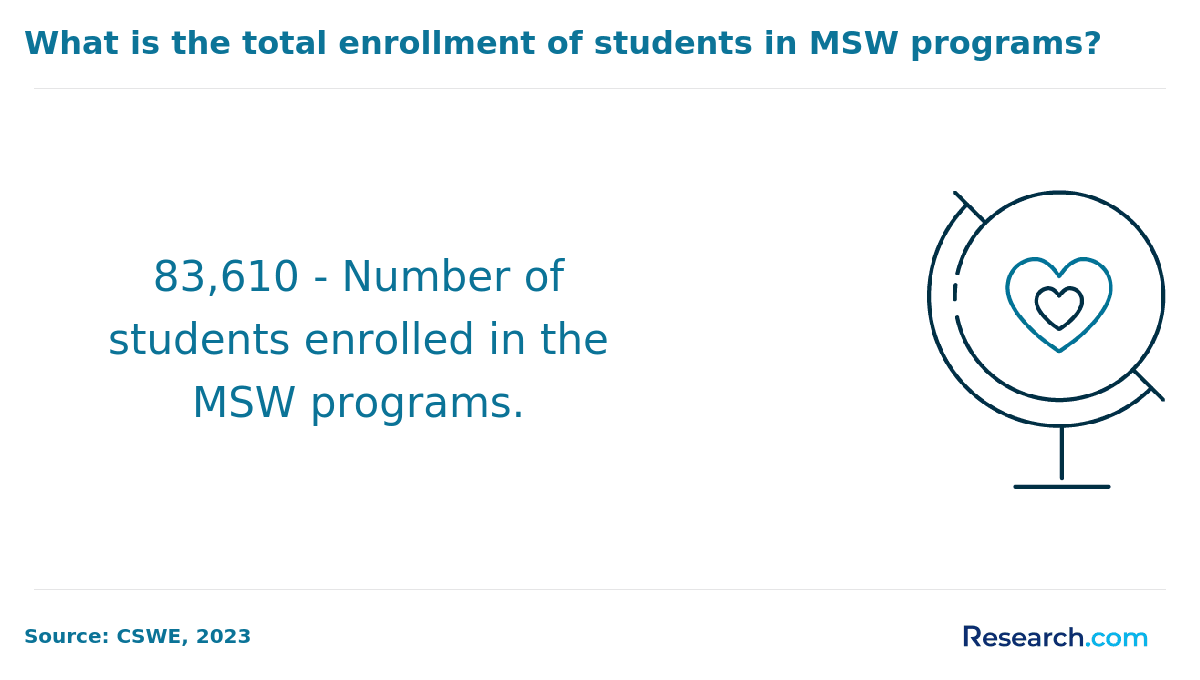
What are the educational requirements for becoming a social worker in North Dakota?
The education you need depends on the kind of social work you want to do. Entry-level and generalist roles commonly begin with a CSWE-accredited BSW, while clinical practice, advanced casework, supervision, and many leadership roles usually require an MSW. Accreditation matters because licensing boards use CSWE accreditation as a quality benchmark for social work education.
North Dakota candidates should plan for the following education and training expectations:
- Earn a CSWE-accredited BSW or MSW: A BSW prepares students for generalist social work, while an MSW provides advanced training for clinical, administrative, and specialized roles.
- Complete field education: Social work programs include supervised practicum or internship hours, giving students experience in agencies, schools, healthcare settings, child welfare, or behavioral health programs.
- Build supervised professional experience after graduation: For higher license levels, candidates may need supervised post-graduate clinical experience, typically two years or 3,000 hours.
- Pass the required ASWB exam: The appropriate exam depends on the license level and is required by the North Dakota Board of Social Work Examiners.
- Choose training that fits North Dakota’s needs: Coursework or field placements in rural practice, Indigenous community services, behavioral health, aging services, and child welfare can be especially useful.
| Education path | Best for | Important consideration |
| BSW | Students seeking generalist social work roles or a foundation for graduate study | Make sure the program is CSWE-accredited and includes strong field placement support. |
| MSW | Students aiming for advanced, clinical, supervisory, or specialized practice | Review whether the curriculum supports your target license and practice area. |
| Advanced standing MSW | BSW graduates who qualify for a shorter graduate pathway | Confirm eligibility rules, field requirements, and whether the accelerated format fits your readiness. |
| Online MSW | Working adults, rural students, and learners who need location flexibility | Check accreditation, field placement arrangements, state licensing alignment, and total cost. |
Students who need flexibility or want to compare costs can review the cheapest CSWE-accredited online MSW programs. Online study can work well for North Dakota learners, but only if the program has accredited coursework, realistic field placement support, and a clear path toward the license you want.
The main decision is not simply “BSW or MSW.” It is whether the program prepares you for the clients, agencies, and licensing requirements you are likely to encounter in North Dakota.
What are the licensing requirements for social workers in North Dakota?
North Dakota uses a tiered licensing structure. Each license level reflects a different scope of practice, education level, supervision requirement, and exam expectation. Before enrolling in a program or accepting a job, confirm which credential your intended role requires because not all social service jobs lead to the same license pathway.
Licensed Social Worker Associate (LSWA)
The LSWA is an early professional credential for candidates who have completed a master's degree from a CSWE-accredited program but still need supervised experience. It allows new professionals to begin practicing under supervision while developing the applied skills needed for independent work. In rural areas, candidates should ask early about supervisor availability because access to qualified supervision can affect the pace of licensure.
Licensed Social Worker (LSW)
The LSW requires 3,000 hours of supervised work and a passing score on the ASWB master’s exam. This credential supports professional practice beyond the entry stage and can be useful for candidates who want broader responsibility in agencies, healthcare organizations, schools, or community programs. Anyone reviewing north dakota social work career requirements should pay close attention to documentation rules for supervision hours, accepted supervisors, and exam timing.
Licensed Clinical Social Worker (LCSW)
The LCSW is the key credential for clinical social work practice. Candidates must complete additional supervised clinical experience and pass the clinical exam. This path is often the best fit for social workers who want to provide therapy, diagnose and treat mental health conditions within their scope, work more independently, or pursue advanced behavioral health roles. If you are comparing social work career opportunities, the LCSW is usually the license that opens the most clinical practice options.
| License level | Common purpose | Planning tip |
| LSWA | Supervised practice after a CSWE-accredited master’s degree | Identify potential supervisors before you graduate, especially if you plan to work outside a major population center. |
| LSW | Professional social work practice after supervised experience and the master’s exam | Track all supervised hours carefully and keep records in the format required by the licensing board. |
| LCSW | Clinical practice after additional supervised clinical work and the clinical exam | Choose jobs and supervisors that support clinical competencies, not just general case management experience. |
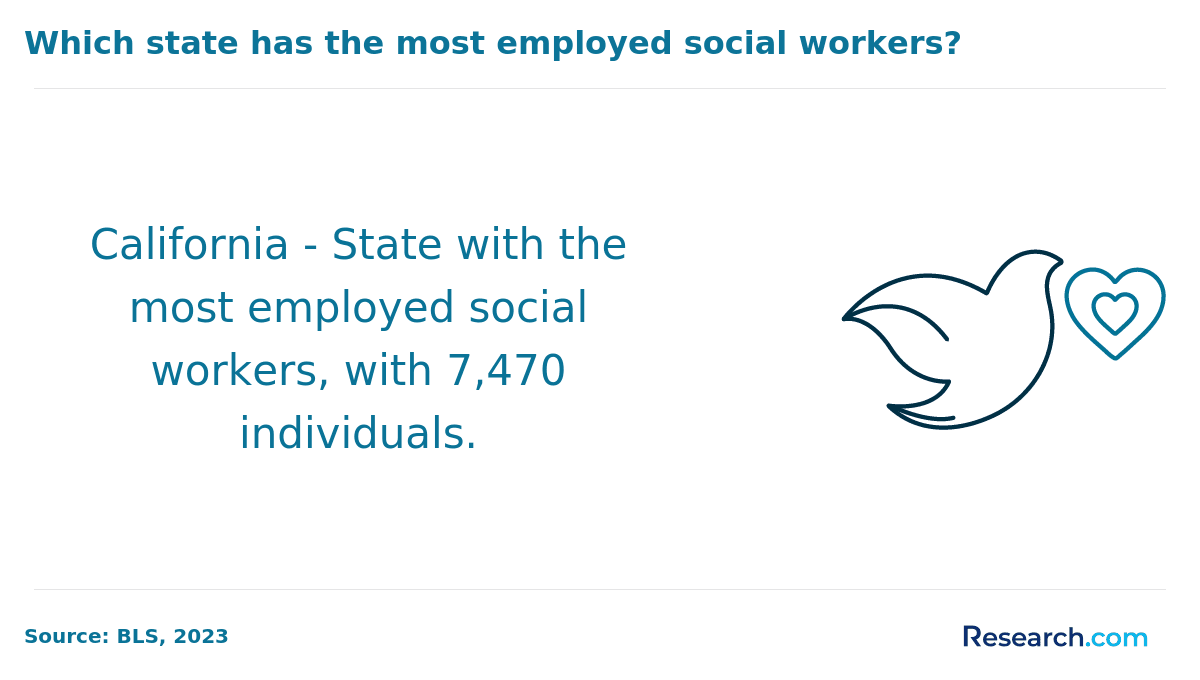
This chart from US BLS details the states with the most employment of social workers in 2023.
How much do social workers make in North Dakota?
The median annual salary for social workers in North Dakota is $76,760. Salary can vary by employer, license level, years of experience, specialization, and whether the role involves clinical services, crisis response, supervision, healthcare coordination, or administrative responsibility.
Regional comparisons can help you evaluate earning potential. Minnesota reports a median salary of $78,900, while South Dakota reports a median salary of $86,180. These figures should not be treated as guaranteed outcomes, but they provide useful context when comparing labor markets, relocation options, and the long-term return on a social work degree.
| Location | Median annual salary | How to interpret the figure |
| North Dakota | $76,760 | Useful baseline for evaluating tuition, licensing costs, and expected debt. |
| Minnesota | $78,900 | Nearby comparison point that may reflect different employer mix and urban labor markets. |
| South Dakota | $86,180 | Regional comparison that may matter for graduates considering cross-border opportunities. |
What is the job outlook for social workers in North Dakota?
North Dakota’s projected social work market is stable but not fast-growing. The state is projected to employ around 180 social workers by 2030, with projected growth of 0% from 2020 to 2030. That means students should not rely on broad statewide growth alone when planning a career. Instead, they should build skills tied to the roles employers consistently need, including behavioral health, child welfare, healthcare coordination, rural outreach, and services for aging adults.
The state’s rural geography shapes the job outlook. Some communities may have few openings, but those positions can require broad responsibilities. Social workers in smaller settings may need to manage casework, crisis coordination, family support, telehealth communication, and cross-agency collaboration. Economic conditions in agriculture and energy can also affect community stress, demand for services, and public agency budgets.
If you are asking what qualifications do you need to be a social worker, the best answer is role-specific. A generalist role may require one credential, while clinical practice, therapy, or supervisory work may require graduate education and advanced licensure.
Current trends affecting North Dakota social work
- Telehealth is changing service delivery: Rural clients may benefit from remote counseling and case management, but social workers still need training in privacy, documentation, crisis response, and technology access barriers.
- Behavioral health needs remain a major workforce issue: Mental health and substance use services continue to shape demand, especially in underserved communities.
- Employers value practical readiness: Field experience, crisis skills, documentation ability, and familiarity with state systems can matter as much as classroom performance.
- Specialization can improve competitiveness: In a small labor market, targeted expertise may help candidates stand out for limited openings.
What social work specializations are in demand in North Dakota?
The most useful specialization depends on where you want to work and which population you want to serve. In North Dakota, demand is often tied to rural service delivery, behavioral health, family systems, healthcare access, aging services, and support for veterans and tribal communities. Candidates interested in high paying social work jobs North Dakota should also consider that higher pay may require clinical licensure, difficult caseloads, supervisory responsibility, or specialized experience.
- Child, family, and school social work: This area supports children and families through foster care, adoption, school-based services, behavioral concerns, family instability, and academic barriers.
- Healthcare social work: Healthcare social workers help patients and families manage chronic illness, discharge planning, care transitions, elder care, and access to medical and community resources.
- Mental health and substance abuse social work: These professionals provide counseling, treatment coordination, crisis intervention, relapse prevention support, and referrals for opioid, alcohol, and mental health concerns.
- Military and veterans social work: Social workers may assist veterans with PTSD, reintegration, benefits navigation, family adjustment, and access to care across dispersed communities.
- Gerontological social work: This specialization focuses on older adults, dementia care, caregiver support, long-term care planning, end-of-life needs, and community-based aging services.
It is also important to understand professional boundaries. The difference between social worker counselor and psychologist can affect what services you may provide, which license you need, and how you collaborate with other behavioral health professionals.
| If your goal is... | Consider specializing in... | Why this path may fit |
| Providing therapy or behavioral health services | Mental health and substance abuse social work | Aligns with clinical licensure and ongoing behavioral health needs. |
| Working with children and families | Child, family, and school social work | Supports roles in schools, agencies, child welfare, and family services. |
| Serving hospitals or clinics | Healthcare social work | Builds skills in care coordination, discharge planning, and patient advocacy. |
| Supporting older adults | Gerontological social work | Fits aging services, long-term care, dementia support, and caregiver programs. |
| Working with military-connected clients | Military and veterans social work | Prepares social workers for trauma-informed and benefits-related support. |
What career advancement opportunities exist for social workers in North Dakota?
Career growth in North Dakota often depends on advanced licensure, specialization, leadership skills, and the ability to serve complex needs in smaller or underserved communities. With only 20 projected annual job openings from 2020 to 2030, advancement may require deliberate planning rather than waiting for a large number of new positions to appear.
Clinical Licensure and Specialized Practice
Earning the LCSW can expand a social worker’s scope, especially for clinical practice and behavioral health roles. The requirement of 3,000 supervised clinical hours and a passing clinical exam makes this a serious commitment. Candidates should choose jobs that provide qualifying supervision and enough clinical exposure to build competence, not just hours.
Supervisory and Administrative Roles
Supervisors, program managers, and agency administrators guide staff, manage programs, monitor compliance, improve service quality, and coordinate funding or partnerships. This path can increase influence but may reduce direct client contact. It works best for social workers who enjoy systems, leadership, coaching, and organizational problem-solving.
Policy and Advocacy Positions
Policy-focused social workers address problems at the program, agency, community, or state level. They may work on rural poverty, behavioral health access, tribal partnerships, child welfare reform, aging services, or public benefits systems. These roles require communication skills, data literacy, coalition-building, and patience with complex decision-making processes.
Specialist Roles and Continuing Education
Specialist credentials or focused training in areas such as trauma-informed care, gerontology, addiction, school social work, or healthcare coordination can help social workers compete for advanced roles. Continuing education is not only a renewal requirement; it is also a way to keep skills relevant as client needs, technology, and service models change.
| Advancement path | Best fit for | Possible trade-off |
| Clinical practice | Social workers who want to provide therapy or advanced behavioral health services | Requires significant supervised clinical experience and exam preparation. |
| Program supervision | Professionals who enjoy leading teams and improving service delivery | May involve less direct client contact and more compliance work. |
| Policy or advocacy | Social workers interested in systems-level change | Progress can be slow and dependent on funding, politics, and partnerships. |
| Specialized practice | Workers who want expertise in a defined population or service area | May require ongoing training costs and careful job-market research. |
This chart from HRSA displays the behavioral health workforce gaps for Addiction and Mental Health Social Workers by 2037.
How can I integrate specialized certifications into my social work career in North Dakota?
Specialized certifications can help North Dakota social workers broaden their service options, especially in behavioral health, disability services, crisis support, and interdisciplinary care. Before pursuing an additional credential, compare the training requirements, supervision rules, exam expectations, continuing education obligations, and whether employers in your area recognize the credential. Social workers interested in behavioral analysis can review how to become a behavior analyst in North Dakota to understand how that pathway may complement social work practice.
How can interdisciplinary approaches enhance community impact in North Dakota?
Many social problems are connected to housing, transportation, employment, healthcare, education, and community design. Social workers who understand those systems can collaborate more effectively with planners, public agencies, nonprofits, schools, clinics, and tribal organizations. If you want to connect direct client support with community-level planning, learning how to become an urban planner in North Dakota can show how planning skills and social work values may overlap in rural development, service access, and community resilience.
How can integrating marriage and family therapy elevate my social work practice in North Dakota?
Marriage and family therapy training can strengthen a social worker’s ability to understand family systems, relationship patterns, parenting stress, trauma, and intergenerational conflict. This can be valuable in counseling, child welfare, school social work, and community mental health. Dual preparation may expand practice options, but candidates should compare licensure rules carefully because social work and marriage and family therapy have separate requirements. For a related pathway, review how to become a marriage and family therapist in North Dakota.
How can I maintain licensure with effective continuing education and professional development strategies?
Maintaining a North Dakota social work license requires staying current with renewal and continuing education requirements. The best approach is to plan continuing education around both compliance and career growth. Choose training that supports your work setting, such as trauma-informed care, ethics, telehealth, clinical documentation, suicide risk assessment, substance use, supervision, child welfare, or aging services.
Do not wait until the end of a renewal period to find credits. Keep certificates, course descriptions, dates, and provider information in one file so you can document completion if asked. Social workers comparing adjacent behavioral health careers can also review education requirements for mental health counselors in North Dakota to understand how professional development expectations may differ across counseling-related roles.
How do I choose the right social work program in North Dakota?
Choosing a program should start with licensure alignment, not marketing language. A strong social work program should be accredited, transparent about field placements, realistic about costs, and clear about how its curriculum supports North Dakota practice settings. Students should also consider whether they need an online, hybrid, part-time, or campus-based format.
| Question to ask | Why it matters | Red flag |
| Is the program CSWE-accredited? | Accreditation is central to social work licensure eligibility. | The school cannot clearly confirm CSWE status. |
| How are field placements arranged? | Internships are essential for skill-building and licensing preparation. | The program leaves students to find placements without support. |
| Does the curriculum match my career goal? | Clinical, school, healthcare, and community practice paths may require different preparation. | Coursework is too general for your intended specialization. |
| What is the total cost? | Tuition is only one part of the expense; fees, books, travel, and lost work time matter too. | The school highlights tuition but avoids total cost estimates. |
| Will the program support North Dakota licensure? | Online and out-of-state programs may not automatically fit state requirements. | Advisors cannot explain licensing alignment for North Dakota. |
Students who want a focused overview of social worker education requirements in North Dakota should compare degree level, accreditation, practicum support, admissions rules, and licensure outcomes before applying.
Who should choose a social work degree?
- People who want a helping profession with structured ethics, licensure, and public service responsibilities.
- Students interested in counseling, child welfare, healthcare, schools, aging services, advocacy, or community programs.
- Career changers who are willing to complete supervised fieldwork and meet licensing rules.
Who may want to consider another path?
- Students who want to provide therapy independently but do not want graduate school or supervised clinical hours.
- People who prefer predictable office work with minimal crisis response or documentation requirements.
- Candidates who are not comfortable working with trauma, poverty, family conflict, mental illness, or systems barriers.
How do I get field experience and internships in social work in North Dakota?
Field experience is where social work education becomes professional practice. In North Dakota, the best placements are not always the most convenient ones. A rural behavioral health agency, child welfare office, tribal service program, hospital, school district, or aging services provider may give you stronger preparation than a placement that is easy to access but unrelated to your goals.
Start by asking your program how it approves practicum sites, matches students with supervisors, evaluates performance, and handles remote or rural placements. If you plan to pursue clinical licensure, ask whether the placement exposes you to assessment, treatment planning, documentation, crisis response, and supervised client contact that will support later professional growth.
- Clarify your career goal: Decide whether you want child welfare, clinical practice, healthcare, schools, community work, or another specialty.
- Ask about approved placement sites: Work with your school’s field office to identify agencies that meet academic and licensing expectations.
- Evaluate supervision quality: A strong supervisor provides feedback, ethical guidance, documentation support, and exposure to real decision-making.
- Consider rural and tribal placements thoughtfully: These experiences can be valuable, but they require cultural humility, flexibility, and reliable support.
- Keep records: Track hours, tasks, supervisor information, evaluations, and competencies from the beginning.
Telehealth is also changing field education. Interns may need to learn virtual communication, confidentiality practices, emergency protocols, and technology troubleshooting. Students who want flexible graduate options after gaining experience can compare MSW online programs while confirming that any program can support North Dakota field requirements.
What local organizations and networking opportunities are available for social workers in North Dakota?
Networking matters in a small labor market. It can help students find internships, learn about supervisors, understand agency needs, discover job openings, and stay current on policy changes. Rural practitioners may need to combine in-person events with online communities, agency partnerships, and informal peer consultation.
- North Dakota Chapter of the National Association of Social Workers (ND NASW): Offers professional development, advocacy updates, webinars, workshops, and state-specific networking.
- North Dakota State University MSW Program: Provides graduate education, local training connections, and field placement pathways that may help students build professional relationships.
- North Dakota Department of Human Services (DHS): Connects social workers with public service systems, specialized training, policy updates, and agency collaboration opportunities.
- ND NASW Annual Conference: Gives professionals a chance to earn training, meet peers, learn about state priorities, and connect with potential mentors.
- North Dakota Social Work Symposium: Supports interdisciplinary learning, professional discussion, and connections across practice areas.
- Regional Social Services Consortium Meetings: Can be valuable for rural collaboration, referral relationships, and interagency problem-solving.
- Online platforms managed by ND NASW: Help practitioners stay connected when travel, scheduling, or geography makes in-person networking difficult.
What is the cost of becoming a social worker in North Dakota?
The cost of becoming a social worker includes more than tuition. Tuition for social work degrees in North Dakota, especially at institutions like North Dakota State University, is a major expense, with in-state undergraduate costs nearing $34,000 and graduate programs around $24,500. Students should also budget for fees, books, technology, transportation, field placement travel, licensing applications, exam costs, and continuing education.
Licensing fees and exam costs range from approximately $75 to $260. These costs may seem smaller than tuition, but they arrive at key transition points, often when graduates are preparing for employment or completing supervised experience.
| Cost category | What to include | Planning advice |
| Tuition | BSW or MSW coursework | Compare total program cost, not just cost per credit. |
| Program fees and materials | Student fees, textbooks, technology, background checks, supplies | Ask schools for a full cost estimate before enrolling. |
| Field placement expenses | Transportation, schedule changes, unpaid hours, required documentation | Plan for reduced work hours if your practicum schedule is demanding. |
| Licensing and exams | Application charges, ASWB exam fees, related licensing expenses | Set aside funds before graduation or before applying for the next license level. |
| Professional maintenance | Continuing education, liability insurance, association dues | Budget for recurring costs after your first job begins. |
To evaluate return on investment, compare total education debt with realistic salary expectations, the license level you plan to pursue, and the number of jobs available in your target region.
What financial aid, scholarships, and grants are available for social work students in North Dakota?
Social work students in North Dakota may use a combination of federal aid, state aid, institutional scholarships, nonprofit scholarships, assistantships, stipends, employer support, and service-based funding. The best strategy is to apply early, track deadlines, and read service commitments carefully before accepting awards.
- Federal aid, including the Pell Grant and Federal Supplemental Educational Opportunity Grant (FSEOG): These programs can provide foundational support, but eligibility and funding availability vary.
- North Dakota aid, including the ND State Grant and National Guard Tuition Assistance: These options may help residents and service members, though eligibility rules can limit who qualifies.
- Institutional scholarships at universities like the University of North Dakota: Awards may be based on merit, need, program fit, or donor criteria.
- Local nonprofit scholarships, including opportunities through ND NASW and the Red River Human Services Foundation: Some awards may support students committed to serving local or underserved communities.
- Assistantships and stipends: These can reduce costs while adding professional experience, but openings are limited and competitive.
Common mistakes to avoid
- Choosing a program before checking accreditation: A non-accredited program can create licensing problems.
- Looking only at tuition: Fees, travel, field placement costs, exam charges, and lost work time can change the real cost.
- Assuming every online program meets North Dakota requirements: Always verify licensure alignment before enrolling.
- Ignoring supervision access: Advanced licensure can be delayed if you cannot find qualified supervision.
- Relying only on rankings: A highly visible program is not always the best fit for your license goal, budget, or field placement needs.
- Expecting salary outcomes to be guaranteed: Pay depends on license level, location, employer, specialization, and experience.
What Social Workers Say About Their Careers in North Dakota
- My social work training at the University of North Dakota helped me connect classroom learning with real client needs. Through work with local nonprofits, I saw how social workers can support families facing difficult transitions, and that experience strengthened my commitment to community service. – Honey
- Working with the North Dakota State Department of Human Services has been meaningful because child welfare work requires both compassion and practical problem-solving. The training and support I received helped me grow while contributing to better outcomes for children. – Mike
- The Dakota Medical Foundation’s social work program gave me insight into rural healthcare challenges, especially where access to services is limited. Its focus on cultural sensitivity and practical care coordination helped me build skills I continue to use every day. – Lany
Key Insights
- North Dakota social work is a small but important field, with only 0.329 positions per 1,000 jobs and projected employment of around 180 social workers by 2030.
- The median annual salary for North Dakota social workers is $76,760, but earnings vary by license level, employer, specialization, and region.
- CSWE accreditation is one of the most important factors when choosing a BSW, MSW, or online social work program.
- Licensure planning should begin early because supervised hours, exam requirements, and access to qualified supervisors can affect your timeline.
- Clinical licensure can expand career options, but it requires 3,000 supervised clinical hours and successful exam completion.
- Specializations in behavioral health, child and family services, healthcare, gerontology, and veterans services may be especially practical in North Dakota.
- Do not evaluate programs by tuition alone. Include field placement costs, fees, exam charges, transportation, continuing education, and potential debt.
- The strongest candidates combine accredited education, relevant field experience, strong documentation skills, cultural humility, and a clear plan for licensure.
Related Articles for Nearby States
- 2027 How to Become a Social Worker in South Dakota
- 2027 How to Become a Social Worker in Minnesota
- 2027 How to Become a Social Worker in Montana
- 2027 How to Become a Social Worker in Nebraska
- 2027 How to Become a Social Worker in Wyoming
- 2027 How to Become a Social Worker in Iowa
- 2027 How to Become a Social Worker in Wisconsin
- 2027 How to Become a Social Worker in Colorado
- 2027 How to Become a Social Worker in Kansas
- 2027 How to Become a Social Worker in Illinois
References:
- HRSA (2024). State of the Behavioral Health Workforce, 2024. Retrieved from https://bhw.hrsa.gov/sites/default/files/bureau-health-workforce/state-of-the-behavioral-health-workforce-report-2024.pdf
- O*Net OnLine (n.d.). North Dakota Employment Trends 21-1029.00 - Social Workers, All Other. Retrieved from https://www.onetonline.org/link/localtrends/21-1029.00?st=ND
- University of North Dakota (n.d.). Social Work Scholarships. Retrieved from https://cnpd.und.edu/student-resources/scholarships-social-work.html
- US BLS (2023). Occupational Employment and Wages, May 2023 21-1029 Social Workers, All Other. Retrieved from https://www.bls.gov/oes/2023/may/oes211029.htm
Other Things You Should Know About Being a Social Worker in North Dakota
The North Dakota Board of Social Work Examiners issues social work licenses in 2027. It sets licensing rules, reviews applications, and handles renewal and discipline for licensed social workers in the state.
To become a licensed social worker in North Dakota in 2027, you must pass the Association of Social Work Boards (ASWB) exam. The ASWB offers different levels of exams, and your required level will depend on the type of social work license you are pursuing.