2027 Online Healthcare Administration Degrees That Help Build Healthcare Risk Management Skills

Co-Founder and Chief Data Scientist
Healthcare organizations need leaders who can reduce patient safety, compliance, financial, cybersecurity, and operational risks without slowing care delivery. HHS Office for Civil Rights breach data shows more than 700 large healthcare data breaches were reported in the U.S. in 2024, underscoring why risk-aware administrators are in demand.
This guide is for prospective students comparing online healthcare administration degrees and related pathways. It explains degree options, courses, accreditation, admissions, career outcomes, salary context, and practical ways to choose a program that fits your goals.
Key Things You Should Know
- Online healthcare administration degrees can support risk management careers when they combine healthcare law, quality improvement, patient safety, compliance, finance, data analytics, and operations coursework rather than only general management classes.
- The strongest labor-market signal comes from medical and health services management: the U.S. Bureau of Labor Statistics reports a May 2024 median pay of $117,960 and projects 29% growth from 2023 to 2033 for this broad occupation.
- Accreditation matters: look for institutional accreditation first, then consider CAHME-accredited graduate programs if you want a healthcare leadership degree with stronger employer recognition and structured competency expectations.
What is an online healthcare administration degree with a focus on healthcare risk management?
An online healthcare administration degree with a risk management focus is a business and leadership program designed around the realities of hospitals, clinics, insurers, public health agencies, long-term care organizations, and health technology vendors. Instead of training students for direct clinical practice, it prepares them to manage systems that affect safety, compliance, financial stability, privacy, quality, and organizational performance.
Healthcare risk management is the discipline of identifying, measuring, reducing, and monitoring risks that could harm patients, employees, finances, reputation, or regulatory standing. In practice, that can include investigating adverse events, preparing for audits, improving infection-control processes, managing claims data, supporting HIPAA compliance, building emergency preparedness plans, and using dashboards to spot operational problems before they become serious.
The degree may not always use the phrase "risk management" in the title. Many relevant programs are labeled healthcare administration, health services administration, healthcare management, health leadership, healthcare quality and safety, or health informatics. The important question is whether the curriculum includes risk-related competencies and gives students opportunities to apply them to healthcare cases.
This path usually fits professionals who want to move into supervisory, compliance, quality, patient safety, operations, or administrative leadership roles. It may be less appropriate for students who want to become licensed clinicians, attorneys, actuaries, or cybersecurity engineers, because those paths usually require different degrees, licenses, or technical credentials.
How can an online healthcare administration program help build healthcare risk management skills?
Online healthcare administration programs build risk management skills by combining healthcare-specific knowledge with leadership tools. A good program does more than explain regulations; it teaches students how to make decisions when patient safety, budget limits, staffing shortages, privacy rules, and organizational priorities compete with one another.
The most useful programs typically develop risk skills through several learning methods. These features matter because risk management is applied work, not memorization.
- Healthcare case studies: Students analyze real-world scenarios involving medication errors, facility incidents, privacy breaches, staffing problems, reimbursement disputes, or quality failures.
- Data-driven assignments: Courses may require students to interpret quality indicators, claims trends, readmission data, incident reports, or population health metrics.
- Policy and compliance projects: Students practice drafting procedures, audit plans, corrective action recommendations, and training materials.
- Interprofessional communication: Risk managers often work with clinicians, finance teams, legal counsel, information security, and executives, so programs should emphasize clear written and verbal communication.
- Capstones or practicums: Strong programs ask students to solve an applied healthcare management problem, ideally one tied to quality, safety, compliance, or operations.
Technology is changing this training. Healthcare organizations increasingly use predictive analytics, electronic health record alerts, AI-assisted documentation review, and automated compliance monitoring. Students do not need to become software engineers, but they should learn how to question data quality, recognize algorithmic bias, protect patient information, and translate analytics into responsible management decisions.
What types of online healthcare administration degrees best prepare students for risk management roles?
The best degree type depends on your current education, work experience, and target role. Entry-level students usually need a bachelor's degree, while professionals aiming for risk director, compliance leadership, or senior operations roles often benefit from graduate study.
The table below compares common online degree options. Use it to match the credential level to the risk management role you want, rather than choosing only by speed or cost.
| Degree option | Best fit | Risk management preparation | Important trade-off |
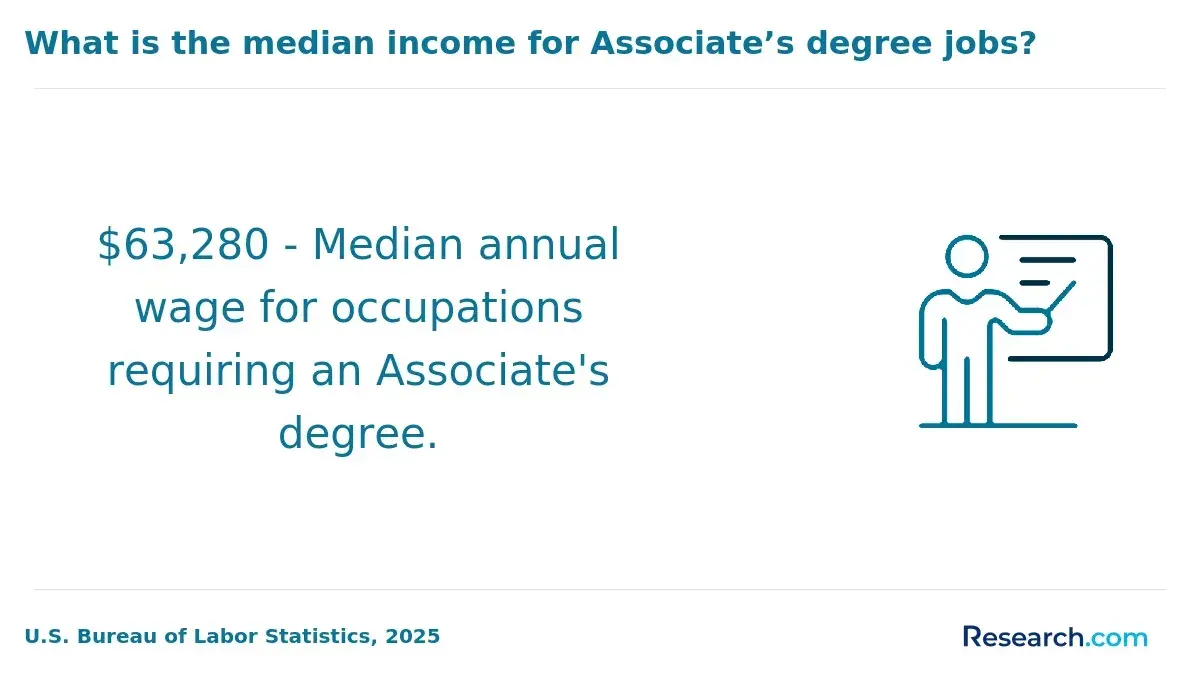
| Online associate degree in healthcare administration | Students seeking entry-level administrative work or a transfer pathway | Introduces medical terminology, office systems, basic compliance, and healthcare delivery | Usually not enough for risk management roles beyond support positions |
| Online bachelor's degree in healthcare administration | Students seeking coordinator, analyst, supervisor, or compliance support roles | Covers healthcare law, quality, finance, operations, ethics, and management fundamentals | May need experience or certification for specialized risk roles |
| Online master's in healthcare administration | Working professionals pursuing leadership, quality, compliance, or risk management roles | Offers deeper training in strategy, governance, analytics, policy, finance, and organizational risk | Requires more investment, so career goals and employer recognition matter |
| Online MBA with healthcare or operations focus | Students who want broader business mobility across healthcare, insurance, consulting, or operations | Strengthens finance, process improvement, supply chain, and enterprise risk thinking | May include less healthcare law, patient safety, or clinical quality content than an MHA |
| Graduate certificate in healthcare risk, quality, compliance, or patient safety | Professionals who already have a degree and want targeted upskilling | Focuses on a narrower set of risk-related competencies | May not substitute for a degree when employers require one |
A masters in healthcare administration is often the most direct graduate route for students who want healthcare leadership roles with risk, compliance, quality, or operations responsibilities.
What courses and competencies in these programs specifically address healthcare risk management?
Risk management preparation usually comes from a cluster of courses, not one class. When reviewing a curriculum, look for both technical knowledge and decision-making skills, because risk leaders must understand regulations and persuade teams to change behavior.
The table below shows common course areas and the competencies they can build. It can help you read program catalogs more critically.
| Course or competency area | Risk management value | What to look for in assignments |
| Healthcare law and ethics | Builds understanding of liability, informed consent, privacy, reporting duties, and ethical decision-making | Legal case analysis, policy memos, compliance scenarios |
| Quality improvement and patient safety | Connects risk reduction to measurable care outcomes and process design | Root-cause analysis, PDSA cycles, safety dashboards |
| Healthcare finance | Helps students evaluate the cost of risk, reimbursement pressures, claims, and resource allocation | Budget analysis, financial risk scenarios, reimbursement case studies |
| Health informatics and analytics | Prepares students to use data for surveillance, reporting, and performance monitoring | Data interpretation, dashboard review, privacy-aware analytics projects |
| Compliance and regulatory affairs | Supports audit readiness and understanding of federal, state, payer, and accreditation expectations | Mock audits, corrective action plans, policy reviews |
| Operations and emergency preparedness | Addresses staffing, patient flow, supply disruptions, facility risk, and continuity planning | Process maps, emergency response plans, operational risk assessments |
Strong programs also teach "soft" competencies that are essential in risk work: negotiation, conflict resolution, documentation, change management, cultural awareness, and executive communication. A risk recommendation that is technically correct but poorly communicated may not be adopted, especially in high-pressure clinical environments.
An online MBA in operations management can make sense when your goal is broader process improvement, supply chain resilience, or enterprise operations leadership that may extend beyond healthcare.
How do online healthcare administration programs compare with campus-based options for risk management training?
Online and campus-based healthcare administration programs can both prepare students for risk management roles. The better choice depends on your schedule, learning style, access to healthcare employers, and need for in-person networking.
The comparison below highlights practical differences that matter for students who are evaluating risk management training, not just delivery format.
| Factor | Online healthcare administration degree | Campus-based healthcare administration degree |
| Flexibility | Often better for working adults, caregivers, military students, and students outside major metro areas | Better for students who prefer fixed class times and in-person routines |
| Risk management practice | Can use simulations, virtual case discussions, EHR-style data exercises, and local projects | May offer in-person labs, campus events, and easier access to nearby healthcare partners |
| Networking | Depends heavily on cohort design, faculty access, alumni engagement, and practicum support | Often stronger for students who can attend events, shadowing, and regional employer activities |
| Work experience integration | Useful for students already employed in healthcare who can apply assignments at work | Useful for students seeking a more immersive academic environment |
| Cost considerations | May reduce commuting or relocation costs, but technology fees and out-of-state tuition can still apply | May involve housing, commuting, parking, or lost work hours |
Online programs are especially attractive for students already working in hospitals, clinics, insurance, public health, or healthcare technology because they can connect coursework to real workplace problems. However, online does not automatically mean easier or cheaper. Students should ask whether the program includes synchronous sessions, group projects, field experiences, proctored exams, or required campus visits.
If your risk interests center on facility safety, capital projects, jobsite hazards, or hospital construction logistics rather than healthcare administration, reviewing online construction management courses may help you compare a facilities-focused path with a healthcare leadership path.
What accreditation should online healthcare administration degrees have for risk management careers?
Accreditation is one of the most important filters for online healthcare administration degrees. At minimum, the college or university should hold institutional accreditation from an accreditor recognized by the U.S. Department of Education or the Council for Higher Education Accreditation. This affects transfer credit, federal financial aid eligibility, graduate school options, and employer trust.
For graduate healthcare administration programs, programmatic accreditation can add another layer of quality assurance. CAHME accreditation is widely recognized for healthcare management education and is especially relevant for MHA and similar graduate degrees. It does not guarantee a job, but it signals that the program has been reviewed against healthcare management education standards.
Students comparing top online MHA programs should verify accreditation directly with the accreditor and the school, because program status, delivery format, and campus eligibility can change. Do not rely only on marketing pages, rankings, or third-party summaries.
Accreditation is not the same as licensure. Healthcare administration risk roles usually do not require a universal state license, but some related roles may have requirements. For example, nursing home administrators are regulated by states, and compliance roles may prefer certifications. Always check the requirements for the specific job title, state, and employer you are targeting.
What are typical admission requirements and time to completion for these online degrees?
Admission requirements vary by degree level and school selectivity. Online programs often serve working adults, but reputable programs still require evidence that students can handle college-level or graduate-level work.
The table below summarizes common requirements and completion timelines. Use it as a planning guide, then confirm details with each school.
| Program level | Typical admission requirements | Common time to completion | Who it serves best |
| Associate degree | High school diploma or GED, transcripts, placement requirements | About 2 years full time | Students starting college or seeking administrative entry points |
| Bachelor's degree | High school diploma or transfer credits, transcripts, possible minimum GPA | About 4 years full time, less with transfer credit | Students seeking a broad healthcare management foundation |
| Master's degree | Bachelor's degree, transcripts, resume, statement of purpose, recommendations, possible healthcare experience | Often 1.5 to 3 years depending on pace | Professionals seeking leadership or specialized administrative roles |
| Graduate certificate | Bachelor's degree, transcripts, sometimes professional experience | Often several months to 1 year | Degree holders seeking focused risk, quality, or compliance skills |
Cost planning should go beyond tuition. The College Board's 2024 Trends in College Pricing and Student Aid report shows that published tuition and fees continue to differ widely by sector and residency status, which means two online programs can have very different total prices even when they look similar academically. Students should calculate tuition, fees, books, software, travel, lost work time, and whether transfer credits or employer tuition assistance can reduce the total cost.
What are the main healthcare risk management careers available to graduates of these programs?
Graduates do not usually start as "chief risk officers" immediately. Most build experience through administrative, quality, compliance, operations, claims, or analyst roles before moving into higher-level risk management positions. Clinical experience can help in patient safety roles, but it is not always required for administrative risk positions.
The table below outlines common career directions and the type of risk each role manages. Actual job titles vary by employer size and healthcare setting.
| Career path | Typical responsibilities | Common employers | Helpful preparation |
| Healthcare risk management coordinator | Track incidents, support investigations, maintain documentation, assist with corrective actions | Hospitals, health systems, clinics, long-term care organizations | Healthcare law, patient safety, quality improvement, communication |
| Patient safety specialist | Analyze adverse events, support root-cause analysis, promote safety initiatives | Hospitals, ambulatory care networks, quality organizations | Quality improvement, clinical workflow knowledge, data analysis |
| Compliance analyst or manager | Monitor policies, support audits, train staff, investigate compliance concerns | Providers, insurers, healthcare vendors, government contractors | Regulatory affairs, ethics, documentation, audit methods |
| Quality improvement manager | Lead performance projects, measure outcomes, report quality metrics | Hospitals, physician groups, accountable care organizations | Analytics, process improvement, leadership, healthcare operations |
| Claims or loss control specialist | Review claims trends, identify liability patterns, recommend risk reduction strategies | Insurers, malpractice carriers, health systems | Finance, legal concepts, data interpretation, communication |
| Emergency preparedness or safety manager | Plan for disruptions, coordinate drills, manage continuity and safety procedures | Hospitals, public health agencies, large healthcare facilities | Operations, emergency management, regulatory standards |
Common advancement paths include moving from coordinator to manager, from manager to director, or from a specialized role in quality or compliance into enterprise risk leadership. Certifications such as Certified Professional in Healthcare Risk Management, Certified Professional in Healthcare Quality, or healthcare compliance credentials may strengthen a resume, but eligibility rules and employer preferences vary.
What salary ranges and job outlook can graduates expect in healthcare risk management?
Salary depends on role, location, employer type, experience, degree level, and whether the position is entry-level or managerial. Healthcare risk management roles often fall within or near the broader category of medical and health services managers, but not every risk-related job pays at that level.
The U.S. Bureau of Labor Statistics reports that medical and health services managers had a May 2024 median annual wage of $117,960. This figure is useful as a broad leadership benchmark, but students should treat it as context rather than a promise because coordinator, analyst, and specialist roles may pay less, while senior directors in large systems may pay more.
The same BLS occupation is projected to grow 29% from 2023 to 2033, much faster than the average for all occupations. For prospective students, this suggests that healthcare leadership demand is strong, but competition can still be significant for specialized risk roles that require experience, regulatory knowledge, and strong communication skills.
The table below shows how to think about salary expectations by career stage without assuming that one degree produces one fixed income.
| Career stage | Common role examples | Salary interpretation | What can improve competitiveness |
| Early career | Risk management assistant, compliance coordinator, quality analyst | Often below broad healthcare manager medians because roles may be support-oriented | Bachelor's degree, internship, healthcare experience, data and documentation skills |
| Mid-career | Risk manager, compliance manager, patient safety specialist, quality improvement manager | May align more closely with healthcare management benchmarks depending on scope | Master's degree, certifications, project leadership, measurable quality outcomes |
| Senior leadership | Director of risk management, director of compliance, chief quality officer, enterprise risk leader | Can exceed broad medians in large systems, but varies widely by organization | Advanced degree, cross-functional leadership, legal and financial fluency, executive communication |
Students should also consider non-salary value: schedule flexibility, employer tuition assistance, promotion eligibility, and the ability to move across healthcare settings. A lower-cost accredited program with strong career alignment may offer better value than a more expensive program with limited risk-related coursework.
How can prospective students evaluate and choose a reputable online healthcare administration program?
Choosing a reputable online healthcare administration program requires more than checking whether the word "risk" appears in a course title. The right program should fit your target role, budget, schedule, learning style, and local job market.
Use the following steps to compare programs before applying. They are designed to reduce common mistakes such as choosing an unaccredited program, underestimating total cost, or enrolling in a degree that does not match your career goal.
- Verify institutional accreditation through official accreditor or government-recognized databases, not only the school's website.
- Review the curriculum for healthcare law, compliance, quality improvement, patient safety, finance, analytics, operations, and capstone work.
- Ask whether online students receive the same faculty access, career services, alumni networking, and practicum support as campus students.
- Request a full cost estimate that includes tuition, fees, books, technology, residency travel, and any tuition differences for out-of-state students.
- Check transfer credit, prior learning, and employer tuition assistance policies before assuming the listed tuition is your final cost.
- Compare faculty backgrounds and look for instructors with healthcare leadership, compliance, quality, legal, informatics, or risk management experience.
- Ask admissions or program staff which employers commonly hire graduates and what roles graduates pursue, while remembering that outcomes are not guaranteed.
- Confirm whether the program supports relevant certifications or professional association involvement, especially if you want risk, quality, or compliance roles.
Red flags include vague accreditation claims, pressure to enroll quickly, unclear tuition disclosures, no healthcare-specific faculty, no applied projects, and limited information about student support. A program can be affordable and reputable, but it should still be transparent about outcomes, requirements, and costs.
Other Things You Should Know About Healthcare Administration
Yes, some administrative risk, compliance, quality, claims, and analyst roles are open to candidates without clinical licenses. However, clinical experience can be valuable for patient safety roles because it helps professionals understand care workflows and communicate with clinical teams.
A certificate may be enough for professionals who already have a relevant degree and healthcare experience. For students without a bachelor's degree or for those targeting leadership roles, a full degree is usually more useful because employers often screen for degree level.
Online healthcare administration degrees often have optional or required internships as part of the curriculum. These internships provide practical experience in healthcare settings, which is valuable for applying theoretical knowledge, especially in risk management roles, and building professional networks in 2027.
References
- Health Care Risk Management (HRM) Core Program | ASHRM https://www.ashrm.org/education/hrm-core
- Healthcare Vendor Risk Management Training: Essential Skills and Certifications | Censinet https://censinet.com/perspectives/healthcare-vendor-risk-management-training-essential-skills-and-certifications
- Online AssociateDegree in HealthcareAdministration https://campus.edu/online-healthcare-administration-associate-degree
- Online Healthcare Administration Program Benefits and Student Guide https://online.aurora.edu/program-resources/bs-healthcare-administration-degree-guide/
- Online Bachelor’s in Healthcare Administration Programs (BHA / BSHA) https://www.onlineeducation.com/healthcare/bachelors-in-healthcare-administration-programs
- Become a Healthcare Risk Manager - Education, Certifications & Salary https://www.healthcaredegree.com/administration/healthcare-risk-manager
- How to choose a bachelor's in healthcare administration | edX https://www.edx.org/resources/how-to-choose-a-bachelors-in-healthcare-administration
- Online Health Administration Degree Program | University of Phoenix https://www.phoenix.edu/online-healthcare-degrees/health-administration-bachelors-degree.html
- How a Healthcare Management Degree Can Boost Your Career https://www.straighterline.com/blog/how-a-healthcare-management-degree-can-boost-your-career-prospects