2027 Online Healthcare Administration Degrees That Help Build Healthcare Data Skills

Co-Founder and Chief Data Scientist
Choosing an online healthcare administration degree now means looking beyond management courses and asking whether the program builds usable data skills. The U.S. Bureau of Labor Statistics reports a median pay of $117,960 for medical and health services managers and projects 23% employment growth from 2024 to 2034, making healthcare leadership one of the stronger management paths.
This guide is for students, career changers, and working healthcare staff who want to compare formats, costs, accreditation, curriculum, jobs, and ROI before enrolling.
Key Things You Should Know
- Online healthcare administration degrees are strongest for students who want management roles in hospitals, clinics, insurers, public health agencies, long-term care, or digital health organizations, especially when the curriculum includes analytics, finance, quality improvement, compliance, and health information systems.
- For medical and health services managers, the BLS reports 2024 median pay of $117,960 and projected 23% job growth from 2024 to 2034; these figures describe the occupation overall, not a guaranteed outcome for any degree.
- Before enrolling, verify institutional accreditation, ask whether graduate programs have CAHME accreditation when relevant, compare total cost rather than tuition alone, and confirm that data courses use practical tools such as Excel, SQL, dashboards, EHR reporting, or quality metrics.
What are online healthcare administration degrees with healthcare data skills?
Online healthcare administration degrees prepare students to manage healthcare organizations, teams, budgets, operations, compliance requirements, and service quality. Programs with healthcare data skills add training in how to collect, interpret, protect, and use healthcare information for decisions such as staffing, patient access, revenue cycle improvement, quality reporting, and population health planning.
These degrees are not the same as clinical degrees. They usually do not train students to diagnose or treat patients. Instead, they fit people who want to lead departments, improve healthcare operations, supervise staff, manage projects, work with electronic health record data, or move from a clinical or administrative role into leadership.
The best degree level depends on your starting point and career goal. The table below summarizes common options so you can compare the purpose and trade-offs of each path.
| Degree option | Best fit | Typical data-skill focus | Decision point |
| Associate degree | Students seeking entry-level office, billing, scheduling, or health services support roles | Basic healthcare systems, records, terminology, and office reporting | Useful for a lower-cost start, but usually limited for management advancement |
| Bachelor's degree | Students seeking coordinator, supervisor, analyst-adjacent, or department support roles | Healthcare finance, quality measures, spreadsheets, compliance reporting, and information systems | Often the baseline degree for early healthcare administration careers |
| Master's degree | Working professionals seeking manager, director, consultant, or executive-track roles | Strategic analytics, data-informed leadership, operations improvement, policy evaluation, and financial decision-making | Best when you already have experience or need a graduate credential for advancement |
| Graduate certificate | Professionals who need a focused credential without completing a full degree | Analytics, informatics, compliance, project management, or quality improvement | Good for targeted upskilling, but may not replace a degree for leadership roles |
A healthcare administration degree may be worth it if you want to manage people, budgets, processes, or performance in healthcare settings. It may not be the best fit if you want a deeply technical data science career, a licensed clinical role, or a job focused mainly on coding algorithms; in those cases, health informatics, data analytics, nursing, public health, or computer science may fit better.
Which accreditation matters for online healthcare administration programs?
Accreditation is one of the most important checks because it affects financial aid eligibility, transfer credit, graduate admission, employer recognition, and sometimes state licensure pathways. At minimum, the school should hold institutional accreditation from an accreditor recognized by the U.S. Department of Education or the Council for Higher Education Accreditation.
For master's-level healthcare management programs, the Commission on Accreditation of Healthcare Management Education, or CAHME, is the specialized accreditation many employers and fellowships recognize. CAHME is most relevant for MHA, healthcare MBA, MPH-health management, and similar graduate programs; it is not usually the standard for associate or bachelor's degrees.
If you are comparing a healthcare administration degree online accredited by recognized agencies, look beyond the accreditation label and confirm what it covers. A school can be institutionally accredited while a specific graduate healthcare management program may or may not hold CAHME accreditation.
Use this quick checklist before applying. It can prevent common mistakes that are expensive to fix later.
- Confirm the institution appears in an official accreditation database, not just on the school's marketing page.
- Ask whether the specific healthcare administration, healthcare management, or MHA program has programmatic accreditation when that matters for your goal.
- Check whether credits transfer to public universities, graduate programs, or professional pathways you may pursue later.
- If you plan to work in nursing home administration, confirm state-specific licensure education requirements before enrolling.
- Be cautious with programs that advertise unusually fast completion but provide limited faculty access, unclear outcomes, or vague accreditation language.
How do online and campus healthcare administration programs compare?
Online and campus healthcare administration programs can lead to similar credentials when the school and curriculum are equivalent, but the student experience is different. The right format depends on your schedule, learning style, need for local networking, and access to internships or healthcare employers.
The comparison below shows the practical differences that matter most when you are choosing a format.
| Factor | Online program | Campus program | Best choice when |
| Schedule | Often asynchronous or evening-friendly | Usually fixed class times | Online works better for full-time workers or caregivers |
| Networking | Can be national and virtual, but requires initiative | Often stronger local peer and faculty interaction | Campus helps if you want a local hospital network |
| Data coursework | May use cloud tools, dashboards, case simulations, and remote datasets | May include labs, live group projects, and in-person presentations | Either can work if assignments are practical and tool-based |
| Internships | May allow placements near your home area | May rely on campus relationships with local providers | Ask how the school helps online students secure experience |
| Cost | May reduce commuting and relocation costs | May offer stronger campus services but higher living costs | Compare total cost, not only tuition per credit |
Online study makes sense if you need flexibility and can stay organized without weekly in-person accountability. Campus study may be better if you learn through live discussion, want frequent face-to-face faculty access, or are trying to build a local professional network from scratch.
What healthcare data skills are included in the curriculum?
Healthcare data skills in administration programs are usually applied rather than purely technical. The goal is to help future managers interpret operational and clinical-adjacent data, ask better questions, communicate findings, and make responsible decisions within privacy and compliance rules.
Look for courses and assignments that build the following competencies. These skills are especially valuable because healthcare employers increasingly expect administrators to use dashboards, quality indicators, and financial reports rather than relying only on experience or intuition.
- Healthcare analytics: reading utilization, access, cost, staffing, patient satisfaction, and quality metrics to identify operational problems.
- Health information systems: understanding how EHRs, patient portals, billing systems, and reporting platforms support healthcare operations.
- Data visualization: presenting trends through charts, dashboards, and executive summaries for nontechnical stakeholders.
- Quality improvement: using measures, benchmarks, root-cause analysis, and process improvement methods to reduce errors or inefficiencies.
- Revenue cycle and finance: interpreting reimbursement, payer mix, denials, cost reports, and budget performance.
- Privacy and compliance: applying HIPAA, data governance, risk management, and ethical use of patient information.
- Population health basics: using demographic, utilization, and outcomes data to understand community health needs and care gaps.
- AI readiness: evaluating AI-supported tools carefully, recognizing bias and data-quality limits, and knowing when human review is required.
A strong program should not simply list "analytics" in a catalog. Ask admissions staff whether students complete projects using spreadsheets, SQL basics, dashboard software, EHR-style reports, case datasets, or quality improvement plans. Practical assignments matter more than course titles.
What admission requirements do online healthcare administration programs need?
Admission requirements vary by degree level, selectivity, and school mission. Online programs often serve working adults, so many offer flexible start dates, transfer-friendly policies, and part-time pacing, but reputable programs still require evidence that you can succeed academically.
The table below summarizes common requirements and what they mean for applicants.
| Program level | Common requirements | What to prepare |
| Associate | High school diploma or GED, placement assessment, basic application | Transcripts, FAFSA information, and any prior college or military credit |
| Bachelor's | High school diploma or transfer credits, transcripts, minimum GPA, possible personal statement | Official transcripts, transfer evaluation request, resume if you have healthcare experience |
| Master's | Bachelor's degree, minimum GPA, resume, statement of purpose, recommendations, sometimes healthcare or leadership experience | Career goals, evidence of quantitative readiness, management examples, and explanation of any GPA concerns |
| Graduate certificate | Bachelor's degree or professional experience, depending on the school | Clear reason for the certificate and how it supports your current role |
Before applying, take a few practical steps to avoid delays and mismatches. This is especially important for students with transfer credits or a specific promotion timeline.
- Request unofficial transcript reviews from several schools before paying application fees.
- Ask whether statistics, accounting, or healthcare experience is recommended before the first term.
- Confirm whether online students receive the same career services, internship support, library access, and faculty advising as campus students.
- Check whether the program accepts credit for prior learning, military training, community college coursework, or professional certifications.
- Ask how often required courses are offered, because a missing prerequisite can slow graduation even in an online program.
How long do online healthcare administration degrees take?
Completion time depends on degree level, transfer credits, course load, start dates, and whether the program uses traditional semesters or accelerated terms. Online formats can make scheduling easier, but they do not automatically make a degree shorter unless the school offers year-round courses, generous transfer policies, or condensed terms.
Here is a realistic planning range for common pathways.
| Credential | Typical full-time timeline | Typical part-time timeline | What can shorten it |
| Associate degree | About 2 years | About 3 years or more | Transfer credit, summer courses, prior learning credit |
| Bachelor's degree | About 4 years from the start | Often 5 to 6 years | Community college transfer, degree-completion format, year-round enrollment |
| Master's degree | About 1 to 2 years | About 2 to 3 years | Accelerated terms, no thesis requirement, continuous enrollment |
| Graduate certificate | About 6 to 12 months | About 1 to 2 years | Short course sequence and flexible start dates |
If speed is a priority, compare course sequencing carefully rather than relying on the advertised completion time. A fastest online master's in healthcare administration option may help experienced professionals move faster, but accelerated programs can be intense and may leave less room for internships, electives, or career exploration.
Choose full-time study if you can protect enough weekly study time and want the fastest route. Choose part-time study if you need to keep working, maintain income, or apply what you learn immediately in a healthcare job.
How much do online healthcare administration degrees cost?
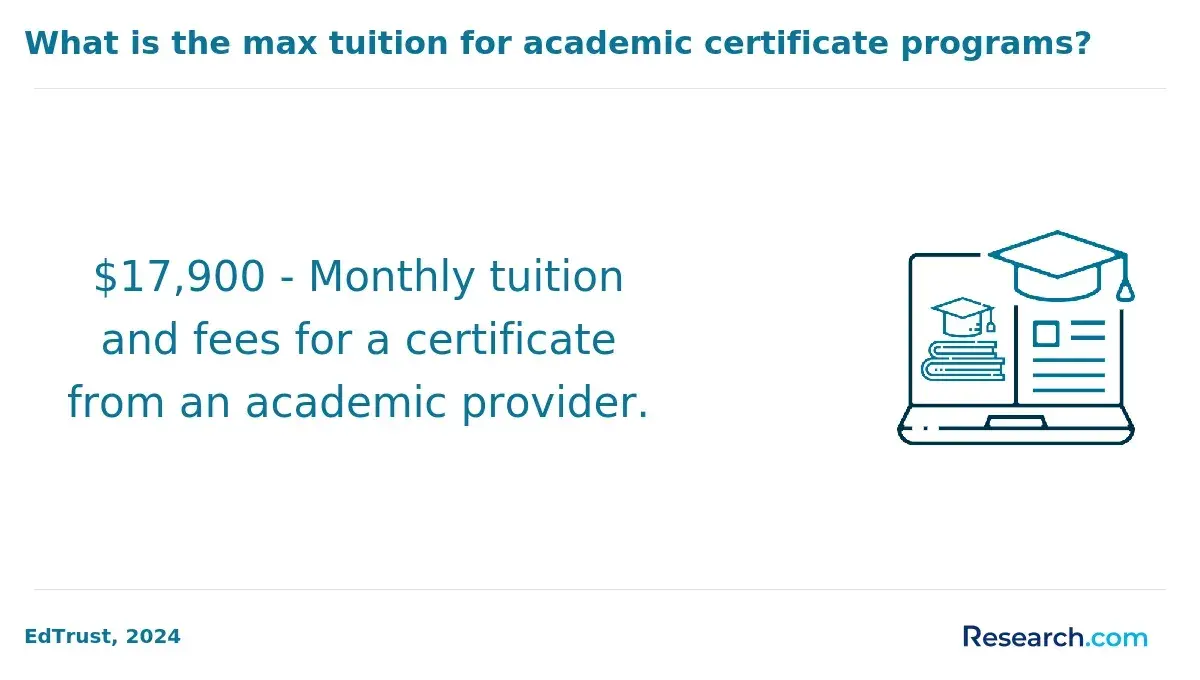
Cost varies widely because online healthcare administration programs charge by credit, term, or program, and fees can differ for technology, clinical placement support, graduation, books, and proctored exams. The most useful comparison is total net cost after grants, employer tuition support, transfer credits, and scholarships, not the advertised tuition alone.
For broader context, the College Board reported average published tuition and fees of $11,610 for in-state students at public four-year institutions in 2024-25. That figure is not specific to online healthcare administration, but it shows why residency status, public versus private pricing, and fee structure can significantly affect affordability.
When comparing programs, ask schools to provide a written estimate that includes the major price components below.
- Tuition per credit or total program tuition
- Required technology, online learning, student service, graduation, and transcript fees
- Books, software, database access, exam proctoring, and course materials
- Travel costs for any required residencies, intensives, internships, or campus visits
- Lost income or reduced work hours if the course load is heavy
- Expected grant aid, scholarships, employer reimbursement, military benefits, or transfer-credit savings
Affordability is not only about finding the lowest tuition. A lower-priced program can cost more in the long run if few credits transfer, required courses are not offered often, or career support is weak. If budget is your top constraint, compare tuition and outcomes alongside curated options for a cheap project management degree online if your main goal is operations or project leadership rather than healthcare-specific administration.
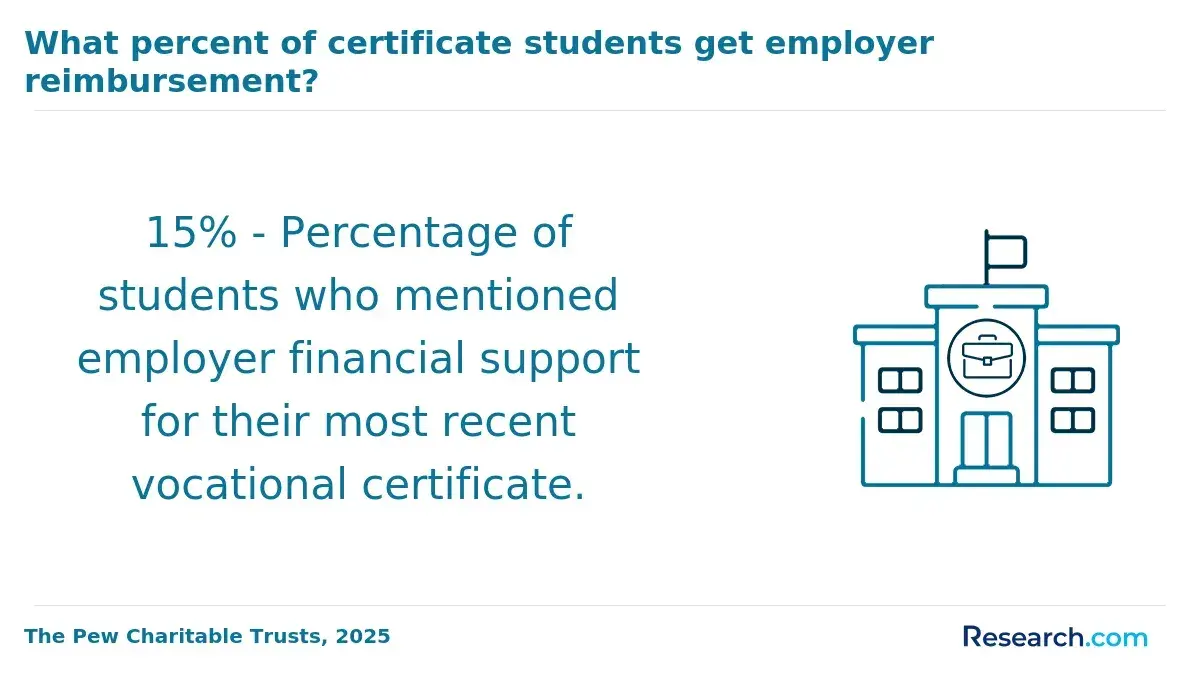
Avoid the common mistake of borrowing for a program before checking whether your employer reimburses tuition. Many hospitals, health systems, insurers, and public agencies offer education benefits, but they may require a minimum grade, approved major, continued employment, or repayment if you leave soon after finishing.
What jobs can healthcare administration graduates pursue?
Healthcare administration graduates can pursue roles across providers, payers, public health organizations, consulting firms, long-term care facilities, and health technology companies. The best fit depends on your experience level, degree level, data skills, and whether you prefer people management, operations, finance, compliance, or analytics-heavy work.
The table below connects common roles with responsibilities and the type of preparation that helps most.
| Role | Typical responsibilities | Helpful preparation |
| Healthcare administrator | Coordinate operations, staffing, budgets, policies, and service performance | Bachelor's or master's degree, healthcare operations knowledge, reporting skills |
| Medical practice manager | Manage scheduling, billing workflows, staff performance, patient access, and vendor relationships | Bachelor's degree, revenue cycle knowledge, communication skills |
| Quality improvement coordinator | Track quality indicators, support audits, analyze process gaps, and prepare improvement reports | Quality methods, healthcare analytics, compliance knowledge |
| Health information manager | Oversee records, documentation quality, privacy practices, and health information workflows | Health information systems, HIPAA, data governance |
| Revenue cycle analyst or manager | Review denials, reimbursement trends, payer performance, and billing operations | Healthcare finance, spreadsheet skills, payer knowledge |
| Population health program coordinator | Use patient and community data to support outreach, care coordination, and preventive programs | Population health, data visualization, program evaluation |
| Healthcare project manager | Lead system implementations, workflow redesign, compliance projects, or facility initiatives | Project management, stakeholder communication, healthcare systems knowledge |
If you are most interested in implementation work, technology rollouts, or cross-functional operations, healthcare administration pairs well with project management. Students comparing alternatives may also want to review online accelerated project management degree programs, especially if they want a broader business credential that can apply outside healthcare.
Entry-level graduates often start in coordinator, assistant manager, analyst support, billing operations, or department administration roles. Advancement usually depends on performance, leadership experience, employer size, data fluency, and whether the role requires a graduate degree.
What salaries do healthcare administration graduates earn?
Salaries in healthcare administration vary by role, employer, region, degree level, and years of experience. The most useful national benchmark is the BLS category for medical and health services managers, which reported 2024 median annual pay of $117,960. This is an occupational median, so it includes a wide range of managers and should not be read as a starting salary for every graduate.
The table below gives a practical view of how compensation context can differ by career stage.
| Career stage | Common role examples | Salary context | What influences earnings |
| Early career | Administrative coordinator, practice support specialist, quality assistant, revenue cycle associate | Often below the manager median because these roles may not supervise large teams or budgets | Prior healthcare experience, technical reporting skills, location, and employer type |
| Mid-career | Practice manager, department manager, quality coordinator, revenue cycle manager | May move closer to management-level benchmarks when the role includes budget or staff responsibility | Supervisory experience, measurable improvements, certifications, and data fluency |
| Advanced leadership | Director, service line leader, operations executive, health system administrator | Can exceed national medians in larger systems, but competition and expectations are higher | Graduate education, strategic leadership, financial accountability, and multi-site experience |
Use salary data carefully when judging ROI. A lower-cost degree with strong employer connections may be a better investment than a more expensive program with weak career support, while a graduate degree may make more sense after you have enough experience to compete for management roles.
What certifications help healthcare administration graduates advance?
Certifications can help healthcare administration graduates signal specialized knowledge, but they are usually supplements rather than replacements for education and experience. The right credential depends on whether you want to advance in general management, health information, revenue cycle, compliance, quality, or project leadership.
The table below summarizes widely recognized certification paths and when they may be useful.
| Certification | Issuing organization | Best fit | Important note |
| FACHE | American College of Healthcare Executives | Experienced healthcare leaders pursuing executive credibility | Typically more relevant after gaining substantial management experience |
| cHAP | Association for Healthcare Administrative Professionals | Administrative professionals in healthcare settings | Can support advancement for office and administrative leadership roles |
| RHIA | American Health Information Management Association | Health information management and data governance careers | Eligibility depends on completing an approved health information management program |
| CHC | Health Care Compliance Association | Compliance, privacy, auditing, and risk management roles | Most useful when paired with compliance work experience |
| CPHQ | National Association for Healthcare Quality | Quality improvement, patient safety, and performance measurement roles | Helpful for professionals who work with healthcare quality metrics |
| PMP | Project Management Institute | Healthcare project managers and operations leaders | Requires project management experience and is not healthcare-specific |
Before paying for a certification, check job postings in your target market. If employers repeatedly mention a credential, it may be worth prioritizing. If not, you may get more value from building a portfolio of dashboards, process improvement projects, budget analyses, or measurable operational results.
Other Things You Should Know About Healthcare Administration
Yes, many online programs are designed for working adults. The key is to confirm weekly workload, synchronous meeting requirements, internship expectations, and whether courses are offered year-round or only in certain terms.
In 2027, an online healthcare administration degree typically offers data analytic skills, proficiency in health informatics systems, and understanding of data security protocols. These skills prepare graduates to manage and analyze healthcare data efficiently, contributing to improved patient outcomes and streamlined organizational operations.
No. Healthcare administration focuses on managing organizations, people, budgets, compliance, and operations. Health informatics focuses more directly on health data systems, information workflows, data standards, and technology-enabled care.
Ask about accreditation, total program cost, transfer credits, graduation timeline, data-related courses, internship support, career services for online students, faculty experience, and recent graduate outcomes. Request written answers when possible.
References
- 10 careers you can pursue with a Healthcare Administration Degree - SMWC https://www.smwc.edu/10-careers-you-can-pursue-with-a-healthcare-administration-degree-blog-december-22/
- Who Accredits MHA Programs? https://www.mhaonline.com/faq/who-accredits-online-mha-programs
- Health Administration Accreditation – Why It Matters https://www.healthadministrationdegrees.com/articles/health-administration-accreditation-why-it-matters/
- How to Become a Healthcare Administrator https://www.publichealthdegrees.org/careers/healthcare-administrator/
- Healthcare Administration Degree Online | DeVry University https://www.devry.edu/online-programs/bachelors-degrees/healthcare-administration.html
- Commission on Accreditation of Healthcare Management Education - (CAHME) https://www.chea.org/commission-accreditation-healthcare-management-education
- Top 10 Best Certifications for Healthcare Administrators in 2026 https://clinxacademy.com/blog/best-certifications-for-healthcare-administrators
- Online Health Administration Degree Program | University of Phoenix https://www.phoenix.edu/online-healthcare-degrees/health-administration-bachelors-degree.html
- Distinctives https://www.eastern.edu/academics/graduate-programs/certificate-healthcare-administration