2027 Best Online Master's in Healthcare Administration With the Best Fit for Nontraditional Students

Co-Founder and Chief Data Scientist
Choosing an online master's in healthcare administration is often a high-stakes decision for adults balancing work, family, and career change. Recent U.S. Bureau of Labor Statistics data places median pay for medical and health services managers at $117,960, but program cost, accreditation, flexibility, and career alignment determine whether the degree is a smart investment.
This guide explains how online MHA programs work, who they fit best, what to compare, and how to avoid choices that look convenient but do not support your long-term healthcare leadership goals.
Key Things You Should Know
- The strongest online MHA fit for nontraditional students usually combines CAHME or strong institutional accreditation, asynchronous coursework, part-time pacing, career services, and applied projects tied to real healthcare settings.
- The labor market is favorable but not automatic: the BLS reports $117,960 median pay for medical and health services managers and projects 29% growth through 2033, with outcomes varying by role, region, and experience.
- Cost planning matters because graduate borrowing is expensive: for 2024-2025, federal Direct Unsubsidized Loans for graduate students carry an 8.08% fixed interest rate and an annual borrowing limit of $20,500.
What is an online master's in healthcare administration, and who is it best suited for?
An online master's in healthcare administration, often called an MHA, is a graduate degree focused on the business, operational, financial, legal, and leadership side of healthcare. Instead of preparing students to provide direct clinical care, it prepares them to manage people, budgets, quality improvement initiatives, compliance responsibilities, patient access, and organizational strategy in healthcare settings.
The degree is usually best suited for working adults who want to move from frontline healthcare, business operations, public health, insurance, or military medical administration into leadership roles. It may also fit career changers who already have management experience and want a healthcare-specific credential. Students who are still exploring the field may want to compare an online health administration degree at the undergraduate level before committing to graduate tuition.
The table below shows common student profiles and how well an online MHA usually fits each one. Use it to clarify whether the degree matches your starting point rather than assuming all healthcare leadership paths require the same credential.
| Student profile | Typical fit | Why it may or may not work |
| Registered nurse, allied health professional, or clinic supervisor | Strong fit | Clinical experience can translate well into operations, quality, patient safety, and department leadership roles. |
| Business professional entering healthcare | Moderate to strong fit | Prior management, finance, HR, or analytics experience can be valuable, but the student must build healthcare regulatory and delivery-system knowledge. |
| Recent bachelor's graduate with limited work experience | Variable fit | Some programs accept early-career applicants, but competitive leadership roles may still require practical healthcare experience. |
| Student seeking a licensed clinical role | Poor fit | An MHA does not qualify graduates to become physicians, nurses, therapists, or other licensed clinicians. |
| Experienced executive seeking research or academic leadership | Possible stepping stone | An MHA may support executive practice, while doctoral study may be better for advanced research, teaching, or high-level policy work. |
A strong-fit applicant usually has a clear career target: hospital operations, long-term care administration, healthcare consulting, revenue cycle management, population health, or payer-side leadership. A weaker-fit applicant is someone choosing the degree mainly because it sounds stable without checking job descriptions, employer preferences, or local hiring patterns.
How do online healthcare administration master's programs compare to campus-based options?
Online and campus-based MHA programs often cover similar academic content, but the student experience can be very different. For nontraditional students, the best choice usually depends less on prestige alone and more on schedule control, commuting time, networking access, and how the program connects coursework to the student's current or target healthcare environment.
The table below compares the major trade-offs. It can help you decide whether online learning is a true advantage for your situation or whether a campus program's structure and in-person network would be worth the extra time commitment.
| Factor | Online MHA | Campus-based MHA | Best-fit takeaway |
| Schedule flexibility | Often asynchronous or evening-based | Usually fixed class times | Online is often better for shift workers, parents, caregivers, and full-time employees. |
| Networking | Virtual cohorts, residencies, alumni events, employer partnerships | More spontaneous in-person networking | Campus may help students who need local healthcare connections, while online can work if networking is intentionally built into the program. |
| Applied learning | Projects may use the student's workplace or virtual case studies | May include local internships, consulting projects, or campus-linked health systems | Working students should look for programs that let them apply assignments to current job problems. |
| Cost structure | May reduce commuting and relocation costs | May include more transportation, parking, or lost work time | Total cost should include fees, travel, books, technology, and reduced work hours, not tuition alone. |
| Learning style | Requires self-direction and comfort with digital platforms | Provides more in-person accountability | Online is not easier; it is more flexible and often demands stronger time management. |
A major mistake is assuming "online" means lower quality or easier admissions. Reputable online MHA programs can be rigorous, especially when they require analytics, finance, strategy, and capstone projects. Another mistake is choosing a campus option mainly for tradition even when commuting would reduce study time, work income, or family stability.
Online learning trends also matter. Healthcare administration programs increasingly use virtual simulations, analytics dashboards, telehealth case studies, and AI-supported workflow analysis. These tools can be useful for students preparing for modern healthcare operations, but they should supplement faculty feedback and applied projects rather than replace meaningful instruction.
How can nontraditional and working adult students find the best-fit MHA program?
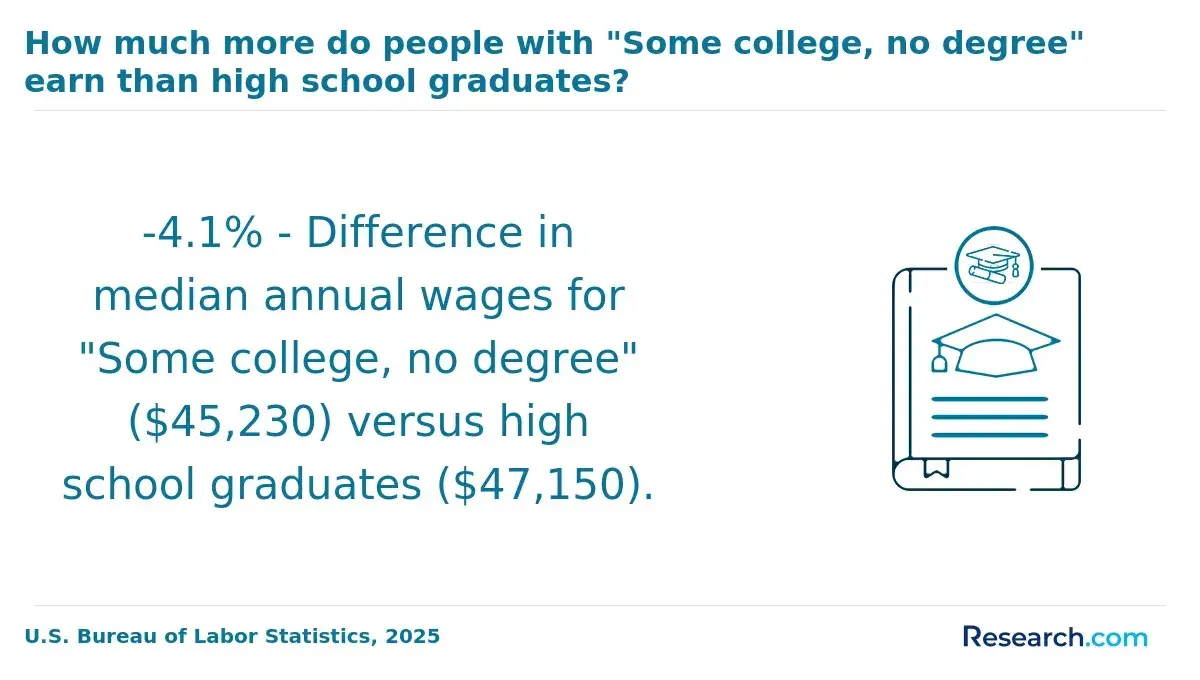
For nontraditional students, "best" should mean best aligned with your life constraints and career goal, not simply the school with the most recognizable name. A program that works well for a full-time employee may have different strengths than one designed for recent graduates who can attend synchronous classes several times a week.
Start with a structured comparison process instead of collecting random rankings. The steps below focus on fit, flexibility, risk, and return on effort.
- Define the target role first, such as clinic administrator, hospital department manager, revenue cycle leader, health policy analyst, or long-term care administrator.
- Check whether the curriculum includes the skills listed in real job postings for that role, especially finance, quality improvement, compliance, data analytics, and people management.
- Confirm the format details, including asynchronous coursework, live session frequency, exam proctoring, residency requirements, and whether group projects require fixed meeting times.
- Ask how the program supports adult learners through advising, writing help, career coaching, disability accommodations, military benefits, and leave-of-absence policies.
- Calculate total cost using tuition, fees, books, software, travel, childcare, reduced work hours, and loan interest, then compare that amount with realistic career pathways.
- Review outcomes carefully, including employer partnerships, internship access, alumni roles, graduation rates, and whether outcomes are specific to online students.
Common red flags include vague accreditation language, unclear tuition pages, no named faculty, limited career support for online students, pressure to enroll quickly, or a curriculum that has not kept pace with healthcare analytics, value-based care, interoperability, and regulatory compliance. If a school cannot clearly explain how online students complete applied learning, keep comparing.
A useful test is the "Tuesday night test": if you worked a full shift, handled family responsibilities, and had two hours to study, would the program's platform, course calendar, and support model still be manageable? If not, the program may be academically good but personally unsustainable.
What accreditation should online healthcare administration master's programs have in the United States?
Accreditation is one of the most important quality checks for an online MHA because it affects federal financial aid access, credit transfer, employer trust, and sometimes eligibility for internships or administrative licensure pathways. At minimum, the institution should hold recognized institutional accreditation from an accreditor accepted by the U.S. Department of Education or the Council for Higher Education Accreditation.
For healthcare management programs, the most recognized programmatic accreditor is the Commission on Accreditation of Healthcare Management Education, commonly known as CAHME. Not every good program has CAHME accreditation, but CAHME can be a strong signal that the curriculum, faculty qualifications, competency model, and outcomes have been reviewed specifically for healthcare management education.
The table below explains the main accreditation checks and why they matter. Use it before applying, not after enrolling, because accreditation problems can be difficult and expensive to fix later.
| Accreditation or approval type | What it means | Why it matters to students |
| Institutional accreditation | The college or university has been reviewed as a whole institution | Usually required for federal financial aid and often important for credit transfer and employer recognition. |
| CAHME accreditation | The healthcare management program has been reviewed against field-specific standards | Can strengthen confidence in curriculum quality and may be valued by some employers or fellowship programs. |
| State authorization | The school is allowed to enroll online students from the student's state | Important for distance education compliance, complaints, and in some cases field placements. |
| Program-specific licensure alignment | The program discloses whether it meets educational rules for certain regulated roles | Especially important for students interested in nursing home administration or other state-regulated administrative pathways. |
Do not rely only on logos on a marketing page. Verify accreditation through the accreditor's directory and ask the admissions office whether the specific online MHA program is included. Also ask whether any concentration, dual degree, or accelerated pathway has different accreditation or state authorization rules.
What admission requirements do online healthcare administration master's programs typically have?
Admission requirements vary, but most online MHA programs look for evidence that applicants can handle graduate-level writing, quantitative work, and leadership-oriented coursework. Many programs are designed for working adults, so they may evaluate professional experience alongside undergraduate grades.
Typical requirements are listed below. These are not universal, so always confirm requirements directly with each school before paying application fees.
- Bachelor's degree from an accredited institution, often in any field
- Official transcripts showing undergraduate performance and completed prerequisites if required
- Resume or CV documenting work experience, leadership, healthcare exposure, military service, or volunteer experience
- Statement of purpose explaining career goals and why healthcare administration is the right path
- Letters of recommendation from supervisors, faculty, or professional mentors
- Minimum GPA requirement or alternative review process for applicants with lower GPAs
- GRE or GMAT scores for some programs, though many online MHA programs are test-optional or do not require them
- English proficiency documentation for applicants whose prior education was not in English
Students coming from administrative support, medical billing, scheduling, human resources, or office management may still be competitive if they can show readiness for leadership coursework. Applicants at an earlier stage might build relevant experience through fields such as business office administration, healthcare customer service, revenue cycle support, or clinic operations before pursuing a graduate degree.
If your GPA is below a posted minimum, ask whether the school offers conditional admission, a graduate certificate entry route, or a probationary first term. A common mistake is assuming one weak part of the application automatically rules you out; many adult-focused programs review evidence of recent professional growth, certifications, and leadership responsibility.
How long does it take to complete an online master's in healthcare administration?
Most online MHA programs take about one to three years, depending on credit load, course length, transfer policy, and whether the student studies full time or part time. The fastest option is not always the best option for working adults because compressed courses can create heavy weekly reading, writing, group project, and exam demands.
The table below summarizes common pacing models. It can help you match program speed with your actual weekly capacity rather than choosing a timeline based only on graduation date.
| Pacing model | Common completion window | Best suited for | Main trade-off |
| Accelerated full-time | About 12 to 18 months | Students with flexible jobs, strong academic preparation, or short-term ability to reduce work hours | Less margin for illness, family emergencies, overtime, or academic adjustment. |
| Standard full-time | About 18 to 24 months | Students who can manage multiple courses while maintaining some work or family obligations | Balanced but still demanding during finance, statistics, and capstone terms. |
| Part-time | About 24 to 36 months | Full-time employees, parents, caregivers, and students returning after a long academic gap | Longer time to completion and potentially more exposure to tuition increases. |
| Self-paced or competency-based | Varies by student progress | Highly disciplined adults with relevant experience and predictable study blocks | Requires strong self-management and careful checking of employer and financial aid acceptance. |
Before choosing an accelerated program, ask for a sample weekly schedule from a current course. If a school says students should expect 15 to 20 hours of work per week per course, take that seriously. Nontraditional students often succeed by choosing a sustainable pace, using summer terms strategically, and avoiding the mistake of overloading during major work or family transitions.
What core courses and specializations are offered in online MHA programs?
Online MHA curricula usually combine healthcare-specific management with broader business and leadership training. The best programs do more than teach terminology; they ask students to interpret financial statements, evaluate quality metrics, manage teams, understand legal constraints, and make decisions in complex healthcare systems.
Core courses often cover the following areas because healthcare administrators need to connect strategy with daily operations.
- Healthcare systems, policy, and delivery models
- Healthcare finance, accounting, budgeting, and reimbursement
- Quality improvement, patient safety, and performance measurement
- Healthcare law, ethics, compliance, privacy, and risk management
- Organizational leadership, human resources, conflict management, and change management
- Health informatics, data analytics, decision support, and digital transformation
- Strategic planning, marketing, population health, and community health needs
- Capstone, practicum, consulting project, or administrative residency
Specializations can help students signal a more specific career direction. They are most useful when they align with job postings, employer needs, and the student's existing experience.
| Specialization | What it emphasizes | Potential career relevance |
| Health informatics or analytics | Data governance, dashboards, EHR use, performance measurement | Useful for operations analysts, quality managers, and leaders working with AI-supported decision tools. |
| Long-term care administration | Aging services, facility operations, compliance, resident care systems | Relevant for students exploring skilled nursing, assisted living, or senior services leadership, subject to state rules. |
| Population health | Community health, prevention, care coordination, social determinants of health | Useful for health systems, public agencies, insurers, and value-based care organizations. |
| Healthcare finance | Revenue cycle, reimbursement, budgeting, cost control | Helpful for payer organizations, hospitals, consulting, and administrative finance roles. |
| Leadership or strategy | Organizational behavior, executive decision-making, change management | Useful for supervisors and managers moving toward director-level responsibilities. |
Current trends make analytics, compliance, workforce management, and technology literacy especially important. AI may automate some reporting and scheduling tasks, but it also increases the need for leaders who can question data quality, protect patient privacy, manage bias, and translate insights into safe operational decisions.
How much do online healthcare administration master's programs cost, and what financial aid is available?
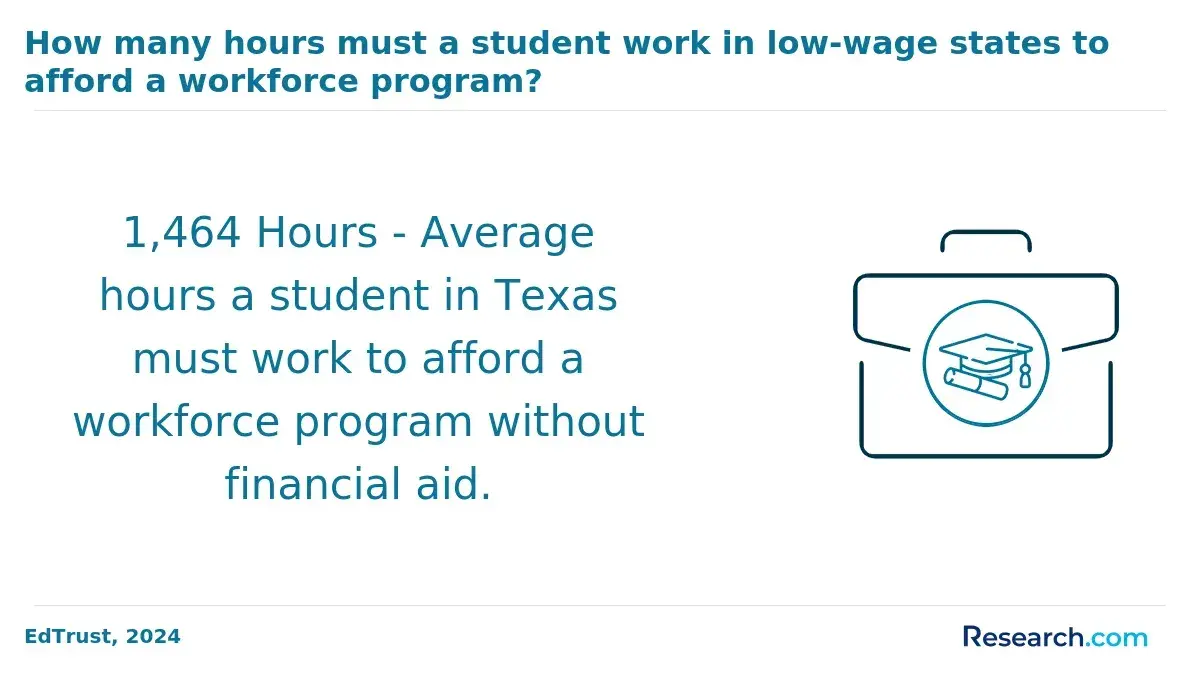
Online MHA costs vary widely by institution, residency policy, credit requirements, fees, and whether the program is public, private nonprofit, or private for-profit. Institution type alone does not determine value; a lower-tuition program can be a poor investment if it lacks support, while a higher-cost program needs a clear explanation of outcomes, employer connections, and services.
Graduate students should also pay close attention to borrowing costs. For 2024-2025, federal graduate Direct Unsubsidized Loans have an 8.08% fixed interest rate and a $20,500 annual limit, while Grad PLUS Loans have a 9.08% fixed interest rate. Those rates make it important to borrow only what is needed and compare repayment scenarios before enrolling.
When comparing affordability, include the full cost of attendance, not just tuition. This is the same mindset students should use across professional degrees, whether they are comparing an MHA or researching a field-specific option such as the cheapest online construction management degree: the lowest sticker price is not always the lowest total cost if fees, time away from work, or weak support extend the timeline.
The table below summarizes major cost categories. Use it to create a side-by-side spreadsheet for each program you are considering.
| Cost factor | What to check | Why it affects value |
| Tuition model | Per-credit, per-course, flat-rate term, or competency-based tuition | Different models favor different pacing strategies. |
| Program length | Total credits required and whether prerequisites add credits | A lower per-credit price may not save money if the program requires more credits. |
| Fees | Technology, graduation, online learning, clinical placement, residency, or proctoring fees | Fees can materially change the real cost of attendance. |
| Travel requirements | Campus intensives, residencies, orientations, or required conferences | Travel can add transportation, lodging, meals, and time-off costs. |
| Work impact | Reduced hours, lost overtime, childcare, or schedule changes | Opportunity cost can be larger than visible school fees for working adults. |
| Completion risk | Leave policies, course availability, advising, and academic support | Stopping out can increase debt without producing the intended credential. |
Financial aid options may include federal loans, employer tuition assistance, military and veteran benefits, scholarships, payment plans, graduate assistantships, and professional association awards. Before borrowing, take these practical steps.
- Submit the FAFSA if the institution participates in federal student aid and you are eligible.
- Ask your employer whether tuition assistance requires a minimum grade, continued employment period, or approved major.
- Request a written total cost estimate from the school for your expected pace.
- Compare monthly loan repayment estimates against conservative salary scenarios, not best-case promotions.
- Ask whether scholarships are renewable and whether online students are considered equally.
A common mistake is using expected salary growth to justify any price. A better approach is to ask what career move the degree makes more realistic, how soon that move could happen, and what debt level would still be manageable if promotion takes longer than planned.
What healthcare administration careers can graduates pursue, and in which settings?
Graduates of online MHA programs can pursue management and leadership roles across hospitals, clinics, physician practices, insurers, public health agencies, consulting firms, long-term care organizations, health technology companies, and nonprofit health systems. The exact role depends heavily on prior experience; an MHA often accelerates or redirects a career rather than replacing the need for practical healthcare knowledge.
The table below connects common roles with typical responsibilities and work settings. Use it to identify which track matches your background and what experience you may need before applying.
| Career path | Typical responsibilities | Common settings |
| Clinic or practice manager | Staffing, scheduling, patient flow, billing coordination, provider support, service quality | Physician groups, outpatient clinics, specialty practices, urgent care centers |
| Hospital department manager | Budget oversight, team supervision, compliance, productivity improvement, interdepartmental coordination | Hospitals, academic medical centers, health systems |
| Quality improvement manager | Performance metrics, safety initiatives, process redesign, regulatory reporting | Hospitals, insurers, accountable care organizations, consulting firms |
| Revenue cycle or reimbursement manager | Claims, coding workflows, denial management, payer contracts, financial performance | Hospitals, medical groups, billing companies, insurers |
| Long-term care administrator | Facility operations, staffing, resident services, compliance, budgeting | Skilled nursing facilities, assisted living organizations, senior care networks |
| Healthcare consultant | Operational analysis, strategy projects, implementation support, workflow improvement | Consulting firms, health systems, technology vendors |
| Public health or population health manager | Program planning, care coordination, community partnerships, outcomes tracking | Government agencies, nonprofits, insurers, integrated delivery systems |
Students who want to move beyond practice-focused leadership into research, university teaching, executive scholarship, or advanced policy analysis may later compare a PhD in healthcare management online with professional doctorates such as a DHA or DrPH. That decision usually makes sense after clarifying whether the goal is research, executive practice, teaching, or policy leadership.
To prepare for these roles, build evidence beyond the diploma: lead a process improvement project, learn spreadsheet and dashboard tools, document budget exposure, seek cross-functional committee work, and practice explaining healthcare decisions to both clinical and nonclinical audiences. Employers often look for proof that a candidate can manage ambiguity, communicate with clinicians, and improve operations without compromising patient safety.
What salary ranges and job outlook can graduates of online MHA programs expect?
The clearest national benchmark for MHA-related leadership roles is the BLS category for medical and health services managers. The BLS reported a median annual wage of $117,960 in May 2024 and projected 29% employment growth through 2033, much faster than the average for all occupations. For readers, this means the field has strong demand signals, but the median is not a starting salary promise.
Pay varies by setting, geography, organization size, leadership level, and prior experience. A student moving from a nonmanagerial role into a first supervisory position may see a different salary path than an experienced nurse manager or finance professional using the MHA to move into director-level work.
The table below shows how salary context often differs by career stage. It avoids promising specific outcomes and instead frames what typically influences earning potential.
| Career stage | Possible role types | Salary factors to evaluate |
| Entry or transition stage | Administrative fellow, project coordinator, operations analyst, assistant manager | Prior healthcare exposure, internship access, local employer demand, technical skills, and willingness to start in a narrower function. |
| Early management stage | Clinic manager, department supervisor, quality coordinator, revenue cycle manager | Team size, budget responsibility, measurable process improvements, and experience with compliance or reimbursement. |
| Midcareer leadership stage | Director, service line manager, population health manager, senior consultant | Strategic scope, multi-site responsibility, analytics ability, change management record, and industry specialization. |
| Executive stage | Chief operating officer, vice president, executive director, senior administrator | Organizational scale, financial accountability, board interaction, turnaround experience, and long-term leadership record. |
Healthcare demand is influenced by aging populations, chronic disease management, consolidation among providers, telehealth operations, value-based payment models, cybersecurity needs, and workforce shortages. These trends can create opportunities for administrators who understand both people and systems. However, competition may be strong for highly desirable hospital leadership roles, especially in major metro areas.
The safest way to evaluate ROI is to compare the program cost against job postings in your region and target setting. Look for required degree level, preferred certifications, years of experience, salary ranges when posted, and whether employers value MHA, MBA, MPH, MSN, or other credentials for the same role.
Other Things You Should Know About Healthcare Administration
Neither is automatically better. An MHA is usually more healthcare-specific, while an MBA may offer broader business flexibility. Choose the MHA if you are committed to healthcare operations or policy, and consider the MBA if you want a credential that can transfer more easily across industries.
A clinical background is not required for success in the best online Master's in Healthcare Administration programs in 2027. These programs are designed to accommodate nontraditional students by focusing on leadership, management, and policy, allowing individuals from various professional backgrounds to thrive.
They can be useful when they match your target role. Examples include credentials in healthcare management, project management, quality improvement, compliance, revenue cycle, or health information management. Check job postings first so you do not spend time and money on a credential employers in your target market rarely request.
Yes, but it requires intention. Look for programs with live discussions, alumni panels, mentorship, employer projects, residencies, student associations, and faculty access. Online students should also join local healthcare associations and attend regional events when possible.
References
- 10 careers you can pursue with a Healthcare Administration Degree - SMWC https://www.smwc.edu/10-careers-you-can-pursue-with-a-healthcare-administration-degree-blog-december-22/
- Master's in health administration | edX https://www.edx.org/masters/online-mha
- MHA Healthcare Administration Salary and Career Outlook | USAHS https://www.usa.edu/blog/mha-healthcare-administration-salary-and-career-outlook/
- Schools with Online Master’s Degree Programs in Healthcare https://www.mhaonline.com/school-profiles
- Master of Health Administration - Graduate School of Public Policy https://www.schoolofpublicpolicy.sk.ca/programs/masters-programs/master-of-health-administration.php
- 2025 Most Affordable Online Master's in Healthcare Administration https://www.onlineu.com/most-affordable-colleges/healthcare-administration-masters-degrees
- Master of Health Administration Degree | University of Phoenix https://www.phoenix.edu/online-healthcare-degrees/health-administration-masters-degree.html
- CAHME-Accredited Healthcare Administration Programs by State https://www.healthcareadministrationedu.org/accredited-healthcare-administration-programs/
- MHA https://www.publichealthdegrees.org/program/masters/mha/