2027 Online Healthcare Administration Degrees That Prepare Students for Healthcare Leadership Advancement

Co-Founder and Chief Data Scientist
Choosing an online healthcare administration degree is really a decision about leadership readiness, cost, flexibility, and career fit. The stakes are high: the U.S. Bureau of Labor Statistics reports that medical and health services managers had a May 2024 median pay of $117,960, reflecting strong demand for people who can manage complex care systems.
This guide is for working adults, career changers, and healthcare employees comparing degree options. You will learn how programs differ, what accreditation matters, what costs to expect, and how to evaluate whether a degree supports your next career move.
Key Things You Should Know
- Online healthcare administration degrees are best suited for students who want leadership, operations, finance, compliance, or strategy roles in healthcare rather than direct clinical practice.
- Program quality depends heavily on institutional accreditation, relevant curriculum, field experience, student support, and transparent outcomes; for MHA programs, CAHME accreditation can be especially important for competitive administrative fellowships.
- The BLS projects medical and health services manager employment to grow 29% from 2023 to 2033, but salaries and advancement depend on degree level, experience, location, employer type, and management scope.
What is an online healthcare administration degree and how does it prepare leaders?
An online healthcare administration degree is a business-focused healthcare program that teaches students how hospitals, clinics, long-term care facilities, insurance organizations, public health agencies, and healthcare technology companies operate. Unlike nursing, medicine, or other clinical degrees, it prepares students to manage people, budgets, systems, policies, quality improvement efforts, and organizational change.
Students often study topics such as healthcare finance, law and ethics, health information systems, human resources, population health, strategic planning, and quality management. A strong program connects these subjects to real leadership problems, such as reducing patient wait times, preparing for audits, managing staffing shortages, using data to improve outcomes, or implementing new technology responsibly.
The degree can be a good fit if you want to move from front-line healthcare work into supervision, from general business into healthcare, or from an entry-level administrative job into a more strategic role. It may not be the best first choice if your main goal is to diagnose patients, prescribe medication, or provide hands-on clinical care, because those careers usually require clinical licensure rather than an administrative degree.
For students exploring the field broadly, programs in healthcare administration can also vary by pace, transfer policy, and career focus, so it is important to compare the degree structure rather than relying only on the program title.
Most programs are designed to build leadership through applied assignments rather than lectures alone. Before enrolling, students should look for learning activities that mirror real healthcare management work, including the following:
- Case studies involving staffing, finance, patient safety, compliance, or access to care decisions
- Projects that require students to analyze healthcare data and recommend operational improvements
- Courses that address health equity, reimbursement, regulation, and organizational ethics
- Internships, practicums, capstones, or employer-based projects that demonstrate management readiness
The best programs do not just teach terminology. They help students practice decision-making in settings where financial constraints, patient needs, workforce pressures, and regulatory requirements all interact.
How do online and campus-based healthcare administration programs compare for working adults?
Online and campus-based healthcare administration programs can lead to similar degrees, but the learning experience is different. For working adults, the biggest question is usually not whether online education is legitimate; it is whether the format provides enough flexibility, interaction, accountability, and career support for the student's goals.
NCES distance education data released in 2024 continued to show that millions of U.S. college students take at least some online courses, making online learning a mainstream delivery model rather than an exception. For adult learners, that matters because many reputable universities now design online programs intentionally instead of treating them as secondary versions of campus programs.
The table below compares common decision points for working adults. Use it to identify which format fits your schedule, learning style, and need for in-person networking.
| Factor | Online healthcare administration degree | Campus-based healthcare administration degree |
| Schedule fit | Often best for students balancing full-time work, caregiving, military service, or shift work | Often best for students who can attend classes at fixed times and travel regularly |
| Networking | May rely on virtual cohorts, discussion boards, alumni platforms, residencies, or local internships | May offer more spontaneous in-person interaction with faculty, peers, and campus recruiters |
| Learning style | Requires strong time management, written communication, and comfort with learning platforms | Provides more face-to-face structure and immediate classroom interaction |
| Career services | Quality varies widely; strong programs provide online advising, virtual career events, and employer connections | May provide easier access to campus-based career fairs and local healthcare employers |
| Best fit | Experienced professionals who need flexibility and can self-direct their learning | Students who value physical classroom structure or want a traditional campus network |
Online programs are not automatically easier. In many cases, they demand more self-discipline because students must manage deadlines without the rhythm of commuting to class. Campus programs are not automatically better either; they can be less practical for healthcare workers whose schedules change week to week.
Working adults should pay close attention to whether classes are asynchronous, synchronous, or hybrid. Asynchronous courses offer the most flexibility because students can complete weekly work on their own schedule. Synchronous courses can provide stronger live interaction but may be difficult for students with rotating shifts. Hybrid programs can be useful for networking, but travel costs and required residencies should be included in the real cost of attendance.
What types of healthcare administration degrees can you earn online and at what levels?
Online healthcare administration degrees are available from the associate level through doctoral study. The right level depends on your current education, work experience, target role, budget, and how quickly you need a credential.
The table below summarizes common online degree levels and the types of students they usually serve. It can help you avoid overpaying for a credential that is too advanced or choosing a program that is too limited for your career goal.
| Degree level | Typical purpose | Common career direction | Who should consider it |
| Associate degree | Builds a foundation in office systems, medical terminology, records, billing, and administrative support | Medical office assistant, patient services representative, scheduling coordinator, records clerk | Students seeking an affordable starting point or a transfer pathway into a bachelor's program |
| Bachelor's degree | Develops broad management knowledge in healthcare operations, finance, policy, HR, and quality | Clinic supervisor, department coordinator, practice manager, healthcare operations analyst | Students seeking entry-level management or advancement from administrative support roles |
| Master of Healthcare Administration or related master's | Prepares students for advanced management, strategy, analytics, and executive-track roles | Healthcare manager, service line administrator, operations director, administrative fellow | Professionals with a bachelor's degree who want leadership advancement or career change into healthcare management |
| Doctoral degree | Focuses on executive leadership, applied research, policy, teaching, or organizational transformation | Senior executive, consultant, faculty member, policy leader, system-level administrator | Experienced leaders pursuing top-level roles, research-informed leadership, or academic pathways |
| Graduate certificate | Provides focused study in healthcare leadership, informatics, compliance, or finance without a full degree | Skill upgrade, specialization, or pathway toward a later master's program | Professionals who already hold a degree and need targeted training rather than a full credential |
An associate degree may be enough for front-office or support roles, especially when paired with healthcare experience. Students still deciding between general administration and healthcare-specific work may compare an office administration degree online with a healthcare administration track to see whether they need industry-specific coursework in medical terminology, billing, privacy, and healthcare operations.
A bachelor's degree is often the practical minimum for many management-track roles, while a master's degree is commonly preferred for higher-level leadership positions in hospitals, health systems, consulting, and large healthcare organizations. Doctoral study is usually not necessary for most management jobs, but it can make sense for experienced professionals pursuing executive, academic, research, or policy-focused work.
How can you verify that an online healthcare administration program is properly accredited?
Accreditation is one of the most important quality checks for any online healthcare administration degree. It affects transfer credit, graduate school eligibility, employer recognition, federal financial aid access, and sometimes fellowship competitiveness. Students should verify accreditation independently rather than relying only on marketing language.
The first requirement is institutional accreditation from an accreditor recognized by the U.S. Department of Education or the Council for Higher Education Accreditation. This confirms that the college or university meets broad academic and administrative standards. Programmatic accreditation is separate and may apply to specific healthcare management programs.
For master's-level healthcare management education, the Commission on Accreditation of Healthcare Management Education, commonly known as CAHME, is the most recognized programmatic accreditor. Students comparing top online MHA programs should understand that CAHME accreditation can be especially valuable when targeting competitive administrative fellowships or large health system leadership pipelines.
Use the following process before applying. It is a practical way to reduce the risk of choosing a school that looks credible online but may not support your goals.
- Search the institution in the U.S. Department of Education's Database of Accredited Postsecondary Institutions and Programs or CHEA's recognized institution database.
- Confirm that the accreditation status is active and that the school name matches exactly, including campus or system location when relevant.
- For an MHA or similar graduate program, check whether the specific program appears in CAHME's accredited program directory if CAHME accreditation matters for your goals.
- Ask admissions whether online students earn the same diploma designation as campus students and whether the transcript identifies the delivery format.
- Confirm whether credits are likely to transfer and whether graduates meet eligibility expectations for fellowships, graduate study, or employer tuition reimbursement.
Common red flags include vague claims such as "nationally recognized" without naming an accreditor, pressure to enroll immediately, unclear tuition policies, missing faculty credentials, no published curriculum, or a school that cannot explain how online students complete required fieldwork. Accreditation does not guarantee a perfect program, but lack of recognized accreditation can create serious academic and financial problems.
What are typical admission requirements for online healthcare administration bachelor's and master's programs?
Admission requirements vary by school, but most online healthcare administration programs look for evidence that students can succeed in a management-oriented curriculum. Bachelor's programs usually focus on prior academic preparation, while master's programs often evaluate professional experience, leadership potential, and writing ability.
For bachelor's programs, applicants generally need a high school diploma or GED. Transfer students may submit college transcripts, and many adult-focused programs award credit for prior coursework, military training, professional certifications, or standardized prior learning assessments. Students with healthcare experience but limited college credit should ask whether the school offers a transfer evaluation before requiring a deposit.
For master's programs, applicants generally need a bachelor's degree from an accredited institution. Some programs prefer applicants with healthcare, business, public service, or management experience, but many also admit career changers who can explain a clear reason for entering healthcare leadership. GRE or GMAT requirements have become less common in many professional master's programs, but policies still vary by institution.
The list below shows common materials schools may request. Reviewing these early helps applicants avoid rushed essays, missing transcripts, or weak recommendations.
- Official transcripts from prior high school or college study, depending on degree level
- Minimum GPA, often with conditional admission options for students below the standard threshold
- Resume showing healthcare, administrative, supervisory, military, nonprofit, or business experience
- Personal statement explaining career goals and why healthcare administration fits those goals
- Letters of recommendation from supervisors, faculty, or professional mentors
- English language proficiency documentation for applicants whose prior education was not in English
- Possible interview, writing sample, prerequisite coursework, or statistics preparation for some graduate programs
A common mistake is applying only to programs with the fastest admissions process. Speed can be useful, but students should still evaluate academic support, graduation requirements, and whether the curriculum matches the job they want. Another mistake is assuming clinical experience is required for every healthcare administration program. It can help, but many programs also value operations, finance, customer service, data, and people management experience.
How long do online healthcare administration degrees take and what do they cost?
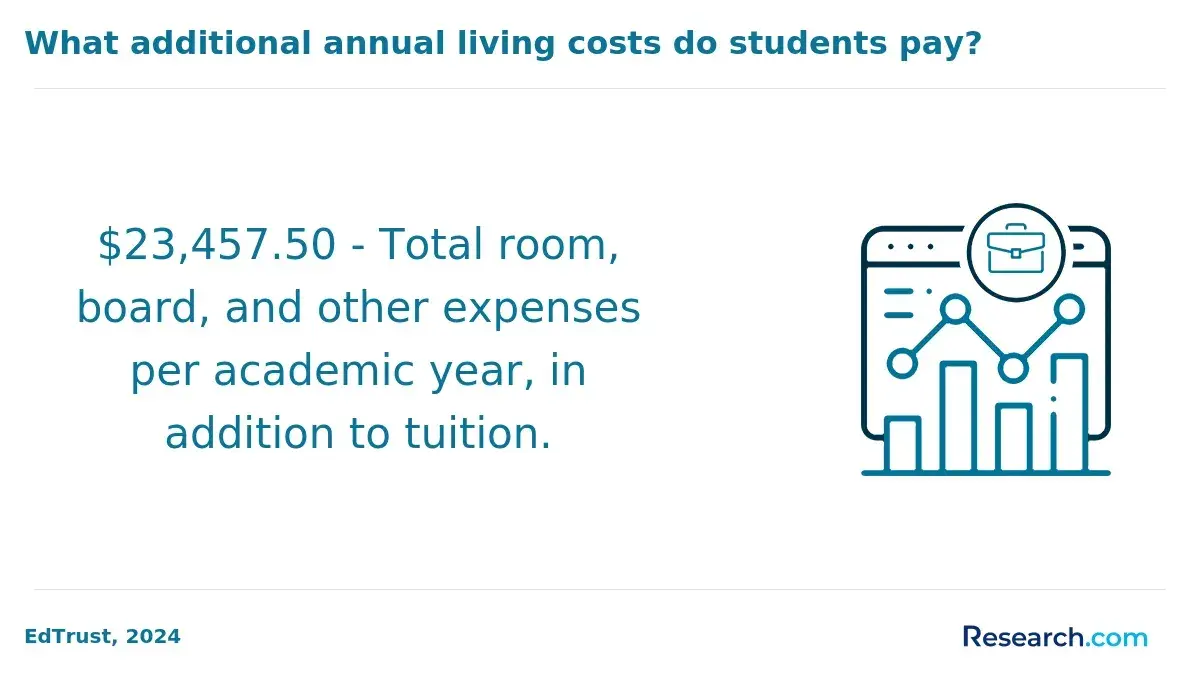
Program length depends on degree level, transfer credits, course load, term structure, and whether the student enrolls full time or part time. Cost depends on tuition, fees, books, technology charges, travel for residencies, lost work time, and how much financial aid or employer support the student receives.
According to College Board's 2024 Trends in College Pricing and Student Aid, published tuition and fees remain substantially different across public two-year, public four-year, and private nonprofit institutions. For online healthcare administration students, that means the most affordable-looking program is not always the best value; transfer policies, time to completion, and employer reimbursement can change the total cost significantly.
The table below provides a practical planning view of typical timelines and cost considerations. Exact tuition should always be verified with the school's current cost of attendance page.
| Credential | Common completion time | Cost factors to compare | Best value strategy |
| Associate degree | About 2 years full time; longer part time | Community college tuition, online fees, transferability, books, technology costs | Choose a regionally accredited program with clear bachelor's transfer agreements |
| Bachelor's degree | About 4 years from first enrollment; 1 to 3 years for many transfer students | Per-credit tuition, accepted transfer credits, prior learning credit, general education requirements | Request a full transfer credit review before comparing total cost |
| Master's degree | About 1.5 to 3 years depending on course load and format | Graduate tuition, residency travel, practicum requirements, employer tuition benefits | Compare total program cost, not only per-credit tuition |
| Doctoral degree | Often 3 or more years depending on dissertation or applied project pace | Tuition structure, dissertation fees, research support, required residencies | Enroll only when the credential clearly supports executive, academic, consulting, or policy goals |
| Certificate | Often several months to 1 year | Credit-bearing status, stackability into a degree, employer recognition | Use certificates for targeted skill gaps rather than as a substitute for a required degree |
Students can reduce total cost by taking transferable general education courses at a lower-cost accredited institution, using employer tuition assistance, applying for scholarships, choosing part-time enrollment to keep income stable, or accelerating only if they can handle the workload. Federal Direct Loan limits and eligibility rules change by student level and dependency status, so applicants should use the school's official financial aid estimate rather than assuming they can borrow the full cost automatically.
Accelerated programs can be worthwhile for students with strong transfer credit, predictable schedules, and urgent career goals. They can be risky for students working heavy clinical shifts, supporting families, or returning to school after a long break. A slower program may cost more in time, but it can lead to better learning and less withdrawal risk if the schedule is realistic.
What core courses and specializations are common in online healthcare administration curricula?
Healthcare administration curricula combine management training with healthcare-specific policy, finance, technology, and quality improvement. The strongest programs show students how decisions affect patients, staff, reimbursement, compliance, and organizational performance.
Core courses usually cover the operating knowledge that healthcare managers need across settings. These subjects are especially important because healthcare organizations are highly regulated, data-driven, and financially complex.
- Healthcare systems and policy, including how care is organized, financed, and regulated in the U.S.
- Healthcare finance and reimbursement, including budgeting, revenue cycles, payer mix, and cost control
- Healthcare law, ethics, and compliance, including privacy, risk management, and organizational accountability
- Human resources and workforce management, including staffing, labor relations, performance, and retention
- Quality improvement and patient safety, including process improvement, outcomes measurement, and accreditation readiness
- Health informatics and data analytics, including electronic health records, dashboards, and decision support
- Strategic planning and leadership, including change management, governance, communication, and stakeholder alignment
Specializations can help students align the degree with a specific career direction. They are most useful when they connect to the student's experience or target employer type rather than simply sounding impressive.
- Health informatics for students interested in data, EHR systems, analytics, workflow improvement, or digital health operations
- Long-term care administration for students targeting nursing facilities, assisted living, aging services, or post-acute care operations
- Healthcare finance for students pursuing budgeting, revenue cycle, payer strategy, or financial planning roles
- Quality and patient safety for students interested in performance improvement, risk reduction, accreditation, or clinical operations support
- Public health administration for students focused on community health, policy implementation, nonprofit leadership, or government programs
- Human resources or organizational leadership for students who want to manage workforce planning, training, culture, and employee relations
AI and automation are increasingly relevant in healthcare administration curricula. Students should look for programs that teach responsible data use, privacy, cybersecurity awareness, workflow automation, and how to evaluate analytics tools without replacing human judgment. Healthcare leaders do not need to be software engineers, but they do need to understand how technology affects staffing, cost, compliance, and patient experience.
What healthcare leadership and management careers can graduates pursue with these degrees?
Healthcare administration graduates can pursue roles across provider organizations, insurance companies, consulting firms, health technology vendors, government agencies, and nonprofit healthcare organizations. The right role depends on degree level, prior experience, management skills, and whether the student wants to work close to patient care or in broader business operations.
The table below connects common roles with typical responsibilities and degree fit. It is meant as a planning tool, not a guarantee that one credential will qualify every applicant for every position.
| Career path | Typical responsibilities | Common degree fit | Experience that helps |
| Medical office manager | Oversees scheduling, billing workflows, staff coordination, patient service, and office procedures | Associate or bachelor's degree | Front-office healthcare, billing, customer service, supervisory experience |
| Practice manager | Manages clinic operations, budgets, staffing, compliance, provider schedules, and patient access | Bachelor's degree; master's for larger groups | Clinic operations, revenue cycle, team leadership, EHR knowledge |
| Healthcare operations manager | Improves processes, manages departments, analyzes performance, and coordinates service delivery | Bachelor's or master's degree | Operations, analytics, project management, quality improvement |
| Health services manager | Plans, directs, and coordinates services for a department, facility, or clinical service line | Bachelor's or master's degree | Healthcare experience, budgeting, compliance, staff management |
| Quality improvement manager | Leads patient safety initiatives, tracks outcomes, supports accreditation, and improves care processes | Bachelor's or master's degree | Quality methods, data analysis, clinical operations, regulatory knowledge |
| Healthcare compliance manager | Monitors laws, policies, audits, privacy practices, training, and risk controls | Bachelor's or master's degree | Compliance, legal awareness, documentation, auditing, ethics training |
| Hospital administrator or executive-track leader | Guides strategy, finances, service lines, workforce planning, partnerships, and organizational performance | Master's degree often preferred | Progressive leadership, fellowships, project ownership, cross-functional management |
Students should distinguish administrative leadership from clinical advancement. A nurse, for example, may choose healthcare administration for operations or executive leadership, while someone who wants advanced patient diagnosis and treatment would need a clinical graduate pathway such as online msn PMHNP programs or another licensed practice route.
Career progression is often stepwise. Many graduates move from coordinator or analyst roles into supervisor roles, then into department management, and later into director or executive positions. Employers typically look for evidence of leadership impact, such as reducing denials, improving scheduling access, lowering turnover, managing budgets, leading implementation projects, or improving quality metrics.
What salary ranges and job outlook can healthcare administration graduates expect?
Healthcare administration salaries vary widely because the field includes small medical offices, large hospitals, health systems, consulting firms, insurers, long-term care organizations, and government agencies. Degree level matters, but experience, location, employer size, management scope, and performance record often matter just as much.
The clearest national benchmark is the BLS category for medical and health services managers. The BLS reported a May 2024 median annual wage of $117,960 for this occupation. Readers should treat that figure as a midpoint for a broad occupational group, not as a starting salary for every graduate.
The table below shows how to think about salary context by career stage. It avoids treating one national median as if it applies equally to every job title.
| Career stage | Typical role examples | Salary context | What can improve earning potential |
| Entry or early administrative stage | Patient services coordinator, medical office lead, billing coordinator, department assistant | Often below the national manager median because these roles may have limited budget or staff authority | Healthcare experience, EHR skills, billing knowledge, customer service leadership, transfer into supervisory work |
| First management stage | Clinic supervisor, office manager, assistant practice manager, operations analyst | Compensation generally rises as responsibility expands to staffing, workflows, reporting, or budget support | Bachelor's degree, project results, data skills, process improvement, strong supervisor references |
| Mid-level management stage | Practice manager, department manager, quality manager, compliance manager | Closer alignment with health services management benchmarks may occur when roles include staff, budget, and performance responsibility | Master's degree, certifications, measurable operational outcomes, cross-functional leadership |
| Senior leadership stage | Director, service line administrator, hospital administrator, executive-track manager | Pay can exceed broad medians in larger or more complex organizations, but competition is stronger | Advanced degree, fellowships, progressive leadership record, financial accountability, strategic project ownership |
The job outlook is favorable at the national level. BLS projects employment for medical and health services managers to grow 29% from 2023 to 2033, much faster than the average for all occupations. This reflects an aging population, expanding healthcare services, consolidation of healthcare organizations, and increasing need for managers who understand technology, regulation, staffing, and cost control.
Still, students should avoid assuming that a degree alone will produce a specific salary. The strongest return usually comes when the degree is paired with healthcare experience, internships or practicums, leadership projects, data literacy, and a clear target role. Geographic labor markets also differ: a rural clinic, urban academic medical center, insurer, and national consulting firm may value the same degree differently.
How should students choose a reputable online healthcare administration program that fits their goals?
The best online healthcare administration program is not always the highest-ranked, fastest, or cheapest option. It is the program that is accredited, affordable for your situation, realistic for your schedule, aligned with your target role, and strong enough to help you demonstrate leadership readiness.
Start by defining the job you want after graduation. A student aiming for medical office management may not need the same program as a student targeting hospital administration, health informatics, long-term care leadership, or a future executive role. Once the goal is clear, compare programs against that goal rather than comparing them only by tuition or brand recognition.
Use the following steps to make a careful decision before enrolling. They are designed to help you compare programs on quality, fit, and financial risk.
- Confirm institutional accreditation and any relevant programmatic accreditation before discussing tuition or admissions timelines.
- Request a written transfer credit evaluation so you know how many credits remain and how long the degree will actually take.
- Compare total program cost, including fees, books, technology charges, residency travel, exam fees, and lost income from reduced work hours.
- Review the curriculum for healthcare finance, law, ethics, quality improvement, informatics, leadership, and a capstone or applied project.
- Ask how online students complete internships, practicums, simulations, or employer-based projects if field experience is part of the program.
- Evaluate faculty experience in healthcare management, not only academic credentials.
- Ask for career support details, including resume help, interview preparation, alumni access, fellowship guidance, and employer connections.
- Check whether the program supports your preferred pace, including part-time, accelerated, asynchronous, synchronous, or hybrid options.
- Speak with current students or alumni when possible to understand workload, faculty responsiveness, and practical career value.
Several red flags should prompt caution. Be wary of schools that will not disclose total cost, avoid direct accreditation questions, promise unrealistic salaries, pressure you to enroll immediately, provide little information about student outcomes, or advertise a healthcare leadership degree without meaningful healthcare-specific coursework.
Students should also compare the degree against alternatives. A certificate may be enough for a specific skill gap. A bachelor's completion program may be better than a master's if you do not yet have an undergraduate degree. A clinical graduate program may be better if your goal is advanced patient care. The smartest choice is the credential that closes the gap between where you are now and the role you are actually pursuing.
Other Things You Should Know About Healthcare Administration
Most online healthcare administration degrees do not specify "online" on diplomas in 2027, as universities aim to equate online and on-campus programs. The focus remains on the degree title itself, ensuring that graduates are recognized for their academic achievement, irrespective of the study format.
Yes, it can be. Employers may value business, operations, finance, customer service, data, military, or nonprofit experience, especially for nonclinical management roles. Clinical experience helps in some settings, but it is not always required.
They can be useful when they match your role. Examples include credentials related to healthcare management, medical practice management, revenue cycle, compliance, quality improvement, or project management. Check employer preferences before paying for an exam.
Some roles in revenue cycle, compliance, analytics, consulting, project coordination, and health technology may offer remote or hybrid work. Facility operations, patient access, and staff management roles are more likely to require regular on-site presence.
References
- What Jobs Can You Get With a Healthcare Administration Degree? [Quiz] https://www.umassglobal.edu/blog-news/jobs-can-you-get-a-healthcare-administration-degree-quiz
- Healthcare Administration Degree Online Guide: Schools N-Z - Healthcare Administration Degree Programs https://www.healthcare-administration-degree.net/healthcare-administration-degree-online-guide-schools-n-z/
- MHA https://www.publichealthdegrees.org/program/masters/mha/
- How Do You Compare MHA Programs Online? - ThoughtLab https://thoughtlab.lynchburg.edu/college-search/mha-programs-online-what-to-look-for-when-choosing-the-right-healthcare-administration-degree/
- What can you do with a healthcare management degree? | edX https://www.edx.org/resources/what-can-you-do-with-a-healthcare-management-degree
- How to Choose a Health Administration Program https://www.healthadministrationdegrees.com/articles/choosing-a-program/
- Online BS in Healthcare Administration https://www.baypath.edu/academics/undergraduate-programs/healthcare-administration/
- Commission on Accreditation of Healthcare Management Education - (CAHME) https://www.chea.org/commission-accreditation-healthcare-management-education
- Who Accredits MHA Programs? https://www.mhaonline.com/faq/who-accredits-online-mha-programs