2027 Online Healthcare Administration Degrees With Strong Business and Healthcare Training

Co-Founder and Chief Data Scientist
Choosing an online healthcare administration degree is really a career investment decision: you are comparing cost, flexibility, accreditation, and management outcomes. The field is expanding quickly, with the U. S. Bureau of Labor Statistics projecting 29% growth for medical and health services managers from 2023 to 2033. This guide is for prospective students, working healthcare staff, and career changers who want business training tied to healthcare operations. You will learn how programs work, what they cost, which credentials matter, and how to choose a degree that fits your goals.
Key Things You Should Know
- Online healthcare administration degrees combine healthcare systems, finance, law, quality improvement, data, and people management rather than preparing students for direct clinical licensure.
- For career outcomes, accreditation and fit matter more than format; employers generally focus on institutional legitimacy, relevant experience, internships, and leadership skills.
- The BLS reported a May 2024 median annual wage of $117,960 for medical and health services managers, but pay varies widely by role, region, employer type, and experience.
What is an online healthcare administration degree and how does it prepare you for leadership?
An online healthcare administration degree is a business-focused degree for people who want to manage healthcare organizations, departments, teams, budgets, operations, compliance processes, or patient-service systems. Unlike nursing, radiologic technology, or other clinical degrees, healthcare administration usually does not prepare students to diagnose or treat patients. Its purpose is to build leadership capacity in organizations such as hospitals, clinics, physician practices, insurance companies, long-term care facilities, public health agencies, and health technology firms.
At the undergraduate level, the degree often introduces healthcare delivery, medical terminology, accounting, human resources, healthcare law, and operations. At the graduate level, it usually goes deeper into strategy, finance, analytics, population health, executive leadership, and organizational change. Students who already work in healthcare may use the degree to move from frontline or coordinator roles into supervisory roles. Career changers may use it to translate business, military, customer service, or project experience into the healthcare sector.
The best fit depends on your starting point. A bachelor's degree can help prepare you for entry-level administrative and supervisory roles, while a master's degree is more common for people targeting department management, consulting, operations leadership, or executive-track positions. Students who specifically want a broader business curriculum with healthcare electives may also compare a healthcare MBA with a master's in healthcare administration.
These degree options are often confused, but they serve different career needs. The table below compares common healthcare administration education paths so you can match the credential to your current experience and target role.
| Program type | Typical student profile | Best use case | Important limitation |
| Associate degree | New college student or administrative worker | Entry-level medical office, billing, records, or support roles | May not be enough for management roles without experience |
| Bachelor's degree | Student seeking a first management-ready credential | Healthcare operations, practice administration, quality support, or supervisory tracks | Leadership roles may still require experience or a master's degree |
| Master's in healthcare administration | Working professional or bachelor's graduate | Department management, health system administration, policy, consulting, or executive-track roles | More valuable when paired with relevant healthcare or business experience |
| MBA with healthcare concentration | Student wanting broader business mobility | Healthcare finance, strategy, operations, entrepreneurship, or cross-industry leadership | May include less healthcare policy depth than an MHA |
| Graduate certificate | Professional who already has a degree | Targeted upskilling in compliance, informatics, quality, or healthcare leadership | Usually not a substitute for a full degree when employers require one |
How do online healthcare administration programs compare to campus-based options in flexibility and outcomes?
Online healthcare administration programs are often designed for adults who need to keep working while studying. The strongest online programs cover the same academic content as campus-based programs, but deliver lectures, discussions, assignments, simulations, and group projects through a learning platform. Some are fully asynchronous, while others require scheduled live sessions, residencies, internships, or proctored exams.
Format affects your weekly routine more than the value of the credential. Employers typically care whether the school is accredited, whether the curriculum is relevant, and whether you can show applied skills. A campus program may offer more face-to-face networking and local internship access, while an online program may let you choose a school outside your region without relocating.
The comparison below shows where online and campus-based programs tend to differ. Use it to decide which learning environment fits your schedule, learning style, and career goals.
| Factor | Online healthcare administration degree | Campus-based healthcare administration degree |
| Scheduling | Often more flexible, especially in asynchronous formats | More fixed class meeting times |
| Networking | Usually virtual, with optional residencies or local fieldwork in some programs | More frequent in-person interaction with faculty and classmates |
| Work compatibility | Generally stronger for full-time employees and caregivers | Better for students who can attend classes during scheduled hours |
| Field experience | May be completed locally if the school approves a site | Often connected to the school's regional employer network |
| Learning style fit | Best for self-directed students who can manage deadlines independently | Best for students who benefit from in-person structure and immediate classroom interaction |
Online study is not automatically easier. It can be harder for students who procrastinate, need frequent in-person accountability, or underestimate group work in virtual courses. Before enrolling, ask whether the program uses live sessions, how exams are proctored, whether group projects are required, and how field placements are arranged for online students.
What accreditation should online healthcare administration degrees have for quality and employer recognition?
Accreditation is one of the most important quality checks for an online healthcare administration degree. At minimum, the college or university should hold institutional accreditation from an accreditor recognized by the U.S. Department of Education or the Council for Higher Education Accreditation. This matters because it can affect federal financial aid eligibility, transfer credit, graduate admission, and employer confidence.
Programmatic accreditation can add another layer of review. For graduate healthcare management programs, the Commission on Accreditation of Healthcare Management Education is a widely recognized specialized accreditor. Not every reputable program has programmatic accreditation, especially at the bachelor's level, but specialized accreditation can be useful if you are comparing similar graduate options or seeking leadership roles in competitive health systems.
Accreditation checks should be specific, not assumed from marketing language. Use the following steps before you apply or pay an enrollment deposit:
- Confirm the school's institutional accreditation through the U.S. Department of Education database or the accreditor's own directory.
- Check whether the healthcare administration, healthcare management, or related graduate program has programmatic accreditation if that matters for your target employers.
- Ask whether the online version of the program is covered by the same accreditation status as the campus version.
- Verify that credits are transcripted by the accredited institution, especially if a third-party online program manager supports course delivery.
- Contact potential employers or graduate schools if you need the degree for a specific promotion, fellowship, or doctoral pathway.
A common mistake is choosing a school because it is fast or inexpensive without checking legitimacy. Another is assuming that a program's business accreditation automatically means its healthcare management curriculum has specialized healthcare review. Accreditation does not guarantee a job, but it reduces avoidable risk when you are investing time and tuition.
What courses and skills are typically covered in online healthcare administration curricula?
Online healthcare administration curricula blend business management with healthcare-specific regulation, operations, finance, and patient-service concerns. The goal is to help students understand both the business side of healthcare and the constraints that make healthcare different from other industries, such as privacy rules, reimbursement systems, clinical quality metrics, staffing shortages, and patient safety expectations.
Course names vary by school, but most programs organize learning around a few practical skill areas. The table below summarizes common curriculum categories and why they matter in healthcare leadership roles.
| Curriculum area | Common topics | Leadership value |
| Healthcare systems | U.S. delivery models, public health, managed care, continuum of care | Helps managers understand how organizations, payers, providers, and patients interact |
| Finance and reimbursement | Budgeting, revenue cycles, insurance, Medicare and Medicaid concepts | Supports decisions about staffing, service lines, cost control, and financial sustainability |
| Law and ethics | Compliance, privacy, risk management, patient rights, organizational accountability | Reduces operational and legal risk in regulated environments |
| Operations and quality | Process improvement, patient flow, safety, supply chains, performance measurement | Prepares students to improve efficiency without ignoring quality of care |
| Data and health information | Analytics, electronic health records, informatics, reporting dashboards | Builds evidence-based decision-making skills |
| Leadership and strategy | Organizational behavior, change management, negotiation, strategic planning | Develops the people-management and planning skills needed for advancement |
Technology is changing what employers expect from healthcare administrators. Managers increasingly work with dashboards, electronic health record data, AI-supported documentation tools, telehealth workflows, and cybersecurity concerns. Students interested in the data and records side of healthcare may also compare administration programs with a health information management associate degree online, especially if they want a more technical route into medical records, coding, privacy, or data quality.
Strong programs also require applied work, not just reading and exams. Look for case studies, capstone projects, simulations, internships, practicums, or employer-based projects that let you solve realistic problems such as reducing wait times, improving billing workflows, analyzing staffing patterns, or preparing a compliance plan.
What admission requirements do online healthcare administration programs usually expect from applicants?
Admission requirements depend on the degree level. Associate and bachelor's programs usually focus on high school completion, prior college credits, placement requirements, and transfer evaluations. Master's programs usually require a bachelor's degree, transcripts, a resume, a statement of purpose, and sometimes professional experience. Some graduate programs ask for prerequisite coursework in statistics, accounting, economics, or healthcare systems.
Requirements also vary in selectivity. Open-admission or transfer-friendly programs may be easier to enter, while competitive graduate programs may evaluate leadership potential, healthcare experience, GPA trends, recommendations, and career fit. Test requirements have become less common in many professional master's programs, but some schools still accept or request GRE or GMAT scores.
Before applying, prepare a clear admissions file that shows both academic readiness and career direction. The following items commonly strengthen an application:
- A resume that highlights healthcare, business, operations, customer service, military, nonprofit, or supervisory experience.
- A statement of purpose explaining why healthcare administration fits your career goal rather than simply saying you want to help people.
- Transcripts from every prior college, including community college and dual-enrollment coursework.
- Documentation for transfer credits, professional certifications, military training, or prior learning assessments if the school accepts them.
- References who can speak to reliability, communication, leadership potential, and ethical judgment.
One common mistake is applying only to the fastest program without checking whether your background matches the curriculum. Another is underestimating math, writing, or data requirements. If you have been out of school for years, ask whether the program offers writing support, statistics refreshers, tutoring, library access, and career advising for online students.
How long do online healthcare administration degrees take and what do they cost?
Program length depends on degree level, transfer credits, course load, and whether the calendar is semester-based, quarter-based, or accelerated. An associate degree often takes about two years of full-time study. A bachelor's degree usually takes about four years for first-time students, but transfer students with an associate degree may finish faster. A master's degree often takes one to three years depending on pace and credit requirements.
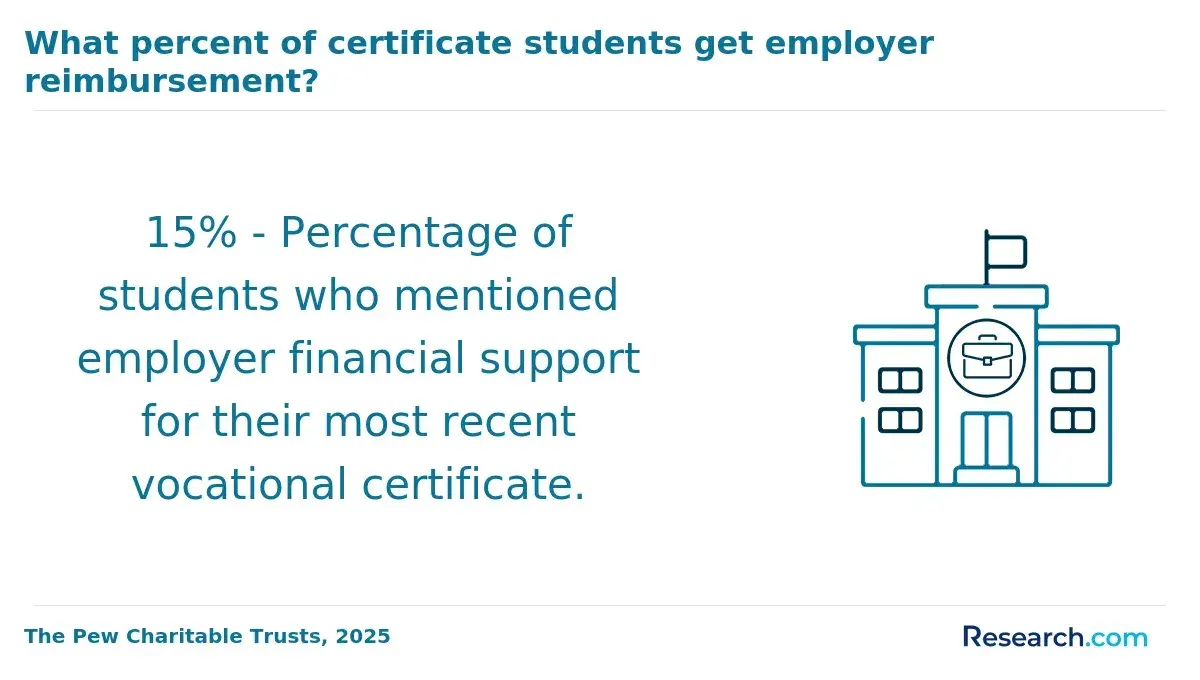
Cost is more variable than duration. Tuition may be charged per credit, per term, or at a flat online rate. Public universities may offer lower in-state rates, but some online programs charge the same rate to all students regardless of residence. College Board's 2024 pricing data reported average published tuition and fees of $11,610 for in-state students at public four-year colleges and $43,350 at private nonprofit four-year colleges for 2024-25. Those figures are not healthcare-administration-specific, but they help frame why students should compare total cost rather than assuming all online degrees are low-cost.
The table below summarizes common time and cost considerations by credential level. Use it as a planning tool, then confirm exact tuition, fees, and credit requirements with each school.
| Degree level | Typical full-time timeline | Cost factors to compare | Best cost-saving strategy |
| Associate degree | About two years | Community college tuition, online fees, books, transferability | Choose a regionally transferable program if you plan to earn a bachelor's degree later |
| Bachelor's degree | About four years, or less with transfer credits | Per-credit tuition, transfer credit limits, internship costs, technology fees | Maximize approved transfer credits before enrolling |
| Master's degree | About one to three years | Graduate tuition, residency fees, employer reimbursement, course load | Use employer tuition assistance when available and avoid unnecessary prerequisite repeats |
| Graduate certificate | Often less than one year | Credit cost, stackability into a degree, employer recognition | Pick a certificate that can later apply toward a master's degree if your goals may expand |
To estimate return on investment, compare total program cost with the roles you are realistically qualified for after graduation. A low-cost program that lacks employer recognition can be a poor investment, while a higher-cost program may still be risky if it requires debt that your target role cannot reasonably support. Ask schools for net price estimates, not just tuition rates, and include books, fees, travel, lost work time, and interest if borrowing.
What healthcare and business career paths can a healthcare administration degree support?
A healthcare administration degree can support several career paths, but the right path depends on degree level, experience, location, and employer needs. Graduates often work behind the scenes to keep healthcare organizations financially stable, compliant, staffed, and responsive to patients. Some roles are general management jobs, while others specialize in quality, operations, revenue cycle, compliance, human resources, or health information.
The career options below show how healthcare administration connects business functions to healthcare settings. This table is not a promise of eligibility; employers may require specific experience, certifications, clinical knowledge, or graduate education.
| Career path | Typical responsibilities | Common entry point | Advancement direction |
| Medical office or practice administration | Scheduling, staffing, billing coordination, patient service, vendor management | Associate or bachelor's degree plus office experience | Practice manager or multi-site administrator |
| Healthcare operations | Workflow improvement, capacity planning, supply coordination, service-line support | Bachelor's degree plus operations or healthcare experience | Operations manager, director, or system-level improvement role |
| Quality and patient safety | Performance reporting, process improvement, compliance with quality standards | Bachelor's or master's degree with healthcare exposure | Quality manager or director of performance improvement |
| Revenue cycle and finance | Billing processes, reimbursement, budget tracking, payer coordination | Business, billing, accounting, or healthcare administration background | Revenue cycle manager or healthcare finance leadership |
| Compliance and risk management | Policy review, privacy support, audits, incident tracking, training | Bachelor's degree plus regulatory or administrative experience | Compliance officer or risk management director |
| Healthcare project management | Implementation planning, stakeholder coordination, timelines, vendor communication | Business, IT, operations, or healthcare administration experience | Program manager, implementation lead, or PMO leadership |
Healthcare administration can also pair well with project-based careers because hospitals and clinics constantly implement new systems, construction projects, telehealth workflows, compliance initiatives, and process changes. If you are considering that route, comparing healthcare administration outcomes with project management degree jobs can help you decide whether you want a healthcare-specific path or a broader project leadership path.
This degree may not be the best fit if you want direct patient care, a clinical license, laboratory work, or a highly technical IT role. In those cases, nursing, allied health, health informatics, cybersecurity, data analytics, or clinical professional programs may align better with your target work.
What salary ranges and earning potential can healthcare administration graduates expect?
Healthcare administration salaries vary because the degree can lead to many types of roles. Entry-level administrative jobs may pay far less than department manager, director, or executive roles. Experience, employer size, region, responsibility level, and specialized skills in finance, analytics, compliance, or operations can all influence earning potential.
The most cited national benchmark is for medical and health services managers. The U.S. Bureau of Labor Statistics reported a May 2024 median annual wage of $117,960 for this occupation. That figure represents the midpoint for the occupation, not a starting salary for every graduate, so students should use it as a long-term career benchmark rather than a guaranteed outcome immediately after completing a degree.
The table below provides a practical salary context by career stage. It is designed to help you think about progression rather than assume one degree produces one salary.
| Career stage | Examples of roles | How to interpret earning potential |
| Entry-level administration | Administrative coordinator, medical office assistant, billing support, patient access representative | Often useful for building healthcare experience before moving into supervision |
| Early management | Clinic supervisor, practice coordinator, department lead, quality analyst | Pay typically improves when the role includes staff oversight, reporting, or budget responsibility |
| Mid-level management | Practice manager, operations manager, revenue cycle manager, compliance manager | Experience and measurable results often matter as much as the degree itself |
| Senior leadership | Director, administrator, service-line leader, executive-track manager | Often requires graduate education, significant experience, and strong financial or operational performance |
To evaluate your own likely ROI, compare your current role with the next realistic step after graduation. If you already have healthcare experience, a degree may help you qualify for internal promotions more quickly. If you are entering the field from another industry, you may need to start in coordinator or analyst roles before competing for management jobs.
What is the job outlook for healthcare administration roles and management positions?
The job outlook for healthcare administration is strong because healthcare organizations need managers who can coordinate care delivery, control costs, improve quality, comply with regulations, and adapt to new technology. Demand is also supported by an aging population, growth in outpatient care, value-based payment models, and the expansion of data-driven operations.
The BLS projects employment for medical and health services managers to grow 29% from 2023 to 2033, much faster than the average for all occupations. For readers, the key takeaway is not that every graduate will get a management job immediately, but that the management side of healthcare is expected to expand as organizations become larger, more complex, and more dependent on analytics and coordinated operations.
Current hiring trends also favor administrators who can work across departments. Employers increasingly value people who understand operations, finance, quality, patient experience, workforce planning, and digital tools. Knowledge of AI-supported documentation, telehealth operations, cybersecurity awareness, and analytics can make a candidate more competitive, especially for roles connected to process improvement or system implementation.
Students interested in the operations side of healthcare may also compare a healthcare administration program with an operations management MBA online. That comparison is useful if you want skills that transfer beyond healthcare into logistics, supply chain, manufacturing, consulting, or general operations leadership.
Job outlook still varies by region and employer type. Large metro health systems may offer more specialized roles but also more competition. Rural hospitals, community clinics, and long-term care organizations may offer broader responsibilities earlier, but compensation and resources can differ. Before choosing a program, search job postings in your target location and note the degree level, years of experience, and software skills employers request most often.
How can you choose a reputable online healthcare administration program that fits your goals?
The best online healthcare administration program is not simply the cheapest, fastest, or highest ranked. It is the program that is accredited, affordable for your situation, realistic for your schedule, aligned with your career target, and strong enough to help you build evidence of management ability. Start by defining the role you want after graduation, then work backward to the degree level, curriculum, field experience, and support services that role requires.
Use a structured comparison process before you enroll. These steps can help you avoid expensive mistakes and focus on programs that fit your goals:
- Identify your target role, such as practice manager, quality analyst, compliance coordinator, operations manager, or healthcare executive-track candidate.
- Check job postings in your region to see whether employers prefer a bachelor's degree, master's degree, healthcare experience, certifications, or specific software skills.
- Verify institutional accreditation and any relevant programmatic accreditation before reviewing cost or course speed.
- Compare total cost, including tuition, fees, books, residencies, internship travel, technology fees, and interest if borrowing.
- Ask how online students access career services, alumni networks, faculty, tutoring, library resources, and field placement support.
- Review the curriculum for finance, law, data, operations, quality improvement, leadership, and a capstone or applied project.
- Confirm transfer credit policies, course rotation, maximum time to completion, and whether stopping out affects tuition or degree requirements.
Red flags include vague accreditation claims, pressure to enroll immediately, unclear tuition pages, limited faculty information, no career support for online students, and promises of specific job titles or salaries. A reputable school should be willing to answer detailed questions about outcomes, costs, student support, and how the online program is delivered.
Finally, consider opportunity cost. A full-time accelerated program may help you finish sooner, but it can be stressful if you work full time or have caregiving responsibilities. A part-time program may cost more over time if fees repeat, but it can reduce burnout and allow you to apply coursework directly at work. The right choice is the one you can complete successfully without taking on more financial or personal risk than the outcome justifies.
Other Things You Should Know About Healthcare Administration
The terms overlap, and schools sometimes use them interchangeably. Healthcare administration often emphasizes organizational systems, policy, compliance, and executive functions, while healthcare management may focus more on managing departments, teams, and daily operations. Always compare the actual curriculum instead of relying only on the program title.
Most healthcare administration roles do not require a general administrator license. However, some settings and positions, such as nursing home administration, may require state-specific licensure. Requirements vary, so check your state board and your target job postings before choosing a program.
Yes, but you may need to build healthcare context through internships, entry-level administrative roles, volunteering, or projects. Business, military, customer service, finance, HR, and operations experience can transfer well, but employers often prefer candidates who understand healthcare workflows and regulations.
In 2027, online healthcare administration degrees typically provide a comprehensive curriculum that blends business acumen with healthcare-specific knowledge. These programs cover topics such as healthcare policy, financial management, ethics, and organizational leadership, equipping graduates with the necessary skills to effectively manage healthcare organizations.
References
- Online BS in Healthcare Administration https://www.baypath.edu/academics/undergraduate-programs/healthcare-administration/
- Healthcare Administration Associate vs Bachelor’s Degree https://campus.edu/blog/healthcare/healthcare-administration-associate-vs-bachelors-degree
- Healthcare Administration Job Outlook: 2025 Trends | IntuitionLabs https://intuitionlabs.ai/articles/healthcare-admin-job-market-2025
- Online vs Hybrid vs Campus Learning in Healthcare: Which Is Right for You? https://www.edumed.org/articles/online-vs-hybrid-vs-campus/
- Who Accredits MHA Programs? https://www.mhaonline.com/faq/who-accredits-online-mha-programs
- What do you learn in a bachelor's in healthcare administration? | edX https://www.edx.org/resources/what-do-you-learn-in-a-bachelors-in-healthcare-administration
- Online vs On-Campus HIM Programs: How to Choose | Health Information Management Programs https://healthinformationmanagementprograms.com/guides/online-vs-campus-him-programs/
- Health Administration: Online Degrees and Careers https://www.publichealthonline.org/healthcare-administration/online-degree-programs/
- Five Healthcare Management Careers With an Excellent Job Outlook - Healthcare Management Degree Guide https://www.healthcare-management-degree.net/list-articles/five-healthcare-management-careers-with-an-excellent-job-outlook/
- How to Become a Healthcare Administrator https://www.publichealthdegrees.org/careers/healthcare-administrator/