2027 Online MS in Psychology - Forensic Psychology for Faith-Based Outreach Staff: What to Check Before Changing Careers
Audited and Verified:
Our Editorial and Data Verification Process
Research.com uses government datasets, official education statistics and primary institutional information to support its career and degree guides. Our review process checks factual accuracy, occupational definitions, source dates and the requirements associated with the credentials discussed.
How This Article Was Fact-Checked
Our editorial team verifies salary estimates, employment projections, education requirements and program information against original data providers and official organizations. Salary figures are checked against the relevant occupational definitions and reporting periods. Information about licensure, accreditation and required in-person training is reviewed separately.
Fact-checked and verified on:

Co-Founder and Chief Data Scientist
Faith-based outreach work can build valuable experience in crisis referrals, community trust, and service coordination. An online MS in psychology with a forensic focus may deepen that work - or lead toward a different role in victim services or the justice system - but it will not, by itself, make you a forensic psychologist. This guide helps you compare realistic jobs with licensed practice, identify skills your current work already demonstrates, and check program demands and costs before committing to a career change.
Key Things You Should Know
- A forensic psychology MS can support nonclinical justice-related work, but it provides no independent psychologist license by itself.
- Compare at least two routes before enrolling: the MS and a direct route into your target job through experience, focused training, or a qualifying professional degree.
- Ask for the full tuition-and-fee estimate and written placement requirements; an online label does not mean field experience is optional or remotely available.
What Is an Online MS in Psychology With a Forensic Psychology Focus?
It is graduate study in psychological science as applied to legal and justice settings. Depending on the school, forensic psychology may be the degree name, a formal concentration, or a set of electives within a general psychology MS. These distinctions matter: the transcript, research opportunities, and career preparation can differ substantially.
For outreach staff, the useful question is whether the program builds skills missing from your current work - such as evaluating evidence, understanding victimization and justice-system processes, or analyzing service outcomes. Someone without a bachelor's degree needs an undergraduate route first; three-year online forensic psychology degree options are worth comparing only after checking actual admission, credit, and scheduling requirements.
Can This Degree Prepare You for Forensic Psychology Careers?
Yes, for some nonclinical careers; not by itself for licensed forensic practice. Outreach staff may already bring interviewing within a support role, partnership-building, safeguarding awareness, and referral experience. An MS could add research literacy and justice-specific knowledge. Employers may still require direct victim-services, corrections, data, or case-management experience.
Define the job before choosing the concentration. If you want to coordinate support for people leaving incarceration, assess whether the curriculum covers reentry systems and whether you can gain relevant supervised experience.
If your work primarily involves substance-use outreach, comparing accredited addiction psychology BA pathways may help you distinguish foundational education from the state-recognized credential an actual counseling job might require. Neither route automatically authorizes treatment.
What Licenses Are Required to Become a Forensic Psychologist?
In the United States, independent forensic psychological assessment and use of the protected psychologist title generally require a state psychologist license. That pathway typically involves an appropriate doctoral psychology degree, supervised experience, examinations, and any other state-board requirements.
Forensic expertise develops through relevant training and practice; the word "forensic" on an MS diploma is not a license or authority to conduct evaluations or offer expert opinions. If your goal is psychotherapy rather than psychological evaluation, investigate a distinct licensure-qualifying counseling or social-work program and the rules in the state where you intend to practice.
Comparing accredited counseling degree completion times can clarify the education commitment, but confirm the program's state eligibility and supervised-practice obligations directly. For support and advocacy jobs, check employer requirements instead of assuming a clinical license is necessary.
Online delivery may let you remain employed and continue serving your community. It does not guarantee self-paced study: live seminars, group research, scheduled supervision, campus visits, or local field experiences may still be required. Campus programs may offer easier access to faculty projects or nearby agencies, though access depends on the particular program rather than its format alone.
Ask each school for a sample weekly schedule and its policy on approving an existing outreach job as an applied-learning site. Your employer's permission, a suitable supervisor, defined learning tasks, and faculty approval may all be needed; routine work is not automatically a placement. When considering accelerated psychology master's study for working adults, check whether the compressed schedule leaves enough time for both paid work and substantive learning.
Coursework varies, but relevant programs may combine research methods and statistics with psychology and law, behavior in legal settings, trauma or victimization, ethics, and cultural responsiveness. A thesis, capstone, or applied project can be especially useful if it demonstrates a skill an employer needs, such as evaluating a referral process without disclosing client information.
Read the course descriptions, not just the titles. A class about assessment does not qualify students to administer restricted tests; a class about psychopathology does not authorize diagnosis. If you need undergraduate psychology foundations before graduate study, compare prerequisite courses with shorter undergraduate psychology study pathways rather than assuming a second bachelor's is required.
Schools set their own requirements. Common application materials include an accredited bachelor's degree or accepted equivalent, transcripts, a statement of purpose, and recommendations. Some programs require or recommend introductory psychology, statistics, or research methods; policies on GPA, tests, and professional experience vary.
Outreach experience can strengthen an application when you explain specific responsibilities and what you learned, but it does not replace a published prerequisite unless the school approves an alternative.
Ask admissions to identify required courses separately from recommended preparation and to confirm any waiver in writing. If you are finishing an undergraduate degree, psychology major credit portability can inform your questions, but only the receiving institution can determine which credits satisfy its requirements.
Completion time depends on required credits, course availability, enrollment pace, and whether an applied project or thesis extends beyond coursework. A faster advertised timeline may assume continuous enrollment or a heavier load than someone working in outreach can sustain. Evaluating faster-paced forensic psychology master's degrees should therefore include a term-by-term plan, not just the shortest advertised duration.
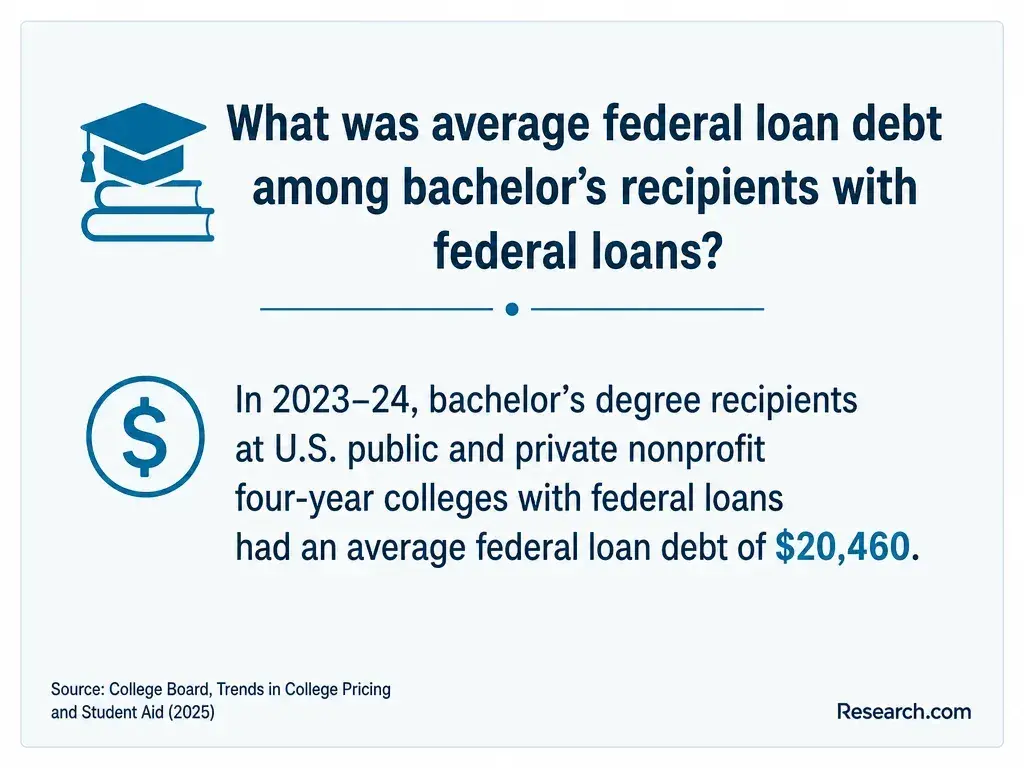
Calculate the likely expense from published tuition per credit and required credits, then add mandatory fees, books, technology, travel, and any unpaid placement time. Ask whether your employer offers education assistance and what service commitment it requires. Compare that total with the cost of targeted training or a credential required for your specific job; do not assume an MS will produce a salary increase sufficient to repay the difference.
Potential transitions include victim-services advocate, reentry program coordinator, justice-focused community-services specialist, program evaluator, or research-support worker. These titles describe different duties: advocacy may center on referrals and accompaniment, coordination on service continuity, and evaluation on data quality and reporting. Hiring requirements depend on the employer, setting, and population served.
Choose a target posting and compare it with evidence you already have: documented partnerships, accessible outreach materials, careful records, or approved evaluation work. Fill the largest gap through supervised experience or a specific course before assuming another degree is necessary.
If the actual goal is substance-use counseling, investigate the relevant state credential and qualifying education; bachelor's-level substance use counseling scholarship planning may be more useful than financing an unrelated MS. Faith-based experience can be an asset, but work in public agencies also requires serving clients regardless of belief and following agency confidentiality and nondiscrimination rules.
There is no reliable single salary or job-growth figure for "forensic psychology MS graduates." The US Bureau of Labor Statistics reports by occupation, not by concentration. Its psychologist figures largely describe an occupation with licensing requirements; they should not be treated as the expected pay or outlook for someone entering nonclinical advocacy or program support with an MS.
For a realistic estimate, match several local job postings to your intended duties and credentials, then compare the corresponding occupation in the Bureau of Labor Statistics Occupational Outlook Handbook.
Account for nonprofit versus government pay structures, required experience, and whether the role is grant-funded. Treat one-year forensic psychology study and career outcomes as separate questions: quicker graduation does not establish faster hiring or higher wages.
How Can You Evaluate Accreditation and Program Quality?
First, confirm the institution's accreditation through the institution and its recognized accreditor. Then confirm the exact degree title and whether the forensic focus is a named concentration or simply electives.
Institutional accreditation is not evidence that a nonclinical MS meets psychologist-licensure requirements; APA accreditation applies to specific covered professional psychology programs and training settings, not every psychology master's degree.
Ask for a current curriculum, total-cost estimate, online attendance rules, placement-approval policy, faculty research interests, and career-outcome information with clear cohort definitions.
Request an explanation of how the program supports your intended job, and check any licensure claim with the relevant state board. When comparing affordable online psychology degree programs, use the same cost and outcome questions for each school rather than relying on a tuition label alone.
Other Things You Should Know About Psychology
Possibly. Obtain program and organizational approval before planning the work, and clarify supervision, data access, confidentiality, and what can be shared outside the organization.
Describe transferable duties with concrete examples - such as referral coordination or volunteer training - and explain how you work respectfully with people of different beliefs.
Some agencies require one and may impose additional site-specific screening or access rules. Ask the proposed site and program early, before depending on a placement.
Follow your organization's policies and describe your actual role accurately. Graduate study does not change your authority to assess, diagnose, or provide treatment.
- Your financial path to graduation | consumerfinance.gov https://www.consumerfinance.gov/paying-for-college/your-financial-path-to-graduation/
- Faith and Community Engagement | samhsa.gov https://www.samhsa.gov/communities/faith-based-community-engagement
- Cost of Attendance (Budget) | 2025-2026 Federal Student Aid Handbook https://fsapartners.ed.gov/knowledge-center/fsa-handbook/2025-2026/vol3/ch2-cost-attendance-budget
- Accreditation in the U.S. | ed.gov http://www.ed.gov/laws-and-policy/higher-education-laws-and-policy/college-accreditation/accreditation-in-the-us
- A Career in Forensic and Public Service Psychology | apa.org https://www.apa.org/education-career/guide/subfields/forensic/education-training
- Careers With a Forensic Psychology Master's Degree | The Chicago School https://www.thechicagoschool.edu/insight/career-development/career-options-masters-degree-forensic-psychology/
- How to Become a Forensic Psychologist in California (2026) | Touro University Worldwide https://www.tuw.edu/psychology/how-to-become-a-forensic-psychologist-in-california/
- Online Master's Degree in Forensic Psychology | Monroe University https://www.monroeu.edu/academics/king-graduate-school/online-masters-degree-forensic-psychology
- Career Options for Forensic Psychology Students | LSU Online https://online.lsu.edu/newsroom/articles/what-can-you-do-forensic-psychology-degree/
- Best Online Forensic Psychology Master's Programs | bestcolleges.com https://www.bestcolleges.com/psychology/masters/forensic-psychology/