2027 Online BA in Psychology - General Psychology: How to Evaluate a Guaranteed Course Availability Policy
Audited and Verified:
Our Editorial and Data Verification Process
Research.com uses government datasets, official education statistics and primary institutional information to support its career and degree guides. Our review process checks factual accuracy, occupational definitions, source dates and the requirements associated with the credentials discussed.
How This Article Was Fact-Checked
Our editorial team verifies salary estimates, employment projections, education requirements and program information against original data providers and official organizations. Salary figures are checked against the relevant occupational definitions and reporting periods. Information about licensure, accreditation and required in-person training is reviewed separately.
Fact-checked and verified on:

Co-Founder and Chief Data Scientist
A guaranteed course availability policy sounds reassuring when you are fitting an online psychology degree around work, caregiving, or a return to college. But "available" may mean a required course runs somewhere in the program - not that you can take it when you need it.
This guide explains how to read the policy, test it against your degree plan, and estimate the time and cost of possible delays. It also covers the academic and career questions worth checking before a scheduling promise influences your enrollment decision.
Key Things You Should Know
- A useful guarantee identifies the required courses covered, how often they run, who qualifies, and what the school does if a course is unavailable.
- Compare the policy with a written, term-by-term degree plan. A typical bachelor's degree requires about 120 semester credits, but accepted transfer credits do not necessarily satisfy psychology-major requirements.
- Course availability does not guarantee a seat, a convenient meeting time, graduation by a chosen date, or eligibility for a licensed psychology profession.
What is an online BA in general psychology?
An online Bachelor of Arts in general psychology is an undergraduate degree covering psychological science across several areas rather than concentrating exclusively on one specialty. It usually combines general education, psychology courses, electives, and requirements set by the institution.
The BA designation does not tell you how much statistics, laboratory work, or research experience the program provides; inspect the actual curriculum.
General psychology can suit students who want broad preparation for nonclinical work or later study while keeping elective choices open. That flexibility makes scheduling important: a school may reliably offer its core courses while offering a graduate-school prerequisite or preferred elective less often.
Use an online psychology degree selection guide to identify options, then obtain each school's current catalog and scheduling policy before comparing them.
How does a guaranteed course availability policy work?
There is no universal definition. A school might promise to schedule every required psychology course within a specified period, offer an alternative if a section is canceled, or provide a pathway for eligible students following an approved plan.
None of those statements necessarily promises immediate registration. Ask for the policy that applies to your entry term, not a general description from an admissions page.
The distinction between a scheduled course and a usable course is central. This comparison shows what common policy language may leave unresolved:
| Policy feature | What it may establish | What it may not establish |
| Required course is offered regularly | A planned opportunity to take it | An open seat in your preferred term |
| Course is available online | Remote instruction | Asynchronous work or convenient live-session times |
| Completion pathway is guaranteed | A route for students meeting stated conditions | Graduation on your preferred date if prerequisites or transfer decisions change |
| Alternative section or substitution is available | A possible response to a scheduling conflict | Automatic approval or equivalent preparation for later study |
Request a written degree audit and proposed schedule, then use the following checks to test whether the promise protects your particular pathway:
- Mark each remaining required course, its prerequisites, and the last term in which you could take it without delaying graduation.
- Ask whether the guarantee covers major electives, statistics and methods, general education, capstones, and courses taken by part-time students.
- Confirm registration priority, enrollment caps, summer availability, and any minimum-course-load or advising conditions.
- Ask what remedy applies if a required course is canceled or full: another section, an approved substitution, an independent study, or a later term.
- Get the responsible office's answer in writing and ask how exceptions, complaints, and appeals work.
A promise is most valuable when its remedy prevents a specific delay, not merely when its wording sounds absolute. The same sequencing principle matters in later study: forensic psychology master's course sequencing for faster completion depends on actual prerequisites and term offerings, not an advertised completion time alone.
Why does accreditation matter for an online psychology degree?
Check that the institution holds recognized institutional accreditation and that it covers the institution awarding the online degree. Accreditation is relevant to academic oversight and can affect credit-transfer and further-study decisions, although another school retains authority over the credits it accepts.
Verify status with the accreditor or the U.S. Department of Education's accreditation database, and confirm the exact institution and degree-awarding campus.
Do not mistake institutional accreditation for proof that a course guarantee works or that the BA qualifies you for clinical practice. The American Psychological Association does not accredit general psychology bachelor's programs.
If your eventual goal is counseling, evaluate the requirements of the intended profession and jurisdiction separately; accredited clinical counseling timelines for working students address a distinct graduate training pathway.
Common subjects include introductory psychology, statistics, research methods, developmental psychology, social psychology, cognition, biological psychology, and the academic study of mental disorders. Requirements vary. A capstone, laboratory course, internship, or research project may be required, optional, or unavailable in the online format.
For a course-availability decision, focus less on the total number of psychology courses than on dependency chains. Statistics may precede research methods, which may precede a capstone.
A missed early course can therefore affect several later terms. Ask an advisor to identify prerequisites that are offered infrequently and whether an approved transfer or substitute course would still provide the preparation you need.
Check how many elective choices are offered in terms you can attend. If you want substantial addiction-related coursework, compare the general BA's actual offerings with a bachelor's-level addiction psychology program guide; neither route alone establishes eligibility to provide addiction counseling.
An accredited institution may award the same credential to online and campus students, but identical degree names do not establish identical learning opportunities or schedules.
Compare required courses, faculty access, research participation, advising, assessment standards, and any internship or campus-visit obligations. An asynchronous lecture can still have fixed deadlines, scheduled group meetings, or a supervised experience during business hours.
Ask how the school supports remote students who need research experience or recommendation letters for graduate applications. Also check whether a course promised "online" requires live attendance.
This distinction becomes even more important when comparing later accelerated study: one-year graduate forensic psychology program planning involves a separate set of workload and scheduling questions, not a benefit conferred by completing an online BA.
Schools set their own first-year and transfer admission rules. An applicant may need prior transcripts, evidence of secondary-school completion, and any institution-specific application materials.
Admission to the university, admission to the psychology major, and approval of transfer coursework can be separate decisions; ask which requirements apply before planning a start date.
Returning students should request an official degree audit showing where each accepted credit applies: general education, major, elective, prerequisite, or residency requirement. A statistics course that transfers as elective credit, for example, may leave the psychology statistics requirement unfinished.
A college credit evaluation for psychology majors can help you frame questions, but only the receiving institution can approve your particular record. Recheck the course guarantee after that evaluation changes your remaining sequence.
A bachelor's degree commonly totals about 120 semester credits, but your remaining time depends on approved transfer credits, term length, course load, prerequisites, and how often required courses run.
An advertised completion time is not a personalized graduation estimate. For a working student, a sustainable part-time plan may be more useful than a faster plan that requires unavailable daytime meetings.
Calculate cost from the credits still required, not credits merely accepted for transfer. Include tuition, mandatory fees, books or software, possible travel, and the cost of an extra term if a required course slips.
Compare those inputs with psychology degree options with lower tuition, but do not assume the lowest per-credit rate produces the lowest total bill. Ask financial-aid staff how your proposed enrollment pace and any additional term affect aid eligibility.
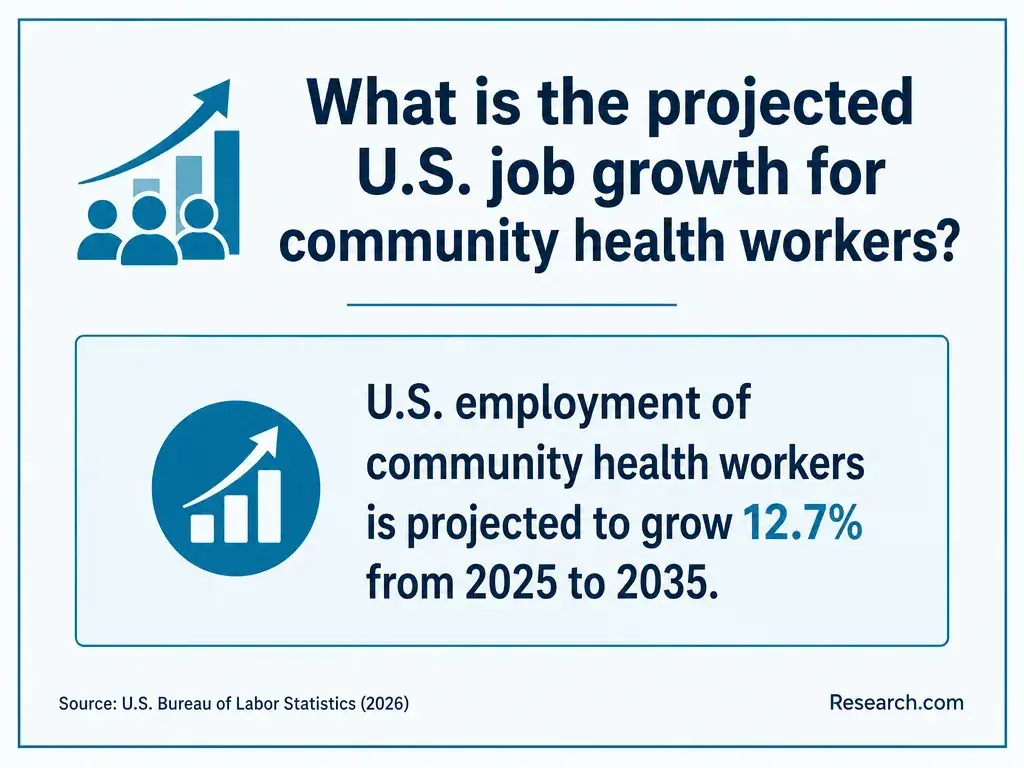
Depending on experience, location, and employer requirements, graduates may seek nonclinical roles in human services, community outreach, research support, program coordination, recruiting, or administrative support in behavioral-health settings.
These roles use different skills: a research assistant may need data-handling experience, while a service coordinator may need documentation, referral, and communication skills. A course guarantee helps you reach graduation more predictably; it does not replace relevant experience.
Choose electives and supervised opportunities around a target job description rather than assuming any psychology credential fits every role. If your goal specifically involves substance-use services, compare local job requirements and the cost and duration of substance abuse counseling bachelor's degrees before choosing a general BA. State credential rules may apply even to roles whose job titles sound similar.
There is no single salary or employment-growth figure for "general psychology BA graduate." The U.S. Bureau of Labor Statistics reports by occupation, not by undergraduate major, and occupations open to BA holders differ substantially in duties and entry requirements.
For a realistic comparison, look up the current Occupational Outlook Handbook entry for the specific job you want, for example, social and human service assistant, and check its wage reference year, projected growth period, and typical entry requirements. Its occupation-wide median is not an offer to new graduates.
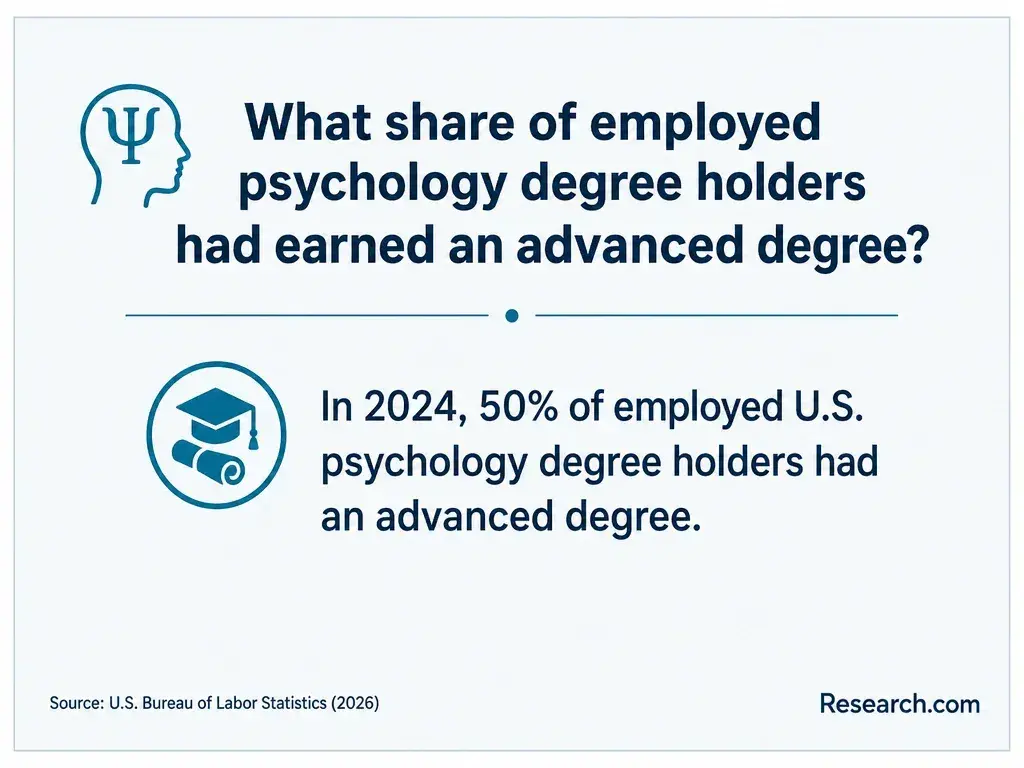
Evaluate the degree's financial return against the jobs you can plausibly pursue with your existing experience. Further education may be useful for a defined research or professional goal, but it adds cost and does not automatically improve earnings.
Compare that trade-off before considering low-cost master's degrees in psychology; a nonclinical psychology master's is not interchangeable with a licensure-qualifying professional degree.
Does a psychology bachelor's degree qualify you for licensure?
No. A general psychology BA alone does not qualify someone to practice independently as a psychologist, diagnose mental disorders, provide psychotherapy, or perform restricted psychological assessments.
Requirements depend on the profession and jurisdiction and can include a qualifying graduate degree, supervised experience, examinations, and other conditions.
If licensed counseling is the goal, work backward from the relevant state board's educational and supervised-practice rules before choosing an undergraduate program.
An online BA's course guarantee may help you complete prerequisites on time, but it cannot shorten requirements imposed by a licensing authority. Compare the later commitment involved in accelerated master's study in clinical mental health counseling without assuming that a faster academic schedule accelerates every step toward licensure.
Other Things You Should Know About Psychology
Policies can change, and schools may apply different catalog rules to different entry cohorts. Keep the version governing your enrollment and ask the registrar which provisions continue to apply if the catalog changes.
Ask the registrar or psychology department to resolve the conflict in writing. Identify the course, intended term, and policy language so the answer addresses your situation rather than a general schedule.
Not necessarily. Check whether the guarantee requires continuous enrollment and whether returning students keep their original catalog requirements or must follow a newer degree plan.
Keep your approved degree audit, enrollment plan, registration attempts, course-cancellation notice, and written exchanges with advisors. These records can support a request for an alternative or an appeal under the school's procedures.
- Semester Course Load and Student Performance - PMC - NIH https://pmc.ncbi.nlm.nih.gov/articles/PMC7568764/
- Student Guide to Transfer | Maryland Higher Education Commission https://mhec.maryland.gov/preparing/pages/stuguide.aspx
- Recommended Course Sequence | Texas Higher Education Coordinating Board https://www.highered.texas.gov/data-submission-reporting/recommended-course-sequence/
- School-Determined Requirements - FSA Partner Connect https://fsapartners.ed.gov/knowledge-center/fsa-handbook/2025-2026/vol1/ch1-school-determined-requirements
- University Regulations | The George Washington University Bulletin https://bulletin.gwu.edu/university-regulations/
- Policies & Forms - Hunter College Continuing Education - CUNY https://continuing-ed.hunter.cuny.edu/forms-and-policies/
- General Psychology | Online Bachelor's Degree | Capella University https://www.capella.edu/online-psychology-degrees/bs-psychology-program/bachelors-general-psychology/
- General Education Requirements | ou.edu http://www.ou.edu/gened/courses/requirements.html
- Policies for Online Teaching | Teaching and Learning Resource Center https://teaching.resources.osu.edu/teaching-topics/policies-online-teaching
- Distance Education - University Policy https://universitypolicy.gmu.edu/policies/distance-education/