2027 Online BA in Psychology - Addictions Admissions with a Changed Legal Name Across Transcripts: What to Ask Before Applying
Audited and Verified:
Our Editorial and Data Verification Process
Research.com uses government datasets, official education statistics and primary institutional information to support its career and degree guides. Our review process checks factual accuracy, occupational definitions, source dates and the requirements associated with the credentials discussed.
How This Article Was Fact-Checked
Our editorial team verifies salary estimates, employment projections, education requirements and program information against original data providers and official organizations. Salary figures are checked against the relevant occupational definitions and reporting periods. Information about licensure, accreditation and required in-person training is reviewed separately.
Fact-checked and verified on:

Co-Founder and Chief Data Scientist
Your current legal name may differ from the name on one or more college transcripts. That difference does not necessarily prevent admission to an online psychology BA with an addictions focus, but an unexplained mismatch can delay transcript matching, transfer evaluation, or financial-aid processing.
This guide is for first-time, transfer, and returning applicants who need to know what to disclose, where to send documentation, and what to confirm before paying an application fee. It also helps you judge whether the program's credits, schedule, cost, and career outcomes fit your goal.
Key Things You Should Know
- Ask admissions how it matches transcripts under a former legal name to your current application, what proof it accepts, and how to submit that proof securely.
- Keep identity verification separate from transfer evaluation: an accepted transcript does not mean its courses satisfy psychology-major requirements or shorten a typical 120-credit bachelor's curriculum.
- Confirm the school's accreditation and your state's addiction-counselor rules before applying; an addictions-focused psychology BA is not, by itself, a counseling license.
What Is an Online Bachelor's Degree in Psychology With an Addictions Focus?
It is an undergraduate psychology degree that combines the study of behavior and research with coursework on substance use, prevention, recovery, or service systems. "Addictions focus" might mean an officially recorded concentration, a group of electives, or simply a program's marketing description. Ask which designation, if any, will appear on your transcript.
A BA typically includes general education and psychology-major requirements; the exact balance of language, laboratory science, statistics, and electives varies by school. If your goal is a state-recognized substance use counseling credential rather than broad psychology study, compare the curriculum against that credential's rules. Comparing undergraduate substance use counseling costs and outcomes can help frame that alternative, but the school and state regulator must confirm eligibility.
How Does a Legal Name Change Affect College Admissions and Transcripts?
Colleges need to establish that records under different names belong to the same applicant. A former surname, a changed given name, or several name changes can affect how a transcript is matched, even when the issuing school sent it correctly. Admissions normally handles application identity and receipt of records; the registrar or transfer-credit office decides how prior courses apply. Neither decision should be assumed from the other.
Before requesting transcripts, contact the receiving school through its published admissions channel. Ask for its procedure rather than uploading sensitive documents to an unverified form or emailing them to a general inbox. The sequence below helps prevent a record from sitting unmatched:
- Ask whether the application has a secure "former names" field, which names to enter, and whether all names used on prior academic records must be listed.
- Ask what evidence links the names - for example, a court order, marriage certificate, or updated identification - and whether the school needs an image, an original, or no document unless a mismatch occurs.
- Confirm the approved secure submission method, who can view the documents, and whether you may request restricted handling of a former name.
- Order official transcripts using each prior school's instructions, then ask the receiving school how to verify that every record was received and matched.
- After matching, request a written transfer evaluation or degree audit showing where each accepted course applies.
Ask the prior school's registrar whether its transcript will show your current or former name and whether it can update its records. Do not assume it must reissue historical records. If you studied under more than two names, create a private record of the name used at each institution so you can answer admissions precisely. For additional questions about moving existing credits into psychology study, focus on requirement-level equivalencies, not just the total credits accepted.
What Should You Ask Online Psychology Programs About Accreditation?
Ask who accredits the institution, whether that accreditation covers the school offering the online degree, and whether the school is eligible to participate in federal student aid programs. Check the accreditor's and institution's current records rather than relying on an advertisement. Institutional accreditation supports recognition of the institution; it does not establish that an addictions concentration meets a state's counseling-license requirements.
Ask separately whether the school claims any program-specific recognition and what credential it covers. APA accreditation does not generally apply to bachelor's psychology majors. A future counseling master's program may have different accreditation and state-approval considerations; accredited clinical counseling timelines for working students are a separate comparison, not evidence that a psychology BA is a licensure program.
Requirements depend on whether you apply as a first-time student, a transfer student, or someone who already holds a degree. Schools may request prior transcripts, evidence of secondary-school completion, and an application; some impose separate standards for entry to the psychology major. Ask which rules apply to your entry term and whether a transcript under a former name needs review before the application can be marked complete.
If you have previous college work, distinguish admission from degree completion. The school may admit you before it determines whether statistics, research methods, general education, or electives fulfill specific requirements. Ask when the formal degree audit arrives, whether a course substitution can be appealed, and which psychology courses must be taken at the institution. If graduate study is your eventual goal, check its prerequisites separately; accelerated MA psychology study pathways do not all require the same undergraduate preparation.
Expect the published curriculum - not the concentration's name - to determine what you learn. Relevant work may include introductory psychology, statistics, research methods, abnormal psychology, developmental or social psychology, and courses on substance use, prevention, recovery, or behavioral-health systems. A methods sequence matters if you want to evaluate evidence rather than rely on claims about treatments or risk factors.
Ask which courses are required, which are offered regularly online, and whether an internship or capstone is optional, required, or available near you. An undergraduate service placement may involve outreach, observation, or referrals; it is not automatically clinical training. If you are comparing different interests, short-duration undergraduate forensic psychology programs illustrate why similar psychology cores can lead to very different electives. Choose the additions that support your intended work, not a specialization label alone.
A bachelor's curriculum commonly totals about 120 semester credits, but your remaining credits depend on the school's requirements and its written evaluation of your prior work. A transcript matched to your application is only the starting point. Courses accepted as electives may not replace a required psychology course; prerequisites, course availability, and residency rules can extend the timeline.
For cost, request a term-by-term estimate based on your evaluated remaining requirements, not an advertised per-credit price alone. The comparison below separates charges and commitments that can change the amount you actually pay.
| Cost or timing factor | Why it matters |
| Tuition and required fees | Rates may depend on residency, enrollment load, or online-course charges. |
| Credits still needed | Accepted transfer credits and credits satisfying degree requirements can differ. |
| Course schedule | A required course offered infrequently can delay completion. |
| Applied experience | Travel, site requirements, or unpaid hours may add costs even to an online degree. |
| Financial aid | Eligibility can depend on enrollment and satisfactory academic progress. |
If affordability controls your decision, investigate grants for substance abuse counseling bachelor's study alongside the prospective school's aid offer. Ask its financial-aid office whether an unresolved identity or transcript issue could delay a determination, and do not count unawarded aid as a price reduction.
The better format is the one in which you can complete the required courses and any applied experience on a workable schedule. Online classes may be asynchronous, but group projects, exams, live meetings, or approved placements can still have fixed times. Campus programs may simplify access to some faculty activities or local sites, while adding travel and location constraints.
Ask each school whether its addictions courses are available in your preferred format every term, whether visits are required, and whether you must arrange a local placement. Compare the written degree audit and full cost in each format. Lists of psychology college costs for online students can identify schools to investigate, but they cannot substitute for a quote based on your transfer evaluation and enrollment plan.
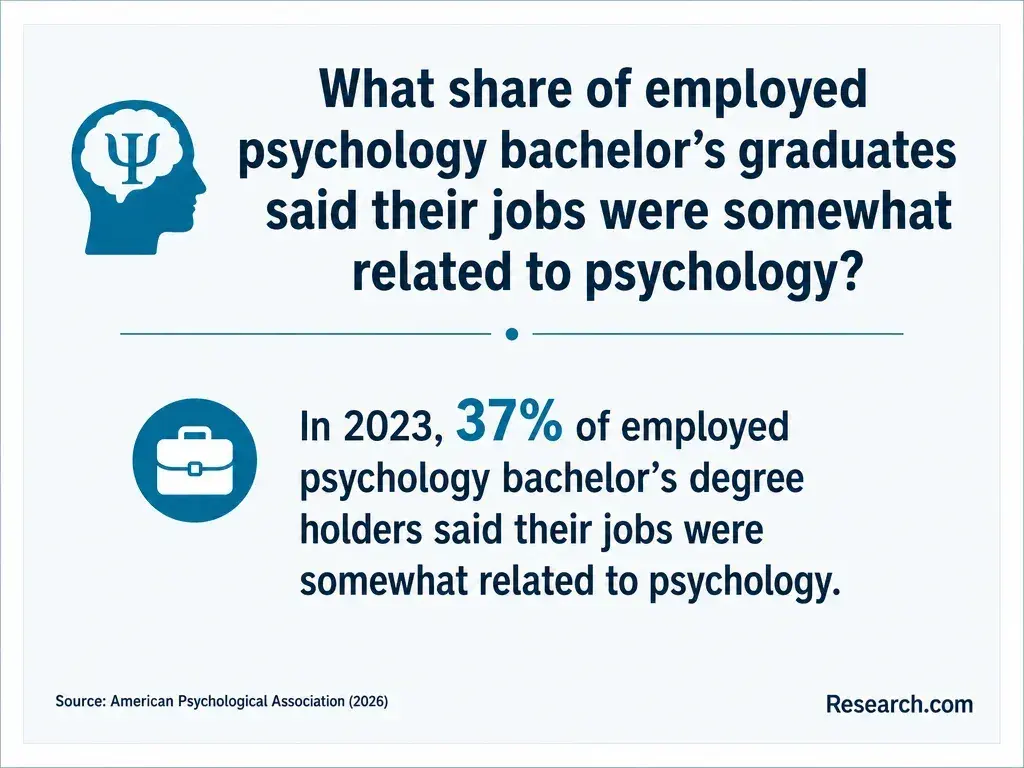
Depending on the employer and state, graduates may seek nonclinical work in recovery-service outreach, intake support, prevention programs, community education, research assistance, or service coordination. Duties might include documenting contacts, explaining available resources, helping with referrals, or supporting program evaluation - not independently diagnosing or treating substance use disorders.
Review actual job postings for the tasks, experience, background checks, and credentials required in your area. If your target is a different setting, such as victim services or corrections support, choosing a shorter forensic psychology graduate pathway addresses a distinct specialization; it should not be mistaken for addiction-counselor preparation. Relevant supervised experience may be more valuable for an entry-level support role than an additional degree chosen without a specific job requirement.
Not automatically. States set their own rules for addiction counselor credentials, including qualifying coursework or degrees, supervised experience, examinations, and permitted duties. Some distinguish credentials by education level or supervision status. A psychology BA with addictions electives may provide useful preparation while leaving important credential requirements unmet.
Before enrolling, identify the exact credential and state where you intend to work. Ask the responsible state board or credentialing authority whether the program's documented courses and any field hours meet its rules; request the school's written explanation of what it does and does not prepare students to pursue. If your goal is licensed mental health counseling rather than an addiction-specific credential, faster-paced online mental health counseling master's study is a different educational route with its own supervised-training and state requirements.
What Are the Salary and Job Outlook for Addiction Psychology Careers?
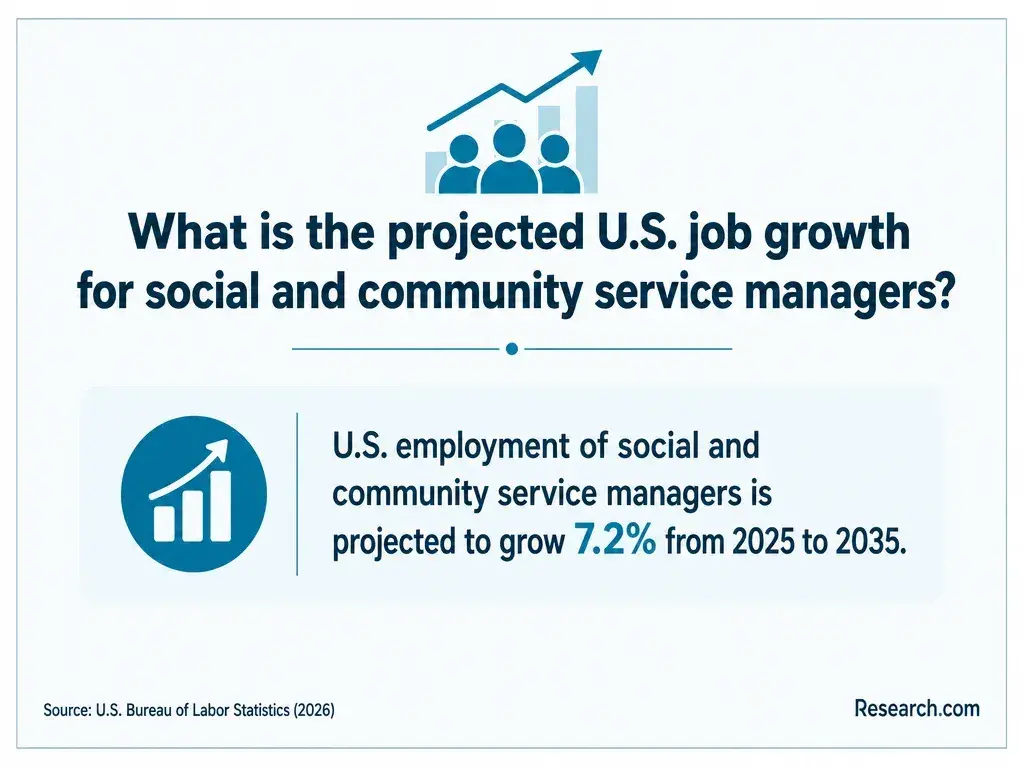
There is no single salary or job-growth figure for "addictions psychology BA graduates." The U.S. Bureau of Labor Statistics reports occupation-wide wages and projections, including for substance abuse, behavioral disorder, and mental health counselors. That category includes workers with different credentials and experience; its median wage should not be treated as an entry-level offer or as evidence that a psychology BA qualifies you for every job in the category.
For a useful return-on-investment comparison, match local postings to a specific job title you could qualify for, then compare their stated pay and credential requirements with your remaining degree cost. If your plan requires a later counseling degree, include that additional education in the calculation. Funding options for accredited mental health counseling programs may inform that later decision, but they should not be counted as funding for this BA.
Other Things You Should Know About Psychology
Often, yes. Ask the receiving school whether it will accept that transcript as issued and how it will match the former name. Do not alter an official document yourself.
Ask them to use the name on your application. If a reference to your former name is necessary to identify prior work, discuss how to handle it privately before they submit the letter.
Do not assume so. Ask the scholarship or financial-aid office whether it needs a separate identity-matching step and use its approved secure process.
Follow the application's instructions. If an earlier name appears on a required academic record, ask admissions when and how to disclose it so the record can be matched without delaying review.
- Requesting Student Records and Transcripts | web https://www.schools.nyc.gov/learning/student-journey/student-records-and-transcripts/requesting-student-records-and-transcripts
- How to change your name and what government agencies to notify | USAGov https://www.usa.gov/name-change
- Request a Transcript | MN Office of Higher Education https://ohe.mn.gov/transcript
- Frequently Asked Questions - California Board of Psychology https://www.psychology.ca.gov/licensees/faq.shtml
- Admissions and Records | Leeward Community College https://intranet.leeward.hawaii.edu/admissions-records
- School Closure Transcripts, Resources, and Information | Utah System of Higher Education https://ushe.edu/office-of-commissioner/closed-school-resources/
- LibGuides: Guide to Changing Your Legal Name and/or Gender in North Carolina: Changing Your Legal Name | unc.edu https://guides.lib.unc.edu/legalnamegenderchange/namechange
- Bachelor of Arts in Psychology - Texas State's online programs https://online.txst.edu/degrees/undergraduate/ba-psychology/
- Understanding Your Transfer Credits | Transfer Hub https://transfer.ecu.edu/understanding-your-transfer-credits/
- Transfer Credit Evaluations | CSUCI https://www.csuci.edu/office-departments/registrar/transfer-credit-evaluations.html