2027 Online BA in Psychology - Mental Health for Mental Health Support in Chronic Pain Services: Which Courses Should You Look For?

Co-Founder and Chief Data Scientist
Chronic pain services need staff who understand how pain affects mood, sleep, daily activity, and access to care. An online BA in psychology can build that understanding, but course titles alone do not show whether a program prepares you for a support role.
This guide is for prospective students and early-career service workers choosing courses or comparing programs. It identifies the most useful coursework, the experience that should accompany it, and the professional boundaries to check before investing in a degree.
Key Things You Should Know
- Prioritize health psychology, biological psychology, research methods, abnormal psychology, and courses covering behavior change and chronic illness; check what is actually offered and when.
- Pair coursework with supervised, nonclinical experience in patient navigation, community services, or rehabilitation support. A psychology BA does not qualify you to diagnose pain-related conditions or provide psychotherapy.
- Compare the full route to your target job: a typical bachelor's degree requires about 120 credits, but transfer decisions, course availability, placement requirements, and later professional training can change the time and cost.
What Is an Online Psychology Bachelor's Degree for Chronic Pain Support?
An online BA in psychology is an undergraduate degree covering psychological science, research, and human behavior. For chronic pain services, its value lies in helping a student understand the interaction of physical symptoms, emotions, behavior, social circumstances, and access to support. It is not a clinical pain-treatment qualification, and most programs do not offer a formal chronic pain concentration.
In practice, "mental health support" might mean helping people find resources, coordinating referrals, documenting service needs, or supporting participation in a care plan established by qualified clinicians. Chronic pain may coexist with depression, anxiety, disability, or substance-use concerns, but support staff should not infer a diagnosis or independently recommend treatment. In particular, pain-related medication concerns are not interchangeable with addiction: recovery-focused roles and qualifications involve their own duties and, sometimes, state credential rules.
A BA makes the most sense if you want broad psychology preparation alongside transferable research and communication skills. If your intended job chiefly requires a state-recognized peer credential, patient-navigation training, or healthcare experience, ask employers whether those routes would be more direct.
Which Psychology Courses Prepare Students for Chronic Pain Services?
The strongest course plan combines pain-relevant science with evidence appraisal and ethical support skills. The table distinguishes what each subject can teach from what it cannot authorize you to do; catalog names and availability vary by school.
| Course or subject | Why it matters in chronic pain services | What to look for |
| Health psychology or behavioral medicine | Connects stress, coping, health behavior, and social context with chronic illness. | Evidence-based discussion of pain, disability, sleep, and health behavior rather than unsupported promises of symptom relief. |
| Biological psychology or neuroscience | Builds literacy about nervous-system processes and why pain is more complex than a single injury measure. | Clear treatment of biological processes without implying that a BA graduate can assess or treat them clinically. |
| Abnormal psychology and lifespan development | Provides context for mental health concerns and age-related differences in support needs. | Attention to diagnostic limits, disability, older adults, and developmentally appropriate communication. |
| Statistics and research methods | Helps students evaluate claims about interventions, screening, and service outcomes. | Practice distinguishing correlation from causation and judging whether findings apply to a particular population. |
| Social psychology, cultural psychology, or community psychology | Examines stigma, family support, access barriers, and the social conditions affecting care. | Accessible, culturally responsive service examples and attention to inequities. |
| Ethics, interviewing, or human-services electives | Supports respectful listening, documentation, referrals, and professional boundaries. | Explicit instruction on confidentiality and when to escalate a concern to qualified staff. |
If you can take only a few electives, choose health psychology first, then fill the biggest gap in your preparation: biological foundations, behavior change, or community-based support. Take statistics before advanced research or evaluation work where the sequence allows it. An addictions elective can help you understand overlapping service needs, but it is not a substitute for the qualifications required in recovery services. Compare actual syllabi and schedules, not just titles, when reviewing undergraduate psychology degree program choices.
For applied learning, seek an approved, supervised project such as reviewing published pain-support research or helping a service team organize nonidentifiable resource information. Access to patient records, interviews, or service data requires the appropriate site permission and privacy safeguards; a class assignment does not grant that access.
Can an Online Psychology Bachelor's Degree Lead to Mental Health Careers?
Yes, it can support applications for some nonclinical mental health and human-services jobs, especially when paired with relevant experience. Eligibility depends on the employer, the actual duties, and any state requirements - not the online format alone. In chronic pain services, an entry-level role may emphasize resource navigation, scheduling, outreach, or supervised service coordination rather than counseling.
If your goal is to provide psychotherapy, independently assess mental health conditions, or develop clinical treatment plans, plan for a distinct qualifying professional pathway and supervised experience. For example, fast-track online clinical counseling master's options are a different category of education from a psychology BA; a short advertised timeline does not establish licensure eligibility in your state.
Before choosing electives, find several local job postings and compare their required degrees, credentials, and experience. If the positions you want require a license, use the BA to prepare for the appropriate graduate program rather than treating a mental-health elective as clinical training.
Confirm that the university has recognized institutional accreditation and that the credential awarded is the bachelor's degree you expect. Institutional accreditation matters for degree recognition and may affect transfer or future study, but it does not authorize clinical practice. APA accreditation does not serve as a blanket accreditation for general psychology bachelor's programs.
For a regulated occupation, work backward from the state licensing board's current rules for that specific profession. A counseling pathway, for example, may have requirements concerning graduate education, supervised practice, and examinations that a BA cannot satisfy. Compare those requirements with a prospective graduate program's disclosures before relying on claims about accelerated clinical counseling degrees and study length.
Also ask whether a target support job has employer training, background-check, peer-certification, or other requirements. "Mental health support" is not a single regulated title, so the job description and jurisdiction determine which rules apply.
Start with the courses that serve your goal, then test whether you can realistically complete them. A school may list health psychology as an elective but offer it infrequently, or require an internship that must be arranged locally. When comparing finding an affordable psychology degree route, include those scheduling and placement constraints alongside tuition.
Ask an advisor for the current degree map and answers to these decision-critical questions:
- Are health psychology, biological psychology, statistics, and research methods required or reliably available as electives?
- Does the program offer a supervised, nonclinical internship or project relevant to healthcare or community support, and who approves the site?
- Which courses have live meetings, group work, campus visits, or fixed-time assessments?
- What advising and career support can help students obtain local experience without promising placement?
Give extra weight to a program that lets you demonstrate both research literacy and appropriate service boundaries. If it lacks a pain-specific course, a sound health psychology sequence plus approved applied experience may be more useful than an appealing concentration name with little relevant coursework.
Online study can make coursework accessible without relocating, but it does not make supervised experience virtual or scheduling effortless. Campus study may offer easier access to faculty projects and nearby service partners; online study may let you build relationships with organizations where you already live. Neither format is inherently better for chronic pain support.
Compare the obligations that would affect your ability to gain experience: live classes, research meetings, internship hours, travel, and the availability of a qualified site supervisor. A student working in a hospital or community organization might be able to propose an approved nonclinical project there, but an existing job does not automatically satisfy academic placement requirements.
If licensed counseling is your longer-term goal, compare undergraduate delivery separately from the later professional program. Information about clinical counseling master's completion time and employment outlook can inform that later decision, but an online BA does not remove graduate fieldwork or state licensing requirements.
Requirements depend on whether you apply as a first-year or transfer student. Schools commonly request prior transcripts and evidence that you meet their undergraduate admission standards; some also have separate rules for entering or continuing in the psychology major. Do not assume that prior healthcare or support-work experience replaces academic requirements.
Transfer applicants should request a written degree audit showing where each accepted course applies: general education, psychology major, statistics or research prerequisites, electives, or credits that do not advance the degree. Acceptance of a course is not the same as satisfaction of a requirement. Guidance on psychology major credit portability is a starting point, but only the receiving institution can evaluate your record and approve substitutions.
If you have prior statistics, biology, or human-services coursework, supply syllabi when equivalency is unclear. Ask which remaining courses must be taken in sequence and which are offered online during your intended terms before accepting an estimated graduation date.
A bachelor's degree commonly entails about 120 credits and roughly four years of full-time study, but your remaining requirements - not credits accepted in isolation - determine your timeline. Part-time enrollment, course sequencing, and an approved placement can extend it. A transfer student should use the school's completed degree audit rather than assume that an associate degree leaves exactly half the work.
For cost, compare the published charge per credit or term with required fees, books, technology, and any placement-related travel or lost work hours. Then multiply the applicable tuition rate by the credits the school says you still need; add other charges separately. Do not treat an advertised per-credit rate as a total degree price. Aid eligibility also depends on the student and institution. Although financial aid for substance abuse counseling bachelor's degrees addresses a different major, its discussion of aid questions can help you prepare to ask the psychology program's financial aid office about your own options.
If a local support job does not require a bachelor's degree, compare this investment with employer training or a narrower credential before enrolling solely for that job.
Possible targets include patient navigator, care-coordination assistant, community health worker, rehabilitation program assistant, and social or human-service assistant. Titles vary by employer, and some positions require a different credential or experience. Look at the tasks behind the title: connecting people with services, tracking referrals, communicating access barriers, and documenting work under organizational procedures are different from diagnosing or treating pain.
The best preparation depends on the role. A patient-navigation applicant benefits from knowledge of referral systems and accessible communication; a program-support applicant should be able to summarize research and handle data appropriately. Experience in disability services, community health, or supervised outreach can make classroom knowledge more credible. If a position instead centers on substance-use recovery, compare its credential requirements and the weighing tuition against substance abuse counseling career outcomes decision separately; pain support and addiction counseling are not interchangeable career tracks.
When applying, describe a specific supervised project or service responsibility, your documentation and referral skills, and how you respected confidentiality and role boundaries. Avoid presenting observation of clinical work as experience delivering treatment.
What Are the Salary and Job Outlook for Psychology Graduates?
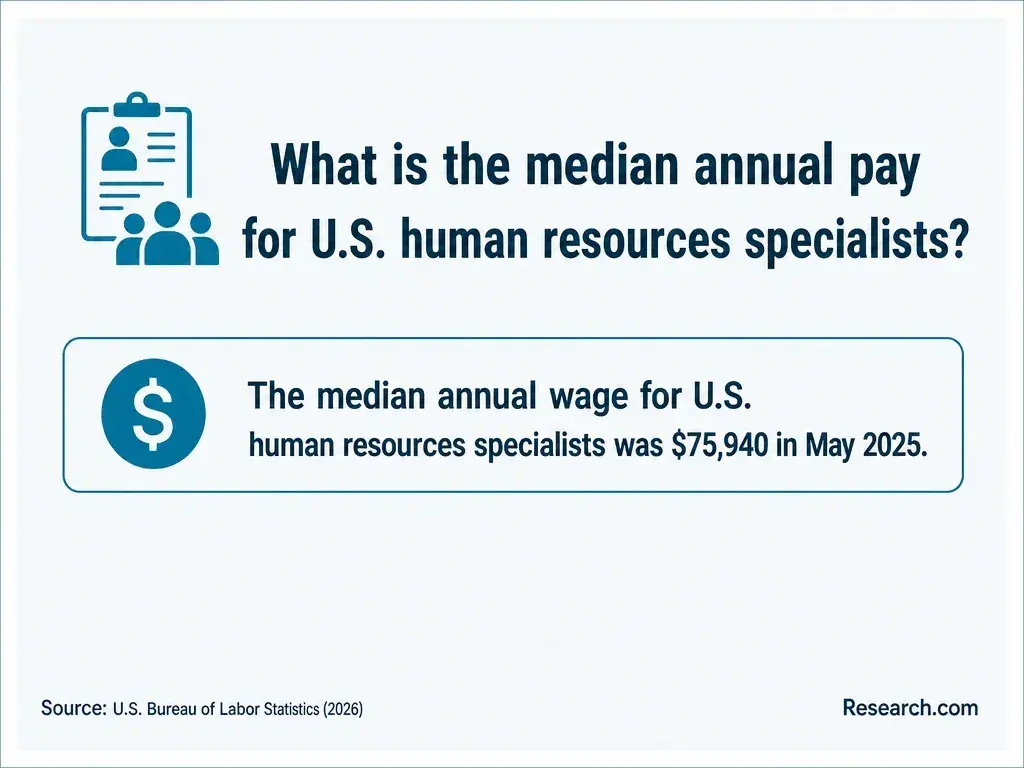
There is no single salary or employment projection for graduates of an online psychology BA in chronic pain services. The US Bureau of Labor Statistics reports wages and outlook by occupation, not by undergraduate major or pain-service setting. Its social and human service assistants occupation is a useful comparison for some nonclinical support jobs, but it also includes work outside healthcare; its occupational median should not be read as a new graduate's offer.
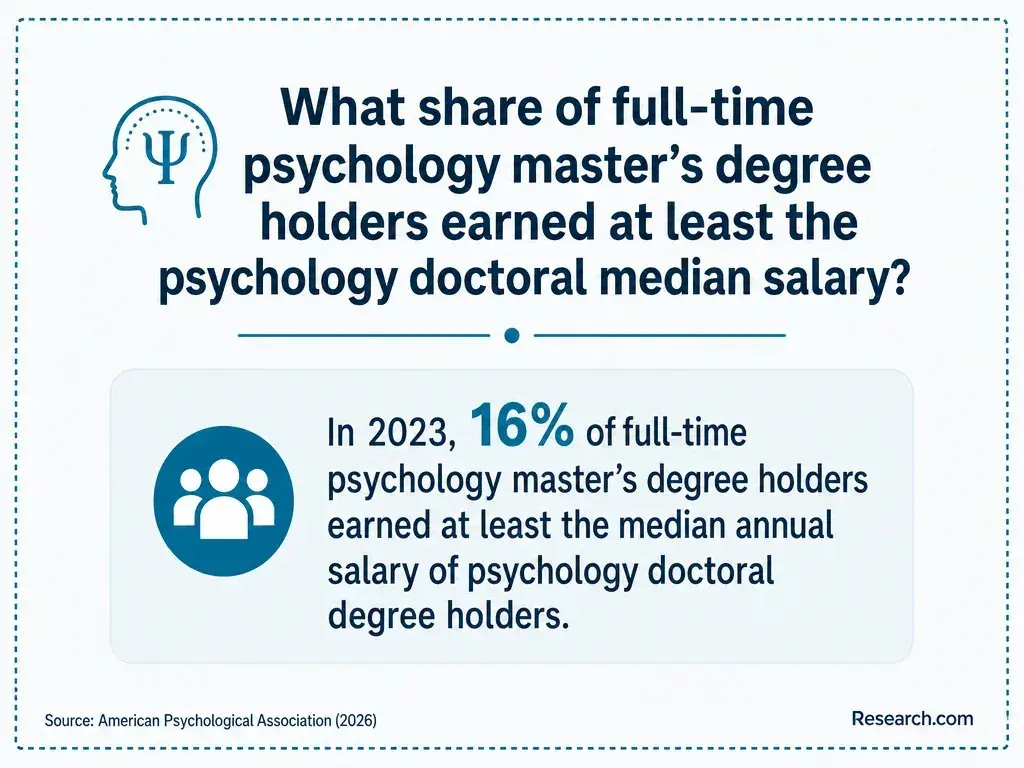
Use the closest occupational category as context, then check local postings for the actual job title, required credentials, schedule, and pay range. Advancement may depend more on relevant experience or a qualifying professional credential than on another general psychology degree. If considering shorter online psychology master's timelines, verify what the specific program teaches and whether employers value it for your target work; a nonclinical psychology master's does not automatically qualify you for licensed mental health practice.
Other Things You Should Know About Psychology
No. It can be useful, but employers may value health psychology, research literacy, service experience, and knowledge of referral boundaries more. Check the duties of the jobs you want.
Coursework alone does not grant permission. Use depends on the instrument, employer policy, your training and supervision, and applicable law. Screening is not the same as diagnosis.
Often. It can add perspective on access to care, prevention, and population-level barriers that affect people living with chronic pain. Choose it when those topics match your target role.
Yes, if your school and site permit it and you exclude confidential client information. A literature review or authorized, nonidentifying description of your contribution is safer than sharing service records.
- Cultural Framing and the Impact On Acute Pain... - PMC - NIH https://pmc.ncbi.nlm.nih.gov/articles/PMC10462520/
- Trauma-Informed Approaches and Programs | samhsa.gov https://www.samhsa.gov/mental-health/trauma-violence/trauma-informed-approaches-programs
- Definitions | Transfer Credit Ohio https://transfercredit.ohio.gov/educational-partners/educational-partner-initiatives/articulation-transfer-policy-policy/articulation-transfer-policy-definitions
- Cultural Competence in Health Care: Is it important for people with chronic conditions? - Health Policy Institute https://hpi.georgetown.edu/cultural/
- The biopsychosocial model of pain and pain management | Cambridge Core https://www.cambridge.org/core/books/behavioral-and-psychopharmacologic-pain-management/biopsychosocial-model-of-pain-and-pain-management/2CC3BB51B68A337072F00E3F7C3C896C
- Psychology and Behavioral Health Associate Degree Online | The Pennsylvania Institute of Technology https://www.pit.edu/programs/psychology-and-behavioral-health/
- 9 Mental Health Careers You Can Pursue with a BA | New England College https://www.nec.edu/news/9-mental-health-careers-you-can-pursue-with-a-ba
- Discover Psychology Career Paths That Lead to Professional Success | Mount saint vincent https://online.mountsaintvincent.edu/degrees/undergraduate/bachelor-psychology/careers-for-professional-success/
- Psychology, BA | Pace University New York https://www.pace.edu/program/psychology-ba
- Cultural Competence and the Postoperative Experience | sciencedirect.com https://www.sciencedirect.com/science/article/pii/S2666061X23000767