2027 Online BA in Psychology - Addictions for Work in College Recovery Programs: Compare Degree Fit and Hiring Requirements
Audited and Verified:
Our Editorial and Data Verification Process
Research.com uses government datasets, official education statistics and primary institutional information to support its career and degree guides. Our review process checks factual accuracy, occupational definitions, source dates and the requirements associated with the credentials discussed.
How This Article Was Fact-Checked
Our editorial team verifies salary estimates, employment projections, education requirements and program information against original data providers and official organizations. Salary figures are checked against the relevant occupational definitions and reporting periods. Information about licensure, accreditation and required in-person training is reviewed separately.
Fact-checked and verified on:

Co-Founder and Chief Data Scientist
College recovery programs need people who can organize peer communities, connect students with services, and work responsibly within campus support systems. An online BA in psychology with addictions coursework may help you prepare for that work, but it is not the same as an addiction counseling credential.
This guide is for prospective students and career changers comparing degree routes against actual hiring requirements. It explains which roles a bachelor's degree may support, when a different qualification is more direct, and what to verify before paying for a program.
Key Things You Should Know
- For nonclinical college recovery roles, relevant experience, campus partnerships, and peer-support skills may matter as much as an addictions concentration; a psychology BA alone does not qualify you to provide therapy.
- There is no single national hiring standard or college-recovery-specific federal wage series. Compare actual campus job postings, including degree, experience, and credential requirements, before choosing a program.
- If your target job involves substance-use-disorder counseling, check your state's credential rules first. Required education and supervised experience may make a counseling-focused route more direct than a psychology BA.
What is an online psychology degree in addictions for college recovery work?
It is generally a psychology bachelor's degree delivered primarily online, with a formal addictions concentration or selected courses on substance use and recovery. Those are different offerings: a concentration appears in a school's approved degree requirements, while electives may not produce a separately recognized designation. Check the catalog rather than relying on a program's marketing label.
College recovery programs support students pursuing recovery while enrolled in higher education. Their work may include peer community-building, recovery-friendly events, education, and connections to campus or community services. Studying psychological science can inform that work; it does not turn a student-program role into clinical treatment. If your intended job is counseling rather than campus program support, compare the curriculum and credential implications through an addiction counseling degree comparison resource.
What jobs can a psychology bachelor's degree prepare you for in college recovery programs?
A BA may support applications for recovery-program assistant, student-support coordinator, prevention-education assistant, or related campus and community roles. Titles are not standardized. A coordinator posting may require substantial higher-education experience, while a peer role may place greater weight on approved peer training or lived-experience criteria. Read the duties, not just the title.
The following comparison separates work a bachelor's applicant might help perform from work that requires a different qualification. Individual employers set hiring standards, and regulated duties depend on state law.
| Target work | Evidence that may help an applicant | Important boundary |
| Recovery-program support | Event coordination, student engagement, accessible communications, and referral knowledge | Does not include independent diagnosis or treatment |
| Peer or community support | Relevant training, supervised experience, and the ability to maintain boundaries | Peer credentials and permissible duties vary |
| Program coordination | Partnership-building, budgets, documentation, and basic program evaluation | Employers may require prior campus or supervisory experience |
| Addiction counseling | Education and supervised practice meeting the applicable credential rules | A psychology BA alone is not proof of eligibility |
If you already work in student affairs or a community organization, document your transferable coordination and outreach work before committing to another degree. Likewise, a different specialization should be judged against its own jobs: online forensic psychology programs and graduate outcomes concern a distinct career direction, not a substitute credential for college recovery work.
What education and licensing requirements apply to addiction counseling careers?
Requirements depend on the state, credential, work setting, and services provided. A state may recognize different levels of substance-use-disorder counselor, with different coursework, supervised practice, examinations, and permitted duties. Employers can also impose requirements beyond the legal minimum. Ask the relevant state licensing or certification authority whether a particular psychology degree and its courses satisfy the credential you want; an admissions adviser cannot grant that determination.
Campus recovery support, peer work, and prevention education are not interchangeable with psychotherapy. Learning about motivational approaches or addiction treatment in a BA course does not authorize a graduate to assess a disorder or counsel independently. If the target is a licensed mental-health counseling role, examine qualifying graduate programs and their state-specific fieldwork requirements. A comparison of shorter graduate counseling programs by cost and duration can help frame that separate decision, but a short timeline is not evidence of licensure eligibility.
Online delivery can reduce commuting and widen course choices, but it does not eliminate scheduled classes, group work, examinations, or local experiential requirements. Campus study may make it easier to participate directly in a collegiate recovery program and meet staff who hire or supervise students. Either format can work if you can build relevant experience where you live.
Before enrolling online, ask whether courses are asynchronous, whether live meetings are required, and who finds and approves a local internship or project site. A remote class and an in-person recovery-program placement are separate commitments. This distinction also applies if you later compare graduate study: online forensic psychology master's graduation planning illustrates why a program's advertised online timeline should not be mistaken for a promise that every required activity is self-paced.
Look for a psychology foundation in research methods, statistics, development, social behavior, and biological or health-related psychology. Addiction-relevant courses may cover substance use, prevention, recovery systems, and cultural or community contexts. For college recovery work, courses in program evaluation and ethical communication can be as useful as additional clinical-sounding electives.
Judge the curriculum by what you can demonstrate afterward: interpreting evidence without overstating it, communicating with students respectfully, making appropriate referrals, and protecting confidential information. A supervised, nonclinical project - such as an approved review of outreach materials - may provide stronger job evidence than a course title alone. If you are also considering fast-track bachelor's study in forensic psychology, compare required courses against your intended setting: justice-focused electives do not replace recovery-program preparation merely because both degrees are in psychology.
Schools set their own first-year and transfer admission rules, which may involve prior transcripts and general institutional eligibility. Admission to a university does not necessarily settle admission to a major, acceptance of transfer credit, or satisfaction of psychology requirements. Returning students should request a written degree audit showing where each accepted course applies.
Ask specifically about statistics and research-methods equivalencies, remaining general education, required courses offered only in certain terms, and any minimum credits that must be completed at the awarding institution. For a broader starting point, psychology program admissions and curriculum comparisons can help you identify questions to put to each school; its published overview cannot replace your individual credit evaluation.
Time depends on your accepted credits, how they satisfy the degree audit, course availability, and the pace you can sustain. An accelerated calendar may shorten the schedule without reducing required work. Ask the school for a term-by-term completion plan, especially if a research course must precede an internship or capstone.
Compare the full remaining cost, not an advertised tuition rate alone: required tuition and fees, books or software, possible travel, and any unpaid placement time all affect affordability. Have each school calculate charges against your proposed enrollment plan, then check aid eligibility and employer assistance separately. Low-cost online psychology degrees are useful candidates to investigate, but the lowest published rate may not produce your lowest completion cost.
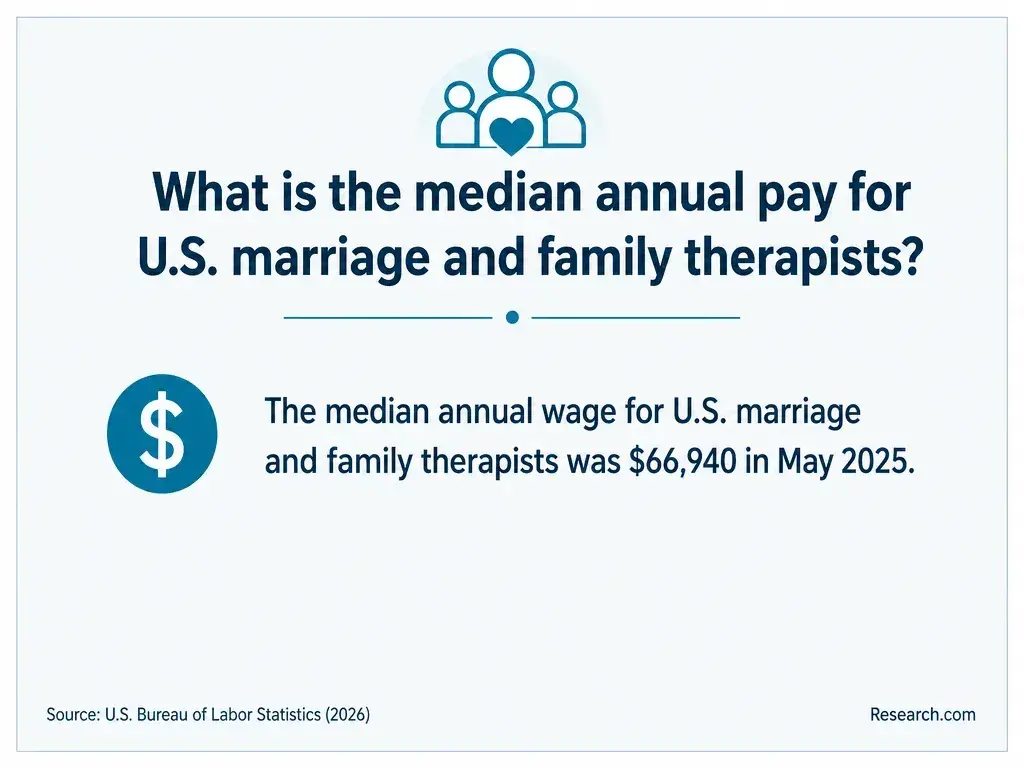
No federal occupation category isolates employees of college recovery programs, and a psychology BA has no single graduate salary. Campus pay depends on the institution, location, funding, duties, and experience. The US Bureau of Labor Statistics reports wages and projections for broader occupations such as substance abuse, behavioral disorder, and mental health counselors, but those figures cover roles with differing qualifications; they should not be presented as expected pay for a campus recovery assistant.
For a useful comparison, collect current postings for the exact jobs and locations you would accept. Separate entry-level campus support positions from credentialed counselor positions, and note whether a job is grant-funded or requires experience you do not yet have. If counselor pay is central to your decision, undergraduate substance use counseling study on a budget is a more relevant comparison than assuming all addictions-related degrees lead to the same occupation.
A certification is useful only if it matches the work and is recognized by the employer or applicable state authority. Peer-support credentials, prevention training, and substance-use counselor credentials can have different eligibility rules, supervision requirements, and scopes of practice. Some campus positions instead emphasize staff training and experience rather than a particular external certificate.
Choose the target position first, then ask its hiring office which credentials it accepts and whether training must be completed before hire. If the work requires licensed counseling, do not substitute a short certificate - or a general psychology master's degree - for a qualifying professional pathway. Comparing the cost of a lower-cost psychology master's degree is sensible for a separate academic goal, but price alone does not establish counselor-credential eligibility.
How can you choose an accredited online psychology program for addiction work?
First confirm the institution's current accreditation with its recognized accreditor and verify that the online degree is offered by that institution. Then check whether "addictions" is an official concentration, what the transcript will show, and whether the required courses are available at your intended pace. Institutional accreditation is important; it is not proof that an undergraduate psychology program meets a state addiction-counselor credential rule. APA accreditation should not be assumed for a general psychology BA.
Use your target postings as a final test: compare their requirements with the program's degree audit, available supervised nonclinical experiences, and career support. Request written answers about local site approval, scheduling, transfer credit, and total remaining cost. If speed is a deciding factor, use comparing accelerated psychology degree options to shortlist programs, then verify that the faster schedule still leaves room to gain the campus recovery experience employers request.
Other Things You Should Know About Psychology
Often, if a program has volunteer opportunities. Ask what training, screening, supervision, and time commitments apply. Volunteering can help you test your interest, but it does not automatically count as academic fieldwork.
Not for every position. Some peer roles specify lived-experience criteria; coordination and administrative roles may not. Follow the posting and respect students' privacy rather than assuming one background fits every role.
Only with permission from the program and, where applicable, the school. Use approved, nonidentifying materials; do not include student disclosures, private records, or unpublished program data.
Ask which tasks new hires perform, which experience is hardest to recruit for, and which credentials the institution recognizes. Those answers can show whether you need a degree, targeted training, or supervised experience next.
- Engaging Students to Enhance Alcohol and Other Drug Prevention and Education | Campus Drug Prevention https://www.campusdrugprevention.gov/views-from-the-field/engaging-students-enhance-alcohol-and-other-drug-prevention-and-education
- Peer Recovery Support Coordinator - VCU Main Campus, Virginia, United States https://www.jobs.virginia.gov/jobs/peer-recovery-support-coordinator-vcu-main-campus-virginia-united-states
- Co-Occurring Disorders and Other Health Conditions | samhsa.gov https://www.samhsa.gov/substance-use/treatment/co-occurring-disorders
- Supporting Students in Recovery on College Campuses - PMC https://pmc.ncbi.nlm.nih.gov/articles/PMC3134882/
- Online Bachelor's Degree in Psychology in Addictions | Purdue Global https://www.purdueglobal.edu/degree-programs/psychology/bachelor-psychology-addictions/
- Substance Abuse and Addictions Concentration, Counseling and Applied Psychological Science Degree, BS | ASU https://degrees.asu.edu/bachelors/major/ASU00/LSCAPSAABS/counseling-and-applied-psychological-science-substance-abuse-and-addictions
- Online Bachelor of Science in Substance Abuse Counseling | UC News https://www.online.uc.edu/degrees-programs/bachelors/bs-substance-abuse-counseling.html
- Applied Psychology: Addictions Studies, B.S. - CPS, CPSO | University of New Hampshire https://www.unh.edu/program/bachelor-science/applied-psychology-addictions-studies
- What is CAC Certification? | ufl.edu https://addiction-certificate.psychiatry.ufl.edu/2017/05/05/what-is-cac-certification/
- Collegiate Recovery Coordinator job with University of Utah | The Chronicle of Higher Education Jobs https://jobs.chronicle.com/job/38029800/collegiate-recovery-coordinator/