2027 Substitute Teaching License & Requirements in New York

Co-Founder and Chief Data Scientist
Substitute teaching in New York can be a practical way to enter the classroom without committing immediately to a full-time teaching contract. It appeals to recent graduates, career changers, retired educators, graduate students, and people testing whether teaching is the right long-term path. The process, however, is not the same everywhere: New York City, suburban districts, rural districts, charter schools, and private schools may use different hiring systems, credential expectations, training rules, and pay structures.
This guide explains how substitute teaching works in New York, what qualifications districts may require, how assignments are offered, what substitutes typically earn, and how the role can support a move into full-time teaching. It also covers benefits, legal protections, ethical expectations, common challenges, online teaching options, and professional development resources so you can decide whether this path fits your goals.
Quick answer: How do you become a substitute teacher in New York?
To become a substitute teacher in New York, you generally apply directly through a school district or, in New York City, through the New York City Department of Education process. Candidates must usually provide proof of education, pass fingerprinting and a criminal background check, complete required district paperwork, and meet local training or credential rules. Some roles may be open with a high school diploma or GED, while other assignments may require college credits, a bachelor’s degree, a teaching certificate, or a substitute license.
- New York substitute requirements vary by district, but candidates may need a valid teaching certificate or substitute license, a minimum of 60 college credits for some pathways, and a completed fingerprinting background check.
- Demand remains strongest in large urban systems, high-need subject areas, and districts with persistent teacher vacancies or limited local hiring pools.
- Pay can differ significantly by district and assignment type. Reported figures include an average around $130 per day, hourly ranges of $22 to $26, and a New York City public school annual rate around $46,217 for some substitute roles.
| Decision point | What it means for you | Why it matters |
| Where you want to work | NYC, suburban districts, upstate districts, rural districts, charter schools, and private schools may use different hiring procedures. | You may need to apply separately to each employer rather than relying on one statewide application. |
| Your education level | Some opportunities may be available with a high school diploma or GED, while others may require 18, 48, 60 college credits, or a bachelor’s degree. | Your education level can affect the assignments you qualify for and how many days you may be allowed to work. |
| Your long-term goal | Substitute teaching can be short-term income, classroom exploration, or a bridge to certification. | If you want full-time teaching, you should track workdays, seek relevant placements, and understand certification rules early. |
- What are the requirements to become a substitute teacher in New York?
- What types of substitute teaching permits may apply in New York?
- How do substitute teachers renew eligibility in New York?
- How do New York substitutes receive assignments?
- Can substitute teaching lead to a full-time teaching job?
- How much do substitute teachers make in New York?
- What is the job outlook for New York substitute teachers?
- What ethical standards apply to substitute teachers?
- What legal rights and workplace protections should substitutes know?
- What benefits do substitute teachers receive?
- How long can it take to move from substitute teaching to full-time teaching?
- What challenges should substitutes expect?
- Can substitute teaching help you move into private school teaching?
- How can substitutes use online teaching opportunities in New York?
- What professional development resources help New York substitutes grow?
What are the requirements to become a substitute teacher in New York?
New York does not operate like a single-employer system for all substitute teachers. In most cases, you apply to the district or school system where you want to work. That employer determines the local hiring steps, verifies your education, reviews your references, confirms your background clearance, and explains any limits on assignments.
The most important point for applicants is this: do not assume that one district’s rules apply everywhere. New York City has its own process through the NYCDOE, while other districts may use different forms, training platforms, interview steps, and minimum education standards.
- Minimum education: A high school diploma or GED may satisfy the baseline requirement for some substitute roles. Other districts or longer-term assignments may prefer or require college coursework, a teaching assistant certificate, a bachelor’s degree, or progress toward teacher certification.
- College credit expectations: Some substitute pathways reference specific credit thresholds, including 18 college credits, 48 college credits, 60 college credits, or a bachelor’s degree, depending on the permit type, assignment length, and district policy.
- Fingerprinting and background check: Candidates must complete fingerprinting and a criminal history review through the New York State Education Department. The listed fee is $101.50.
- District application: Applicants typically submit proof of education, references, identification, employment forms, and any district-required documents. Many districts also conduct interviews before adding candidates to the substitute pool.
- New York City substitute teacher license: Candidates who want to work in NYC public schools must follow the New York City Department of Education’s substitute teacher licensing process.
- Required training: Many districts ask newly hired substitutes to complete training within 30 days of hire. Training often covers classroom management, school safety, reporting procedures, and local policies.
- Optional certification pathway: A current or in-progress teaching certificate is not always required for short-term substitute work, but it can expand assignment options and support a transition into regular teaching.
| Requirement | What to prepare | Applicant tip |
| Education proof | Diploma, GED record, transcript, college credit documentation, or degree record. | Ask the district which documents it accepts before paying for official transcripts. |
| Fingerprint clearance | Fingerprinting and criminal history background check through the New York State Education Department. | Budget for the $101.50 fee and start early because clearance can affect your start date. |
| Local application | District application, references, employment forms, and interview materials. | Apply to more than one district if you want steadier work. |
| NYC-specific approval | NYCDOE substitute teacher license process for NYC public schools. | Do not assume approval in another district automatically qualifies you for NYC assignments. |
| Training | District onboarding modules, safety training, classroom procedures, and policy acknowledgments. | Complete required training within 30 days of hire if your district sets that deadline. |
If you want to strengthen your qualifications or prepare for certification, a graduate education program can be useful. Research.com’s guide to one-year online master’s in education programs can help you compare accelerated options if a master’s degree fits your career plan.
The chart below shows where short-term substitute teacher employment was most concentrated in 2023. It can help applicants understand why larger states and districts often produce more frequent opportunities for substitutes.
What types of substitute teaching permits may apply in New York?
Substitute teaching eligibility in New York can depend on the employer, your education, your certification status, and whether the assignment is daily, short-term, or extended. The categories below are useful for understanding how districts may sort candidates by preparation level and assignment type.
| Permit or eligibility type | Typical candidate profile | Best fit |
| Day-to-day substitute teaching permit | Individuals with at least 48 college credits who want daily substitute assignments in public schools across New York State. | Applicants seeking flexible, short-term work across multiple classrooms. |
| Initial substitute teaching permit | Candidates with a bachelor’s degree who may substitute teach for up to five years. | People using substitute teaching as a bridge toward full teacher certification. |
| Certified substitute teaching permit | Educators who already hold a valid teaching certificate. | Certified teachers who want assignments tied to their grade level or subject area. |
| Short-term substitute teaching permit | Candidates filling placements lasting less than 40 days in one assignment, with a minimum of 18 college credits. | Applicants who want a faster entry route into brief assignments. |
| Uncertified substitute teaching permit | Candidates with fewer than 48 college credits, usually limited to specific districts. | Applicants beginning in education while completing additional coursework. |
Before applying, confirm three details with the district: the minimum education level it accepts, whether it limits the number of days an uncertified substitute may work, and whether long-term assignments require different credentials.
How do substitute teachers renew eligibility in New York?
Substitute renewal is usually handled through the district or school system that employs you. In New York City, renewal is tied to the NYCDOE process and employee systems. In other districts, renewal may involve local re-approval, service verification, updated training, and confirmation that you remain in good standing.
- Minimum service days: Some substitutes must complete at least 20 days of service during the previous school year to remain active.
- Annual training: Districts may require online modules on safety, discrimination prevention, student privacy, or other compliance topics.
- Renewal submission: Renewal may be completed through an online portal, an employee login system, or district paperwork.
- Eligibility review: District staff may review your service record, performance standing, and continued clearance.
- Supporting documents: You may need to upload or mail proof of required workshops, training, or certification updates.
- Deadline management: Missing a renewal deadline can remove you from the active substitute list and delay future assignments.
| Renewal task | Why it matters | How to avoid problems |
| Track days worked | Some renewal processes require at least 20 service days. | Keep your own spreadsheet even if the district tracks assignments. |
| Finish annual training | Incomplete compliance training can pause your eligibility. | Complete modules as soon as they open rather than waiting for the deadline. |
| Check employee portal messages | Districts may communicate renewal steps electronically. | Log in regularly and update your contact information. |
| Maintain good standing | Negative reports can affect assignment access and renewal. | Follow lesson plans, arrive on time, and document issues professionally. |
If your long-term goal is leadership, administration, or higher education work, advanced study may be part of your plan. Research.com’s overview of online doctoral programs in higher education administration can help you understand one possible graduate pathway.
How do New York substitutes receive assignments?
Most substitute assignments are offered through district-managed systems rather than informal calls from individual teachers. New York City uses SubCentral, while other districts may use different substitute management platforms, district offices, preferred lists, or school-level requests.
- Automated assignment system: New York City uses the SubCentral System to manage teacher absences, substitute selection, and assignment notifications.
- Registration requirement: Substitutes must complete a one-time phone registration with SubCentral before they can receive assignments.
- Notification methods: Assignments may be offered through automated calls beginning as early as 5:30 AM and through online access available 24/7.
- Preferred substitute requests: Schools may request specific substitutes through SubCentral’s “Selection” process when they have a strong match for a classroom or program.
- Priority lists: Some districts maintain preferred substitute lists for people with strong work histories, specialized skills, or reliable availability.
- Geographic flexibility: Many NYC substitutes can work citywide, while some roles, including substitute paraprofessional positions, may be tied to a specific borough, school, or program.
- Assignment management: SubCentral lets substitutes review jobs, update profiles, and monitor work history.
- Annual standing: Continued access depends on renewal, good performance, and compliance with district requirements.
| How assignments are offered | Advantage | Possible drawback |
| Automated phone calls | You may receive same-day openings quickly. | Calls can come early, including 5:30 AM. |
| Online job board or portal | You can review openings 24/7 and choose work that fits your schedule. | High-demand assignments may disappear quickly. |
| Preferred school requests | Strong performance can lead to repeat assignments. | It may take time to build relationships with schools. |
| District preferred lists | Reliable substitutes may receive priority access. | New substitutes may need to prove themselves before getting frequent calls. |
The chart below highlights public school staffing pressure in subjects such as special education, general elementary education, and ESL/bilingual education. For substitutes, these shortage areas may create more opportunities, especially for candidates with relevant training or certification goals.
Can substitute teaching lead to a full-time teaching job in New York?
Yes. Substitute teaching can help you move toward a permanent teaching role, but it is not automatic. The value of substitute experience depends on whether you document your work, choose assignments aligned with your certification area, build relationships with schools, and meet New York State Education Department certification rules.
- Classroom experience: Substitute teaching gives you direct practice with instruction, student behavior, lesson delivery, school routines, and communication with staff.
- Documented workdays: Candidates pursuing full-time credentials may need to track teaching days. A common benchmark is 540 full-time days, or about three years, with official verification available through designated NYCDOE forms.
- Certification alignment: Experience is most useful when it matches the grade level or subject area connected to your certification goal.
- Clearance continuity: Fingerprinting and criminal background checks are required for substitute roles and remain important when moving into full-time teaching.
- Professional development: Renewal training, district workshops, and classroom management preparation can strengthen your profile.
- Certification application: When ready, transitioning substitutes apply through the New York State Education Department certification system and provide required documentation.
| If your goal is... | Use substitute teaching to... | Watch out for... |
| Full-time public school teaching | Gain experience in your intended grade or subject area and track workdays carefully. | Assuming all substitute days automatically count toward certification. |
| Long-term substitute assignments | Build trust with schools and show you can maintain continuity over several weeks or months. | Taking long-term placements without understanding extra responsibilities. |
| Teacher certification | Clarify required coursework, exams, student teaching, and experience documentation. | Waiting too long to verify certification requirements. |
| Private school teaching | Develop classroom management, lesson delivery, and school references. | Assuming private schools use the same hiring rules as public districts. |
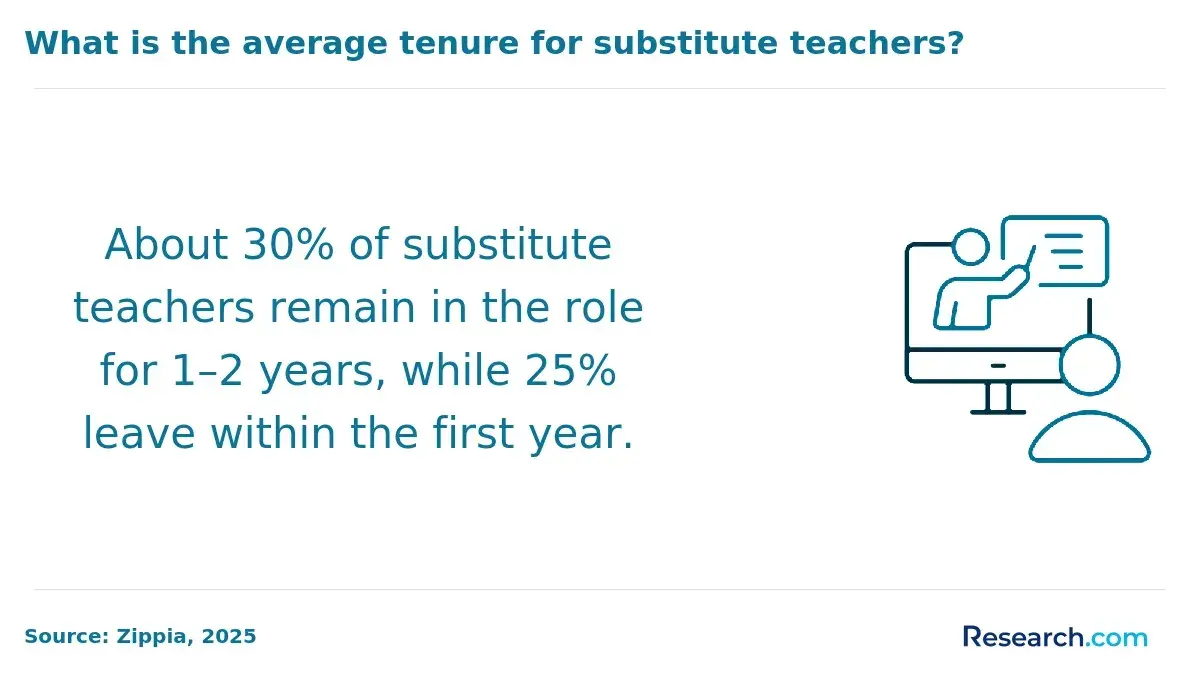
The image below provides context on the average tenure of substitute teachers and why many educators use the role either temporarily or as a bridge into full-time positions.
How much do substitute teachers make in New York?
Substitute teacher pay in New York depends on the district, assignment length, credentials, location, and whether the position is day-to-day or long-term. Reported figures vary: some summaries cite an average around $130 per day, while other New York pay references describe hourly ranges of $22 to $26 and annual rates around $46,217 in New York City public schools. NYC per diem information also lists $217.75 per day as of January 2025.
Because pay rules can change by employer and assignment category, applicants should verify the current rate directly with the district before accepting work.
- Assignment type: Daily substitute roles and full-term regular substitute roles may be paid differently.
- Credentials: Teaching certification, advanced credentials, or alternative certification progress may affect pay eligibility in some districts.
- Location: New York City and other urban districts may pay differently from suburban or rural districts because budgets and cost-of-living pressures differ.
- Length of placement: Assignments lasting weeks or months may include higher rates or additional responsibilities.
- Subject area: Specialized needs, including special education, can influence assignment availability and compensation practices.
| Pay factor | How it can affect earnings | Question to ask before accepting |
| Daily vs. long-term work | Longer placements may pay differently and require more planning or grading. | Does this assignment pay a daily, weekly, long-term, or annualized rate? |
| District | Rates can vary across NYC, suburban, upstate, and rural districts. | What is the current substitute pay schedule? |
| Credential level | Certified substitutes may qualify for different roles or rates. | Does certification change my pay or assignment eligibility? |
| Benefits status | Per diem substitutes may receive fewer benefits than long-term or Q-status substitutes. | Does this role include any benefits, paid leave, or union coverage? |
If you are still deciding whether a teaching-related degree is worth pursuing, Research.com’s explanation of education degree types can help you compare undergraduate and graduate routes.
What is the job outlook for New York substitute teachers?
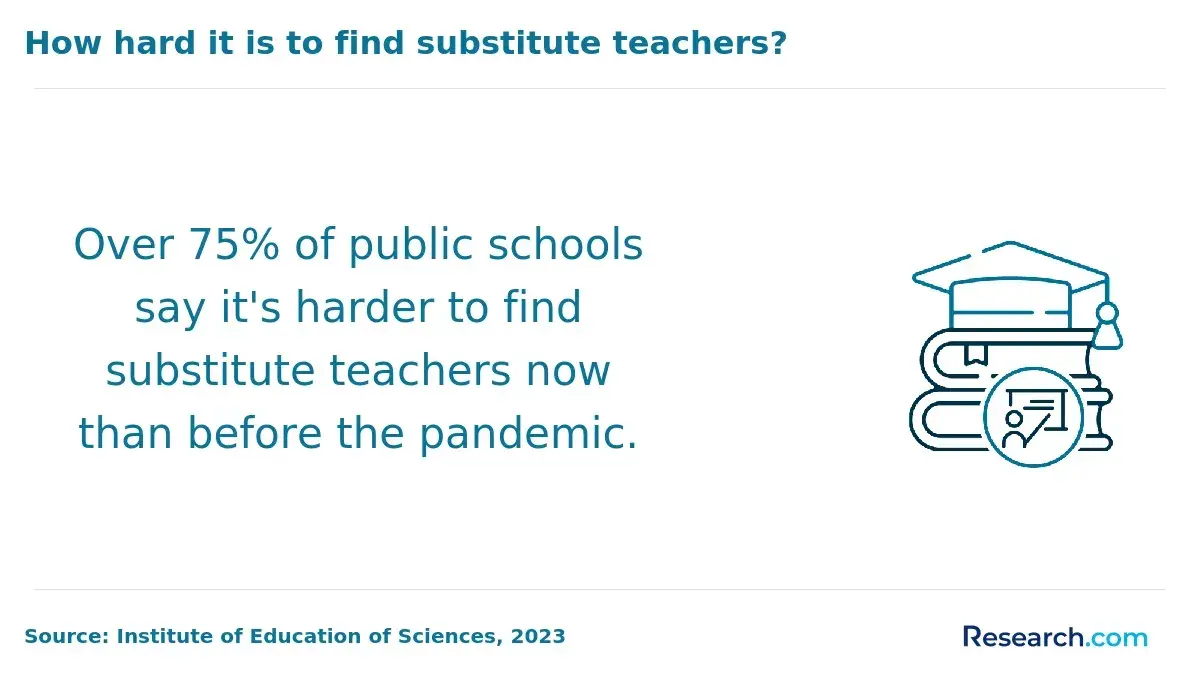
The outlook for substitute teachers in New York is shaped by teacher vacancies, absenteeism, class size rules, subject shortages, and local labor market conditions. Demand is not identical across the state, but many districts continue to rely on substitutes to keep classrooms covered when teachers are absent or positions remain unfilled.
- New York City: The NYC Department of Education plans to hire thousands of new teachers in 2025 to meet new class size mandates and address vacancies, which can also increase short-term and transition-related substitute needs.
- High-need urban districts: Districts serving large and diverse student populations may face persistent vacancies and may depend heavily on substitute coverage.
- Upstate and rural districts: Smaller hiring pools and less competitive compensation can make substitute staffing harder, especially in specialized subjects.
- Special education and STEM classrooms: Special education, math, and science remain areas where schools often need qualified educators.
- Temporary and long-term absences: Teacher health issues, burnout, leave, and vacancies can create both daily and extended assignments.
Applicants who want more consistent work should consider applying to multiple districts, becoming available for early-morning calls, accepting repeat assignments at reliable schools, and developing skills in high-need areas such as special education, ESL/bilingual education, general elementary education, math, or science.
If you are interested in school library, literacy, or information-focused education roles, Research.com’s list of affordable online master’s degrees in library science can help you evaluate a related specialization.
What ethical standards apply to substitute teachers in New York?
Substitute teachers are temporary employees in a classroom, but their ethical responsibilities are serious. They are trusted with student safety, confidential information, classroom order, and instructional continuity. A substitute who ignores school rules or mishandles student information can lose assignment access and damage future employment prospects.
- Protect student privacy: Do not discuss grades, behavior, disability status, family matters, or personal student information outside appropriate school channels.
- Maintain a safe classroom: Follow attendance, emergency, dismissal, and supervision procedures exactly.
- Respect district policy: Use the lesson plan, behavior procedures, technology rules, and reporting expectations provided by the school.
- Act professionally: Communicate respectfully with students, staff, families, and administrators.
- Avoid conflicts of interest: Do not accept gifts, favors, or arrangements that could affect fairness or judgment.
- Set consistent behavior expectations: Apply classroom rules calmly and avoid uneven or retaliatory discipline.
- Stay renewal-ready: Background checks, performance expectations, and annual renewal steps reinforce professional accountability.
- Support diversity and equity: New York classrooms include students from many cultures, languages, identities, and learning needs; substitutes should create an inclusive environment.
- Preserve instructional integrity: Follow the teacher’s plan unless a school administrator directs otherwise.
What legal rights and workplace protections should substitutes know?
Substitute teachers in New York should understand both their responsibilities and their workplace protections. Depending on employer, assignment type, and employment status, protections may involve safe working conditions, timely pay, non-discrimination rules, union representation, and district grievance procedures. These protections are often district-specific, so substitutes should review employee handbooks, union materials, and assignment terms before problems arise.
Important areas to clarify include how pay is calculated, whether the role is per diem or long-term, how complaints are reported, what happens after a workplace injury, and whether the substitute has access to union support. If you are comparing this role with the broader teaching pathway, Research.com’s related guide on becoming a substitute teacher in New York can help you connect the legal and career-planning pieces.
What benefits do substitute teachers receive in New York?
Substitute teaching can offer meaningful advantages, but applicants should be realistic about benefits. Day-to-day substitute roles often provide flexibility and classroom experience, while traditional benefits such as comprehensive health insurance or retirement access may be limited unless the role becomes long-term or meets specific district criteria.
- Flexible scheduling: Substitutes can often choose the days they work, which helps people balancing family responsibilities, graduate school, another job, or a phased career transition.
- Daily pay: NYC’s listed per diem rate is $217.75 per day as of January 2025.
- Long-term assignment potential: Extended placements may offer more stability and, in some cases, access to Q-status, which can provide benefits similar to full-time teachers.
- Professional growth: Substitute teaching builds practical classroom experience and may encourage advanced preparation, including programs such as fast-track EdD degree programs for educators pursuing leadership goals.
- Union representation: The United Federation of Teachers advocates for substitute teachers, particularly around pay and benefits for longer-term roles.
| Benefit | Best for | Limit to check |
| Schedule control | People who need part-time or variable work. | Fewer accepted jobs may mean less predictable income. |
| Classroom experience | Future teachers testing grade levels, subjects, and school settings. | Experience may not count toward certification unless properly documented and aligned. |
| Long-term placements | Substitutes seeking stability and stronger school relationships. | Responsibilities may increase without the same support as a permanent teacher. |
| Union advocacy | Substitutes working in covered settings. | Coverage and protections may depend on role classification and assignment type. |
How long can it take to move from substitute teaching to full-time teaching?
The timeline depends on your current education, certification status, subject area, and the type of teaching job you want. Someone who already has a teaching certificate may move faster than a career changer who still needs prerequisite coursework, exams, student teaching, or graduate study. Substitute experience can help, but it does not replace all certification requirements.
Applicants should map the process backward: identify the teaching certificate they want, confirm coursework and exam requirements, determine whether substitute days can support the experience requirement, and collect official verification as they work. For a fuller explanation of the education timeline, review Research.com’s guide to how long it takes to become a teacher in New York.
What challenges should New York substitute teachers expect?
Substitute teaching can be rewarding, but the role is demanding. You may enter an unfamiliar classroom with little notice, manage students who do not know you, interpret incomplete lesson plans, and adjust to different school cultures every day.
| Common challenge | Why it happens | Better approach |
| Inconsistent income | Per diem work depends on available assignments and your accepted schedule. | Apply to multiple districts, monitor assignments daily, and build relationships with schools that request you back. |
| Limited benefits | Short-term substitute roles may not include health insurance, retirement, or paid leave. | Ask about long-term roles, Q-status, and benefit eligibility before relying on substitute work as primary income. |
| Insufficient lesson plans | Teachers may be absent unexpectedly or leave incomplete instructions. | Bring backup age-appropriate activities and ask neighboring teachers or office staff for guidance. |
| Classroom management pressure | Students may test boundaries when their regular teacher is absent. | Start with clear expectations, follow the teacher’s procedures, and document serious issues. |
| Administrative complexity | Districts use different forms, platforms, renewal rules, and credential expectations. | Keep a checklist for each district where you work and save copies of all approvals and training records. |
| Isolation and burnout | Substitutes may not feel fully included in the school community. | Seek repeat assignments, introduce yourself to department chairs, and participate in available training. |
Can substitute teaching help you move into private school teaching?
Yes, substitute teaching can support a move into private school teaching, especially if you use the experience to build classroom confidence, references, and a record of reliability. Private schools may not follow the same certification rules as public districts, but they still value strong instruction, professional communication, classroom management, and alignment with the school’s mission.
If this is your goal, keep records of successful assignments, ask administrators for feedback, and note experiences with small classes, specialized curricula, religious or independent school environments, and parent communication. For a focused comparison of requirements, see Research.com’s guide on how to become a private school teacher in New York.
How can substitutes use online teaching opportunities in New York?
Online teaching can help substitute teachers expand their skills beyond in-person classroom coverage. Virtual instruction requires different habits: clear digital routines, strong communication, student engagement through online tools, and the ability to manage behavior without being physically present in the room.
Substitutes interested in online teaching should practice virtual lesson delivery, learn common learning management systems, build comfort with video instruction, and document any remote teaching experience. This can be useful for tutoring, virtual school roles, online enrichment programs, and hybrid learning support. For step-by-step guidance, review Research.com’s resource on how to become an online teacher in New York.
What do substitute teachers often value about the role?
Many substitutes are drawn to the role because it offers flexibility, exposure to different school settings, and a low-risk way to test a teaching career. Others use it strategically: they accept assignments in districts where they hope to work full time, build relationships with principals, and learn which grade levels or subjects fit them best.
- Flexibility: Substitutes can often accept work around school, family, retirement, or another job.
- Career testing: The role lets future teachers experience different classroom environments before committing to a certification path.
- Networking: Reliable substitutes can become familiar to school leaders who make hiring recommendations.
- Skill building: Frequent classroom exposure develops behavior management, lesson delivery, adaptability, and professional judgment.
What professional development resources help New York substitutes grow?
Professional development is especially valuable for substitutes because they often receive less daily support than permanent teachers. The best training focuses on classroom management, student safety, special education basics, culturally responsive teaching, English language learners, instructional technology, and emergency procedures.
- District workshops: These can explain local policies, reporting expectations, school safety procedures, and classroom routines.
- Certification planning: Substitutes who want full-time teaching should compare different New York teacher certification types and requirements before choosing coursework or exams.
- Mentorship: Repeat assignments at the same schools can help substitutes learn from department chairs, grade-level teams, and experienced teachers.
- Online training: Short courses in classroom management, educational technology, and inclusive instruction can improve confidence before accepting difficult assignments.
- Reflection records: Keeping notes after each assignment helps you identify which grade levels, schools, and subject areas fit your strengths.
Common mistakes to avoid before becoming a substitute teacher in New York
| Mistake | Why it can hurt you | What to do instead |
| Assuming requirements are statewide and identical | You may apply with the wrong documents or miss a district-specific step. | Check each district’s substitute teacher page or HR office before applying. |
| Focusing only on the daily rate | Higher pay may come with fewer assignments, longer commutes, or no benefits. | Compare pay, assignment frequency, travel time, benefits, and long-term opportunities. |
| Ignoring renewal rules | You can lose active status even if you were previously approved. | Track deadlines, service days, training, and portal notices. |
| Not documenting experience | Unverified substitute days may be harder to use for certification or hiring. | Keep records and request official verification when needed. |
| Accepting every assignment without preparation | You may be placed in a grade level or subject area you are not ready to manage. | Start with assignments that match your strengths, then expand gradually. |
| Assuming online teaching is the same as classroom teaching | Virtual instruction requires different engagement and management skills. | Train in online platforms, digital communication, and remote lesson design. |
Related Articles for Nearby States
- 2027 Substitute Teaching License & Requirements in New Jersey
- 2027 Substitute Teaching License & Requirements in Pennsylvania
- 2027 Substitute Teaching License & Requirements in Connecticut
- 2027 Substitute Teaching License & Requirements in Massachusetts
- 2027 Substitute Teaching License & Requirements in Vermont
- 2027 Substitute Teaching License & Requirements in Rhode Island
- 2027 Substitute Teaching License & Requirements in Delaware
- 2027 Substitute Teaching License & Requirements in Maryland
- 2027 Substitute Teaching License & Requirements in New Hampshire
- 2027 Substitute Teaching License & Requirements in Ohio
References:
- Cousineau, M. (2024, January 31). Rampant misclassification costs subs higher wages. New York Focus. https://nysfocus.com/2024/01/31/substitute-teacher-new-york-city-pay-status
- Elevate K12. (n.d.). How to address the teacher shortage in New York City. https://www.elevatek12.com/blog/elevate-in-action/nyc-teacher-shortage/
- New York City Department of Education. (n.d.). Substitute teaching. https://www.schools.nyc.gov/careers/substitute-teaching
- New York State Education Department. (n.d.). Substitute teaching: OTI. https://www.highered.nysed.gov/tcert/certificate/special-education-teacher.html
- Will, M. (2024, February 7). 10 major challenges for substitute teachers. Education Week. https://www.edweek.org/teaching-learning/10-major-challenges-for-substitute-teachers/2024/02
Key Insights
- Substitute teaching in New York is district-driven. Always verify local education, training, renewal, and assignment rules before applying.
- New York City uses a distinct process, including the NYCDOE substitute teacher license and SubCentral assignment system.
- Pay varies by location, assignment type, and status. Reported figures include around $130 per day, $22 to $26 per hour, around $46,217 in New York City public schools, and a per diem rate of $217.75 per day as of January 2025.
- Substitute teaching can support a full-time teaching career, but only if you document your workdays, pursue the right certification pathway, and seek assignments aligned with your target grade or subject area.
- The best opportunities often go to substitutes who are reliable, responsive, trained in classroom management, and willing to work in high-need schools or subject areas.
- Before accepting substitute work as a primary income source, compare schedule flexibility against inconsistent pay, limited benefits, commute time, and renewal requirements.
Other Things to Know About Substitute Teaching License and Requirements in New York
In 2027, substitute teachers in New York must have a minimum of a high school diploma or equivalent. However, preference is often given to candidates with a college degree or those who have completed some post-secondary education, ideally in education or a related field.
Yes, retired teachers in New York can apply for a substitute teaching license in 2027. They need to provide proof of their previous certification and may be subject to certain refresher courses or compliance checks depending on the local school district guidelines.
Substitute teachers in New York must complete a state and federal fingerprint-based criminal history check through the New York State Education Department and its approved vendor. Schools cannot place applicants in substitute roles until clearance is completed and reported as suitable for employment.