2027 How to Become an English Teacher in New Mexico: Requirements & Certification

Co-Founder and Chief Data Scientist
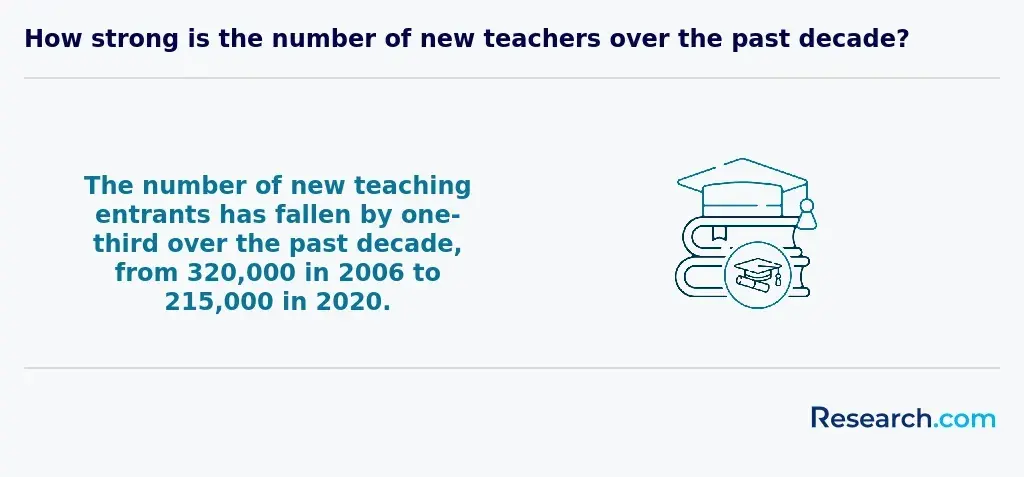
Becoming an English teacher in New Mexico is a practical career goal, but it requires more than a love of literature, writing, and working with students. Candidates must understand state-approved preparation programs, Praxis testing, student teaching, background checks, license renewal, and district hiring expectations. The need is real: a 2023 report from New Mexico State University College showed teacher vacancies increasing from 690 to 751, creating opportunities for new educators while also highlighting persistent staffing challenges across the state.
This guide explains how to become an English teacher in New Mexico, what education and licensing steps are required, how student teaching works, what salary and job-market conditions look like, and how to compare career options before committing to this path. It is designed for prospective teachers, career changers, current education majors, and licensed educators moving to New Mexico from another state.
Quick Answer: How Do You Become an English Teacher in New Mexico?
To become an English teacher in New Mexico, you generally need to earn at least a bachelor’s degree, complete a state-approved educator preparation program, finish supervised student teaching, pass the required Praxis exams, complete fingerprinting and background checks, and apply for a teaching license through the New Mexico Public Education Department. After licensure, teachers must keep their credentials current through renewal requirements and professional development.
Key Things You Should Know About Becoming an English Teacher in New Mexico
- New Mexico continues to report teacher shortages, including demand for English teachers in districts that struggle to fill classroom positions.
- Reported English teacher pay in New Mexico commonly falls between $44,500 and $50,000 per year, although salary can vary by district, years of experience, education level, and local funding.
- The employment outlook is cautiously positive, with the New Mexico Public Education Department projecting teaching-position growth of around 5% over the next decade.
- New Mexico’s cost of living is listed as 1.07 times less expensive than the national average, which can partially offset lower average salaries compared with some other states.
- State education funding has been improving through recent legislative efforts aimed at increasing teacher pay and strengthening school resources, which may influence long-term retention and job satisfaction.
- How to become an English teacher in New Mexico
- Education requirements for New Mexico English teachers
- Certification and licensing process
- Student teaching, internships, and classroom experience
- English curriculum standards in New Mexico
- Job market, salary, and benefits
- Professional development and continuing education
- Classroom management and teaching methods
- Alternative career paths for English teachers
- Advancement options and specializations
- Resources for new English teachers
- Using art to strengthen English instruction
- English teaching versus physical education teaching careers
- School librarian roles for English educators
- Cost-effective teaching credential options
- Retention challenges and support systems
- Specialized ESL certifications
- Higher-paying alternatives to English teaching
- Supplementary certifications for broader career options
- Policies affecting English education in New Mexico
- Work-life balance for English teachers
- Certification timeline
How can you become an English Teacher in New Mexico?
A 2022 National Center for Education Statistics report lists New Mexico with 890 public schools and approximately 21,572 teachers serving more than 300,000 students. English teachers are part of that statewide workforce, serving students in middle schools, high schools, alternative schools, charter schools, and rural districts.
The standard route is straightforward in concept but detailed in practice. Candidates must meet degree, preparation, testing, and application requirements before they can teach independently in a public school classroom.
| Step | What You Need to Do | Why It Matters |
| Earn a bachelor’s degree | Complete a degree in English, education, English education, or a closely related field. | This establishes your academic foundation in literature, writing, language, and teaching. |
| Complete teacher preparation | Enroll in a state-approved educator preparation program with pedagogy coursework and supervised practice. | New Mexico requires future teachers to demonstrate classroom readiness, not only subject knowledge. |
| Finish student teaching | Complete a supervised placement, usually in a school setting aligned with your intended teaching level. | Student teaching gives you evidence of classroom performance for licensure and job applications. |
| Pass required exams | Take the appropriate Praxis assessments for English language arts and teaching knowledge. | Testing verifies subject-area and professional competency. |
| Apply for licensure | Submit transcripts, exam results, background-check materials, and the required application to the New Mexico Public Education Department. | You cannot teach as a licensed public school educator without state approval. |
| Apply for teaching jobs | Search district websites, education job boards, career fairs, and educator networks. | Hiring is local, so district needs, school culture, salary schedules, and support systems matter. |
Prospective teachers should also build a targeted resume early. Strong applications highlight student teaching, tutoring, writing-center work, youth programs, substitute teaching, ESL experience, literacy intervention, and any training related to culturally responsive instruction.
What are the educational requirements for becoming an English teacher in New Mexico?
The minimum academic expectation for most English teaching candidates in New Mexico is a bachelor’s degree. Common majors include English, English education, secondary education with an English concentration, or another closely related field. In 2023, 52% of teachers in New Mexico held a bachelor’s degree, while some educators pursued graduate study to expand their instructional skills or qualify for advancement opportunities.
A strong English teacher preparation pathway usually includes coursework in literature, composition, grammar, linguistics, young adult literature, reading instruction, assessment, educational psychology, classroom management, and teaching methods. Candidates preparing for secondary English positions should expect deeper subject-area preparation than a general education pathway may provide.
Completing an accredited educator preparation program is especially important. These programs connect theory with classroom practice through observation, lesson planning, supervised teaching, and feedback from mentor teachers. They also help candidates understand the documentation and testing requirements tied to state licensure.
Accreditation matters because it signals that the institution and preparation pathway meet recognized quality standards. Before enrolling, students should confirm that the program is approved for New Mexico teacher licensure and that the degree aligns with the grade level and subject area they plan to teach.
Students interested in becoming licensed outside New Mexico should compare requirements before transferring or moving. For example, candidates researching another state can review this guide to the Montana teaching license application.
What is the certification and licensing process for an English teacher in New Mexico?
The New Mexico Public Education Department oversees teacher licensing. For English teachers, the process generally combines academic preparation, educator preparation, testing, background screening, and formal application review.
- Initial license preparation: Candidates typically begin by completing a bachelor’s degree and a teacher preparation program with a focus on English language arts or a related teaching area.
- Praxis testing: Applicants must pass the required Praxis exams that measure English language arts content knowledge and professional teaching competency.
- Application documentation: Candidates submit official transcripts, exam scores, program-completion verification, and any other materials requested by the New Mexico Public Education Department.
- Fingerprinting and background checks: State screening requirements help protect students and maintain trust in the public school system.
- Fees: Applicants should budget for testing, background checks, and licensing charges. These costs vary depending on the exams and credential type.
- Renewal and reciprocity: Licensed teachers must follow renewal requirements, which typically include professional development. Teachers licensed in other states may be eligible for reciprocity if they meet New Mexico’s conditions.
Because requirements can change, candidates should verify current rules directly with the New Mexico Public Education Department before paying for exams or applying. Teachers who want to strengthen literacy expertise may also consider an online master's degree in reading and literacy after or alongside classroom experience.
How important is teaching experience and what are the internship opportunities for English teachers in New Mexico?
Teaching experience is one of the most important parts of becoming a confident English teacher. New Mexico candidates are expected to complete supervised student teaching, and certification pathways commonly require at least 12 weeks of student teaching with related pedagogy and subject-area coursework.
Student teaching usually places candidates in a real classroom with a mentor teacher. During this period, future teachers practice lesson planning, classroom routines, writing instruction, discussion facilitation, feedback on student essays, assessment design, and communication with families. This experience also helps candidates decide whether middle school, high school, or another instructional setting is the best fit.
New Mexico also offers paid pathways that can make the clinical-experience phase more financially manageable. Candidates should review the New Mexico Public Education Department's paid student teaching and teaching residency programs for eligibility and program details.
Universities in the state, including the University of New Mexico and New Mexico State University, provide educator preparation options that connect coursework with field placements. Candidates can also build experience through tutoring, substitute teaching, after-school literacy programs, summer learning programs, youth writing workshops, and volunteering with community education organizations.
What are the standards and curriculum requirements for teaching English in New Mexico?
English teachers in New Mexico are expected to align instruction with the state’s K-12 English Language Arts standards. New Mexico follows the K-12 English Language Arts Common Core State Standards and includes an additional 15% of state-specific standards focused on cultural responsiveness. Those state-specific standards reflect New Mexico’s cultural and linguistic diversity and are not included in state assessments.
For English teachers, this means instruction should go beyond grammar drills and essay formats. Effective courses help students read complex texts, write for different purposes, evaluate evidence, speak and listen thoughtfully, and connect literature to culture, history, identity, and community.
New Mexico educators may use resources such as the New Mexico English Language Arts Instructional Scope and the K-12 ELA Essential Elements to plan lessons, support English learners, and adapt instruction for students with cognitive disabilities.
- Plan reading, writing, speaking, and listening activities that connect to students’ lived experiences.
- Select texts that reflect New Mexico’s diverse communities while also exposing students to broader literary traditions.
- Use culturally responsive pedagogy to support analysis, discussion, and critical thinking.
- Adjust assignments and supports for English learners, students with disabilities, and students working above grade level.
Teachers interested in cross-disciplinary instruction may also find value in arts-based education pathways, including programs listed among music degree colleges.
What is the job market like and what are the salary expectations for English teachers in New Mexico?
The job market for English teachers in New Mexico includes both opportunity and unevenness. Districts with persistent vacancies may need qualified teachers, especially in underserved or rural communities, but applicants should compare districts carefully because salary schedules, mentoring, planning time, class sizes, and classroom resources can differ widely.
Reported salary figures vary by source and location. The average salary for an English teacher in New Mexico is often described as around $50,000 annually. Urban areas such as Albuquerque and Santa Fe may offer salaries exceeding $55,000, while rural districts may fall below the state average. Another cited figure lists the average salary for an English teacher in New Mexico at approximately $$46,833 annually.
| Factor | How It Can Affect English Teacher Pay or Hiring |
| District location | Urban districts may have different salary scales and support systems than rural districts. |
| Experience level | Teachers usually move up salary schedules as they gain years of service. |
| Education level | Advanced degrees may qualify teachers for higher lanes or stipends, depending on district policy. |
| Hard-to-staff schools | Some schools may have stronger hiring demand because of vacancies or turnover. |
| Additional duties | Coaching, mentoring, department leadership, curriculum work, or extracurricular assignments may affect total compensation. |
Benefits also matter. Health insurance, retirement plans, paid leave, professional development support, and district-sponsored mentoring can significantly affect the overall value of a teaching position. Candidates should ask for the salary schedule, benefits summary, contract calendar, and workload expectations before accepting an offer.
What professional development and continuing education opportunities are available for English teachers in New Mexico?
Professional development helps English teachers stay current with literacy instruction, technology integration, culturally responsive teaching, classroom assessment, and support for English learners. It is also part of maintaining licensure over time. Teachers who want a broader graduate pathway can explore an online master's in education.
- State online learning options: The New Mexico Public Education Department offers online courses through its Learning Management System, including resources connected to virtual and blended instruction.
- Technology workshops: Training on tools such as Google applications and Canvas can help teachers organize materials, support collaboration, and improve feedback cycles.
- Specialized student-support training: Organizations such as West Ed and the Comprehensive Center Network provide resources related to students with disabilities, English Language Learners, and distance-learning needs.
- Continuing education credits: Teachers should track completed workshops, courses, conferences, and certifications to support license renewal.
- Professional networks: Groups such as the State Educational Technology Directors Association provide eLearning resources, instructional examples, and case studies that can support classroom improvement.
When choosing professional development, teachers should prioritize training that solves a real classroom need. For example, a new English teacher working with many multilingual learners may benefit more from ESL-focused strategies than from a general technology session.
What are effective classroom management strategies and teaching methods for English teachers in New Mexico?
Strong English teaching depends on two connected skills: managing the learning environment and designing instruction that students can access. New Mexico classrooms may include students from many linguistic, cultural, economic, and academic backgrounds, so one-size-fits-all instruction is rarely enough.
- Set clear routines early: Students should know how class begins, how discussions work, how writing drafts are submitted, and what respectful participation looks like.
- Teach expectations directly: Do not assume students already understand academic discussion, peer review, citation rules, or revision habits. Model each process.
- Use culturally relevant texts and examples: Local literature, regional history, oral storytelling, bilingual experiences, and community-based themes can make English instruction more meaningful.
- Differentiate reading and writing tasks: Offer scaffolds such as vocabulary previews, sentence frames, graphic organizers, audio supports, and tiered writing assignments.
- Assess often and adjust quickly: Exit tickets, reading checks, short reflections, peer comments, and writing conferences help teachers identify gaps before major assessments.
- Balance structure with student voice: English classes work best when students have clear academic expectations and meaningful opportunities to interpret, question, write, and revise.
| Common Classroom Challenge | Better Teaching Response |
| Students avoid complex reading | Break texts into purposeful sections, pre-teach vocabulary, and use guiding questions that build toward interpretation. |
| Writing quality varies widely | Use writing conferences, models, rubrics, and revision checkpoints instead of relying only on final drafts. |
| Discussions are dominated by a few students | Use small groups, written preparation, discussion roles, and structured speaking protocols. |
| English learners need more support | Combine language objectives with content goals and provide visual, oral, and written scaffolds. |
| Students do not see relevance | Connect texts and writing assignments to local issues, student interests, culture, media, and future careers. |
What alternative career paths can English teachers in New Mexico explore?
An English teaching background develops skills in communication, analysis, curriculum planning, feedback, writing, and student support. Those skills can transfer to several education-related and communication-focused careers. Teachers who enjoy working with younger children may research how to become an elementary school teacher in New Mexico. Others may consider curriculum development, instructional coaching, educational publishing, tutoring program management, corporate training, academic advising, college writing support, or nonprofit literacy work.
The best alternative path depends on what a teacher wants to change. If the issue is salary, moving into administration or a specialized licensed field may require more education. If the issue is classroom stress, curriculum or training roles may offer a better match. If the goal is broader student support, literacy intervention, ESL, counseling-adjacent roles, or library services may be worth comparing.
What are the career advancement opportunities and specializations for English teachers in New Mexico?
English teachers in New Mexico can advance by deepening classroom expertise, taking on leadership responsibilities, or moving into specialized roles. Common advancement options include department chair, instructional coach, literacy specialist, curriculum coordinator, mentor teacher, intervention specialist, administrator, or education nonprofit leader.
Specializations can also improve a teacher’s effectiveness and marketability. Areas to consider include literacy instruction, ESL, bilingual education, gifted education, special education, instructional technology, and assessment design. Teachers interested in ESL graduate study should compare programs carefully, including whether they meet accreditation standards for ESL programs.
Additional credentials may also support advancement. National Board Certification, endorsements, graduate degrees, and leadership certifications can create new opportunities, depending on district policies and state requirements. In New Mexico, teachers who achieve National Board Certification may qualify for stipends or bonuses.
Before investing in a graduate degree or endorsement, teachers should ask whether the credential will increase pay, meet a district need, support licensure renewal, or move them toward a specific role. Not every additional credential produces the same return.
What resources and support are available for new English teachers in New Mexico?
New English teachers in New Mexico should not try to build every lesson, assessment, and student-support system alone. State resources, school mentors, professional networks, and university partners can make the first years more manageable.
- English learner resources: The English Learner Toolkit and Newcomer Toolkit provide strategies for serving multilingual students and students recently entering U.S. schools.
- Guidance manuals: Resources such as the Technical Assistance Manual for Serving English Learners and guidance on English learners with disabilities help teachers understand instructional and compliance expectations.
- Culturally responsive instruction materials: Guidance documents for American Indian English learners and other culturally and linguistically responsive frameworks can support inclusive practice.
- Family communication tools: Sample letters, monitoring worksheets, and parent communication templates can help teachers document progress and communicate more clearly with families.
- Mentoring and collaboration: New teachers should seek a mentor, join grade-level or department teams, and request feedback on lesson design, classroom routines, and grading practices.
Support is especially important during the first teaching year, when new educators are learning curriculum, school culture, student needs, grading systems, parent communication, and classroom management at the same time. Teachers should ask during interviews whether the district provides mentoring, shared planning time, curriculum materials, instructional coaching, and support for English learners.
How can integrating art enhance English instruction in New Mexico?
Art can make English instruction more accessible and memorable, especially when students are analyzing complex texts or developing original writing. Visual projects, performance, audio production, digital storytelling, illustration, and design can help students interpret theme, character, setting, tone, and argument in ways that go beyond a traditional written response.
For example, students might create visual annotations for a poem, design a multimedia presentation about a novel’s historical context, perform scenes to analyze dialogue, or pair personal narratives with photography. These projects still require rigorous reading and writing, but they give students more than one way to demonstrate understanding. Teachers interested in interdisciplinary methods can compare this approach with pathways described in how to become an art teacher in New Mexico.
What distinguishes career growth opportunities between English and Physical Education teaching in New Mexico?
English teaching and physical education teaching both involve licensure, classroom management, student assessment, and ongoing professional development, but their advancement routes often differ. English teachers may move into literacy leadership, curriculum writing, academic intervention, writing program coordination, or English department leadership. Physical education teachers may build careers around coaching, athletic programming, wellness initiatives, fitness education, and extracurricular leadership.
Teachers comparing these fields should look at day-to-day responsibilities, certification requirements, extracurricular expectations, salary schedules, and leadership options. Those researching the physical education route can review PE teacher career requirements to understand how that pathway differs from English language arts teaching.
Can exploring a school librarian role diversify your career in New Mexico?
English teachers who enjoy literacy, research, media, student support, and schoolwide collaboration may find the school librarian pathway appealing. A librarian role can allow educators to support reading programs, teach information literacy, collaborate with classroom teachers, manage digital resources, and help students become stronger researchers.
This path can be a natural extension of English teaching because it uses knowledge of literature, writing, research, and student engagement. However, it may require additional preparation or credentials. Educators considering this move can start with this guide on how to be a school librarian in New Mexico.
What do graduates have to say about becoming an English teacher in New Mexico?
- Teaching English in New Mexico exposed me to students with many cultural backgrounds and perspectives. That diversity made classroom discussions richer and pushed me to design lessons that felt relevant to my students. Madison
- The state’s cultural history gives English teachers meaningful ways to connect literature, identity, and community. Professional development also helped me refine my teaching methods and make my classroom more interactive. David
- I chose English teaching because I wanted students to build confidence as readers and writers. Collaboration with other educators has been one of the most helpful parts of working in New Mexico schools. Laura
How can I obtain a cost-effective teaching credential in New Mexico?
The most affordable credential route depends on your starting point. A first-time college student, a bachelor’s degree holder changing careers, a substitute teacher, and an out-of-state licensed teacher may all have different options. Candidates should compare tuition, program length, student-teaching format, exam costs, financial aid, paid residency options, and whether the program is approved for New Mexico licensure.
Do not choose the cheapest program without checking approval and outcomes. A low-cost option is not a bargain if it does not lead to the license you need. For a focused comparison of budget-conscious pathways, review types of teaching certificates in New Mexico.
Challenges and Support Systems for Retaining English Teachers in New Mexico
Retaining English teachers in New Mexico is a serious workforce issue. Rural districts may face higher turnover because of salary competition, limited housing options, fewer instructional resources, longer commutes, and professional isolation. New teachers may also feel pressure when they are expected to support students with varied academic, cultural, and linguistic needs without enough planning time or mentoring.
The New Mexico Public Education Department has supported initiatives such as paid residencies and mentoring for new educators. University partnerships, district coaching, and professional development focused on English Language Learners can also reduce early-career stress.
Financial aid and incentives for teachers pursuing endorsements may help educators build skills in areas such as bilingual instruction or literacy intervention. These credentials can improve classroom practice and may support movement into roles with greater responsibility.
Candidates who want a broader overview of state requirements can review what degree do you need to be a teacher in New Mexico.
What specialized certifications can enhance ESL teaching effectiveness in New Mexico?
ESL-related certifications can help English teachers better serve multilingual learners. These credentials can strengthen skills in language acquisition, academic vocabulary, culturally responsive instruction, assessment accommodations, and family engagement.
Teachers should consider ESL certification if they work in schools with many English learners, want to move into an ESL-specific role, or plan to pursue literacy leadership. Requirements can be detailed, so candidates should review the New Mexico ESOL certification requirements before enrolling in coursework or applying for an endorsement.
Are there alternative careers with higher financial rewards than teaching English in New Mexico?
Some English teachers eventually decide they want to remain in education or student services but pursue a role with different compensation potential. Options may include administration, instructional design, curriculum leadership, higher education student support, technical writing, corporate training, or specialized clinical fields.
One possible alternative is becoming a speech language pathologist. This path uses communication expertise but requires additional specialized education and licensure. It is not a quick switch, but it may appeal to educators who want to work on language and communication development in a different professional setting.
How can supplementary certifications expand my career opportunities in New Mexico?
Supplementary certifications can help English teachers move beyond a standard classroom assignment. Literacy, ESL, bilingual education, special education, instructional technology, and leadership credentials can make teachers more useful to schools and more competitive for specialized roles.
Some educators also explore related licensed professions. For example, speech-language pathology requires additional preparation and state-specific requirements, which are outlined in this guide to New Mexico SLP license requirements. Before pursuing any add-on credential, teachers should compare the cost, time commitment, licensure impact, and likely career benefit.
What policies are shaping the future of English education in New Mexico?
English education in New Mexico is shaped by state standards, educator licensure rules, funding decisions, teacher vacancy trends, culturally responsive instruction expectations, and support for English learners. Policy changes can affect testing, license renewal, professional development, teacher pay, and alternative pathways into the classroom.
Teachers and candidates should monitor official updates from the New Mexico Public Education Department rather than relying only on older program pages or informal advice. Educators who are comparing subject areas may also review related pathways, such as how to become a high school history teacher in New Mexico.
How can I achieve a healthy work-life balance as an English teacher in New Mexico?
English teaching can create heavy workloads because grading essays, planning discussions, giving feedback, contacting families, and adapting lessons all take time. Work-life balance is possible, but it requires systems rather than willpower alone.
- Use rubrics and focused feedback instead of marking every issue on every draft.
- Build reusable lesson templates for reading, discussion, writing, revision, and assessment.
- Set clear communication windows for students and families.
- Collaborate with colleagues instead of creating every resource independently.
- Protect planning time and avoid taking on too many extracurricular duties during the first year.
- Use peer review and writing conferences strategically to reduce grading overload while improving student writing.
Teachers considering other subject areas can compare workload patterns and expectations through resources such as high school history teacher requirements in New Mexico.
How long does the certification process take?
The certification timeline depends on your current education level, whether you already have a bachelor’s degree, the format of your preparation program, student-teaching placement availability, exam scheduling, and application processing time. Candidates beginning college from scratch will need longer than career changers who already hold a degree.
In general, the process moves through degree completion, teacher preparation, student teaching, required exams, background checks, and state application review. Delays often happen when candidates wait too long to schedule exams, submit incomplete documentation, or choose a program that does not align with licensure requirements. For a closer look at timing, review how long does it take to get a teaching certificate in New Mexico.
How can digital tools enhance English instruction in New Mexico?
Digital tools can improve English instruction when they support learning goals rather than distract from them. Teachers can use learning management systems, collaborative documents, discussion boards, digital annotation tools, online quizzes, multimedia presentations, and audio or video assignments to support reading, writing, speaking, and listening.
Digital storytelling is especially useful in English classes because it combines narrative writing, media literacy, revision, and audience awareness. Teachers can also use online tools to provide faster feedback, track student progress, and support students who need alternative ways to access text.
Interdisciplinary digital projects can connect English with music, art, history, and media production. Educators interested in arts-related teaching pathways can compare those ideas with music teaching qualifications in New Mexico.
Common Mistakes to Avoid When Becoming an English Teacher in New Mexico
| Mistake | Why It Can Hurt You | Better Approach |
| Choosing a program without checking approval | The program may not lead to New Mexico licensure. | Confirm state approval before enrolling or paying tuition. |
| Looking only at tuition | Exam fees, background checks, books, transportation, and unpaid time can change the real cost. | Compare total cost, financial aid, and paid residency options. |
| Waiting too long to schedule Praxis exams | Testing delays can postpone student teaching or licensure. | Map exam deadlines early with your advisor. |
| Assuming all online programs meet state rules | Online format does not guarantee licensure eligibility. | Ask whether the program is approved for New Mexico English teaching licensure. |
| Applying to districts without comparing support | A higher salary may not offset weak mentoring, heavy workload, or limited resources. | Ask about induction, planning time, curriculum materials, and teacher retention. |
| Ignoring English learner preparation | Many classrooms require strong language-support strategies. | Seek ESL, literacy, and culturally responsive teaching training. |
Questions to Ask Before Choosing This Career Path
- Do I want to teach middle school, high school, or another setting?
- Does my chosen program lead directly to New Mexico licensure in English language arts?
- How much supervised classroom experience will I complete before graduation?
- What Praxis exams are required, and when should I take them?
- Can I access paid student teaching, residency funding, scholarships, or district incentives?
- Which districts offer the best combination of salary, support, mentoring, and manageable workload?
- Am I prepared to teach students with diverse linguistic, cultural, and academic needs?
- Would an ESL, literacy, bilingual, or special education endorsement improve my long-term options?
Key Insights
- New Mexico’s teacher vacancies create opportunities for English teacher candidates, but preparation quality, licensure accuracy, and district fit are critical.
- The standard path includes a bachelor’s degree, a state-approved teacher preparation program, at least 12 weeks of student teaching, required Praxis exams, background checks, and a state license application.
- Reported salaries vary, with figures ranging from $44,500 to $50,000 per year, around $50,000 annually, and approximately $$46,833 annually depending on the cited source and district context.
- Urban districts such as Albuquerque and Santa Fe may pay more than some rural districts, but benefits, mentoring, resources, and workload should be compared alongside salary.
- New Mexico’s English standards include Common Core-aligned ELA expectations plus an additional 15% of state-specific standards focused on cultural responsiveness.
- ESL, literacy, bilingual education, instructional technology, and leadership credentials can help English teachers serve students better and qualify for broader roles.
- The smartest next step is to verify current New Mexico Public Education Department requirements, choose an approved preparation pathway, plan testing early, and compare districts before accepting a teaching position.
Related Articles for Nearby States
- 2027 How to Become an English Teacher in Arizona: Requirements & Certification
- 2027 How to Become an English Teacher in Colorado: Requirements & Certification
- 2027 How to Become an English Teacher in Texas: Requirements & Certification
- 2027 How to Become an English Teacher in Utah: Requirements & Certification
- 2027 How to Become an English Teacher in Oklahoma: Requirements & Certification
- 2027 How to Become an English Teacher in Nevada: Requirements & Certification
- 2027 How to Become an English Teacher in Kansas: Requirements & Certification
- 2027 How to Become an English Teacher in Wyoming: Requirements & Certification
- 2027 How to Become an English Teacher in Nebraska: Requirements & Certification
- 2027 How to Become an English Teacher in California: Requirements & Certification
References:
- Livingcost. (2024, March 1). Cost of living & prices in New Mexico: 13 cities compared. Livingcost.org. Retrieved September 6, 2024.
- New Mexico LFC. (2023, September 28). LFC hearing brief: Status of the educator workforce. New Mexico Legislative Finance Committee. Retrieved September 6, 2024.
- New Mexico PED. (2021, September). Professional development. New Mexico Public Education Department. Retrieved September 6, 2024.
- New Mexico State University College of Health, Education, and Social Transformation, & Southwest Outreach Academic Research (SOAR) Evaluation & Policy Center. (2023, October 2). 2023 New Mexico educator vacancy report. New Mexico State University. Retrieved September 6, 2024.
- ZipRecruiter. (2024, August 30). English teacher salary in New Mexico. ZipRecruiter.com. Retrieved September 6, 2024.
Other Things You Should Know About Becoming an English Teacher in New Mexico
To become an English teacher in New Mexico in 2027, you must earn a bachelor’s degree in English education, pass the required Praxis exams, and apply for a New Mexico teaching license. Additionally, completing a teacher preparation program is necessary for certification.
To become an English teacher in New Mexico in 2027, you need a bachelor's degree in English or a related field and complete a state-approved teacher preparation program. Additionally, you must pass the New Mexico Teacher Assessments (NMTA) and apply for a teaching license through the New Mexico Public Education Department. --- **Question** What are the basic steps to become an English teacher in New Mexico in 2027? **Answer** To become an English teacher in New Mexico in 2027, you should earn a bachelor's degree in English or a related subject, complete a teacher preparation program, pass the NMTA exams, and apply for a teaching license from the New Mexico Public Education Department. **Question** Can a foreigner work as an English teacher in New Mexico? **Answer** Yes, a foreigner can work as an English teacher in New Mexico, provided they have a valid work visa, meet the educational requirements, and obtain a New Mexico teaching license. They must also demonstrate proficiency in English and pass the relevant teaching exams. **Question** Is teaching experience required to become an English teacher in New Mexico in 2027? **Answer** While prior teaching experience is beneficial, it is not mandatory to become an English teacher in New Mexico in 2027. However, completing a teacher preparation program, which includes student teaching, is required to gain practical classroom experience.
In 2027, maintaining an English teacher certification in New Mexico involves completing professional development activities and renewing the license every five years. Teachers must earn a set amount of Continuous Education Units (CEUs) or equivalent professional development hours in accordance with New Mexico Public Education Department guidelines.