
2027 How to Become a History Teacher in Kansas: Requirements & Certification

Co-Founder and Chief Data Scientist
Becoming a history teacher in Kansas means preparing for two decisions at the same time: how to earn the right teaching license and whether the Kansas classroom environment fits your career goals. The state is often viewed as a comparatively attractive place to teach because of factors such as school leadership support, classroom autonomy, and mentoring for new educators, according to a 2024 Learning Policy Institute analysis. At the same time, Kansas reported 1,810 vacant teaching assignments in 2022-2023, which means qualified candidates may find real opportunities in public school districts that need social studies and history educators.
This guide explains how to become a history teacher in Kansas, including degree and licensure requirements, Praxis testing, out-of-state reciprocity, scholarships, salary expectations, professional development, career options, and practical steps for entering the classroom. It is designed for future teachers, career changers, out-of-state educators, and current education students comparing certification pathways.
Quick answer: How do you become a history teacher in Kansas?
To become a history teacher in Kansas through the traditional route, you generally need to earn a bachelor’s degree from a regionally accredited institution, complete a state-approved teacher preparation program, pass the required Praxis content assessment for the grade level you want to teach, meet Kansas recency requirements, and apply for licensure through the Kansas State Department of Education. History is typically licensed under social studies, so candidates should verify the exact endorsement and test requirements with KSDE before applying.
Key things you should know about becoming a history teacher in Kansas
- Employment projection data from Zippia indicates that 48,700 new jobs for history teachers are expected over the next decade.
- National Education Association data shows that Kansas teachers earn an average salary of approximately $56,000 annually, though pay depends on district, experience, education level, and supplemental compensation.
- History teachers help students interpret evidence, understand civic life, evaluate sources, and connect past events to current issues.
- Kansas offers traditional, out-of-state, substitute, exchange, and other licensure options, but the right path depends on your education history and teaching experience.
- The Kansas State Department of Education supports educator development through licensure guidance, mentoring expectations, and professional learning resources.
- What are the requirements to become a history teacher in Kansas?
- Are there grants or scholarships available for aspiring history teachers in Kansas?
- Do history teachers need special certifications in Kansas?
- Is there certification reciprocity for history teachers in Kansas?
- What career paths are available for history teachers in Kansas?
- What professional development opportunities are available for history teachers in Kansas?
- What are the best resources for history teachers in Kansas?
- What alternative career opportunities can complement a teaching career in Kansas?
- How can interdisciplinary approaches benefit history teachers in Kansas?
- How can I advance my career as a history teacher in Kansas?
- Is Kansas a good state to teach in?
- Should I consider dual certification in elementary and history teaching?
- What are the challenges of teaching history to students in Kansas?
- How do Kansas history teachers address diversity and inclusion in the classroom?
- What are the Kansas teacher certification types and requirements?
- How do history and art teaching career pathways differ in Kansas?
- How does Kansas support early-career history teachers?
- What steps should I take to start my career as a history teacher in Kansas?
- Are private schools a viable option for history teachers in Kansas?
- How can collaborating with school librarians enhance history teaching?
What are the requirements to become a history teacher in Kansas?
The standard route to becoming a Kansas history teacher is built around three major requirements: college preparation, educator training, and state licensure. Because history is usually part of a broader social studies endorsement, candidates should choose a program that prepares them for the grade level and content area they plan to teach.
- Earn a bachelor’s degree: Start with a bachelor’s degree from a regionally accredited college or university. Many candidates major in history, social studies education, secondary education with a social studies concentration, or a closely related field. Kansas institutions such as the University of Kansas and Kansas State University offer pathways that may combine content coursework with teacher preparation.
- Complete a state-approved teacher preparation program: A teacher preparation program gives you supervised classroom experience, instructional methods, classroom management training, assessment practice, and student teaching. This requirement is important because Kansas licensure is not based on history knowledge alone; you must also demonstrate readiness to teach students effectively.
- Pass the required Praxis assessment: Kansas uses Praxis content assessments for licensure areas. History candidates generally test under social studies, with the exam determined by the grade level and endorsement area requested.
- Meet recency requirements: Kansas requires candidates to show recent preparation or teaching experience. This may involve completing eight credit hours or one year of accredited teaching experience within the past six years.
- Apply through KSDE: After completing education, preparation, testing, and recency requirements, candidates apply for licensure through the Kansas State Department of Education.
Licensure rules are state-specific. The teaching requirements Arkansas uses, for instance, are not identical to the requirements in Kansas. Before enrolling in a program or paying for an exam, confirm the current Kansas rules directly with KSDE or with the licensure officer at your college or university.
| Step | What it means | Decision point for future history teachers |
| Bachelor’s degree | Complete undergraduate study at a regionally accredited institution. | Choose a major or concentration that aligns with social studies or history teaching. |
| Teacher preparation | Finish a state-approved educator preparation program with supervised fieldwork. | Make sure the program leads to the Kansas endorsement and grade level you want. |
| Praxis assessment | Pass the required content test for the licensure area. | Verify the exact test code and passing score before registering. |
| Recency requirement | Show recent coursework or teaching experience within the required period. | Ask your program or KSDE whether your recent credits or experience qualify. |
| Licensure application | Submit documentation to the Kansas State Department of Education. | Keep transcripts, test scores, program verification, and experience records organized. |
Are there grants or scholarships available for aspiring history teachers in Kansas?
Yes. Future history teachers in Kansas may be able to reduce college costs through state service scholarships, adult learner grants, private scholarships, institutional awards, and education department funding. The best option depends on your age, enrollment status, financial need, academic program, and willingness to teach in a designated shortage area or underserved location.
- Kansas Teacher Service Scholarship: This service obligation scholarship supports future educators pursuing a bachelor’s or master’s degree and currently licensed teachers seeking endorsements in underserved geographic areas or hard-to-fill disciplines in Kansas. Recipients may qualify for $1,301 up to $3,252 per semester, depending on the number of credit hours taken. Scholars must teach one year for each year they receive the scholarship.
- Kansas Adult Learner Grant: Kansas residents aged 25 or older who are pursuing a bachelor’s degree in education may qualify for this service scholarship. It is available to full-time and part-time adult learners and can be used for tuition, books, and required fees. Because awards are made on a first come, first served basis, early application matters.
- Kansas Masonic Foundation: This organization provides scholarships worth $1,000 up to $5,000 for eligible Kansas residents attending approved colleges or universities.
- College and department scholarships: Kansas colleges often offer awards for history majors, education majors, or students seeking teaching licensure. For example, Washburn University lists the William O. Wagnon Scholarship and Robert E. Davis Scholarship for history majors pursuing high school or secondary education teaching licensure.
Do not compare programs by tuition alone. Ask each school’s financial aid office about education-specific scholarships, service obligations, renewal rules, minimum credit requirements, student teaching expenses, exam fees, and whether awards apply during the semester you complete your practicum or internship.
| Funding source | Best fit | Important condition to check |
| Kansas Teacher Service Scholarship | Students willing to teach in designated shortage or underserved areas | Service obligation and eligible fields or locations |
| Kansas Adult Learner Grant | Kansas residents aged 25 or older returning for a bachelor’s degree in education | First come, first served funding and enrollment rules |
| Kansas Masonic Foundation scholarships | Eligible Kansas residents enrolled in approved institutions | Application deadlines and institution eligibility |
| School-based scholarships | History or education majors at Kansas colleges | Major, licensure track, GPA, and renewal requirements |
Do history teachers need special certifications in Kansas?
Kansas does not usually issue a separate “history-only” classroom credential for public school teachers. Instead, candidates typically seek licensure in social studies for the appropriate grade level, with history included within that broader content area. The Teacher Licensure team of the Kansas State Department of Education is responsible for issuing educator licenses.
Praxis lists the following social studies tests for Kansas licensure areas:
- Social Studies 7004 for Elementary Education
- Social Studies 5581 for Secondary Education
- Social Studies 5089 for Middle School
Each licensure area may have a different test requirement and passing score. The rules for South Carolina teaching licensure exams, or exams in any other state, should not be used as a substitute for Kansas guidance. Exam requirements can change, so candidates should confirm current Praxis requirements with KSDE before registering.
The key question is not simply, “Do I need a history certificate?” It is, “Which Kansas social studies endorsement matches the students I want to teach?” A future high school teacher, middle school teacher, and elementary teacher may all face different test and preparation expectations.
The chart below presents National Center for Education Statistics data on the distribution of certified social science teachers in the United States.
Is there certification reciprocity for history teachers in Kansas?
Kansas provides several routes for teachers licensed in other states, but reciprocity is not automatic for every applicant. KSDE evaluates out-of-state credentials to determine the closest Kansas license or additional requirements.
An out-of-state review may include:
- Official transcripts from accredited institutions.
- Verification of teaching experience from past employers.
- Evidence of passing required assessments, including Praxis exams when applicable.
- Documentation showing completion of an approved educator preparation program.
Kansas may issue several types of initial licenses to qualified out-of-state applicants:
- Two-year exchange license
- One-year nonrenewable license if hired by a Kansas district
- Substitute license until pedagogy or content tests are completed
- Professional license for applicants who meet experience requirements
Kansas also accepts applications from educators trained or licensed in other countries, but international applicants must meet KSDE requirements and provide the documentation requested during the review process.
Interstate Teacher Mobility Compact
Kansas has enacted the Interstate Teacher Mobility Compact. Under the compact, eligible teachers licensed in other compact-member states may be exempt from certain Kansas licensure requirements, including:
- Additional coursework
- State-specific exams
- Additional materials
Compact eligibility still depends on meeting required criteria, such as holding a bachelor’s degree and completing a state-approved teacher preparation program. Teachers exploring teaching job opportunities in Kansas should review both the compact rules and KSDE’s current licensure instructions before relocating or accepting a position.
| Applicant type | Possible Kansas route | What to verify first |
| Licensed teacher from another state | Exchange, professional, nonrenewable, or substitute license | Whether your current license, experience, and exams meet Kansas requirements |
| Teacher from a compact-member state | Closest equivalent license under compact provisions if eligible | Whether you meet all compact criteria |
| International educator | KSDE credential review | Transcript evaluation, preparation documentation, and testing requirements |
| Career changer without licensure | Traditional or alternative pathway, depending on background | Whether your degree and experience qualify for a Kansas-approved route |
How much do history teachers make in Kansas?
History teacher pay in Kansas varies by district, grade level, years of experience, graduate credits, negotiated salary schedules, supplemental duties, and whether the school is public or private. Public school pay is often tied to district salary schedules, while private schools may use different compensation models.
- According to the National Education Association, Kansas teachers earned an average of $56,481 as of 2022-2023.
- The average starting salary for Kansas teachers is $41,200.
- KSDE reported a total average salary package of $64,148 for Kansas teachers in 2021-2022. That calculation included a salary of $45,801, supplemental salary of $2,708, and fringe benefits of $6,639.
- The median salary for Kansas educators was $58,941 in 2021-2022, with the lowest earners receiving $41,507 and the highest earners receiving $76,933.
- Zippia data shows an average salary of $44,894 per year for history teachers in Kansas, with the top 10% earning about $63,000 and the lowest 10% earning approximately $31,000 annually.
- Kansas ranks 39th in the nation for average teacher salary.
Kansas may not offer the highest average teacher salaries in the country, but compensation should be evaluated alongside cost of living, benefits, pension considerations, district salary schedules, commute, class load, and advancement opportunities. Candidates seeking higher pay may want to compare districts such as Shawnee Mission and Olathe, consider hard-to-fill endorsements, pursue graduate study, or move into leadership roles over time.
| Salary factor | Why it matters | Question to ask before accepting a job |
| District salary schedule | Public school salaries often depend on years of service and education level. | Where would I start on the salary schedule, and how quickly can I advance? |
| Graduate credits or advanced degree | Additional education may affect placement on the pay scale. | Does the district offer salary increases for master’s credits or degrees? |
| Supplemental duties | Coaching, clubs, department roles, and extra assignments may add income. | Which stipends are available, and what time commitment do they require? |
| Benefits | Health coverage, retirement, and leave policies affect total compensation. | What is the full benefits package, not just the base salary? |
| Location | Pay and cost of living vary across metro, suburban, and rural districts. | How do housing, commute, and local costs compare with the salary offered? |
What career paths are available for history teachers in Kansas?
A Kansas history teaching license can lead to more than one professional path. Many educators begin in middle or high school classrooms, then move into curriculum, administration, college teaching, museums, or specialized instructional roles.
- Middle school or high school history teacher: This is the most direct path for candidates who want to teach U.S. history, world history, government, geography, civics, or broader social studies courses.
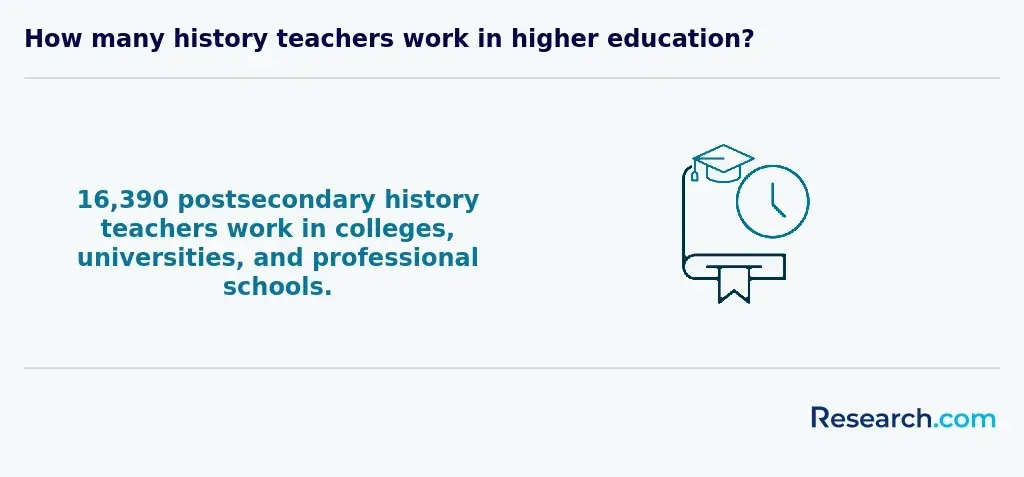
- College instructor or professor: Teachers who pursue advanced degrees may qualify for postsecondary roles at colleges and universities, including institutions such as the University of Kansas and Kansas State University. These jobs may involve teaching, advising, research, and academic service.
- Curriculum developer: Experienced teachers can help design social studies curriculum, align lessons with state standards, develop assessments, and support districtwide instruction.
- Educational administrator: Some history teachers move into department chair, instructional coach, assistant principal, principal, or district coordinator roles after gaining classroom experience and meeting administrative preparation requirements.
- Museum educator: Kansas historical sites and museums, including the Kansas Museum of History, may hire educators to design public programs, school visits, exhibits, and community learning experiences.
If your long-term interests shift, Kansas education experience may also support movement into related fields such as special education counselor careers, school leadership, instructional design, or community education. The best path depends on whether you want to stay student-facing, specialize in content, lead adults, or work outside the K-12 classroom.
| Career path | Best for teachers who want to... | Likely additional preparation |
| Classroom history teacher | Work directly with students and teach historical thinking | Kansas teaching license and social studies endorsement |
| Curriculum developer | Shape lessons, standards alignment, and instructional materials | Classroom experience and curriculum design expertise |
| Department chair or instructional coach | Mentor teachers and improve instruction across a school | Strong teaching record and leadership experience |
| Administrator | Lead school programs and manage staff, budgets, or operations | Administrative credential or graduate preparation |
| Museum educator | Teach history in public, informal, or community settings | Public history, museum education, or program development experience |
What professional development opportunities are available for history teachers in Kansas?
Professional development helps Kansas history teachers stay current with standards, instructional strategies, technology, student assessment, and inclusive teaching practices. It is also useful for career growth, license renewal planning, and leadership preparation.
- KSDE workshops and guidance: The Kansas State Department of Education provides resources tied to curriculum, assessment, educator effectiveness, and licensure expectations.
- History education conferences: Events such as the Kansas Council for History Education Conference can help teachers exchange lesson ideas, discuss social studies standards, and connect with colleagues.
- Online professional learning: Virtual workshops and webinars allow teachers to access training without traveling, which can be especially valuable for educators in rural districts.
- Local historical organizations: Museums, archives, historical societies, and universities may provide primary source training, local history materials, and classroom-ready resources.
- Professional learning communities: School-based and district-based PLCs allow teachers to examine student work, refine lessons, and share approaches for difficult historical topics.
When choosing professional development, look for programs that solve a real classroom problem. For example, a new teacher may need help with classroom discussion protocols, while an experienced teacher may benefit more from training in primary source analysis, curriculum leadership, or dual-credit instruction.
What are the best resources for history teachers in Kansas?
Strong history instruction depends on more than a textbook. Kansas history teachers need primary sources, state standards, civic education materials, local history collections, and professional networks that help students investigate the past rather than memorize isolated facts.
- Kansas State Department of Education: KSDE provides teaching standards, licensure information, curriculum guidance, and social studies resources, including alignment with civic and critical thinking goals.
- Kansas Council for History Education: This professional organization supports history teachers through networking, professional development, and teaching materials relevant to Kansas classrooms.
- Library of Congress: Teachers can use its extensive primary source collections, including photographs, letters, maps, newspapers, and government documents.
- PBS Learning Media: This platform offers videos, lesson plans, interactive activities, and multimedia resources that can support history and social studies instruction.
- Teacher communities and blogs: Online educator groups can be useful for lesson ideas and peer support, but teachers should evaluate shared materials for accuracy, bias, copyright, and alignment with Kansas standards.
- Local museums and archives: Kansas museums, historical societies, and community archives can help teachers connect national and global history to local places students recognize.
The best resources are accurate, age-appropriate, inclusive, and connected to a clear learning objective. Before using any material, ask whether it helps students analyze evidence, consider multiple perspectives, and explain historical significance.
What alternative career opportunities can complement a teaching career in Kansas?
History teachers often build transferable skills in communication, research, public speaking, curriculum design, youth development, and documentation. These skills can support work in museums, libraries, archives, tutoring, curriculum publishing, educational technology, community programming, and student support services.
Some educators also explore adjacent helping professions. For example, teachers interested in language development, communication disorders, and student intervention services may compare their current pathway with how to become a speech pathologist in Kansas. That route has different education and licensure expectations, so it should be evaluated as a separate professional track rather than a simple add-on to teaching.
How can interdisciplinary approaches benefit history teachers in Kansas?
Interdisciplinary teaching can make history more meaningful by connecting events, people, and ideas to literature, economics, geography, science, statistics, art, and civic life. For example, students might analyze population data during migration units, compare scientific innovation with industrial change, or use literature to understand social conditions in a particular era.
This approach is especially useful when students struggle to see why history matters. It also helps them practice evidence-based reasoning across subjects. Teachers who want a broader instructional toolkit may review related subject pathways, such as how to become a middle school math teacher in Kansas, to understand how different disciplines structure learning, assessment, and problem-solving.
How can I advance my career as a history teacher in Kansas?
Career advancement usually comes from combining classroom success with additional responsibility, specialized expertise, and continued education. Kansas history teachers may move into department leadership, curriculum coordination, instructional coaching, assessment design, school administration, dual-credit teaching, museum education, or teacher preparation roles.
Graduate education can help, especially when it is tied to a specific goal. A teacher seeking leadership may compare programs connected to masters in education careers, while a teacher focused on content expertise may consider history, social studies education, curriculum and instruction, or educational leadership programs. Before enrolling, ask whether the degree affects salary placement, licensure, advancement, or eligibility for the role you want.
Is Kansas a good state to teach in?
Kansas can be a good state for history teachers who value professional autonomy, community-based schools, lower housing costs, and a steady need for qualified educators. It may be less ideal for teachers whose top priority is working in a large metropolitan area or maximizing salary compared with higher-paying states.
- Teacher demand: Kansas continues to need educators across grade levels, from early childhood career opportunities to postsecondary roles. NCES data showed that 12.2% of Kansas teachers were considered “leavers” in 2021-2022, creating replacement needs that can affect hiring.
- Professional support: KSDE and local districts provide licensure guidance, professional development, mentoring, and teacher support initiatives.
- Union and advocacy presence: Teacher organizations can play a role in advocating for pay, benefits, classroom conditions, and educator voice.
- Burnout risk: Like teachers nationwide, Kansas educators may face workload pressure, limited resources, student needs, and compensation concerns. New teachers should ask direct questions about planning time, class size, mentoring, and administrative support.
- Rural and underserved schools: Some Kansas communities face deeper staffing shortages and budget limitations. These schools can offer meaningful work and stronger community ties, but teachers may need flexibility and resourcefulness.
Kansas also offers rural landscapes, outdoor recreation, lower traffic congestion, and relatively affordable living in many areas. Trade-offs may include extreme weather, longer drives between cities, and fewer large urban centers. The right decision depends on the district, not just the state.
| Potential advantage | Potential challenge | How to evaluate it |
| Need for qualified teachers | Shortages may reflect workload or retention issues in some districts | Ask why the position is open and how the district supports retention. |
| Lower cost of living in many areas | Salaries may be lower than in some other states | Compare salary, benefits, housing, commute, and debt payments together. |
| Community-based schools | Smaller districts may have fewer resources or course options | Ask about curriculum materials, technology, planning time, and department support. |
| Professional autonomy | Teachers still must meet standards and district expectations | Ask how much flexibility teachers have in selecting texts, sources, and projects. |
Using U.S. Bureau of Labor Statistics data, the chart below shows average teacher earnings by grade level.
Should I consider dual certification in elementary and history teaching?
Dual certification can be useful if you want broader job options or are open to teaching different age groups. A teacher who can support elementary instruction and social studies may be more flexible in districts with changing staffing needs. However, dual certification also means additional coursework, testing, field experiences, and potentially different teaching responsibilities.
This path makes the most sense if you genuinely enjoy working with younger students and are comfortable teaching multiple subjects, not only history. If you are considering that route, compare the requirements with how to become an elementary school teacher in Kansas before adding another endorsement or changing programs.
What are the challenges of teaching history to students in Kansas?
History teaching is rewarding, but it is not simple. Kansas teachers must help students evaluate evidence, discuss contested topics respectfully, meet standards, and understand multiple perspectives while working within local curriculum expectations.
- Serving students with different backgrounds and readiness levels: Kansas classrooms include students with varied cultural experiences, reading levels, political views, and prior knowledge. History teachers need strategies that make complex content accessible without oversimplifying it.
- Facilitating difficult conversations: Topics such as race, war, migration, civil rights, colonization, religion, and political conflict can lead to strong emotions. Teachers need clear discussion norms and evidence-based lesson design.
- Balancing accuracy and age-appropriate instruction: Good history teaching includes difficult truths, multiple perspectives, and careful sourcing. Teachers must select materials that are accurate, respectful, and suitable for students’ maturity levels.
- Responding to policy and community pressure: Public debates about curriculum can affect how teachers plan lessons. Educators should know district policies, communicate learning goals clearly, and document how lessons align with standards.
- Teaching source evaluation in the AI era: Students now encounter AI-generated summaries, social media claims, and misleading digital content. History teachers increasingly need to teach source credibility, context, bias, and corroboration.
| Common challenge | Better teaching response | Mistake to avoid |
| Students see history as memorization | Use primary sources, debates, maps, timelines, and local case studies. | Relying only on lectures and textbook questions. |
| Controversial topics create tension | Set discussion norms and require evidence-based claims. | Avoiding important topics entirely or allowing unsupported opinions to dominate. |
| Students struggle with reading historical texts | Teach vocabulary, sourcing, annotation, and context-building strategies. | Assuming students can interpret complex documents without support. |
| AI tools produce inaccurate summaries | Have students compare AI outputs against primary and scholarly sources. | Treating AI-generated content as automatically reliable. |
How do Kansas history teachers address diversity and inclusion in the classroom?
Kansas history teachers can support inclusive learning by using sources and narratives from multiple communities, including groups that have often been underrepresented in traditional curricula. This does not mean abandoning core historical knowledge. It means helping students understand that history is built from evidence, perspective, context, and interpretation.
Practical strategies include using local archives, inviting students to analyze community history, comparing multiple primary sources, teaching respectful discussion routines, and selecting materials that reflect varied racial, ethnic, geographic, economic, and cultural experiences. Teachers who want to strengthen literacy-rich and discussion-based instruction may also find useful parallels in how to become an English teacher in Kansas.
What are the Kansas teacher certification types and requirements?
Kansas offers several licensure pathways for candidates with different backgrounds. Some students follow a traditional teacher preparation route, while career changers, out-of-state teachers, substitute teachers, and educators seeking additional endorsements may use different options. Each route has its own documentation, testing, coursework, and experience requirements.
Because choosing the wrong pathway can delay employment or increase costs, candidates should compare requirements before enrolling in a program. For a more detailed overview, review Kansas teacher certification types and requirements.
How do history and art teaching career pathways differ in Kansas?
History and art teachers both need strong instructional skills, but their preparation and classroom work differ. History teachers focus heavily on evidence, chronology, civic reasoning, reading, writing, discussion, and interpretation. Art teachers focus on creative production, visual literacy, technique, critique, studio management, and artistic expression.
The certification process also differs because each subject has its own content expectations. A student deciding between these fields should compare daily classroom activities, portfolio or content requirements, assessment methods, and long-term career goals. Prospective art educators can review the requirements to be an art teacher in Kansas to understand how that pathway differs from social studies licensure.
How does Kansas support early-career history teachers?
Early-career history teachers in Kansas may receive support through district induction programs, mentoring, professional learning communities, state guidance, and professional organizations. The quality of support can vary by district, so new teachers should ask specific questions during the hiring process.
Kansas Mentoring and Induction Guidelines help frame how novice educators can be paired with experienced teachers. A strong mentor can help with lesson planning, grading, classroom management, parent communication, student engagement, and adapting history content for different learners.
New teachers may also benefit from professional learning communities where educators review student work, share resources, plan interdisciplinary lessons, and troubleshoot classroom challenges. For history teachers, these communities can be especially useful when designing source-based lessons or facilitating discussions about complex events.
Organizations such as the Kansas Historical Society may also offer events, archives, and materials that help teachers integrate Kansas history into broader national and global themes. These resources can make instruction more relevant for students who want to understand their own communities.
Teachers looking for an affordable path into the profession should also compare cost, program quality, licensure fit, and support services. A low-cost route is only useful if it leads to the license you need. For cost-focused planning, review the cheapest way to get teaching credential in Kansas.
What steps should I take to start my career as a history teacher in Kansas?
The best way to start is to work backward from the job you want. A future high school history teacher should choose a pathway that leads to the correct Kansas social studies endorsement, includes student teaching at the right grade level, prepares them for Praxis testing, and fits their budget and timeline.
- Choose your target grade level: Decide whether you want elementary, middle school, secondary, or another setting.
- Confirm the correct Kansas endorsement: Check KSDE requirements for the social studies or history-related area you plan to teach.
- Select an approved preparation program: Make sure the program is approved for Kansas licensure and includes supervised classroom experience.
- Plan for testing early: Identify the required Praxis exam, study timeline, fees, and retake policy.
- Apply for financial aid: Compare scholarships, grants, service programs, and school-based awards.
- Complete student teaching: Treat student teaching as both a licensure requirement and a job-search opportunity.
- Apply for licensure: Submit transcripts, program verification, test results, and required documents to KSDE.
- Prepare for district hiring: Build a resume, teaching portfolio, sample lesson, and interview examples tied to classroom management and historical thinking.
Students focused specifically on secondary teaching can review how to become a high school history teacher in Kansas for a more targeted path from education and training to employment.
Are private schools a viable option for history teachers in Kansas?
Private schools can be a realistic option for Kansas history teachers, especially for educators who want a mission-driven school environment, smaller communities, religious or independent school settings, or more curricular flexibility. However, private schools may use different hiring standards than public schools, and requirements can vary by institution.
Before accepting a private school role, ask whether Kansas licensure is required or preferred, how curriculum decisions are made, what salary and benefits are offered, and whether experience will count if you later apply to a public district. Candidates comparing this route should review private school teacher requirements in Kansas.
How can collaborating with school librarians enhance history teaching?
School librarians can be valuable partners for history teachers because they understand research tools, databases, source evaluation, copyright, media literacy, and student inquiry. Collaboration can help students move beyond quick internet searches and learn how to locate, compare, and cite credible historical evidence.
Effective partnerships may include co-teaching research lessons, curating primary source sets, building digital archives for classroom projects, supporting National History Day-style assignments, and teaching students how to evaluate AI-generated or web-based claims. Educators interested in library leadership and research support roles can explore how to become a school librarian in Kansas.
Common mistakes to avoid when becoming a history teacher in Kansas
- Choosing a program before checking licensure alignment: Not every history degree automatically leads to Kansas teacher licensure. Confirm that the program is state-approved for the endorsement you need.
- Assuming “history” and “social studies” requirements are interchangeable: Kansas testing and endorsement rules may use social studies categories, so verify the exact grade-level requirement.
- Ignoring total cost: Tuition is only one part of the expense. Add books, testing fees, transportation, student teaching costs, background checks, and lost work hours.
- Waiting too long to prepare for Praxis: Exam delays can postpone student teaching, licensure, or hiring.
- Relying only on rankings or reputation: A well-known school is not automatically the best fit. Compare licensure pass support, field placements, advising, cost, and graduate outcomes.
- Assuming salary outcomes are guaranteed: Pay depends on district schedules, education level, experience, benefits, and supplemental assignments.
- Overlooking rural and underserved districts: These schools may offer meaningful opportunities, but candidates should ask about mentoring, planning time, class load, and resources.
Questions to ask before choosing a Kansas history teacher preparation program
| Question | Why it matters |
| Is the program approved for Kansas teacher licensure? | Approval is essential if you want a direct path to public school teaching. |
| Which endorsement and grade level will I be eligible for? | History teaching may fall under social studies, and requirements differ by grade level. |
| What Praxis exam should I take, and when? | Testing timelines can affect student teaching and licensure. |
| Where will I complete fieldwork and student teaching? | Placement quality can influence classroom readiness and job connections. |
| What scholarships or service programs are available? | Financial aid can reduce debt, but service obligations must be understood. |
| How does the program support job placement? | Resume help, district partnerships, and interview preparation can improve your transition into teaching. |
| Will credits transfer if I change schools? | Transfer policies can affect time to completion and total cost. |
What Kansas history teachers often value in their careers
History teachers who stay in the profession often point to the same core rewards: helping students ask better questions, connecting local stories to national and global events, and watching young people become more thoughtful readers of evidence and public life. Many also value the collegial nature of school communities, especially when departments share materials and administrators protect planning time.
The work can be demanding. Lesson planning, grading, classroom discussion, family communication, and changing curriculum expectations require stamina. The teachers most likely to thrive are usually those who enjoy both history content and the daily work of helping adolescents learn, not only one or the other.
Related Articles for Nearby States
- 2027 How to Become a History Teacher in Nebraska: Requirements & Certification
- 2027 How to Become a History Teacher in Oklahoma: Requirements & Certification
- 2027 How to Become a History Teacher in Missouri: Requirements & Certification
- 2027 How to Become a History Teacher in Colorado: Requirements & Certification
- 2027 How to Become a History Teacher in Iowa: Requirements & Certification
- 2027 How to Become a History Teacher in Arkansas: Requirements & Certification
- 2027 How to Become a History Teacher in Texas: Requirements & Certification
- 2027 How to Become a History Teacher in South Dakota: Requirements & Certification
- 2027 How to Become a History Teacher in Wyoming: Requirements & Certification
- 2027 How to Become a History Teacher in Minnesota: Requirements & Certification
References:
- Education Commission of the States (n.d.). Teacher License Reciprocity: State Profiles. Retrieved from https://www.ecs.org/teacher-license-reciprocity-state-profiles
- Leung-Gagné, M. et al. (July 2024). Where Is Teaching Most Attractive and Equitable? https://learningpolicyinstitute.org/product/where-is-teaching-most-attractive-equitable-brief
- Kansas State Department of Education (n.d.). Teacher Licensure. https://www.ksde.org/Agency/Division-of-Learning-Services/Teacher-Licensure-TL
- Kansas State Department of Education (n.d.). Teacher Salaries 2021-2022. https://www.ksde.org/Portals/0/School%20Finance/reports_and_publications/Teacher%20Salary%20Intro.pdf
- National Center for Education Statistics (n.d.). Teachers' status by state: Percentage distribution of public school teacher stayers, movers, and leavers, by state: 2021–22. https://nces.ed.gov/surveys/ntps/estable/table/ntps/tfs2122_80601_cf1s
- National Education Association (April 2024). 2024 Reports Educator Pay in America. https://www.nea.org/resource-library/educator-pay-and-student-spending-how-does-your-state-rank/teacher
- Praxis (n.d.). Tests Required by Kansas. https://praxis.ets.org/state-requirements/kansas-tests.html
- Tan, T. et al. (August 2024). State Teacher Shortages 2024 Update. Learning Policy Institute. https://learningpolicyinstitute.org/media/4412/download?inline&file=State_Vacancy_2024_RESOURCE.pdf
- Zippia (June 2024). History Teacher Salary. https://www.zippia.com/salaries/history-teacher
- Zippia (July 2024). Job outlook for history teachers in the United States. https://www.zippia.com/history-teacher-jobs/trends
Key Insights
- History teachers in Kansas typically pursue licensure through social studies, so candidates should verify the exact endorsement and Praxis test for their intended grade level.
- The traditional pathway includes a bachelor’s degree, a state-approved teacher preparation program, required Praxis testing, recency requirements, and a KSDE licensure application.
- Kansas offers several routes for out-of-state teachers, including exchange, nonrenewable, substitute, and professional licenses, and the Interstate Teacher Mobility Compact may reduce some requirements for eligible applicants.
- Financial aid can make the pathway more affordable, especially through Kansas service scholarships, adult learner funding, private scholarships, and school-based awards.
- Salary varies widely by district, experience, degree level, supplemental duties, and benefits; candidates should compare total compensation rather than base pay alone.
- Kansas can be a strong fit for teachers who value community-centered schools and professional support, but applicants should ask about workload, mentoring, planning time, and classroom resources before accepting a position.
- The best preparation programs are not just affordable; they are approved for Kansas licensure, provide strong field placements, prepare students for Praxis, and support the transition into teaching.
Other Things You Should Know About Becoming a History Teacher in Kansas
In 2027, you can teach history in Kansas without a teaching degree through alternative pathways, such as the Restricted Teaching License Program. This program allows individuals with a bachelor's degree in a related field to teach while completing education coursework and obtaining a full teaching license.
Kansas teacher certification requires a fingerprint-based state and FBI criminal background check through the Kansas State Department of Education and a cleared record review. Applicants submit fingerprints during the licensure process, and schools may also require local district screening before hiring.
To become a certified history teacher in Kansas in 2027, you must pass the Praxis exams, specifically the Praxis Core Academic Skills for Educators and the Praxis History Subject Assessment. These exams assess your teaching skills and subject knowledge.


