
2027 How to Become a Middle School Math Teacher in West Virginia: Requirements & Certification

Co-Founder and Chief Data Scientist
Becoming a middle school math teacher in West Virginia requires more than being good at math. You need the right degree or approved preparation pathway, passing exam scores, classroom experience, background clearance, and a state teaching certificate that matches the grade level and subject you want to teach. This guide explains the full process for aspiring teachers, career changers, current educators considering another endorsement, and paraprofessionals planning their next step.
You will learn how West Virginia certification works, what education and student teaching requirements usually apply, how salaries compare, where technology and STEM priorities are changing math instruction, and how to avoid costly mistakes when choosing a teacher preparation program. The goal is simple: help you make a practical, informed decision before investing time and money in a teaching credential.
Quick Answer: How do you become a middle school math teacher in West Virginia?
To become a middle school math teacher in West Virginia, you generally need to earn a bachelor’s degree, complete a state-approved educator preparation program, pass the required Praxis exams for teaching and middle school mathematics, complete student teaching or an approved field experience, pass fingerprinting and background checks, and apply for certification through the West Virginia Department of Education. Candidates should confirm current requirements directly with WVDE because certification rules, testing requirements, and application procedures can change.
| Requirement | What it means for aspiring teachers |
| Bachelor’s degree | You need at least an undergraduate degree, usually connected to education, mathematics, or an approved teacher preparation route. |
| Educator preparation | Your program must prepare you for classroom teaching and meet West Virginia approval standards. |
| Praxis exams | You must pass required assessments, including the subject-area exam for middle school mathematics. |
| Student teaching | You need supervised experience in a real classroom before becoming fully certified. |
| Background clearance | Fingerprinting and background checks are required before licensure. |
| State application | You submit documentation, scores, transcripts, and fees through the state certification process. |
Key Things You Should Know About Becoming a Middle School Math Teacher in West Virginia
- West Virginia has reported ongoing need for qualified middle school math educators, especially as schools emphasize STEM instruction and subject-specific teaching capacity.
- Salary expectations vary by district, experience, education level, and local pay schedules. According to data from August, 2024, the median salary for a middle school math teacher in West Virginia is $60,849.
- Most middle school math teachers in West Virginia earn between $49,416 and $75,659 annually, while the lowest 10% earn $39,006 and the highest 10% earn $89,143.
- Teacher preparation should be evaluated carefully. Accreditation, state approval, Praxis alignment, student teaching placement quality, and transfer-credit policies matter more than convenience alone.
- Technology, adaptive learning tools, data-informed instruction, and AI-supported classroom workflows are changing how math teachers plan lessons, identify learning gaps, and personalize support.
- What are the steps to becoming a middle school math teacher in West Virginia?
- What are the educational requirements for becoming a middle school math teacher in West Virginia?
- What is the certification and licensing process for a middle school math teacher in West Virginia?
- How important is teaching experience and what are the internship opportunities for middle school math teachers in West Virginia?
- What are the West Virginia standards and curriculum requirements for teaching middle school math?
- What is the job market like and what are the salary expectations for middle school math teachers in West Virginia?
- What professional development and continuing education opportunities are available for middle school math teachers in West Virginia?
- What are effective classroom management strategies and teaching methods for middle school math teachers in West Virginia?
- What are the career advancement opportunities and specializations for middle school math teachers in West Virginia?
- What other teaching careers are available in West Virginia?
- What is the work-life balance like for middle school math teachers in West Virginia?
- Can integrating arts and creativity enhance math instruction in West Virginia?
- What legal and ethical considerations must West Virginia middle school math teachers follow?
- Can affordable online degree programs advance my teaching career?
- What resources and support are available for new middle school math teachers in West Virginia?
- How is technology shaping the future of math education in West Virginia?
- How can I reduce the cost of obtaining a teaching credential in West Virginia?
- How can I transition from middle school to high school math teaching in West Virginia?
- What are the renewal and continuing education requirements for my teaching credential in West Virginia?
- What alternative certification pathways and career transitions can expand my teaching opportunities in West Virginia?
- Can dual certification in math and music enhance my teaching career in West Virginia?
- Is transitioning to elementary education a viable strategy to expand my teaching career in West Virginia?
- How can I stay updated with evolving educational policies in West Virginia?
What are the steps to becoming a middle school math teacher in West Virginia?
The path is manageable if you treat it as a sequence of decisions: choose the right program, complete the required training, pass exams, document your experience, and submit a complete certification application. Missing one step can delay your license, so it is worth building a checklist early.
- Choose the correct preparation route. Traditional candidates usually enroll in a bachelor’s program with teacher preparation. Career changers may investigate alternative certification options if they already hold a degree and have strong math preparation.
- Earn the required degree. A bachelor’s degree is the common baseline. Your coursework should include both mathematics content and education-focused preparation.
- Complete an approved teacher preparation program. The program should cover instructional planning, adolescent development, assessment, classroom management, inclusive teaching, and math-specific pedagogy.
- Finish student teaching or an approved clinical experience. West Virginia candidates typically complete supervised teaching before certification. The experience helps you prove that you can manage a classroom, explain math clearly, and assess student learning.
- Pass the required Praxis assessments. Candidates must satisfy state testing rules, including the relevant middle school mathematics assessment and any required professional knowledge exams.
- Complete fingerprinting and background checks. These checks are part of the state’s process for protecting students and confirming candidate eligibility.
- Apply for West Virginia certification. Submit transcripts, exam scores, preparation-program verification, background documentation, and applicable fees through the state process.
- Plan for renewal from the beginning. Certification is not a one-time task. Teachers must stay current through continuing education and renewal requirements.
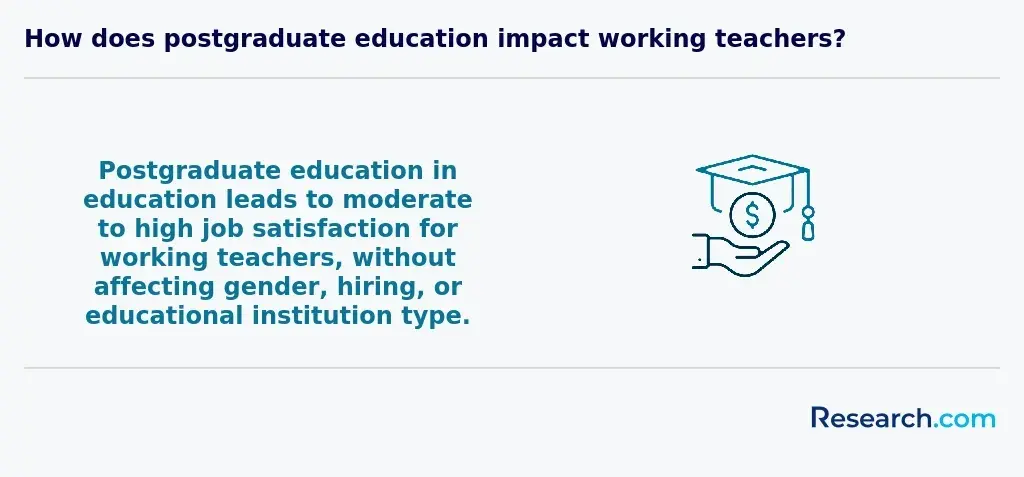
Advanced study is not required for every entry-level teaching role, but it can support long-term mobility. Postgraduate education has been associated with moderate to high job satisfaction among working teachers without being affected by gender, hiring type, or educational institution type, shown below.
| Stage | Main action | Decision point |
| Before enrollment | Verify program approval and accreditation | Will the program qualify you for West Virginia certification? |
| During college | Complete math and education coursework | Does the curriculum align with middle school math standards and Praxis expectations? |
| Clinical preparation | Complete supervised student teaching | Will you receive meaningful feedback from a qualified mentor teacher? |
| Testing | Pass required Praxis exams | Do you have enough time for retakes if needed? |
| Licensure | Submit a complete application | Have you gathered transcripts, scores, background checks, and program verification? |
What are the educational requirements for becoming a middle school math teacher in West Virginia?
West Virginia middle school math teachers need both content knowledge and teaching skill. A strong candidate understands algebraic reasoning, proportional relationships, geometry, statistics, and number systems, but also knows how to help early adolescents learn, ask questions, recover from mistakes, and build confidence.
- Bachelor’s degree: The standard route begins with a bachelor’s degree, preferably in education, mathematics education, mathematics, or a related field that includes an approved teacher preparation component.
- Mathematics coursework: Candidates should expect college-level math preparation that supports the concepts taught in grades 6 through 8.
- Education coursework: Teacher preparation typically includes lesson design, assessment, classroom management, special education foundations, literacy across content areas, educational psychology, and methods for teaching mathematics.
- Clinical practice: Student teaching gives candidates supervised classroom experience before they become the teacher of record.
- Accreditation and state approval: The safest choice is a program that clearly states it is approved for teacher licensure in West Virginia. If you attend an out-of-state or online program, ask whether it directly meets West Virginia requirements.
If you are comparing certification rules across states, Research.com’s guide to Washington teacher certification can help you understand how state requirements may differ.
Questions to ask before choosing a teacher preparation program
| Question | Why it matters |
| Is the program approved for West Virginia teacher certification? | A degree alone may not qualify you for licensure if the preparation program is not recognized by the state. |
| Which Praxis exams does the program prepare students to take? | Exam alignment can reduce delays and additional study costs. |
| Where are student teaching placements located? | Placement quality affects your readiness, references, and hiring network. |
| Can previous college credits transfer? | Transfer policies can significantly change your timeline and total cost. |
| Does the program support online or hybrid learners? | Flexibility matters for working adults, but field placements must still meet state expectations. |
What is the certification and licensing process for a middle school math teacher in West Virginia?
West Virginia teacher certification is governed by state policy and administered through the West Virginia Department of Education. Candidates should review current WVDE instructions before applying because application forms, Praxis codes, and documentation rules may change.
- Complete an eligible preparation pathway. Most candidates finish an approved educator preparation program connected to a bachelor’s degree. Alternative routes may be available for qualified career changers.
- Meet testing requirements. Praxis exams are used to verify professional knowledge and subject competency. Middle school math candidates must satisfy the exam requirements that apply to their endorsement area.
- Submit official documentation. Expect to provide transcripts, test scores, program-completion verification, and identification information.
- Complete required background checks. Fingerprinting and background clearance are standard parts of the process.
- Monitor your application electronically. Certification communication is handled online, so use an email address you check regularly.
- Plan for processing time. The application process can take up to 90 days due to the volume received, so candidates should avoid waiting until a job offer is imminent.
Teachers who want to strengthen their understanding of adolescent learning and development may also compare related graduate options, including online child development education benefits, when planning long-term professional growth.
Traditional route vs. alternative route
| Pathway | Best for | Key trade-off |
| Traditional bachelor’s program with teacher preparation | First-time college students and candidates who know early that they want to teach | Structured support, but it may take longer if you already have a degree. |
| Post-baccalaureate or alternative certification | Career changers with prior college coursework and math strengths | Can be more direct, but candidates must carefully confirm eligibility and support. |
| Master’s-level teacher preparation | Degree holders seeking initial licensure plus graduate study | May improve professional depth, but tuition and time commitments can be higher. |
How important is teaching experience and what are the internship opportunities for middle school math teachers in West Virginia?
Teaching experience is essential because middle school classrooms require both instructional skill and strong relationship-building. Students at this age are developing independence, confidence, and abstract reasoning. A candidate who can solve equations but cannot explain concepts, redirect behavior, or adjust instruction will struggle.
- Student teaching: Certification candidates complete supervised classroom practice, often over a full semester or equivalent clinical placement. The article’s source material also notes a minimum of 12 weeks of student teaching.
- University partnerships: Colleges such as West Virginia University and Marshall University may coordinate placements with school districts for teacher candidates enrolled in their programs.
- Alternative pathway fieldwork: Career changers may complete supervised experiences through alternative certification programs while building classroom skill.
- Mentor feedback: Strong candidates actively request feedback on lesson pacing, questioning, differentiation, classroom routines, and assessment design.
- Virtual and hybrid experiences: Online teaching simulations and remote observation tools can supplement preparation, but they should not replace state-required clinical practice unless explicitly approved.
When evaluating internships or student teaching placements, ask whether you will teach full lessons, observe multiple teaching styles, work with diverse learners, analyze student data, and receive documented performance feedback. These experiences can make a major difference in your first year as a teacher.
What are the West Virginia standards and curriculum requirements for teaching middle school math?
Middle school math teachers in West Virginia teach within the state’s mathematics standards for grades 6 through 8. These standards are designed to move students from concrete numerical reasoning toward algebraic thinking, proportional reasoning, functions, geometry, and data interpretation.
- Grade 6 focus: Students commonly work with ratios, rates, number systems, expressions, equations, and early statistical reasoning.
- Grade 7 focus: Instruction expands into proportional relationships, rational numbers, expressions, equations, geometry, probability, and data-based reasoning.
- Grade 8 focus: Students move toward linear equations, functions, irrational numbers, geometric transformations, and preparation for high school algebra.
- Real-world application: Effective instruction connects math to measurement, budgeting, data, local issues, science, technology, and everyday problem-solving.
- Assessment alignment: Teachers must design lessons and assessments that reflect the state’s expected grade-level knowledge and skills.
Teachers who want to broaden school-based qualifications beyond math sometimes consider additional education fields. For example, candidates interested in school media and information literacy can compare best value online library science degrees.
Middle school math topics and teaching priorities
| Topic area | What teachers need to do well |
| Ratios and proportional reasoning | Use visual models, tables, graphs, and real-life examples to connect procedures with meaning. |
| Expressions and equations | Help students understand variables, equivalence, and equation-solving rather than memorizing isolated steps. |
| Functions and linear relationships | Connect patterns, graphs, equations, and verbal descriptions. |
| Geometry | Use diagrams, measurement tools, transformations, and spatial reasoning activities. |
| Statistics and probability | Teach students to interpret data, evaluate claims, and communicate conclusions clearly. |
What is the job market like and what are the salary expectations for middle school math teachers in West Virginia?
The job market for middle school math teachers depends on district needs, retirements, local budgets, geographic location, and the availability of certified candidates. Math is a high-priority subject in many school systems, so candidates with strong preparation, a valid endorsement, and classroom readiness may find opportunities across multiple districts.
According to data from August, 2024, the median salary for a middle school math teacher in West Virginia is $60,849. Salary ranges vary widely: the lowest 10% of earners make $39,006, while the highest 10% earn $89,143. Most middle school math teachers in West Virginia earn between $49,416 and $75,659 annually, shown in the graph below.
| Salary measure | Amount |
| Lowest 10% | $39,006 |
| Typical range | $49,416 to $75,659 |
| Median salary | $60,849 |
| Highest 10% | $89,143 |
Before accepting a position, review the district salary schedule, benefits, retirement contributions, health insurance costs, supplemental pay, class size expectations, planning periods, mentoring support, and commute time. A slightly higher salary may not be the best offer if the workload, travel, or support conditions are poor.
If you are considering graduate study to improve your qualifications, Research.com’s guide to top online teaching programs can help you compare flexible options.
Is becoming a middle school math teacher in West Virginia worth it?
It can be worth it for candidates who enjoy working with early adolescents, can explain math patiently, and want a stable public-service career with community impact. It may not be the right fit if you dislike classroom management, need immediate high earnings, or prefer work with limited evening planning and grading. The strongest candidates enter the profession with realistic expectations: teaching is meaningful, but it is also demanding.
What professional development and continuing education opportunities are available for middle school math teachers in West Virginia?
Professional learning is part of a teacher’s career, not an optional add-on. Middle school math teachers need to stay current with curriculum updates, instructional technology, special education practices, assessment design, and strategies for helping students who are below grade level.
- WVDE professional learning: The West Virginia Department of Education offers teacher learning resources, including eLearning opportunities. The WVLearns eLearning courses have transitioned to the Canvas platform, and enrollment is limited to two courses at a time.
- District training: Local school systems often provide professional development tied to curriculum adoption, assessment tools, intervention programs, and instructional priorities.
- Math education organizations: Professional groups can provide workshops, conferences, lesson resources, and networking with other math teachers.
- Graduate coursework: Teachers may pursue master’s degrees, endorsements, or certificates to deepen subject expertise or prepare for leadership roles.
- Peer collaboration: Grade-level teams and professional learning communities help teachers analyze student data, improve lessons, and create common assessments.
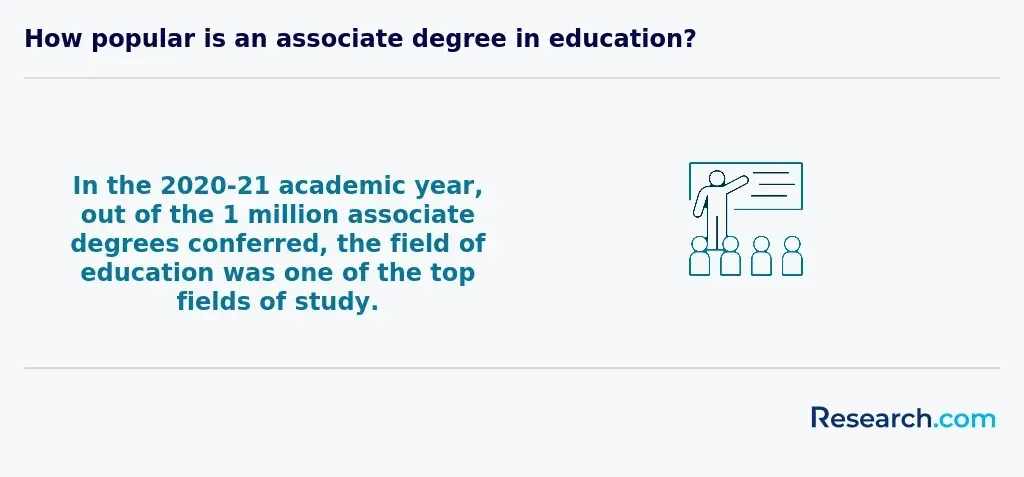
You do not necessarily need an advanced degree to begin teaching. In AY 2020-21, education was one of the top fields among the approximately one million Associate’s degrees conferred in the USA, shown below.
How to choose useful professional development
| Professional development option | Choose it when you need to... |
| Math content workshops | Strengthen understanding of concepts you teach or prepare for advanced endorsements. |
| Technology training | Use learning platforms, calculators, graphing tools, or adaptive programs more effectively. |
| Classroom management training | Improve routines, behavior systems, transitions, and student accountability. |
| Special education and differentiation training | Support students with IEPs, 504 plans, language needs, or significant learning gaps. |
| Graduate education | Pursue advancement, leadership opportunities, or deeper instructional expertise. |
What are effective classroom management strategies and teaching methods for middle school math teachers in West Virginia?
Middle school math classrooms work best when expectations are clear, lessons are active, and students receive frequent feedback. Many students arrive with math anxiety or uneven foundational skills, so teachers need routines that make participation safe and productive.
- Teach routines explicitly. Model how students enter class, begin warmups, use materials, ask for help, work in groups, and submit assignments.
- Use short checks for understanding. Exit tickets, mini-whiteboards, quick polls, and error-analysis tasks help teachers respond before misconceptions become permanent.
- Balance direct instruction with problem-solving. Students need clear explanations, but they also need time to reason, discuss strategies, and apply concepts.
- Make mistakes useful. Error analysis helps students see math as a reasoning process rather than a test of speed or memorization.
- Differentiate without lowering expectations. Provide scaffolds, manipulatives, visual models, sentence frames, and extension tasks while keeping grade-level goals visible.
- Use local and practical contexts. Budgeting, sports data, weather patterns, maps, construction, agriculture, and community statistics can make math feel relevant.
Common classroom mistakes and better alternatives
| Common mistake | Better approach |
| Moving too quickly from example to independent practice | Use guided practice, checks for understanding, and worked examples before releasing students. |
| Only rewarding fast answers | Recognize reasoning, persistence, explanation quality, and multiple solution paths. |
| Using technology as a substitute for teaching | Use digital tools to support feedback, visualization, practice, and intervention. |
| Ignoring math anxiety | Create low-risk participation routines and normalize revision and correction. |
| Teaching procedures without concepts | Connect formulas and steps to models, patterns, and real-world meaning. |
What are the career advancement opportunities and specializations for middle school math teachers in West Virginia?
A middle school math teaching role can lead to several career directions. Some teachers remain in the classroom and become highly skilled instructional leaders. Others move into coaching, curriculum, administration, or additional certification areas.
- Lead teacher or department chair: Experienced teachers may coordinate curriculum, mentor colleagues, and guide math department planning.
- Instructional coach: Math coaches support teachers with lesson design, data analysis, intervention strategies, and instructional improvement.
- Special education or gifted education specialization: Additional credentials can help teachers serve specific student populations more effectively.
- Technology integration: Teachers who become skilled with digital tools, data systems, and blended learning may support schoolwide innovation.
- Administration: Teachers interested in school leadership often pursue graduate study in educational leadership or administration.
- Curriculum development or policy work: Teachers with strong content knowledge can contribute to standards alignment, assessment design, and district-level curriculum decisions.
According to data from the National Center for Education Statistics, the average wages of public elementary and secondary school teachers in the United States in 2020-2021 varied by highest degree earned. Teachers with a bachelor’s degree earned an average salary of $52,500, while teachers with a master’s degree earned $67,000 on average. Educators with an education specialist degree had an average wage of $70,500, and teachers with a doctorate earned the highest average salary of $71,300, shown below.
This national data illustrates why some teachers pursue advanced education, but it should not be read as a guaranteed salary increase for every individual. Pay depends on district salary schedules, state policy, years of service, degree recognition rules, and available positions.
What other teaching careers are available in West Virginia?
If middle school math is not the right long-term fit, West Virginia educators can consider other instructional roles. Early childhood and elementary positions require a different skill set, with more emphasis on foundational literacy, numeracy, social development, and family communication. Candidates interested in younger learners can review Research.com’s guide on how to become a preschool teacher in West Virginia.
What is the work-life balance like for middle school math teachers in West Virginia?
Work-life balance depends heavily on district culture, class size, planning time, grading load, extracurricular responsibilities, and first-year support. New teachers often spend significant time outside school preparing lessons, contacting families, grading assignments, and learning district systems. The workload usually becomes more manageable as teachers build reusable materials and stronger classroom routines.
Teachers who want a different type of school-based role may compare responsibilities and expectations in related fields, such as how to become a special education teacher in West Virginia. Special education can be deeply rewarding, but it also includes compliance, documentation, and individualized planning responsibilities that candidates should understand before switching paths.
Can integrating arts and creativity enhance math instruction in West Virginia?
Creative instruction can help students see mathematical structure, especially when abstract concepts are represented visually, physically, or through design. Geometry, symmetry, scale, patterns, graphs, and data visualization all lend themselves to art-connected lessons. The key is to use creativity to deepen math understanding, not to decorate assignments without instructional purpose.
Teachers interested in interdisciplinary approaches can explore career pathways related to arts for ideas about visual communication, design thinking, and creative problem-solving that may translate into classroom activities.
What legal and ethical considerations must West Virginia middle school math teachers follow?
West Virginia teachers are responsible for student safety, fair treatment, confidentiality, mandated reporting, professional conduct, and compliance with state and district policies. These responsibilities begin during student teaching and continue throughout a teaching career.
- Valid certification: Teachers must hold the appropriate state certificate for the subjects and grade levels they teach.
- Professional conduct: Teachers must follow state law, district policy, and professional standards for ethical behavior.
- Mandatory reporting: West Virginia teachers are legally obligated to report suspected child abuse or neglect under West Virginia Code §49-2-803.
- Student privacy: Teachers must protect confidential student information, including grades, disability status, family circumstances, and records.
- Equity and inclusion: Ethical teaching requires fair access to instruction, respectful treatment, and appropriate support for diverse learners.
- Assessment integrity: Teachers must follow testing rules and avoid practices that compromise student data or assessment validity.
Career changers who need to complete an undergraduate credential more quickly may compare accelerated bachelor's degree online options, but they should verify whether any program satisfies West Virginia teacher certification rules before enrolling.
Can affordable online degree programs advance my teaching career?
Online degrees can help teachers add content knowledge, prepare for leadership, or build complementary skills while continuing to work. However, affordability should not be the only factor. For teachers, the most important questions are whether the institution is accredited, whether the program is recognized for licensure or advancement, whether credits transfer, and whether the coursework fits your district’s salary schedule or endorsement rules.
Some educators use low-cost online programs to strengthen communication, writing, and interdisciplinary teaching skills. For example, a teacher comparing humanities-based options might review the cheapest online English degree, especially if stronger writing instruction would support math explanations, word-problem comprehension, and cross-curricular planning.
What resources and support are available for new middle school math teachers in West Virginia?
Support during the first years of teaching can determine whether a new teacher stays in the profession. Middle school math teachers should look for districts that provide mentoring, planning support, curriculum resources, behavior guidance, and opportunities to collaborate with experienced educators.
- Mentorship: New teachers benefit from assigned mentors who can help with lesson pacing, parent communication, classroom routines, grading systems, and district expectations.
- Professional organizations: The West Virginia Council of Teachers of Mathematics provides networking and professional learning opportunities for math educators.
- WVDE resources: The state education department provides guidance on teaching, learning, standards, and professional development.
- District teams: Grade-level teams and math departments can help new teachers avoid isolation and improve lesson quality.
- Online lesson tools: Digital repositories, assessment platforms, and math visualization tools can reduce planning time when used thoughtfully.
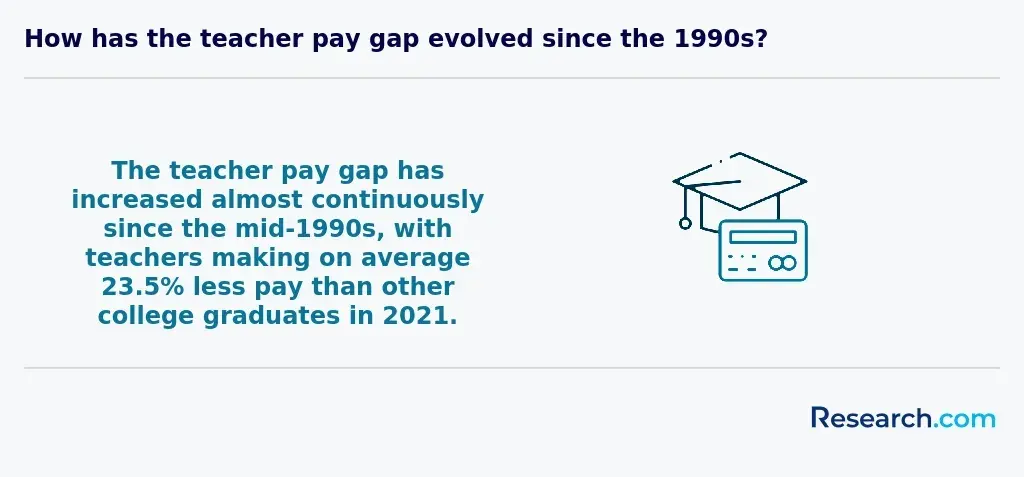
Teacher support matters in part because compensation concerns remain a national issue. Teachers were paid 23.5% less than other college graduates in 2021 compared to the 1990s, as shown below.
What to look for in a first teaching job
| Factor | Why it matters |
| Mentor assignment | New teachers need someone available for practical, day-to-day questions. |
| Planning time | Math teachers need time to design lessons, review data, and prepare interventions. |
| Curriculum materials | A clear curriculum reduces first-year overload and improves instructional consistency. |
| Behavior support | Strong schoolwide systems make classroom management more sustainable. |
| Professional culture | Collaborative schools help teachers improve faster and feel less isolated. |
How is technology shaping the future of math education in West Virginia?
Technology is changing middle school math instruction by giving teachers more ways to visualize concepts, personalize practice, monitor progress, and support students who need extra help. Used well, technology can make math more interactive. Used poorly, it can become passive screen time.
- Adaptive learning tools: Programs can adjust practice based on student responses and help teachers identify skill gaps.
- Interactive math platforms: Tools such as Khan Academy and Desmos can support graphing, modeling, visualization, and independent practice.
- Data dashboards: Assessment platforms help teachers spot patterns, group students, and plan targeted reteaching.
- AI-supported workflows: AI may assist with drafting practice problems, generating examples, summarizing data, or providing feedback, but teachers must review accuracy and protect student privacy.
- Virtual professional learning: Webinars and online communities make it easier for teachers in rural or geographically dispersed areas to access training.
Teachers should align technology use with standards and instructional goals. Comparing teaching requirements in other states, such as elementary school teacher requirements in Wisconsin, can also help educators see how technology expectations may vary across certification contexts.
How can I reduce the cost of obtaining a teaching credential in West Virginia?
Teacher preparation can become expensive if candidates repeat coursework, choose a non-approved program, pay for unnecessary credits, or delay exams. The best cost-saving strategy is to confirm requirements before enrolling.
- Verify state approval first. Do not assume an online education degree leads to West Virginia licensure.
- Maximize transfer credits. Ask for an official transfer evaluation before committing.
- Compare total cost, not just tuition. Include fees, books, testing, background checks, travel to field placements, and lost work time.
- Ask about scholarships and shortage-area incentives. Some support may be available through institutions, districts, or state programs.
- Prepare seriously for Praxis exams. Retakes cost time and money.
For a focused cost-reduction overview, see Research.com’s guide to the cheapest way to get a teaching credential in West Virginia.
How can I transition from middle school to high school math teaching in West Virginia?
Moving from middle school to high school math usually requires meeting the certification or endorsement requirements for the higher grade level. High school math often involves algebra, geometry, advanced algebra, trigonometry, statistics, pre-calculus, or other advanced courses, so teachers may need additional content preparation and testing.
Before transitioning, compare your current endorsement with the high school requirements, review Praxis expectations, ask your district about staffing needs, and pursue professional development in advanced math instruction. Research.com’s guide on how to become a high school math teacher in West Virginia explains the pathway in more detail.
What are the renewal and continuing education requirements for my teaching credential in West Virginia?
Keeping a West Virginia teaching credential active requires more than completing initial certification. Teachers must follow the renewal process, document approved professional learning, and stay current with state policy. Because renewal rules can change, teachers should monitor WVDE guidance and district communications well before their certificate expires.
For a broader explanation of certificate categories and renewal expectations, review Research.com’s guide to teaching certificate requirements in West Virginia.
What alternative certification pathways and career transitions can expand my teaching opportunities in West Virginia?
Alternative certification may help qualified adults move into teaching without completing a traditional undergraduate education program, but eligibility depends on state rules, academic background, subject knowledge, and district needs. Current teachers may also expand their options by adding endorsements in another subject or grade level.
For example, a math teacher interested in broadening into social studies could explore the pathway to become a high school history teacher in West Virginia. Before pursuing any transition, confirm testing requirements, coursework requirements, and whether the new endorsement improves your employment prospects.
Can dual certification in math and music enhance my teaching career in West Virginia?
Dual certification can make sense for teachers who genuinely want to teach in more than one area and are prepared to meet both sets of requirements. A math-and-music combination may be useful in smaller schools where staffing flexibility matters, and it can support creative interdisciplinary teaching. However, dual certification requires additional coursework, assessments, and planning, so it should be pursued for a clear career purpose.
Educators considering this route can start by reviewing music teacher education requirements in West Virginia and comparing them with current math certification obligations.
Is transitioning to elementary education a viable strategy to expand my teaching career in West Virginia?
Transitioning from middle school math to elementary education can expand job options, but it changes the nature of the work. Elementary teachers usually teach multiple subjects and focus heavily on foundational reading, writing, numeracy, social development, and family communication. A middle school math teacher may need additional preparation to meet elementary certification requirements.
If this path interests you, compare certification differences, field experience expectations, and assessment requirements in Research.com’s guide on how to become an elementary teacher in West Virginia.
How can I stay updated with evolving educational policies in West Virginia?
Teachers should build a habit of checking official sources rather than relying only on social media, outdated program pages, or informal advice. Certification, curriculum, testing, and renewal policies can shift, and missing an update can delay licensure or renewal.
- Review West Virginia Department of Education announcements regularly.
- Subscribe to district and state education communications when available.
- Participate in professional organizations and math teacher networks.
- Ask your certification office or HR department to confirm requirements in writing.
- Keep copies of transcripts, Praxis scores, professional development records, and certificate documents.
Teachers comparing subject-specific requirements can also review West Virginia English teacher certification requirements to understand how endorsement expectations differ across disciplines.
Key Insights
- The standard path to becoming a middle school math teacher in West Virginia includes a bachelor’s degree, approved educator preparation, Praxis testing, student teaching, background clearance, and state certification.
- Program choice is one of the most important decisions. Confirm state approval, accreditation, Praxis alignment, field placement quality, and transfer-credit rules before enrolling.
- According to August, 2024 salary data, the median salary for a middle school math teacher in West Virginia is $60,849, with most earning between $49,416 and $75,659 annually.
- Teaching experience matters. Student teaching, mentor feedback, and classroom practice are essential for learning how to manage middle school learners and explain math effectively.
- Technology and AI can support math instruction, but they do not replace teacher judgment. Effective teachers use digital tools to clarify concepts, monitor progress, and personalize support.
- Continuing education is part of the career. Teachers should plan for renewal, professional development, and possible endorsements from the beginning.
- Career changers and current teachers have options, including alternative certification, high school math, special education, elementary education, music, history, English, and leadership pathways, but each route has its own certification requirements.
- The biggest mistakes are choosing a program without verifying licensure eligibility, focusing only on tuition, underestimating Praxis preparation, ignoring student teaching quality, and assuming salary outcomes are automatic.
References:
- American Board for Certification of Teacher Excellence. (2024). American Board for Certification of Teacher Excellence.
- Bureau of Labor Statistics. (2023). Middle school teachers. Bureau of Labor Statistics.
- Bureau of Labor Statistics. (2023). Occupational employment and wages, May 2023: Middle school teachers. Bureau of Labor Statistics.
- Data USA. (2023). Education. Data USA.
- Data USA. (2023). Mathematics teacher education. Data USA.
- National Center for Education Statistics. (2023). The condition of education 2023. National Center for Education Statistics.
- Salary.com. (2024). Middle school math teacher salary in West Virginia. Salary.com.
- West Virginia Department of Education. (2024). Teacher professional learning. West Virginia Department of Education.
Other Things You Should Know About Becoming a Middle School Math Teacher in West Virginia
To become a middle school math teacher in West Virginia, you must obtain a teaching certificate from the West Virginia Department of Education. This typically involves completing a bachelor’s degree in education with a focus on mathematics, passing the required Praxis exams, and completing a student teaching internship.
In addition, you may need to undergo a background check and fulfill any continuing education requirements to maintain your certification.
In 2027, to become a middle school math teacher in West Virginia, candidates must hold at least a bachelor's degree with a major in mathematics or education. Additionally, they must complete a state-approved teacher preparation program, pass the Praxis exams, and apply for initial certification through the West Virginia Department of Education.
In 2027, the typical pathway to becoming a middle school math teacher in West Virginia involves earning a bachelor's degree in education with a math focus, passing the Praxis exams, and obtaining a teaching license. Additional steps include completing a teacher preparation program and securing a position at a local school.


