
2027 How to Become a Substitute Teacher in Pennsylvania

Co-Founder and Chief Data Scientist
Becoming a substitute teacher in Pennsylvania is often the fastest way to enter a classroom, test whether teaching is the right career, or keep working in education after retirement. It can also be a practical route for people who already have a bachelor’s degree but do not yet hold a full Pennsylvania teaching certificate. The opportunity is real: limited full-time teaching openings can make education careers competitive, while a substitute teacher shortage affecting nearly 30% of school districts has increased the need for qualified, reliable classroom coverage.
This guide explains how substitute teaching works in Pennsylvania in 2026, including the education and clearance requirements, emergency permits, training expectations, pay range, renewal rules, daily responsibilities, legal limits, and ways to turn substitute experience into a longer-term education career. It is written for career changers, recent graduates, retired educators, college students in teacher preparation programs, and anyone comparing substitute teaching with other paths into Pennsylvania schools.
Quick answer: How do you become a substitute teacher in Pennsylvania?
To become a substitute teacher in Pennsylvania, you generally need a bachelor’s degree from an accredited college or university, required background clearances, state-mandated training, and either a valid teaching certificate or a district-sponsored emergency permit. School districts, intermediate units, and substitute staffing agencies may add their own onboarding steps, so the exact process depends on where you apply.
| Step | What you need to do | Why it matters |
| Confirm eligibility | Verify that you have a bachelor’s degree or meet a district-approved pathway, such as enrollment in a Pennsylvania teacher preparation program. | Most Pennsylvania substitute roles require proof that you meet the state’s education standard. |
| Choose where to apply | Apply through a school district, intermediate unit, or substitute teacher agency. | Each employer controls hiring, onboarding, pay rates, and assignment procedures. |
| Complete clearances | Obtain the FBI Criminal Background Check, PA Criminal Background Check, and PA Child Abuse Clearance History. | These clearances are mandatory before working with students. |
| Secure the right credential | Use an active teaching certificate if you have one, or have the district request an emergency permit when allowed. | The credential determines what assignments you may accept and how long you may serve. |
| Finish required training | Complete pre-hire training, Act 126 Child Abuse Recognition and Reporting Training, and district orientation. | Training prepares you for classroom management, safety responsibilities, and local procedures. |
| Start accepting assignments | Use the district’s call system, online platform, or agency portal to select daily or long-term jobs. | Substitute teaching is flexible, but steady work depends on availability, reliability, and school demand. |
Key Things to Know About Becoming a Substitute Teacher in Pennsylvania
- A bachelor’s degree is the standard entry requirement. Pennsylvania generally expects substitute teachers to hold a bachelor’s degree or higher, although some supervised or student-teacher pathways may be available depending on the district and credential type.
- Pay varies widely by location and assignment type. Substitute teachers in Pennsylvania generally earn between $19,046 and $69,166 per year, with most earning between $31,100 and $50,100 annually.
- Training is not optional. New substitutes must complete required training before entering classrooms, including preparation in classroom expectations, student safety, and mandated reporting responsibilities.
- What are the basic requirements to become a substitute teacher in Pennsylvania?
- What training is required for first-time substitute teachers in Pennsylvania?
- How do you apply to become a substitute teacher in Pennsylvania?
- How much do substitute teachers in Pennsylvania make?
- How do you renew or maintain a substitute teaching certificate in Pennsylvania?
- What are the responsibilities of a substitute teacher in Pennsylvania?
- How flexible is a substitute teacher’s schedule in Pennsylvania?
- What are the current licensing requirements for substitute teachers in Pennsylvania?
- What challenges do substitute teachers face in Pennsylvania?
- How long does it take to transition from substitute teaching to full certification in Pennsylvania?
- What are the benefits received by a substitute teacher in Pennsylvania?
- What legal rights do substitute teachers have in Pennsylvania?
- What are the career advancement opportunities for substitute teachers in Pennsylvania?
- What do substitute teachers in Pennsylvania say about their careers?
- What additional certifications can enhance your substitute teaching career in Pennsylvania?
- Common mistakes to avoid before accepting substitute assignments
- References
What are the basic requirements to become a substitute teacher in Pennsylvania?
Pennsylvania substitute teaching requirements depend on whether you already hold a teaching certificate, are applying through an emergency permit, or are entering through a district-supported pathway. The safest first step is to identify the district or intermediate unit where you want to work, then confirm which credential route they use for candidates with your background.
- Minimum education: A bachelor’s degree from an accredited college or university is generally required. Pennsylvania allows flexibility in the subject area of the degree, so your major does not always have to be education.
- Teaching certificate: Many substitute roles require a valid Pennsylvania teaching certificate, such as an intern, Level I, or Level II certificate.
- Inactive certificate rules: Candidates with inactive certificates may substitute teach up to 90 days annually. Emergency permits can allow day-to-day substitute work, but these permits are limited to 20 consecutive days and are used when districts cannot locate qualified substitutes.
- Mandatory clearances: You must pass an FBI Criminal Background Check, PA Criminal Background Check, and PA Child Abuse Clearance History before working with students.
- Alternative entry options: Some districts allow individuals who are still completing degree requirements or student teaching to substitute under supervision, especially when transcripts show continued progress.
- District or agency application: Substitute teacher agencies can simplify paperwork, training, and assignment access, but district-specific rules still apply.
Keep official transcripts, clearance receipts, identification documents, and certification records organized before you apply. If you are using substitute teaching as a stepping stone after graduate study, this work can also help you clarify what to do with a masters in education while building school-based experience in Pennsylvania.
| Candidate type | Likely pathway | Important limitation |
| Certified Pennsylvania teacher | Use an active intern, Level I, or Level II certificate. | Assignment length rules still apply based on the role and district need. |
| Bachelor’s degree holder without certification | District may request an emergency permit. | The district or intermediate unit must sponsor the permit request. |
| Inactive certificate holder | May substitute under inactive certificate provisions. | Annual day limits apply. |
| Teacher preparation student | May qualify through supervised or district-approved options. | Districts may request transcripts or proof of progress. |
| Retired educator | May return for shortage-related substitute roles. | Pension-related rules should be verified with the employer and PSERS-approved status. |
What training is required for first-time substitute teachers in Pennsylvania?
First-time substitute teachers in Pennsylvania must complete training that addresses classroom readiness, student safety, mandated reporting, and local school procedures. Do not treat training as a paperwork formality. It is what helps you walk into an unfamiliar classroom, keep students safe, follow the teacher’s plan, and know what to do when a situation escalates.
- Pre-credential or pre-hire preparation: Complete required pre-hire instruction in classroom management, basic instructional strategies, professional expectations, and student engagement. Some providers, including Kelly Education, offer state-compliant substitute training.
- Act 126 Child Abuse Recognition and Reporting Training: Pennsylvania requires training on recognizing and reporting child abuse. This training is required every five years and should be completed early enough to satisfy employer onboarding expectations.
- District or intermediate unit orientation: Attend orientation sessions that explain local school policies, attendance systems, emergency procedures, technology tools, and reporting expectations.
- District-specific modules: Be prepared for additional training in topics such as diversity and inclusion, special education awareness, student privacy, school safety, or online learning procedures.
- Ongoing updates: Stay current with refresher courses, clearance timelines, and annual processes if you work through emergency permits, intermediate units, or guest teacher programs.
In 2023, states such as California, Texas, and New York employed the largest numbers of short-term substitute teachers. Virginia and North Carolina also reported high employment levels, showing that substitute staffing needs are not limited to one region. For Pennsylvania candidates, the larger point is practical: districts need substitutes who can arrive prepared, manage a room responsibly, and protect instructional time when regular teachers are absent.
| Training area | What it helps you handle | What to ask before you start |
| Classroom management | Student behavior, transitions, attention, and respectful routines. | Does the district provide grade-level examples or only general training? |
| Mandated reporting | Child abuse recognition and reporting obligations under Act 126. | How does the district want reports documented and escalated? |
| Technology systems | Attendance, lesson materials, online platforms, and substitute assignment portals. | Will I receive login access before my first assignment? |
| Special education awareness | Accommodations, IEP-related responsibilities, and student support needs. | How are substitute teachers informed of required accommodations? |
| Emergency procedures | Fire drills, lockdowns, medical incidents, and urgent communication. | Where are emergency plans located in each classroom? |
How do you apply to become a substitute teacher in Pennsylvania?
The application process is usually local, even though many requirements come from the state. That means two neighboring Pennsylvania districts may use different portals, staffing agencies, orientation dates, pay calendars, and permit procedures. Start with the employer you want to work for and follow its sequence closely.
- Choose your district, intermediate unit, or staffing agency. Decide where you want to work based on commute, grade levels, assignment availability, pay rate, and onboarding timeline.
- Confirm your credential route. Ask whether the employer accepts your active certificate, inactive certificate, emergency permit eligibility, guest teacher pathway, or teacher preparation program status.
- Collect your documents. Prepare official transcripts, identification, proof of work authorization, certification records if applicable, and any forms required by the employer.
- Complete the required background checks. Submit the Pennsylvania State Police Criminal Record Check, Child Abuse History Clearance, and FBI Criminal History Record.
- Have the district request an emergency permit if needed. If you do not hold a Pennsylvania teaching certificate, a district may request a Type 06 Emergency Permit on your behalf. This permit can allow substitute service for one school year and may be renewable.
- Finish training and orientation. Complete guest teacher training, district onboarding, Act 126 training, technology setup, payroll steps, and any online teaching preparation required.
- Start with manageable assignments. If you are new, consider accepting familiar grade levels or schools first, then expand once you understand routines and expectations.
A Pennsylvania substitute teacher who completed her education locally described the process as manageable but detail-heavy. She said the most important move was contacting the district early because each employer had its own expectations. Clearances took coordination, and the emergency permit was the point where the process began to feel real. Once onboarding started, technology access and remote assignment procedures became just as important as the paperwork.
If you are interested in broader school roles beyond classroom substitute teaching, a master's of library science online may support future work in school library, information, and educational resource settings.
How much do substitute teachers in Pennsylvania make?
Substitute teacher pay in Pennsylvania depends on the district, assignment length, grade level, local staffing demand, and whether you are hired directly or through an agency. Substitute teachers typically earn between $19,046 and $69,166 annually, with most earning between $31,100 and $50,100. These figures should be viewed as a range, not a guarantee, because many substitutes work variable schedules.
Pay is often higher for long-term assignments, high-need schools, frequent availability, or specialized roles. A substitute who accepts assignments consistently across the school year may earn substantially more than someone who works only occasional days. However, income can fluctuate when school is closed, assignments are scarce, or you restrict yourself to a small number of schools.
Pennsylvania also compares poorly with other states on substitute teacher salary. The state ranks 50th out of 50 for substitute teacher salaries, which places it at the bottom nationally. National averages tend to sit in the low-to-mid $30,000s, so Pennsylvania candidates should evaluate local pay carefully before relying on substitute teaching as a primary income source.
If higher long-term pay and benefits are your main goals, use substitute teaching strategically: build classroom references, decide which grade levels fit you, and consider a credential pathway into full-time teaching. Comparing the most affordable online education degrees can help you assess whether earning an education degree is financially realistic.
| Pay factor | How it can affect earnings | Decision tip |
| Daily vs. long-term assignments | Long-term work may provide steadier income but usually requires more planning, grading, and continuity. | Ask whether long-term roles pay differently from day-to-day jobs. |
| District location | Pay can differ significantly between districts based on budgets and staffing pressure. | Compare nearby districts before applying to only one employer. |
| Agency vs. direct employment | Staffing agencies may simplify scheduling, while districts may have different pay and benefit structures. | Review the pay calendar, deductions, and eligibility rules before accepting work. |
| Availability | Substitutes who accept frequent assignments usually have more earning potential. | Keep your calendar updated and respond quickly to openings. |
| Education level | Higher education may support better long-term career options and, in some cases, higher earnings. | Do not pursue an expensive degree without comparing certification value and expected job outcomes. |
The data below shows a relationship between education level and substitute teacher earnings. Individuals with a doctorate earn about $7,324 more per year than those with only a high school diploma. Each increase in educational attainment is associated with a wage increase.
How do you renew or maintain a substitute teaching certificate in Pennsylvania?
Maintaining eligibility depends on whether you work under an emergency permit, an active teaching certificate, an inactive certificate provision, or an intermediate unit program. Missing a renewal step can interrupt your ability to accept assignments, so track deadlines before the summer hiring cycle begins.
- Emergency permit renewal: Emergency permits are renewed annually through the Pennsylvania Department of Education’s Teacher Information Management System (TIMS). Your school district or intermediate unit must sponsor the request.
- Renewal fee: Emergency permit renewal usually requires a non-refundable fee of around $25.
- Supporting documentation: Some permit types, such as a Type 01 emergency permit, may require proof of enrollment in a teacher preparation program or evidence that required credit hours have been completed.
- Act 48 compliance for certified teachers: Certified educators must meet Act 48 requirements every five years by completing six semester credits, six PDE-approved continuing professional education credits, or 180 hours of PDE-approved training.
- Record tracking: Act 48 credits should be documented in the Professional Educator Record Management System (PERMS).
- Paraprofessional and special education substitute renewal: Some substitutes complete an annual electronic renewal through an intermediate unit, such as IU13, without a renewal fee.
- Employer notifications: Districts and intermediate units often send renewal instructions in early summer. Do not wait for the first school week to check your status.
| Credential or status | Maintenance requirement | Risk if ignored |
| Emergency permit | Annual renewal through TIMS with district or intermediate unit sponsorship. | You may lose access to assignments for the new school year. |
| Certified educator | Act 48 requirements every five years. | Your certification status may become an obstacle to continued work. |
| Intermediate unit substitute | Follow the IU’s electronic renewal and documentation process. | Your assignment access may be paused until renewal is complete. |
| Inactive certificate holder | Monitor annual day limits and district documentation rules. | You may exceed allowable service limits without realizing it. |
What are the responsibilities of a substitute teacher in Pennsylvania?
A substitute teacher’s main job is to protect learning time when the regular teacher is absent. In practice, that means you must manage the room, follow the lesson plan, supervise students safely, document what happened, and communicate clearly with school staff.
- Follow lesson plans: Teach the assigned material as closely as possible so the class stays aligned with the regular teacher’s schedule.
- Manage student behavior: Apply school rules consistently and maintain a classroom environment where students can work.
- Take attendance and keep records: Record attendance, note participation issues, and document incidents according to school procedures.
- Supervise students throughout the day: Monitor students during class, hallway transitions, lunch, recess, dismissal, and other assigned duties.
- Communicate with staff: Report urgent issues to administrators and leave useful notes for the regular teacher.
- Support instruction when plans are limited: Use appropriate strategies to help students continue working if a lesson plan is incomplete or unclear.
- Adapt quickly: Be ready for different grade levels, subjects, school cultures, and last-minute schedule changes.
- Respect special education requirements: Follow accommodations and Individualized Education Plans (IEPs) when the school provides that information.
- Maintain confidentiality: Protect student information and avoid discussing private matters outside appropriate school channels.
- Complete mandated training: Finish required instruction, including Act 126 child abuse recognition and reporting training.
- Keep clearances current: Maintain required background checks and clearance documentation as required by Pennsylvania law and employer policy.
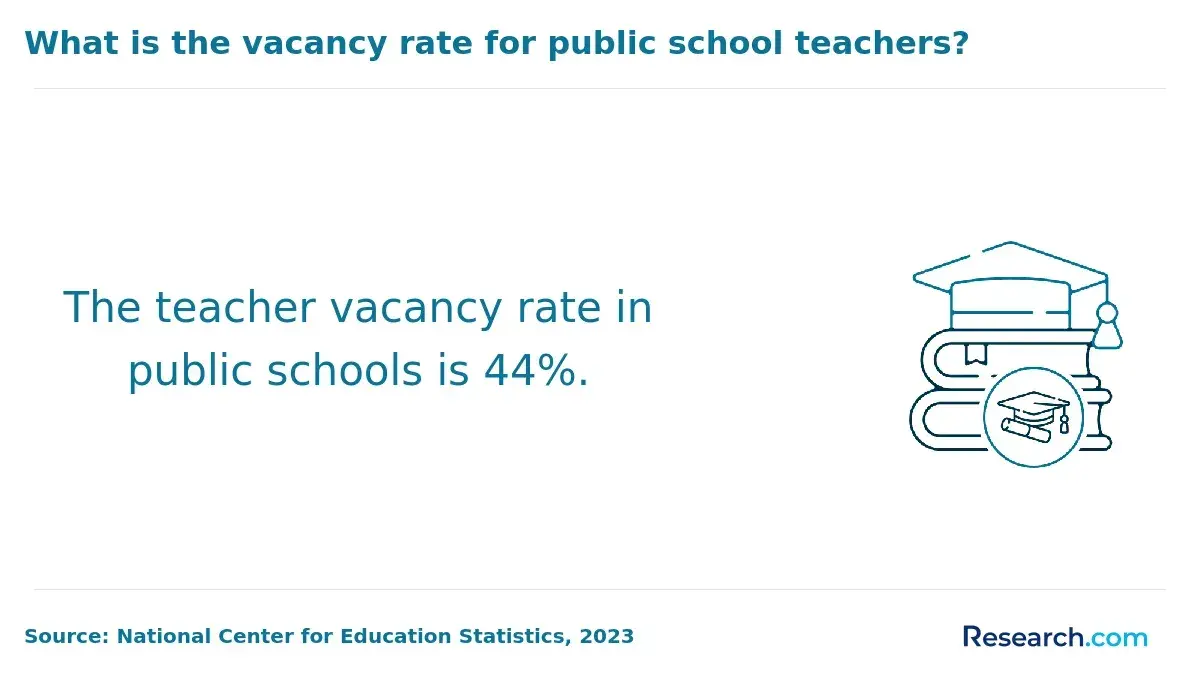
Strong substitutes are not expected to be experts in every subject. They are expected to be professional, observant, calm, and reliable. The image below provides additional context on teacher vacancy rates, which helps explain why substitutes continue to play an important role in Pennsylvania and across the country.
How flexible is a substitute teacher’s schedule in Pennsylvania?
Substitute teaching in Pennsylvania can be highly flexible because many assignments are day-to-day. You can often choose whether to accept available jobs, which schools to work in, and how many days per week fit your schedule. This makes the role attractive for retirees, graduate students, parents, career changers, and people who want part-time work in education.
The trade-off is income uncertainty. Flexibility works best when you can tolerate uneven pay periods or when substitute teaching supplements another source of income. Long-term assignments offer more consistency but usually reduce flexibility because you are expected to report regularly, follow a classroom routine, and maintain continuity for students.
One Pennsylvania substitute teacher described the schedule as something he had to learn, not something that felt easy immediately. At first, he checked assignment systems at the wrong times and missed openings. Over time, he learned when districts posted jobs, which schools called frequently, and how to reserve days for family commitments. His takeaway was simple: the role gives you control, but you need a system for using that control well.
| Work style | Best fit | Potential drawback |
| Occasional day-to-day substitute | People who want flexible, part-time classroom experience. | Income may be inconsistent. |
| Frequent day-to-day substitute | Candidates who want steady exposure across schools and grade levels. | Schedules can change quickly and require fast decisions. |
| Long-term substitute | Future teachers who want deeper classroom responsibility. | Less scheduling freedom and more instructional accountability. |
| Agency-based substitute | People who want access to multiple schools through one system. | Benefits, pay, and procedures may differ from direct district employment. |
What are the current licensing requirements for substitute teachers in Pennsylvania?
Pennsylvania substitute licensing rules are designed to balance classroom safety, instructional quality, and staffing shortages. Candidates typically need a bachelor’s degree, required background clearances, required training, and either a recognized teaching certificate or an eligible emergency permit. The credential you use affects assignment length, renewal steps, and whether the district must sponsor your application. For a focused breakdown, see Research.com’s guide to Pennsylvania substitute teacher licensing requirements.
What challenges do substitute teachers face in Pennsylvania?
Substitute teaching can be rewarding, but it is not always easy. Common challenges include unpredictable assignments, inconsistent earnings, limited preparation time, unfamiliar classroom routines, and different rules from one school to another. New substitutes may also find it difficult to manage behavior when students test boundaries or when lesson plans are incomplete.
The best way to reduce these challenges is to prepare before the first assignment. Learn each district’s procedures, carry a simple backup activity appropriate for the grade level, arrive early, ask office staff about urgent information, and document the day clearly for the regular teacher. If you plan to combine substitute teaching with remote or digital instruction, learning how to be an online teacher in Pennsylvania can help you understand technology expectations and virtual classroom routines.
How long does it take to transition from substitute teaching to full certification in Pennsylvania?
The timeline from substitute teaching to full Pennsylvania teacher certification depends on your starting point. A certified teacher returning to the classroom has a different path than a bachelor’s degree holder who still needs teacher preparation coursework, exams, supervised experience, and state application steps. Substitute teaching can strengthen your application and help you choose a grade level or subject area, but it does not automatically replace certification requirements.
If your goal is a permanent teaching position, ask districts which certification areas are hardest to staff, whether they hire long-term substitutes into full-time roles, and whether your current coursework aligns with Pennsylvania requirements. For more detail on timelines, review How long does it take to get a teaching certificate in Pennsylvania?.
What are the benefits received by a substitute teacher in Pennsylvania?
The main benefits of substitute teaching are flexibility, classroom experience, and access to school networks. Traditional employee benefits may be limited or conditional, so candidates should ask specific questions before assuming health insurance, retirement contributions, or paid time off are available.
- Voluntary employee benefits: Some districts and agencies may offer access to health insurance, 401(k) plans, or life insurance, but eligibility often depends on hours worked or the employer’s benefit rules.
- Flexible schedule: You can choose assignments around school, family, retirement, or other work commitments.
- Classroom experience: Substitute teaching helps you practice classroom management, observe school cultures, and decide whether teaching is a good long-term fit.
- Professional networking: Reliable substitutes build relationships with principals, office staff, teachers, and department leaders who may later influence hiring decisions.
- Pension-friendly work for some retirees: Retired educators may be able to work without pausing their Pennsylvania pension when the employer is PSERS-approved.
- Competitive daily pay in some districts: Daily rates commonly range from $90 to $150, and some districts may offer more depending on the assignment.
For some candidates, substitute teaching is most valuable as a bridge into a degree or certification pathway. A bachelor’s degree, or enrollment in at least 60 credits in a Pennsylvania teacher preparation program, can be essential depending on the route. If early childhood education is your target, compare how an online bachelors degree in early childhood education may support future salary and role options.
What legal rights do substitute teachers have in Pennsylvania?
Substitute teachers in Pennsylvania are covered by rules that define who may serve, how long assignments may last, and when emergency provisions can be used. These rules protect students while giving districts flexibility during staffing shortages.
- Certification flexibility: Substitutes with active Pennsylvania certificates or comparable out-of-state certificates can work up to 20 days per assignment without additional permits.
- Extended service for inactive certificates: Individuals with inactive certifications may substitute for up to 180 days per school year, doubling the previous limit.
- Emergency permit access: Candidates with a bachelor’s degree but no certification may qualify for renewable one-year emergency permits for day-to-day substitute work.
- Retiree employment protections: Retired teachers can be rehired during shortages without affecting their pension annuities when filling emergency substitute roles.
- Multiple placements: Substitutes may accept different assignments as long as no single placement exceeds 20 days unless a long-term permit is in place.
- Temporary roles for prospective teachers: Individuals who have completed all requirements except the PRAXIS exam may fill temporary and long-term substitute positions while waiting for certification.
- Online assignment rules: Certification and assignment limits apply to online substitute teaching as well as in-person assignments.
- Classroom monitor limits: Classroom monitors may support pre-planned online work, but they cannot create lessons or grade student work and must meet basic education or paraprofessional requirements.
Legal rights and assignment limits can change based on credential type and district need, so keep written confirmation from the employer before accepting an extended placement.
What are the career advancement opportunities for substitute teachers in Pennsylvania?
Substitute teaching can become more than temporary work if you use it deliberately. It can help you build references, identify shortage areas, test grade levels, and move toward certification or specialized education roles.
- Full teacher certification: Many substitutes pursue Pennsylvania certification after gaining classroom experience and confirming that teaching is the right long-term career.
- Long-term substitute roles: Consistent performance can lead to longer placements, which provide deeper instructional experience and stronger references.
- Specialized instruction: Building expertise in special education, ESL, or a high-need subject area can make you more useful to districts.
- School-based support roles: Some substitutes move into paraprofessional, intervention, library, instructional support, or administrative support roles.
- Educational leadership: With additional education and experience, some educators move toward leadership or administrative positions.
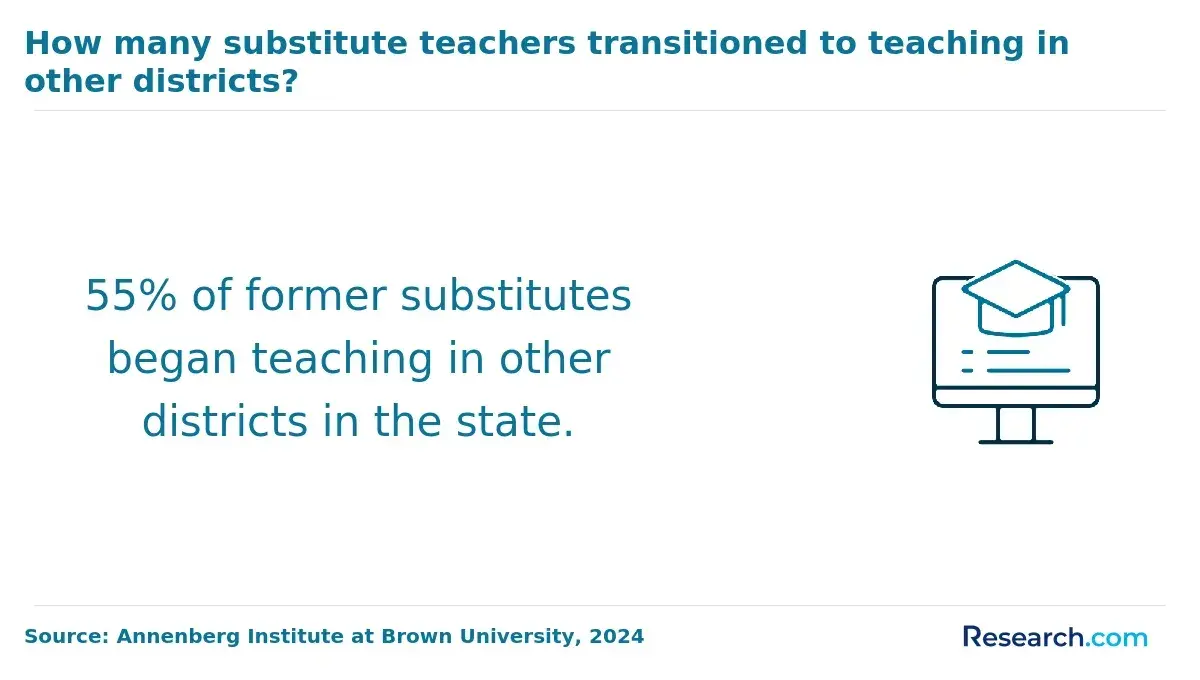
The image below shows substitute teacher movement across districts, which illustrates how the role can expose educators to different school systems and career opportunities.
If leadership is part of your long-term plan, exploring the shortest doctor of education online degrees may help you compare advanced education options for future administrative or leadership roles.
What do substitute teachers in Pennsylvania say about their careers?
- My substitute teaching preparation at Cheltenham High School gave me a strong starting point for working in different Pennsylvania classrooms. The most useful part was learning practical strategies that helped me adjust quickly when I moved between subjects and grade levels. Substitute teaching let me explore school environments while gaining confidence. I also found the work meaningful because even a single day can help students stay on track. - Jerry
- After training at Central Dauphin High School, substitute teaching gave me a realistic entry into education while I continued developing professionally. I appreciated the variety of assignments because they helped me understand students from different backgrounds and strengthen my classroom skills. The work also made me feel connected to the local community because I could support students directly when their regular teachers were away. - Thalia
- Completing the substitute teacher program at Upper Merion Area High School helped me understand how adaptable I needed to be. Working as a local substitute showed me the pace and complexity of Pennsylvania schools. The role pushed me to solve problems quickly, respond to different learning needs, and think seriously about future career opportunities in education. - Shawn
What additional certifications can enhance your substitute teaching career in Pennsylvania?
Additional credentials can make substitute teachers more competitive for long-term assignments, hard-to-fill classrooms, and eventual full-time roles. Special education, ESL, and subject-specific certifications can be especially useful because they show districts that you can support more specialized instructional needs. These credentials may also strengthen your classroom confidence by giving you better tools for lesson delivery, student support, and behavior management.
Before pursuing another credential, confirm that it aligns with Pennsylvania requirements and the jobs you want. A certification that is valuable in one district may not be the fastest route to your target role in another. For a broader overview, review Pennsylvania teacher certification requirements.
Common mistakes to avoid before accepting substitute assignments
| Mistake | Why it can hurt you | Better approach |
| Applying without checking credential rules | You may spend time on an application only to learn that the district uses a different permit or certificate pathway. | Ask the district which substitute credential route applies to your background before submitting everything. |
| Assuming all districts pay the same | Substitute pay can vary by district, assignment type, and employer structure. | Compare pay rates, pay dates, agency fees, and long-term assignment rates. |
| Focusing only on flexibility | A flexible schedule can also mean unpredictable income. | Decide how many days you need to work each month and whether assignment availability supports that goal. |
| Ignoring renewal deadlines | Expired permits, clearances, or training records can stop you from accepting jobs. | Create a calendar for Act 126, Act 48, clearance, and permit-related deadlines. |
| Taking difficult assignments too early | New substitutes can become overwhelmed if they begin with unfamiliar grades or high-need settings without support. | Start with schools or grade levels where you feel prepared, then expand gradually. |
| Leaving poor notes for the regular teacher | Weak communication can reduce trust and future call-backs. | Leave clear notes on attendance, completed work, behavior issues, and anything that needs follow-up. |
Questions to ask before you choose a Pennsylvania substitute teaching employer
- What credential route do you use for candidates with a bachelor’s degree but no teaching certificate?
- Will the district or intermediate unit sponsor the emergency permit if I need one?
- What are the daily and long-term substitute pay rates?
- How often are substitutes paid?
- Are benefits available, and what hours or assignment thresholds determine eligibility?
- Which training modules must be completed before the first assignment?
- How are assignments posted: phone calls, online portal, app, or agency system?
- Can I choose preferred schools, grades, or subjects?
- What support is available if a class has no lesson plan or a behavior issue escalates?
- Do long-term substitutes receive planning time, curriculum access, or mentor support?
Related Articles for Nearby States
- 2027 How to Become a Substitute Teacher in New Jersey
- 2027 How to Become a Substitute Teacher in Delaware
- 2027 How to Become a Substitute Teacher in Maryland
- 2027 How to Become a Substitute Teacher in New York
- 2027 How to Become a Substitute Teacher in West Virginia
- 2027 How to Become a Substitute Teacher in Ohio
- 2027 How to Become a Substitute Teacher in Virginia
- 2027 How to Become a Substitute Teacher in Connecticut
- 2027 How to Become a Substitute Teacher in Rhode Island
- 2027 How to Become a Substitute Teacher in Massachusetts
References:
- All Education Schools. (2025). Pennsylvania teacher certification guide. https://www.alleducationschools.com/teacher-certification/pennsylvania/
- Intermediate Unit 8. (2025). Guest substitute teacher program. https://www.iu08.org/page/guest-substitute-teacher-programopen-dropdown
- Pennsylvania Department of Education. (2025). Substitute teaching in Pennsylvania. https://www.pa.gov/agencies/education/programs-and-services/educators/certification/substitute-teaching-in-pennsylvania.html
- ReadySetHire. (2025, May 9). Substitute teacher salaries & top paying companies in Doylestown, PA. https://www.readysethire.com/job-search/position-salary-in-city/substitute-teacher-salary-in-doylestown-pa
- Swing Education. (2025). What you need to know about earning your substitute teacher certificate. https://swingeducation.com/sub-success-resource-center/what-you-need-to-know-about-earning-your-substitute-teacher-certificate/
- Teaching Certification. (2025). Pennsylvania teacher certification renewal. https://teaching-certification.com/teaching/pennsylvania-teacher-certification-renewal/
Key Insights
- Substitute teaching is one of the most accessible classroom entry points in Pennsylvania, but it is still regulated. Most candidates need a bachelor’s degree, background clearances, required training, and the correct certificate or emergency permit.
- Your employer matters. Districts, intermediate units, and agencies may differ in pay, onboarding speed, assignment access, benefits, and long-term opportunities.
- Flexibility is the biggest advantage and the biggest trade-off. You can often choose when to work, but income may be inconsistent unless you accept assignments frequently.
- Pay should be evaluated locally. Pennsylvania substitute teachers generally earn between $19,046 and $69,166 annually, with most earning between $31,100 and $50,100, but district rates and assignment length can change your actual income.
- Substitute teaching can support a permanent education career. Use the role to build references, learn school systems, identify high-need areas, and decide whether full Pennsylvania teacher certification is worth pursuing.
Other Things to Know About Becoming a Substitute Teacher in Pennsylvania
The Pennsylvania Department of Education sets the certification rules and reviews educator credentials for substitute teaching. Districts and approved hiring agencies use those state rules to determine whether an applicant meets the required background checks, education level, and certification or permit standards before assigning classroom duties.
To become a substitute teacher in Pennsylvania in 2027, you must have a bachelor's degree, pass a criminal background check, and obtain a valid teaching certificate or emergency permit issued by the Pennsylvania Department of Education.


