2027 How to Become a Private School Teacher in New York: Requirements & Certification

Co-Founder and Chief Data Scientist
Teaching in a New York private school can be a good fit if you want more school-level flexibility than many public systems offer, smaller learning communities, mission-driven education, or a role tied to a specific subject, faith tradition, pedagogy, or student population. The path is not always the same as becoming a public school teacher in New York, and that difference is where many applicants get confused: private schools may not always require state certification, but they still expect strong subject knowledge, classroom readiness, background clearance, and a clear fit with the school’s culture.
This guide explains how to become a private school teacher in New York, what credentials may help you compete, how long the process can take, what costs to expect, how salaries compare, and how to evaluate whether this career path is worth pursuing. It is designed for recent graduates, career changers, current educators, and subject-matter professionals who want to teach in independent, religious, or other nonpublic schools.
Quick Answer: How do you become a private school teacher in New York?
To become a private school teacher in New York, you usually need at least a bachelor’s degree, strong knowledge of the subject or grade level you want to teach, a clean background check, and teaching-related experience. State teacher certification is often not required in the same way it is for public school teachers, but many private schools prefer certified candidates or applicants with graduate education, student teaching, tutoring, coaching, or classroom experience. The strongest applicants research individual school requirements, tailor their materials to each school’s mission, and show evidence of instructional skill, professionalism, and student-centered teaching.
Key Things You Should Know About Becoming a Private School Teacher
- Private school hiring can be more flexible than public school hiring. New York private schools often have more discretion over whether they require state certification, which can help career changers and subject experts enter teaching.
- Certification is still valuable. Even when it is not mandatory, a New York teaching certificate, graduate degree, or specialized credential can make an applicant more competitive.
- Subject demand varies. Teachers in STEM fields may find more openings than applicants in humanities or arts fields, depending on the school and grade level.
- Experience matters. Applicants without public school experience can still be hired, but they should show classroom readiness through student teaching, tutoring, substitute teaching, youth work, coaching, or curriculum projects.
- School fit is critical. Private schools often hire for mission alignment, teaching philosophy, community expectations, and willingness to contribute beyond the classroom.
- Screening is still required. Even when formal licensure is not required, candidates should expect fingerprinting and background checks, which may involve fees.
- What education do New York private school teachers usually need?
- How does private school licensure, hiring approval, and renewal work in New York?
- Can you teach in a New York private school with only a certificate?
- What does private education cost in New York?
- How long does it take to become a private school teacher in New York?
- How much should you budget to become a private school teacher in New York?
- What is the employment outlook for private school teachers in New York?
- What are affordable ways to prepare for private school teaching in New York?
- How much do New York private school teachers earn?
- How can private school teachers move into special education roles in New York?
- What professional development options help New York private school teachers advance?
- What career paths can private school teachers pursue in New York?
- What alternative careers fit former private school teachers in New York?
- How can digital tools improve engagement in private school classrooms?
- Where can New York private school teachers build professional networks?
- Which specialized certifications can strengthen a private school teaching career?
- What certification and accreditation trends should private school teachers watch?
- How can online learning support a private school teaching career?
- How can private school teachers protect work-life balance?
- What can a Doctorate in Education add to a private school teaching career?
- How does subject expertise help private school teachers advance?
- How can history specialization create opportunities in New York private schools?
What are the educational requirements for private school teachers in New York?
The baseline qualification for most New York private school teaching jobs is a bachelor’s degree. The degree does not always have to be in education, especially for middle school and high school roles, but it should support the subject or age group you want to teach. For example, a private high school may value a math, biology, English, music, history, or world language degree if the applicant can also demonstrate teaching ability.
Unlike public school positions, many private school roles do not follow one uniform state certification pathway. That flexibility helps applicants from different professional backgrounds, but it also means requirements can vary widely by school. Some schools prefer certified teachers. Others emphasize subject mastery, graduate education, teaching demonstrations, recommendations, or alignment with a specific educational philosophy.
| Qualification | How it helps | When it matters most |
| Bachelor’s degree | Shows academic preparation and is commonly expected by private schools. | Nearly all full-time classroom teaching roles. |
| Education coursework | Builds skill in lesson planning, assessment, classroom management, and child development. | Applicants without prior teaching experience. |
| New York teaching certification | Can make an applicant more credible, even when not required by the school. | Competitive schools, core academic subjects, and candidates who may later move to public schools. |
| Master’s degree | Can strengthen expertise and may support advancement into leadership or specialized roles. | Experienced teachers, independent schools with advanced academic expectations, and specialized subject areas. |
| Classroom or youth experience | Provides evidence that the applicant can manage students and teach effectively. | Career changers and applicants without an education major. |
If you are comparing teaching pathways across states, it may help to review how requirements differ elsewhere, such as South Carolina teaching credential requirements. The main point for New York private schools is that no single credential guarantees employment. Schools evaluate the whole candidate: academic background, teaching skill, communication style, references, and fit with the school’s mission.
- Best first step: earn or complete a bachelor’s degree in a relevant field.
- Best competitiveness step: add supervised teaching experience or certification preparation.
- Best long-term step: consider a master’s degree or specialized credential once you know your preferred grade level or subject.
What is the licensure application and renewal process for private school teachers in New York?
Private school teacher licensure in New York is different from public school certification. Public school teachers generally must meet state certification rules for their teaching area. Private schools may have more flexibility, and many are allowed to hire teachers who are not state-certified. However, that does not mean hiring is informal or unregulated. Schools may still require background checks, fingerprinting, documentation of education, references, and evidence that the teacher is qualified for the assignment.
Some private schools prefer applicants who already hold New York State certification because it signals formal preparation. Others may hire candidates based on subject expertise, professional experience, graduate study, or a strong teaching demonstration. If a school requires a specific license, permit, or approval process, applicants should confirm the details directly with the school and the relevant city or state agency.
| Question | Practical answer for applicants |
| Do all New York private school teachers need state certification? | No. Private schools often have more hiring flexibility than public schools, though individual schools may still prefer or require certification. |
| Will certification improve my chances? | Often, yes. Certification can be especially helpful for new teachers, core academic roles, and applicants who want future public school options. |
| Do private school teachers need background screening? | Applicants should expect fingerprinting and background checks, which can involve fees. |
| Is there a standard renewal process? | Renewal depends on the credential held and the school’s employment policies. Certified teachers must follow the rules tied to their certificate. |
| Where can career growth lead? | Experienced teachers may move into department leadership, curriculum work, admissions, student support, or broader education careers. |
Before applying, ask each school whether it requires state certification, a private school license or permit, fingerprint clearance, religious or mission-based qualifications, professional development hours, or subject-specific credentials. Requirements can differ significantly even among schools located in the same city.
Can I become a private school teacher in New York with just a certificate?
It may be possible to teach in a New York private school with a certificate and without following the full public-school certification route, but the answer depends on the school, the role, and the applicant’s background. Some private schools may consider candidates with a teaching certificate, associate’s degree, specialized training, or professional experience. Other schools will expect a bachelor’s degree or higher, particularly for full-time classroom roles and advanced academic subjects.
The important distinction is that private schools set many of their own hiring standards. A certificate can help, but it is rarely enough by itself if the applicant cannot show subject knowledge, lesson planning ability, student rapport, and professional judgment.
- School-specific policies matter. One private school may hire a certificate-only applicant for a support, enrichment, early childhood, or specialized role, while another may require a bachelor’s degree for every lead teacher.
- State or school approval may still apply. Private schools that hire unlicensed teachers may need to follow applicable application or reporting procedures with the New York State Department of Education.
- Core academic roles are more competitive. Schools may compare certificate-only applicants with candidates who hold degrees, certification, and classroom experience.
- Your portfolio can close gaps. Lesson samples, tutoring results, coaching experience, references, and a strong demonstration lesson can help show readiness.
If you have only a certificate, target roles strategically. Look for assistant teacher positions, substitute work, after-school programs, tutoring roles, enrichment classes, and schools that value professional or artistic expertise. Then build experience, collect references, and consider additional coursework if you want to become a lead classroom teacher.
What is the average cost of Private education programs in New York?
The phrase “private education programs” can mean two different things: the cost families pay for private K-12 schooling, or the cost an aspiring teacher pays to prepare for private school employment. For K-12 private education in New York City, low-cost private schools provide an alternative to high-tuition independent schools.
- The average tuition for these low-cost private schools is about $6,065 annually.
- Great Oaks charges approximately $5,600 per year.
- The Trey Whitfield School charges approximately $5,000 per year.
- The Children’s Scholarship Fund has helped over 200,000 low-income students and distributed nearly $1 billion in scholarships since 1998.
For aspiring teachers, this tuition information matters because it helps explain the market you may enter. Low-cost private schools can have different budgets, staffing models, salary structures, and student support needs than elite independent schools. They may also face competition from charter schools that do not charge tuition, which can affect enrollment and hiring.
| Private education cost factor | Why it matters to teachers |
| Annual tuition level | Tuition can influence school budgets, staffing levels, benefits, and available classroom resources. |
| Scholarship support | Schools serving lower-income families may depend on outside scholarship funding to remain accessible. |
| Competition with charter schools | Tuition-free charter options can affect enrollment at low-cost private schools. |
| School mission | Some private schools prioritize affordability, religious education, individualized attention, or a particular curriculum model. |
If you are evaluating a job offer, do not assume all private schools have similar resources. Ask about class size, planning time, benefits, curriculum materials, professional development, and salary growth.
How long does it take to become a private school teacher in New York?
The timeline depends on your current education and the kind of teaching role you want. A traditional route usually takes four to six years: about four years for a bachelor’s degree and one to two additional years for a teaching certificate or graduate-level preparation. A career changer who already has a bachelor’s degree may be able to apply sooner, especially if the target school does not require state certification.
| Starting point | Likely timeline | Best next step |
| No college degree yet | About four years for a bachelor’s degree, plus more time if you pursue certification. | Choose a major aligned with your intended subject or grade level and seek classroom experience early. |
| Bachelor’s degree completed | Potentially immediate applications for some private school roles; one to two additional years if pursuing certification. | Build a teaching portfolio, complete observation or substitute work, and research school-specific requirements. |
| Teaching certificate in progress | One to two additional years, depending on the program. | Use student teaching and field placements to secure references and classroom evidence. |
| Experienced professional changing careers | Varies by subject and school expectations. | Translate professional expertise into classroom value and consider pedagogy coursework. |
Applicants who want maximum flexibility should consider certification even if private schools do not always require it. Certification can support mobility between private and public schools and can reassure employers that you have completed formal teacher preparation.
How much does it cost to become a private school teacher in New York?
The cost of becoming a private school teacher in New York depends on how much education you already have and whether you pursue certification, graduate school, or additional professional training. The biggest expense is usually the degree itself, but applicants should also budget for testing, background screening, professional development, and classroom materials.
| Expense | Typical cost stated | Decision note |
| Bachelor’s degree | Tuition for a four-year college can range from $10,000 to over $50,000 annually. | Costs vary by public or private institution, residency, aid, transfer credits, and program length. |
| Certification exams | Exam fees typically range from $100 to $300. | Even if not required for every private school, certification may improve competitiveness. |
| Certification preparation | Preparation courses can add another $500 to $1,000. | Use free or low-cost resources first if you are confident in the exam content. |
| Background checks | Background checks can cost between $50 and $100. | Most schools require screening before employment. |
| Professional development | Workshops, conferences, and coursework often cost several hundred dollars each year. | Ask whether the school reimburses or funds required training. |
| Classroom supplies | Teachers may spend $200 to $500 annually. | Before accepting a role, ask what materials the school provides. |
To control costs, compare total program price rather than tuition alone. Include fees, transportation, books, unpaid fieldwork, certification exams, and the time it will take to complete the program. If you already have a bachelor’s degree, a shorter certification or master’s pathway may be more efficient than starting over with another undergraduate program.
What is the job outlook for private school teachers in New York?
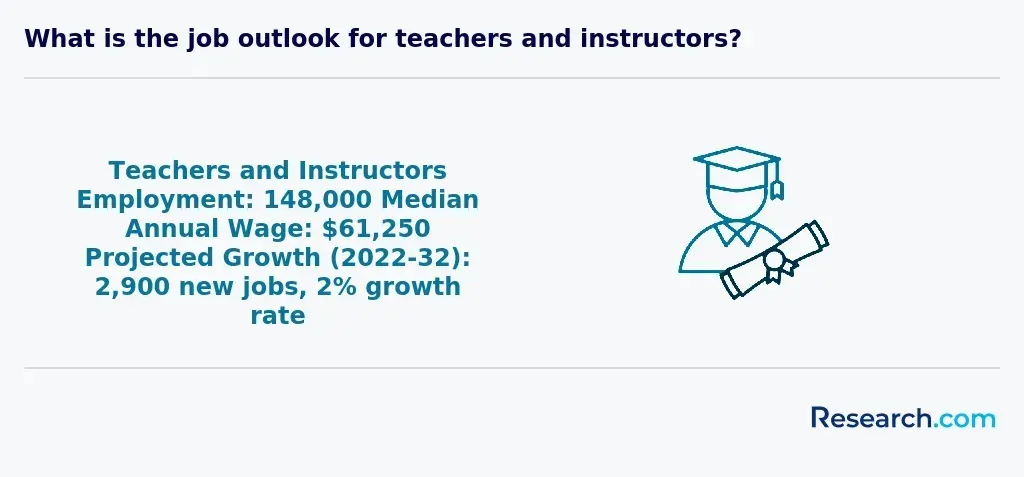
The job outlook for private school teachers in New York is shaped by school enrollment, subject demand, turnover, location, and the broader teacher labor market. Nationally, employment for high school teachers is projected to grow by around 1% over the next decade, and about 67,100 job openings for high school teachers are anticipated each year across the United States. These figures do not describe private schools in New York alone, but they help frame the broader market for secondary educators.
- Openings often come from turnover. Even when overall growth is limited, retirements, relocations, and career changes create vacancies.
- STEM and specialized roles may be easier to find. Private schools may compete for teachers in math, science, technology, special education, world languages, and advanced coursework.
- Mission fit can matter as much as credentials. Schools may prioritize applicants who understand their curriculum model, faith tradition, student support approach, or independent school culture.
- Urban schools may post more openings. Location, cost of living, school reputation, and student needs can influence turnover and job availability.
- Graduate credentials can help in competitive searches. Teachers interested in English learners, for example, may explore TESOL graduate programs.
Applicants should not rely only on large job boards. Many independent and religious schools post openings on their own websites, through association job boards, alumni networks, and referrals.
What are the affordable pathways to becoming a private school teacher in New York?
The most affordable pathway depends on what you already have. If you have no degree, the cost-saving priority is choosing an accredited bachelor’s program with strong transfer policies, financial aid access, and field experience. If you already hold a bachelor’s degree, the more efficient route may be a certification, post-baccalaureate, or master’s program that builds teaching skill without requiring a second undergraduate degree.
| Pathway | Best for | Cost-control strategy |
| Bachelor’s degree in education or subject area | Students starting college or changing majors early. | Use transfer credits, compare public and private tuition, and seek field placements. |
| Post-baccalaureate teacher preparation | Career changers with a completed bachelor’s degree. | Avoid duplicating coursework and focus on required pedagogy and classroom experience. |
| Alternative or lower-cost credential route | Applicants who need a practical path into teaching. | Compare the cheapest teaching credential program in New York with school hiring expectations. |
| Online teaching degree or master’s program | Working adults who need schedule flexibility. | Confirm accreditation, transfer rules, fieldwork requirements, and total fees. |
| Assistant teacher or substitute role first | Applicants who need experience before committing to a full program. | Earn income while testing whether private school teaching is a long-term fit. |
A low-cost option is only worthwhile if it supports your employment goal. Before enrolling, ask whether graduates are hired by private schools, whether the program includes supervised teaching practice, and whether credits can apply toward future certification or graduate study.
How much do private school teachers in New York make?
Private school teacher pay in New York varies by school type, location, subject, experience, degree level, and benefits. On average, private school teachers in New York earn around $60,000 annually. A teacher with a master’s degree and twelve years of experience may earn upwards of $105,000, but that should not be treated as a guaranteed outcome.
Private school salaries may be lower than New York City Department of Education salaries in some cases, even for experienced teachers. Benefits can also differ. Some private schools offer strong health coverage, retirement plans, tuition remission, or professional development funding, while others have more limited benefits.
| Salary factor | How it can affect compensation |
| Experience | Teachers with more years in the classroom may qualify for higher pay or leadership stipends. |
| Graduate education | A master’s degree can strengthen salary negotiations at some schools. |
| Subject area | Hard-to-fill subjects may improve bargaining power. |
| School budget | Independent schools, religious schools, and low-cost private schools may have very different salary structures. |
| Benefits | Health coverage, retirement contributions, tuition assistance, and paid development can change the real value of an offer. |
When comparing offers, calculate total compensation, not just annual salary. Ask about health insurance, retirement, tuition remission, summer pay, professional development reimbursement, class load, advisory duties, coaching expectations, and required evening or weekend events. If you want to increase your qualifications while continuing to work, a flexible teaching master's online may be worth comparing with your salary goals.
How Can I Transition to Special Education Roles in New York?
Special education can be a strong next step for private school teachers who want deeper expertise in learning differences, individualized instruction, intervention planning, and inclusive classroom design. Private schools may need teachers who can support students with diverse academic, behavioral, communication, or executive functioning needs.
The transition usually requires more than general classroom experience. Teachers should look for coursework, supervised practice, and credentials focused on assessment, accommodations, Individualized Education Program support, differentiated instruction, and collaboration with families and specialists. For a role-specific overview, review how to become a special education teacher in New York.
What are the professional development opportunities for private school teachers in New York?
Professional development helps private school teachers stay current, improve classroom practice, and qualify for leadership or specialized roles. Useful options include school-sponsored workshops, independent school conferences, graduate certificates, subject-area institutes, instructional coaching, peer observation, and advanced degrees.
Choose professional development based on a real career goal. A new teacher may need classroom management and assessment training. A department chair may need curriculum leadership. An arts educator may benefit from creative practice and studio-based pedagogy, including options such as an online MFA. The best programs produce evidence you can use: lesson materials, portfolio artifacts, supervised feedback, or credentials recognized by employers.
What career paths are available for Private school teachers in New York?
A private school teaching job can lead to several education careers beyond the classroom. The right path depends on whether you prefer direct student work, curriculum design, leadership, counseling-adjacent support, admissions, or consulting.
| Career path | Typical responsibilities | Who it fits |
| Classroom teacher | Plan lessons, teach students, assess learning, communicate with families, and support student growth. | Educators who enjoy daily student interaction and subject instruction. |
| Department chair or academic dean | Guide curriculum, mentor teachers, coordinate assessment, and support academic standards. | Experienced teachers who want leadership without leaving teaching entirely. |
| Curriculum developer | Create units, materials, assessments, and interdisciplinary learning experiences. | Teachers who enjoy design, planning, and instructional improvement. |
| Educational consultant | Advise schools, families, or organizations on curriculum, instruction, admissions, or student support. | Experienced educators with a clear specialty and strong communication skills. |
| Extracurricular or program leader | Lead clubs, arts programs, athletics, service learning, debate, publications, or student organizations. | Teachers who want to build community outside traditional classes. |
If you are preparing for advancement, consider affordable graduate study, leadership training, and targeted credentials. Comparing budget-friendly online teaching degrees can help you find options that fit your schedule and long-term plans.
What alternative careers are available to private school teachers in New York?
Private school teachers build transferable skills in communication, curriculum planning, assessment, mentoring, public speaking, conflict resolution, and family engagement. Those skills can transfer into education-adjacent roles, especially for teachers who want to leave full-time classroom instruction but remain connected to student development.
- Speech-language pathology: Teachers interested in communication development can explore how to become a speech pathologist in New York.
- Educational consulting: Experienced teachers can advise families, schools, or education companies.
- Tutoring and test preparation: Subject specialists may work independently or with tutoring organizations.
- Curriculum development: Teachers can write lessons, assessments, online course materials, or enrichment programs.
- Admissions or student support: Private school experience can translate into roles that require understanding families, students, and school culture.
How can private school teachers in New York integrate digital tools to enhance classroom engagement?
Digital tools can improve engagement when they solve a clear instructional problem. They should not be added simply because they are new. Effective teachers use technology to support feedback, collaboration, practice, creativity, accessibility, and individualized learning.
- Use interactive tools for participation. Polls, discussion boards, shared documents, and formative quizzes can make student thinking visible.
- Personalize practice. Adaptive platforms can help students review skills at different levels, but teachers should still monitor accuracy and depth.
- Support multimodal learning. Video, audio, simulations, digital annotation, and visual tools can help students access complex ideas.
- Teach digital judgment. Students need guidance on source evaluation, responsible AI use, citation, privacy, and academic integrity.
- Start small. One well-integrated tool is better than several disconnected platforms.
Teachers building a broader technology-supported career plan can also review guidance on how to become a teacher in New York.
What networking opportunities are available for private school teachers in New York?
Networking matters in private education because many roles are filled through school communities, professional associations, referrals, alumni contacts, and mission-aligned networks. It also helps teachers learn about school culture before applying.
- Professional organizations: Groups such as the New York State Association of Independent Schools can connect educators with events, resources, and job postings.
- School and regional conferences: Conferences help teachers learn from peers, present classroom work, and identify hiring trends.
- Alumni networks: College and graduate school networks can lead to referrals, mentoring, and informational interviews.
- Online communities: LinkedIn and education-focused groups can help teachers follow school openings and discuss classroom practice.
- Local workshops: Subject-area and pedagogy workshops often create stronger professional relationships than broad online networking alone.
For job seekers, networking should be specific. Instead of asking generally for openings, ask teachers or administrators what their school values in applicants, how hiring timelines work, and what a successful demonstration lesson looks like.
What specialized certifications can further boost your teaching career in New York?
Specialized certifications can help private school teachers move into higher-need roles, deepen expertise, or stand out in competitive hiring. The best credential depends on the students you want to teach and the type of school you are targeting.
| Specialization | How it can help |
| ESL or TESOL | Supports work with multilingual learners and international student populations. |
| Special education | Builds skill in accommodations, intervention, and inclusive teaching. |
| Early childhood education | Helps teachers work with younger learners and understand developmentally appropriate instruction. You can compare preschool teacher requirements in New York. |
| Subject-specific certification | Strengthens credibility in fields such as math, science, arts, music, history, or languages. |
| Educational leadership | Prepares experienced teachers for department chair, dean, or administrative roles. |
Before paying for any certificate, ask whether private schools in your target area recognize it, whether it leads to state certification, whether it includes supervised practice, and whether it supports salary growth or promotion.
What are the latest trends in teacher certification and professional accreditation for private school teachers in New York?
Private schools continue to value flexibility, but employer expectations are becoming more evidence-based. Schools increasingly want teachers who can show measurable instructional skill, adapt to diverse learners, use technology responsibly, and participate in ongoing professional growth. Certification, while not always required, remains a useful signal of preparation.
Teachers should stay aware of the types of teacher certification in New York, especially if they want to keep public school options open or move into specialized areas. Professional accreditation and certificate renewal can also affect long-term credibility, particularly for teachers pursuing leadership roles.
How can online learning opportunities boost my private school teaching career in New York?
Online learning can help private school teachers add credentials, update teaching methods, and specialize without leaving the workforce. It is especially useful for career changers, working teachers, and educators balancing classroom duties with graduate study.
However, online programs should be evaluated carefully. Confirm accreditation, fieldwork expectations, state certification alignment, total cost, transfer credit rules, and whether the credential is respected by the schools where you want to work. For a broader overview of remote preparation pathways, see how to become a teacher online in New York.
What strategies can private school teachers in New York adopt for work-life balance?
Private school teachers often do more than teach classes. Advisory duties, clubs, coaching, family communication, admissions events, evening programs, and weekend activities can expand the job beyond the school day. Work-life balance requires boundaries and realistic expectations before accepting a role.
- Clarify duties before signing. Ask about teaching load, preps, advisory, clubs, coaching, evening events, and summer responsibilities.
- Protect planning time. Use recurring blocks for grading, parent communication, and lesson preparation.
- Set communication norms. Follow school policy, but avoid creating an expectation of constant after-hours availability.
- Reuse and refine materials. Build a curriculum library instead of starting from scratch every week.
- Find a mentor. A colleague can help you understand which tasks are essential and which can be simplified.
Teachers still exploring grade-level fit may find it useful to review pathways such as how to become an elementary school teacher in New York, since workload patterns can differ by age group.
What career benefits does a Doctorate in Education offer to private school teachers in New York?
A Doctorate in Education can benefit experienced private school teachers who want to move into senior leadership, research-informed school improvement, educational consulting, curriculum administration, or higher education. It is usually not necessary for entry-level private school teaching, so the decision should be tied to a clear career objective.
The strongest reason to pursue doctoral study is not simply to earn a title. It is to gain advanced skill in research, organizational leadership, policy analysis, program evaluation, and systems-level decision-making. Teachers considering this investment can explore potential jobs for PhD in education before committing.
How can subject-specific expertise elevate my private school teaching career in New York?
Subject expertise can be a major advantage in private schools, especially at the middle and high school levels. Independent schools may look for teachers who can teach advanced courses, sponsor academic clubs, design electives, lead performances or competitions, and connect classroom content to real-world inquiry.
For arts educators, music expertise can support classroom teaching, ensembles, performances, admissions events, and interdisciplinary programming. Teachers interested in this route can review music teaching qualifications in New York. The broader principle applies across subjects: deep content knowledge becomes more valuable when paired with strong pedagogy and student engagement.
How can specializing in history offer unique career advancements in New York's private schools?
History specialization can help private school teachers design rigorous humanities courses, lead civic education projects, coordinate debate or model government programs, develop interdisciplinary curricula, and connect students with New York’s cultural institutions. Strong history teachers also help students practice evidence-based writing, source analysis, argumentation, and ethical reasoning.
Teachers who want to build a history-focused career should strengthen both content and pedagogy. That may include graduate coursework, museum partnerships, archival projects, writing-intensive curriculum design, and professional development in historical thinking. For a role-specific pathway, review how to become a history teacher in New York.
Common mistakes to avoid when pursuing private school teaching in New York
| Mistake | Why it can hurt you | Better approach |
| Assuming certification never matters | Some private schools prefer or require certified teachers, especially for competitive roles. | Check each school’s requirements and consider certification if you want flexibility. |
| Applying with a generic resume | Private schools often hire for mission fit and community contribution. | Tailor your resume and cover letter to the school’s philosophy, grade level, and subject needs. |
| Focusing only on salary | A lower salary with strong benefits may be better than a higher salary with limited support. | Compare total compensation, workload, benefits, and growth opportunities. |
| Ignoring background check requirements | Screening delays can slow hiring or onboarding. | Ask early about fingerprinting, documentation, and fees. |
| Choosing a program only because it is cheap | A low-cost program may not lead to the credential or preparation you need. | Confirm accreditation, fieldwork, completion requirements, and employer recognition. |
| Relying only on job boards | Many private school openings circulate through networks and association boards. | Use school websites, professional organizations, alumni contacts, and informational interviews. |
Questions to ask before accepting a New York private school teaching job
- Does the school require New York State teacher certification now or in the future?
- What background checks, fingerprinting, permits, or onboarding steps are required?
- How many classes, preps, students, advisory groups, clubs, or extracurricular duties are included?
- What is the salary scale, and how do graduate degrees or experience affect pay?
- What health, retirement, tuition, and professional development benefits are offered?
- How does the school support new teachers with mentoring, observation, and feedback?
- What curriculum freedom do teachers have, and what materials are provided?
- How does the school serve students with learning differences or language needs?
- What are the expectations for parent communication and after-hours events?
- How does the school define successful teaching in the first year?
Key Insights
- New York private school teaching is flexible, but not qualification-free. Many schools do not require the same certification route as public schools, yet they still expect strong education, experience, professionalism, and background clearance.
- A bachelor’s degree is the practical baseline. Some exceptions may exist, but most lead teaching roles favor candidates with at least a bachelor’s degree and relevant subject or grade-level preparation.
- Certification can improve mobility. Even when private schools do not mandate it, state certification can strengthen applications and preserve the option to move into public education later.
- Costs vary widely. Aspiring teachers should budget for degree tuition, exam fees, background checks, professional development, and classroom supplies rather than looking only at tuition.
- Salary depends heavily on the school. Private school teachers in New York earn around $60,000 annually on average, but experience, graduate education, benefits, and school resources can change the total value of a job.
- Subject demand and school fit drive hiring. STEM, special education, languages, and specialized programs may offer stronger opportunities, but mission alignment remains central in many private schools.
- The best applicants show evidence. Demonstration lessons, portfolios, references, tutoring experience, student teaching, and clear classroom strategies can matter as much as credentials.
- Do not accept a role without understanding workload. Private school jobs may include advisory, clubs, coaching, family events, and evening obligations, so total responsibilities should be clear before signing.
Related Articles for Nearby States
- 2027 How to Become a Private School Teacher in New Jersey: Requirements & Certification
- 2027 How to Become a Private School Teacher in Pennsylvania: Requirements & Certification
- 2027 How to Become a Private School Teacher in Connecticut: Requirements & Certification
- 2027 How to Become a Private School Teacher in Massachusetts: Requirements & Certification
- 2027 How to Become a Private School Teacher in Vermont: Requirements & Certification
- 2027 How to Become a Private School Teacher in Rhode Island: Requirements & Certification
- 2027 How to Become a Private School Teacher in Delaware: Requirements & Certification
- 2027 How to Become a Private School Teacher in Maryland: Requirements & Certification
- 2027 How to Become a Private School Teacher in New Hampshire: Requirements & Certification
- 2027 How to Become a Private School Teacher in Ohio: Requirements & Certification
References:
- Kerry McDonald (023). The Not-So-Secret World Of Low-Cost New York City Private Schools. https://www.forbes.com/sites/kerrymcdonald/2023/03/02/the-not-so-secret-world-of-low-cost-new-york-city-private-schools
- nyc-business.nyc.gov (n.d.). Private School Teacher License or Permit. https://nyc-business.nyc.gov/nycbusiness/description/private-school-teacher-license-or-permit
- nysais.org (09 May 2022). Independent School Job Boards. https://www.nysais.org/careers/job_boards
- Reddit. (2023). NY Private school teacher salary. https://www.reddit.com/r/NYCTeachers/comments/15hrkrs/ny_private_school_teacher_salary
- U.S. Bureau of Labor Statistics. (2024). High School Teachers. https://www.bls.gov/ooh/education-training-and-library/high-school-teachers.htm
Other Things You Should Know About Becoming a Private School Teacher in New York
In 2027, teaching at a private school in New York typically requires a bachelor's degree in your subject area. Some schools may prefer or require teacher certification, but it is not mandated by state law for private schools. Additionally, relevant teaching experience and a background check are often required.
No. New York does not require private school teachers to hold a state-issued teaching certificate for most private school jobs. Schools set their own hiring rules, but many still prefer a bachelor’s degree, subject expertise, and training aligned with New York State Education Department standards.
Private school teachers in New York in 2027 may not need a state-specific subject certification but should demonstrate proficiency in their subject area. Individual schools may have specific requirements, so it's best to inquire directly with the institution for precise details.