
2027 How to Become a Middle School Math Teacher in Tennessee: Requirements & Certification

Co-Founder and Chief Data Scientist
If you want to teach middle school mathematics in Tennessee, the main decision is not simply whether you enjoy math. You need to understand which degree path fits your background, how Tennessee licensure works, which exams you may need, how student teaching is completed, and whether the career makes financial and professional sense for you. This 2026 guide explains the practical route to becoming a Tennessee middle school math teacher, including education requirements, licensing steps, classroom preparation, salary expectations, career alternatives, and common mistakes to avoid before you invest time and money in a program.
Quick answer: How do you become a middle school math teacher in Tennessee?
To become a middle school math teacher in Tennessee, you typically need a bachelor’s degree from an accredited institution, completion of a state-approved educator preparation program, required Praxis testing, supervised teaching experience, fingerprinting and background checks, and a Tennessee teaching license issued through the Tennessee Department of Education. Candidates who already hold a bachelor’s degree may also explore alternative licensure pathways, depending on their academic background and district needs.
Key points to know before choosing this teaching path in Tennessee
- Middle school math is a high-impact subject area because students are building the algebraic, quantitative reasoning, and problem-solving skills they need for high school coursework and future career pathways.
- Salary estimates vary by source, district, experience, and education level. One cited estimate places the average salary for middle school math teachers in Tennessee around $52,000 annually as of 2023, while Salary.com lists the average Middle School Math Teacher salary in Tennessee as $62,607 as of August 27, 2024.
- The employment outlook cited for middle school math teachers in Tennessee indicates approximately 5% growth over the next decade, while national middle school teacher employment is projected to grow by 2% over 2022-2032.
- Tennessee’s cost-of-living index is cited at around 86.5, where 100 represents the national average, which can affect how far a teacher salary goes in different parts of the state.
- Tennessee’s continued focus on math proficiency means new teachers should expect close attention to standards alignment, assessment data, intervention strategies, and evidence-based instruction.
- Step-by-step path to becoming a Tennessee middle school math teacher
- Education requirements for Tennessee middle school math teachers
- Tennessee certification and licensing process
- Student teaching, fieldwork, and internship experience
- Tennessee middle school math standards and curriculum expectations
- Job market and salary expectations in Tennessee
- Professional development and continuing education
- Classroom management and effective math teaching methods
- Advancement options and teaching specializations
- Legal and ethical duties for Tennessee teachers
- Support resources for new middle school math teachers
- Leadership training for experienced educators
- Common challenges and practical solutions
- Alternative education careers in Tennessee
- Mentorship and networking opportunities
- Using music and the arts to support math learning
- Cost-effective ways to earn a Tennessee teaching credential
- Additional certifications that can broaden your career
- Financial support for certification and education costs
- Technology integration in middle school math classrooms
- Exam preparation strategies for Tennessee certification
- Math teacher vs. English teacher certification in Tennessee
- How to monitor Tennessee certification rule changes
What are the steps to becoming a middle school math teacher in Tennessee?
The standard Tennessee pathway combines academic preparation, supervised classroom practice, testing, and state licensure. The best route depends on whether you are starting college, already have a bachelor’s degree, or are changing careers from a math-related field.
| Step | What you need to do | Why it matters |
| Complete a bachelor’s degree | Earn a bachelor’s degree in education, mathematics education, mathematics, or a related field from an accredited institution. If you still need a degree, you may compare options such as accelerated bachelor's degree online programs. | Tennessee requires formal academic preparation before licensure, and the degree must support the endorsement area you plan to teach. |
| Finish an approved teacher preparation program | Complete coursework in teaching methods, adolescent development, assessment, classroom management, and middle school math pedagogy. | This is where candidates learn how to translate math knowledge into instruction that works for middle-grade learners. |
| Complete fieldwork and student teaching | Participate in supervised classroom placements before taking full responsibility for instruction during student teaching. | Districts want teachers who can manage real classrooms, differentiate instruction, and use feedback from mentor teachers. |
| Pass required assessments | Prepare for and pass the Praxis Core Academic Skills for Educators tests and the Praxis Subject Assessment for middle school mathematics, if required for your pathway. | Assessments verify foundational academic skills and subject-specific math knowledge. |
| Apply for licensure | Submit required materials through the appropriate Tennessee Department of Education process, often with support from your educator preparation provider or employing school. | You cannot serve as a fully credentialed public school teacher without the appropriate Tennessee license and endorsement. |
| Complete background checks | Submit fingerprints and complete required background screening. | Background checks are part of Tennessee’s student safety requirements for educators. |
| Pay licensing fees | Budget for state application fees. The fee for a standard teaching license in Tennessee is cited as approximately $100. | Licensure costs are separate from tuition, testing, books, transportation, and other preparation expenses. |
Your degree does not have to be earned in Tennessee if it comes from an accredited U.S. institution and satisfies Tennessee’s licensure requirements. In 2022, the three institutions with the most education degrees awarded were Western Governors University, with a total of 12,454 degrees conferred, Grand Canyon University with 8,555 education degrees, and the American College of Education, awarding 4,301 education degrees.
What are the educational requirements for becoming a middle school math teacher in Tennessee?
Tennessee middle school math teachers need both math content knowledge and teacher preparation. A strong transcript alone is usually not enough; candidates also need training in lesson design, assessment, classroom management, and how middle school students learn mathematical concepts.
- Bachelor’s degree: A bachelor’s degree from an accredited institution is the baseline academic requirement for most traditional teaching pathways.
- Math-focused coursework: Candidates should expect coursework that strengthens knowledge in areas such as algebra, geometry, statistics, quantitative reasoning, and mathematical problem solving.
- Education coursework: Teacher preparation commonly includes instructional methods, assessment literacy, adolescent development, special populations, classroom management, and culturally responsive teaching.
- Approved educator preparation: Tennessee licensure generally requires completion of an approved preparation program that includes clinical experiences and supervised teaching.
- Accreditation check: Before enrolling, confirm that the institution is accredited and that the program is approved for the Tennessee endorsement you want. This is especially important for online and out-of-state programs.
- Subject matter competency: Candidates must demonstrate readiness to teach mathematics, often through required Praxis II or related subject assessments.
| If your background is... | Likely pathway | Decision factor |
| You have not earned a bachelor’s degree | Choose a bachelor’s program that includes Tennessee-approved teacher preparation. | This is usually the most direct route because degree coursework, fieldwork, and licensure preparation are built together. |
| You already hold a bachelor’s degree in math or a related field | Explore alternative licensure or post-baccalaureate teacher preparation options. | This may reduce duplication, but you still need pedagogy, supervised teaching, and Tennessee licensure approval. |
| You earned your degree outside Tennessee | Have transcripts and program details reviewed against Tennessee requirements. | Out-of-state programs may not automatically meet Tennessee endorsement or testing expectations. |
| You are comparing education careers | Review requirements across grade levels and states, including resources such as West Virginia teacher education programs. | Requirements differ by state, grade band, and subject endorsement. |
What is the certification and licensing process for a middle school math teacher in Tennessee?
The Tennessee licensure process is designed to confirm that candidates have the academic background, supervised teaching experience, content knowledge, and professional screening required to teach children safely and effectively.
- Earn the required degree: Candidates must complete a bachelor’s degree that includes an educator preparation program. Math-related coursework may include algebra, geometry, calculus, and statistics.
- Pass required educator assessments: The Core Academic Skills for Educators assessments evaluate foundational reading, writing, and mathematics skills. Middle school math candidates also need the relevant subject assessment when required.
- Apply for the Apprentice License: After meeting education and testing requirements, candidates may apply for an Apprentice License. This license is valid for five years and is typically submitted through the employing school with transcripts and proof of exam completion.
- Complete fingerprinting and background screening: Tennessee requires background checks to support student safety before educators work in schools.
- Upgrade when eligible: After three years of teaching under the Apprentice License, educators may move to a Professional License if they receive positive evaluations from their school.
- Maintain the license: License renewal requires renewal points, which may be earned through professional development, coursework, mentoring, or other approved learning activities.
An advanced degree is not required for every beginning middle school math teacher, but it may be useful for educators who want to move into curriculum, instructional design, teacher leadership, or district-level roles. For example, online doctorate in instructional design programs may support experienced educators who want to specialize in curriculum and learning systems.
How important is teaching experience and what are the internship opportunities for middle school math teachers in Tennessee?
Teaching experience is one of the most important parts of preparation because middle school math classrooms require more than content expertise. Candidates must learn how to explain abstract concepts, support students with different skill levels, manage behavior, communicate with families, and adapt lessons when students are not understanding the material.
- Field experience before student teaching: Tennessee candidates typically complete a minimum of 200 hours of field experience before student teaching. These placements help candidates observe instruction, assist teachers, and practice early teaching tasks.
- Student teaching: Candidates typically complete a semester-long student teaching placement under a mentor teacher. This experience helps future teachers develop lesson pacing, assessment practices, classroom routines, and confidence.
- District and university partnerships: Many educator preparation programs coordinate placements with local schools, so candidates should ask how placements are assigned and whether middle school math placements are available.
- Alternative routes: Programs such as Teach For America or Tennessee’s Alternative Certification Program may provide pathways for candidates who already have strong math backgrounds and want to enter teaching while receiving support.
- How to make fieldwork count: Ask for feedback, collect lesson artifacts, observe multiple teaching styles, practice data-based reteaching, and learn how your mentor handles students who are behind, advanced, disengaged, or anxious about math.
Education level and experience can also influence earnings. The National Center for Education Statistics found that during AY 2020-2021, the average annual wages of public elementary and secondary school teachers in the United States were $52,500 for those with a bachelor's degree, $67,000 for those with a master's degree, $70,500 for those with an education specialist degree, and $71,300 for those with a doctorate degree.
Practical experience is not a box to check at the end of a program. It is where many candidates discover whether they can explain math clearly, respond calmly to classroom challenges, and build the trust middle school students need before they take academic risks.
What are the Tennessee standards and curriculum requirements for teaching middle school math?
Tennessee middle school math teachers are expected to teach state standards, prepare students for grade-level expectations, and help learners connect conceptual understanding with procedural fluency and application. Strong teachers do not simply “cover” standards; they plan instruction so students can reason, communicate, and apply math in unfamiliar situations.
- State standards: The Tennessee State Board of Education sets K–12 academic standards. Tennessee math standards were revised in February 2021 and are set to be implemented in classrooms starting in the 2023-24 school year.
- Three instructional priorities: Tennessee’s math standards emphasize conceptual understanding, procedural skill and fluency, and application.
- Mathematical practices: The state includes eight Standards for Mathematical Practice that guide students in problem solving, quantitative reasoning, argument construction, modeling, precision, and strategic tool use.
- Math literacy: Tennessee emphasizes reading mathematical text, using accurate vocabulary, discussing mathematical ideas, and writing coherent mathematical arguments.
- Instructional resources: Tennessee provides instructional focus documents and practice guides that help teachers align daily instruction with standards and effective math pedagogy.
| Curriculum expectation | What it means in class | Example teacher action |
| Conceptual understanding | Students understand why a procedure works, not just how to repeat it. | Use visual models, number talks, and student explanations before moving to symbolic procedures. |
| Procedural fluency | Students can complete grade-level computations accurately and efficiently. | Build practice routines that develop speed without reducing math to memorization only. |
| Application | Students use math to solve real-world and multi-step problems. | Connect ratios, equations, geometry, and data to situations students can analyze and explain. |
| Mathematical communication | Students explain reasoning verbally and in writing. | Require students to justify answers, critique reasoning, and revise explanations. |
If you are still exploring grade levels, an online bachelor's in early childhood education may help you compare how early learning preparation differs from middle grades math preparation.
What is the job market like and what are the salary expectations for middle school math teachers in Tennessee?
The job market for Tennessee middle school math teachers depends heavily on district location, school needs, applicant supply, licensure area, and whether candidates are willing to work in schools with hard-to-fill positions. Math is often treated as a priority subject because it affects student readiness for high school coursework, graduation pathways, and technical careers.
The average Middle School Math Teacher salary in Tennessee is $62,607 as of August 27, 2024, with a salary range typically falling between $50,843 and $77,845. Salary ranges can vary significantly depending on the city and several other key factors, such as education level, certifications, additional skills, and years of experience in the profession.
| Salary percentile in Tennessee | Salary amount | How to interpret it |
| 10th percentile | $40,133 | May reflect lower experience, lower-paying districts, or early-career placement. |
| 25th percentile | $50,843 | Represents the lower quarter of the cited salary distribution. |
| 50th percentile | $62,607 | Represents the median cited estimate from Salary.com. |
| 75th percentile | $77,845 | May reflect more experience, additional credentials, or higher-paying districts. |
| 90th percentile | $91,718 | Represents the upper end of the cited salary distribution. |
Teachers comparing long-term earnings should look beyond starting pay. District salary schedules may reward years of service, advanced degrees, added endorsements, leadership responsibilities, and hard-to-staff assignments. If you are considering graduate study, compare cost, time, and career goals before enrolling in options such as affordable online education degrees.
Nationally, cited data indicates total employment of 148,000 teachers with a median annual wage of $61,500 and a projected 2% growth rate over 2022-2032. This projection would add 2,900 new jobs per year in that decade.

What professional development and continuing education opportunities are available for middle school math teachers in Tennessee?
Professional learning matters because math standards, assessment expectations, instructional tools, and student needs change over time. Tennessee teachers also need continuing education activity to maintain licensure, build renewal points, and strengthen instructional practice.
- State and district professional development: Tennessee educators can participate in professional learning connected to standards, assessment, intervention, classroom management, and instructional planning.
- Virtual and on-demand learning: Programs such as "Active Students, Active Learners: Virtual PD Week" provide recorded sessions teachers can complete on a flexible schedule.
- Continuing education credits: Teachers should confirm which workshops, seminars, online courses, and district trainings count toward license renewal requirements.
- Math-focused workshops: Professional sessions for math educators can address problem-based learning, intervention strategies, formative assessment, and standards-aligned lesson design.
- Professional organizations: Groups such as the Tennessee Association for Health, Physical Education, Recreation and Dance and the Society of Health and Physical Educators provide examples of how professional associations support teacher training and resources across education fields.
Before paying for continuing education, ask whether the activity is approved for renewal credit, whether your district reimburses the cost, and whether the learning directly supports your current classroom challenges.
What are effective classroom management strategies and teaching methods for middle school math teachers in Tennessee?
Middle school math teachers need routines that protect instructional time and methods that help students engage with math even when they feel frustrated or underprepared. The most effective classrooms combine clear expectations, strong relationships, structured practice, and frequent checks for understanding.
- Set expectations early: Teach routines for entering class, using materials, discussing solutions, asking for help, working in groups, and correcting mistakes.
- Build trust before rigor: Students are more willing to attempt difficult math when they believe the teacher is fair, consistent, and invested in their progress.
- Use multiple representations: Move among visual models, verbal explanations, equations, tables, graphs, manipulatives, and real-world contexts.
- Differentiate intentionally: Use small groups, tiered tasks, targeted practice, and enrichment problems so students at different readiness levels can participate meaningfully.
- Check understanding often: Exit tickets, quick writes, whiteboard responses, and short quizzes reveal misconceptions before they become larger learning gaps.
- Teach productive struggle: Normalize mistakes, require reasoning, and help students revise work instead of waiting for the teacher to give the answer.
- Use technology selectively: Digital tools can support practice and feedback, but they should not replace teacher-led explanation, discussion, and intervention.
| Common classroom issue | Weak response | Better alternative |
| Students say they are “bad at math” | Move on quickly or give easier work only. | Use growth-focused feedback, scaffold the task, and help students identify the exact step they can improve. |
| Wide skill gaps | Teach only to the middle of the class. | Use diagnostic checks, flexible grouping, targeted review, and extension tasks. |
| Low engagement | Rely only on lectures and worksheets. | Include discussion, modeling, real-world problems, and structured partner work. |
| Frequent off-task behavior | React inconsistently or wait until problems escalate. | Use predictable routines, proximity, positive reinforcement, and private redirection. |
What are the career advancement opportunities and specializations for middle school math teachers in Tennessee?
A middle school math teaching license can lead to more than one classroom role. With experience, strong evaluations, and additional credentials, teachers may move into coaching, curriculum work, department leadership, intervention, administration, or specialized instructional roles.
- Instructional coach: Experienced teachers may support colleagues with lesson planning, standards alignment, classroom strategies, and data-informed instruction.
- Department chair or team lead: Teachers may coordinate grade-level planning, common assessments, intervention blocks, and curriculum pacing.
- Curriculum specialist: Educators with strong content and assessment knowledge may help design or evaluate district math curricula.
- Special education or gifted education focus: Additional preparation can help teachers serve students with individualized needs or advanced learning profiles.
- Technology integration: Teachers who understand digital tools and assessment data may support blended learning, adaptive platforms, and district instructional technology initiatives.
- School administration: Some teachers pursue roles such as assistant principal, principal, or district administrator after completing the required preparation and licensure steps.
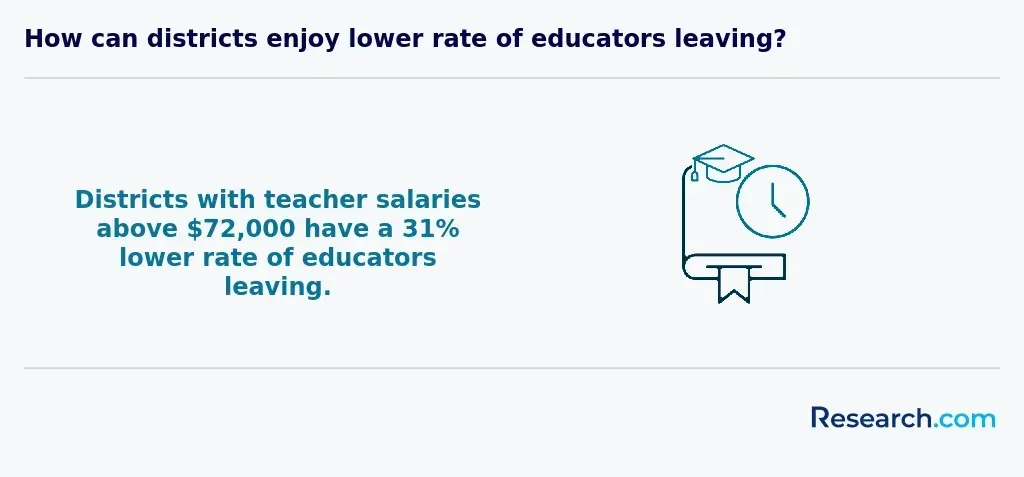
Teacher compensation and retention are closely connected. The cited data notes that teacher salaries above $72,000 per year result in lower numbers of educator attrition.
- : "A Tennessee teacher’s career can expand in unexpected ways: one educator described joining a curriculum committee after years in the classroom and finding that her lesson-level experience helped shape broader instructional decisions."
What legal and ethical considerations must Tennessee middle school math teachers follow?
Tennessee teachers carry legal and ethical responsibilities because they work with minors, student records, state curriculum requirements, and public trust. These duties begin before licensure and continue throughout a teacher’s career.
- Valid licensure: Public school teachers must hold the appropriate Tennessee license and endorsement for their assigned teaching area.
- Background checks: Fingerprinting and background screening are required to support student safety.
- Standards-based instruction: Teachers are expected to teach Tennessee’s required academic standards and follow district curriculum expectations.
- Confidentiality: Student grades, records, disabilities, family circumstances, and discipline information must be handled professionally and privately.
- Equitable treatment: Ethical teaching requires fairness, respect, and access to learning for students across backgrounds, ability levels, and learning needs.
- Mandated reporting: Teachers must report suspected child abuse or neglect and follow school procedures for bullying, harassment, threats, and safety concerns.
- Professional boundaries: Communication with students and families should be appropriate, documented when needed, and aligned with district policy.
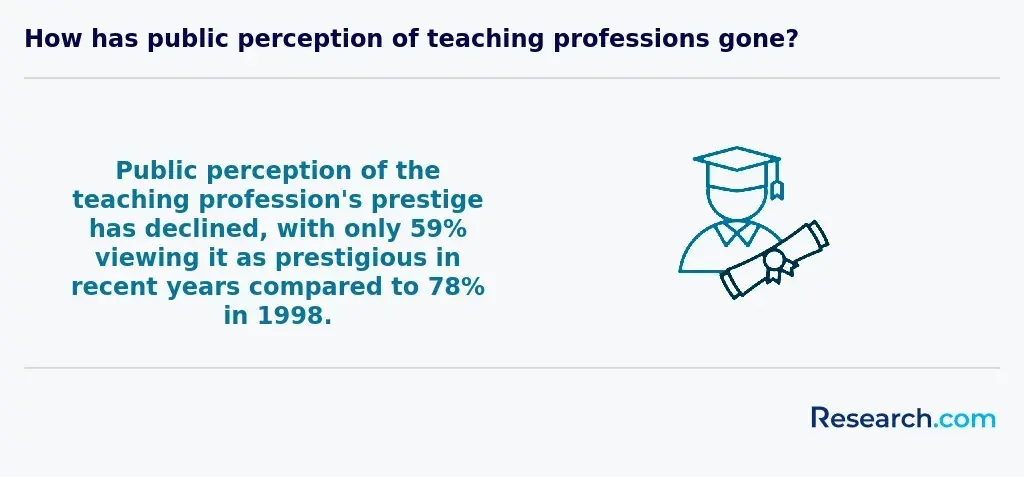
Public perception of teaching has changed over time. Cited data shows public perception of the teaching profession as a career has declined significantly from 78% in 1998 to its current levels of around 59%.
Legal compliance protects students, but ethical teaching goes further. It shapes how teachers grade fairly, respond to student mistakes, communicate with families, and create classrooms where every student has a real opportunity to learn mathematics.
What resources and support are available for new middle school math teachers in Tennessee?
New teachers should not try to navigate their first years alone. Mentorship, district induction, professional communities, and math-specific resources can shorten the learning curve and reduce burnout.
- Mentorship and induction: Programs such as the Tennessee Teacher Induction Program may pair beginning teachers with experienced educators who help with planning, classroom management, and district procedures.
- Math educator organizations: The Tennessee Council of Teachers of Mathematics can provide professional community, workshops, and networking opportunities for math teachers.
- Department collaboration: Grade-level teams and math departments can help new teachers align assessments, plan units, analyze data, and share materials.
- State resources: Tennessee Department of Education materials can support standards alignment, instructional planning, and assessment preparation.
- District coaching: Some districts provide instructional coaches, curriculum specialists, and intervention support for early-career teachers.
- Conferences and workshops: Professional events can expose new teachers to practical strategies and connect them with educators facing similar classroom challenges.
How can advanced leadership training enhance your teaching career?
Leadership training can help experienced middle school math teachers move from strong classroom practice to broader school improvement. Teachers who want to mentor colleagues, lead curriculum work, analyze schoolwide data, or prepare for administrative roles may benefit from graduate study in leadership. Programs such as online masters in management and leadership can help educators build skills in communication, planning, organizational strategy, and team leadership.
What are the challenges and solutions for middle school math teachers in Tennessee?
Middle school math teaching can be deeply rewarding, but it is demanding. Teachers must manage mixed readiness levels, math anxiety, adolescent behavior, testing pressure, and changing instructional expectations. The best preparation is to anticipate these challenges and choose practical responses before they become overwhelming.
| Challenge | Why it happens | Practical solution |
| Students arrive with uneven math foundations | Prior learning gaps can affect fractions, ratios, integer operations, and algebra readiness. | Use quick diagnostics, targeted review, small-group instruction, and frequent formative assessment. |
| Some students see math as irrelevant | Students may not connect classroom math to everyday decisions or future careers. | Use real-world applications, student-centered problems, data examples, and project-based tasks. |
| Behavior can disrupt learning | Middle school students are developing socially, emotionally, and academically at the same time. | Use clear routines, consistent consequences, positive relationships, and proactive communication with families. |
| Testing and curriculum pressure | Teachers must balance standards coverage, remediation, enrichment, and assessment preparation. | Plan from standards, use common assessments wisely, and collaborate with colleagues on pacing and intervention. |
| Teacher workload | Planning, grading, parent communication, meetings, and documentation can exceed the school day. | Reuse strong lesson structures, batch grading, set communication routines, and seek mentor support early. |
Teachers can also learn by comparing certification and classroom expectations across states and grade levels. For example, reviewing elementary school teacher requirements in Texas can help candidates understand how state-specific rules and grade-level preparation differ.
What career options are available for educators who do not choose to become middle school math teachers in Tennessee?
If middle school math is not the right fit, your interest in education can still lead to several paths. Some candidates prefer younger children, special education, secondary math, curriculum work, tutoring, instructional technology, or school support roles. For those drawn to early childhood classrooms, learning how to become a preschool teacher in Tennessee can clarify a very different route focused on early development, foundational learning, and age-appropriate classroom environments.
How can mentorship and networking opportunities enhance your teaching career in Tennessee?
Mentorship and networking help teachers improve faster because they provide feedback, lesson ideas, emotional support, and career information that is hard to get from coursework alone. New teachers should look for mentors who can observe lessons, discuss classroom dilemmas, review assessments, and explain district expectations. Professional communities also expose educators to strategies from other subjects; for example, exploring the pathway of a high school history teacher in Tennessee can inspire cross-disciplinary approaches to discussion, evidence, and academic writing in math.
How can integrating music and arts enhance math instruction in Tennessee?
Music and the arts can make mathematical patterns, structure, proportion, rhythm, symmetry, and sequences more visible to middle school students. A math teacher might connect beats to fractions, visual design to geometry, or musical patterns to ratios and functions. These strategies should support standards-based instruction rather than replace core math practice. Teachers interested in interdisciplinary planning can review music teacher education requirements in Tennessee to see how arts educators prepare for instruction in the state.
What is the most cost-effective pathway for obtaining a teaching credential in Tennessee?
The most cost-effective pathway depends on your starting point. A first-time college student may save money by choosing an affordable accredited bachelor’s program with built-in teacher preparation. A career changer with a bachelor’s degree may compare alternative certification, post-baccalaureate licensure, district-supported programs, and online coursework. The key is to confirm that any option is approved for Tennessee licensure before enrolling. For a focused cost comparison, review the cheapest way to get a teaching credential in Tennessee.
What do graduates say about becoming a middle school math teacher in Tennessee?
- One Tennessee math teacher described the work as energetic and unpredictable, noting that middle school students bring curiosity, humor, and big reactions when a difficult idea finally makes sense. Sallie
- Another graduate emphasized the value of professional development and collaboration, especially when trying new technology tools and sharing lesson ideas with colleagues. Jimmy
- A third teacher highlighted the satisfaction of designing hands-on lessons that connect math to everyday situations while adjusting instruction for students with different needs. Ellie
What additional certifications can diversify your teaching career in Tennessee?
Additional endorsements and certifications can make a teacher more versatile, especially in schools that need educators able to support intervention, inclusion, gifted learners, STEM initiatives, or curriculum leadership. Special education is one of the most practical areas to consider because math teachers often work with students who need accommodations, individualized supports, or co-taught instruction. To compare that pathway, review how to become a special education teacher in Tennessee.
What financial support options are available to ease your certification and education costs in Tennessee?
Teacher preparation costs can include tuition, fees, exams, books, technology, transportation to field placements, and lost work hours during student teaching. Candidates should ask schools about scholarships, grants, employer tuition support, payment plans, transfer credits, and whether online coursework can reduce commuting or housing expenses. Comparing lower-cost programs in related education fields, such as this list of most affordable online child development degree programs, can help you understand how program format and tuition structure affect total cost.
How can technology integration enhance math instruction in Tennessee?
Technology can strengthen math instruction when it gives students immediate feedback, helps teachers identify misconceptions, supports practice at different levels, or makes abstract ideas easier to visualize. Useful tools may include graphing applications, digital manipulatives, adaptive practice, assessment platforms, and collaborative problem-solving tools. Technology should serve the lesson goal, not distract from it. Teachers comparing instructional technology across grade levels may also explore how to become an elementary teacher in Tennessee.
How can exam preparation strategies improve your certification success in Tennessee?
Praxis preparation should begin well before the test date. Candidates should identify required exams for their licensure pathway, review official test content categories, take practice questions, and create a study schedule that targets weak areas first. For math exams, preparation should include both content review and timed problem solving. Study groups, tutoring, and structured prep courses can help, but candidates should verify that materials match the current test they must take. If you are deciding between grade levels, compare this route with how to become a high school math teacher in Tennessee.
How do Tennessee math and English teacher certification pathways differ?
Math and English teacher pathways share core requirements such as an accredited bachelor’s degree, educator preparation, supervised teaching, background checks, and Tennessee licensure. The major difference is the subject endorsement and assessment focus. Math candidates must demonstrate quantitative reasoning, mathematical content knowledge, and problem-solving ability, while English candidates are assessed on language, literature, writing, and literacy instruction. To compare the English route, review Tennessee English teacher certification requirements.
How can you stay updated on evolving certification regulations in Tennessee?
Certification rules, testing expectations, renewal procedures, and endorsement requirements can change. The safest approach is to verify requirements directly with the Tennessee Department of Education, your educator preparation provider, and the district where you plan to work. Candidates should also save written guidance, monitor licensure portals, attend advisor sessions, and check renewal expectations before deadlines. For a broader overview, use teaching certificate requirements in Tennessee as a starting point.
Common mistakes to avoid before becoming a Tennessee middle school math teacher
- Choosing a program without confirming Tennessee approval: Accreditation matters, but you also need to know whether the program supports the Tennessee license and endorsement you want.
- Looking only at tuition: Testing fees, field placement travel, books, technology, and unpaid student teaching time can affect total cost.
- Assuming online means easier: Online teacher preparation can be flexible, but clinical requirements, exams, deadlines, and licensure paperwork still require planning.
- Waiting too long to study for Praxis exams: Exam delays can postpone licensure, hiring, and graduation clearance.
- Ignoring district salary schedules: Compare pay by district, education level, and experience rather than relying on one statewide average.
- Underestimating classroom management: Strong math knowledge does not automatically translate into effective middle school teaching.
- Assuming salary outcomes are guaranteed: Pay depends on district policies, experience, credentials, and available roles.
Questions to ask before enrolling in a teacher preparation program
- Is the program approved for Tennessee middle school math licensure?
- What Praxis exams will I need, and when should I take them?
- How are field placements and student teaching assignments arranged?
- Can I complete student teaching near where I live?
- What is the program’s support process if I do not pass a required exam the first time?
- How much will the total program cost after fees, books, exams, and placement-related expenses?
- Does the program support alternative licensure candidates who already have a bachelor’s degree?
- What percentage of graduates obtain teaching positions in Tennessee districts?
- Who helps with licensure paperwork, background checks, and endorsement verification?
References
- Bureau of Labor Statistics. (2023). Middle school teachers. Bureau of Labor Statistics.
- Bureau of Labor Statistics. (2023). Occupational employment and wages, May 2023: Middle school teachers, except special and career/technical. Bureau of Labor Statistics.
- Data USA. (2023). Education. Data USA.
- Data USA. (2023). Mathematics teacher education. Data USA.
- Math Teacher Edu. (2024). Tennessee math teacher education. Math Teacher Edu.
- MathTeaching.org. (2024). Tennessee math teaching resources. MathTeaching.org.
- Salary.com. (2024). Middle school math teacher salary in Tennessee. Salary.com.
- Tennessee Department of Education. (2024). Active students - active learners: Professional learning. Tennessee Department of Education.
- U.S. Department of Education, National Center for Education Statistics. (2023). Condition of education 2023. National Center for Education Statistics.
Related Articles for Nearby States
- 2027 How to Become a Middle School Math Teacher in Kentucky: Requirements & Certification
- 2027 How to Become a Middle School Math Teacher in Mississippi: Requirements & Certification
- 2027 How to Become a Middle School Math Teacher in Alabama: Requirements & Certification
- 2027 How to Become a Middle School Math Teacher in Georgia: Requirements & Certification
- 2027 How to Become a Middle School Math Teacher in North Carolina: Requirements & Certification
- 2027 How to Become a Middle School Math Teacher in Missouri: Requirements & Certification
- 2027 How to Become a Middle School Math Teacher in Arkansas: Requirements & Certification
- 2027 How to Become a Middle School Math Teacher in Virginia: Requirements & Certification
- 2027 How to Become a Middle School Math Teacher in Indiana: Requirements & Certification
- 2027 How to Become a Middle School Math Teacher in South Carolina: Requirements & Certification
Key Insights
- Becoming a middle school math teacher in Tennessee requires more than math ability; candidates need accredited academic preparation, approved educator training, supervised classroom experience, testing, background checks, and state licensure.
- The traditional route works best for students who have not yet earned a bachelor’s degree, while alternative pathways may be more efficient for candidates who already have a bachelor’s degree in math or a related field.
- Salary estimates differ by source. Salary.com reports an average Middle School Math Teacher salary in Tennessee of $62,607 as of August 27, 2024, with a typical range between $50,843 and $77,845.
- Student teaching and fieldwork are critical because middle school math teachers must learn how to manage behavior, explain abstract concepts, identify misconceptions, and support students with different readiness levels.
- Before enrolling in any program, verify Tennessee approval, accreditation, endorsement alignment, Praxis requirements, placement support, and total cost.
- Long-term career options can include instructional coaching, curriculum development, department leadership, special education, gifted education, technology integration, and school administration.
- The strongest candidates prepare early for exams, build classroom management skills, understand Tennessee math standards, and seek mentorship before and during their first teaching years.
Other Things You Should Know About Becoming a Middle School Math Teacher in Tennessee
To become a certified middle school math teacher in Tennessee in 2027, you need a bachelor's degree in education or a related field, complete an approved teacher preparation program, pass the Praxis exams relevant to your subject area, and apply for a teaching license through the Tennessee Department of Education.
In 2027, the job outlook for middle school math teachers in Tennessee remains stable, with growth driven by educational needs and teacher retirements. Demand may vary by region, making urban areas more competitive, but rural locations might offer more opportunities.


