
2027 Cheapest Way to Get a Teaching Credential in New Hampshire: Requirements & Certification

Co-Founder and Chief Data Scientist
Becoming a teacher in New Hampshire is not just a question of meeting state requirements. For many candidates, the harder question is how to earn a teaching credential without taking on unnecessary debt, delaying income, or choosing a pathway that does not fit their background. The lowest-cost route depends on where you are starting: high school graduate, college student, bachelor’s degree holder, out-of-state teacher, international educator, or career changer.
This guide explains the most affordable ways to pursue New Hampshire teacher certification, including state-approved preparation programs, online coursework, alternative pathways, portfolio-based options, reciprocity, renewal rules, and role-specific requirements. It also highlights costs you should budget for, questions to ask before enrolling, and common mistakes that can make a “cheap” credential path more expensive later.
Quick answer: What is the cheapest way to get a teaching credential in New Hampshire?
The cheapest pathway is usually the one that matches your existing education and avoids duplicate coursework. Candidates who do not yet have a bachelor’s degree often save money by starting at a community college, transferring credits, and completing a state-approved educator preparation program at a public institution. Candidates who already have a bachelor’s degree may reduce costs through a Site-Based Licensing Plan, a portfolio route, or another alternative pathway that allows them to work while meeting credential requirements. Online programs can also lower commuting and housing costs, but they must still satisfy New Hampshire licensure expectations.
Key things to know before choosing a pathway
- New Hampshire offers several routes to licensure, including state-approved educator preparation programs, alternative options for bachelor’s degree holders, portfolio-based review, and pathways for out-of-state educators.
- The least expensive option is not always the lowest-tuition option. Testing, background checks, application fees, field placement logistics, transfer-credit rules, and endorsement requirements can change the total cost.
- A Site-Based Licensing Plan can help eligible candidates gain classroom experience while completing certification requirements over a three-year period.
- A portfolio pathway may reduce tuition expenses for candidates who can document that they already meet required competencies.
- Online coursework can be convenient and cost-conscious, especially for working adults, but most teacher pathways still require supervised field experience or student teaching.
- Licensure costs may include a $120 application fee, fingerprinting, background checks, and required exams such as Praxis assessments.
- How much does it cost to become a teacher in New Hampshire?
- Can a foreign applicant get a New Hampshire teaching license?
- Can I complete a New Hampshire teaching credential online?
- Can I teach in New Hampshire with an out-of-state credential?
- How does teacher retirement work in New Hampshire?
- What should I do if my New Hampshire teaching credential expires?
- How many credits or CEUs are connected to a New Hampshire teaching credential?
- How much do teachers in New Hampshire make?
- What other careers can teachers pursue in New Hampshire?
- What is the job outlook for teachers in New Hampshire?
- How can advanced education affect a New Hampshire teaching career?
- How can I specialize in teaching history in New Hampshire?
- What does a teacher career path look like in New Hampshire?
- What should future music teachers know about specialized requirements?
- How are private school teaching requirements different in New Hampshire?
- How can I become a preschool teacher in New Hampshire?
- What are the current teacher certification requirements in New Hampshire?
- How can new teachers find mentorship and professional support?
- What are the steps to become a kindergarten teacher in New Hampshire?
- How do I choose the right New Hampshire teaching credential pathway?
- What are the requirements for middle school math teachers in New Hampshire?
- How can I become a high school teacher in New Hampshire?
- What other pathway details should candidates verify before enrolling?
How much does it cost to become a teacher in New Hampshire?
The total cost of becoming a teacher in New Hampshire depends on the route you choose, your prior credits, your endorsement area, and whether you need a full degree, a post-baccalaureate program, testing, or additional field experience. The most affordable approach is to map every required expense before you enroll, not after you have already committed to a program.
Common cost categories include tuition, certification fees, exams, background checks, books or course materials, transportation to field placements, and lost income if a program requires unpaid student teaching. Candidates should also account for New Hampshire’s cost of living, which is approximately 10% above the national average, because housing and commuting can affect the real cost of a credential pathway.
| Cost item | What to know | How to reduce the expense |
| Tuition | Costs vary by institution, program type, residency status, and whether you already hold a bachelor’s degree. | Compare public colleges, transfer-friendly programs, community college coursework, and online options before committing. |
| Praxis or subject exams | Each Praxis exam costs around $90, and some endorsement areas may require more than one assessment. | Confirm exactly which tests apply to your endorsement and avoid registering for unnecessary exams. |
| Certification application | The application fee for certification is $120. | Submit a complete application the first time to reduce delays or avoid repeat costs. |
| Background check | Background check expenses can range from $50 to $100. | Ask your program and the state credentialing office when the check should be completed so it does not expire before placement or licensure. |
| Living and transportation costs | Field placements, student teaching, and on-campus requirements can create indirect expenses. | Choose local placements when possible and compare online or hybrid programs that reduce commuting. |
Most affordable New Hampshire teacher credential pathways
- Start at a community college. Candidates who still need general education coursework may save money by completing lower-division credits first and then transferring to a four-year educator preparation program.
- Choose a public, state-approved educator preparation program. A lower-cost program only helps if it actually leads to the license and endorsement you need.
- Use online coursework when appropriate. Online courses can reduce commuting, housing, and schedule-related costs, especially for working adults.
- Consider an alternative route if you already have a bachelor’s degree. A Site-Based Licensing Plan or other nontraditional route may allow you to earn income while completing requirements.
- Ask about scholarships, grants, work-study, and district incentives. Some colleges offer aid for education majors, and some districts may provide support for candidates in high-need areas.
If you are comparing licensure rules across states, Research.com also provides guidance on Nevada educator certification, which can help you understand how state requirements differ.
Can a foreign applicant get a New Hampshire teaching license?
Yes, an applicant educated outside the United States may pursue a New Hampshire teaching license, but the process is not the same as transferring a license from another U.S. state. International candidates usually need documentation showing that their academic preparation, teacher training, and experience meet New Hampshire expectations.
What foreign-educated teachers should prepare
- Foreign transcript evaluation. Applicants commonly need an evaluation of international academic records to determine U.S. equivalency. Because evaluation services have different pricing and timelines, compare approved options before ordering.
- Evidence of teacher preparation. If you completed teacher training outside the United States, be ready to document coursework, supervised practice, and program standards.
- Additional coursework if required. Some candidates may need U.S.-based coursework to fill gaps. Online options, including child development degree online programs, may be useful when early childhood or developmental knowledge is relevant to the intended credential.
- No simple foreign-license exchange. New Hampshire does not recognize foreign teaching licenses through the same type of reciprocity process used for some U.S. credentials.
- Documentation of experience. Teaching experience outside the United States may require careful verification and may not satisfy every service requirement tied to U.S. licensure.
- Funding research. International educators should look for scholarships, institutional aid, and employer support that can reduce credentialing costs.
The practical advice: do not enroll in a costly program until the state or an approved institution has reviewed what you already completed abroad. A credential evaluation done early can prevent you from repeating coursework unnecessarily.
Can I complete a New Hampshire teaching credential online?
You can complete some New Hampshire teacher preparation coursework online, and online study can be one of the most affordable options for career changers or working adults. However, “online” does not mean the entire credential process is remote. Teacher preparation generally includes clinical practice, observation, or student teaching that must happen in a real educational setting.
| Online credential factor | Why it matters | Question to ask before enrolling |
| State approval | An online program must align with New Hampshire licensure expectations. | Does this program lead to the specific New Hampshire endorsement I want? |
| Field placement | Most candidates need supervised classroom experience. | Can I complete student teaching or practicum requirements near where I live? |
| Schedule flexibility | Online coursework may allow candidates to keep working. | Are classes asynchronous, live online, hybrid, or tied to fixed meeting times? |
| Total cost | Online tuition is only one part of the price. | What are the fees for testing, placement, background checks, technology, and licensure? |
| Support services | Teacher candidates need advising, test preparation, and placement coordination. | Who helps me verify requirements and arrange field experience? |
Online programs can be especially useful if you are balancing work, family, or geographic distance from campus. They can also help you explore nearby education-related careers. For example, candidates considering school libraries or media services may want to review careers in library science while evaluating long-term options.
If you need a broader comparison of distance-learning pathways, see Research.com’s guide to accredited online teaching degrees.
Can I teach in New Hampshire with an out-of-state credential?
Possibly. New Hampshire provides a route for educators who completed preparation or earned licensure in another state, but you still need to meet the state’s review standards. Reciprocity is not automatic, and endorsement alignment matters.
Out-of-state credential rules to review
- Approved program route. If you completed a recognized educator preparation program in another state, you may qualify if the program was completed within the last three years.
- Valid license route. If you hold an out-of-state teaching license, it should not have expired for more than three years.
- Experience-based review. If you do not qualify through a recently completed approved program, you may need to document three years of full-time teaching under a valid out-of-state license within the past seven years.
- Official documentation. Transcripts, licenses, and employer letters may be needed to verify eligibility.
- Endorsement comparison. New Hampshire reviews whether the endorsement from your previous state corresponds to an available New Hampshire endorsement.
- Assessment requirements. Depending on your endorsement, you may need to complete assessments such as the Basic Academic Skills Assessment.
Before paying for a new program, ask the New Hampshire Department of Education or the program advisor to review whether your out-of-state license can reduce the number of courses or exams you need. Candidates who need additional coursework can also compare accredited online teaching degrees to avoid overpaying for a program that does not fit their endorsement goal.
How does teacher retirement work in New Hampshire?
Teacher retirement in New Hampshire is separate from teacher certification. Earning or renewing a teaching credential does not, by itself, determine when you can retire. Retirement eligibility depends on New Hampshire Retirement System rules, your employment classification, service credit, and other plan-specific conditions.
For career planning, new teachers should avoid focusing only on starting salary. Benefits, retirement contributions, district policies, and long-term salary advancement all affect whether a credential pathway is financially worthwhile. If you are comparing job offers, ask each district how retirement participation works and where you can review official New Hampshire Retirement System information.
Questions to ask before accepting a teaching position
- Is this position covered by the New Hampshire Retirement System?
- How is service credit calculated for full-time, part-time, substitute, or charter school roles?
- How do advanced degrees or endorsements affect placement on the salary schedule?
- Are mentoring, professional development, and renewal support included?
- What benefits are available beyond salary?
Teachers planning long-term advancement may also compare top-rated online education degrees if an additional degree could support future leadership or salary-step goals.
What should I do if my New Hampshire teaching credential expires?
If your New Hampshire teaching credential expires, you should begin the renewal process as soon as possible and verify the professional development documentation required for your situation. Educators may begin renewal as early as January 1 of the year the license expires. If the license has already expired, an application can be submitted at any time.
What matters most in renewal
- Professional development is central. Renewal depends on documented professional development completed within three years before applying or after the last license was issued.
- A degree alone is not enough. Simply earning a degree, gaining experience, or passing an exam does not automatically renew the credential.
- Local plans may matter. Teachers in non-public or charter settings should ask whether their employer follows a local Professional Development Master Plan.
- Costs can vary. Professional development, application fees, and required documentation may create expenses.
- Do not wait until the deadline. Late renewal can disrupt employment, placement, or contract eligibility.
| Common renewal mistake | Why it causes problems | Better approach |
| Assuming years of teaching automatically renew the license | Experience alone does not satisfy renewal requirements. | Track eligible professional development throughout the licensure period. |
| Waiting until the credential has expired | Late action can create employment complications. | Start reviewing renewal requirements on January 1 of the expiration year. |
| Taking random courses without checking eligibility | Not all training may count toward renewal. | Confirm that workshops, courses, or activities align with renewal expectations. |
| Ignoring employer-specific procedures | Some schools may use a local Professional Development Master Plan. | Ask your district, charter school, or non-public school how renewal documentation is handled. |

How many credits or CEUs are connected to a New Hampshire teaching credential?
The number of credits or continuing education units depends on whether you are earning an initial credential, adding endorsements, or renewing an existing license. A bachelor’s degree typically includes around 120 credit hours. After licensure, New Hampshire educators must complete 45 CEUs over a three-year licensure period to maintain their credential. Each specific endorsement requires an additional 30 CEUs.
| Requirement type | Number stated | What it means for planning |
| Bachelor’s degree | Around 120 credit hours | Candidates without a degree should compare transfer policies and lower-cost general education options. |
| License maintenance | 45 CEUs over a three-year licensure period | Teachers should track professional development throughout the cycle, not only near renewal. |
| Each endorsement | 30 additional CEUs | Adding endorsements can improve flexibility but may increase renewal obligations. |
| Initial license fee | $120 for the initial three-year license | This should be included in the credential budget along with testing and background checks. |
The cost-saving strategy is to align professional development with both renewal and career advancement. For example, workshops that support classroom practice, endorsement requirements, and district priorities may deliver more value than unrelated training completed only to meet a deadline.
How much do teachers in New Hampshire make?
Teacher pay in New Hampshire varies widely by district, role, experience, credentials, and local funding. The typical salary for teachers in New Hampshire is around $57,416, but district-level variation is significant. Reported examples range from $31,990 in Unity to above $78,194 in Lyme. Larger districts can also differ: Manchester teachers earn an average of $60,259, while Londonderry teachers earn about $65,230. Some smaller or less affluent districts may offer salaries below $50,000.
| Salary figure | Context | Decision point for candidates |
| Around $57,416 | Typical teacher salary in New Hampshire | Use this as a broad reference, not a guaranteed offer. |
| $31,990 | Example of lower district salary in Unity | Compare district salary schedules before assuming statewide averages apply. |
| Above $78,194 | Example of higher district salary in Lyme | Higher-paying districts may also have different cost-of-living and hiring competition. |
| $60,259 | Average teacher salary example in Manchester | Review salary placement rules for experience and degree level. |
| $65,230 | Average teacher salary example in Londonderry | Ask whether additional endorsements or advanced degrees affect salary steps. |
When deciding whether a credential pathway is worth the cost, compare expected debt with realistic district salaries. Advanced degrees or specialized certifications may raise earning potential in some districts, but policies vary. Always review the actual salary schedule for the district where you hope to work.
What other careers can teachers pursue in New Hampshire?
A teaching credential can support more than classroom instruction. New Hampshire educators may move into curriculum work, instructional coaching, school administration, counseling-related roles, education technology, assessment, tutoring, nonprofit education, or specialized student services. The best alternative path depends on whether you want to remain student-facing, move into leadership, or shift into a related clinical or support role.
Teachers interested in communication, language development, and student support may explore the process for earning an SLP license in New Hampshire. This kind of transition usually requires additional preparation, so it should be evaluated carefully before leaving a classroom role.
What is the job outlook for teachers in New Hampshire?
New Hampshire’s outlook varies by teaching field, district, and student needs. For the “Teachers and Instructors, All Other” category, employment is projected to rise from approximately 970 in 2020 to around 1,070 by 2030. That equals a 10% growth rate and an average of 130 job openings annually. The national growth rate for this category is projected at 2%.
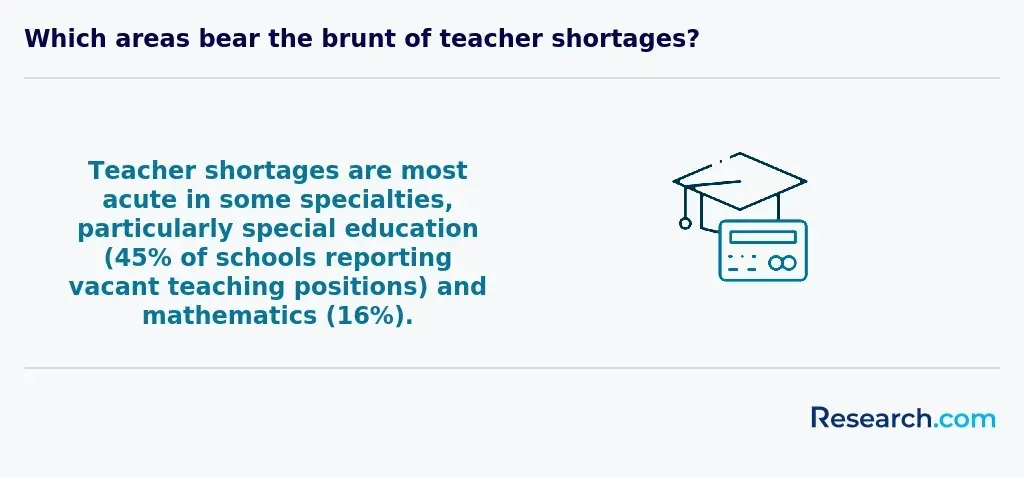
These projections do not guarantee an individual job offer, but they do suggest that candidates with the right endorsement, strong clinical experience, and flexibility across districts may find opportunities. Shortage areas, rural needs, special education, STEM-related subjects, and early childhood roles may each have different hiring patterns, so candidates should research local district postings before selecting an endorsement.
How to improve employment prospects without overspending
- Choose an endorsement that matches actual district demand, not only personal preference.
- Complete student teaching in a district where you would consider working.
- Build references from mentor teachers, principals, and field supervisors.
- Ask whether a program has placement support or district partnerships.
- Consider additional endorsements only if they strengthen employability enough to justify the CEU and coursework burden.
How can advanced education affect a New Hampshire teaching career?
Advanced education can help New Hampshire teachers pursue leadership, curriculum design, instructional coaching, specialized endorsements, or administrative roles. It may also support salary advancement in districts that reward graduate study. However, an advanced degree should be evaluated as an investment, not an automatic pay raise.
Before enrolling, compare tuition, employer reimbursement, salary schedule rules, licensure value, and the time required to complete the program. Teachers who need flexible graduate study may want to compare online masters in education options that align with their subject area, budget, and long-term career goals.
How can I specialize in teaching history in New Hampshire?
Future history teachers need both subject knowledge and age-appropriate teaching skills. A strong pathway should include historical content, social studies pedagogy, classroom assessment, and supervised teaching experience. Candidates should also confirm that the program prepares them for the correct New Hampshire endorsement, especially if they plan to teach middle school, high school, or a specific social studies area.
For a focused guide to this subject area, review Research.com’s resource on how to become a history teacher in New Hampshire.
What does a teacher career path look like in New Hampshire?
A typical New Hampshire teaching career begins with preparation, licensure, and entry-level classroom experience. Over time, educators may add endorsements, complete advanced education, mentor new teachers, become department heads, move into curriculum coordination, or pursue district leadership. Some remain classroom teachers throughout their careers and use professional development to deepen instructional expertise.
| Career stage | Typical focus | Cost-conscious move |
| Pre-licensure | Degree completion, educator preparation, exams, and field experience | Use transfer credits, public programs, and state-approved online coursework when possible. |
| Initial teaching years | Classroom management, curriculum implementation, and mentorship | Choose districts with strong induction support and low-cost professional development. |
| Mid-career growth | Additional endorsements, leadership tasks, or specialized instruction | Add credentials only when they improve employability, salary placement, or role options. |
| Advanced roles | Instructional coaching, department leadership, administration, or policy work | Compare graduate program cost with salary schedule and promotion requirements. |
The most affordable path is not necessarily the shortest. A fast program that lacks field support, licensure alignment, or district connections can cost more if it delays employment.
What should future music teachers know about specialized requirements?
Music teacher preparation usually requires more than general education coursework. Candidates may need to show competence in performance, music theory, rehearsal methods, classroom instruction, and age-appropriate arts education. Some programs may involve auditions, portfolios, or specific music education coursework, so candidates should verify requirements before applying.
For role-specific guidance, see Research.com’s overview of music teacher education requirements in New Hampshire.
How are private school teaching requirements different in New Hampshire?
Private schools in New Hampshire may have more hiring flexibility than public schools. Public school teachers generally need to meet state certification requirements, while private schools may weigh subject expertise, classroom experience, mission fit, professional background, or specialized training differently.
This flexibility can help career changers, subject specialists, or educators with nontraditional backgrounds. However, candidates should not assume private school work will carry the same salary schedule, benefits, retirement treatment, or licensure support as public school employment. Requirements vary by institution.
If you are considering this route, review private school teacher requirements in New Hampshire before deciding whether public licensure, private school employment, or both should be part of your plan.
How can I become a preschool teacher in New Hampshire?
Preschool teaching requires preparation focused on early childhood development, family engagement, learning through play, safety, classroom routines, and age-appropriate assessment. Candidates should verify whether the role they want is in a public school, private preschool, childcare center, Head Start setting, or another early learning environment, because employer expectations can differ.
For a focused explanation of early childhood pathways, see how to become a preschool teacher in New Hampshire.
How can new teachers find mentorship and professional support?
Mentorship can reduce early-career burnout and help new teachers translate preparation coursework into classroom practice. New teachers should look for districts that provide induction support, coaching, curriculum guidance, and regular feedback. Local teacher associations, peer groups, online communities, and program alumni networks can also provide practical advice.
Candidates completing remote or hybrid preparation should ask how mentorship works during field placements. For more information about remote preparation and support structures, Research.com explains how to become a teacher in New Hampshire through online-oriented pathways.
What are the steps to become a kindergarten teacher in New Hampshire?
Kindergarten teachers need preparation in early childhood learning, literacy foundations, developmental assessment, family communication, and classroom routines for young learners. A cost-conscious pathway should still include high-quality supervised experience because kindergarten classrooms require strong practical skill.
- Confirm the exact New Hampshire endorsement needed for kindergarten teaching.
- Choose a state-approved preparation program that includes early childhood or elementary-focused coursework.
- Complete required field experience or student teaching in an age-appropriate setting.
- Pass any required assessments for the endorsement.
- Submit the licensure application, required documentation, and applicable fees.
- Track professional development after licensure so renewal requirements are easier to meet.
For a more detailed role-specific guide, see How to become a kindergarten teacher in New Hampshire?
How do I choose the right New Hampshire teaching credential pathway?
The best pathway is the one that gets you licensed for the role you want at the lowest total cost and with the least risk of wasted credits. Do not choose based only on tuition or convenience. Choose based on licensure alignment, field placement quality, transfer-credit acceptance, endorsement fit, advising, test preparation, and realistic employment outcomes.
| Your starting point | Pathway to compare first | Why it may be affordable |
| No bachelor’s degree yet | Community college plus transfer to a state-approved educator preparation program | Lower-cost early credits can reduce the price of the full degree. |
| Bachelor’s degree in another field | Alternative certification, Site-Based Licensing Plan, or post-baccalaureate preparation | You may avoid repeating undergraduate coursework and may be able to work while completing requirements. |
| Prior teaching experience | Portfolio or experience-based review when available | Documented competencies may reduce the need for additional tuition. |
| Out-of-state licensed teacher | Reciprocity or endorsement review | Existing licensure and experience may shorten the New Hampshire process. |
| Working adult needing flexibility | Online or hybrid state-approved coursework | Remote study can reduce commuting and schedule conflicts. |
Questions to ask every program before enrolling
- Is the program approved for the New Hampshire endorsement I want?
- Will my prior credits transfer, and will I receive that evaluation in writing?
- What exams are required, and when should I take them?
- How are student teaching and field placements arranged?
- What is the total estimated cost, including fees, testing, background checks, and materials?
- Can I continue working while enrolled?
- What happens if I move, change endorsements, or need more time?
- Does the program provide licensure advising and job-search support?
For a deeper comparison of credential types, review New Hampshire teacher certification requirements.
What are the requirements for middle school math teachers in New Hampshire?
Middle school math teachers must combine mathematical content knowledge with instructional strategies suited to adolescent learners. Preparation should include mathematics coursework, methods for teaching problem-solving, assessment strategies, and supervised experience with middle-grade students.
Because math endorsement requirements can be specific, candidates should confirm that their program satisfies New Hampshire expectations before enrolling. For a detailed pathway, see middle school math teacher requirements in New Hampshire.
What are the current teacher certification requirements in New Hampshire?
New Hampshire teacher certification generally requires candidates to meet academic, preparation, assessment, background check, and application requirements. The exact requirements depend on the endorsement, pathway, and prior credentials. Candidates should rely on current state guidance and confirm details directly with the New Hampshire Department of Education or an approved preparation provider.
Core requirement areas to verify
- Degree requirements for the intended teaching level or subject.
- Completion of a state-approved educator preparation program or approved alternative route.
- Required assessments, including basic skills or subject-specific exams where applicable.
- Fingerprinting and background check procedures.
- Application documentation and the $120 certification fee.
- Renewal expectations, including 45 CEUs over a three-year licensure period and 30 additional CEUs for each endorsement.
To compare New Hampshire with other states, use Research.com’s overview of teacher certification requirements by state.
How can I become a high school teacher in New Hampshire?
High school teachers usually prepare for a specific subject area, such as history, mathematics, English, science, music, or another endorsement field. Candidates should choose a pathway that develops both subject mastery and secondary teaching methods. Field experience should take place in a high school or comparable secondary setting whenever possible.
Career changers with subject expertise may be able to compare alternative pathways, but they still need to meet New Hampshire licensure standards. If your interest is history at the high school level, review how to become a high school history teacher in New Hampshire.
Common mistakes that make a teaching credential more expensive
- Choosing a program before checking New Hampshire approval. A program that is not aligned with your target endorsement can lead to extra coursework or licensing delays.
- Looking only at tuition. Exams, background checks, application fees, transportation, and unpaid fieldwork can change the real cost.
- Assuming online means fully remote. Most teacher pathways still require in-person field experience or student teaching.
- Ignoring transfer-credit policies. Candidates with prior college coursework should get a written transfer evaluation before enrolling.
- Adding endorsements without a plan. Extra endorsements can improve flexibility, but they may also require additional CEUs and preparation.
- Waiting to plan for renewal. Professional development is easier and often cheaper when it is tracked throughout the three-year licensure period.
- Assuming salary averages apply everywhere. New Hampshire teacher pay varies sharply by district, so review salary schedules before estimating return on investment.
Key Insights
- The cheapest New Hampshire teaching credential route depends on your starting point. A first-time college student, bachelor’s degree holder, out-of-state teacher, and foreign-trained educator will not have the same lowest-cost option.
- State-approved preparation programs remain a common pathway, with around 60% of certified educators completing an approved preparation program.
- Career changers with a bachelor’s degree should compare alternative options such as the Site-Based Licensing Plan, which can allow candidates to earn while meeting requirements over a three-year period.
- A portfolio route may reduce tuition costs for candidates who can document required teaching competencies.
- Online coursework can lower commuting and scheduling costs, but candidates must verify that the program leads to the correct New Hampshire endorsement and includes workable field placement support.
- Budget beyond tuition. The certification application fee is $120, background checks can range from $50 to $100, and each Praxis exam costs around $90.
- Teacher salaries vary widely by district, from examples such as $31,990 in Unity to above $78,194 in Lyme, so ROI should be based on realistic local salary schedules.
- Renewal planning matters from the beginning. New Hampshire educators must complete 45 CEUs over a three-year licensure period, plus 30 additional CEUs for each endorsement.
Related Articles for Nearby States
- 2027 Cheapest Way to Get a Teaching Credential in Vermont: Requirements & Certification
- 2027 Cheapest Way to Get a Teaching Credential in Massachusetts: Requirements & Certification
- 2027 Cheapest Way to Get a Teaching Credential in Maine: Requirements & Certification
- 2027 Cheapest Way to Get a Teaching Credential in New York: Requirements & Certification
- 2027 Cheapest Way to Get a Teaching Credential in Connecticut: Requirements & Certification
- 2027 Cheapest Way to Get a Teaching Credential in Rhode Island: Requirements & Certification
- 2027 Cheapest Way to Get a Teaching Credential in New Jersey: Requirements & Certification
- 2027 Cheapest Way to Get a Teaching Credential in Pennsylvania: Requirements & Certification
- 2027 Cheapest Way to Get a Teaching Credential in Delaware: Requirements & Certification
- 2027 Cheapest Way to Get a Teaching Credential in Maryland: Requirements & Certification
References:
- BestColleges.com (22 Mar 2023). How to Become a Teacher in New Hampshire. bestcolleges.com https://www.bestcolleges.com/education/certification/new-hampshire/
- Christine Zinkand (08 May 2023). Credentialing HD Knowledge Base. nhdoepm.atlassian.net https://nhdoepm.atlassian.net/wiki/spaces/CHD/pages/323715076/Educator+DOE+Renewal
- cps.unh.edu (08 Nov 2021). How To Become a Certified Teacher in NH and Make a Difference. cps.unh.edu https://cps.unh.edu/blog/2021/11/how-become-certified-teacher-nh-make-difference
- education.nh.gov (31 May 2019). State Average Salary 13624.2* 59,198.2. education.nh.gov https://www.education.nh.gov/sites/g/files/ehbemt326/files/inline-documents/teach_sal18-19.pdf
- NCTQ. (2023). Data Brief: How do trends in teacher preparation enrollment and completion vary by state?. https://www.nctq.org/blog/Data-Brief:-How-do-trends-in-teacher-preparation-enrollment-and-completion-vary-by-state
- nhes.nh.gov (n.d.). Additional fees vary by pathway for licensure and number of endorsements applied for. nhes.nh.gov https://www.nhes.nh.gov/elmi/products/licertocc/documents/teacher.pdf
- nhrs.org (01 Jul 2011). Early Retirement. nhrs.org https://www.nhrs.org/members/benefits/early-service-retirement/g-i-vested-1-1-12
- onetonline.org (09 Aug 2024). Teachers and Instructors, All Other. onetonline.org https://www.onetonline.org/link/localtrends/25-3099.00?st=NH
- tea.texas.gov (n.d.). Out-of-State Certified Educators. tea.texas.gov https://tea.texas.gov/texas-educators/certification/out-of-state-certification/out-of-state-certified-educators
- teach.org (n.d.). Find Your Teacher Career Path. teach.org https://www.teach.org/explore/career-paths
Other Things You Should Know About Getting a Teaching Credential in New Hampshire
In 2027, the cheapest way to get a teaching credential in New Hampshire is through the Alternative 4 pathway. This allows individuals with a bachelor's degree to work in a school while completing a state-approved alternative certification program, reducing costs by offering practical teaching experience as part of the process.
In 2027, to become a certified teacher in New Hampshire, candidates must have at least a bachelor's degree and complete an approved educator preparation program. While a master's degree can enhance career opportunities, it is not a minimum requirement for obtaining a teaching credential.
In 2027, aspiring teachers in New Hampshire can save costs by enrolling in an alternative certification program, such as Teach for America or local college partnerships. These programs often offer reduced tuition rates and provide hands-on classroom experience, making the path to certification both affordable and practical.


