2027 Teacher Certification Types & Requirements in Virginia

Co-Founder and Chief Data Scientist
Becoming a teacher in Virginia means choosing the right licensure route, completing the required preparation, passing state assessments, and keeping your credential active after you begin teaching. The best path depends on your background: a first-time college student, a bachelor’s degree holder changing careers, an experienced educator moving from another state, or a licensed teacher adding a specialty endorsement will each face different requirements.
This guide explains Virginia teacher certification in practical terms: license types, education requirements, exams, traditional and alternative programs, costs, timelines, renewal rules, reciprocity, and specialty pathways such as ESL, music, and physical education. It is designed to help you compare options before committing time and money to a program.
Quick Answer: Virginia Teacher Certification at a Glance
- Virginia uses several licensure categories, including the Provisional License, Collegiate Professional License, Postgraduate Professional License, Technical Professional License, emergency or substitute permits, alternative-route options, specialty endorsements, and advanced professional credentials.
- Most candidates need a bachelor’s degree, completion of an approved teacher preparation program or alternative pathway, required state assessments, supervised classroom experience, background-related requirements, and statutory training such as child abuse recognition, CPR, first aid, AED, and dyslexia awareness.
- The average teacher salary in Virginia is around $66,404, though actual pay depends on district, experience, endorsement area, degree level, and local salary schedules.
- Virginia licensure can be a strong option for candidates who want access to public school teaching roles, professional development, state retirement benefits, and possible advancement into instructional leadership or administration.
- What are the different types of teaching certifications in Virginia?
- What are the education requirements to become a certified teacher in Virginia?
- What tests are required for teacher certification in Virginia?
- What are the best certification programs in Virginia?
- Are there alternative routes to teacher certification in Virginia?
- How much does it cost to get a teaching certification in Virginia?
- How long does it take to get certified as a teacher in Virginia?
- What is the most cost-effective approach to teacher certification in Virginia?
- How can I pursue specialized certification for music education in Virginia?
- What are the specialized certification requirements for ESL teachers in Virginia?
- What challenges may impact the teacher certification process in Virginia?
- How can I become a physical education teacher in Virginia?
- How do you renew Virginia teaching certification?
- Is teacher certification in Virginia transferable to other states?
- What are the benefits of having a teacher certification in Virginia?
What are the different types of teaching certifications in Virginia?
Virginia does not use one single credential for every educator. The license or permit you need depends on whether you have completed all preparation requirements, are entering through an alternative pathway, hold graduate-level credentials, teach a technical subject, or need a temporary authorization while a school fills an urgent staffing need.
The table below summarizes the main Virginia teacher certification types and when each one typically makes sense.
| Virginia credential type | Who it is generally for | Important notes |
| Provisional License | Candidates who are not yet fully licensed but have been hired or are completing remaining requirements | Usually issued for three years and is non-renewable; often used by career changers or candidates in alternative routes. |
| Collegiate Professional License | Educators who have completed required preparation, assessments, and bachelor’s-level requirements | A 10-year renewable license commonly awarded to candidates entering through traditional undergraduate or post-baccalaureate preparation. |
| Postgraduate Professional License | Teachers who qualify for the Collegiate Professional License and also hold a graduate degree | Also valid for 10 years and renewable; may support advancement into specialized, leadership, or higher-level instructional roles. |
| Technical Professional License | Individuals with substantial occupational expertise in approved technical fields | Designed for candidates whose professional experience is central to the teaching assignment; renewable every 10 years. |
| Emergency or Substitute Permits | Schools facing short-term staffing needs or substitute coverage gaps | Temporary authorizations that do not replace full teacher licensure. |
| Alternative Route Certification | Career changers and subject-matter experts who did not complete a traditional education degree | Often begins with a Provisional License while the candidate completes coursework, mentoring, and state requirements. |
| Subject-Specific or Special Education Endorsements | Licensed educators who want authorization in a content area, grade band, or student population | Examples include content fields, special education, ESL, and other approved endorsement areas. |
| Advanced Professional Licenses | Experienced educators with advanced credentials, graduate study, or National Board Certification | Can recognize advanced expertise and may support roles beyond classroom teaching. |
If you are interested in education careers that do not involve a standard classroom teaching role, you may also want to explore career options for education degree holders outside teaching.
What are the education requirements to become a certified teacher in Virginia?
Most Virginia teacher candidates need both academic preparation and supervised classroom practice. The state expects teachers to show subject knowledge, pedagogical training, professional readiness, and awareness of student safety and legal responsibilities before receiving full licensure.
Common education and training requirements include the following:
- Bachelor’s degree: Most candidates must earn at least a bachelor’s degree from an accredited institution. Traditional candidates usually complete the degree alongside a state-approved teacher education program, though some technical and alternative routes work differently.
- Approved teacher preparation: Candidates typically complete a state-recognized educator preparation program that combines instructional theory, teaching methods, subject-area preparation, and fieldwork tied to the intended endorsement.
- Professional studies coursework: Virginia preparation commonly includes topics such as classroom management, instructional planning, child and adolescent development, assessment, educational technology, and strategies for supporting diverse learners.
- Student teaching or clinical practice: Traditional pathways include supervised teaching in a K-12 setting under the guidance of an experienced licensed educator. This is where candidates apply lesson planning, classroom management, assessment, and student support skills in real classrooms.
- Child abuse recognition training: Candidates must complete approved training on identifying and responding to suspected child abuse before licensure.
- CPR, first aid, and AED certification: Virginia requires proof of current emergency first aid, CPR, and AED training through an approved source.
- Additional statutory training: Depending on the license and endorsement, candidates may also need training in areas such as dyslexia awareness, restraint and seclusion, Virginia history or government, cultural competency, and behavior interventions.
For educators who eventually want to move into research, higher education administration, or senior academic leadership, a graduate pathway such as a PhD in higher education online may be worth comparing after initial licensure and classroom experience.
The chart below shows common majors among certified teachers:
What tests are required for teacher certification in Virginia?
Virginia uses licensure assessments to verify that teacher candidates can communicate effectively, understand their subject area, and teach literacy where required. The exact testing plan depends on the grade level and endorsement you are pursuing.
| Assessment or requirement | What it measures | Who typically needs it |
| Virginia Communication and Literacy Assessment (VCLA) | Reading, writing, and communication skills needed for professional teaching | Required for many teacher licensure candidates in Virginia. |
| Praxis Subject Assessments | Content knowledge in the endorsement area, such as mathematics, science, social studies, or elementary education | Candidates seeking subject-specific teaching authorization; required scores vary by endorsement. |
| Reading for Virginia Educators (RVE) | Reading development, literacy instruction, and evidence-based reading practices | Commonly required for elementary education and special education candidates. |
| Required training modules | Student safety, legal responsibilities, health response, literacy awareness, and behavior support | Candidates must complete required training such as Child Abuse Recognition, CPR, AED, Dyslexia Awareness, and Behavior Interventions where applicable. |
A smart testing strategy is to confirm your required exams with your preparation program and the Virginia Department of Education before registering. Taking the wrong Praxis assessment, missing a training module, or waiting too long to schedule an exam can delay licensure.
What are the best certification programs in Virginia?
The best Virginia teacher certification program is the one that is approved for your intended endorsement, fits your schedule, offers strong field placement support, prepares you for required assessments, and has transparent costs. Well-known university-based options in Virginia include both traditional undergraduate pathways and post-baccalaureate or graduate routes for candidates who already hold a degree.
Examples of established Virginia educator preparation providers include:
- University of Virginia (UVA) School of Education and Human Development: UVA offers licensure-focused preparation that combines pedagogy, professional requirements, field experiences, student teaching, and state-required training such as child abuse awareness and dyslexia preparation. Some options may include flexible online components.
- Virginia Commonwealth University (VCU) School of Education: VCU emphasizes research-informed instruction and supervised fieldwork, with preparation relevant to urban, suburban, and diverse classroom settings.
- James Madison University (JMU) College of Education: JMU’s licensure programs pair content knowledge with reflective teaching practice, field placements, and a full semester of student teaching aligned with Virginia Department of Education expectations.
- George Mason University College of Education and Human Development: George Mason focuses on preparing educators for Virginia schools through inclusive practices, technology integration, and standards-based teacher preparation.
- Old Dominion University (ODU) Darden College of Education & Professional Studies: ODU offers on-campus and distance-learning options and uses partnerships with local school divisions to support clinical preparation.
When comparing programs, do not rely only on reputation. Ask whether the program is approved for your exact endorsement, how field placements are arranged, what exam pass support is available, and whether online coursework still meets Virginia licensure requirements. Candidates looking for lower-cost online options may want to compare affordable online elementary education programs that align with their certification goals.
| Program feature to verify | Why it matters | Question to ask |
| State approval | Only approved preparation routes reliably connect coursework to Virginia licensure requirements. | Is this program approved for the specific Virginia endorsement I want? |
| Clinical placement support | Student teaching and fieldwork can be difficult to arrange without school partnerships. | Who secures my placement, and where can I complete it? |
| Exam preparation | VCLA, Praxis, and RVE requirements can affect your timeline and budget. | What support is offered if I do not pass on the first attempt? |
| Online compatibility | Online coursework may be convenient, but licensure still requires approved clinical and training components. | Does the online format meet all Virginia licensure requirements? |
| Total cost | Tuition is only part of the expense; exams, background checks, applications, and materials also matter. | What is the estimated total cost from enrollment through licensure? |
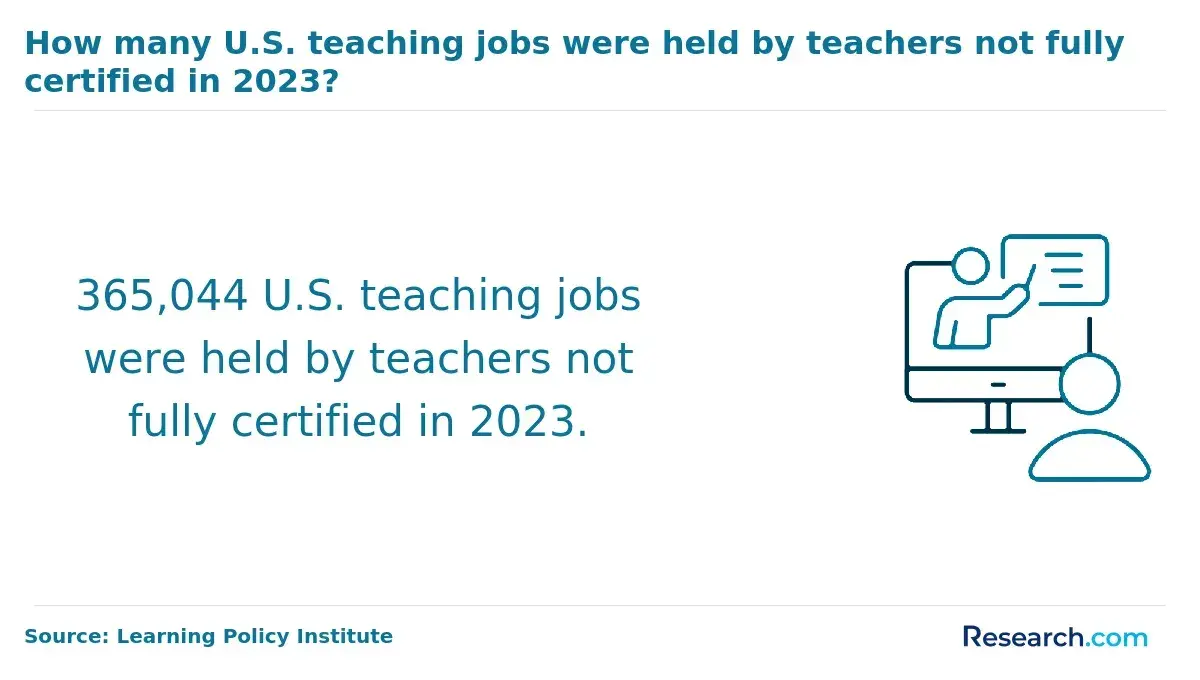
The following image shows the share of teaching jobs across the U.S. held by certified teachers and illustrates why formal credentials matter for employment access.
Are there alternative routes to teacher certification in Virginia?
Yes. Virginia offers alternative licensure options for candidates who did not complete a traditional teacher preparation degree but have a bachelor’s degree, relevant professional experience, and subject-matter knowledge. These routes are especially relevant for career changers who want to teach in shortage areas or secondary content fields.
Key features of Virginia’s alternative certification options include:
- Career Switcher Alternative Route to Licensure: This route generally requires a bachelor’s degree from a regionally accredited institution and at least three years of full-time work experience outside teaching.
- Endorsement preparation: Candidates must satisfy teaching-area endorsement requirements through coursework, professional experience, or a combination that demonstrates subject competence.
- Required assessment scores: Alternative-route candidates must meet the required scores on professional teacher assessments set by the Virginia Board of Education.
- Two-phase structure: Phase I often includes online coursework, classroom observation, and teaching methods, leading to eligibility for a one-year provisional license. Phase II generally requires full-time teaching while completing seminars and field-based support, with the goal of earning a 10-year renewable license.
- Additional application requirements: Candidates may need official transcripts, a minimum undergraduate GPA often listed as 2.5 on a 4.0 scale, Praxis results, professional references, and state-required training such as child abuse prevention and CPR certification.
- Route limitations: The Career Switcher route is primarily aimed at middle and high school teaching in grades 6–12 and does not cover elementary education, special education, or add-on endorsements.
Alternative licensure can be faster and less expensive than returning for a full education degree, but it is not an “easy shortcut.” Candidates must balance coursework, testing, classroom adjustment, and often a full-time teaching role. People with strong communication skills, resilience, and substantial content knowledge tend to be better prepared for this route.
| Traditional route | Alternative route |
| Best for first-time college students or candidates who want a structured educator preparation sequence. | Best for bachelor’s degree holders with professional experience who want to change careers. |
| Usually includes extensive coursework before full-time teaching. | Often places candidates into teaching while they complete remaining preparation. |
| Commonly supports elementary, secondary, and many specialty endorsement areas. | Career Switcher options are mainly focused on grades 6–12 and may not cover elementary or special education. |
| May take longer if completed as part of a full undergraduate degree. | May be faster, but the pace can be demanding for new teachers. |
A Virginia-certified teacher who entered through an alternative route described the transition as demanding but worthwhile. He said his corporate management background helped with organization and communication, but the provisional-license year required rapid growth in lesson planning, student engagement, and classroom routines. His advice was simple: choose a program with strong coaching, not just low tuition.
How much does it cost to get a teaching certification in Virginia?
The cost of becoming certified in Virginia depends heavily on your route. A traditional undergraduate education degree usually costs more than an alternative certification program, but it may provide more structured preparation, broader endorsement options, and built-in student teaching support. Candidates who already have a bachelor’s degree should compare post-baccalaureate, master’s, and alternative options carefully.
| Cost category | Typical amount stated | What to remember |
| Public undergraduate teacher preparation | $10,000 to $15,000 per year for in-state students | Tuition varies by institution, course load, fees, and living costs. |
| Private undergraduate programs | $20,000 to $35,000 annually | Private tuition can be substantially higher, so scholarships and aid matter. |
| Graduate certification programs at public universities | $12,000 and $25,000 | Often used by candidates who already hold a bachelor’s degree. |
| Private graduate options | Frequently exceeding $30,000 | Compare total program cost, not only per-credit tuition. |
| Alternative certification example | $99 or $250 enrollment fee depending on payment plans, with a total program cost around $3,050 | Programs such as CAEP-accredited iteach may not include exams, fingerprinting, or state fees. |
| Praxis II Subject Tests | About $170 for elementary education | Costs may increase if retesting is needed. |
| Virginia Communication and Literacy Assessment (VCLA) | $40 to $80 per test component | Budget for all required components and preparation materials. |
| Background checks and fingerprinting | $50 to $100 | May be required for placements, employment, or licensure steps. |
| State licensure application fee | $100 for in-state applicants | Renewal and other application-related fees may also apply. |
| Test preparation and materials | Free resources to paid courses costing several hundred dollars | Paid prep is optional, but retesting can make weak preparation more expensive. |
Financial aid, scholarships, employer reimbursement, Teacher Loan Forgiveness, and TEACH Grants may help reduce the cost for eligible candidates. If you are considering additional credentials that broaden your education career options, you may also want to compare a master’s in library science with teacher licensure or instructional support roles.
How long does it take to get certified as a teacher in Virginia?
Your certification timeline depends on your current education level, the endorsement you want, whether you study full time or part time, and how quickly you complete exams, fieldwork, and state paperwork.
| Certification pathway | Typical timeline stated | Best fit |
| Traditional bachelor’s degree pathway | About four years of full-time study | Students starting college who want an education degree and licensure preparation together. |
| Post-baccalaureate or master’s certification | 12 to 24 months | Bachelor’s degree holders who want a structured certification or graduate route. |
| Alternative or accelerated programs | As little as 9 to 12 months | Career changers who meet eligibility requirements and can handle a compressed schedule. |
| Student teaching or internship | A full semester, about 15–16 weeks | Traditional candidates and many post-baccalaureate candidates. |
| Supervised teaching in some alternative pathways | May require a full academic year | Alternative-route candidates teaching while completing program requirements. |
| Application and licensure processing | Typically 2–4 weeks after requirements are submitted | All candidates, though peak periods and incomplete documentation can cause delays. |
Exam preparation can add several months if you need additional study time or must retake an assessment. Transfer credits, summer terms, part-time enrollment, and out-of-state experience can also change the timeline.
What is the most cost-effective approach to teacher certification in Virginia?
The lowest-cost route is not always the best route. A cost-effective plan should meet Virginia licensure rules, prepare you for your intended classroom, minimize unnecessary coursework, and avoid delays that create extra fees. For many bachelor’s degree holders, an approved alternative route may be less expensive than a second degree. For first-time college students, an in-state public university program may provide a more complete pathway if the degree and licensure requirements are integrated.
Use this decision process before choosing a program:
- Confirm the exact endorsement and grade level you want to teach.
- Check whether the program is approved for Virginia licensure in that area.
- Calculate total cost, including tuition, fees, exams, background checks, applications, materials, and travel to field placements.
- Ask whether you can use transfer credits, prior coursework, or professional experience.
- Compare financial aid, scholarships, loan forgiveness eligibility, employer reimbursement, and payment plans.
- Choose the least expensive option that still provides credible preparation, placement support, and licensure alignment.
For a deeper cost-focused breakdown, review this guide to the cheapest way to get a teaching credential in Virginia.
How can I pursue specialized certification for music education in Virginia?
Music education candidates need more than general teaching preparation. They must be ready to teach music theory, performance, ensemble direction, classroom instruction, curriculum planning, and age-appropriate music learning. Programs typically combine education coursework with music-specific preparation and supervised experience in school settings.
Before enrolling, ask whether the program prepares you for Virginia’s music endorsement requirements, whether field placements include real K-12 music classrooms, and how the program supports both performance skill and instructional technique. For a focused pathway, see this guide on how to become a music teacher in Virginia.
What are the specialized certification requirements for ESL teachers in Virginia?
ESL teachers work with students who are developing English proficiency while also learning academic content. In Virginia, candidates pursuing ESL or ESOL-related preparation should expect specialized coursework in language acquisition, literacy development, culturally responsive instruction, assessment, and field experiences with multilingual learners.
This specialty can be a strong fit for educators who want to support diverse student populations and collaborate with classroom teachers, families, and school support teams. For a detailed explanation of this pathway, review the guide to ESL teacher requirements in Virginia.
What challenges may impact the teacher certification process in Virginia?
Most delays in teacher certification are preventable. Candidates often run into trouble when they choose a program before confirming approval, underestimate testing requirements, miss statutory training, or submit incomplete documentation. Alternative-route candidates may also underestimate how difficult it is to learn teaching methods while starting full-time classroom work.
| Common mistake | Why it causes problems | Better approach |
| Choosing a program only because it is online or inexpensive | It may not meet Virginia endorsement or clinical requirements. | Verify state approval and endorsement alignment before enrolling. |
| Focusing only on tuition | Exams, background checks, materials, and application fees can add meaningful cost. | Build a full budget from enrollment through licensure. |
| Taking the wrong exam | Incorrect Praxis or missing RVE requirements can delay application review. | Confirm assessment requirements with your program and the state before registering. |
| Waiting too long to schedule fieldwork | Placements depend on school availability and program partnerships. | Ask early how placements are assigned and what locations are available. |
| Assuming reciprocity is automatic | Other states may require extra tests, training, or background checks. | Research the destination state before moving or accepting a job. |
| Letting a license lapse | You cannot teach in Virginia public schools until reinstatement requirements are resolved. | Track renewal points and statutory training throughout the license cycle. |
If your main concern is timing, the guide How long does it take to be a teacher in Virginia? can help you compare routes more closely.
How can I become a physical education teacher in Virginia?
Physical education teachers need preparation in movement science, health and wellness, instructional design, safety, assessment, and age-appropriate physical activity. Candidates should expect subject-specific coursework, supervised school experience, and required safety credentials such as CPR and first aid.
This pathway is a good fit for candidates who enjoy coaching, wellness education, student motivation, and active learning environments. It also requires strong classroom management because PE teachers often supervise movement-based activities with safety risks. For a step-by-step overview, read the guide on how to become a PE teacher in Virginia.
How do you renew Virginia teaching certification?
Virginia teaching licenses must be renewed to show that educators remain current in professional practice, state requirements, and student support responsibilities. Renewal should be planned throughout the license cycle rather than rushed near the expiration date.
- License duration: Most Virginia teaching licenses, including Postgraduate Professional and Technical Professional licenses, are renewed every ten years.
- Professional development for 10-year licenses: Teachers renewing a ten-year license must complete 270 professional development points through sustained, high-quality activities connected to an individualized professional development plan.
- Professional development for 5-year licenses: Educators who still hold five-year renewable licenses, which are being phased out, need 180 professional development points before conversion to the ten-year renewable license type.
- Required statutory training: Teachers must complete all applicable Virginia Board of Education renewal requirements, including required trainings or certifications within the renewal cycle.
- Approval of activities: Professional development activities generally need approval from the chief executive officer or designee of the employing Virginia educational agency, and reciprocity may apply for points earned across agencies.
- Online renewal submission: Renewal applications are submitted through the Virginia Department of Education’s online licensure portal or educator account system.
- Documentation: Educators must keep records proving completion of professional development points and required training.
- Renewal fees: Applicants must pay the renewal fee listed by the Department of Education.
- Background check updates: Some educators may need updated background checks, especially after a gap in employment or a break in service.
- Reinstatement after expiration: If a license lapses, the educator cannot teach in Virginia public schools until reinstatement requirements, documentation, and fees are completed.
Graduate coursework can sometimes support professional growth and renewal planning. If you are deciding whether graduate study is worth the cost, compare the career value of an online master’s degree in education before enrolling.
To better understand how education level may relate to earnings, see the chart below on average salary differences among certified teachers by educational attainment.
Is teacher certification in Virginia transferable to other states?
Virginia teacher certification may transfer to other states through reciprocity, but transferability does not mean automatic licensure. Virginia participates in the NASDTEC Interstate Agreement, which includes more than 40 states such as California, Texas, New York, Florida, and North Carolina. Each receiving state still controls its own licensing rules.
Teachers moving out of Virginia may need to complete background checks, state-specific exams, mandated training, or additional documentation. Some states provide temporary or provisional licenses so educators can begin working while finishing remaining requirements.
Before relocating, gather official transcripts, test scores, license verification, proof of teaching experience, and professional development records. Then check the destination state’s education department requirements before applying for jobs.
A Virginia-certified teacher who moved to another state described reciprocity as helpful but not effortless. Her Virginia credential was recognized, but she still had to complete extra exams and training. The temporary license helped her start working sooner, but the paperwork required careful tracking.
What are the benefits of having a teacher certification in Virginia?
Virginia teacher certification is more than a legal requirement for many public school roles. It can expand employment eligibility, support long-term career growth, and provide access to professional structures that uncertified candidates may not have.
- Access to public school teaching roles: Certification is required for many positions in Virginia public schools, charter schools, and specialized instructional programs.
- Stronger employment mobility: A state-issued license can make it easier to apply across districts and pursue positions that match your endorsement area.
- Salary schedule placement: Certification, degree level, years of experience, and endorsements can affect placement on district pay scales, though earnings are not guaranteed.
- Leadership opportunities: Licensed teachers may pursue roles such as lead teacher, department chair, mentor teacher, instructional coach, or administrator with additional qualifications.
- Eligibility for incentives: Certified teachers may qualify for selected scholarships, shortage-area supports, loan forgiveness options, or programs for educators serving low-income communities.
- Benefits and retirement access: Certified public school teachers may be eligible for health coverage and retirement benefits through systems such as the Virginia Retirement System, depending on employment status.
- Ongoing professional development: Licensure connects teachers to renewal requirements, training, endorsements, and professional learning that can strengthen classroom practice.
- Improved instructional readiness: Certification preparation includes classroom management, assessment, pedagogy, and student support training that helps teachers serve diverse learners more effectively.
Current education trends make certification planning even more important. Districts increasingly expect teachers to use instructional technology, support diverse learners, respond to literacy needs, and adapt to data-informed instruction. AI tools may help with planning, feedback, and administrative tasks, but they do not replace the need for licensed educators who understand student development, classroom judgment, ethics, and subject instruction.
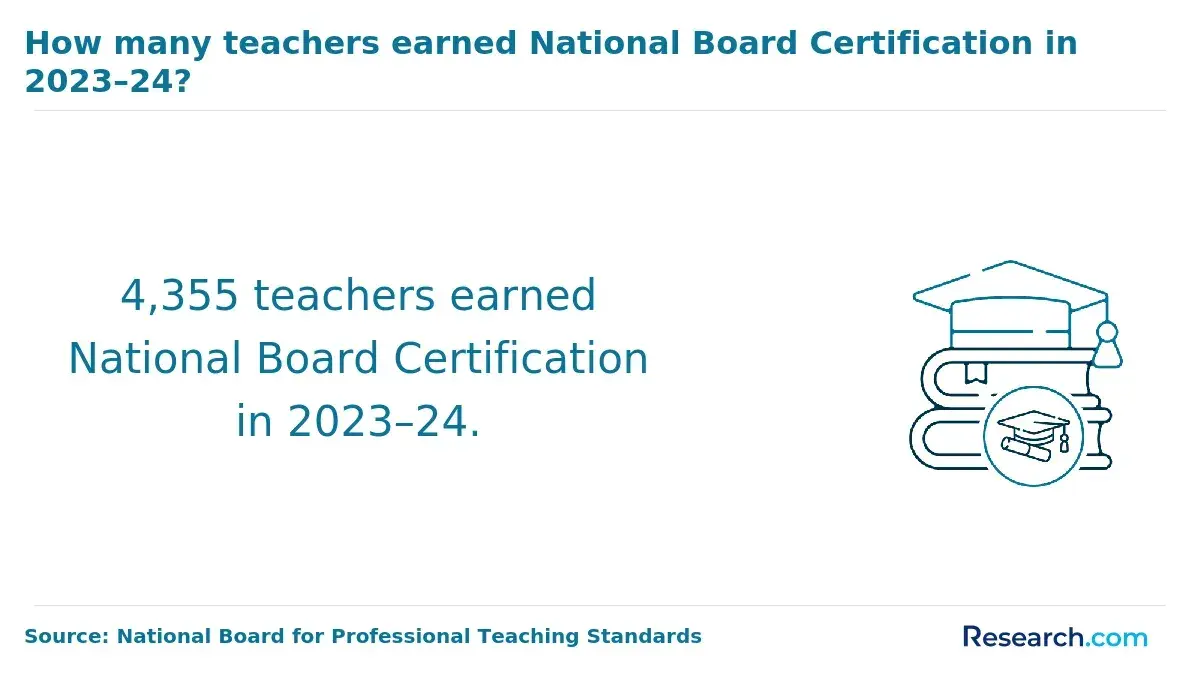
To further illustrate the role of advanced professional credentials, the following image shows how many teachers across the U.S. have earned National Board Certification.
What Teachers in Virginia Say About Their Certification
- Earning my Virginia teaching license changed the way I planned my career. I can apply across districts, compare school settings, and make choices that fit my family responsibilities. The salary structure also made the investment feel more practical. – Lily
- My certification gave me access to roles I would not have been considered for before. Over time, I was able to look beyond the classroom and consider lead teacher and administrative pathways. – Lyca
- The renewal and professional development expectations keep me learning. They take planning, but they also help me stay current and more confident in my teaching. – Rheanne
Related Articles for Nearby States
- 2027 Teacher Certification Types & Requirements in West Virginia
- 2027 Teacher Certification Types & Requirements in Maryland
- 2027 Teacher Certification Types & Requirements in North Carolina
- 2027 Teacher Certification Types & Requirements in Tennessee
- 2027 Teacher Certification Types & Requirements in Kentucky
- 2027 Teacher Certification Types & Requirements in Pennsylvania
- 2027 Teacher Certification Types & Requirements in South Carolina
- 2027 Teacher Certification Types & Requirements in Ohio
- 2027 Teacher Certification Types & Requirements in Delaware
- 2027 Teacher Certification Types & Requirements in New Jersey
Key Insights
- Virginia teacher certification starts with matching your background to the right route: traditional preparation, post-baccalaureate study, an alternative pathway, technical licensure, reciprocity, or an endorsement add-on.
- Most candidates should plan for a bachelor’s degree, approved preparation, supervised classroom experience, VCLA and Praxis-related testing, and required training such as child abuse recognition, CPR, first aid, AED, and dyslexia awareness.
- Alternative certification can reduce time and cost for qualified career changers, but it is best suited for candidates who can manage coursework, testing, and classroom responsibilities at the same time.
- Cost comparisons should include more than tuition. Exams, background checks, application fees, materials, field placement logistics, and possible retesting can change the true price of certification.
- Virginia licenses can often support mobility to other states, but reciprocity is not automatic. Each state may require additional exams, training, background checks, or documentation.
- The safest way to avoid delays is to verify program approval, endorsement alignment, exam requirements, and renewal rules directly before enrolling or applying.
References:
- College of Liberal Arts and Human Sciences, Virginia Tech. (n.d.). Education teaching licensure programs. https://liberalarts.vt.edu/academics/graduate-programs/licensure.html
- Education Commission of the States. (n.d.). Teacher license reciprocity state profiles. https://www.ecs.org/teacher-license-reciprocity-state-profiles
- FastForward Virginia. (n.d.). Teacher certification programs. https://fastforwardva.org/credential_cats/education
- Indeed. (2025). Teacher salary in Virginia. https://www.indeed.com/career/teacher/salaries/VA
- Moreland University. (n.d.). 10 benefits of teaching in VA infographic. https://teach.moreland.edu/virginia-teaching-benefits
- Moreland University. (n.d.). Thinking about teaching in Virginia? A step-by-step guide for out-of-state applicants. https://moreland.edu/resources/blog-insights/thinking-about-teaching-in-virginia-a-step-by-step-guide-for-out-of-state-applicants
- Moreland University. (n.d.). Virginia alternative route to licensure. https://iteach.net/alternative-teacher-certification/virginia-teacher-alternative-route-to-licensure
- Teaching Certification. (n.d.). Virginia teacher reciprocity agreements and certification information for out-of-state teachers. https://teaching-certification.com/teaching/virginia-teacher-reciprocity
- Teach Virginia. (n.d.). Requirements and licensure areas for Virginia teachers. http://teachvirginia.org/get-certified
- University of Virginia School of Education and Human Development. (n.d.). Become a teacher. https://education.virginia.edu/academics/become-teacher
- Virginia Beach City Public Schools. (n.d.). Quick glance at Virginia licensure. https://www.vbschools.com/careers/quick-glance-at-virginia-licensure
- Zippia. (2025). Certified Teacher Demographics and Statistics [2025]: Number of certified teachers in the US. https://www.zippia.com/certified-teacher-jobs/demographics
Other Things You Should Know About Teacher Certification Types and Requirements in Virginia
Virginia has reciprocity agreements with several states allowing already certified teachers to receive a Virginia license more easily. Candidates must submit proof of valid certification and meet specific state requirements, such as background checks and sometimes additional coursework.
In 2027, prospective teachers in Virginia must pass the Praxis Core Academic Skills for Educators tests, the Virginia Communication and Literacy Assessment (VCLA), and the specific Praxis Subject Assessments related to their teaching field to meet state certification requirements.
The Virginia Department of Education, through the Board of Education, issues teacher licenses in Virginia. Applicants submit materials through the online licensure process and must meet endorsement, testing, and background-check requirements before a license is approved.