2027 Best Online Bachelor's in Healthcare Administration for Career Changers

Co-Founder and Chief Data Scientist
Changing careers into healthcare can be confusing because many roles require business skills, not clinical training. An online bachelor's in healthcare administration can help bridge that gap. The U.S. Bureau of Labor Statistics projects medical and health services manager employment to grow 29% from 2023 to 2033, far faster than average. This guide is for adults comparing flexible degree options, costs, accreditation, transfer credits, and career outcomes so they can decide whether this path fits their goals, schedule, and return-on-investment expectations.
Key Things You Should Know
- The strongest online bachelor's in healthcare administration programs for career changers are regionally accredited, transfer-friendly, and built around healthcare finance, operations, quality improvement, law, ethics, and data-informed management.
- Completion time usually ranges from about 18 months for students with substantial transfer credits to four years for first-time bachelor's students, with part-time study often extending the timeline.
- The BLS reported a May 2024 median annual wage of $117,960 for medical and health services managers, but many bachelor's graduates start in coordinator, analyst, office manager, or revenue cycle roles before advancing.
What is an online bachelor's in healthcare administration and who is it best suited for?
An online bachelor's in healthcare administration is an undergraduate degree focused on the business, compliance, operations, and leadership side of healthcare. Instead of preparing students to diagnose or treat patients, it prepares them to support how hospitals, clinics, insurers, long-term care organizations, public health agencies, and health technology companies operate.
For career changers, the best programs are usually those that accept prior college credit, offer asynchronous classes, and connect assignments to real workplace problems. If you are comparing a health administration degree, look beyond the label and check whether the curriculum matches the type of healthcare setting you want to enter.
This degree tends to fit people who want to move into healthcare without becoming a nurse, physician assistant, therapist, or other licensed clinician. It may be especially useful for adults with previous experience in customer service, retail management, military administration, finance, billing, human resources, insurance, logistics, project coordination, or office operations.
The table below summarizes who is usually a strong fit and who may need a different option. Use it as a quick self-check before spending time on applications.
| Reader profile | Fit for an online healthcare administration bachelor's | Why it matters |
| Career changer with business or operations experience | Strong fit | Prior management, scheduling, budgeting, and process-improvement skills can transfer well into healthcare settings. |
| Working adult who needs flexibility | Strong fit if the program is asynchronous or hybrid-light | Online delivery can reduce commuting time, but deadlines, group work, and practicum requirements still need planning. |
| Student seeking direct patient-care licensure | Weak fit | This degree does not qualify graduates to become licensed nurses, physicians, pharmacists, or therapists. |
| Future executive aiming for senior hospital leadership | Good starting point | A bachelor's can open the door, but senior roles often favor experience plus a graduate degree. |
| Student mainly interested in coding or cybersecurity | Possible fit with the right concentration | A health information management, informatics, or data concentration may be more relevant than a general administration track. |
Are online bachelor's in healthcare administration good options for career changers?
Yes, an online bachelor's in healthcare administration can be a good option for career changers when the goal is to enter the administrative, operational, or management side of healthcare. It is less ideal if you want a clinical credential, a very low-cost short-term job switch, or a role that requires a specialized license.
The main advantage is that healthcare organizations need people who understand both service delivery and business constraints. Career changers often underestimate how valuable nonclinical experience can be when paired with healthcare-specific knowledge. A former retail manager may already understand staffing, customer complaints, inventory, performance metrics, and compliance routines; the degree helps translate those skills into healthcare language.
Before enrolling, compare the degree against faster or more specialized alternatives. The right choice depends on your timeline, current education, and target role.
| Option | Best for | Main trade-off |
| Online bachelor's in healthcare administration | Career changers who need a full undergraduate credential and broad healthcare business preparation | Takes longer than a certificate but provides a stronger foundation for advancement. |
| Undergraduate certificate in healthcare administration | People who already have a bachelor's degree or want a lower-risk introduction | May not meet bachelor's degree requirements listed in many management job postings. |
| Associate degree in health information or medical billing | Students targeting entry-level records, coding support, or revenue cycle roles | May be narrower and less management-focused. |
| Clinical degree or license | People who want direct patient care | Usually requires labs, clinical rotations, licensing exams, and a different admissions process. |
| Graduate healthcare administration degree | Students who already hold a bachelor's and want leadership preparation | May be premature without healthcare experience or a clear advancement plan. |
A practical way to decide is to reverse-engineer job postings in your region. Save 10 postings for roles such as clinic coordinator, practice manager trainee, patient access supervisor, revenue cycle analyst, or healthcare operations coordinator. If most require a bachelor's degree and mention healthcare finance, compliance, quality, or electronic health records, the degree is likely aligned with your target.
Common mistakes include choosing a program only because it is fast, ignoring transfer-credit limits, assuming an online degree automatically leads to management, or enrolling before checking whether local employers recognize the school. A better approach is to compare accreditation, employer partnerships, internship options, curriculum relevance, and total cost before applying.
How do online healthcare administration degrees compare to on-campus programs for quality and outcomes?
Online healthcare administration degrees can be comparable to on-campus programs in quality when they share the same institutional accreditation, faculty standards, learning outcomes, and degree name. Employers generally care more about the institution's legitimacy, the student's experience, and the relevance of the curriculum than whether every course was completed in a classroom.
The biggest difference is not quality by default; it is learning environment. Online programs reward students who can manage deadlines, communicate clearly in writing, and stay organized without weekly in-person reminders. On-campus programs may be better for students who want face-to-face networking, local internships, and a more structured routine.
The table below compares the two formats from a career changer's perspective. It focuses on practical outcomes rather than assuming one format is automatically better.
| Factor | Online bachelor's format | On-campus format | Decision point |
| Flexibility | Often better for working adults, parents, and military students | Usually requires scheduled attendance | Choose online if schedule control is essential. |
| Networking | Can be strong if the program offers live sessions, cohorts, alumni access, and virtual career events | Often easier through campus events and local employer visits | Ask how online students access career services. |
| Internships or capstones | May allow local placements or employer-based projects | May have established regional partners | Confirm requirements before enrolling, especially if you live far from campus. |
| Cost | May reduce commuting, housing, and relocation costs | May offer campus-based scholarships or local networking value | Compare total cost, not tuition alone. |
| Student support | Quality varies widely by school | Support may be easier to access in person | Look for online advising, tutoring, library access, and technical support. |
Current online education trends also matter. More programs now use healthcare simulations, electronic health record case studies, analytics dashboards, and virtual collaboration tools. That can be useful because many healthcare administration roles involve digital workflows, remote meetings, reporting systems, and cross-functional coordination.
Red flags include programs that hide whether the diploma says "online," provide little access to faculty, lack career services for online students, or require in-person components that are not clearly disclosed. Ask admissions advisors to explain exactly how online students complete projects, internships, exams, and advising.
What accreditation should an online healthcare administration program have to be recognized by employers?
The most important accreditation for an online bachelor's in healthcare administration is institutional accreditation from a recognized accrediting agency. In the U.S., this is what employers, graduate schools, and federal financial aid systems generally use to verify that a college or university meets baseline academic standards.
Programmatic accreditation can add value, but it is not always required at the bachelor's level in healthcare administration. For many students, a regionally accredited institution with a rigorous curriculum, strong outcomes, and relevant field experiences can be a reasonable choice. However, if you plan to pursue graduate study later, check whether your target master's programs prefer or require certain academic backgrounds.
Use the following checklist when evaluating recognition and legitimacy. These steps are especially important for online students because websites can make weak programs look more established than they are.
- Confirm the institution is accredited by an agency recognized by the U.S. Department of Education or the Council for Higher Education Accreditation.
- Check whether the school is eligible for federal student aid if you plan to use grants or federal loans.
- Ask whether credits transfer to other accredited colleges and whether graduates have entered healthcare administration, public health, business, or graduate programs.
- Review the curriculum for healthcare law, finance, quality improvement, ethics, health information systems, and organizational leadership.
- Look for transparent faculty credentials, student support services, and career services for online learners.
Career changers who expect to pursue a master's later should also understand graduate accreditation. Many leadership-oriented graduate programs in healthcare administration are accredited by CAHME, and students comparing long-term executive pathways may eventually research best MHA programs after completing a bachelor's degree and gaining experience.
A common mistake is assuming that "nationally accredited," "licensed," "approved," and "recognized" all mean the same thing. They do not. When in doubt, verify accreditation through official databases and ask employers or graduate admissions offices whether they accept degrees from that institution.
What are the typical admission requirements for an online bachelor's in healthcare administration?
Typical admission requirements for an online bachelor's in healthcare administration vary by school, but most programs ask for proof of high school completion or previous college coursework. Degree-completion programs may require a minimum number of transfer credits, while four-year programs may admit first-time college students.
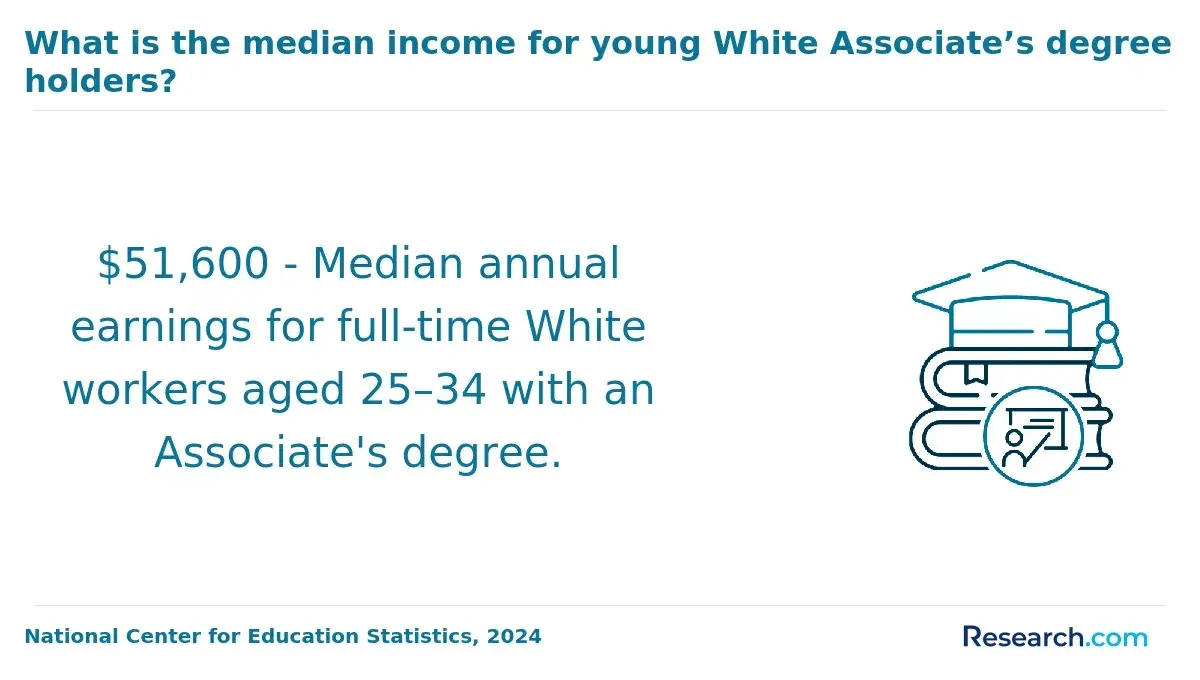
Career changers should pay close attention to transfer policies because they can substantially change cost and timeline. Some schools accept credits from community colleges, military training, professional certifications, prior learning assessments, or standardized exams, while others apply strict limits to major courses or upper-division credits.
Most applicants should expect some combination of the following requirements. The details can vary, so verify each item with the admissions office before assuming you qualify.
- High school diploma, GED, or equivalent credential for first-year admission
- Official transcripts from all previously attended colleges
- Minimum GPA requirement, often with conditional admission options at some schools
- Application form and fee, though some online programs waive the fee
- Personal statement or goals essay explaining interest in healthcare administration
- Resume, especially for adult learners applying to degree-completion programs
- English proficiency documentation for applicants whose prior education was not in English
Some programs may ask about professional experience, but most bachelor's programs do not require previous healthcare employment. That said, relevant work history can help you choose better electives, complete stronger capstone projects, and compete for internships or entry-level roles.
Before applying, ask admissions advisors direct questions: How many of my credits will transfer? Which credits apply to the major? Is there a residency requirement? Can I receive credit for prior learning? Are there separate fees for online courses, technology, graduation, or assessments? These answers often matter more than the advertised tuition rate.
How long does it take to complete an online healthcare administration bachelor's and can you study part time?
A traditional bachelor's degree usually requires about 120 credits, which full-time students often complete in four years. Career changers with prior college credit may finish faster, especially in degree-completion programs that accept 60 to 90 transfer credits. Part-time study is common, but it extends the timeline and may affect financial aid pacing.
The best timeline depends on your work schedule, family responsibilities, financial aid eligibility, and urgency to change careers. Accelerated programs can be attractive, but they are not always easier; they often compress the same learning into shorter terms.
The table below shows common pacing options and what they mean in practice. Use it to estimate workload before choosing a start date.
| Study pace | Typical student profile | Potential timeline | Key consideration |
| Full-time, first-time bachelor's student | Student starting with few or no credits | About four years | Can be faster to degree completion but may be difficult while working full time. |
| Full-time transfer student | Student with an associate degree or substantial prior credits | About 18 months to three years | Timeline depends heavily on how many credits apply to major and general education requirements. |
| Part-time student | Working adult balancing job and family responsibilities | Often three to six years, depending on transfer credits | More sustainable but may delay career transition. |
| Accelerated online student | Highly organized student comfortable with short terms | Potentially faster than traditional pacing | Requires strong time management and may limit breaks between courses. |
Part-time study can be a smart choice if you need to keep income stable while transitioning into healthcare. It may also let you apply new concepts at work, volunteer in a healthcare setting, or take an entry-level healthcare role while finishing the degree.
Avoid overloading your first term. If you have been away from school for several years, start with a manageable course load and adjust after learning the platform, writing expectations, discussion schedule, and exam format.
What courses and specializations are usually offered in online healthcare administration bachelor's programs?
Online healthcare administration bachelor's programs usually combine business fundamentals with healthcare-specific courses. The goal is to help students understand how care delivery organizations manage people, budgets, data, compliance, patient experience, and quality outcomes.
Common required courses often include healthcare management, medical terminology, healthcare finance, healthcare law and ethics, health information systems, human resources, strategic planning, quality improvement, public health, statistics, and organizational behavior. Many programs also include a capstone, internship, practicum, or applied project.
Specializations can help career changers align the degree with a specific direction. The table below shows common concentration areas and the types of students they may suit.
| Specialization | Focus | Best fit |
| Health information management | Records, data governance, privacy, coding systems, and information workflows | Students interested in data, compliance, or revenue cycle operations |
| Healthcare operations | Process improvement, staffing, scheduling, logistics, and service delivery | Students with retail, military, supply chain, or operations backgrounds |
| Long-term care administration | Nursing facilities, aging services, regulatory compliance, and resident services | Students interested in senior care settings; state requirements may apply for administrator licensure |
| Public health administration | Community health, prevention programs, health policy, and population health | Students interested in agencies, nonprofits, or community-based programs |
| Healthcare finance or revenue cycle | Billing systems, reimbursement, budgeting, payer relations, and financial reporting | Students with accounting, banking, insurance, or billing experience |
Technology is becoming more important across nearly every concentration. AI-assisted documentation, predictive analytics, telehealth workflows, cybersecurity risks, and electronic health record optimization are changing how administrators make decisions. A strong program should not treat technology as a side topic; it should show how data and digital systems affect staffing, quality, compliance, and patient access.
If you are more interested in broad business operations than healthcare-specific management, comparing an MBA operations management online pathway later may make sense after you finish a bachelor's or gain experience. For now, choose undergraduate electives that build practical skills in Excel, data analysis, project coordination, communication, and regulatory reasoning.
How much does an online bachelor's in healthcare administration cost and what financial aid is available?
The cost of an online bachelor's in healthcare administration depends on tuition, transfer credits, fees, books, residency status, technology charges, and how long you remain enrolled. The lowest advertised tuition is not always the lowest total cost, especially if a school accepts fewer transfer credits or charges high per-term fees.
For a national baseline, College Board's 2024 Trends in College Pricing reported average published tuition and fees of $11,610 for in-state students at public four-year colleges and $43,350 at private nonprofit four-year colleges for 2024-25. Online programs can fall below or above those figures, so use them as comparison anchors rather than predictions of your exact bill.
When comparing programs, separate direct costs from hidden or indirect costs. The table below highlights items that can change the real price of the degree.
| Cost factor | Why it affects total cost | What to ask |
| Transfer credits | More accepted credits can reduce the number of courses you must pay for | How many credits apply to the degree, not just how many are accepted? |
| Tuition model | Per-credit, flat-rate, and subscription models can favor different study speeds | Which model is cheaper for my expected course load? |
| Online fees | Technology, assessment, proctoring, and graduation fees can add up | What is the full program cost after mandatory fees? |
| Books and materials | Some courses use paid platforms or access codes | Are textbooks included, open-access, or billed separately? |
| Time to completion | Longer enrollment can increase fees and delay earnings from a new role | What is the realistic completion date based on my transfer evaluation? |
Most eligible students should begin with the FAFSA to determine access to federal grants, federal loans, and work-study. Federal student loans may be useful, but they should be borrowed carefully because healthcare administration salaries vary widely by role, region, employer, and experience level.
Possible funding sources include the following. Compare them before relying heavily on private loans.
- Federal Pell Grants for eligible undergraduate students
- Federal Direct Subsidized and Unsubsidized Loans
- State grants for residents attending eligible institutions
- Employer tuition assistance or reimbursement
- Military and veteran education benefits
- Institutional scholarships for transfer, adult, online, or healthcare students
- Community college transfer pathways that reduce the number of credits taken at a four-year tuition rate
The smartest affordability strategy is to request a written transfer-credit evaluation, a full cost estimate, and a degree plan before committing. If a school cannot clearly show how many courses you still need, it is hard to judge value.
What jobs can you get with an online bachelor's in healthcare administration as a career changer?
Career changers with an online bachelor's in healthcare administration often begin in coordinator, analyst, supervisor, or assistant manager roles. The degree can help you qualify for jobs that require a bachelor's, but your first title will depend heavily on prior experience, local hiring conditions, internships, and whether you already understand healthcare workflows.
Many graduates move into healthcare through roles that connect business operations with patient services. The table below lists realistic job targets and what they typically involve.
| Role | Typical responsibilities | Good background match |
| Patient access coordinator | Registration workflows, scheduling, insurance verification, patient communication, and service recovery | Customer service, call center, hospitality, retail, or administrative support |
| Healthcare office manager | Staff scheduling, vendor coordination, front-office supervision, billing support, and daily operations | Office management, small business, retail supervision, or administrative leadership |
| Revenue cycle analyst or coordinator | Claims processes, denials tracking, reimbursement workflows, and financial reporting support | Billing, accounting, insurance, banking, or data entry |
| Quality improvement coordinator | Performance metrics, process audits, patient safety projects, and compliance documentation | Operations, compliance, project coordination, manufacturing, or military administration |
| Health services department supervisor | Team oversight, workflow management, reporting, training, and policy implementation | People management, scheduling, logistics, or service operations |
| Healthcare project coordinator | Implementation timelines, meeting coordination, stakeholder updates, and documentation | Project support, IT coordination, operations, or business administration |
To make the career change more credible, build evidence while you study. Employers often respond well to applicants who can show applied knowledge, not just completed courses.
- Target entry-level healthcare jobs or volunteer roles before graduation if you have no healthcare experience.
- Use class projects to analyze real healthcare problems such as wait times, staffing gaps, denials, patient satisfaction, or process bottlenecks.
- Learn common tools such as spreadsheets, dashboards, scheduling systems, and basic electronic health record terminology.
- Join a healthcare management or health information association as a student member if it fits your career direction.
- Ask your program whether the capstone can be completed with your current employer or a local healthcare organization.
If your strongest interest is managing timelines, teams, budgets, and cross-functional initiatives, a project management degree online may also be worth comparing. Healthcare administration is the better fit when you want healthcare-specific knowledge; project management is broader and can apply across industries.
What is the salary potential and job outlook for graduates in healthcare administration roles?
Salary potential in healthcare administration depends on role level, location, employer type, healthcare experience, and whether the job involves supervisory authority. A bachelor's degree can support entry into the field, but higher-paying management roles usually require progressive experience and sometimes a graduate degree.
The clearest national benchmark is the BLS category for medical and health services managers. The BLS reported a May 2024 median annual wage of $117,960 for this occupation. This figure is useful for understanding the upper-direction career path, but it should not be treated as a typical starting salary for new bachelor's graduates.
The BLS also projects 29% employment growth for medical and health services managers from 2023 to 2033. That outlook reflects demand from an aging population, expanding healthcare services, technology adoption, and the need to manage complex regulations and care delivery systems. For career changers, the takeaway is that demand is strong, but competition for management roles still favors candidates who combine education with healthcare experience.
Career progression often looks like a ladder rather than a single jump. The table below shows how responsibilities may evolve over time.
| Career stage | Common titles | What employers usually look for |
| Entry stage | Patient access representative, administrative coordinator, billing assistant, operations assistant | Communication skills, reliability, basic healthcare terminology, customer service, and attention to detail |
| Early advancement | Clinic coordinator, revenue cycle coordinator, quality coordinator, office supervisor | Bachelor's coursework, process knowledge, reporting skills, and ability to coordinate teams |
| Management stage | Practice manager, department manager, health services manager, operations manager | Supervisory experience, budgeting, compliance knowledge, performance improvement, and stakeholder communication |
| Senior leadership pathway | Director, administrator, service line leader, executive roles | Strong track record, strategic planning, financial leadership, and often graduate education |
Several trends may improve opportunities for well-prepared graduates. Healthcare organizations are investing in analytics, value-based care, patient access improvement, telehealth operations, cybersecurity coordination, and automation of administrative workflows. These changes can reward administrators who understand data, workflow redesign, privacy rules, and change management.
At the same time, do not assume the degree alone will produce a management salary. To improve ROI, choose a program with strong transfer-credit acceptance, complete applied projects, seek healthcare experience early, and track job postings before graduation. If your long-term goal is executive leadership, plan for the possibility of graduate study after you have enough experience to benefit from it.
Other Things You Should Know About Healthcare Administration
No. Clinical experience can help, but many administrative roles value operations, finance, customer service, scheduling, compliance, and people-management skills. If you lack healthcare experience, try to gain exposure through internships, volunteering, entry-level administrative work, or applied class projects.
Some roles can be remote or hybrid, especially in revenue cycle, insurance operations, data reporting, scheduling, and health technology. Jobs tied to clinic operations, staff supervision, patient access desks, or facility management are more likely to require on-site work.
In 2027, graduates of an online Bachelor's in Healthcare Administration have diverse prospects, including roles like hospital administrator, health services manager, and medical office manager. With healthcare's evolving landscape, these professionals are crucial in optimizing operations. Robust job growth is expected due to increased healthcare demand and technological advancements.
Certifications can help if they match your target role, but they should not distract from finishing the degree. Consider credentials in areas such as medical billing, health information, project management, compliance, or quality improvement only after confirming they are valued in the job postings you want.
References
- Medical Assistant to Healthcare Administration: Online Degree Pathways https://www.collegetransitions.com/blog/medical-assistant-to-healthcare-administration/
- Online MHA https://www.publichealthdegrees.org/online/mha/
- Bachelors in Health Administration | HealthAdministrationDegrees.com https://www.healthadministrationdegrees.com/programs/bachelors-in-health-administration/
- Is an Online Bachelor’s Degree in Healthcare Management Right for You? | Miller-Motte College https://www.miller-motte.edu/blog/healthcare/is-an-online-bachelors-degree-in-healthcare-management-right-for-you/
- What is the Timeline for Obtaining a Degree in Healthcare Management? - Healthcare Management Degree Guide https://www.healthcare-management-degree.net/faq/what-is-the-timeline-for-obtaining-a-degree-in-healthcare-management/
- Online BS in Healthcare Administration https://www.baypath.edu/academics/undergraduate-programs/healthcare-administration/
- Online Healthcare Administration Bachelor Degree | Indiana Wesleyan University https://www.indwes.edu/program/bs-healthcare-administration/
- Bachelors in Healthcare Administration: Roles and Outlook https://aicef-chirurgiaplasticafacciale.it/bachelors-in-healthcare-administration-roles-and-outlook
- Most Popular Online Degrees in Healthcare Administration 2025 https://www.onlineu.com/degrees/healthcare-administration
- Five Emerging Careers in Healthcare Administration https://www.mhaonline.com/blog/five-new-healthcare-administration-careers