2027 Online Healthcare Administration Degrees for Students Who Want Medical Office Management Careers

Co-Founder and Chief Data Scientist
Choosing an online healthcare administration degree is really a career-fit decision: will the program prepare you to run the business side of a clinic, physician practice, or outpatient office? Demand is strong; the U.S. Bureau of Labor Statistics projects employment for medical and health services managers to grow 29% from 2023 to 2033. This guide explains degree options, accreditation, costs, online learning trade-offs, skills, jobs, and salary context so you can compare programs and avoid enrolling in one that does not match your medical office management goals.
Key Things You Should Know
- For medical office management, an associate or bachelor's degree can support entry-level office supervisor roles, while a master's degree is more often useful for practice administrator, department manager, or director-level paths.
- Accreditation matters: choose a school with recognized institutional accreditation, and consider CAHME-accredited graduate programs if you plan to pursue senior healthcare management roles.
- BLS data shows medical and health services managers had a median annual wage of $117,960 in May 2024, but pay varies widely by employer type, location, experience, and whether the role manages a small office or a larger healthcare operation.
What is an online healthcare administration degree and how does it prepare you for medical office management careers?
An online healthcare administration degree is a college program focused on the management, finance, compliance, staffing, technology, and operations of healthcare organizations. For students interested in medical office management, the most relevant programs emphasize the business side of patient care rather than clinical diagnosis or treatment.
Medical office managers typically coordinate front-desk operations, billing workflows, scheduling, staff training, records processes, patient communication, and regulatory compliance. In a small physician practice, one manager may oversee many of these duties. In a larger clinic or health system, the role may specialize in revenue cycle, patient access, practice operations, or department administration.
The degree can be a good fit if you want to lead administrative teams in settings such as primary care offices, specialty practices, outpatient clinics, urgent care centers, community health organizations, dental offices, or hospital-affiliated practices. It may not be the best fit if your main goal is direct patient care; in that case, nursing, radiologic technology, medical assisting, or another clinical pathway may be more appropriate.
Online delivery is especially practical for working adults because many programs use asynchronous coursework, allowing students to complete assignments outside standard business hours. However, the best online programs still require serious time management, regular interaction with instructors, and applied projects that connect coursework to real healthcare operations.
Are online healthcare administration programs for medical office management respected and accredited in the United States?
Online healthcare administration programs can be respected by employers when they come from properly accredited institutions and include relevant coursework, applied projects, internships, or healthcare experience. Employers usually care less about whether a degree was online or campus-based and more about whether the school is legitimate, the curriculum is relevant, and the graduate can manage people, processes, data, and compliance responsibilities.
There are two main accreditation checks students should understand. Institutional accreditation evaluates the college or university as a whole. Programmatic accreditation evaluates specific programs, but it is more common at the graduate level in healthcare management than at the undergraduate level.
The table below summarizes the most important accreditation signals for students comparing online healthcare administration programs. Use it to separate meaningful quality indicators from marketing language that sounds official but may not carry much weight.
| Quality signal | What it means | Why it matters for medical office management |
| Recognized institutional accreditation | The college or university is reviewed by an accreditor recognized by the U.S. Department of Education or CHEA. | This is the baseline requirement for federal financial aid, transfer credit acceptance, and employer confidence. |
| CAHME accreditation | The Commission on Accreditation of Healthcare Management Education accredits selected graduate healthcare management programs. | It is most relevant for students considering master's-level healthcare administration leadership roles. |
| Healthcare-specific curriculum | The program includes courses in healthcare law, finance, quality improvement, health information systems, and operations. | Medical office managers need healthcare-specific knowledge that a general management program may not fully cover. |
| Applied learning | The program includes case studies, projects, practicums, internships, or capstones tied to healthcare organizations. | Applied work helps students demonstrate readiness for practice operations and supervisory responsibilities. |
Be cautious with schools that avoid naming their accreditor, advertise unrealistic job outcomes, pressure you to enroll immediately, or claim that accreditation is "pending" without explaining what that means. A reputable program should make accreditation, tuition, transfer credit rules, and student support services easy to verify.
How do online healthcare administration degrees compare to campus-based programs for medical office management training?
Online and campus-based healthcare administration programs often cover similar academic content, but the student experience can be very different. The right choice depends on your schedule, learning style, access to local healthcare employers, and need for structure.
The table below compares the practical differences that matter most for students preparing for medical office management. It is designed to help you decide which format fits your life, not to suggest that one format is always better.
| Decision factor | Online program | Campus-based program |
| Schedule flexibility | Often better for working adults, parents, military students, and students with rotating shifts. | Better for students who want fixed class times and in-person accountability. |
| Networking | May rely on virtual discussions, alumni platforms, local internships, and remote faculty access. | May offer more face-to-face networking with classmates, faculty, and nearby healthcare employers. |
| Hands-on exposure | Can be strong if the school helps students arrange local practicums or work-based projects. | May be easier to access through campus partnerships with nearby clinics or hospitals. |
| Technology readiness | Builds comfort with digital collaboration, electronic records concepts, analytics tools, and virtual communication. | May provide more in-person presentation and team leadership practice. |
| Best fit | Students who need flexibility and can self-manage deadlines. | Students who learn best through in-person interaction and structured schedules. |
Online learning is also affected by current workplace trends. Medical offices increasingly rely on patient portals, telehealth workflows, digital scheduling, electronic health records, and data dashboards. An online program that uses modern learning platforms and healthcare technology projects can help students practice the same digital coordination skills used in today's clinics.
If you are comparing healthcare administration with broader business options, it can also help to look at online business degree programs accredited by reputable institutions. A business administration degree may fit students who want flexible management options outside healthcare, while healthcare administration is usually better for students committed to medical office, clinic, payer, or health system roles.
What healthcare administration degrees best fit students pursuing medical office management roles?
The best healthcare administration degree for medical office management depends on your current education level, work experience, and target role. A student starting from high school has a different decision than a medical assistant trying to move into supervision or a bachelor's graduate aiming for practice administrator roles.
The table below compares common degree levels and the roles they most often support. Use it to match the credential to the level of responsibility you want, instead of choosing the highest degree automatically.
| Degree level | Typical length | Best fit | Common career direction |
| Certificate or undergraduate certificate | Several months to 1 year | Students who already have experience and need focused training in billing, coding, health office systems, or supervision. | Administrative assistant, billing support, patient access, front-office lead. |
| Associate degree | About 2 years full time | Students seeking entry-level administrative roles or a lower-cost starting point before transferring. | Medical office coordinator, patient services representative, office supervisor trainee. |
| Bachelor's degree | About 4 years full time, less with transfer credit | Students who want broader management preparation and stronger advancement potential. | Medical office manager, practice coordinator, clinic operations supervisor. |
| Master's degree | About 1 to 3 years depending on format | Working professionals pursuing larger practice, department, or health system management roles. | Practice administrator, department manager, healthcare operations manager. |
Students who already hold a bachelor's degree and want to move into higher-level administration may compare masters in healthcare administration programs based on cost, CAHME status, executive format, internship requirements, and whether the curriculum emphasizes operations, policy, finance, or population health.
A degree may not be necessary for every front-office job, especially if an employer provides training. However, a degree becomes more valuable when you want to supervise staff, manage budgets, improve workflows, handle compliance responsibilities, or compete for roles in larger healthcare organizations.
What courses and skills are typically taught in healthcare administration programs focused on medical office management?
Healthcare administration programs focused on medical office management usually combine business fundamentals with healthcare-specific rules and systems. The goal is to prepare students to keep an office financially stable, compliant, efficient, and patient-centered.
The following list highlights course areas that are especially relevant for students who want to manage medical offices. These subjects matter because medical office managers must coordinate both people and processes in a regulated environment.
- Healthcare delivery systems, including how physician practices, hospitals, insurers, outpatient clinics, and public programs interact.
- Medical office operations, including scheduling, patient flow, front-desk management, referrals, and service recovery.
- Healthcare finance and revenue cycle, including billing processes, reimbursement basics, payer relationships, and budget monitoring.
- Healthcare law, ethics, and compliance, including privacy, documentation standards, risk management, and workplace policies.
- Health information systems, including electronic health records, patient portals, reporting tools, and data security concepts.
- Human resources and leadership, including hiring support, staff training, conflict resolution, performance improvement, and team communication.
- Quality improvement, including process mapping, patient satisfaction, safety metrics, and continuous improvement methods.
Technology skills are becoming more important. Medical office managers increasingly need to understand AI-supported scheduling tools, automated reminders, claims edits, analytics dashboards, and digital patient communication. Students do not need to become software engineers, but they should graduate able to evaluate technology, protect patient information, and help staff adopt new tools responsibly.
Students who enjoy workflow design and efficiency may also compare healthcare administration with broader operations pathways such as an MBA operations management program. The MBA route may be stronger for cross-industry leadership, while healthcare administration usually provides more direct preparation for clinical office regulations and healthcare payment systems.
What are the typical admission requirements for online healthcare administration degrees in the U.S.?
Admission requirements vary by school and degree level, but online healthcare administration programs are generally designed to admit both traditional students and working adults. Requirements are usually more selective at the graduate level, especially for programs built for experienced healthcare professionals.
The list below shows common admission materials by degree level. Review these early because missing transcripts, transfer evaluations, or prerequisite documentation can delay your start date.
- Certificate programs commonly require a high school diploma, GED, or prior college enrollment, depending on whether the certificate is undergraduate or post-baccalaureate.
- Associate programs usually require a high school diploma or GED, an application, official transcripts, and placement assessment or prior coursework documentation.
- Bachelor's programs typically require high school or college transcripts, minimum GPA standards, transfer credit review, and sometimes a personal statement.
- Master's programs usually require a bachelor's degree, official transcripts, a resume, statement of purpose, recommendation letters, and sometimes healthcare or management experience.
Some programs ask for statistics, accounting, or basic business prerequisites. Others build these courses into the curriculum. If you are transferring from a medical assisting, billing and coding, health information, or business program, ask whether your credits apply to major requirements or only to electives.
A common mistake is assuming that "open admission" means the program will be easy or that all credits will transfer. Before enrolling, request a written transfer evaluation, confirm the total number of credits still required, and ask whether repeated courses or old credits affect your timeline.
How long do online healthcare administration programs take, and what do they cost?
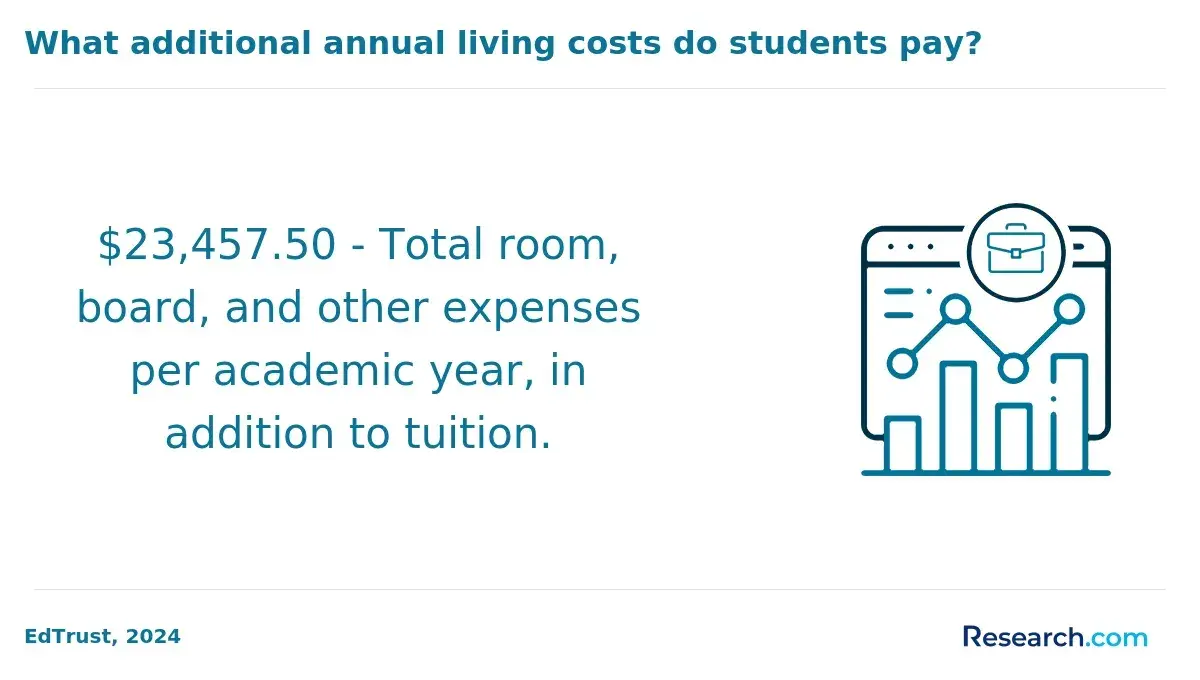
Program length and cost depend on degree level, transfer credits, enrollment pace, residency status, and whether the institution is public, private nonprofit, or private for-profit. Online programs may reduce commuting and relocation costs, but they can still include technology fees, proctoring fees, books, and internship-related expenses.
For cost context, the College Board's 2024 pricing data reported the following average published tuition and fee figures for U.S. four-year institutions. These are not healthcare-administration-specific prices, but they help students benchmark whether a program's sticker price is unusually high or low.
- Public four-year, in-state average published tuition and fees: $11,610 for 2024-25
- Public four-year, out-of-state average published tuition and fees: $30,780 for 2024-25
- Private nonprofit four-year average published tuition and fees: $43,350 for 2024-25
Those figures are annual sticker prices, not the final amount every student pays. Your net cost may be lower after grants, scholarships, employer tuition assistance, military benefits, transfer credits, or competency-based pacing. It may also be higher if fees, books, repeated courses, or part-time enrollment extend the timeline.
The table below summarizes typical completion timelines. Use it to estimate opportunity cost as well as tuition cost, because taking longer may delay promotion eligibility or increase the number of terms you pay fees.
| Program type | Typical full-time timeline | Part-time or working-adult timeline | Cost factor to watch |
| Certificate | Several months to 1 year | 1 year or more | Whether credits can later apply to a degree. |
| Associate degree | About 2 years | 2.5 to 4 years | Transfer pathway into a bachelor's program. |
| Bachelor's degree | About 4 years | 4 to 6 years, less with transfer credit | Number of accepted transfer credits and upper-division major requirements. |
| Master's degree | 1 to 2 years in accelerated formats | 2 to 3 years in flexible formats | Whether the program requires a practicum, residency, or extra foundation courses. |
To reduce cost, compare total program cost rather than tuition per credit alone. Ask schools for a full cost estimate, including fees, books, software, background checks, internship expenses, and graduation fees. Also ask whether tuition is locked for enrolled students or can increase each academic year.
What entry-level and advanced medical office management jobs can a healthcare administration degree lead to?
A healthcare administration degree can support several medical office management career paths, but job titles vary widely by employer. A small practice may use "office manager," while a hospital-owned clinic may use "practice coordinator," "clinic operations supervisor," or "ambulatory services manager."
The table below connects common roles with typical responsibilities and the level of education or experience often expected. Use it as a career-mapping tool, not as a universal hiring rule, because employers set their own requirements.
| Role | Typical responsibilities | Common preparation |
| Medical office coordinator | Supports scheduling, patient intake, records flow, referrals, and front-desk communication. | Certificate, associate degree, or relevant office experience. |
| Patient access supervisor | Oversees registration, insurance verification, staff schedules, and patient service standards. | Associate or bachelor's degree plus experience in patient-facing administration. |
| Medical office manager | Manages staff, daily workflows, vendor coordination, billing support, compliance tasks, and office policies. | Bachelor's degree is often helpful; experience is highly valued. |
| Practice administrator | Oversees budgets, provider schedules, revenue cycle coordination, strategic planning, and operational performance. | Bachelor's or master's degree plus healthcare management experience. |
| Clinic operations manager | Improves patient flow, staffing models, quality metrics, and cross-department processes. | Bachelor's or master's degree with operations or ambulatory care experience. |
Students can strengthen their career path by combining education with healthcare exposure. Part-time jobs in patient registration, billing support, medical records, call centers, or administrative assisting can help you understand real clinic workflows before applying for supervisory roles.
If you are still exploring management fields, compare healthcare administration with other specialized administration paths. For example, sports management online programs may fit students who prefer athletics, recreation, or event operations, while healthcare administration is better aligned with medical offices, clinics, and regulated patient-service environments.
What is the salary potential and job outlook for medical office managers and related roles?
Salary potential in medical office management depends on the size of the organization, job scope, geography, credentials, and years of experience. A front-office supervisor in a small practice will usually have a different pay range than a manager overseeing multiple outpatient sites or a department within a health system.
The strongest national benchmark is the BLS category for medical and health services managers. In May 2024, the median annual wage for this occupation was $117,960. This figure includes a broad range of managers across healthcare settings, so students should treat it as a management-level benchmark rather than a guaranteed outcome for every medical office job.
Job outlook is also favorable. BLS projects 29% employment growth for medical and health services managers from 2023 to 2033, much faster than the average for all occupations. For students, this suggests that healthcare administration skills may remain valuable, especially as the population ages, outpatient care expands, and healthcare organizations need managers who can coordinate staffing, technology, compliance, and patient access.
The table below shows how role scope can influence salary expectations. It does not assign specific pay to each title because employers use titles inconsistently, but it helps explain why compensation varies so much across medical office management careers.
| Career stage | Typical scope | Salary influence |
| Entry-level administrative support | Patient scheduling, intake, records support, insurance verification, and office communication. | Pay is usually tied to clerical experience, local labor market, and technical familiarity with office systems. |
| Lead or supervisor | Small team oversight, scheduling coverage, training, and workflow coordination. | Pay may rise with supervisory responsibility and knowledge of billing or patient access operations. |
| Office or practice manager | Staffing, budgets, compliance coordination, vendor relationships, policies, and performance improvement. | Compensation often reflects the size of the practice, number of staff, revenue responsibility, and reporting level. |
| Advanced administrator | Multi-site operations, strategic planning, service line management, or department leadership. | Higher pay is more likely when the role includes broad operational authority, financial accountability, and leadership experience. |
Students should evaluate return on investment carefully. A lower-cost accredited program with strong transfer credit, employer tuition assistance, and relevant internship support may produce a better personal ROI than a more expensive program with limited healthcare connections. Salary data should guide expectations, not be treated as a promise.
How can students choose a reputable online healthcare administration program for medical office management careers?
Choosing a reputable online healthcare administration program requires more than comparing tuition and reading rankings. The best program for medical office management is one that is accredited, affordable for your situation, realistic for your schedule, and aligned with the type of healthcare setting where you want to work.
Use the following steps before applying. They are designed to help you verify quality, avoid hidden costs, and make sure the program connects to your career goal.
- Confirm institutional accreditation through a recognized accreditor, and verify the status on official accreditation directories rather than relying only on marketing pages.
- Review the curriculum for healthcare-specific courses in law, compliance, finance, information systems, revenue cycle, quality improvement, and operations.
- Ask how online students complete internships, practicums, capstones, or work-based projects, especially if you need experience in a medical office setting.
- Request a written transfer credit evaluation before enrolling, including which credits apply to the major and which count only as electives.
- Compare total cost, including fees, books, software, background checks, proctoring, graduation fees, and any required in-person activities.
- Ask about career support for online students, including resume help, employer connections, alumni networking, interview preparation, and healthcare job boards.
- Check whether courses are asynchronous, synchronous, accelerated, or competency-based so you can match the format to your work and family schedule.
- Look for transparent outcomes, such as retention, graduation, licensure-related disclosures when relevant, and examples of employer partnerships.
Red flags include vague accreditation claims, unclear tuition pages, aggressive enrollment pressure, guaranteed salary language, weak student support, and programs that cannot explain how the curriculum prepares students for healthcare-specific management. Also be cautious about choosing solely by speed; an accelerated program can be useful, but only if you can handle the workload and still build practical skills.
A strong final test is to contact admissions and ask, "How does this program prepare online students specifically for medical office management?" A credible school should be able to point to courses, projects, faculty experience, internship options, student services, and career pathways that directly answer that question.
Other Things You Should Know About Healthcare Administration
Yes, some people move into medical office management through experience in billing, scheduling, patient access, or administrative assisting. However, a degree can help you compete for supervisory roles, understand healthcare regulations, and qualify for employers that prefer formal management education.
Students who are self-motivated, possess strong communication skills, and have an interest in managing healthcare facilities will benefit most from an online healthcare administration degree in 2027. This degree offers flexible learning tailored for those aiming for leadership roles in medical office management.
Medical office managers generally do not need a state license, but requirements can vary by employer and role. Some jobs may prefer certifications in medical management, revenue cycle, coding, compliance, or health information, especially when the role includes specialized responsibilities.
References
- Job Market Data https://www.careerstep.com/certify/administrative/medical-office-manager/job-market-data/
- Who Accredits MHA Programs? https://www.mhaonline.com/faq/who-accredits-online-mha-programs
- Medical Office Administration Education Requirements https://theunitutor.com/story/084/2TW/MUfqZ3/medical-office-administration-education-requirements
- 2025 Top Picks: 20 Best CAHME-Accredited Master of Healthcare Administration Degree Programs https://mhadegree.org/top-picks-20-cahme-accredited-mha-programs/
- What You’ll Learn in a Healthcare Management Program – Allen School https://www.allenschool.edu/what-youll-learn-in-a-healthcare-management-program/
- Prepare for a Career with Our Medical Office Administration Program https://pharmamedical.ca/find-out-how-medical-office-administration-program-can-prepare-you/
- Online Bachelor's Degree in Healthcare Administration | CSU Global | Accredited https://csuglobal.edu/academic-programs/undergraduate-degrees/bachelors-degree-healthcare-administration-management
- 10 careers you can pursue with a Healthcare Administration Degree - SMWC https://www.smwc.edu/10-careers-you-can-pursue-with-a-healthcare-administration-degree-blog-december-22/
- Online AssociateDegree in HealthcareAdministration https://campus.edu/online-healthcare-administration-associate-degree
- Online Health Administration Degree Program | University of Phoenix https://www.phoenix.edu/online-healthcare-degrees/health-administration-bachelors-degree.html