2027 Best Online Healthcare Administration Degrees for Working Adults

Co-Founder and Chief Data Scientist
Choosing an online healthcare administration degree is a career-and-cost decision, not just a school search. The field is expanding quickly: the U.S. Bureau of Labor Statistics projects 23% growth for medical and health services managers from 2024 to 2034, far faster than the average for all occupations.
This guide is for working adults comparing flexible degree paths, tuition trade-offs, accreditation, timelines, and career outcomes. You'll learn which options fit different goals and how to avoid programs that look convenient but may not support your next move.
Key Things You Should Know
- The best value depends on your career stage: an associate degree can support entry-level office roles, a bachelor's degree is often the practical minimum for management-track jobs, and a master's degree is usually stronger for director-level or system-level leadership roles.
- Healthcare administration is a high-growth management field; BLS projects 23% employment growth for medical and health services managers from 2024 to 2034, but salaries vary by role, employer, region, and experience.
- For working adults, the strongest online programs usually combine institutional accreditation, healthcare-focused curriculum, transparent total cost, transfer-credit flexibility, asynchronous coursework, and measurable student support.
What is an online healthcare administration degree and who is it best for?
An online healthcare administration degree prepares students to manage the business, operations, compliance, staffing, finances, and quality-improvement functions of healthcare organizations. Instead of training students to provide direct clinical care, these programs focus on how hospitals, clinics, physician practices, insurance organizations, long-term care facilities, and public health systems operate.
For working adults, the degree can be especially useful because many healthcare employers need leaders who understand both patient-centered operations and business constraints. The right degree level depends on where you are starting and how far you want to move into management.
The table below compares the most common online healthcare administration degree options. Use it to match your current experience level with a realistic next credential, rather than assuming the highest degree is always the smartest choice.
| Degree option | Best fit | Typical career use | Decision note |
| Associate degree | Adults starting in healthcare administration or moving from general office work | Medical office assistant, patient services coordinator, billing support, front-office supervisor | Best for entry-level mobility, but may not be enough for management roles in larger organizations |
| Bachelor's degree | Adults seeking a management-track credential | Practice manager, department coordinator, healthcare operations supervisor, revenue cycle analyst | Often the strongest balance of cost, access, and career flexibility for adults without a prior degree |
| Master of Healthcare Administration or similar master's degree | Adults with a bachelor's degree who want leadership roles | Clinic administrator, hospital department manager, quality director, operations leader | Usually makes the most sense when paired with healthcare experience or a clear leadership goal |
| Graduate certificate | Adults who already have a degree and want targeted healthcare management skills | Career pivot, promotion preparation, specialization in compliance, quality, or informatics | Lower commitment than a full degree, but may not carry the same weight for senior roles |
The degree is a good fit if you enjoy systems, people, budgets, regulations, scheduling, and problem solving. It may be a poor fit if you want a primarily clinical role, dislike administrative responsibility, or need a licensed career path with clearly defined clinical requirements.
How do online healthcare administration programs compare to campus-based options?
Online and campus-based healthcare administration programs can lead to similar credentials when they are offered by properly accredited institutions, but they do not feel the same day to day. For working adults, the main trade-off is flexibility versus built-in structure.
The comparison below shows where online and campus formats usually differ. These differences matter because a program that is academically strong can still be a bad fit if the schedule, networking model, or field-experience requirements do not match your life.
| Factor | Online program | Campus-based program | Best choice when |
| Schedule | Often asynchronous or evening-friendly | More likely to require fixed class times | Online is stronger if you work full time or have caregiving responsibilities |
| Networking | Built through discussion boards, virtual events, alumni groups, and local internships | Built through in-person faculty access, student groups, and local employer ties | Campus may help if you want a highly local professional network |
| Self-direction | Requires strong time management and comfort with learning platforms | Provides more visible routine and in-person accountability | Campus may be better if you need face-to-face structure to stay on track |
| Field experience | May allow local practicum placement near the student | Often tied to regional healthcare partners | Online can work well if the school helps arrange approved local sites |
| Cost and commuting | May reduce relocation, parking, and commuting costs | May include campus fees and travel costs | Online is often more practical when total cost matters more than campus access |
Do not assume "online" automatically means easier. Good online programs still require papers, projects, exams, group work, and sometimes supervised fieldwork. The advantage is that adults can often complete the same academic requirements with fewer disruptions to work and family obligations.
A common mistake is choosing an online program only because it is convenient. A better approach is to ask whether the program has live support, faculty access, local practicum options, transparent technology requirements, and documented outcomes for adult learners.
Which online healthcare administration degrees offer the best value for working adults?
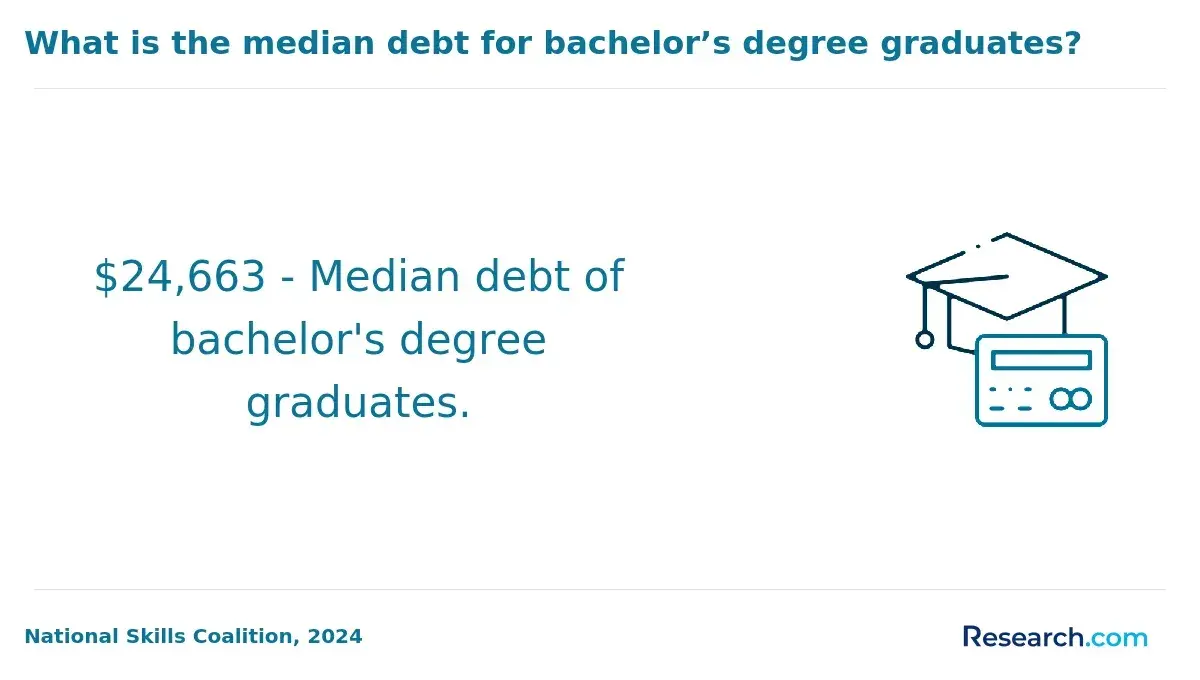
The best-value online healthcare administration degree is the one that gets you to a specific career step without overcharging you for credits you do not need. Value is not the same as the lowest tuition; it includes accreditation, transfer credit, employer tuition benefits, completion speed, student support, and whether the credential is respected for your target role.
Adults comparing advanced leadership options often look at online MHA programs because they are designed around healthcare finance, policy, quality, strategy, and operations rather than general business alone.
The table below summarizes which degree types tend to provide the strongest value for different working-adult goals. Use it as a decision filter before comparing individual schools.
| Goal | Best-value degree path | Why it can be a good value | Watch out for |
| Enter healthcare administration from another field | Associate degree or bachelor's completion program | Can build healthcare terminology, billing, records, and operations knowledge without requiring a graduate degree | Programs that do not accept transfer credits from prior college work |
| Move from clinical work into management | Bachelor's degree or master's degree, depending on prior education | Connects clinical experience with budgeting, staffing, compliance, and quality-improvement skills | Assuming clinical experience alone will satisfy business or leadership requirements |
| Advance from supervisor to director-level roles | MHA, MBA with healthcare concentration, or health systems management master's | Signals readiness for broader operational and strategic responsibility | Choosing a generic program without enough healthcare-specific coursework |
| Develop a targeted specialty | Graduate certificate in healthcare quality, informatics, compliance, or administration | Lower time and cost commitment than a full graduate degree | Expecting a certificate to substitute for a degree when employers require one |
For many working adults, the best return comes from a bachelor's completion program if they already have transfer credits, or a master's program if they already hold a bachelor's degree and have healthcare experience. The weakest value usually comes from paying graduate-level tuition before confirming that the target roles actually require a graduate degree.
What accreditation should online healthcare administration programs have and how do you verify it?
Accreditation is one of the most important quality checks for any online healthcare administration degree. It affects credit transfer, graduate school eligibility, employer confidence, and access to federal financial aid. At minimum, the institution should hold recognized institutional accreditation from an accreditor accepted by the U.S. Department of Education or the Council for Higher Education Accreditation.
Programmatic accreditation can also matter, especially at the graduate level. For healthcare management education, CAHME accreditation is a widely recognized marker for graduate healthcare management programs. At the undergraduate level, AUPHA membership can signal alignment with healthcare management education standards, although it is not the same as institutional accreditation.
Before enrolling, verify accreditation directly rather than relying only on marketing language. These steps can help you separate recognized programs from risky ones:
- Search the institution in the U.S. Department of Education's Database of Accredited Postsecondary Institutions and Programs.
- Confirm that the accreditor listed on the school's website matches the accreditor shown in the federal database.
- For graduate healthcare management programs, check whether the specific program appears in CAHME's accredited program directory.
- Ask admissions whether credits transfer to other accredited institutions and whether graduates have entered the roles or graduate programs you are considering.
- Be cautious if a school uses vague phrases such as "nationally approved," "internationally recognized," or "accreditation pending" without naming a recognized accreditor.
Also check licensure implications if you want to work in long-term care. Nursing home administrator licensure is regulated by states, and education requirements can vary. A general healthcare administration degree may help, but it may not automatically satisfy every state's licensure or administrator-in-training requirement.
What courses and skills are typically taught in online healthcare administration programs?
Online healthcare administration programs teach students how to manage healthcare organizations as complex service systems. Coursework usually blends business, healthcare policy, law, ethics, technology, leadership, and data-informed decision-making.
The curriculum matters because healthcare administrators now work with electronic health records, analytics dashboards, payer rules, staffing constraints, patient-satisfaction metrics, and compliance requirements. AI tools and automation are also changing administrative workflows, especially in scheduling, documentation support, revenue cycle management, and quality reporting.
Most programs include a mix of the following courses and applied skills. Review the course catalog carefully to make sure the program supports your target job, not just the broad field name:
- Healthcare systems and policy, including how providers, insurers, regulators, and public programs interact
- Healthcare finance, budgeting, reimbursement, billing, and revenue cycle management
- Healthcare law, ethics, compliance, privacy, and risk management
- Human resources, staffing, organizational behavior, and conflict resolution
- Quality improvement, patient safety, performance measurement, and process redesign
- Health informatics, electronic health records, data analytics, and technology governance
- Strategic planning, operations management, project leadership, and change management
- Capstone, internship, practicum, or applied project tied to a healthcare organization
Project leadership is especially useful because administrators often coordinate cross-functional initiatives such as opening a clinic site, improving patient flow, implementing new software, or reducing claim denials. Adults who want broader operations skills may also compare a project management online degree with a healthcare administration program, especially if they want roles that extend beyond healthcare.
Look for assignments that resemble real administrative work: budget memos, staffing plans, compliance analyses, dashboard interpretation, policy briefs, and improvement proposals. These artifacts can become interview talking points and may be more valuable than exams alone.
What are the admission requirements for online healthcare administration degrees?
Admission requirements vary by degree level, but online healthcare administration programs for adults often consider prior college credits, work history, GPA, and readiness for online learning. Selective graduate programs may also evaluate leadership potential and healthcare experience.
The table below outlines common admission expectations. Always confirm requirements with the school because test policies, prerequisite courses, and transfer-credit rules can change.
| Program level | Common admission requirements | Working-adult considerations |
| Associate degree | High school diploma or equivalent, placement assessment, basic application | Good starting point if you need college-level administrative foundations |
| Bachelor's degree | High school diploma or transfer credits, transcripts, minimum GPA, possible prerequisites | Transfer-credit review can significantly affect time and total cost |
| Bachelor's completion program | Prior college credits, associate degree or equivalent credit minimum, transcripts | Often strong for adults who stopped out before finishing a degree |
| Master's degree | Bachelor's degree, transcripts, statement of purpose, resume, recommendations, possible minimum GPA | Healthcare or leadership experience may strengthen the application even when it is not required |
| Graduate certificate | Bachelor's degree, transcripts, short application, sometimes professional experience | Useful for focused skill building without committing to a full master's program |
If you are not ready for a full healthcare administration degree, an office administration course or related associate-level pathway can help you build practical skills in records, communication, scheduling, and office systems before moving into healthcare-specific study.
Before applying, gather transcripts from every college you attended, ask whether professional certifications can earn credit, and request a written transfer-credit evaluation. One common mistake is enrolling before the school confirms how many credits will count toward the degree; this can add terms, tuition, and frustration later.
How long do online healthcare administration programs take and what do they cost?
Program length depends on the credential, course load, transfer credits, and whether the program uses traditional semesters or accelerated terms. Working adults often choose part-time study, but the fastest route is not always the best route if it increases stress or reduces your ability to use employer tuition assistance.
The table below gives realistic timeline and cost considerations by credential type. These are planning ranges, not promises, because tuition and transfer policies vary widely by institution.
| Credential | Common time to complete | Main cost drivers | Best cost-control strategy |
| Associate degree | About 2 years full time; longer part time | Per-credit tuition, fees, books, technology, transfer limits | Use community college pricing and confirm transfer pathways early |
| Bachelor's degree | About 4 years full time; shorter with transfer credits | Tuition rate, number of accepted credits, online fees, general education requirements | Choose a completion-friendly program if you already have college credits |
| Master's degree | About 1 to 3 years depending on pace | Graduate tuition, residency requirements, practicum costs, employer reimbursement timing | Compare total program cost, not just per-credit tuition |
| Graduate certificate | Several months to about 1 year | Graduate tuition per course, certificate credit transferability | Ask whether certificate credits can later apply to a master's degree |
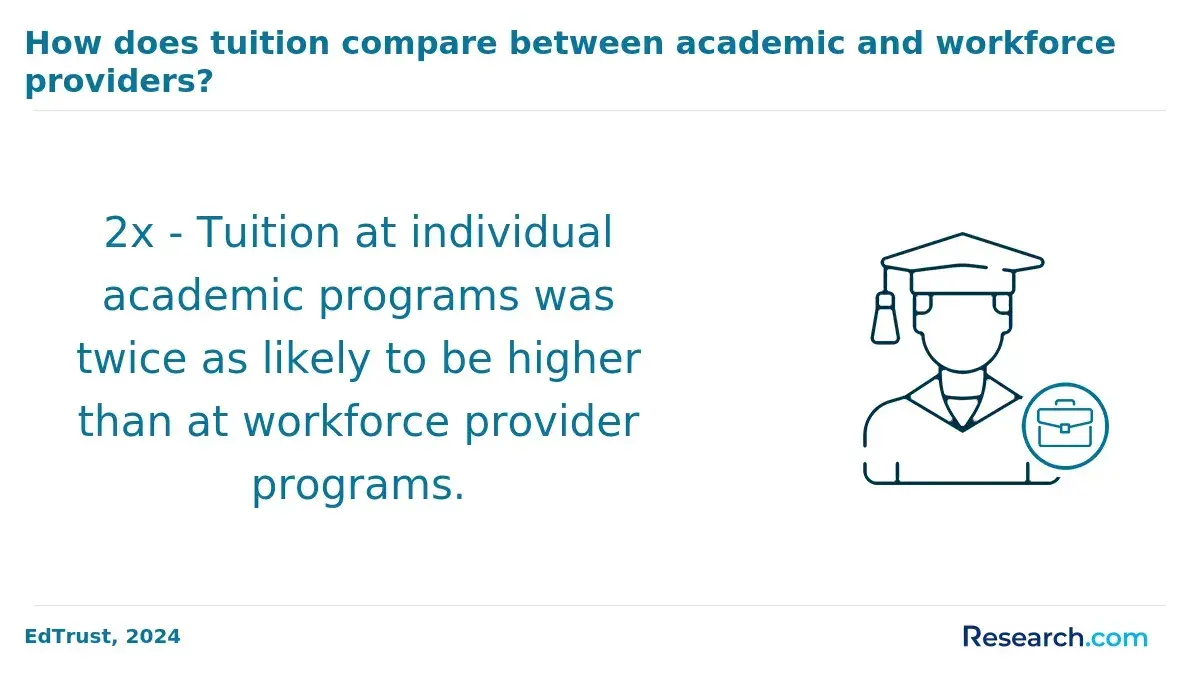
For cost context, the College Board's 2024 Trends in College Pricing report lists average published tuition and fees of $11,610 for in-state students at public four-year colleges for 2024-25. That benchmark can help adults judge whether an online program's tuition is unusually low, typical, or expensive, but it does not include every fee or living expense.
Adults trying to finish quickly may compare an accelerated healthcare management degree online with a standard-paced program. Acceleration can be valuable if you have time, experience, and financial support, but it can be risky if courses overlap heavily with work demands.
To reduce total cost, ask admissions and financial aid offices specific questions before enrolling:
- How many of my previous credits apply to the major, general education, and electives?
- What is the full estimated cost through graduation, including fees, books, software, and practicum expenses?
- Does the tuition rate change for out-of-state online students?
- Can I pause for a term without losing my catalog year, tuition rate, or academic standing?
- Will employer tuition reimbursement, military benefits, scholarships, or payment plans reduce out-of-pocket cost?
What healthcare administration careers can you pursue with an online degree?
An online healthcare administration degree can support a range of nonclinical management and operations roles. The best-fit role depends on your degree level, prior experience, technical skills, and whether you want to work directly with patients, behind the scenes, or at the system level.
The table below connects common healthcare administration roles with typical responsibilities. Use it to identify which jobs match the kind of work you actually want to do each week.
| Career path | Typical responsibilities | Common degree fit |
| Medical office manager | Supervise front-office staff, scheduling, patient communication, records workflow, and daily operations | Associate or bachelor's degree with healthcare office experience |
| Practice manager | Manage physician practice operations, budgets, staffing, billing coordination, vendor relationships, and patient experience | Bachelor's degree; master's degree may help for larger practices |
| Revenue cycle manager | Oversee claims, denials, reimbursement processes, coding coordination, payer issues, and financial performance | Bachelor's degree plus billing, coding, or finance experience |
| Healthcare operations manager | Improve workflows, coordinate departments, track performance metrics, and support service-line goals | Bachelor's or master's degree |
| Quality improvement coordinator | Support patient safety initiatives, compliance reporting, process improvement, and outcome tracking | Bachelor's or master's degree with analytics and quality coursework |
| Long-term care administrator | Manage facility operations, staffing, compliance, resident services, and budgets | Bachelor's or master's degree plus state-specific licensure when required |
| Health information manager | Oversee records systems, privacy practices, data integrity, and information workflows | Bachelor's degree with informatics or health information coursework |
Entry-level students should expect to build experience through coordinator, assistant manager, billing, scheduling, records, or patient services roles before competing for higher-level management jobs. Adults who already work in nursing, allied health, insurance, billing, or operations may be able to move faster because they can connect the degree to existing healthcare knowledge.
A practical career strategy is to choose a specialization early. Finance-focused students can pursue revenue cycle or payer relations, tech-focused students can move toward informatics and analytics, and people-focused students may prefer clinic management, staffing, or patient experience leadership.
What salary range and job outlook can healthcare administrators expect?
Healthcare administration salaries vary widely, so the most useful benchmark is tied to a specific occupation rather than the degree alone. The U.S. Bureau of Labor Statistics reports a 2024 median annual wage of $117,960 for medical and health services managers. That figure reflects a broad occupation category and should be used as a market reference, not as a guaranteed outcome for any graduate.
Job outlook is also strong at the management level. BLS projects 23% growth for medical and health services managers from 2024 to 2034, driven in part by an aging population, increasing healthcare utilization, growth in group practices, and demand for managers who can improve efficiency and compliance.
The table below shows how compensation expectations often differ by career stage. It avoids promising exact salaries because pay can shift significantly by state, employer size, setting, and prior experience.
| Career stage | Common roles | Salary context | What influences pay most |
| Entry level | Patient services coordinator, billing support, administrative assistant, records coordinator | Usually below the medical and health services manager median | Healthcare experience, technical systems knowledge, location, and employer type |
| Early management | Office manager, practice supervisor, department coordinator | Can improve as supervisory responsibility and budget exposure increase | Staff size, revenue responsibility, and ability to solve operational problems |
| Mid-career management | Practice manager, operations manager, quality coordinator, revenue cycle manager | More likely to approach management-level wage benchmarks | Degree level, measurable results, analytics skills, and healthcare specialization |
| Senior leadership | Director, administrator, service-line leader, executive-track manager | Often tied to organization size and scope of responsibility | Graduate education, leadership record, compliance knowledge, and strategic decision-making |
Current technology trends are changing what employers value. Administrators increasingly need to interpret dashboards, understand privacy risks, evaluate AI-assisted workflow tools, and lead staff through software changes. Programs that teach data-informed management and change leadership may better match where the field is heading.
To evaluate return on investment, compare the total cost of the degree with the roles you are realistically qualified for within the next few years. A degree can open doors, but experience, geography, employer needs, and professional networks strongly affect outcomes.
How can working adults choose a reputable and flexible online healthcare administration program?
Working adults should choose an online healthcare administration program by starting with the role they want, then working backward to the credential, curriculum, schedule, and cost. Rankings can be useful, but they should not replace a careful fit check.
Use the following steps to compare programs in a practical order. This sequence helps you avoid choosing based on brand name, speed, or tuition alone.
- Define your target role, such as practice manager, revenue cycle manager, health information leader, or long-term care administrator.
- Confirm the degree level commonly requested for that role by reviewing job postings in your region.
- Verify institutional accreditation and any relevant programmatic accreditation before discussing enrollment.
- Request a written transfer-credit estimate and a full cost-to-completion estimate.
- Review the curriculum for healthcare finance, law, quality, informatics, leadership, and applied projects.
- Ask whether courses are asynchronous, synchronous, hybrid, or self-paced, and whether any campus visits are required.
- Confirm internship, practicum, or capstone expectations, especially if you work full time or live far from the school.
- Evaluate support services for online adults, including advising, tutoring, career coaching, library access, and technical support.
- Ask for outcome information such as completion support, employer partnerships, alumni roles, and career services access.
- Compare at least three programs before committing, and do not enroll under pressure from an admissions deadline.
Red flags include unclear accreditation, aggressive enrollment pressure, vague tuition estimates, limited faculty access, poor transfer-credit transparency, and programs that cannot explain how online students complete field experiences. Another warning sign is a curriculum that sounds business-related but includes little healthcare law, finance, quality, compliance, or informatics.
The most reputable and flexible program is usually the one that can answer detailed questions in writing. If a school gives only broad promises, keep looking until you find a program that shows how it supports adult learners from admission through graduation and career planning.
Other Things You Should Know About Healthcare Administration
Many online programs are designed for working adults. Look for asynchronous classes, part-time pacing, evening support, and flexible practicum options if fieldwork is required.
Generally, to enroll in an online healthcare administration degree program in 2027, you need a high school diploma or equivalent. Most programs do not require clinical experience, focusing instead on leadership, policy, and management skills. Some may also require prior coursework in business or health sciences.
Healthcare administration is broader and focuses on operations, finance, staffing, strategy, and compliance. Health information management focuses more specifically on records, data governance, privacy, coding systems, and health information technology.
Employers are generally more concerned with accreditation, school reputation, relevant coursework, experience, and skills than the delivery format. Avoid unaccredited programs and be ready to discuss projects, internships, and measurable workplace results.
References
- Online AssociateDegree in HealthcareAdministration https://campus.edu/online-healthcare-administration-associate-degree
- Healthcare Administration Online Certification Training https://medcerts.com/programs/healthcare/healthcare-administration-professional-online-training
- Online BS in Healthcare Administration https://www.baypath.edu/academics/undergraduate-programs/healthcare-administration/
- What Do I Need To Know About Healthcare Administration Accredited Degrees? - Healthcare Administration Degree Programs https://www.healthcare-administration-degree.net/faq/what-do-i-need-to-know-about-healthcare-administration-accredited-degrees/
- Online vs Hybrid vs Campus Learning in Healthcare: Which Is Right for You? https://www.edumed.org/articles/online-vs-hybrid-vs-campus/
- Master of Health Administration Degree | University of Phoenix https://www.phoenix.edu/online-healthcare-degrees/health-administration-masters-degree.html
- What do you learn in a bachelor's in healthcare administration? | edX https://www.edx.org/resources/what-do-you-learn-in-a-bachelors-in-healthcare-administration
- Commission on Accreditation of Healthcare Management Education - (CAHME) https://www.chea.org/commission-accreditation-healthcare-management-education
- How Do I Decide Which Online Healthcare Management Degree is Right For Me? - Healthcare Management Degree Guide https://www.healthcare-management-degree.net/faq/how-do-i-decide-which-online-healthcare-management-degree-is-right-for-me/