
2027 How to Become a Substitute Teacher in Washington

Co-Founder and Chief Data Scientist
Becoming a substitute teacher in Washington can be a practical way to enter education, earn flexible income, test whether teaching is the right long-term career, or stay connected to schools after retirement. The process is not the same in every district, however. Washington uses state certification through the Office of Superintendent of Public Instruction, while school districts and staffing agencies may add their own onboarding, training, scheduling, and hiring requirements.
This guide explains how Washington substitute teaching works in 2026: certificate options, education requirements, background checks, application steps, pay expectations, renewal rules, daily responsibilities, benefits, legal protections, and possible career paths. It is designed for first-time substitutes, career changers, recent graduates, retired educators, and paraprofessionals who want a clear decision-making roadmap before applying.
Quick answer: How do you become a substitute teacher in Washington?
To work as a substitute teacher in Washington, you generally need the correct substitute teaching certificate through the Washington Office of Superintendent of Public Instruction, a completed background check with fingerprinting, and approval from the district or placement agency where you want to work. The standard route typically involves a bachelor’s degree and an approved teacher preparation background, while an emergency substitute certificate may be used by districts facing shortages and can have different minimum qualifications. Some summaries describe eligibility as requiring a minimum of 45 college credits or a bachelor’s degree, but the exact requirement depends on the certificate type and district need.
| Decision point | What to know before applying |
| Certificate type | Most applicants pursue a Substitute Certificate; some districts initiate an Emergency Substitute Certificate when certified substitutes are unavailable. |
| Education requirement | A regular substitute route typically requires a bachelor’s degree from an accredited institution and approved preparation; emergency substitute roles may require only a high school diploma under shortage conditions. |
| Background clearance | Fingerprinting and a criminal background check are required for substitute educators unless qualifying clearance is already on file. |
| Pay expectation | Substitutes in Washington commonly earn between $120 and $160 per day, though pay varies by district, assignment type, location, and experience. |
| Work schedule | Daily substitute work is flexible but unpredictable; long-term substitute assignments are steadier but less flexible. |
| District onboarding | Many districts require orientation, training modules, interviews, or local employment forms before you can accept assignments. |
- What are the basic requirements to become a substitute teacher in Washington?
- What training is required for first-time substitute teachers in Washington?
- How do you apply to become a substitute teacher in Washington?
- How much do substitute teachers in Washington make?
- How do you renew or maintain a substitute teaching certificate in Washington?
- What are the responsibilities of a substitute teacher in Washington?
- How flexible is a substitute teacher’s schedule in Washington?
- What are the benefits received by a substitute teacher in Washington?
- Can substitute teaching open doors to online teaching opportunities in Washington?
- How long does it take to transition to a full teaching certificate in Washington?
- How Does Substitute Teaching Experience Impact Full Teacher Certification in Washington?
- What legal rights do substitute teachers have in Washington?
- What are the career advancement opportunities for substitute teachers in Washington?
What are the basic requirements to become a substitute teacher in Washington?
Washington substitute teaching requirements come from two places: the state certification system and the hiring district. OSPI controls certificate rules, while districts decide whether they need additional training, interviews, references, technology onboarding, or staffing agency registration. Before you spend money on an application, confirm which certificate your target district expects.
- Education: For a regular substitute certificate, candidates typically need a bachelor’s degree from an accredited institution. An emergency substitute certificate may require only a high school diploma when districts face substitute shortages.
- Teacher preparation background: A regular substitute certificate requires completion of an approved teacher preparation program. Substitute certificate applicants are not required to complete certification exams in the same way as candidates seeking full classroom teacher certification.
- Background check and fingerprinting: All substitute educators must complete fingerprinting through local Educational Service Districts and pass the required background review before working with students.
- Age and work authorization: Applicants must be at least 18 years old and must be legally eligible to work in the United States.
- Emergency substitute pathway: The emergency substitute certificate can be used when districts cannot find enough certified substitutes. It is valid up to two school years and still requires background clearance and district approval.
- Application cost: The substitute teacher certificate application fee is $35, so applicants should check eligibility and documentation requirements before submitting.
The key distinction is that a regular substitute certificate is designed for candidates with stronger educator preparation, while the emergency certificate gives districts a temporary staffing tool. If you are using substitute teaching as the first step toward a long-term education career, it may be worth comparing future credentials, including graduate-level options related to the best education masters.
| Requirement area | Regular substitute route | Emergency substitute route |
| Who usually uses it? | Applicants who meet standard state substitute certification expectations | Districts responding to certified substitute shortages |
| Education baseline | Typically a bachelor’s degree from an accredited institution | May require only a high school diploma |
| Teacher preparation | Approved teacher preparation program required | District-driven approval and onboarding are central |
| Validity | Maintained through state renewal rules | Valid up to two school years |
| Best fit | Future teachers, retired teachers, and candidates with educator preparation | Applicants hired by districts during staffing gaps |
What training is required for first-time substitute teachers in Washington?
Washington does not use one identical statewide training course for every first-time substitute teacher. Instead, training usually depends on the district, staffing provider, certificate type, and grade levels you may cover. This local approach lets districts focus on their own policies, but it also means applicants should not assume one district’s onboarding will satisfy another district’s rules.
- Pre-hire orientation: Placement providers such as Kelly Education often require training on district procedures, classroom expectations, student safety, emergency response, and basic classroom management.
- District onboarding: Districts may require sessions on attendance systems, school technology, behavior expectations, professional conduct, reporting procedures, and how to support diverse student populations.
- Fingerprinting and background clearance: This step is mandatory for new substitutes and applies regardless of whether the applicant is pursuing a regular or emergency certificate.
- Emergency substitute preparation: Emergency substitute certificate holders may receive more limited formal training, but they still must complete district onboarding and background clearance. The certificate lasts two school years and can be renewed.
- Required compliance modules: Some districts require training in sexual harassment prevention, child abuse reporting, equity practices, cultural competency, or other legal and community-specific topics.
First-time substitutes should treat training as more than a hiring formality. The first day in a classroom can involve unfamiliar lesson plans, technology, student behavior issues, emergency drills, and special instructions. If your goal is to become a full-time educator, pairing substitute experience with a structured academic pathway, such as one of the best online teaching degree programs, can help you move from short-term classroom coverage to a more complete teaching preparation plan.
| Training topic | Why it matters in the classroom |
| Classroom management | Helps you maintain order when students do not know you and routines are disrupted. |
| Emergency procedures | Prepares you for drills, lockdown protocols, medical needs, and unexpected incidents. |
| Student confidentiality | Protects student privacy and helps you avoid legal or professional mistakes. |
| Technology systems | Allows you to access attendance tools, lesson materials, substitute portals, and school communication systems. |
| Mandatory reporting | Clarifies what to do if you suspect abuse, neglect, harassment, or safety concerns. |
How do you apply to become a substitute teacher in Washington?
The application process is manageable, but it has several moving parts. Most delays happen when applicants choose the wrong certificate, submit incomplete transcripts, overlook district-specific paperwork, or wait too long to complete fingerprinting. Start with the state certificate requirement, then work backward through the hiring steps for the district or agency where you want assignments.
- Confirm the correct certificate pathway. Decide whether you qualify for a Substitute Certificate or whether a district must initiate an Emergency Substitute Certificate for you.
- Collect your records. Prepare transcripts, educator preparation documentation, and any additional forms required for out-of-state or foreign credentials.
- Apply through Washington’s E-Certification system. Upload required documents, select the correct certificate type, and review every field before submitting.
- Complete fingerprinting and the background check. Submit fingerprints for the criminal history review unless you already have valid clearance or a qualifying certificate on file.
- Pay the fee. Submit the non-refundable application fee only after verifying that your application is complete and accurate.
- Finish district hiring requirements. Expect possible interviews, substitute orientation, HR paperwork, tax forms, reference checks, and training modules.
- Wait for approval and roster placement. Processing may take up to three weeks, depending on application review, background clearance, and district hiring timelines.
A Washington substitute teacher who graduated from a local institution described the process as clear in some places and confusing in others. Her biggest challenge was coordinating the state application with district-specific documents and deadlines. She said the online certificate process was manageable, but local forms, transcript timing, and separate HR instructions required careful tracking.
She also noted that requesting transcripts was easier because she had attended a Washington school. Peers with out-of-state credentials sometimes needed more time to gather acceptable documentation. In her view, the background check and document review made the process feel serious and student-centered, even though it required patience.
Common application mistakes to avoid
| Mistake | Why it causes problems | Better approach |
| Applying before confirming the certificate type | You may pay a fee for an option that does not match district hiring needs. | Ask the district HR office which certificate pathway they use for your situation. |
| Assuming state approval equals district employment | A certificate allows eligibility, but districts still control hiring and assignment access. | Complete both OSPI and district hiring requirements. |
| Waiting on fingerprints | Background clearance can delay start dates. | Schedule fingerprinting as soon as instructions are available. |
| Ignoring orientation requirements | Some districts will not activate you in the absence system until training is complete. | Finish all required modules and confirm activation in writing. |
| Looking only at pay | Higher pay may come with longer commute times, stricter availability rules, or fewer openings. | Compare pay, assignment frequency, location, grade levels, and support. |
How much do substitute teachers in Washington make?
Substitute teacher pay in Washington depends heavily on district budgets, assignment length, local labor demand, and whether the job is daily, half-day, long-term, or specialized. A statewide average can be useful, but your actual earnings will depend on how often you work and which districts place you.
The average substitute teacher salary in Washington State typically sits around $25.30 per hour. In Seattle, where living costs are higher, substitute teacher pay rates Seattle WA average closer to $28.79 per hour. Vancouver offers an example of district-level variation, with a daily rate of approximately $196 for a full day.
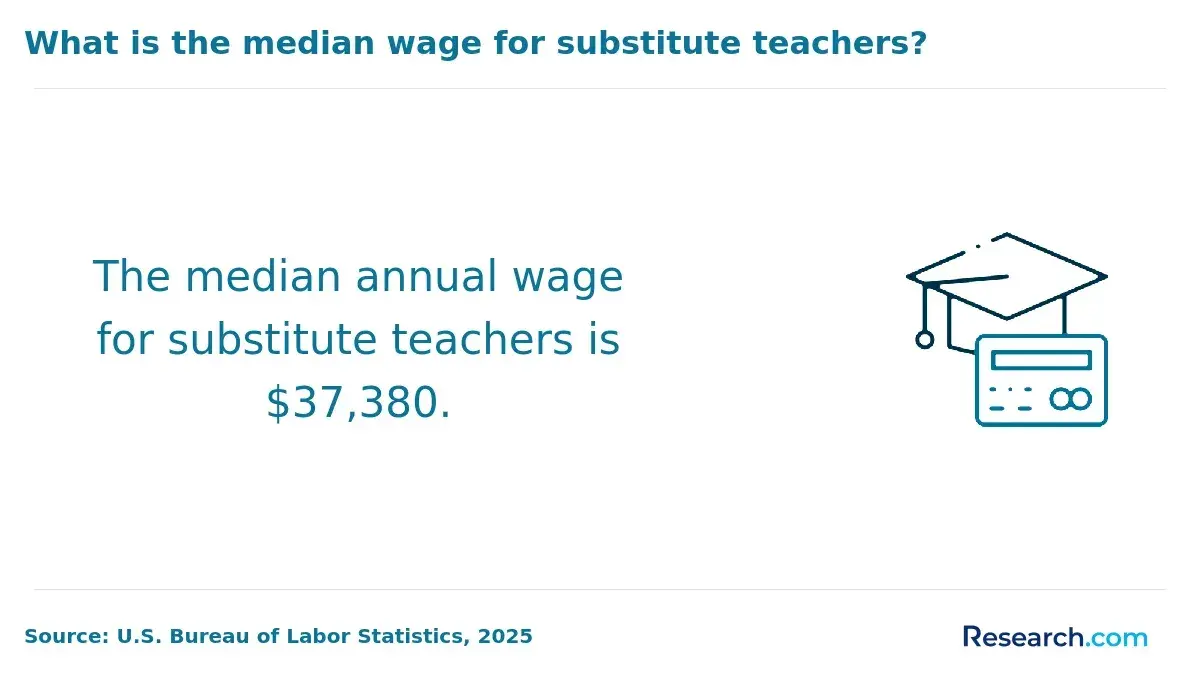
Annual income is less predictable than hourly or daily pay because substitute work is usually assignment-based. Many substitutes earn between $31,600 and $50,900 annually, while the 75th percentile reaches over $63,000. Substitutes who accept frequent assignments, work in higher-paying districts, or obtain long-term placements usually have more stable income than those who only accept occasional daily jobs.
Compared with national averages that generally fall between $17 and $19 per hour, Washington pay can look competitive. Still, pay alone does not guarantee financial stability. School breaks, summer months, last-minute cancellations, transportation costs, and limited benefits can affect real take-home value. If substitute teaching is part of a larger career plan, comparing low-cost education pathways such as what are the most affordable online education degrees can help you think about long-term return on investment.
| Pay factor | How it affects substitute income |
| District | Rates differ across Washington because districts set their own compensation structures. |
| Assignment type | Long-term assignments may offer more predictable earnings than occasional daily assignments. |
| Location | Areas such as Seattle may pay more, but commuting and cost of living also matter. |
| Availability | Substitutes who can work more days, accept early calls, and cover multiple schools may receive more assignments. |
| School calendar | Income can drop during holidays, breaks, testing schedules, and summer recess. |
How do you renew or maintain a substitute teaching certificate in Washington?
Maintaining a Washington substitute teaching certificate requires attention to renewal dates, professional development documentation, and OSPI submission rules. Renewal is not something to handle at the last minute, especially because recent timing rules require earlier planning for expiring certificates.
- Renewal deadline change: Applications must be submitted by January 1, 2025, for certificates expiring June 30, 2025. This means renewal requests are due six months before expiration.
- Late application policy: Late renewals are accepted without fees until January 2, 2030, but professional development hours earned after a late application cannot count toward the current renewal cycle.
- Professional development requirement: Educators must complete 100 clock hours or the equivalent through college credits or Professional Growth Plans within the five years before renewal.
- STEM and equity hours: Educators with STEM endorsements must complete 15 clock hours in STEM subjects, and all teachers must complete 15 hours focused on equity-based school practices.
- Documentation: Applicants should submit proof such as clock hour forms, official transcripts, or district-verified Professional Growth Plan forms through the OSPI online system.
- Character and fitness review: Renewal applicants must complete the character and fitness supplement and may need another fingerprint background check if they do not hold another valid certificate.
- Transitional certificate: Educators with expired certificates may use a transitional certificate to keep working while completing renewal requirements.
- Reinstatement: Expired certificates may be reinstated after completing the required professional development and submitting documentation from the five years before application.
| Maintenance task | When to do it | Why it matters |
| Track expiration date | At least six months before expiration | Missing the renewal window can affect your ability to work without interruption. |
| Save clock hour records | Throughout the five-year cycle | Documentation is easier to prove when records are organized before renewal. |
| Complete equity-focused hours | Before submitting renewal | All teachers need 15 hours in equity-based school practices. |
| Confirm STEM requirements | If you hold STEM endorsements | STEM endorsements require 15 clock hours in STEM subjects. |
| Review fingerprint status | Before renewal submission | You may need updated clearance if no other valid certificate is on file. |
What are the responsibilities of a substitute teacher in Washington?
A substitute teacher’s main job is to keep learning and supervision on track when the regular teacher is absent. In practice, that means much more than handing out worksheets. Substitutes must manage behavior, follow safety procedures, protect student privacy, communicate with staff, and leave useful records for the returning teacher.
- Carry out lesson plans: Substitutes should follow the teacher’s written instructions as closely as possible so students remain aligned with the planned instructional goals.
- Maintain safety and supervision: Students must be supervised throughout the assignment, including transitions, classroom activities, and emergency situations.
- Manage classroom behavior: A substitute must enforce classroom and school rules while keeping the learning environment respectful and productive.
- Use professional judgment: Appropriate language, boundaries, and conduct are essential when working with students and staff.
- Keep accurate notes: The regular teacher needs clear information about completed work, absent students, behavior concerns, unfinished tasks, and unusual events.
- Communicate with school personnel: Substitutes should report incidents, ask questions when instructions are unclear, and check out according to school procedures.
- Adapt quickly: Assignments may change after arrival, and substitutes may be asked to cover different rooms or grade levels based on urgent needs.
- Protect confidentiality: Student grades, behavior, disability status, health information, and family circumstances must not be shared casually.
- Maintain availability systems: Substitutes should keep their schedule updated, respond promptly, and cancel assignments only according to district rules.
- Meet certification expectations: Washington requires at least a bachelor’s degree, completion of approved preparation or equivalent experience, and fingerprint clearance unless the applicant already holds a valid state certificate.
- Follow assignment procedures: Many districts use centralized absence systems, and reassignment may happen when schools face immediate staffing needs.
- Support instructional continuity: Some districts expect substitutes to accept calls consistently so classrooms remain covered and student routines are disrupted as little as possible.
What successful substitutes do differently
| Strong practice | Why it helps |
| Arrive early when possible | Gives time to review lesson plans, seating charts, emergency procedures, and technology instructions. |
| Introduce expectations immediately | Students respond better when routines and limits are clear from the start. |
| Ask nearby teachers for support | Grade-level teams often know schedules, student needs, and school norms. |
| Leave specific notes | The returning teacher can follow up on work completion, behavior, and unresolved questions. |
| Stay neutral and calm | Professional composure reduces escalation and protects the substitute’s credibility. |
How flexible is a substitute teacher’s schedule in Washington?
Substitute teaching in Washington can be highly flexible, especially for daily substitutes who choose when, where, and how often they work. This makes the role appealing for retirees, graduate students, caregivers, career changers, and people testing education before committing to full certification.
The trade-off is unpredictability. Daily assignments may appear early in the morning or with little notice. Preferred schools may fill quickly. Some days may offer several choices, while other days may offer none. District absence systems can also prioritize availability, seniority, location, or urgent staffing needs, which means substitutes do not always get their first choice.
Long-term substitute roles work differently. They usually follow the absent teacher’s schedule and may involve planning, grading, meetings, and more sustained student relationships. This can create steadier income but reduces the freedom to decline work from day to day.
A Washington substitute who graduated locally described the schedule as flexible but not effortless. He valued the ability to decline early calls when family responsibilities came first, but he also found it frustrating when preferred schools were already filled. His advice was to treat substitute teaching like a flexible profession, not a casual side gig: keep availability current, respond quickly, and build relationships with schools that match your strengths.
| Schedule option | Best for | Main trade-off |
| Daily substitute teaching | People who want control over workdays and locations | Income and assignment availability can vary week to week. |
| Half-day assignments | Substitutes balancing other work, classes, or caregiving | Pay is lower than a full-day assignment and travel time may reduce value. |
| Long-term assignments | Future teachers seeking deeper classroom experience and steadier work | Less schedule freedom and more responsibility. |
| Multiple district rosters | Substitutes who want more assignment options | Requires managing different systems, policies, and commute patterns. |
What are the benefits received by a substitute teacher in Washington?
Benefits for Washington substitute teachers vary widely. Some substitutes receive little beyond daily pay, while frequent or long-term substitutes may qualify for additional benefits depending on district policy, union representation, and service thresholds. Before accepting a position, ask the district what benefits apply to daily substitutes, long-term substitutes, and substitutes who work a certain number of days.
- Professional wages: Substitutes are commonly paid by full-day or half-day rates, with district pay schedules reflecting local budgets and staffing needs.
- Retirement access: Participation in the Washington Teachers’ Retirement System depends on service and compensation thresholds, which occasional substitutes may not meet.
- Health insurance: Health coverage is usually limited for occasional substitutes, but frequent and long-term assignments may create eligibility depending on the district.
- Union support: Union membership may provide liability insurance, legal consultation, representation, and workplace advocacy.
- Professional development: Associations and districts may offer free or discounted training that helps substitutes improve classroom management and pursue future roles.
Substitute teacher benefits in Washington State should be evaluated district by district. If your long-term plan includes leadership, instructional coaching, or administration, an online degree in educational leadership may be worth comparing once you understand certification, cost, and career goals.
Questions to ask before joining a district substitute pool
- What is the full-day and half-day substitute pay rate?
- Are long-term substitutes paid differently from daily substitutes?
- How many days must I work to qualify for any benefits?
- Does the district provide paid training or unpaid orientation?
- Which absence management system does the district use?
- Can I choose grade levels, schools, or subject areas?
- What happens if an assignment is canceled after I accept it?
- Are substitutes represented by a union or association?
- Who do I contact for classroom emergencies or behavior support?
Can substitute teaching open doors to online teaching opportunities in Washington?
Substitute teaching can help educators build skills that transfer to online instruction, including lesson delivery, student engagement, behavior management, adaptability, and communication with families and school staff. As more schools use learning management systems, video tools, and digital assignments, substitutes who are comfortable with technology may have an advantage when pursuing remote or hybrid education roles.
The transition is not automatic. Online teaching requires different classroom routines, stronger digital communication habits, platform fluency, and an understanding of how to keep students engaged when they are not physically in the same room. Substitutes interested in virtual instruction should look for district training, online pedagogy courses, and state-aligned professional development. A helpful next step is reviewing how to become an online educator through resources such as how to be an online teacher in Washington.
How long does it take to transition to a full teaching certificate in Washington?
The timeline from substitute teacher to fully certified teacher in Washington depends on your starting point. A substitute who already completed an approved teacher preparation program may have fewer steps than a career changer who still needs coursework, exams, field experience, and program admission. Out-of-state credentials, endorsement goals, and alternative route options can also affect the timeline.
Substitute teaching can make the transition more informed because it exposes you to grade levels, subjects, school cultures, and student needs before you commit to a full certification path. However, substitute experience by itself does not replace every requirement for full teacher certification. Candidates usually still need to meet Washington’s academic, testing, preparation, and documentation requirements. For a more focused timeline, see How long does it take to get a teaching certificate in Washington?.
How Does Substitute Teaching Experience Impact Full Teacher Certification in Washington?
Substitute teaching can strengthen a future teacher’s application and professional readiness, but it should be understood as experience rather than a shortcut around certification rules. Regular classroom exposure helps candidates build confidence, understand school operations, manage student behavior, and identify the grade levels or subjects they want to teach permanently.
This experience can also help candidates speak more clearly in program interviews, gather professional references, and connect certification coursework to real classroom situations. To align substitute experience with state expectations, review Washington teacher certification requirements before choosing a preparation program or endorsement area.
What legal rights do substitute teachers have in Washington?
Washington substitute teachers have workplace rights and professional obligations, but the details can vary by district, assignment type, contract language, and union representation. Substitutes should not assume they have the same benefits or job security as full-time contracted teachers. They should, however, expect lawful hiring practices, safe working conditions, fair pay according to district policy, and clear procedures for concerns or discipline.
- Certification standards: Substitutes must hold the appropriate Substitute Certificate, which requires a bachelor’s degree, approved preparation or equivalent experience, and a background check.
- Union representation: Substitutes represented by the Washington Education Association may receive full union membership, due process support, legal consultation, and workplace protections.
- Due process: Discipline or removal procedures can differ by district and contract, but substitutes should have access to fair processes where applicable.
- Liability and legal support: Union membership often includes liability coverage and legal advice, which can matter when disputes, accidents, or student safety concerns arise.
- Pay and benefits: Substitutes are entitled to the wages established by the hiring district or employer, and long-term substitutes may qualify for benefits depending on policy and eligibility rules.
- Training access: Professional development and support are increasingly important because substitutes are expected to manage classrooms, safety procedures, and student needs effectively.
- Remote teaching protections: Substitutes working online should receive protections aligned with in-person roles, while still following digital conduct, privacy, and instructional expectations.
Practical legal and professional safeguards
- Keep copies of hiring documents, pay schedules, assignment confirmations, and training completions.
- Document serious classroom incidents factually and report them through the correct school channels.
- Never discuss confidential student information outside the professional setting.
- Ask for written clarification if you are unsure about duties, supervision, medication procedures, or special education support.
- Review union membership options if you expect to substitute frequently or accept long-term placements.
What are the career advancement opportunities for substitute teachers in Washington?
Substitute teaching can remain a flexible role, or it can become a stepping stone to broader education careers. Advancement depends on your credentials, work history, relationships with schools, professional development, and willingness to complete additional education or certification.
- Full-time certified teacher: Many substitutes use classroom experience to confirm their interest in teaching, then pursue a Washington State Teaching Certificate and permanent classroom roles.
- Specialized instruction: Substitutes may build experience in high-need areas such as special education, where additional training and credentials can improve job prospects.
- Professional development or mentoring: Experienced substitutes who are active in unions or associations may help train newer substitutes, lead workshops, or contribute to district onboarding.
- Education administration: Some educators eventually move toward instructional coordination, school leadership, or administrative work after gaining experience and completing further education.
Professional development opportunities for Washington substitute teachers matter because districts are more likely to trust substitutes who are reliable, trained, and comfortable across classrooms. If your long-term goal includes advanced leadership or doctoral-level study, a list of short doctor of education online degrees can help you compare accelerated options after you understand your career direction.
| Career goal | How substitute teaching helps | Likely next step |
| Permanent classroom teacher | Builds classroom confidence and school-based references | Complete full Washington teacher certification requirements |
| Special education support | Offers exposure to inclusive classrooms and student support needs | Pursue relevant endorsements, training, or degree pathways |
| Online teacher | Develops lesson delivery, adaptability, and student engagement skills | Learn virtual instruction platforms and online teaching practices |
| Instructional leadership | Provides firsthand understanding of classroom operations | Consider graduate study, leadership credentials, or administrative preparation |
What are the licensing requirements for substitute teachers in Washington?
Washington substitute teacher licensing requirements center on state certification, academic documentation, background clearance, and district hiring approval. Applicants should expect to submit transcripts, complete fingerprinting, and follow OSPI’s online certification process. Depending on the route, candidates may also need evidence of an approved preparation program or district sponsorship for an emergency substitute certificate.
Because requirements can change and districts may apply additional screening, applicants should verify the exact certificate type before paying fees or completing onboarding. The most reliable approach is to check OSPI guidance and then contact the district HR office for local instructions related to substitute hiring, training, and activation.
What do substitute teachers in Washington say about their careers?
Earning my substitute teaching credential through Seattle Pacific University helped me feel prepared before accepting assignments in Washington classrooms. Working as a substitute let me try different grade levels, observe a range of teaching approaches, and build practical skills quickly. The flexibility is one of the biggest advantages, but I also value the chance to support students in communities with very different needs. Being part of Washington schools has strengthened my commitment to helping students grow academically and personally. - Selena
After completing my substitute teaching certification at Western Washington University, I found that local school assignments gave me a deeper understanding of the cultural and environmental context that shapes education in Washington. I especially enjoyed bringing local history and environmental awareness into classroom discussions when the lesson plans allowed it. Substitute teaching helped me serve the community while improving my classroom management and confidence. It also showed me that the role can lead to broader teaching opportunities. - Hannah
My substitute teacher training experience at Eastern Washington University gave me a realistic view of classroom work and helped me begin a career that fit my life. Substituting in local schools allowed me to balance teaching with personal responsibilities while gaining meaningful experience with diverse student groups. I appreciate that Washington schools rely on substitutes to keep learning moving when teachers are absent. The work has encouraged me to keep developing professionally, and I take pride in contributing to student success. - Peter
Related Articles for Nearby States
- 2027 How to Become a Substitute Teacher in Oregon
- 2027 How to Become a Substitute Teacher in Idaho
- 2027 How to Become a Substitute Teacher in Montana
- 2027 How to Become a Substitute Teacher in California
- 2027 How to Become a Substitute Teacher in Nevada
- 2027 How to Become a Substitute Teacher in Utah
- 2027 How to Become a Substitute Teacher in Wyoming
- 2027 How to Become a Substitute Teacher in Arizona
- 2027 How to Become a Substitute Teacher in Colorado
- 2027 How to Become a Substitute Teacher in New Mexico
References:
- Blad E. (2024). Substitute Teachers Need Support, Too. See How One State Is Helping. Education Week
- Seattle Public Schools. (n.d.). Substitute Information. SPS
- Swing Education. (2025). Should I substitute teach before becoming a teacher? Swing
- Washington Education Association. (n.d.). Substitute educators meet a vital need. WEA
- Washington Office of Superintendent of Public Instruction. (n.d.). Substitute Teacher. Washington OSPI
- Washington State Legislature. (2024). Revised Code of Washington (RCW). WSL
- Washington State Professional Educator Standards Board. (n.d.). Becoming an educator. Washington PESB
- Zippia. (2025). Substitute Teacher demographics and statistics in the US. Zippia
Key Insights
- Washington substitute teaching is both state-regulated and locally managed: OSPI handles certification, while districts control hiring, onboarding, scheduling, and many day-to-day expectations.
- The right certificate depends on your background and the district’s staffing situation. A regular substitute certificate typically requires stronger educator preparation, while an emergency substitute certificate may be used during shortages and is valid up to two school years.
- Fingerprinting and background checks are not optional. Build processing time into your application plan, especially if you want to start working by a specific date.
- Pay can be competitive, with Washington averages around $25.30 per hour and Seattle closer to $28.79 per hour, but income depends on assignment frequency, district rates, school calendars, and long-term placement availability.
- Flexibility is real but not guaranteed. Daily substitutes can choose many assignments, but preferred schools may fill quickly and work can fluctuate.
- Substitute teaching can be a smart first step toward full teacher certification, online teaching, special education, or education leadership, but it does not automatically replace formal certification requirements.
- Before applying, compare districts on pay, training, benefits, commute, assignment volume, support systems, and union representation—not just the daily rate.
Other Things You Need to Know About Becoming a Substitute Teacher in Washington
The Washington Office of Superintendent of Public Instruction (OSPI) issues substitute teaching credentials. Applicants submit their materials through the Educational Service District or district process used for hiring, and the credential must be active before working in a public school classroom.
In 2027, Washington requires substitute teachers to hold at least a bachelor's degree from an accredited institution. Applicants must also undergo a background check and may need to complete additional training mandated by individual school districts.


