
2027 How to Become a Special Education Teacher in Wyoming: Requirements & Certification

Co-Founder and Chief Data Scientist
Becoming a special education teacher in Wyoming is a meaningful career choice for people who want to help students with disabilities access instruction, build independence, and participate more fully in school life. It is also a practical workforce question: according to Wyoming's 2022-23 School Report Card, 15% of the state’s 91,640 public school students required special education services, which means schools need educators who understand individualized instruction, legal compliance, behavior support, and family collaboration.
This guide explains how to become a special education teacher in Wyoming, including degree expectations, licensing steps, timelines, salary information, job demand, professional development, advanced career options, and practical ways to choose the right preparation pathway. It is written for future teachers, career changers, paraprofessionals, and current educators considering a move into special education.
Quick answer: How do you become a special education teacher in Wyoming?
To become a special education teacher in Wyoming, you generally need to complete a bachelor’s degree and a state-approved educator preparation program with special education coursework, finish supervised student teaching, pass required licensure exams, complete background checks and fingerprinting, and apply for licensure through the Wyoming Professional Teaching Standards Board. Career changers may be able to use alternative or post-baccalaureate routes if they already hold a bachelor’s degree.
Key things to know before choosing this career
- Student need is substantial. Wyoming reported that 15% of its 91,640 public school students received special education services in 2022-23.
- Demand is projected to grow. The job outlook for special education teachers in Wyoming is positive, with projected growth of 7% to 9% through 2032, depending on grade level and setting.
- Salary varies by district and experience. Reported earnings include an average annual salary of around $60,470, while another cited figure places average pay at around $70.32 per hour; actual compensation depends on location, funding, seniority, additional credentials, and contract terms.
- Licensure matters. Public school teaching roles require Wyoming licensure, and out-of-state teachers must meet Wyoming-specific requirements even when reciprocity applies.
- Professional growth is part of the job. Organizations such as the Wyoming Department of Education offer training opportunities that help teachers stay current on IEPs, specially designed instruction, inclusion, behavior support, and compliance.
- Major employers include public school districts. Districts such as Laramie County School District and Natrona County School District are among the school systems that recruit qualified special education professionals.
- Education requirements for Wyoming special education teachers
- How long the pathway usually takes
- Wyoming licensing requirements
- Demand and job outlook in Wyoming
- Salary expectations for special education teachers
- Professional development options
- Advanced roles for experienced teachers
- Common challenges in Wyoming special education
- Technology and emerging innovations
- Online advanced degree options
- Cost-effective credential pathways
- Interdisciplinary credentials that may strengthen your career
- Wyoming special education laws and teacher responsibilities
- Leadership and mentorship strategies
- How elementary teaching experience supports special education
- Parent and community engagement
- Collaboration with school counselors
- Scholarships and grants
- Public, private, and charter school opportunities
- Alternative special education career paths
- Supporting students affected by substance abuse
What are the educational requirements to be a special education teacher in Wyoming?
The standard route to becoming a special education teacher in Wyoming begins with a bachelor’s degree and a state-approved teacher preparation program. The preparation must give candidates both academic knowledge and classroom practice because special education teachers are responsible for individualized instruction, IEP implementation, disability-related accommodations, progress monitoring, and collaboration with families and service providers.
| Requirement | What it means for aspiring teachers in Wyoming | Why it matters |
| Bachelor’s degree | A bachelor’s degree in special education is the most direct academic route. Institutions such as the University of Wyoming offer programs designed to prepare future teachers for this field. | It provides the foundation for instruction, assessment, classroom management, disability categories, and legal responsibilities. |
| Approved teacher preparation | Candidates complete education coursework and clinical practice aligned with state expectations. | Wyoming public schools generally require licensed teachers to come through an approved preparation pathway. |
| Field experience | Most programs include internships, practicum placements, or student teaching with students with disabilities. | Supervised practice helps candidates learn how to adapt lessons, manage IEP goals, and work with real classroom constraints. |
| Cumulative GPA | Many programs expect applicants or teacher candidates to maintain a minimum cumulative GPA, often around 3.0. | GPA standards help programs confirm that candidates are prepared for professional coursework and licensure expectations. |
| Master’s degree | A master’s degree is not always the first step, but it can be valuable for teachers seeking advanced practice, leadership, behavioral analysis, or early childhood special education specialization. | Graduate study can support advancement into specialist, diagnostic, consulting, or administrative roles. |
| Alternative routes | Career changers with a bachelor’s degree may consider post-baccalaureate programs, alternative preparation, or a related degree followed by graduate-level special education training. | These options can help non-education majors enter the profession without starting over completely. |
When comparing programs, do not look only at the title of the degree. Ask whether the program is approved for Wyoming educator licensure, whether it includes special education field placements, and whether graduates are eligible for the license or endorsement you want. A program that teaches disability theory but does not lead to the correct credential may not qualify you for the classroom role you are targeting.
Who is this pathway best for?
- Students who want to teach in public schools and need an initial teaching license.
- Paraprofessionals who want to move into certified teaching roles.
- Career changers who already have a bachelor’s degree and are willing to complete educator preparation.
- Current teachers who want to add special education expertise or move into a more specialized instructional role.
Who should consider a different route?
- People who want to work with students with disabilities but do not want classroom teaching responsibilities may prefer related professions such as speech-language pathology, counseling, occupational therapy, or school psychology.
- Those who need a very short training pathway should understand that licensure-based teaching careers require formal preparation, supervised practice, and state approval.
- Applicants interested only in private tutoring or educational support roles may not need the same licensure pathway, although qualifications still matter to employers and families.
How long does it take to become a special education teacher in Wyoming?
Most candidates should expect the process to take about five to eight years, depending on prior college credit, enrollment status, whether they already have a bachelor’s degree, and whether they pursue a master’s degree. The fastest route is usually for someone who already holds a bachelor’s degree and can enter a post-baccalaureate or alternative preparation pathway. The traditional route generally begins with a four-year undergraduate degree.
| Step | Typical time | Notes for Wyoming candidates |
| Bachelor’s degree | Four years | This is the common starting point for candidates entering college after high school. |
| Teacher preparation program | One to two semesters | Especially important for non-education majors or candidates completing a post-baccalaureate pathway. |
| Student teaching internship | One semester | This supervised classroom experience helps candidates apply special education methods in real school settings. |
| Master’s degree | Additional two years | Optional for many entry-level teaching roles, but useful for advanced practice, leadership, or specialized positions. |
A realistic timeline matters because aspiring teachers often underestimate the time needed for testing, background checks, field placement scheduling, application processing, and district hiring cycles. If you want to begin teaching by a specific school year, work backward from district application deadlines and confirm when your preparation program recommends candidates for licensure.
Ways to avoid unnecessary delays
- Confirm early that your degree or preparation program aligns with Wyoming licensure requirements.
- Ask whether student teaching placements are available in your preferred region, especially if you live in a rural area.
- Track application deadlines for admission, clinical placement, testing, and licensure.
- Keep documentation of transcripts, test scores, field hours, and background check completion.
- If you already have a bachelor’s degree, ask programs specifically about post-baccalaureate, alternative, or accelerated options.
What are the licensing requirements for special education teachers in Wyoming?
Special education teachers who want to teach in Wyoming public schools must hold an appropriate teaching license. The Wyoming Professional Teaching Standards Board oversees licensure, and candidates should verify current requirements directly with the board before enrolling in a program or applying from another state.
Core licensing steps
- Complete a state-approved educator preparation program with coursework related to special education.
- Finish supervised student teaching or equivalent practical training in a special education setting.
- Pass the state-mandated licensure exams required for the credential being pursued.
- Complete background checks and fingerprinting.
- Submit the licensure application and required documentation to the appropriate Wyoming licensing authority.
Licensure is not a one-time task. Once approved, teachers must meet renewal requirements to keep their credentials active. Renewal commonly involves continuing education, professional learning, or credits that help educators stay current with instructional practices, legal expectations, and student support strategies. Because renewal rules and timelines can change, teachers should check current Wyoming Professional Teaching Standards Board guidance rather than relying on secondhand information.
What if you are licensed in another state?
Wyoming offers license reciprocity options for educators coming from other states, but reciprocity does not automatically remove every state-specific requirement. Out-of-state applicants may still need to meet Wyoming testing, background check, documentation, or endorsement requirements. Teachers comparing multiple states may also find it useful to review pathways such as teaching requirements Virginia, but Wyoming candidates should make final decisions based on Wyoming’s own rules.
Questions to ask before applying for licensure
- Does my program lead to the exact Wyoming special education license or endorsement I need?
- Which exams are required for my grade level and special education area?
- Do I need additional coursework because my degree was earned out of state?
- How long does application processing usually take?
- What documentation will I need from my university, testing agency, and prior employers?
What is the demand for special education teachers in Wyoming?
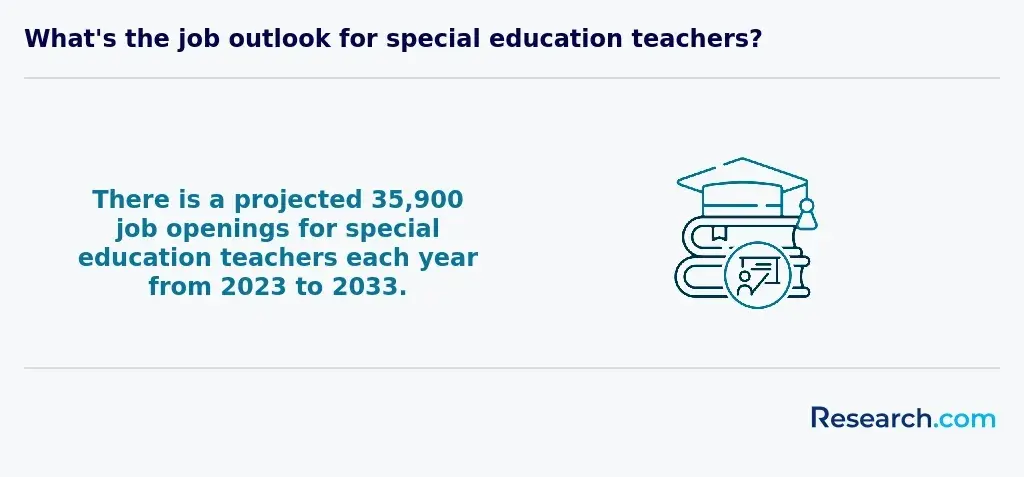
Wyoming schools continue to need trained special education teachers across grade levels. The state has approximately 1,200 special education teachers working in educational settings, and the Wyoming Department of Workforce Services projects continued employment growth through 2032.
| Special education setting | Projected employment change by 2032 | What the projection suggests |
| Preschool special education | 6.6% | Early identification and intervention continue to create demand for teachers who understand young children with disabilities. |
| Kindergarten through middle school special education | 9.2% | Elementary and middle grades are expected to offer growing opportunities for teachers who can support foundational academic and behavioral needs. |
| High school special education | 9.4% | Secondary schools need teachers who can support academics, transition planning, independence, and post-school readiness. |
Across the decade, the projected growth translates to around 80 to 419 total openings. These openings are expected to come from new demand and replacement needs, including retirements and turnover. Demand can differ significantly by district, disability area, and geography. Rural communities may have fewer total openings but greater difficulty recruiting specialized educators, while larger districts may offer more structured teams and a broader range of positions.
Where special education teachers may find opportunities
- Public elementary, middle, and high schools
- Early childhood and preschool special education programs
- District-level special education departments
- Alternative education and transition programs
- Specialized programs serving students with intensive support needs
- Private or charter schools, depending on their student population and service model
The outlook is encouraging, but candidates should avoid assuming that any credential will fit every role. Employers may look for experience with specific disability categories, behavior intervention, assistive technology, IEP compliance, transition planning, or co-teaching models.
How much do special education teachers in Wyoming earn?
Special education teacher pay in Wyoming depends on district salary schedules, years of experience, education level, additional duties, geographic location, and available funding. A commonly cited average annual salary is around $60,470. Another reported figure places average compensation at around $70.32 per hour. Because salary sources may use different methods, prospective teachers should compare official district salary schedules before making financial decisions.
| Career stage | Reported salary range | What can affect placement on the salary schedule |
| Entry-level special education teachers | $43,000 to $48,000 | Initial degree, licensure area, district, and prior relevant experience |
| Mid-career special education teachers | $50,000 to $62,000 | Years of teaching, graduate credits, performance expectations, and district pay structure |
| Experienced special education teachers | $81,000 or more | Advanced education, longevity, leadership duties, hard-to-staff incentives, or specialized responsibilities |
Compensation can vary between urban and rural districts. Urban districts may offer higher salaries in some cases, while rural districts may provide different benefits, smaller communities, or hard-to-fill opportunities. Special education teachers should also review benefits, planning time, caseload expectations, mileage or travel requirements, mentoring support, and stipends before comparing offers.
How to evaluate whether a salary offer is sustainable
- Request the district salary schedule and ask how your education and experience will be credited.
- Review health insurance, retirement contributions, paid leave, and professional development funding.
- Ask whether there are stipends for special education duties, extended school year work, case management, or additional certifications.
- Compare salary with housing, transportation, and commuting costs in the district’s area.
- Clarify caseload, planning time, paraeducator support, and paperwork expectations, since workload affects long-term job satisfaction.
What professional development opportunities are available for special education teachers in Wyoming?
Professional development is essential in special education because teachers must stay current on instructional methods, legal requirements, behavior supports, assistive technology, inclusion practices, and documentation. Wyoming educators can access state-sponsored training, conferences, district learning opportunities, and online programs.
- Week of Academic Vision for Excellence (WAVE) Conferences: This annual event brings together educators, administrators, and specialists to examine current practices, legal updates, instructional strategies, and special education trends. A WAVE Bootcamp focused on classroom strategies and Specially Designed Instruction (SDI) is also available to new SPED teachers.
- Wyoming Department of Education workshops: These sessions may address topics such as IEP development, behavior intervention, inclusive instruction, compliance, progress monitoring, and services for diverse learners.
- Online learning and webinars: Flexible online training can help teachers build skills in Universal Design for Learning, Positive Behavioral Interventions and Supports, data use, assistive technology, and collaboration.
- Graduate education: Teachers seeking leadership, research, or administrative roles may consider advanced study, including an online doctorate in higher education leadership, when it matches their long-term career goals.
The best professional development is directly tied to the teacher’s caseload and school context. A teacher supporting students with intensive behavioral needs may prioritize crisis prevention and behavior intervention, while a teacher in a co-taught classroom may benefit more from collaboration, differentiation, and inclusive lesson design.
The chart below highlights important special education knowledge areas school principals should understand to support effective instruction for students with disabilities.
Are there advanced roles for experienced special education teachers in Wyoming?
Special education teaching can lead to several advancement paths. Some educators remain in the classroom and become highly skilled lead teachers, while others move into assessment, behavior support, program leadership, consulting, or district-level coordination. Advanced roles often require experience, graduate coursework, additional credentials, or specialized training.
| Advanced role | Main responsibilities | When this path makes sense |
| Lead or veteran classroom teacher | Provide specialized instruction, mentor newer teachers, support IEP implementation, and model effective practices. | Best for educators who want to stay close to students while taking on informal leadership. |
| Educational diagnostician | Evaluate student learning needs, contribute to eligibility decisions, and help design individualized plans. | Best for teachers interested in assessment, data interpretation, and multidisciplinary collaboration; a master’s degree is typically necessary. |
| Behavior intervention specialist | Develop and support behavior plans, coach teachers, analyze behavior data, and help schools respond to challenging behaviors. | Best for educators with strong interest in behavioral support, crisis prevention, and functional interventions. |
| Director or program manager | Oversee special education programs, supervise staff, support compliance, manage services, and coordinate district strategies. | Best for experienced teachers who want administrative or systems-level impact. |
| Independent consultant | Train educators, advise schools or agencies, support program improvement, and contribute to policy or practice development. | Best for educators with deep expertise, strong communication skills, and a desire for flexible or specialized work. |
Teachers who want advancement should document their accomplishments carefully. Examples include IEP compliance work, student progress data, professional development delivered, mentoring responsibilities, behavior intervention outcomes, assistive technology implementation, and leadership in multidisciplinary teams.
The chart below shows teacher interest in assistive technology training, underscoring how important technology skills have become for supporting students with varied learning and communication needs.
What are the biggest challenges faced by special education teachers in Wyoming?
Special education can be deeply rewarding, but it is also demanding. Prospective teachers should understand the realities of the work before committing to the pathway. The strongest candidates are not only compassionate; they are organized, legally aware, collaborative, resilient, and willing to keep learning.
- Heavy workload: Special education teachers may manage instruction, case management, IEP meetings, progress reports, accommodations, behavior documentation, and family communication. In rural settings, staffing shortages can require teachers to cover multiple responsibilities.
- Limited resources: Some schools may not have enough specialized materials, assistive technology, service providers, or paraeducator support. Budget constraints can make individualized instruction harder to deliver.
- Emotional strain: The work can be emotionally intense, especially when students have complex academic, behavioral, medical, or family needs. A 2022 survey reported that 65% of teachers in the state considered leaving their positions, with well-being concerns cited as one factor.
- Complex family communication: Parents and guardians may be worried, frustrated, or overwhelmed. Teachers need strong communication skills to explain services, listen carefully, and maintain trust during difficult conversations.
- Safety and supervision responsibilities: Teachers may need to plan for wandering, bullying, crisis behavior, medical concerns, or environmental risks, especially for students who require intensive support.
These challenges do not mean the career is a poor choice. They mean candidates should choose preparation programs and employers carefully. Ask about mentoring, caseload size, paraeducator support, planning time, crisis response procedures, administrative support, and access to specialists. Teachers seeking ideas from other state pathways may also review resources such as Nevada teacher education courses, while remembering that licensure and school systems differ by state.
How are emerging innovations shaping special education careers in Wyoming?
Technology is changing how special education teachers plan lessons, document progress, communicate with teams, and personalize instruction. In Wyoming, where schools may serve students across large geographic areas, digital tools can be especially useful when they improve access to services, support collaboration, or help teachers monitor student growth more efficiently.
Important innovation areas to understand
- Assistive technology: Tools for communication, reading, writing, mobility, organization, and sensory support can help students participate more independently.
- Data-informed instruction: Teachers increasingly use progress-monitoring tools to adjust interventions and document whether IEP goals are being met.
- Digital collaboration platforms: Shared systems can help teachers, counselors, therapists, administrators, and families coordinate services.
- AI-supported planning: AI tools may help generate draft lesson ideas, simplify text, or organize materials, but teachers must verify accuracy, protect student privacy, and ensure accommodations are appropriate.
- Telepractice and remote consultation: Digital service models can support collaboration with specialists, particularly in areas where access is limited.
Innovation does not replace teacher judgment. Special education teachers still need to understand disability needs, legal requirements, ethical data use, family communication, and individualized instruction. Educators interested in broader teaching opportunities can also compare related certification paths, including how to become an English teacher in Wyoming.
What advantages do online advanced degree programs offer to Wyoming special education teachers?
Online advanced degree programs can be useful for Wyoming teachers who want to keep working while building graduate-level expertise. This flexibility matters in a state where relocation may be difficult and where educators may live far from campus-based programs. A well-designed online program can help teachers study instructional design, assessment, behavior support, inclusion, leadership, and research while applying new strategies in their current classrooms.
An option such as an online master of teaching may be especially relevant for educators who want a stronger foundation in pedagogy, data-informed instruction, and classroom practice. However, teachers should confirm whether any online program they consider aligns with Wyoming licensure, endorsement, salary advancement, or district reimbursement policies.
| Online advanced degree advantage | What to verify before enrolling |
| Study while remaining employed | Check course schedules, practicum expectations, and whether any campus visits are required. |
| Access programs without relocating | Confirm that the institution is accredited and accepted by your employer or licensing authority. |
| Build specialized expertise | Review concentrations in special education, behavior, assessment, leadership, or curriculum. |
| Potential salary schedule movement | Ask your district how graduate credits or degrees affect pay placement. |
| Preparation for leadership roles | Make sure coursework matches your target role, such as program coordination, coaching, or administration. |
What is the most cost-effective pathway to earn a teaching credential in Wyoming?
The most cost-effective pathway depends on what you already have. A first-time college student may save money by choosing an approved in-state program, transferring credits carefully, and applying for scholarships. A career changer with a bachelor’s degree may reduce time and cost through post-baccalaureate, alternative, accelerated, or online coursework that leads to the correct credential.
Candidates should evaluate teaching credential programs in Wyoming by total cost, not just tuition. Fees, student teaching requirements, travel, testing, background checks, books, technology, and time away from work can all affect affordability.
Cost-control steps for aspiring teachers
- Confirm that the program leads to Wyoming licensure before paying application fees.
- Ask for a written transfer credit evaluation if you have prior college coursework.
- Compare tuition, fees, books, testing costs, and clinical placement expenses.
- Ask whether the program offers part-time, online, evening, or accelerated formats.
- Look for scholarships, district partnerships, tuition reimbursement, and state-supported aid.
- Calculate the income you may lose during student teaching if you must reduce work hours.
Could additional interdisciplinary credentials boost my special education career in Wyoming?
Interdisciplinary credentials can make a special education teacher more effective, especially when students need academic, behavioral, communication, mental health, or developmental support. Additional training does not replace special education licensure, but it can strengthen collaboration and open new career options.
For example, understanding school psychologist requirements Wyoming can help teachers better appreciate evaluation, mental health, and learning assessment roles. Some teachers may also pursue behavior-focused, counseling-adjacent, early childhood, or literacy-related training depending on their district’s needs.
| Additional area of expertise | How it can support special education work |
| School psychology knowledge | Improves understanding of evaluations, learning differences, and mental health considerations. |
| Behavior analysis | Supports behavior plans, data collection, and intervention design. |
| Early childhood education | Helps teachers support developmental foundations and early intervention. |
| Counseling collaboration | Strengthens social-emotional support and referral practices. |
| Assistive technology | Improves access for students with communication, mobility, reading, writing, or organization needs. |
How do Wyoming’s special education laws impact teachers?
Special education teachers work within a legal framework that shapes instruction, documentation, collaboration, and student rights. Understanding the law is not optional; it is central to the job. Teachers must know how to implement IEPs, provide accommodations, document progress, and participate in legally compliant meetings.
- IDEA and FAPE: The Individuals with Disabilities Education Act requires eligible students with disabilities to receive a Free Appropriate Public Education. Teachers help deliver services through Individualized Education Programs tailored to student needs.
- Wyoming licensure rules: Wyoming requires special education teachers to hold appropriate credentials through the Professional Teaching Standards Board, helping ensure that educators have the preparation needed for the role.
- Child Find: Districts must identify and evaluate children who may have disabilities. Teachers may contribute observations, documentation, interventions, and referrals as part of this process.
- Early intervention emphasis: Wyoming’s focus on early support encourages teachers to respond proactively when young students show developmental, learning, or behavioral concerns.
Legal compliance is also a teamwork issue. Special education teachers often coordinate with general education teachers, administrators, school psychologists, counselors, speech-language pathologists, occupational therapists, families, and outside providers. Candidates exploring options in nearby or comparison states may find resources such as Washington teacher preparation programs useful, but Wyoming educators must follow Wyoming and federal requirements applicable to their role.
What are effective leadership and mentorship strategies for special education teachers in Wyoming?
Experienced special education teachers can influence their schools by mentoring colleagues, improving systems, and modeling strong inclusive practice. Leadership does not always require leaving the classroom. In many schools, the most effective leaders are teachers who help teams solve practical problems around IEP implementation, co-teaching, data collection, accommodations, and behavior support.
Practical leadership strategies
- Create templates and checklists that help teams track IEP services, accommodations, and progress monitoring.
- Mentor new special education teachers on documentation, meetings, family communication, and workload management.
- Lead short training sessions for general education teachers on inclusion, differentiation, or behavior supports.
- Build routines for collaboration with paraprofessionals and related service providers.
- Use student data to recommend instructional adjustments rather than relying only on anecdotal impressions.
- Study related early learning pathways, such as preschool teacher requirements in Wyoming, when working with younger students or early intervention teams.
Strong mentorship also reduces burnout. New teachers often need help prioritizing tasks, preparing for meetings, communicating with families, and understanding which issues require administrative support. Schools that invest in mentoring are better positioned to retain qualified special education staff.
How does elementary teaching experience enhance special education practices in Wyoming?
Elementary teaching experience can be valuable in special education because many disabilities affect foundational reading, writing, math, behavior, communication, and executive functioning skills. Teachers who understand early literacy, numeracy, classroom routines, and child development are often better prepared to design interventions that meet students where they are.
Educators who want to strengthen this foundation may benefit from reviewing how to become an elementary school teacher in Wyoming. Elementary preparation can support special education practice by improving lesson sequencing, differentiation, small-group instruction, classroom management, and family communication.
Where elementary experience is especially useful
- Teaching students who need intensive reading or math intervention
- Supporting students with developmental delays or early learning gaps
- Designing routines that improve behavior and independence
- Collaborating with general education teachers in inclusive classrooms
- Helping families understand grade-level expectations and realistic progress goals
How can parent and community engagement strengthen special education in Wyoming?
Family and community partnerships can make special education services more effective. Parents and guardians understand the child’s history, strengths, triggers, communication patterns, medical needs, and goals outside school. Community agencies may provide services that schools cannot offer alone. When collaboration is respectful and consistent, IEP planning becomes more practical and student-centered.
Teachers can strengthen engagement by preparing clearly for meetings, avoiding jargon, listening before recommending solutions, and following up in writing. For students with behavior needs, family input can be especially important. Educators interested in deeper behavior expertise may explore how to become a BCBA in Wyoming.
Effective family engagement practices
- Share progress in plain language, not only during annual IEP meetings.
- Ask families what strategies work at home and what concerns they want prioritized.
- Explain accommodations and services with examples.
- Document decisions and next steps after meetings.
- Coordinate with community providers when families give appropriate permission.
- Respect cultural, geographic, transportation, and scheduling barriers that may affect participation.
How can special education teachers collaborate with school counselors in Wyoming?
Special education teachers and school counselors often serve the same students from different angles. Teachers focus heavily on instruction, accommodations, IEP goals, and classroom supports. Counselors may address academic planning, social-emotional development, crisis response, attendance, family concerns, and transition planning. Collaboration helps schools avoid fragmented support.
Reviewing school counselor requirements in Wyoming can help special education teachers understand counselors’ training and responsibilities. The goal is not to blur professional boundaries, but to coordinate services so students receive consistent support.
Ways to collaborate effectively
- Schedule regular check-ins for students with significant academic, behavioral, or emotional needs.
- Clarify who communicates with families about specific issues.
- Coordinate transition planning for older students.
- Share relevant classroom observations while protecting student confidentiality.
- Develop consistent behavior, attendance, and coping strategies across settings.
- Participate together in professional development when topics overlap, such as trauma-informed practice or crisis prevention.
Are there scholarships and grants available for special education teachers in Wyoming?
Financial aid can make the path to special education teaching more accessible, especially for students pursuing undergraduate teacher preparation or current educators returning for graduate coursework. Applicants should review eligibility rules carefully because scholarships may be limited by residency, GPA, enrollment level, institution, field of study, or teaching commitment.
- Wyoming Quality Counts: This state-funded scholarship supports teachers who want to teach special education in early education and can cover up to $1,000.
- University of Wyoming Scholarships: As the only in-state institution that offers teacher preparation programs approved by the WY Professional Teaching Standards Board (PTSB), the university provides several undergraduate and graduate scholarship options that can help reduce education costs.
- Wyoming Community Foundation: This organization lists scholarships for graduating high school students and undergraduate college students. Award amounts vary, and applicants generally must be Wyoming residents, attend an accredited institution, and meet certain GPA thresholds.
Financial aid should be evaluated alongside program fit. A scholarship is helpful only if the program leads to the credential you need. Students comparing teaching options outside Wyoming may also review resources such as Oklahoma teaching certificate programs, but state-specific eligibility and licensure rules will differ.
Questions to ask about financial aid
- Is the award available to undergraduate students, graduate students, or both?
- Does the scholarship require Wyoming residency?
- Does it require enrollment in an approved teacher preparation program?
- Can the award be used for online coursework, fees, testing, or books?
- Is there a teaching service obligation after graduation?
- What GPA or enrollment status must be maintained?
How does school type affect opportunities for special education teachers in Wyoming?
The type of school you choose can affect your responsibilities, resources, legal obligations, team structure, and career experience. Public, private, and charter schools may all serve students with disabilities, but they can differ in staffing, funding, compliance expectations, and program design.
| School type | Potential advantages | Potential trade-offs | Best fit for teachers who... |
| Public schools | Public schools operate under IDEA requirements and often have established IEP procedures, multidisciplinary teams, and federally mandated services. | Rural districts may face staffing shortages, limited resources, and broad caseload demands. | Want structured special education systems, public school licensure roles, and access to district support teams. |
| Private schools | Some private schools offer specialized programs or smaller learning environments for students with particular needs. | Services and legal obligations can vary because private schools are not required to follow IDEA in the same way public schools are. | Prefer mission-driven settings and are comfortable investigating each school’s support model carefully. |
| Charter schools | Charter schools may offer innovative instructional models and flexibility while operating as public institutions. | Funding, staffing, and service delivery models may vary widely by school. | Want public education roles in settings that may use nontraditional schedules, curricula, or instructional designs. |
Teachers considering private schools should review qualifications and expectations carefully. A resource on how to become a private school teacher in Wyoming can help clarify how private school roles may differ from public school positions. Regardless of setting, special education teachers should ask how the school identifies student needs, provides accommodations, supports teachers, involves families, and handles legal responsibilities.
What alternatives are available for aspiring special education professionals in Wyoming?
Not everyone who wants to support students with disabilities needs to become a classroom special education teacher. Some professionals work as related service providers, evaluators, counselors, therapists, behavior specialists, or support staff. These careers can be a better fit for people who prefer clinical work, assessment, therapy, communication services, or mental health support.
| Alternative role | How it supports students with disabilities | Why someone might choose it instead of teaching |
| Speech-language pathologist | Supports communication, language, speech, and sometimes swallowing-related needs. | Best for those interested in assessment and therapy focused on communication. |
| Occupational therapist | Helps students build functional, sensory, motor, and daily living skills needed for school participation. | Best for those interested in therapy, access, independence, and adaptive strategies. |
| Educational diagnostician | Assesses learning needs and contributes to individualized planning. | Best for educators who enjoy testing, data, and eligibility decisions. |
| School counselor or psychologist | Supports emotional, behavioral, social, academic, and mental health needs. | Best for those drawn to counseling, assessment, and student support systems. |
One important related path is speech-language pathology. To compare requirements and responsibilities, review how to become a speech language pathologist in Wyoming. Choosing among these roles should depend on whether you want to teach academic content, provide therapy, conduct evaluations, support behavior, or coordinate broader student services.
How can special education teachers address substance abuse challenges in Wyoming?
Special education teachers may work with students whose academic performance, attendance, behavior, or emotional health is affected by substance abuse in the student’s life, family, or community. Teachers are not substance abuse counselors unless they hold the appropriate qualifications, but they can play an important role in noticing concerns, documenting patterns, following school protocols, and connecting students with trained professionals.
Effective support begins with collaboration. Teachers should work with school counselors, administrators, nurses, families, and community agencies when appropriate. IEP teams may also need to consider how substance-related challenges affect behavior, learning, attendance, or services while protecting student confidentiality and dignity. Educators who want deeper expertise can review how to become a substance abuse counselor in Wyoming.
Appropriate teacher actions
- Document observable academic, behavioral, or attendance concerns without making unsupported diagnoses.
- Follow district reporting and referral procedures.
- Coordinate with counselors and administrators when safety or well-being concerns arise.
- Use trauma-informed and non-stigmatizing communication.
- Maintain IEP supports while the broader team addresses nonacademic concerns.
- Protect confidentiality and avoid discussing sensitive issues with people who do not have a legitimate educational role.
Common mistakes to avoid when becoming a special education teacher in Wyoming
Many problems in the licensure and job search process can be avoided by checking requirements early and making decisions based on long-term fit rather than convenience alone.
| Common mistake | Why it can cause problems | Better approach |
| Choosing a program without confirming Wyoming approval | You may complete coursework that does not lead to the license or endorsement you need. | Verify approval and licensure alignment before enrolling. |
| Looking only at tuition | Fees, testing, transportation, books, technology, and unpaid student teaching can increase total cost. | Compare the full cost of attendance and required fieldwork expenses. |
| Assuming online programs automatically meet licensure rules | Some online programs are designed for other states or for non-licensure professional development. | Ask the program and Wyoming licensing authority how the degree applies to licensure. |
| Ignoring student teaching logistics | Placements may be limited by location, schedule, or school partnerships. | Ask early where placements occur and whether rural or local placements are available. |
| Assuming salary outcomes are guaranteed | Pay depends on district schedules, experience, education, and local funding. | Review current district salary schedules and ask how your credentials will be credited. |
| Underestimating paperwork and compliance | IEPs, progress reports, data collection, and meetings are central parts of the job. | Choose programs and employers that provide strong training, mentoring, and systems support. |
| Relying only on rankings or reputation | A well-known program may not be the best fit for your schedule, budget, licensure goal, or location. | Compare approval status, field placements, faculty support, completion requirements, and cost. |
What Special Education Teachers in Wyoming Say About Their Careers
- "Special education has given me the chance to build close relationships with students and families. In Wyoming communities, you often see the impact of your work beyond the classroom, and that makes the difficult days easier to carry." - Brenda
- "The most powerful part of this job is watching a student master something that once felt impossible. When instruction is truly individualized, students surprise themselves, their families, and sometimes even the adults around them." - Caroline
- "I see my role as both teacher and advocate. The training and support I have received help me build classrooms where students with disabilities are not treated as an afterthought, but as full members of the school community." - Isobel
Related Articles for Nearby States
- 2027 How to Become a Special Education Teacher in Montana: Requirements & Certification
- 2027 How to Become a Special Education Teacher in South Dakota: Requirements & Certification
- 2027 How to Become a Special Education Teacher in Nebraska: Requirements & Certification
- 2027 How to Become a Special Education Teacher in Colorado: Requirements & Certification
- 2027 How to Become a Special Education Teacher in Idaho: Requirements & Certification
- 2027 How to Become a Special Education Teacher in Utah: Requirements & Certification
- 2027 How to Become a Special Education Teacher in North Dakota: Requirements & Certification
- 2027 How to Become a Special Education Teacher in Kansas: Requirements & Certification
- 2027 How to Become a Special Education Teacher in Iowa: Requirements & Certification
- 2027 How to Become a Special Education Teacher in Nevada: Requirements & Certification
Key Insights
- The standard Wyoming pathway combines a degree, approved preparation, student teaching, exams, background checks, and licensure. Do not enroll in a program until you confirm that it leads to the credential you need.
- The timeline is usually five to eight years. A traditional bachelor’s route takes about four years before licensure steps, while master’s study can add two years for teachers seeking advanced roles.
- Demand is expected to remain positive. Wyoming projections show growth of 6.6% for preschool special education teachers, 9.2% for kindergarten through middle school, and 9.4% for high school special education teachers by 2032.
- Salary depends heavily on district and experience. Reported figures include an average annual salary of around $60,470, with ranges from $43,000 to $48,000 for entry-level teachers and $81,000 or more for experienced teachers.
- Special education is both instructional and legal work. Teachers must understand IEPs, FAPE, Child Find, accommodations, documentation, and collaboration.
- Technology and interdisciplinary skills are increasingly valuable. Assistive technology, data-informed instruction, behavior support, and collaboration with counselors or specialists can strengthen career prospects.
- The best career decision comes from comparing fit, not just eligibility. Before choosing a program or job, review accreditation or approval, licensure outcomes, total cost, field placement logistics, salary schedules, caseload expectations, mentoring, and long-term advancement options.
References:
- Cowboy State Daily. (2022, June 3). Report: 65% of Wyo Teachers Want to Leave Jobs. https://cowboystatedaily.com/2022/06/02/report-majority-of-wyoming-teachers-unhappy-with-jobs-professor-thinks-outlook-is-brighter
- National Center for Learning Disabilities. (2023, June 12). Wyoming State Snapshot of Specific Learning Disabilities. https://ncld.org/wp-content/uploads/2023/06/Snapshot-SoLD-06102023-web_wy.pdf
- Wyoming Department of Workforce Services. (2024, July). Wyoming Long-Term Industry and Occupational Employment Projections, 2022-2032. https://doe.state.wy.us/lmi/projections/2024/WY_LT_Projections_2022-2032.pdf
- Wyoming Measures Up. (2023). Wyoming School Report Card. https://wyomingmeasuresup.com
- Wyoming Professional Teaching Standards Board. (n.d.). Become Licensed in Wyoming. Retrieved October 22, 2024, from https://wyomingptsb.com/licensure/becoming-licensed
Other Things You Should Know About Becoming a Special Education Teacher in Wyoming
In 2027, aspiring special education teachers in Wyoming must complete a student teaching or fieldwork component as part of their program. This involves working under a licensed special education teacher in a classroom setting to gain practical, hands-on experience essential for certification.
In 2027, aspiring special education teachers in Wyoming need a bachelor's degree in special education or a related field. They must also complete a state-approved educator preparation program and pass the Praxis exams. Additionally, they must apply for certification through the Wyoming Professional Teaching Standards Board.


