2027 How to Become a Middle School Math Teacher in Minnesota: Requirements & Certification

Co-Founder and Chief Data Scientist
Becoming a middle school math teacher in Minnesota is a regulated process: you need the right degree preparation, supervised classroom experience, passing licensure exams, background checks, and an active Minnesota teaching license. The decision matters because middle school math sits at a critical point in student development—students are moving from arithmetic into algebraic reasoning, problem-solving, data interpretation, and the mathematical habits they will need in high school.
Minnesota’s projected employment growth for middle school teachers is 3.8% from 2022 to 2032, with about 730 annual openings. Middle school math teachers in the state earned an average annual salary of $68,710, according to the salary figure cited in this guide. This article explains the full path: education requirements, licensure steps, student teaching, salary expectations, curriculum standards, professional development, common challenges, and practical alternatives if you want to teach math in a different setting.
Quick Answer: How Do You Become a Middle School Math Teacher in Minnesota?
To become a middle school math teacher in Minnesota, you generally need to earn a bachelor’s degree, complete a state-approved teacher preparation program with student teaching, pass the required Minnesota Teacher Licensure Examinations, complete fingerprinting and a background check, and apply for licensure through the Minnesota Professional Educator Licensing and Standards Board. After licensure, teachers must complete continuing education to renew their license every five years.
Key Things You Should Know About Becoming a Middle School Math Teacher in Minnesota
- Demand is steady. Minnesota’s projected growth for middle school teachers is 3.8% from 2022 to 2032, with around 730 openings each year during that period.
- Pay can be competitive within K-12 education. The average annual salary cited for Minnesota middle school math teachers is $68,710, while another commonly cited estimate places average pay at approximately $60,000 annually depending on district, experience, and location.
- Location affects both salary and affordability. Twin Cities districts may offer different compensation than rural districts, but housing, commuting costs, and local cost of living can change the real value of a salary.
- Licensure is not optional for public school teaching. Candidates must meet Minnesota’s teacher preparation, exam, student teaching, background check, and licensing requirements before serving as the teacher of record in most public school settings.
- Support systems matter. Mentorship, induction programs, district coaching, and professional organizations can make the first years of teaching more manageable and improve long-term career satisfaction.
- Step-by-step path to becoming a middle school math teacher in Minnesota
- Education requirements for Minnesota middle school math teachers
- Certification and licensing process in Minnesota
- Student teaching, internships, and classroom experience
- Minnesota math standards and middle school curriculum expectations
- Job outlook, salary expectations, and hiring market
- Professional development and continuing education
- Classroom management and teaching methods for middle school math
- Career advancement and specialization options
- Legal and ethical responsibilities for Minnesota teachers
- Support resources for new middle school math teachers
- Interdisciplinary strategies for stronger math instruction
- Alternatives to teaching math in middle school
- How advanced science education can support math teaching
- How dual subject certifications may expand options
- Mentorship and professional networks for long-term success
- Affordable ways to finance teacher certification
- How teaching middle school math in Minnesota compares with other states
- Common challenges new teachers face
- Burnout prevention and work-life balance strategies
- Middle school vs. high school math teaching in Minnesota
- Alternative pathways for career changers
- Specialized certification requirements for Minnesota math teachers
What are the steps to becoming a middle school math teacher in Minnesota?
The route to becoming a middle school math teacher in Minnesota is straightforward, but each step must be completed carefully. The most common path is a bachelor’s degree plus a Minnesota-approved teacher preparation program. Career changers may have alternative options, but they still need to prove subject knowledge, teaching readiness, and eligibility for licensure.
| Step | What You Need to Do | Why It Matters |
| 1. Earn a bachelor’s degree | Complete a bachelor’s program in education, mathematics, mathematics education, or a closely related field. | A bachelor’s degree is the academic foundation required before you can qualify for teacher preparation and licensure. |
| 2. Complete teacher preparation | Enroll in a state-approved program that includes pedagogy, adolescent development, math methods, classroom management, and supervised teaching. | Minnesota expects teachers to know both math content and how to teach it to middle grade learners. |
| 3. Finish student teaching | Complete supervised classroom practice, often for a full semester and at least 12 weeks. | Student teaching shows you can plan lessons, manage students, assess learning, and adjust instruction in a real classroom. |
| 4. Pass required exams | Take the Minnesota Teacher Licensure Examinations, including required pedagogy, basic skills, and mathematics content assessments when applicable. | These exams verify that you meet Minnesota’s baseline standards for teaching knowledge and subject competence. |
| 5. Apply for licensure | Submit your application through the Minnesota Professional Educator Licensing and Standards Board. The application fee is typically around $57. | You cannot teach as the licensed classroom teacher in most public school roles without the appropriate license. |
| 6. Complete background checks | Submit fingerprints and pass the required criminal background check. | Student safety requirements apply to all licensed educators working with minors. |
| 7. Keep the license current | Complete continuing education and professional development for renewal every five years. | Renewal requirements help teachers stay current with instructional methods, student needs, and state expectations. |
If you are still comparing degree options, an education-focused bachelor’s program is usually the most direct route. Students who need flexibility may also compare online education degree programs, but they should confirm that any program meets Minnesota licensure and student teaching requirements before enrolling.
What are the educational requirements for becoming a middle school math teacher in Minnesota?
Minnesota middle school math teachers need more than strong math skills. They must understand how early adolescents learn, how to make abstract concepts concrete, how to identify gaps in prerequisite knowledge, and how to teach students with different levels of readiness.
- Bachelor’s degree: A bachelor’s degree is the minimum academic credential. Common majors include mathematics education, elementary or middle level education with a mathematics concentration, mathematics, or a related field combined with teacher preparation.
- State-approved teacher preparation: Candidates should complete a Minnesota-approved program or another approved pathway that aligns with state licensure rules.
- Mathematics coursework: Programs typically include algebra, geometry, statistics or data analysis, number systems, mathematical reasoning, and methods for teaching mathematics to middle grade students.
- Education coursework: Candidates study lesson design, assessment, educational psychology, classroom management, inclusive instruction, and strategies for supporting multilingual learners and students with disabilities.
- Field experience: Most programs include observation hours, practicums, and student teaching so candidates can practice before taking full classroom responsibility.
- Advanced study, if useful: A master’s degree is not the entry-level requirement, but graduate work in mathematics education, curriculum, leadership, or special education can support advancement later.
Prospective teachers should pay close attention to license level. Minnesota candidates may pursue licenses such as 5-8 or 5-12 Mathematics, depending on the grade levels they want to teach. A 5-8 path fits middle school roles most directly, while a 5-12 license may provide broader flexibility across secondary grades.
What is the certification and licensing process for a middle school math teacher in Minnesota?
Certification and licensure are the formal steps that allow a prepared candidate to become a licensed teacher in Minnesota. The process is overseen by the Minnesota Professional Educator Licensing and Standards Board, often referred to as PELSB, and is designed to confirm that candidates have the necessary academic preparation, field experience, testing, and professional fitness.
- Complete an approved preparation route: The standard route is a bachelor’s degree from an accredited institution plus a state-approved teacher education program. Candidates who already have a math degree but lack education coursework may need an alternative or additional licensure pathway.
- Pass required examinations: Candidates must complete the Minnesota Teacher Licensure Examinations. These may include pedagogy, basic skills in reading, writing, and math, and a mathematics content exam. The basic skills test may be waived for candidates with qualifying ACT or SAT scores.
- Secure program recommendation: Teacher preparation programs generally verify that candidates have completed coursework, fieldwork, and student teaching before they apply for licensure.
- Submit the license application: Applicants file through the state licensing system and should be ready to provide transcripts, test results, program verification, and required fees.
- Complete fingerprinting and background checks: Minnesota requires these checks to help protect students and maintain public trust in schools.
- Plan for renewal: After earning the license, teachers must complete continuing education and professional development activities to remain eligible for renewal.
Licensing fees, exam fees, transcript costs, and preparation program expenses can add up. Candidates who expect to continue into curriculum leadership, district-level roles, or higher education may later compare advanced options such as online doctoral programs in curriculum and instruction, but that level of study is not required for initial middle school math licensure.
How important is teaching experience and what are the internship opportunities for middle school math teachers in Minnesota?
Teaching experience is one of the most important parts of preparation because middle school classrooms are complex. A teacher must explain math clearly, read student confusion quickly, manage behavior, build trust, and keep lessons moving. These skills are difficult to master through coursework alone.
Minnesota candidates are generally expected to complete supervised student teaching, and the requirement is often at least 12 weeks. Many programs structure this as a semester-long placement in which the candidate gradually moves from observation and small-group support to full lesson planning and classroom teaching.
Strong field placements usually include:
- A qualified mentor teacher: A supportive mentor helps the candidate understand pacing, assessment, classroom culture, and parent communication.
- Opportunities to teach different topics: Candidates should practice lessons in number sense, algebraic reasoning, geometry, measurement, probability, and data analysis.
- Feedback cycles: Observation, coaching, reflection, and revision help candidates improve faster than trial-and-error teaching alone.
- Exposure to diverse learners: Middle school math teachers need practice supporting students who are ahead, behind, multilingual, anxious about math, or receiving special education services.
Before student teaching, candidates can build experience by tutoring, working as a paraprofessional, volunteering in after-school programs, serving as a math intervention aide, or assisting with summer enrichment. These experiences do not replace licensure requirements, but they can make the transition into student teaching much smoother.
In 2023, Minnesota had around 9,750 middle school teachers. The chart below provides additional employment context.
What are the Minnesota standards and curriculum requirements for teaching middle school math?
Minnesota’s K-12 Academic Standards in Mathematics set expectations for what students should know and be able to do. Middle school math teachers use these standards to plan lessons, choose materials, design assessments, and prepare students for later mathematics coursework.
The standards are organized around four major strands: Number and Operation, Algebra, Geometry and Measurement, and Data Analysis and Probability. In practice, teachers do not teach these as isolated silos. Strong middle school instruction connects computation, reasoning, patterns, measurement, and real-world data so students understand why procedures work and when to use them.
The standards were last revised in 2007, with full implementation expected by the 2010-11 school year. Minnesota conducts a standards review process every ten years, and the latest revisions were initiated in 2021-22. Teachers should monitor Minnesota Department of Education updates because standards, assessments, and district curriculum decisions can change over time.
| Curriculum Area | What Middle School Teachers Emphasize | Classroom Example |
| Number and Operation | Fluency with rational numbers, proportional reasoning, and operations across number systems. | Using ratios, fractions, decimals, and percentages to compare prices or analyze survey results. |
| Algebra | Patterns, variables, expressions, equations, and early function thinking. | Modeling a real situation with an equation and explaining what each variable represents. |
| Geometry and Measurement | Shapes, spatial reasoning, area, volume, angles, and measurement relationships. | Designing a scale drawing or calculating the volume of a classroom object. |
| Data Analysis and Probability | Collecting, representing, interpreting, and using data to make arguments. | Creating graphs from local data and discussing whether the data supports a conclusion. |
Teachers also need to prepare students for state assessments such as the Minnesota Comprehensive Assessment. However, assessment preparation should not replace rich instruction. The strongest classrooms combine conceptual understanding, procedural fluency, mathematical communication, and problem-solving. If you are exploring broader education careers, Research.com also explains what you can do with a teaching degree.
What is the job market like and what are the salary expectations for middle school math teachers in Minnesota?
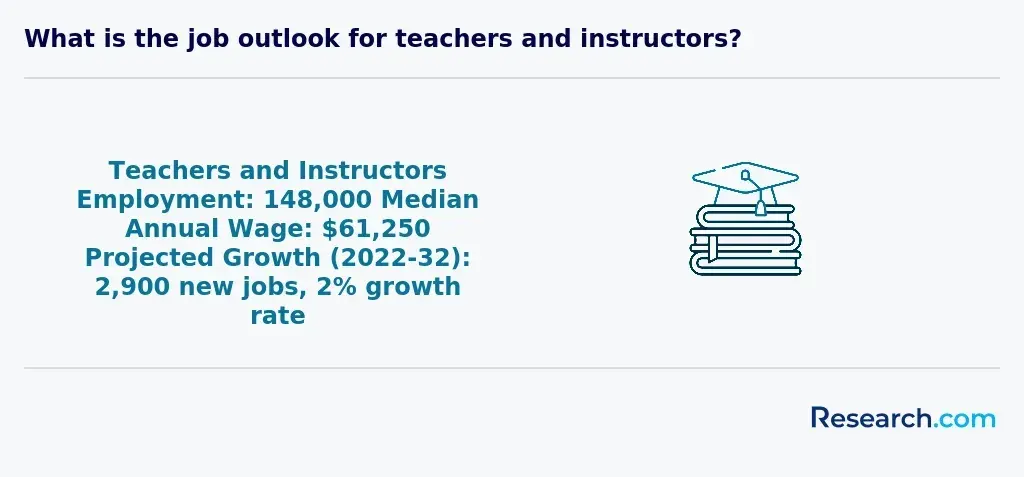
Minnesota’s job outlook for middle school teachers is positive but not explosive. Employment is projected to grow by 3.8% from 2022 to 2032, with about 730 annual openings during that period. Openings may come from growth, retirements, transfers, and teachers leaving the profession.
The average annual salary figure cited for Minnesota middle school math teachers is $68,710. Some salary sources also estimate average pay at approximately $60,000 annually. Differences in estimates can come from job title definitions, district contracts, years of experience, benefits, and whether the figure includes all middle school teachers or math-specific postings.
| Factor | How It Can Affect Pay or Hiring |
| District location | Urban, suburban, and rural districts may differ in salary schedules, cost of living, and shortage needs. |
| Experience level | Teachers typically move across steps on a salary schedule as they gain years of service. |
| Graduate credits or degrees | Some districts pay more for additional approved credits or advanced degrees. |
| License flexibility | A teacher licensed across more grade levels or subject areas may qualify for a wider range of openings. |
| Shortage needs | Districts that struggle to fill math roles may recruit more aggressively, although compensation depends on local contracts. |
| Benefits | Health insurance, retirement plans, paid leave, and professional development support can be a major part of total compensation. |
Teachers should evaluate a job offer by looking beyond the base salary. Ask about class sizes, prep periods, mentoring, curriculum materials, intervention support, planning time, substitute coverage, and expectations for after-school duties. A higher salary may not always be the better offer if workload and support differ sharply.
Teachers who want to move into school leadership, instructional coaching, or organizational roles may later pursue graduate study. An organizational leadership doctorate program online may strengthen leadership preparation, but it should be chosen only after comparing cost, accreditation, career goals, and district salary policies.
One Minnesota teacher described the profession as supportive but demanding: “The community support surprised me, but the workload can feel heavy during the school year. The pay is reasonable, yet the emotional responsibility of helping students is a major part of the role.”
What professional development and continuing education opportunities are available for middle school math teachers in Minnesota?
Professional development is not just a licensure requirement. For math teachers, it is how classroom practice improves over time. Good development helps teachers diagnose misconceptions, use student data, integrate technology, support multilingual learners, build culturally responsive lessons, and manage the unique energy of middle school students.
- Minnesota Department of Education resources: The Minnesota Department of Education offers professional learning opportunities, guidance documents, workshops, presentations, and resources connected to instructional improvement.
- Continuing education credits: Teachers need approved professional development to maintain licensure. Districts, colleges, professional associations, and online providers may offer qualifying opportunities.
- Mentoring and induction: New teachers often benefit from structured mentor relationships that cover planning, classroom routines, grading, communication, and stress management.
- Peer coaching: Collaborative coaching helps teachers observe one another, analyze student work, and refine instructional strategies.
- Math-specific professional organizations: Groups focused on mathematics education can provide conferences, lesson resources, and networks of teachers facing similar instructional challenges.
- Graduate certificates or degrees: Teachers seeking deeper specialization may pursue graduate coursework in math education, curriculum, special education, STEM, or educational leadership.
Cost matters. Teachers comparing additional coursework may want to review affordable online teaching degrees, but they should verify accreditation, licensure relevance, district approval for salary advancement, and whether credits count toward renewal before enrolling.
What are effective classroom management strategies and teaching methods for middle school math teachers in Minnesota?
Middle school math teaching requires a balance of structure and flexibility. Students at this age are developing independence, identity, peer awareness, and abstract reasoning at different speeds. Effective teachers create a classroom where students can take intellectual risks without losing routines or accountability.
| Strategy | How It Helps | Practical Example |
| Teach routines explicitly | Clear routines reduce wasted time and prevent confusion during transitions. | Practice how students enter, start warm-ups, get materials, work in groups, and ask for help. |
| Use positive reinforcement | Recognition of productive behavior helps build a classroom culture focused on effort and participation. | Praise students for explaining their reasoning, revising an error, or helping a peer respectfully. |
| Connect math to real situations | Relevant problems reduce the “when will I use this?” barrier. | Use budgeting, sports statistics, local weather data, maps, or school survey results in lessons. |
| Mix instructional formats | Students learn better when direct teaching, discussion, practice, and exploration are balanced. | Begin with a short mini-lesson, move to guided examples, then use partner problem-solving. |
| Differentiate support | Middle school classes often include wide gaps in readiness. | Offer extension tasks for advanced students and scaffolded practice for students rebuilding prerequisite skills. |
| Use technology purposefully | Digital tools can support visualization, practice, feedback, and assessment when aligned with learning goals. | Use graphing tools, online quizzes, or interactive manipulatives to deepen—not replace—thinking. |
The most effective teaching methods make student thinking visible. Ask students to explain how they solved a problem, compare multiple solution paths, identify errors in sample work, and justify why an answer makes sense. This approach helps teachers catch misconceptions early and helps students see math as reasoning rather than memorization.
What are the career advancement opportunities and specializations for middle school math teachers in Minnesota?
A middle school math teaching license can lead to several long-term career options. Some teachers stay in the classroom and become highly skilled instructional leaders. Others move into coaching, curriculum design, administration, special education, assessment, or district-level work.
- Department chair or team lead: Experienced teachers may coordinate math planning, lead data meetings, or support curriculum alignment.
- Instructional coach: Coaches help teachers improve lesson design, student engagement, assessment, and intervention strategies.
- Math specialist: Additional credentials, such as a K-12 Math Specialist license, may support specialized roles focused on math instruction.
- Special education or English language learner support: Added preparation can help teachers serve students with more complex learning needs.
- STEM education roles: Teachers with STEM expertise may lead enrichment, robotics, coding, engineering design, or interdisciplinary projects.
- School administration: A master’s degree in educational leadership can help teachers pursue roles such as assistant principal or principal.
- Curriculum and policy work: Experienced educators may contribute to district curriculum writing, state committees, assessment design, or professional learning programs.
Career advancement should be planned strategically. Before paying for another credential, ask whether it is recognized by Minnesota, whether your district rewards it, whether it qualifies you for the role you want, and whether the added responsibility matches your preferred work style.
One Minnesota educator described the shift this way: “I began in the classroom, but I wanted to influence instruction beyond my own students. Curriculum leadership was demanding, but seeing our district’s math program improve made the work worthwhile.”
What legal and ethical considerations must Minnesota middle school math teachers follow?
Minnesota teachers are responsible for both academic instruction and student safety. Legal and ethical expectations begin before licensure and continue throughout a teacher’s career.
- Valid licensure: Teachers must hold the appropriate Minnesota license for the grade level and subject they teach.
- Background screening: Fingerprinting and criminal background checks are part of the licensure and employment process.
- Professional ethics: Teachers are expected to act with fairness, integrity, respect, and appropriate professional boundaries.
- Mandated reporting: Minnesota teachers must report suspected child abuse or neglect according to state requirements.
- Equitable instruction: Teachers must provide meaningful access to learning for students with different abilities, backgrounds, languages, and needs.
- Anti-bullying and safe climate responsibilities: Educators help maintain classrooms where harassment, bullying, exclusion, and discrimination are addressed appropriately.
- Confidentiality: Student records, family information, disability status, and sensitive academic data must be handled carefully.
Ethical teaching also includes honest grading, transparent expectations, appropriate communication with families, and refusing to let bias determine student opportunities. Math teachers should be especially alert to “math person” stereotypes that can discourage students from participating or taking advanced courses later.
What resources and support are available for new middle school math teachers in Minnesota?
New teachers should not try to figure out the profession alone. The first years are easier when teachers have mentors, planning partners, high-quality curriculum materials, and a clear understanding of district expectations.
- District mentorship: Many Minnesota districts pair new teachers with experienced educators who can help with planning, routines, grading, and parent communication.
- Induction programs: Structured first-year and second-year supports can help new teachers build skill without feeling isolated.
- Professional organizations: The Minnesota Council of Teachers of Mathematics and national mathematics education organizations can provide conferences, instructional ideas, and networking.
- Collaborative planning teams: Grade-level or subject-area teams help teachers compare student work, design assessments, and align pacing.
- Online lesson and assessment resources: Teachers can use vetted digital materials, but they should adapt resources to Minnesota standards and student needs rather than relying on worksheets alone.
- Leadership development: Teachers who want to take on mentoring, coaching, or team leadership may benefit from leadership skills training as their careers progress.
In 2023, middle school teachers in Minnesota earned around $68,710 per year on average.
How can interdisciplinary strategies enhance middle school math instruction?
Interdisciplinary teaching helps students see math as a tool for understanding the world rather than a set of disconnected procedures. A math lesson can connect to science through measurement and data, to social studies through maps and demographics, to art through symmetry and scale, or to language arts through explanation and argument.
Teachers who want to strengthen communication, storytelling, and creative lesson design may find value in complementary study areas. For example, an online creative writing degree could support clearer explanations, stronger word problems, and more engaging project-based lessons, although it is not a substitute for mathematics licensure preparation.
What alternatives are available for those who want to teach math but not in a middle school setting?
If you like teaching math but are unsure about the middle school environment, compare other instructional settings before committing to one license path. Elementary teaching involves broader subject coverage and earlier numeracy development. High school math usually requires deeper content preparation and includes courses such as algebra, geometry, statistics, pre-calculus, or calculus. Tutoring, online teaching, adult education, curriculum writing, community college instruction, and educational technology roles may also fit math-focused educators.
Some candidates discover that they prefer working with younger children. If that is the case, learning how to become a preschool teacher in Minnesota can help you compare early childhood requirements with middle school math licensure.
How can pursuing advanced science education benefit middle school math teachers in Minnesota?
Science education can make math instruction more applied and inquiry-based. Data collection, measurement, graphing, proportional reasoning, experimental design, and modeling all sit at the intersection of math and science. Teachers with stronger science preparation can build lessons that show students why mathematical reasoning matters in real investigations.
Educators interested in strengthening STEM instruction may compare online science education programs. Before enrolling, they should confirm how the program fits their current license, district goals, budget, and long-term career plans.
Can dual subject certifications expand career opportunities for Minnesota middle school math teachers?
Dual subject preparation can increase flexibility, especially in smaller districts where schools may need teachers who can cover more than one subject area. A math teacher with an added license or endorsement may qualify for interdisciplinary STEM roles, intervention positions, enrichment programs, or different grade-level assignments.
Dual certification also requires extra planning. Additional coursework, testing, field experience, and application steps may apply. If you are considering a second subject outside mathematics, reviewing the music teacher education requirements in Minnesota can show how requirements vary by discipline.
How can mentorship programs and professional networks drive long-term career success?
Mentorship can shorten the learning curve for new teachers. A strong mentor helps with daily routines, grading systems, family communication, student behavior, curriculum pacing, and emotional resilience. Professional networks add another layer of support by connecting teachers with people outside their own building.
Networking is especially useful for teachers considering grade-level changes, leadership, coaching, or additional credentials. Educators who want broader perspective may compare adjacent pathways, such as learning how to become an elementary teacher in Minnesota, to understand how math instruction changes across developmental stages.
What affordable pathways are available to finance my teaching certification?
The cost of becoming a teacher can include tuition, books, exam fees, background checks, application fees, transportation to field placements, and lost income during student teaching. The cheapest path is not always the best path; the best path is the lowest-cost option that still meets Minnesota licensure requirements and gives you enough classroom preparation to succeed.
- Compare public, private, and online program costs: Look at total program cost, not just tuition per credit.
- Ask about transfer credits: Candidates with prior college coursework may reduce time and expense if credits transfer.
- Use financial aid carefully: Federal aid, grants, scholarships, and work-study may help, but loans should be weighed against expected teacher salary.
- Check district partnerships: Some districts support paraprofessionals, substitutes, or career changers moving into licensed teaching roles.
- Consider alternative routes only if they meet state rules: Faster programs can be useful, but only if they lead to the correct Minnesota license.
For a cost-focused overview, see Research.com’s guide to the cheapest way to get a teaching credential in Minnesota. Always verify current requirements with the licensing authority or a qualified program advisor before making enrollment decisions.
How does teaching middle school math in Minnesota compare to other states?
Minnesota’s middle school math teaching path is similar to other states in that candidates typically need a bachelor’s degree, teacher preparation, student teaching, testing, background checks, and licensure. What differs by state is the license structure, exam requirements, renewal rules, reciprocity policies, and grade-level definitions.
If you may move across state lines, do not assume one state’s license automatically qualifies you elsewhere. Compare requirements before choosing a program, especially if you are enrolling online or completing preparation outside Minnesota. Looking at another state’s pathway, such as the elementary school teacher requirements in Delaware, can help illustrate how licensure rules vary by location and teaching level.
Minnesota’s emphasis on math standards, STEM readiness, continuing education, and professional support can make it attractive for teachers who want a structured public school environment. Still, the right state depends on your license portability, family needs, salary expectations, cost of living, and district working conditions.
What common challenges do new middle school math teachers encounter in Minnesota?
New middle school math teachers often discover that content knowledge is only one part of the job. The harder work is diagnosing learning gaps, maintaining routines, building student confidence, communicating with families, and managing grading and planning time.
| Common Mistake or Challenge | Why It Creates Problems | Better Approach |
| Choosing a program without checking licensure alignment | A degree may be legitimate but still not meet Minnesota teacher licensure requirements. | Confirm approval, license level, student teaching rules, and exam preparation before enrolling. |
| Focusing only on tuition | Fees, commuting, books, unpaid student teaching, and delayed employment can change total cost. | Compare total cost of attendance and ask about scholarships, transfer credits, and aid. |
| Assuming math ability equals teaching readiness | Students need explanations, models, feedback, and emotional support, not just correct answers. | Practice multiple ways to teach each concept and learn how to analyze student misconceptions. |
| Relying too heavily on worksheets or test prep | Students may complete procedures without understanding concepts. | Use discussion, problem-solving, real-world data, manipulatives, and formative assessment. |
| Ignoring special education and multilingual learner needs | Math classrooms include students with diverse learning profiles. | Build inclusive strategies and collaborate with specialists. Some teachers also explore how to become a special education teacher in Minnesota. |
| Trying to work alone | Isolation increases stress and slows improvement. | Use mentors, team planning, instructional coaches, and professional networks. |
What strategies can help prevent burnout and manage work-life balance for Minnesota middle school math teachers?
Burnout prevention starts with realistic systems. New teachers often spend too much time creating every lesson from scratch, grading every problem, or trying to solve every student issue alone. Sustainable teaching requires boundaries, collaboration, and routines that reduce decision fatigue.
- Use shared curriculum wisely: Adapt district materials instead of rebuilding every unit from the ground up.
- Grade strategically: Not every assignment needs detailed scoring. Use quick checks, rubrics, peer review, and selected problem grading.
- Protect planning time: Batch similar tasks, create reusable templates, and avoid filling every prep period with meetings when possible.
- Ask for help early: Talk to mentors, counselors, special education staff, administrators, and colleagues before a challenge becomes a crisis.
- Set communication windows: Respond to families professionally, but avoid creating expectations that you are available at all hours.
- Build a life outside school: Rest, exercise, family time, hobbies, and medical care are not optional extras for long-term teachers.
Teachers considering long-term sustainability may also compare other teaching tracks. For example, reviewing the pathway for a high school history teacher in Minnesota can help show how workload, subject demands, and student age groups differ across roles.
What distinguishes middle school and high school math teaching careers in Minnesota?
Middle school and high school math teachers both teach mathematics, but the work feels different. Middle school teachers focus heavily on foundations: proportional reasoning, pre-algebra, number systems, geometry basics, data, and mathematical confidence. High school teachers usually work with more specialized courses and deeper abstractions, including algebra, geometry, statistics, trigonometry, pre-calculus, or calculus depending on the school.
| Comparison Area | Middle School Math | High School Math |
| Student development | Students are transitioning into adolescence and often need more structure, encouragement, and routine. | Students are closer to graduation and may be focused on credits, college, career pathways, or standardized exams. |
| Content focus | Foundational reasoning, pre-algebra, proportional thinking, geometry, and data literacy. | More advanced and course-specific mathematics. |
| Instructional style | Frequent modeling, movement, discussion, visual supports, and confidence-building. | Greater emphasis on abstraction, proof, formal notation, and independent practice. |
| Licensure planning | A 5-8 license may fit middle school roles. | A broader secondary license may be required depending on grade level and course assignments. |
If you are weighing a secondary-level path, Research.com’s guide on how to become a high school math teacher in Minnesota can help you compare requirements and classroom expectations.
What alternative pathways exist for career switchers in Minnesota?
Career changers with a bachelor’s degree in mathematics, engineering, finance, data science, computer science, or another quantitative field may be strong candidates for math teaching, but they still need pedagogical preparation and Minnesota licensure. Alternative pathways are designed to help qualified adults move into teaching without repeating unnecessary coursework.
A good alternative pathway should provide three things: a clear route to the correct Minnesota license, supervised classroom experience, and support for learning how to teach adolescents. Candidates should be cautious of programs that promise speed but do not clearly explain licensure outcomes, student teaching expectations, or PELSB alignment.
Career switchers who want broader teaching flexibility may also compare other subject pathways. For instance, reviewing Minnesota English teacher certification requirements can clarify how subject-specific requirements differ and whether dual preparation is realistic.
What are the specialized certification requirements for middle school math teachers in Minnesota?
Specialized certification for middle school math depends on the license level, preparation pathway, and candidate background. In addition to a bachelor’s degree and teacher preparation, candidates generally need math content preparation, pedagogy training, student teaching, required exams, background checks, and professional development for renewal.
Before selecting a program, ask these questions:
- Does this program lead to the exact Minnesota math license I need?
- Is the program approved or recognized for Minnesota licensure?
- Will I complete supervised student teaching in the correct grade band?
- Which MTLE exams will I need, and how does the program prepare students for them?
- What is the total cost, including exams, fees, books, and transportation?
- How long does the program usually take for students with my background?
- Will the credits apply to salary advancement, graduate study, or license renewal?
For a broader explanation of license categories and documentation, review Research.com’s guide to teaching certificate requirements in Minnesota.
What do graduates have to say about becoming a middle school math teacher in Minnesota?
- “Teaching middle school math in Minnesota has been deeply meaningful for me. I value the collaboration among educators, and I appreciate having resources that help students connect with challenging ideas. Watching students become more confident problem-solvers is the best part of the job.” —Taylor
- “Professional development has made a real difference in my teaching. Workshops and training sessions keep me current, but the best benefit has been meeting other teachers who are willing to share strategies, materials, and encouragement.” —Randy
- “My classroom includes students with many different backgrounds and learning needs. That diversity makes the work richer. Minnesota’s focus on equity gives teachers a framework for helping more students participate, collaborate, and see themselves as capable math learners.” —Irish
Key Insights
- Becoming a middle school math teacher in Minnesota usually requires a bachelor’s degree, approved teacher preparation, student teaching, MTLE exams, background checks, and licensure through the state.
- The career outlook is stable: Minnesota projects 3.8% job growth from 2022 to 2032 and about 730 annual openings for middle school teachers.
- Salary should be evaluated in context. The average annual salary cited here is $68,710, while another estimate places average pay at approximately $60,000 annually; district location, experience, graduate credits, and benefits all matter.
- Student teaching is essential. Minnesota candidates commonly complete at least 12 weeks of supervised practice, which helps bridge the gap between knowing math and teaching it effectively.
- Licensure planning should happen before enrollment. Verify that your degree or alternative pathway leads to the correct Minnesota math license, such as 5-8 or 5-12 Mathematics.
- Continuing education is part of the profession. Teachers must maintain licensure through professional development and renewal requirements every five years; the article’s cited findings also note 125 hours of professional development every five years.
- Cost decisions require caution. Do not choose a program based only on tuition. Include exam fees, application costs, transportation, student teaching time, transfer policies, and whether the credential is accepted in Minnesota.
- Preparation data cited in this guide indicates that approximately 80% of new teachers in Minnesota hold a degree in education, about 90% of candidates pass the content test on their first attempt, licensing applications submitted in 2023 averaged 4-6 weeks of processing time, and enrollment in programs such as the Minnesota Teacher Candidate Program increased by 15% in the past year.
- The best candidates combine math knowledge with patience, adolescent development awareness, clear communication, classroom structure, and a willingness to keep improving.
Related Articles for Nearby States
- 2027 How to Become a Middle School Math Teacher in Wisconsin: Requirements & Certification
- 2027 How to Become a Middle School Math Teacher in Iowa: Requirements & Certification
- 2027 How to Become a Middle School Math Teacher in North Dakota: Requirements & Certification
- 2027 How to Become a Middle School Math Teacher in South Dakota: Requirements & Certification
- 2027 How to Become a Middle School Math Teacher in Nebraska: Requirements & Certification
- 2027 How to Become a Middle School Math Teacher in Illinois: Requirements & Certification
- 2027 How to Become a Middle School Math Teacher in Missouri: Requirements & Certification
- 2027 How to Become a Middle School Math Teacher in Michigan: Requirements & Certification
- 2027 How to Become a Middle School Math Teacher in Kansas: Requirements & Certification
- 2027 How to Become a Middle School Math Teacher in Indiana: Requirements & Certification
References:
- ci.umn.edu (n.d.). Mathematics education additional teaching license. ci.umn.edu
- mathteacheredu.org (21 Jul 2014). Certification requirements to become a math teacher in Minnesota. mathteacheredu.org
- education.mn.gov (n.d.). Professional development opportunities. education.mn.gov
- glassdoor.com (06 Jun 2024). Middle school math teacher salaries in Minnesota. glassdoor.com
Other Things You Should Know About Becoming a Middle School Math Teacher in Minnesota
In 2027, aspiring middle school math teachers in Minnesota must obtain a Tier 3 teaching license. This involves completing a bachelor's degree in education with a focus on math, passing the required Minnesota Teacher Licensure Exams (MTLE), and completing a teacher preparation program approved by the state.
The Minnesota Professional Educator Licensing and Standards Board, or PELSB, issues middle school math teacher licenses. Applicants must meet state preparation standards, pass required exams, and submit a license application through PELSB for review and approval.
Aspiring middle school math teachers in Minnesota in 2027 must pass the Minnesota Teacher Licensure Examinations (MTLE) including the content-specific test for middle school mathematics. Additionally, passing the pedagogy exam relevant to the age group they wish to teach is required.