2027 Teacher Certification Types & Requirements in Oregon

Co-Founder and Chief Data Scientist
Oregon teacher certification is the credential that allows educators to teach in the state’s public K–12 schools and qualify for many charter, specialty, substitute, and endorsement-based roles. For prospective teachers, career changers, substitute teachers, and out-of-state educators, the main decision is not simply “How do I get licensed?” It is which pathway fits your degree, timeline, budget, subject area, and long-term career goals.
This guide explains the major Oregon teaching license types, education and testing requirements, traditional and alternative certification routes, costs, timelines, endorsements, renewal rules, reciprocity, and common delays. It is designed to help you compare options before committing to a program or submitting an application to the Oregon Teacher Standards and Practices Commission (TSPC).
Quick Answer: Oregon Teacher Certification in 2026
To become a certified teacher in Oregon, most candidates need a bachelor’s degree, completion of a TSPC-approved educator preparation program, supervised student teaching or practicum experience, required content and civil rights assessments, fingerprinting and background clearance, and an application through the TSPC eLicensing system. Career changers may qualify through alternative or restricted pathways, but these usually require district sponsorship, mentoring, and completion of remaining preparation requirements while teaching.
Key Points About Teacher Certification Types and Requirements in Oregon
- Oregon uses several license categories, including Preliminary, Professional, Provisional, Temporary, Substitute, Emergency, alternative-route, subject-specific, and specialty licenses. Each one serves a different purpose and has separate eligibility rules.
- The job outlook for certified teachers in Oregon is positive, with a projected growth rate of 6% over the next decade, supported by student enrollment needs and teacher retirements.
- Certified teachers in Oregon earn an average salary of approximately $65,000 annually, though actual pay depends on district salary schedules, experience, degree level, endorsements, and assignment type.
- What teaching licenses are available in Oregon?
- What education do you need to become a certified teacher in Oregon?
- Which exams are required for Oregon teacher certification?
- Which Oregon teacher certification programs should you compare?
- Can you become a teacher in Oregon without a traditional education degree?
- What does Oregon teacher certification cost?
- How long does it take to become certified as a teacher in Oregon?
- How can certification support career advancement in Oregon schools?
- Which endorsements can expand your Oregon teaching options?
- What do ESL teacher candidates need in Oregon?
- What problems can slow down Oregon teacher certification?
- How do you become a Physical Education teacher in Oregon?
- How do you renew an Oregon teaching license?
- Can Oregon teacher certification transfer to another state?
- Why is Oregon teacher certification worth pursuing?
What are the different types of teaching certifications in Oregon?
Oregon’s teacher licensure system is built around a candidate’s preparation level, classroom role, subject area, and employment situation. A new graduate, an experienced teacher, a substitute teacher, a district-sponsored career changer, and a specialist teaching a tribal language may all need different credentials.
The most important first step is identifying the license that matches the job you want. Choosing the wrong route can delay hiring, add unnecessary coursework, or require a new application later.
| Oregon credential type | Who it is generally for | When this path makes sense |
| Preliminary Teaching License | New teachers who completed an approved teacher preparation program | Best for first-time teachers entering Oregon public schools after completing traditional licensure preparation |
| Professional Teaching License | Educators with classroom experience and additional professional preparation | Best for teachers seeking long-term licensure status, advancement, and continued employment stability |
| Provisional or Temporary Licenses | Candidates who are close to meeting full requirements but still need to complete specific items | Useful when a district has a staffing need and the candidate is actively finishing licensure conditions |
| Emergency or Substitute Permits | Individuals filling short-term teaching vacancies or substitute assignments | Appropriate for temporary staffing needs, sudden absences, and limited teaching assignments |
| Alternative Route Certifications | Bachelor’s degree holders entering teaching from another field | Helpful for career changers, especially when a district is willing to sponsor or mentor the candidate |
| Subject-Specific and Special Education Endorsements | Teachers who want authorization in a specific subject or student population | Valuable for educators targeting areas such as physical education, ESOL, special education, or other content fields |
| Advanced Professional Licenses | Educators moving into advanced, leadership, administrative, or career and technical education roles | Best after gaining teaching experience and deciding to specialize or move beyond a standard classroom role |
| American Indian Language and Culture License | Educators teaching indigenous languages and culture in pre-K through 12 settings | Designed for language and cultural preservation work in schools and communities |
For candidates who like education but are unsure whether classroom teaching is the right destination, it can also help to compare career options for education degree holders outside traditional teaching. Oregon certification is valuable, but it is not the only way to work in education.
What are the education requirements to become a certified teacher in Oregon?
Most Oregon teaching candidates must complete both academic preparation and supervised classroom training. The state’s requirements are designed to confirm that teachers know their subject, understand instruction and assessment, and can manage real classroom responsibilities before receiving full authorization.
- Bachelor’s degree: Candidates generally need at least a bachelor’s degree from an accredited institution. The degree may be in education or another field if the candidate completes the remaining licensure requirements.
- TSPC-approved educator preparation program: Most first-time teachers must complete an Oregon-approved educator preparation program, often called an EPP. These programs may be offered at the undergraduate, post-baccalaureate, or graduate level.
- Student teaching or practicum: Candidates must complete supervised classroom practice. This field experience is where candidates demonstrate lesson planning, instruction, classroom management, and assessment skills with actual students.
- Performance-based evaluation: Teacher candidates typically complete work samples, edTPA, or an approved local assessment that measures planning, teaching, and evaluation of student learning.
- Civil rights and educational environment preparation: Oregon expects teachers to understand civil rights, student protections, inclusion, and safe school environments. Programs often build this requirement into coursework or modules.
- Additional preparation for professional licensure: After teaching on an initial license, educators may pursue further qualifications, such as graduate study, professional development, or advanced preparation, to qualify for the Professional Teaching License.
Traditional vs. post-baccalaureate preparation
| Pathway | Best for | Main advantage | Main trade-off |
| Bachelor’s degree with teacher preparation | Students who know early that they want to teach | Licensure coursework, fieldwork, and degree requirements are integrated | Usually requires a full undergraduate timeline |
| Post-baccalaureate licensure program | Adults who already have a bachelor’s degree | Focuses on teacher preparation without starting a second bachelor’s degree | Can be intensive, especially with fieldwork and testing |
| Master’s-level teaching program | Career changers or graduates seeking licensure plus a graduate credential | May improve long-term salary placement depending on district policy | Often costs more than a certificate-only route |
| Alternative or restricted pathway | District-sponsored candidates in shortage or specialized areas | May allow earlier classroom entry | Usually requires close coordination with a school district and completion of remaining requirements |
Future teachers who want to work with students with disabilities may want to compare online bachelor’s degrees in special education, especially if they need a flexible route that can support licensure planning.
What tests are required for teacher certification in Oregon?
Oregon teacher candidates must show that they have the required academic, subject-area, and professional knowledge for the license or endorsement they seek. Exact testing requirements can vary by program, endorsement, and TSPC policy, so candidates should verify requirements with both their preparation program and TSPC before registering for exams.
- Basic skills assessment: Oregon no longer requires a separate basic skills test for every candidate. However, preparation programs may still evaluate reading, writing, and mathematics skills through admissions standards, coursework, or internal assessments.
- Subject-area content exams: Candidates generally must pass the required Content Knowledge Assessment for each endorsement area. These are often taken through ORELA or Praxis, and the passing score is generally set at 220 or higher.
- Performance assessment: Many teacher preparation programs require edTPA or an approved equivalent assessment during the final student teaching stage. This portfolio-style assessment evaluates planning, instruction, and use of student learning evidence.
- Civil rights requirement: Candidates must meet Oregon’s Protecting Student and Civil Rights in the Educational Environment requirement. This may be completed through the appropriate ORELA assessment, approved coursework, or civil rights modules within a preparation program.
How to avoid testing delays
- Ask your educator preparation program for a written testing plan before your final term begins.
- Confirm the exact exam name and endorsement area before paying registration fees.
- Schedule exams early enough to allow for score reporting and possible retakes.
- Keep copies of score reports because TSPC or another state may request documentation later.
- Do not assume another state’s exam automatically satisfies Oregon’s requirement without confirmation.
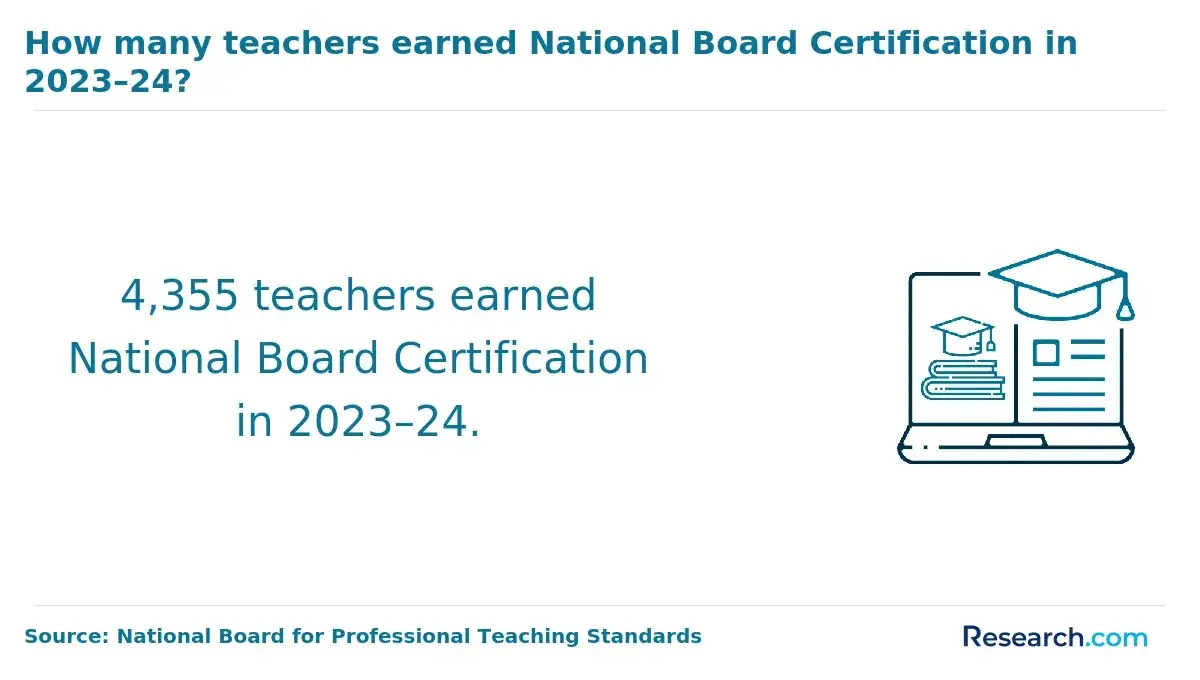
The visual below shows the broader national presence of National Board for Professional Teaching Standards certification among educators, including teachers in Oregon.
What are the best certification programs in Oregon?
The best Oregon teacher certification program is not always the most recognizable school. The right program is the one approved for your intended license and endorsement, compatible with your schedule, affordable enough to complete, and connected to field placements in the communities where you may want to teach.
Oregon candidates often compare the following established teacher preparation providers:
- Oregon State University – College of Education: This CAEP-accredited program combines education coursework with practicum and student teaching experiences that support preparation for the Preliminary Teaching License.
- Portland State University – College of Education: As one of the state’s large education providers, Portland State offers undergraduate and MAT options with attention to urban education, diversity, and school partnerships.
- University of Portland – School of Education: This CAEP-accredited school pairs academic preparation with field placements and district relationships that may help candidates build local professional networks.
- Western Oregon University – College of Education: Known for elementary and secondary preparation, this CAEP-accredited program integrates coursework with applied classroom experience in regional schools.
- George Fox University – School of Education: Approved by TSPC, George Fox offers undergraduate and MAT routes that emphasize ethics, diversity, content knowledge, student teaching, and licensure assessment preparation.
Questions to ask before choosing an Oregon teacher preparation program
| Question | Why it matters |
| Is the program approved by TSPC for my exact license and endorsement? | Approval determines whether the program can actually lead to Oregon licensure in your intended area. |
| Where are student teaching placements located? | Placement location affects commuting, networking, and potential district hiring relationships. |
| Does the program support edTPA, ORELA, Praxis, and civil rights preparation? | Testing support can reduce delays and retake costs. |
| Can I attend part time, online, hybrid, or evenings? | Format matters if you are working, parenting, or changing careers. |
| What is the total cost beyond tuition? | Fees, assessments, transportation, background checks, books, and unpaid student teaching can materially affect affordability. |
| How does the program support job placement? | District partnerships, career fairs, and mentor networks can help during the first hiring cycle. |
All listed institutions are designed to align with Oregon licensure standards, but candidates should still confirm current TSPC approval before enrolling. Educators thinking beyond initial licensure may also compare advanced study routes such as affordable online EdD programs if their long-term goal includes leadership, administration, or policy work.
Are there alternative routes to teacher certification in Oregon?
Yes. Oregon offers alternative and restricted routes for people who did not complete a traditional undergraduate education program. These pathways are especially relevant for career changers, professionals with strong subject-matter backgrounds, and districts trying to fill hard-to-staff positions.
Alternative certification is not a shortcut around professional standards. Candidates still need to meet degree, background check, content knowledge, preparation, mentoring, and licensure requirements. The main difference is that some requirements may be completed while the candidate is already working under district sponsorship.
- Restricted Transitional Certification: This option generally serves bachelor’s degree holders with a background related to the teaching assignment. A school district must co-apply and provide support. The credential lasts three years while the candidate completes an approved preparation program, background checks, fingerprinting, and other requirements.
- Post-baccalaureate and master’s programs with licensure: Candidates who already have a bachelor’s degree can complete a post-baccalaureate certificate or master’s program that includes licensure preparation. Some programs can often be completed within one year, depending on enrollment status and program design.
- Specialized and career/technical education licensure: Candidates in career and technical education or specialized fields may be able to qualify with an associate’s degree or documented industry experience instead of a traditional education background, depending on the credential.
- Restricted Substitute Teaching License: Bachelor’s degree holders who have not finished a teacher preparation program may qualify for a short-term substitute credential with district sponsorship. This license is valid for 18 months and may be renewed during teacher shortages.
Who should consider an alternative route?
| Candidate profile | Alternative route may fit if... | Be careful if... |
| Career changer with a bachelor’s degree | You have strong content knowledge and a district is willing to support your entry | You need a highly predictable schedule or cannot manage coursework while working |
| STEM, special education, English language learning, or high-need subject candidate | Your background aligns with a shortage area and you can complete required preparation quickly | You have not confirmed the exact endorsement requirements |
| Industry professional entering career/technical education | Your work experience matches the CTE teaching assignment | You assume experience alone is enough without checking TSPC rules |
| Substitute teacher exploring full-time teaching | You want school-based experience before committing to a full licensure program | You expect substitute licensure to automatically convert into a full teaching license |
The chart below highlights common skills teachers include on resumes, which can help alternative-route candidates identify transferable strengths from prior careers.
How much does it cost to get a teaching certification in Oregon?
The total cost of Oregon teacher certification depends on the route you choose, the institution you attend, whether you are pursuing a degree or certificate, and how many tests, fees, and field placement expenses apply. Tuition is only one part of the budget.
Traditional undergraduate teacher preparation programs at public universities typically cost between $9,000 and $13,000 per year for in-state tuition. Master’s in teaching programs range from $14,000 to $25,000. These figures do not include university fees, books, supplies, transportation, or other required materials.
Alternative certification can cost less in some cases. For example, Linfield University’s secondary education certificate program costs approximately $6,240. This type of route may be attractive for candidates who already have a bachelor’s degree and want a focused licensure pathway instead of another full degree.
| Expense category | Cost or range stated | What to check before committing |
| Traditional in-state public university preparation | $9,000 to $13,000 per year | Whether the estimate includes program fees, student teaching costs, and testing support |
| Master’s in teaching program | $14,000 to $25,000 | Whether the degree changes salary placement in your target district |
| Linfield University secondary education certificate | Approximately $6,240 | Whether the certificate matches your endorsement and licensure goal |
| TSPC initial license fee | $189 | Whether your application has additional fees as an out-of-state applicant |
| Fingerprinting | $60–$80 | How long processing may take and whether you need a new background check |
| edTPA | $300 | Whether your program requires edTPA or an approved alternative |
| Subject tests | $50–$170 | How many endorsement exams you must take |
Certificate-only programs may have limited financial aid compared with degree programs. Some districts provide reimbursement, and Oregon offers loan forgiveness for teachers in high-need areas. Candidates comparing education-related careers may also review online library science degree options if they are considering school, library, or information-focused roles outside a standard teaching license.
How long does it take to get certified as a teacher in Oregon?
The Oregon certification timeline depends on your current education level, program format, endorsement area, testing schedule, background check timing, and whether you study full time or part time. A high school graduate starting a bachelor’s program faces a different timeline than a career changer who already has a degree.
| Pathway | Typical timeline stated | What can shorten or extend it |
| Traditional bachelor’s pathway | About four years | Transfer credits, major changes, student teaching placement availability, and exam timing |
| Post-baccalaureate or master’s-level program | 12 to 24 months | Full-time versus part-time study, prerequisite coursework, and field placement schedule |
| Alternative certification | One to two years | District sponsorship, high-need placement availability, mentoring, and completion of coursework while teaching |
| Student teaching or internship | A semester or full academic year | Placement availability, program calendar, and whether the placement meets endorsement requirements |
| Testing and application steps | Can add several months | Exam scheduling, score reporting, retakes, fingerprinting, and TSPC processing time |
| Advancement to Professional License | Usually after three to four years of teaching experience and professional development | Completed experience, professional learning documentation, and license-specific requirements |
Practical timeline planning tips
- Map your endorsement requirements before enrolling, not after your first term.
- Ask when student teaching placements are assigned and whether you can request preferred districts.
- Schedule required exams early enough to allow for retakes.
- Start fingerprinting and background check steps as soon as your program advises.
- If you are working full time, ask whether part-time enrollment will double the completion timeline.
- Keep transcripts, test scores, and program completion letters organized for TSPC submission.
How does teacher certification accelerate career advancement in Oregon?
Oregon teacher certification can open the door to more than a first classroom job. Once licensed, teachers may become eligible for department leadership, mentoring, curriculum work, instructional coaching, specialist roles, and later administrative preparation. Certification also creates a documented professional record that districts can use when placing teachers on salary schedules or considering advancement.
For candidates focused on affordability, it is useful to compare the lowest-cost ways to earn a teaching credential in Oregon before choosing a program. The least expensive path is not always the best one, but unnecessary debt can limit career flexibility in the first years of teaching.
What subject-specific endorsements can broaden your teaching career in Oregon?
Endorsements matter because they determine what you are authorized to teach. Adding the right endorsement can improve flexibility across grade levels, subjects, and school staffing needs. Common endorsement areas include STEM fields, bilingual education, the arts, special education, ESOL, and physical education.
A music-focused educator, for example, should follow a pathway that includes the correct coursework, assessments, and field experience for the discipline. Candidates considering that direction can review this guide on how to become a music teacher in Oregon.
How to choose an endorsement strategically
- Start with the grade level and student population you want to teach.
- Check whether the endorsement is in demand in the districts where you plan to apply.
- Ask programs whether field placements are available in that endorsement area.
- Confirm the exact content exam before registering.
- Consider whether the endorsement could support advancement into coaching, leadership, or specialist work later.
What are the special requirements for ESL teacher certification in Oregon?
Oregon’s ESL pathway is intended for teachers who work with students learning English as an additional language. Candidates typically need targeted preparation in language acquisition, culturally responsive instruction, assessment of multilingual learners, and instructional methods that support students with varied language backgrounds.
In addition to general teacher certification requirements, ESL candidates may need to document language-related coursework, practicum experience, and required assessments. Some roles may also require proficiency connected to the language of instruction. For a more focused breakdown, review Oregon ESL teacher requirements and ESOL certification details.
What challenges might delay your Oregon teacher certification?
Many certification delays are preventable. The most common problems are incomplete documentation, missed testing windows, score-reporting issues, background check timing, transcript errors, unclear endorsement requirements, and confusion between program completion and license approval.
| Common mistake | Why it causes problems | Better approach |
| Choosing a program before confirming TSPC approval | A non-approved route may not lead to the license or endorsement you need | Verify approval for your specific license area before enrolling |
| Looking only at tuition | Testing, fees, books, travel, and unpaid student teaching can change the real cost | Build a full certification budget before comparing programs |
| Waiting too long to schedule exams | Late scores can block program completion or TSPC review | Create an exam calendar with retake time built in |
| Assuming online coursework automatically meets Oregon rules | Licensure standards are state-specific | Ask the program in writing how it satisfies Oregon requirements |
| Submitting incomplete records | Missing transcripts, forms, or test scores can pause application review | Use a checklist and keep digital copies of all documents |
| Relying only on rankings | A highly ranked school may not be the best fit for your endorsement, location, or schedule | Compare approval status, placement quality, cost, format, and support services |
For a closer look at certification timing, see how long it takes to become a teacher in Oregon. Planning ahead is especially important for alternative-route candidates because district sponsorship, mentoring, and licensure coursework must align.
How can I specialize in Physical Education teaching in Oregon?
To become a Physical Education teacher in Oregon, candidates generally need a teaching license plus the appropriate physical education endorsement. Preparation usually includes coursework in movement, health, sports science, physical education pedagogy, student wellness, injury prevention, and age-appropriate fitness instruction.
Because PE is a subject-specific teaching area, candidates should confirm required assessments, field experiences, and endorsement rules with their program and TSPC. For step-by-step details, review this guide on how to become a PE teacher in Oregon.
How do you renew Oregon teaching certification?
Oregon teaching licenses must be renewed on the schedule that applies to the license type. Renewal confirms that teachers have continued professional learning, maintained eligibility, and submitted required documentation through the state’s online system.
- Check your license type and expiration date: Oregon Preliminary Licenses expire every three years, while Professional Licenses expire every five years. Your license category determines your renewal deadline and professional development expectations.
- Complete the required Professional Development Units: A Preliminary License requires 75 PDUs for renewal, while a Professional License requires 125 PDUs during the license cycle.
- Document your PDUs correctly: Educators employed by an Oregon public school district, ESD, or charter school typically have PDUs verified through an employer-submitted PEER form. Educators outside those settings may need to submit a signed PDU log and certificates, which TSPC may audit for up to one year after submission.
- Apply through TSPC eLicensing: Renewal applications are submitted online through the TSPC eLicensing portal. Applicants upload required verification and pay the renewal fee there. Paper applications are no longer accepted.
- Watch for processing updates: Approval can take several weeks, and educators often report TSPC evaluation delays of 2–3 months. Messages in the eLicensing account are the official source for status updates and documentation requests.
- Keep your records: Save PDU logs, certificates, PEER forms, and transcripts for at least one year in case of an audit. Verified documents such as transcripts or PEER submissions are generally not subject to random audit in the same way as self-submitted records.
Some educators use graduate study or advanced credentials to support renewal and career growth. If you are comparing long-term advancement options, explore online doctorate degrees in education and related career paths.
The chart below shows major employers that commonly hire certified teachers, including opportunities relevant to Oregon educators.
Is teacher certification in Oregon transferable to other states?
Oregon teacher certification may help you apply for licensure in other states through the NASDTEC Interstate Agreement, including states such as California, New York, and Texas. Reciprocity can make the process easier, but it does not mean an Oregon license automatically becomes a full license elsewhere.
Each state controls its own teacher licensing rules. A receiving state may ask for transcripts, test scores, license history, background checks, proof of teaching experience, and completion of state-specific coursework or assessments. Some states issue provisional or temporary credentials while teachers finish local requirements.
For example, California may provide a preliminary credential while remaining tests are completed, and Arkansas may issue a provisional license with conditions. These arrangements can help teachers begin working sooner, but they still require careful follow-through.
Before moving your Oregon teaching license to another state
- Check the receiving state’s official educator licensing agency requirements.
- Confirm whether your Oregon endorsement matches the new state’s subject or grade authorization.
- Gather transcripts, test scores, background documents, and employment verification before applying.
- Ask whether a temporary or provisional license is available while you complete extra requirements.
- Do not resign, relocate, or accept a position based only on reciprocity assumptions.
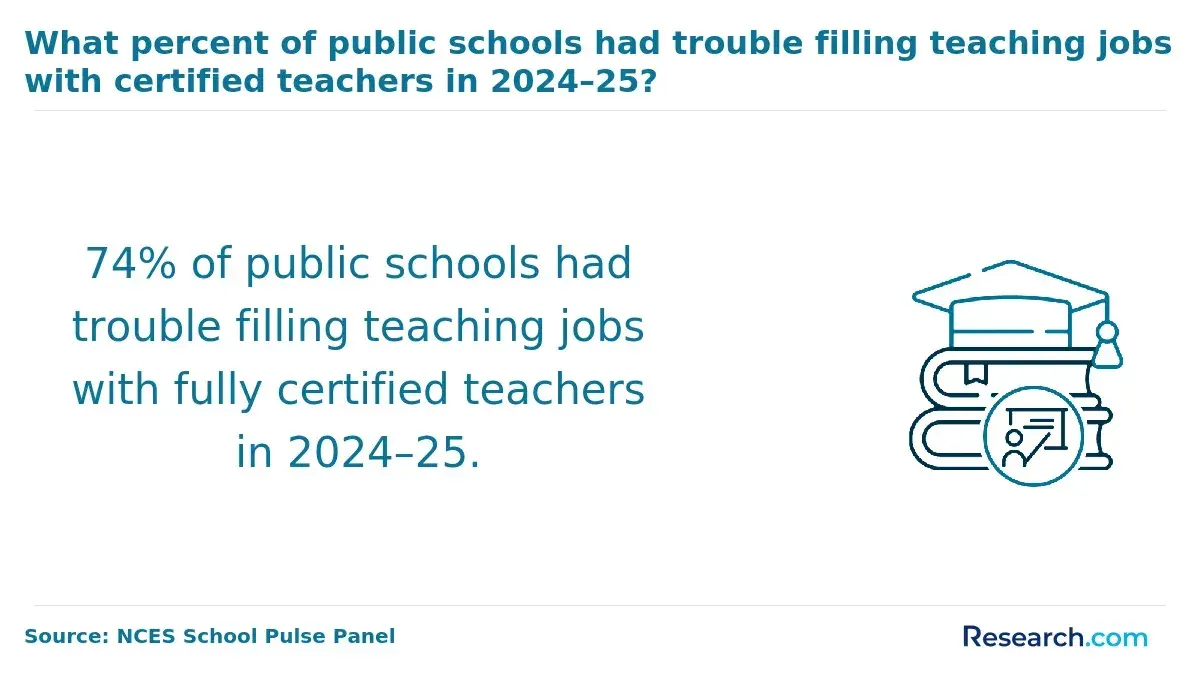
One Oregon-certified teacher described the transfer process as both “challenging and encouraging,” noting that the chance to begin teaching during the transition helped, but that patience and organized records were essential. The chart below shows how many public schools face difficulty hiring certified teachers, which helps explain why many states maintain pathways for already licensed educators.
What are the benefits of having a teacher certification in Oregon?
Teacher certification is the core credential for public K–12 teaching in Oregon. It signals that a teacher has completed state-recognized preparation, met testing and background requirements, and is authorized for specific grade levels, subjects, or student populations.
- Access to public school teaching roles: Certification is required for most public school teaching positions and can also strengthen eligibility for charter, specialty, and district-based roles.
- Greater employment stability: Licensed teachers can qualify for structured contracts, district hiring systems, and long-term classroom positions that are generally unavailable to unlicensed candidates.
- Salary schedule placement: Certified teachers are usually paid through district salary scales where compensation can rise with experience, degree level, and approved credentials.
- Pathways into leadership: Additional endorsements, advanced licenses, graduate education, and experience may support movement into roles such as mentor teacher, department chair, instructional coach, or administrator.
- Eligibility for state-specific supports: Oregon offers loan forgiveness programs and stipends for teachers in high-need subjects and underserved communities, and certified educators may access health and retirement benefits through the Oregon Educators Benefit Board.
- Ongoing professional growth: Renewal requirements push teachers to continue learning, document professional development, and stay current with instructional practice and student support expectations.
- Stronger classroom readiness: Certification requires preparation in pedagogy, classroom management, assessment, and student learning, which can help new teachers enter the classroom with a more complete professional foundation.
Who should choose Oregon teacher certification?
| Certification is a strong fit if... | You may want another path if... |
| You want to teach in Oregon public K–12 schools | You prefer education-adjacent work that does not require classroom licensure |
| You are ready to complete supervised teaching and state requirements | You are not able to commit to practicum, student teaching, or testing timelines |
| You want a long-term career with advancement through endorsements or leadership | You need a credential that transfers automatically without state-by-state review |
| You are willing to maintain PDUs and renew your license | You want a one-time credential with no continuing professional obligations |
What Teachers in Oregon Say About Their Certification
- Earning Oregon certification gave me a clearer professional path. The schedule flexibility and competitive average salaries helped me concentrate on teaching without feeling as financially stretched. – Emma
- Becoming licensed in Oregon helped me move into leadership opportunities I had not expected. The focus on professional growth pushed me to keep improving instead of staying in one role. – Ivan
- The ongoing professional development tied to Oregon certification has helped me sharpen my classroom practice. Workshops and educator learning communities have made it easier to keep growing while supporting students. – Rosa
Related Articles for Nearby States
- 2027 Teacher Certification Types & Requirements in Washington
- 2027 Teacher Certification Types & Requirements in California
- 2027 Teacher Certification Types & Requirements in Idaho
- 2027 Teacher Certification Types & Requirements in Nevada
- 2027 Teacher Certification Types & Requirements in Montana
- 2027 Teacher Certification Types & Requirements in Utah
- 2027 Teacher Certification Types & Requirements in Wyoming
- 2027 Teacher Certification Types & Requirements in Arizona
- 2027 Teacher Certification Types & Requirements in Colorado
- 2027 Teacher Certification Types & Requirements in New Mexico
References:
- AllEducationSchools.com. (2025). Learn How to Earn Teacher Certification in Oregon. AllEducationSchools.com Oregon certification guide
- George Fox University. (2025). Oregon Teacher Certification Programs. George Fox University teacher certification information
- Linfield University. (2025). Online Secondary Education Teaching Certificate. Linfield University secondary education certificate George Fox University education programs
- OregonTeachingDegree.com. (n.d.). Choosing an Oregon Teacher Licensure Program. Oregon teacher licensure program overview
- Portland State University. (2025). Licensure Programs. Portland State University licensure programs OregonTeachingDegree.com licensure resources
- Teacher Standards and Practices Commission Oregon. (2025). Oregon Licensure Programs. TSPC Oregon licensure programs
- University of Oregon. (n.d.). UOTeach Curriculum and Teaching Program. University of Oregon UOTeach program
- Zippia Team. (2025). Certified Teacher skills for your resume and career. Zippia certified teacher skills resource
Key Insights
- Oregon teacher certification usually requires a bachelor’s degree, an approved educator preparation program, student teaching, required assessments, background clearance, and TSPC application approval.
- The Preliminary Teaching License is the common entry point for new teachers, while the Professional Teaching License supports longer-term advancement after experience and professional development.
- Alternative routes can work well for career changers, but they often require district sponsorship, mentoring, and careful coordination with TSPC requirements.
- Costs vary widely. Tuition can range from $9,000 to $13,000 per year for in-state public undergraduate preparation, $14,000 to $25,000 for master’s in teaching programs, and approximately $6,240 for Linfield University’s secondary education certificate program, before additional fees and testing expenses.
- Timeline planning matters. Traditional routes often take about four years, post-baccalaureate and master’s routes commonly take 12 to 24 months, and alternative certification can take one to two years.
- Endorsements are strategic. The right endorsement can expand hiring options in fields such as special education, ESOL, music, physical education, STEM, bilingual education, and other specialized areas.
- Certification does not automatically transfer to another state. Reciprocity can help, but each state may still require tests, coursework, background checks, or provisional licensing conditions.
- The biggest preventable mistakes are enrolling before verifying TSPC approval, underestimating total costs, missing testing deadlines, and assuming online or out-of-state programs automatically meet Oregon requirements.
Other Things You Should Know About Teacher Certification Types and Requirements in Oregon
The Oregon Teacher Standards and Practices Commission (TSPC) issues teacher licenses and sets certification rules in Oregon. It approves educator preparation programs, evaluates license applications, and handles renewals, investigations, and disciplinary actions for licensed teachers across the state.
In Oregon, teacher certification in 2027 requires passing the NES (National Evaluation Series) exams. These include content knowledge tests specific to your teaching field and the NES Essential Academic Skills test, encompassing reading, writing, and mathematics.
Internationally trained teachers seeking certification in Oregon for 2027 must have their academic credentials evaluated by a recognized agency. They must meet the English language proficiency standards and complete the state's required exams. Additionally, they might need to fulfill coursework at an approved Oregon institution to address any gaps.