2027 How to Become an Art Teacher in Wisconsin: Requirements & Certification

Co-Founder and Chief Data Scientist
If you want to teach visual art in a Wisconsin school, the main decision is not whether you love art enough. It is whether you can meet the state’s teacher preparation, testing, licensure, classroom experience, and hiring expectations in a way that fits your timeline and budget. Wisconsin art teachers typically prepare to teach across K-12 settings, which means they need both strong studio skills and the ability to manage a classroom, assess student work fairly, and connect art to broader learning goals.
This guide explains how to become an art teacher in Wisconsin in 2026, including degree requirements, licensure steps, student teaching, curriculum standards, salary expectations, professional development, classroom strategies, and career growth options. It is written for high school students planning a college major, college students in art education programs, career changers with an art background, and current educators considering an art endorsement or related specialization.
Quick answer: How do you become an art teacher in Wisconsin?
To become an art teacher in Wisconsin, you generally need to complete a bachelor’s degree in art education or a closely related field through an accredited, state-approved teacher preparation program; complete supervised student teaching; pass required assessments such as the Praxis II Art Content Knowledge exam; clear a background check; and apply for a Wisconsin teaching license through the Wisconsin Department of Public Instruction. Public school art teachers commonly pursue a K-12 art teaching license, while private school requirements may differ by employer.
Key things to know before you start
- The average salary for art teachers in Wisconsin is approximately $55,000 per year, although pay can differ by district, experience level, location, and contract structure.
- Wisconsin’s teacher employment outlook is described as positive, with the Wisconsin Department of Workforce Development projecting overall teacher employment growth of about 5% through 2030.
- Wisconsin’s cost of living can make teacher salaries go further than they might in more expensive states. Madison’s cost of living index is around 92, compared with the national average of 100.
- Licensure is not a single-step process. You should plan for coursework, field placements, testing, application fees, fingerprinting, and continuing education after you are licensed.
- Classroom management matters as much as artistic ability. Among K-12 art teachers, 59.7% identify behavior management as their biggest challenge.
- How can you become an art teacher in Wisconsin?
- What are the educational requirements for becoming an art teacher in Wisconsin?
- What is the certification and licensing process for an art teacher in Wisconsin?
- How important is teaching experience and what are the internship opportunities for art teachers in Wisconsin?
- What are the standards and curriculum requirements for teaching art in Wisconsin?
- What is the job market like and what are the salary expectations for art teachers in Wisconsin?
- What professional development and continuing education opportunities are available for art teachers in Wisconsin?
- What are the challenges and opportunities of becoming an art teacher in Wisconsin?
- What do aspiring art teachers in Wisconsin need to know to get started?
- How can art teachers foster interdisciplinary collaboration in Wisconsin classrooms?
- How can pursuing advanced degrees impact career opportunities and salary growth for art teachers in Wisconsin?
- What are the funding opportunities and budgeting strategies for art teachers in Wisconsin?
- How can online education opportunities enhance art teaching effectiveness in Wisconsin?
- What are effective classroom management strategies and teaching methods for art teachers in Wisconsin?
- How can art teachers effectively support diverse learners in Wisconsin?
- What are the career advancement opportunities and specializations for art teachers in Wisconsin?
- What resources and support are available for new art teachers in Wisconsin?
- How can art teachers incorporate early childhood art methodologies into their curriculum?
- How can art teachers broaden their instructional expertise beyond art?
- How can art teachers collaborate with music educators to enhance interdisciplinary learning?
- How can art teachers draw on historical insights to enrich their curriculum?
- What are the key considerations for art teachers pursuing private school opportunities in Wisconsin?
- What other factors should future Wisconsin art teachers review before applying?
How can you become an art teacher in Wisconsin?
The standard route to becoming an art teacher in Wisconsin is to combine formal art education training, supervised classroom practice, state testing, and licensure through the Wisconsin Department of Public Instruction. The process is manageable if you treat it as a sequence rather than a checklist you complete at the end.
| Step | What you need to do | Why it matters |
| 1. Choose an accredited art education program | Enroll in a Bachelor’s degree in Art Education or a closely related program at an accredited institution. Wisconsin options include UW-Madison, UW-Stout, and Concordia University Wisconsin. | Your program must prepare you for licensure, not just studio practice. Confirm that it is approved for Wisconsin teacher preparation before enrolling. |
| 2. Complete art and education coursework | Study studio art, art history, design, teaching methods, assessment, child development, and classroom practice. | Wisconsin art teachers need both content knowledge and teaching skill, especially for K-12 classrooms with varied ages and abilities. |
| 3. Finish supervised field experience | Complete school placements and student teaching under licensed educators. | Hiring districts want evidence that you can teach real students, manage materials, and run a safe art classroom. |
| 4. Pass required exams | Prepare for assessments such as the ETS Praxis II content test for art, including the Art: Content Knowledge exam (code 0134 or 5134), with a minimum passing score of 158. | Testing verifies subject-area preparation and is part of the state licensure process. |
| 5. Apply for licensure | Submit transcripts, test results, background check materials, and required forms through Wisconsin’s licensing process. | You cannot teach in most Wisconsin public school art positions without the appropriate state license. |
| 6. Build your job application package | Create a resume, teaching portfolio, sample lesson plans, student teaching evaluations, and a digital or physical art portfolio. | Art teacher hiring often depends on showing how you teach, not only what you can create as an artist. |
| 7. Maintain your license | Track continuing education and professional development so you are prepared for renewal every five years. | License renewal requires ongoing growth, and strong professional development can also improve your classroom practice and advancement options. |
Your portfolio should do more than display polished artwork. Include evidence of how you design lessons, differentiate instruction, assess creativity, organize materials, and connect art to students’ lived experiences. A hiring committee needs to see that you can translate artistic knowledge into effective teaching.
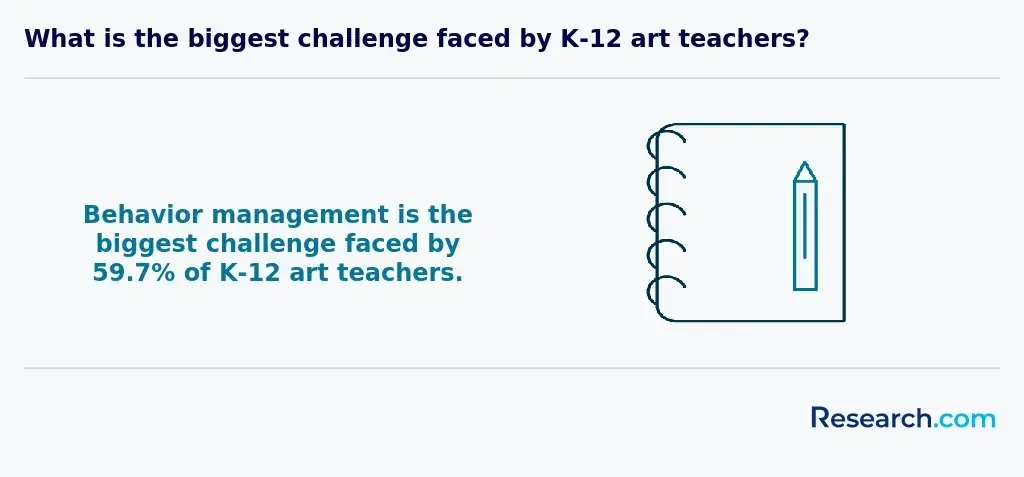
Interpersonal skills should be part of your preparation from the beginning. The graphic below highlights why: behavior management is the most frequently reported challenge among K-12 art teachers, with 59.7% identifying it as their biggest concern.
What are the educational requirements for becoming an art teacher in Wisconsin?
Wisconsin art teacher candidates usually need a bachelor’s degree that includes both visual art preparation and professional education training. A studio art degree alone may not be enough for public school licensure unless it is paired with an approved teacher preparation route.
- Bachelor’s degree: Most candidates complete a Bachelor of Science in Art Education or a related degree that includes approved educator preparation.
- Studio and design coursework: Programs typically include drawing, painting, sculpture, ceramics, photography, digital media, design, or related studio areas so candidates can teach across different media.
- Art history and visual culture: Candidates need historical and cultural knowledge to help students interpret artworks, movements, artists, and design traditions.
- Education coursework: Teacher preparation includes pedagogy, classroom management, assessment, educational psychology, lesson planning, inclusive instruction, and curriculum development.
- Field placements: Approved programs include supervised experiences in schools before and during student teaching.
- Accreditation review: Before enrolling, confirm that the institution is accredited and that the teacher preparation pathway is recognized for Wisconsin licensure. Accreditation is equally important when comparing related creative programs, including accredited online graphic design degree options.
- Subject-matter competency: Candidates must demonstrate readiness to teach art through state-required assessments and program evaluations.
Wisconsin institutions with art education pathways include the University of Wisconsin-Madison, University of Wisconsin-Stout, and University of Wisconsin-River Falls. Before choosing a school, ask whether the program leads directly to Wisconsin licensure, what grade bands it prepares you to teach, how student teaching placements are assigned, and whether the program has partnerships with local schools.
| Program factor | What to check before enrolling | Why it affects your career |
| State approval | Does the program meet Wisconsin teacher preparation requirements? | A non-approved program can delay or complicate licensure. |
| Field placement access | How early do students enter classrooms, and where are placements located? | Strong placements help you build references, confidence, and classroom evidence for interviews. |
| K-12 preparation | Does the curriculum prepare you for elementary, middle, and high school art teaching? | Many art licenses and school assignments require flexibility across grade levels. |
| Portfolio support | Does the program help students prepare teaching and studio portfolios? | A well-organized portfolio can set you apart during hiring. |
| Cost and aid | What are tuition, fees, transportation, art supply costs, and student teaching expenses? | Focusing only on tuition can underestimate the real cost of becoming licensed. |
What is the certification and licensing process for an art teacher in Wisconsin?
Wisconsin public school art teachers need the appropriate teaching license issued through the Wisconsin Department of Public Instruction. The license often aligns with K-12 art instruction, but candidates should always verify the current grade level, subject area, and application requirements directly with DPI or their educator preparation program.
- Teaching license: Candidates seeking public school roles generally pursue a Wisconsin license to teach art, commonly for K-12 settings.
- Education background: A bachelor’s degree in art education or a related field from an accredited institution is expected, along with teacher preparation coursework and student teaching.
- Testing requirements: Candidates may need to pass assessments such as the Wisconsin Foundations of Reading Test and the Praxis II Art Content Knowledge exam.
- Online application: Applications are submitted through the Wisconsin Department of Public Instruction’s Educator Licensing Online system.
- Background check: Fingerprinting and a background check are mandatory. Fingerprinting can be arranged through local law enforcement agencies or approved vendors, and the cost typically ranges from $20 to $50.
- Application fee: The license application fee is currently set at $100, while testing fees may be separate.
- Processing time: Candidates should expect several weeks for processing after submission and should check DPI for current timelines.
- Renewal and professional development: After initial licensure, Wisconsin art teachers must complete ongoing professional development. The requirement is described as a minimum of 6 credits or 90 hours of professional development every five years.
- Professional network: Joining organizations such as the Wisconsin Art Education Association can help new teachers find mentors, workshops, lesson resources, and job market information.
Testing details can be a source of confusion because passing scores and exam codes may change. This article includes the stated Art: Content Knowledge exam code 0134 or 5134 and a minimum passing score of 158, while another cited summary lists the passing score as 157. Before registering, confirm the current requirement with your preparation program and the Wisconsin Department of Public Instruction.
The art economy is broader than K-12 education, and understanding it can help teachers connect classroom lessons to creative careers. The global art market was valued at $64.4 billion in 2019, declined to $50.3 billion in 2020, rose to $65.9 billion in 2021 and $67.8 billion in 2022, and then decreased to $65 billion in 2023. The 2023 figure represented a 4% decline from the prior year but remained above the pre-pandemic level. Inflation and geopolitical instability were identified as factors affecting high-value sales.
How important is teaching experience and what are the internship opportunities for art teachers in Wisconsin?
Teaching experience is one of the most important parts of becoming an art teacher because art classrooms are active, material-heavy, and often less structured than lecture-based classes. You need practice managing tools, movement, cleanup routines, safety expectations, group work, and student choice.
- Student teaching is required: Wisconsin educator preparation includes supervised student teaching as part of the certification pathway.
- Typical duration: The student teaching requirement commonly includes a minimum of 12 weeks of full-time teaching under the supervision of a licensed educator.
- Placement options: Candidates may find placements through their college or university, local school partnerships, community organizations, and arts institutions.
- Volunteer experience helps: Volunteering in schools, museums, summer programs, community art centers, and youth organizations can strengthen your resume and help you test whether teaching is the right fit.
- Mentor communication matters: Meet regularly with your cooperating teacher to clarify expectations, ask for feedback, and discuss classroom decisions.
- Lesson planning should be hands-on: Participate in planning, setup, instruction, critique, cleanup, and assessment so you understand the full cycle of an art lesson.
- Reflection improves performance: Keep notes on what worked, what confused students, what materials caused delays, and how you would adjust the lesson next time.
- Additional teaching practice: Workshops, camps, after-school programs, and community art classes can expose you to different age groups and teaching formats.
| Experience type | Best for | What it shows employers |
| Student teaching | Licensure candidates | You can plan, instruct, assess, and manage a school art classroom under supervision. |
| School volunteering | Early exploration | You understand student behavior, school routines, and educator collaboration. |
| Community art programs | Building youth teaching experience | You can adapt art instruction outside a traditional classroom. |
| Summer camps | Developing engagement strategies | You can keep students active, safe, and motivated during project-based learning. |
| Museum or gallery education | Connecting art history and public learning | You can teach interpretation, critique, and cultural context. |
What are the standards and curriculum requirements for teaching art in Wisconsin?
Wisconsin’s art instruction is guided by the Wisconsin Standards for Art and Design. These standards describe what students should learn from kindergarten through 12th grade and emphasize creativity, critical thinking, presentation, interpretation, and cultural connection.
- Core learning areas: Wisconsin art educators can organize lessons around Create, Present, Respond, and Connect. This structure helps students make art, share art, analyze art, and relate art to personal, historical, and cultural contexts.
- Arts education status: Wisconsin recognizes arts education as a core academic subject. However, the state does not require arts courses to count toward graduation and does not mandate statewide arts assessments in the same way some subjects are tested.
- Curriculum scope: Art programs may include visual arts, design, and media arts. Strong curricula expose students to both traditional media and newer forms of creative production.
- Teacher preparation expectations: Prospective art teachers complete coursework in art history, techniques, and educational practices, along with required preparation in areas such as American Indian studies and conflict resolution.
- Instruction across grades: Licensed art educators may teach younger students in grades K-6 and provide art opportunities for students in grades 7-12, depending on assignment and licensure.
- State and community resources: The Wisconsin Department of Public Instruction and the Wisconsin Arts Board provide guidance, standards, and arts education resources for teachers and schools.
Effective art curriculum should not be limited to isolated projects. A stronger approach builds sequences: students learn a technique, study artists or design examples, create original work, critique thoughtfully, revise, and explain their choices. Teachers who want to broaden their arts knowledge may also explore related creative fields such as a music production degree, especially when designing interdisciplinary arts experiences.
What is the job market like and what are the salary expectations for art teachers in Wisconsin?
The Wisconsin art teacher job market is generally described as stable, but hiring conditions vary widely by district. Openings depend on school budgets, retirements, enrollment, arts program priorities, and whether districts hire full-time art teachers or split positions across buildings.
- Average salary: The average salary for art teachers in Wisconsin is approximately $55,000 per year.
- Urban districts: Art teachers in Milwaukee, Madison, and other urban districts may earn more, with some salaries exceeding $60,000 annually.
- Rural districts: Rural art teaching roles may pay closer to $50,000, though cost of living and benefits can affect the overall value of a job offer.
- Experience effect: New teachers usually begin lower on salary schedules, while experienced teachers and those with advanced qualifications may move into higher pay lanes.
- Benefits: Compensation often includes health insurance, retirement plans, paid time off, and professional development opportunities.
- Demand: The Wisconsin Department of Public Instruction reports that as of 2023, there are approximately 1,200 art teachers employed in K-12 schools across the state.
| Job factor | What to ask before accepting an offer | Why it matters |
| Teaching load | How many grade levels, buildings, and classes will I teach? | Some art teachers manage many sections and multiple age groups, which affects planning time. |
| Class size | How many students are assigned to each art class? | Large classes can increase safety, cleanup, and behavior management challenges. |
| Budget | What annual supply budget is available for materials? | Art instruction depends on consumable supplies, equipment, and storage. |
| Facilities | Is there a dedicated art room, kiln, sinks, ventilation, storage, or digital lab access? | The room and equipment determine what media you can teach safely and realistically. |
| Curriculum expectations | Is there an existing curriculum, or will I build one? | New teachers need to know whether they are stepping into an established program or designing from scratch. |
| Professional support | Will I have a mentor, PLC, or access to other arts educators? | Art teachers are sometimes the only specialist in a building and need external professional connection. |
For comparison, other arts and design occupations show a wide pay range. Special Effects Artists and Animators have a median pay of $106,500, Fashion Designers earn $99,060, Industrial Designers earn $79,290, Interior Designers earn $76,250, Set and Exhibit Designers earn $62,510, and Graphic Designers earn $58,910.
These figures show that some specialized arts and design careers pay more than classroom teaching. However, K-12 teaching may offer a different mix of benefits, schedule structure, public service, stability, and direct impact on students.
What professional development and continuing education opportunities are available for art teachers in Wisconsin?
Professional development helps Wisconsin art teachers maintain licensure, update their teaching methods, learn new media, and avoid professional isolation. It is also important because art education is being reshaped by digital tools, design thinking, visual culture, inclusive teaching, and interdisciplinary learning.
- License renewal requirements: Art teachers must complete continuing education activities, described as a minimum of 6 credits or 90 hours of professional development every five years.
- College-based learning: Institutions such as Madison College, UW-Parkside, and UW-Superior offer workshops, seminars, and courses relevant to art educators.
- Hands-on workshops: Programs such as “Coffee and Canvas” and “Dive into Watercolor” at Madison College can help teachers sharpen studio skills and gather classroom-ready ideas.
- Summer programs: The Milwaukee Institute of Art and Design offers the Summer Creative Educators Institute, where teachers can build creative practice and earn undergraduate or graduate credits.
- Professional organizations: The Wisconsin Arts Board and art education associations provide events, networking, funding information, and teaching resources.
- District training: Many school districts provide in-house professional development, which can support collaboration and alignment with local curriculum goals.
- Online learning: Webinars and online courses can be useful for busy teachers who need flexible schedules or specialized training not available locally.
- Mentorship: New teachers benefit from experienced educators who can advise on curriculum pacing, materials management, parent communication, and classroom routines.
- Community partnerships: Museums, galleries, arts nonprofits, and local artists can provide professional learning and student enrichment opportunities.
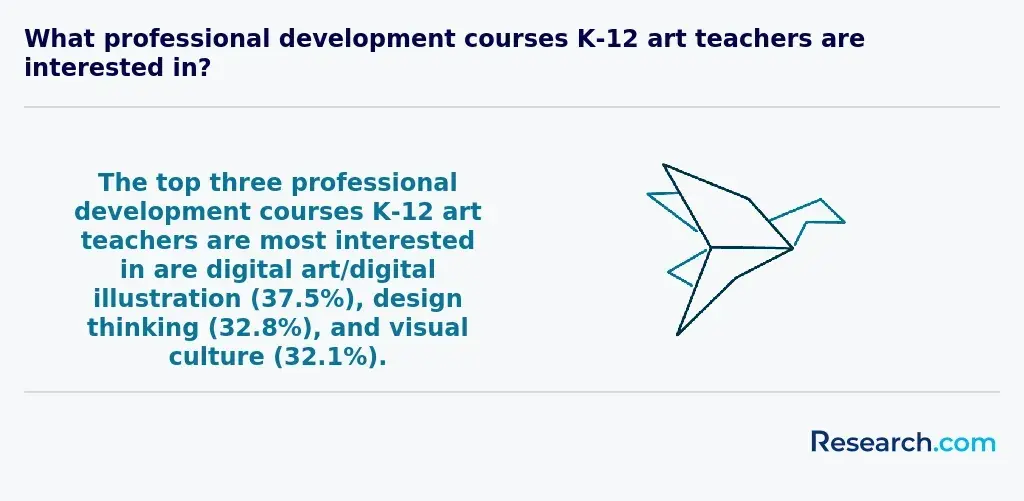
Interest areas among K-12 teachers show where professional learning is moving. The three leading areas are digital art/digital illustration at 37.5%, design thinking at 32.8%, and visual culture at 32.1%.
Educators who enjoy research, school media, and information literacy may also consider related graduate pathways, including a library and information science degree.
What are the challenges and opportunities of becoming an art teacher in Wisconsin?
Wisconsin can be a strong place to build an art teaching career, but the path has real trade-offs. Future teachers should prepare for licensure complexity, budget limits, classroom management demands, and uneven access to art resources across districts. At the same time, art teachers can have meaningful influence because they help students develop creativity, visual communication, problem-solving, cultural awareness, and confidence.
| Challenge | Why it matters | How to respond |
| Licensure steps can feel confusing | Degree approval, testing, background checks, and DPI applications must line up correctly. | Work closely with your educator preparation advisor and verify requirements before each major step. |
| Behavior management is a major concern | Art rooms involve movement, tools, materials, and student choice, which can increase disruption if routines are unclear. | Practice procedures for setup, cleanup, transitions, group work, and material safety during student teaching. |
| Supply budgets may be limited | Art lessons require consumable materials, equipment maintenance, and storage. | Learn grant writing, inventory planning, reuse strategies, and community partnership development. |
| Some schools may reduce specialist positions | Budget decisions can affect whether art roles are full-time, part-time, or shared across buildings. | Build versatility in digital media, elementary art, secondary art, interdisciplinary projects, and curriculum leadership. |
| Assessment can be subjective | Students and families may not understand how creativity is evaluated. | Use rubrics that assess process, craftsmanship, reflection, skill growth, and concept development. |
If you are comparing art education with other teaching careers, it can help to review the general pathway for how to become an elementary school teacher in Wisconsin. The broader teacher preparation process overlaps with art licensure in areas such as field experience, classroom management, and state requirements.
What do aspiring art teachers in Wisconsin need to know to get started?
Start by deciding which pathway fits your current education level. A high school student may look for a Wisconsin-approved art education bachelor’s program. A college student in studio art may need to add teacher preparation coursework. A career changer with an art degree may need an alternative route or post-baccalaureate licensure pathway.
- Confirm that the program you choose leads to Wisconsin licensure, not only a degree in art.
- Ask whether you will graduate eligible for K-12 art licensure or a narrower teaching assignment.
- Plan financially for tuition, fees, transportation to placements, art supplies, testing, background checks, and the $100 application fee.
- Begin building a teaching portfolio early with lesson plans, student work samples when allowed, assessment tools, and reflective notes.
- Observe art teachers in different settings before committing to one grade level or district type.
For a broader view of the state’s educator pathway, review this guide on how to become a teacher in Wisconsin.
How can art teachers foster interdisciplinary collaboration in Wisconsin classrooms?
Interdisciplinary collaboration helps students see art as a way to investigate ideas, not just produce final objects. Wisconsin art teachers can work with English, history, math, music, science, library media, and special education colleagues to design lessons that connect visual thinking with other forms of learning.
- English and art: Students can create visual narratives, illustrated poems, graphic novels, artist statements, or image-based arguments. Teachers interested in literacy collaboration can learn from the preparation path for how to become an english teacher in Wisconsin.
- History and art: Students can examine how visual culture reflects time periods, social movements, identity, power, and technology.
- Math and design: Lessons can connect symmetry, proportion, geometry, measurement, pattern, and spatial reasoning.
- Music and art: Students can explore rhythm, mood, performance design, album art, stage design, and multimedia expression.
- Science and art: Projects can include observation drawing, environmental design, color theory, anatomy, and data visualization.
How can pursuing advanced degrees impact career opportunities and salary growth for art teachers in Wisconsin?
An advanced degree is not always required to begin teaching art, but it can support career growth, salary movement on district pay schedules, and access to leadership roles. Teachers who pursue graduate study may focus on curriculum, instructional design, art therapy, educational technology, administration, or arts leadership.
| Advanced pathway | Potential use | Best fit |
| Master’s in education | Improves instructional practice and may support leadership or curriculum roles. | Teachers who want broader school impact while staying connected to classrooms. |
| Art education graduate study | Deepens expertise in arts pedagogy, research, assessment, and studio-based teaching. | Teachers who want to specialize in visual art instruction. |
| Educational leadership | Can support movement into department chair, coordinator, or administrator roles. | Teachers considering school or district leadership. |
| Art therapy or related specialization | May open specialized roles, depending on additional requirements and employer needs. | Teachers interested in social-emotional learning and therapeutic art contexts. |
Teachers considering graduate school should compare cost, credit requirements, schedule flexibility, district salary lane policies, and whether the credential aligns with their career goals. For examples of roles connected to advanced education credentials, review master's in education jobs.
What are the funding opportunities and budgeting strategies for art teachers in Wisconsin?
Art teachers often need to stretch limited classroom budgets while still offering meaningful studio experiences. Funding can come from district budgets, grants, parent-teacher organizations, local arts partners, community donations, and state or nonprofit arts initiatives.
- Start with curriculum priorities: Identify which materials are essential for standards-based learning before buying specialty items.
- Track inventory: Keep a running list of paper, paint, clay, tools, digital equipment, adhesives, and consumables so orders are based on actual need.
- Use grants strategically: Match proposals to specific learning outcomes, such as ceramics access, digital illustration, community murals, or museum-based learning.
- Build partnerships: Local artists, galleries, libraries, museums, and businesses may support supplies, workshops, exhibitions, or student showcases.
- Document impact: Save photos, student reflections, project descriptions, and assessment results to strengthen future funding requests.
- Plan for equity: Avoid requiring families to purchase expensive supplies unless the school has a clear support plan for students who cannot afford them.
Teachers who want to understand resource management in another education-related field may find useful parallels in this guide on how to become a librarian in Wisconsin.
How can online education opportunities enhance art teaching effectiveness in Wisconsin?
Online education can help art teachers add skills without leaving their jobs or traveling long distances. It is especially useful for digital art, instructional technology, assessment design, inclusive teaching, and interdisciplinary curriculum planning.
- Use online courses to learn software, digital illustration methods, media arts tools, and portfolio platforms.
- Choose professional development that produces classroom-ready materials, not just general theory.
- Check whether online credits count toward district requirements, graduate credit, or license renewal before paying.
- Look for programs that include peer critique, instructor feedback, and examples from K-12 classrooms.
- Compare online teacher education options carefully; resources on accredited online elementary schools can help educators think through online pedagogy and accreditation questions.
What are effective classroom management strategies and teaching methods for art teachers in Wisconsin?
Strong classroom management in an art room depends on clarity, routine, relationship-building, and careful material control. Students need room to experiment, but creative freedom works best when procedures are predictable.
- Teach expectations explicitly: Show students how to enter, gather supplies, use tools, clean workspaces, store projects, and transition between activities.
- Design active lessons: Hands-on work can reduce disengagement when students understand the purpose and sequence of the project.
- Use multiple teaching modes: Combine demonstrations, visuals, verbal instructions, written steps, peer examples, and guided practice to support different learners.
- Reinforce positive behavior: Praise specific actions, such as careful tool use, respectful critique, persistence, cleanup leadership, or thoughtful revision.
- Build relationships: Students are more likely to take creative risks when they feel known and respected.
- Manage transitions: Art classes lose time quickly during setup and cleanup. Use timers, station roles, supply managers, and posted routines.
- Use collaboration carefully: Group projects can strengthen communication, but roles should be clear so one student does not carry the work.
- Respond to behavior consistently: Address problems quickly, calmly, and fairly, especially around safety and material misuse.
- Support creative ownership: Offer choices in theme, media, scale, or process when possible so students see the work as personally meaningful.
- Assess growth as well as products: Use feedback that recognizes planning, experimentation, technique, revision, reflection, and craftsmanship.
Teachers who enjoy art education but want to compare related pathways can also explore alternative education careers.
How can art teachers effectively support diverse learners in Wisconsin?
Art classrooms can be powerful spaces for diverse learners because students can show understanding visually, physically, verbally, and collaboratively. However, inclusion does not happen automatically. Teachers must plan accommodations, scaffold tasks, and coordinate with colleagues.
- Differentiate process: Allow students to reach learning goals through different materials, formats, or levels of support.
- Use visual directions: Step-by-step images, labeled examples, and demonstrations help students who struggle with long verbal instructions.
- Adapt tools and materials: Provide modified grips, larger paper, templates, digital tools, or alternative media when needed.
- Offer structured choice: Too much open choice can overwhelm some students; limited options can preserve creativity while reducing anxiety.
- Coordinate with specialists: Work with special education teachers, English learner staff, counselors, and families to understand student needs.
- Assess fairly: Grade based on the stated learning objective, not on whether every student’s final product looks the same.
Art teachers who want deeper expertise in accommodations and individualized instruction may benefit from understanding special education teacher certification in Wisconsin.
What are the career advancement opportunities and specializations for art teachers in Wisconsin?
Art teaching can lead to several career directions beyond a first classroom role. Advancement may come through leadership, specialization, graduate education, curriculum development, district arts coordination, or related creative fields.
- Department or program leadership: Experienced teachers may become art department heads, team leads, or curriculum coordinators.
- Administrative roles: Some teachers pursue principal or administrator preparation through graduate programs.
- Digital media specialization: Teachers with skills in digital illustration, animation, photography, design, or media arts may be especially useful as schools expand technology-rich arts learning.
- Art therapy-related study: Teachers interested in wellness, trauma-informed practice, or social-emotional learning may explore art therapy or adjacent fields, depending on credential requirements.
- National Board Certification: Additional credentials such as National Board Certification in Art can strengthen professional standing and demonstrate advanced teaching practice.
- Curriculum and policy work: Teachers can contribute to district curriculum writing, standards alignment, assessment development, or statewide arts education initiatives.
Demand for qualified art educators is described as growing, with a reported 10% increase in job openings for art teachers projected over the next decade. This makes continuing professional development and specialization important for teachers who want more options over time.
What resources and support are available for new art teachers in Wisconsin?
New art teachers should not try to build every lesson, rubric, supply system, and classroom routine alone. Wisconsin has professional organizations, district supports, state resources, and online communities that can shorten the learning curve.
- Wisconsin Art Education Association: WAEA offers professional development, networking, conferences, resources, and access to educators who understand Wisconsin art classrooms.
- District mentorship: Many districts pair beginning teachers with experienced educators who can help with classroom management, evaluation systems, and school procedures.
- Wisconsin Department of Public Instruction: DPI provides guidance on standards, educator effectiveness, licensing, and art and design education.
- Lesson resource platforms: Sites such as Teachers Pay Teachers and Artsonia can provide ideas, but teachers should adapt materials to Wisconsin standards and local student needs.
- University workshops: Colleges with art education programs may offer workshops, guest lectures, or networking opportunities for new teachers.
- Online teacher communities: Wisconsin art teacher groups and social media communities can help with quick questions about supplies, projects, grants, and classroom routines.
- Annual conferences: WAEA conferences provide a way to learn current practices and meet peers across the state.
- Funding support: The Wisconsin Arts Board and other arts organizations may offer grants or information that supports arts education initiatives.
If you are comparing colleges or online options for future professional study, review the best nationally accredited online colleges in the USA.
How can art teachers incorporate early childhood art methodologies into their curriculum?
Early childhood art methods can strengthen art teaching at every grade level because they emphasize exploration, sensory learning, process, and curiosity. Even older students benefit when teachers allow experimentation before final products are judged.
- Use open-ended prompts that allow multiple correct visual solutions.
- Include sensory exploration through texture, color, movement, sound, and material comparison.
- Teach foundational motor skills through cutting, drawing, modeling, tearing, weaving, building, and mark-making.
- Emphasize process language: “What did you try?” “What changed?” “What would you do next?”
- Use play-based discovery when introducing new tools or media.
Teachers interested in younger learners can explore the pathway for how to become a kindergarten teacher in Wisconsin.
How can art teachers broaden their instructional expertise beyond art?
Art teachers can become more effective by borrowing instructional strategies from other subjects while keeping visual art at the center. For example, math-based problem solving can improve design lessons, English strategies can strengthen artist statements, and history methods can deepen cultural analysis.
Cross-disciplinary learning is most useful when it improves the art lesson rather than replacing it. Geometry can support pattern and perspective; data can support infographic design; writing can support critique; and inquiry methods can support visual research. Educators interested in structured problem-solving strategies may find useful ideas in this guide on how to be a middle school math teacher in Wisconsin.
How can art teachers collaborate with music educators to enhance interdisciplinary learning?
Art and music teachers can create rich interdisciplinary experiences because both fields involve composition, rhythm, mood, culture, performance, and interpretation. Collaboration works best when both subjects keep their own learning goals while sharing a common theme or final product.
- Students can design album covers, concert posters, stage sets, costumes, or visual responses to music.
- Classes can explore rhythm through pattern, line, repetition, and movement.
- Teachers can coordinate units on cultural traditions, performance, protest art, or multimedia storytelling.
- Student showcases can combine gallery displays with musical performances.
Art educators who want to understand the music education side of collaboration can review how to become a music teacher in Wisconsin.
How can art teachers draw on historical insights to enrich their curriculum?
Historical context helps students understand that art is shaped by people, technology, politics, belief systems, materials, and social change. Instead of teaching art history as memorization, art teachers can use it as a way to help students ask better questions about images and objects.
- Compare artworks from different time periods that address similar themes.
- Analyze how materials and technology changed what artists could make.
- Discuss how power, identity, community, and conflict influence visual culture.
- Ask students to create contemporary responses to historical styles or movements.
- Use critique questions that connect form, content, context, and audience.
Teachers who want to strengthen historical integration can review what it takes to become a history teacher in Wisconsin.
What are the key considerations for art teachers pursuing private school opportunities in Wisconsin?
Private school art teaching in Wisconsin may look different from public school teaching. Some private schools offer smaller classes, mission-driven communities, flexible curriculum design, or specialized arts programming. Others may have lower budgets, different salary structures, or expectations outside the normal school day.
| Consideration | Public school art role | Private school art role |
| Licensure | State licensure is generally required for public school teaching. | Requirements vary by school, though licensure may still be preferred or required. |
| Curriculum | Often aligned with state standards and district expectations. | May allow more flexibility, depending on the school’s mission and accreditation. |
| Pay and benefits | Usually tied to district salary schedules and negotiated benefits. | Can vary widely by school, budget, and contract terms. |
| Class size | Can vary significantly by district and building. | May be smaller, but this is not guaranteed. |
| Community expectations | Often connected to district policy and public accountability. | May include religious, independent, or mission-specific expectations. |
Before accepting a private school position, ask about licensure expectations, pay, benefits, curriculum freedom, supply budget, extracurricular duties, exhibition requirements, and contract renewal terms. For more context, review how to become a private school teacher in Wisconsin.
What other factors should future Wisconsin art teachers review before applying?
Becoming licensed is only one part of the decision. You should also evaluate whether the daily realities of the job match your strengths, personality, and long-term goals.
Common mistakes to avoid
| Mistake | Why it creates problems | Better approach |
| Choosing a program without checking licensure approval | You may graduate with a degree that does not directly qualify you for Wisconsin public school licensure. | Confirm state approval with the program and DPI before enrolling. |
| Focusing only on tuition | Art supplies, transportation, testing, fingerprinting, and unpaid student teaching time can add costs. | Create a full cost plan before choosing a school. |
| Assuming artistic talent is enough | Teaching requires classroom management, assessment, communication, and differentiation. | Build teaching evidence through field placements, tutoring, camps, and volunteer work. |
| Ignoring rural and urban differences | Salary, class size, supply budgets, and job responsibilities vary by district. | Compare full compensation, workload, facilities, and community fit. |
| Using generic applications | Art teacher hiring committees want to see your teaching style and student-centered practice. | Customize your portfolio, resume, and sample lessons for each position. |
| Waiting until renewal to track professional development | You may scramble to meet renewal requirements every five years. | Document credits, hours, workshops, and certificates continuously. |
Questions to ask before choosing an art education program
- Is the program accredited and approved for Wisconsin teacher licensure?
- Does it prepare students for K-12 art teaching?
- What Praxis II preparation support is available?
- How many field placements are included before student teaching?
- Where do students typically complete student teaching?
- What is the program’s approach to classroom management in art rooms?
- Are digital art, design thinking, and media arts included?
- How does the program support portfolio development?
- What are the total costs beyond tuition?
- What career support is available for graduates seeking Wisconsin teaching jobs?
References:
- Art Teacher EDU. (2014, August 28). Wisconsin art teacher certification and job requirements. Art Teacher EDU.
- Concordia University Wisconsin. (2024). Bachelor of arts in art education. Concordia University Wisconsin.
- Milwaukee Institute of Art & Design. (2009, August 13). For educators. Milwaukee Institute of Art & Design.
- University of Wisconsin-Madison. (2016, August 12). The art education program at UW-Madison offers students opportunities to. University of Wisconsin-Madison.
- University of Wisconsin-Madison. (2024, June 1). ART EDUCATION, BS. University of Wisconsin-Madison.
- University of Wisconsin-River Falls. (2024). Schools of education, allied health and social work. University of Wisconsin-River Falls.
- University of Wisconsin-Stout. (2017, November 15). B.S. art education. University of Wisconsin-Stout.
- Wisconsin Art Education Association. (2024). SmART creativity. Wisconsin Art Education Association.
- Wisconsin Arts Board. (2024). Arts board – arts education. Wisconsin Arts Board.
- Wisconsin Department of Public Instruction. (1970, January 1). Art and design education. Wisconsin Department of Public Instruction.
Key Insights
- The most direct route to becoming a Wisconsin art teacher is an accredited, state-approved bachelor’s program in art education followed by student teaching, required exams, background checks, and DPI licensure.
- Do not choose a college program based on art reputation alone. Confirm that it leads to Wisconsin teacher licensure and includes supervised K-12 field experience.
- Salary expectations should be evaluated by district, not statewide average alone. The average salary is approximately $55,000 per year, with urban salaries sometimes exceeding $60,000 and rural salaries sometimes closer to $50,000.
- Classroom management is a major success factor in art education. Because 59.7% of K-12 art teachers identify behavior management as their biggest challenge, future teachers should practice routines, transitions, safety procedures, and positive reinforcement early.
- Professional development is not optional after licensure. Wisconsin art teachers must plan for continuing education, including a minimum of 6 credits or 90 hours every five years.
- Digital art, design thinking, and visual culture are important growth areas, with teacher interest reported at 37.5%, 32.8%, and 32.1%, respectively.
- Career advancement can include department leadership, curriculum coordination, graduate study, art therapy-related specialization, digital media instruction, and National Board Certification.
- The best job candidates show both artistic skill and teaching evidence: lesson plans, student-centered projects, assessment tools, classroom management strategies, and a clear philosophy of why art matters in K-12 education.
Related Articles for Nearby States
- 2027 How to Become an Art Teacher in Minnesota: Requirements & Certification
- 2027 How to Become an Art Teacher in Iowa: Requirements & Certification
- 2027 How to Become an Art Teacher in Illinois: Requirements & Certification
- 2027 How to Become an Art Teacher in Michigan: Requirements & Certification
- 2027 How to Become an Art Teacher in Indiana: Requirements & Certification
- 2027 How to Become an Art Teacher in Missouri: Requirements & Certification
- 2027 How to Become an Art Teacher in Ohio: Requirements & Certification
- 2027 How to Become an Art Teacher in South Dakota: Requirements & Certification
- 2027 How to Become an Art Teacher in Nebraska: Requirements & Certification
- 2027 How to Become an Art Teacher in Kentucky: Requirements & Certification
Other Things You Should Know About Becoming an Art Teacher in Wisconsin
The Wisconsin Department of Public Instruction (DPI) issues art teacher licenses. Applicants must apply through DPI’s educator licensing system and meet state requirements for a Tier II or Tier III license, including an approved teacher preparation program, passing required tests, and a background check.
Yes, out-of-state teaching licenses can be transferred to Wisconsin, but you must meet the state's specific requirements, including passing the Wisconsin Foundations of Reading Test. Verification of your current license and teaching credentials is also necessary, administered by the Wisconsin Department of Public Instruction.