2027 Online General Studies Degrees With Scholarships for Working Professionals

Co-Founder and Chief Data Scientist
Finishing a degree while working is usually a question of time, cost, and career payoff. BLS 2024 annual averages show bachelor's degree holders had median weekly earnings of $1,543, compared with $930 for workers whose highest credential was a high school diploma.
That gap helps explain why flexible online general studies programs appeal to adults with prior credits, changing goals, or unfinished degrees. This guide explains scholarships, admissions, curriculum, costs, timelines, accreditation, and career paths so you can decide whether this broad degree is the right investment.
Key Things You Should Know
- Online general studies degrees are usually 120-credit bachelor's programs designed for flexibility; adults with transfer credits may finish faster than first-time students.
- Scholarships, Pell Grants, employer tuition assistance, and transfer credits can reduce the net cost, but the final price depends on tuition, fees, residency rules, and aid eligibility.
- Employers typically care more about institutional accreditation, relevant experience, communication skills, and job-specific competencies than whether the degree was completed online.
What are online general studies degrees with scholarships for working professionals?
An online general studies degree is an associate or bachelor's degree that lets students combine courses from multiple fields instead of majoring in one narrow discipline. At the bachelor's level, it often includes humanities, social science, business, communication, technology, and elective coursework, making it useful for adults who have accumulated credits from different schools or need a flexible credential to qualify for promotion.
Scholarship-supported programs are not a separate degree category. They are accredited online general studies programs where students may use institutional scholarships, adult learner awards, transfer scholarships, employer tuition benefits, federal grants, military education benefits, or state aid to reduce the amount they pay out of pocket.
The degree is usually a good fit for working professionals who need a bachelor's credential for career mobility but do not need a highly specialized major. It may be less ideal for students targeting regulated fields such as nursing, engineering licensure, teacher certification, or accounting licensure unless the program includes the exact prerequisite coursework required for that path.
The table below shows how general studies compares with other common education choices for adults. This helps clarify when flexibility is an advantage and when a more specialized credential may be better:
| Option | Best fit | Main trade-off |
| Online general studies bachelor's degree | Working adults with prior credits, broad career goals, or promotion requirements | Flexible, but less specialized than a major tied to a specific occupation |
| Online business or communication degree | Students targeting management, marketing, HR, or corporate roles | More focused, but may accept fewer unrelated transfer credits |
| Career certificate | Students who need a fast skill upgrade in areas such as data analytics, project management, or IT support | Shorter and cheaper, but may not satisfy "bachelor's required" job postings |
| On-campus degree | Students who need labs, in-person networking, or a highly structured schedule | More face-to-face support, but less convenient for full-time workers |
Are online general studies degrees from accredited schools respected by employers?
Yes, an online general studies degree from an institutionally accredited school can be respected by employers, especially when the graduate can connect the degree to relevant work experience and job-ready skills. The key distinction is not online versus campus; it is whether the school is accredited by an agency recognized by the U.S. Department of Education or the Council for Higher Education Accreditation.
Accreditation matters because it affects federal financial aid eligibility, credit transfer, graduate school admission, and employer tuition reimbursement. It is also a basic quality screen: if a school is not institutionally accredited, many employers and universities may not treat the degree the same way they treat a credential from an accredited college.
For working professionals, employer perception is usually strongest when the degree is paired with evidence of applied skills. A general studies graduate applying for a supervisor role, for example, should highlight coursework in leadership, communication, data literacy, conflict resolution, or organizational behavior, not just the degree title.
Before enrolling, verify these credibility signals carefully:
- Confirm institutional accreditation through official accreditor or federal databases, not only the school's marketing page.
- Ask whether the diploma or transcript identifies the program as online; many accredited schools do not distinguish delivery format, but policies vary.
- Check whether credits will transfer to graduate programs or professional programs you may want later.
- Review employer tuition reimbursement rules before assuming your workplace will pay for the program.
How do scholarships work for working adults in online general studies programs?
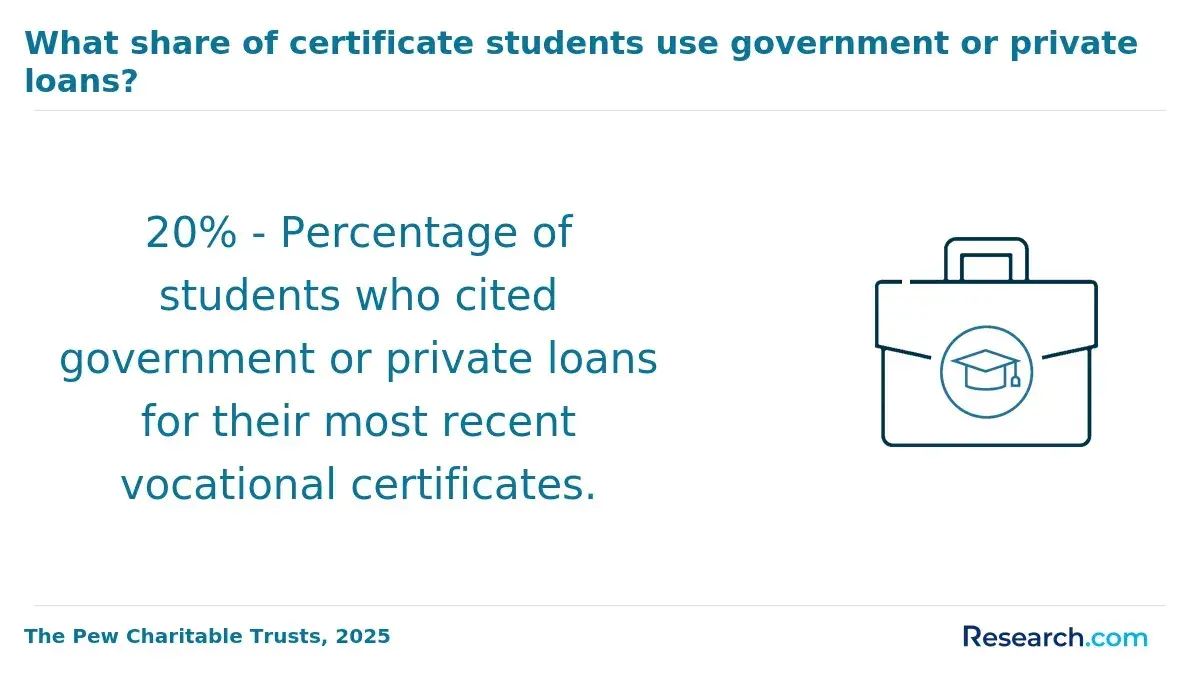
Scholarships for working adults usually reduce tuition charges before the student pays the remaining balance. Some awards are merit-based, some are need-based, and others are designed for transfer students, returning adults, military-affiliated students, first-generation students, public service workers, or employees of partner organizations.
Federal aid can also matter. The maximum Federal Pell Grant for the 2024-25 award year was $7,395, which can make a meaningful difference for eligible undergraduate students. However, Pell eligibility depends on FAFSA results, enrollment intensity, lifetime limits, and the school's cost of attendance, so it should be treated as potential aid rather than a guaranteed discount.
Working professionals should also look beyond scholarships. Employer education assistance can be especially valuable because federal tax rules generally allow up to $5,250 per year in employer-provided educational assistance to be excluded from taxable income when the benefit meets program requirements.
Use the sequence below to organize your funding search before committing to a program. The goal is to reduce net price, not just find the lowest advertised tuition:
- Submit the FAFSA as early as possible so the school can determine federal, state, and institutional aid eligibility.
- Ask the admissions or financial aid office specifically about adult learner, transfer student, online student, and degree-completion scholarships.
- Check whether your employer offers tuition reimbursement, direct billing, preferred school discounts, or paid study time.
- Compare renewable scholarship rules, including GPA minimums, credit-load requirements, and whether awards continue in summer terms.
- Subtract grants and scholarships before loans so you understand the true remaining balance.
A common mistake is choosing a school because it advertises a large scholarship while ignoring fees, book costs, technology charges, or lower transfer-credit acceptance. A smaller scholarship at a lower-cost public university can sometimes produce a better net price than a larger award at a higher-priced institution.
What admission requirements do online general studies programs usually require?
Admission requirements vary by school and degree level, but online general studies programs are often designed to be accessible for adult learners. Bachelor's completion programs may expect prior college credits, while full bachelor's programs may accept first-time students who meet standard undergraduate admission requirements.
Most programs use a practical set of documents to determine eligibility and transfer standing. These requirements help the school confirm academic readiness and calculate how many credits you still need:
- High school diploma, GED, or equivalent for first-time undergraduate admission.
- Official transcripts from every college previously attended, even if credits are old or incomplete.
- Minimum GPA requirement, often with conditional admission options for students below the standard threshold.
- Application form and possible fee, though many adult-focused online programs waive the fee during certain periods.
- Placement information or prior coursework for math, writing, or general education requirements.
- Proof of English proficiency for applicants whose prior education was not in English, depending on school policy.
Test scores are less central than they once were for many adult undergraduate programs. Some schools are test-optional or do not require SAT or ACT scores for applicants who have been out of high school for several years or have completed college coursework.
The most important admissions step for working professionals is the transfer-credit evaluation. Ask for a written estimate of accepted credits before enrolling, because transfer policy can change your timeline and total cost more than almost any other factor.
What courses are included in a general studies degree curriculum?
A general studies curriculum usually combines general education, interdisciplinary electives, a concentration or focus area, and a capstone course. The structure is intentionally broad, but a strong program should still help you build a coherent academic plan rather than assembling random credits.
Most bachelor's programs include about 120 credits, though the exact distribution varies by institution. The table below summarizes common curriculum components and why each one matters for working adults:
| Curriculum area | Typical subjects | Why it matters |
| General education | Writing, math, science, humanities, social science | Builds the broad foundation required for most bachelor's degrees |
| Communication | Public speaking, professional writing, interpersonal communication | Supports workplace roles that involve reports, presentations, teams, or customer interaction |
| Social and behavioral sciences | Psychology, sociology, political science, human development | Helps with roles involving people, organizations, community programs, or public service |
| Business and leadership electives | Management, organizational behavior, ethics, project coordination | Can align the degree with supervisory or administrative career goals |
| Technology and data literacy | Information systems, statistics, digital tools, basic analytics | Helps graduates adapt to AI-enabled and data-supported workplaces |
| Capstone | Portfolio, research project, applied problem-solving project | Lets students demonstrate how their interdisciplinary coursework connects to career goals |
Some students use general studies as a home for related interests, while others are better served by a specialized major. For example, a student whose career goal depends on bilingual communication, translation, or Hispanic studies may find an online Spanish degree more targeted than a general studies program with only a few language electives.
When reviewing curricula, look for a program that lets you build a concentration in areas such as business, communication, social science, technology, public service, or humanities. A focused plan makes the degree easier to explain to employers.
How long does an online general studies degree usually take to finish?
A bachelor's degree in general studies typically requires about 120 credits. A first-time full-time student may need around four academic years, while a working adult studying part time may take longer. Students who transfer in prior credits can shorten that timeline substantially, depending on how many credits apply to degree requirements.
The most important timing factor is not simply course speed; it is credit efficiency. A student who takes accelerated eight-week courses but loses many transfer credits may take longer than a student in a standard semester program that accepts more prior coursework.
The table below shows common completion scenarios. These are planning categories, not promises, because school policies, course availability, financial aid enrollment rules, and work schedules can change the timeline:
| Student situation | Common timeline pattern | Decision point |
| No prior college credit | Usually closest to a traditional four-year path if full time | Compare full-time affordability with part-time work demands |
| Some prior credits | Often shorter if credits meet general education or elective requirements | Request a degree audit before enrolling |
| Associate degree completed | May enter as a junior if the transfer agreement is strong | Check whether all associate degree credits apply |
| Military, professional, or prior learning credit | Can reduce remaining credits at schools that award evaluated learning credit | Ask about ACE, CLEP, DSST, portfolio, or workforce training credit |
| Part-time working student | Often slower but more sustainable | Choose a pace that protects GPA, aid eligibility, and work performance |
If speed is your top priority, compare course length, transfer policy, and term frequency together. Some accelerated degree programs are helpful for motivated adults, but the best option is the one that lets you finish quickly without overloading your schedule or paying for credits you do not need.
How much do online general studies degrees cost after scholarships?
The cost after scholarships depends on tuition, mandatory fees, accepted transfer credits, grants, employer benefits, course load, books, and whether the school charges different rates for in-state and out-of-state online students. The sticker price is only a starting point; the net price is what matters for decision-making.
College Board's 2024 pricing data reported average published tuition and fees of $11,610 for in-state students at public four-year institutions and $43,350 at private nonprofit four-year institutions for 2024-25. Those figures are not specific to online general studies programs, but they show why comparing public, private nonprofit, and transfer-friendly options can materially affect affordability.
Use this simple formula when schools send aid offers: total tuition and required fees minus grants, scholarships, employer payments, and accepted transfer-credit savings equals your estimated remaining cost. Loans can help cover that remaining cost, but they do not reduce the price; they shift payment into the future.
The table below explains the main cost variables. Reviewing these items can prevent you from choosing a program that looks affordable at first but becomes expensive after fees or lost credits are counted:
| Cost factor | Why it changes your net price | What to ask |
| Per-credit tuition | Most online programs charge by credit, so small rate differences multiply across many courses | Is the rate the same for online out-of-state students? |
| Transfer credits | Accepted credits reduce the number of courses you must pay for | How many credits apply directly to my degree plan? |
| Scholarships and grants | Gift aid lowers the amount you pay or borrow | Is the award renewable, and what GPA or enrollment level is required? |
| Employer tuition assistance | Workplace benefits can cover part of tuition if the program qualifies | Does my employer require grades, repayment if I leave, or preapproval? |
| Fees and materials | Technology, online learning, graduation, books, and proctoring fees can add up | What is the full cost of attendance for online students? |
Students focused primarily on minimizing debt should compare transfer acceptance and tuition together. A budget friendly online general studies degree may offer the best value when it is accredited, transparent about fees, and generous with applicable transfer credits.
What careers can you pursue with a general studies degree?
A general studies degree can support careers that value a bachelor's credential, communication ability, analytical thinking, organizational skills, and broad workplace knowledge. It is not usually a direct pipeline into licensed professions, but it can help adults qualify for roles in business, administration, public service, nonprofit work, sales, training, customer success, and operations.
The degree is strongest when paired with experience, internships, certifications, or a focused concentration. For example, a retail supervisor who completes a general studies bachelor's with business and communication electives may be more competitive for operations or HR-adjacent roles than someone with the same degree but no clear skill story.
The table below outlines career areas where a general studies background can be relevant. These are examples of pathways, not guaranteed outcomes, because hiring depends on experience, local labor markets, industry, and employer requirements:
| Career area | Example roles | How to strengthen your candidacy |
| Business operations | Operations coordinator, project assistant, office manager | Add coursework or certificates in project management, Excel, analytics, or process improvement |
| Human resources support | HR assistant, recruiting coordinator, training coordinator | Choose electives in communication, psychology, employment law, or organizational behavior |
| Public and nonprofit service | Program coordinator, case management support, outreach specialist | Build experience through volunteering, community work, or public administration electives |
| Sales and customer success | Account coordinator, customer success associate, sales representative | Develop presentation, CRM, negotiation, and data-reporting skills |
| Administrative management | Administrative services specialist, executive support, department coordinator | Show evidence of budgeting, scheduling, compliance, and team coordination experience |
Current workplace trends make skill signaling especially important. AI tools are changing routine writing, scheduling, reporting, and customer-service tasks, so general studies students should actively build durable skills such as judgment, ethical reasoning, communication, data interpretation, and cross-functional collaboration.
This degree may not be the best choice if you already know you need a tightly prescribed curriculum. Engineering, nursing, education licensure, and some accounting paths usually require specific prerequisites, labs, supervised practice, or programmatic approval.
How much can general studies graduates earn in the United States?
There is no single salary for "general studies graduates" because the degree can lead to many types of work. Earnings depend on the job title, industry, location, prior experience, concentration, and whether the graduate adds specialized skills or credentials.
BLS May 2024 wage data is useful for setting realistic expectations because it reports salaries by occupation rather than by college major. For example, the median annual wage for human resources specialists was $72,910, while general and operations managers had a median annual wage of $101,280. Those roles often require experience and may not be entry-level outcomes, but they show the range of occupations where a broad bachelor's degree can be relevant.
The table below groups potential salary contexts by career direction. Use it to compare occupational targets rather than assuming the degree title alone determines pay:
| Career direction | Typical entry point | Salary context |
| Administrative and office coordination | Coordinator, administrative assistant, office specialist | Often depends heavily on industry, software skills, and responsibility level |
| Business operations | Operations assistant, project coordinator, analyst support role | Can improve with process, data, project management, or supervisory experience |
| Human resources and training | HR assistant, recruiting coordinator, training support | May require HR knowledge, compliance awareness, and strong interpersonal communication |
| Public service and nonprofit programs | Program assistant, outreach coordinator, community services role | Mission-driven roles may vary widely by funding source and location |
| Management pathway | Team lead, assistant manager, operations supervisor | Usually depends on prior work history plus demonstrated leadership outcomes |
To evaluate return on investment, compare the net cost of the degree with the specific roles you want, not with national averages alone. A lower-cost program that helps you qualify for an internal promotion can be more practical than an expensive program with a brand name but weak fit for your career plan.
How do you choose the best online general studies program?
The best online general studies program is the one that is accredited, affordable after aid, transfer-friendly, manageable with your work schedule, and aligned with a realistic career plan. Rankings can be useful, but they should not replace a careful review of cost, credits, support, and outcomes.
Start by deciding whether you need flexibility or specialization. If your target career has strict technical requirements, a general studies degree may not be enough. For instance, someone comparing broad liberal arts options with the cheapest engineering degree online should remember that engineering pathways usually require more prescribed math, science, lab, and accreditation considerations than general studies programs.
Use the steps below to compare programs in a practical order. This process keeps you from overvaluing marketing claims and undervaluing details that affect completion and cost:
- Verify institutional accreditation before reviewing price, format, or scholarships.
- Request a preliminary transfer-credit evaluation and ask which credits apply to requirements, not just how many are accepted.
- Compare total cost after grants, scholarships, fees, books, and employer benefits.
- Review course schedules, term lengths, asynchronous options, exam proctoring rules, and required live sessions.
- Check whether the program offers concentrations that match your career direction, such as business, communication, technology, social science, or public service.
- Ask about adult learner support, including advising, career services, tutoring, prior learning assessment, and re-enrollment help.
- Look for transparent graduation, retention, and student outcome information, but interpret it in context because online adult learners often study part time.
Several red flags deserve extra caution. Avoid schools that pressure you to enroll immediately, refuse to provide a written cost estimate, make unrealistic salary promises, lack recognized accreditation, or give vague answers about transfer credits.
A good final test is whether you can explain the degree in one sentence to an employer. For example: "I completed a general studies bachelor's with a concentration in organizational communication and project coordination, building on eight years of operations experience." If you cannot connect the program to your goals, keep comparing options.
Other Things You Should Know About General Studies
Yes, it can, if the degree is from an accredited institution and you meet the graduate program's prerequisites. Some master's programs accept many undergraduate majors, while others require specific coursework, GPA thresholds, exams, portfolios, or work experience.
Most universities do not distinguish between online and on-campus degrees on diplomas in 2027. The diploma simply reflects the degree earned, with no mention of the mode of study, to ensure that all students receive equal recognition for their academic achievements.
They are similar but not always identical. General studies is usually broad and flexible, while interdisciplinary studies may require a more intentionally designed plan that combines two or more academic fields around a specific theme.
Most scholarship applications ask for a completed FAFSA, a recent transcript, a 1–2 page personal statement, and proof of current employment. Some schools also require two recommendation letters and a minimum 2.5 GPA. Deadlines often fall 6–8 weeks before the term begins.
References
- What Can You Do With a General Studies Degree? https://www.calcoast.edu/news/what-can-you-do-with-a-general-studies-degree
- Online General Studies Degree -BA - Illinois - Aurora University https://online.aurora.edu/online-degrees/general-studies-bachelors/
- Scholarships for Online Courses and Degree Programs? You bet! https://www.top10onlinecolleges.org/scholarships-for/online-study/
- Online Bachelor's Degree: General Studies https://www.umgc.edu/online-degrees/bachelors/general-studies
- How long does it take to get a bachelor's degree? | edX https://www.edx.org/resources/how-long-does-it-take-to-get-a-bachelors-degree
- General Studies Degree Jobs: 10 Careers + Salaries (2026) | Extern https://www.extern.com/post/general-studies-degree-jobs-career-guide
- Research Summary: Education and Lifetime Earnings https://www.ssa.gov/policy/docs/research-summaries/education-earnings.html
- Self-Paced Online Degree Programs https://www.umassglobal.edu/why-umassglobal/flexible-ways-to-learn/self-paced