2027 General Studies Degree Salary Guide

Co-Founder and Chief Data Scientist
A general studies degree can be useful, but its salary value depends heavily on how you shape it. BLS data shows workers with a bachelor's degree had median weekly earnings of $1,543 in 2024, well above workers with only a high school diploma. This guide is for students, transfer learners, working adults, and career changers who want flexibility without guessing about outcomes. You'll learn what the degree covers, which jobs it can support, what salaries look like, and how to choose a program that fits your goals.
Key Things You Should Know
- A general studies degree is strongest when paired with a clear career target, internship, concentration, certificate, or transferable work experience; it is weaker when used as a "default" major with no plan.
- Because there is no single BLS occupation called "general studies graduate," salary should be evaluated by target job; May 2024 BLS medians include $72,910 for human resources specialists, $76,950 for market research analysts, and $108,390 for administrative services managers.
- Cost and completion speed matter: College Board's 2024 pricing data lists average published tuition and fees at $11,610 for in-state public four-year colleges and $43,350 for private nonprofit four-year colleges, before aid.
What is a general studies degree?
A general studies degree is an interdisciplinary college program that lets students combine courses from multiple fields instead of completing one narrow major. Depending on the school, it may be called general studies, liberal studies, interdisciplinary studies, university studies, or individualized studies.
The degree is usually offered at the associate or bachelor's level. It often works best for students who have completed credits in several subjects, are returning to college after a break, or want a broad foundation for business, public service, communications, education support, or graduate study.
The main trade-off is flexibility versus specialization. A general studies degree can help you finish faster if you already have transfer credits, but it may not prepare you for regulated or highly technical careers unless you add the right electives, certifications, prerequisites, or experience.
This comparison shows how general studies differs from more specialized degree paths and when each option may make sense.
| Degree path | Best fit | Main advantage | Main limitation |
| General studies | Students with varied credits, working adults, undecided learners, career changers | Flexible curriculum and strong transfer-credit potential | May need career-focused electives or credentials for specific jobs |
| Business administration | Students targeting management, operations, sales, or entrepreneurship | Clearer employer signal for business roles | Less room for unrelated electives |
| Psychology or human services | Students interested in people-focused support roles | Useful foundation for counseling, social services, or HR | Clinical careers usually require graduate study and licensure |
| Communications | Students targeting writing, media, marketing, or public relations | More direct skills match for communication-heavy roles | May be less flexible for unrelated career changes |
Is general studies a good degree for jobs?
General studies can be a good degree for jobs when you treat it as a customizable career platform rather than a vague credential. Employers often care about the bachelor's degree requirement, communication ability, problem-solving, software skills, customer or client experience, and proof that you can complete projects. A general studies program can support those needs if your coursework and experience align with the role.
It is usually not the best choice for careers that require a specific accredited major, board-approved coursework, or technical preparation. Examples can include engineering, accounting licensure, nursing, teacher licensure in many states, dietetics, and clinical counseling. If your target career has licensure rules, check those rules before enrolling.
The degree may make sense if one of these situations describes you:
- You have many completed credits from different majors and want the fastest legitimate path to a bachelor's degree.
- You are already employed and need a degree to qualify for promotion, management training, or public-sector pay grades.
- You want to combine fields, such as business plus psychology, communication plus public administration, or technology plus social science.
- You plan to apply to graduate school and need a bachelor's degree plus specific prerequisites.
You may want a different major if you need a degree name that directly signals job readiness in a technical field. For example, a student aiming for nutrition-related credentials should compare general studies with a nutritional science degree online, because some health pathways require specific science coursework rather than broad electives.
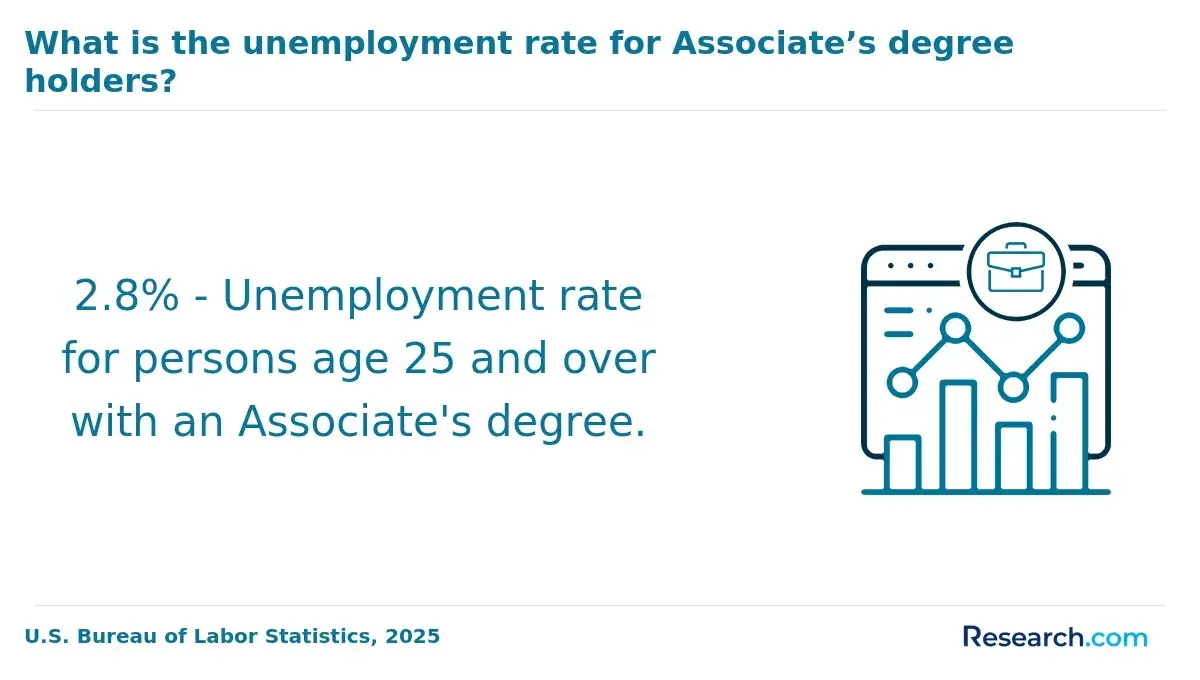
What jobs can a general studies degree get you?
A general studies degree can lead to roles in business operations, administration, human resources, sales, nonprofit work, government support, customer success, communications, and education support. The exact job depends on your electives, internships, prior work experience, software skills, and whether you complete a bachelor's or associate degree.
The table below summarizes common career directions rather than guaranteed outcomes. Use it to connect your degree plan with the skills employers are likely to expect.
| Career area | Possible roles | Helpful coursework or experience | Good fit for students who |
| Business and operations | Operations coordinator, office manager, administrative specialist | Business, project management, Excel, data reporting | Like organizing people, processes, and deadlines |
| Human resources | HR assistant, HR specialist, recruiting coordinator | Psychology, communication, employment law, HR software | Enjoy people-focused work and policy details |
| Marketing and research | Marketing assistant, market research analyst, content coordinator | Statistics, writing, consumer behavior, analytics tools | Can combine creativity with data interpretation |
| Public service and nonprofit | Program coordinator, community outreach worker, case management assistant | Sociology, public administration, grant writing, service learning | Want mission-driven work with diverse populations |
| Sales and customer success | Account coordinator, sales representative, client success associate | Communication, business, CRM systems, negotiation | Are comfortable with targets, relationships, and problem solving |
To improve job prospects, build a degree plan around one employment story. A resume that says "general studies plus HR coursework, internship recruiting experience, and SHRM-aligned electives" is stronger than a transcript with random unrelated classes.
Students interested in language-heavy roles can also use general studies as a base and add concentrated language study. If your goal is translation-adjacent work, bilingual customer success, international business support, or education support, compare this path with Spanish degrees online before deciding.
How much do general studies graduates earn?
There is no single salary for a general studies degree because graduates enter many occupations. The better approach is to compare salaries for roles that commonly accept broad bachelor's degrees and then ask whether your program can help you qualify for those roles.
BLS May 2024 wage data gives a useful benchmark for several general studies-friendly career paths. These medians describe occupations, not degree-specific outcomes, so your pay can vary by location, employer, experience, and skills.
| Occupation | Typical entry requirement | May 2024 median annual wage | How general studies can fit |
| Human resources specialist | Bachelor's degree often preferred or required | $72,910 | Pair the degree with HR, psychology, business, and employment-law coursework |
| Market research analyst | Bachelor's degree | $76,950 | Add statistics, research methods, marketing, and data-analysis tools |
| Training and development specialist | Bachelor's degree | $66,820 | Use communication, education, organizational behavior, and presentation experience |
| Social and community service manager | Bachelor's degree often required | $78,240 | Build a path with nonprofit, sociology, public administration, and service experience |
| Administrative services manager | Bachelor's degree sometimes preferred, experience important | $108,390 | Combine business operations coursework with supervisory or office-management experience |
The biggest salary mistake is assuming the degree title alone determines pay. In practice, salary is shaped by job function. A general studies graduate in administrative support may earn far less than a general studies graduate who builds analytics, HR, operations, or management experience.
For a quick ROI check, compare expected pay in your target role with total program cost, not just tuition. Include fees, books, technology costs, transportation, lost work hours, and the number of credits you still need to graduate.
What affects salary with a general studies degree?
Salary with a general studies degree depends less on the major label and more on how well the degree connects to a job market. Employers may value the broad education, but they still hire for specific problems: coordinating projects, analyzing customer data, managing teams, writing clearly, supporting clients, or improving operations.
These factors usually have the largest effect on salary because they change how employers classify your role and what level of responsibility you can handle:
- Degree level: A bachelor's degree generally opens more professional and management-track roles than an associate degree.
- Concentration: Business, data analytics, HR, communications, public administration, or technology-focused electives can make the degree more marketable.
- Experience: Internships, military experience, supervisory duties, volunteer leadership, and prior full-time work can move you beyond entry-level pay.
- Location: Salaries often rise in higher-cost metro areas, but commuting costs and housing can reduce the real benefit.
- Industry: Healthcare administration, technology services, government, finance, and professional services may pay differently for similar coordination or analyst roles.
- Tools and credentials: Excel, CRM platforms, HRIS systems, project management tools, data visualization, and industry certificates can strengthen your profile.
Current hiring trends also matter. AI and automation are changing entry-level administrative, writing, and research tasks, so students should build skills that complement technology rather than compete with it. That can include data interpretation, prompt-aware research, quality control, client communication, compliance awareness, and project coordination.
A practical way to improve salary potential is to reverse-engineer job postings before choosing electives. Pick 10 postings for roles you want, list the repeated skills, and choose courses or certificates that fill those gaps.
Can you earn a general studies degree online?
Yes. Many colleges offer online general studies degrees, and the format can be especially useful for adults with transfer credits, full-time jobs, caregiving responsibilities, military schedules, or limited access to a nearby campus. Online programs may offer asynchronous courses, accelerated sessions, and year-round start dates.
Online is not automatically cheaper or easier. The best choice depends on your learning style, schedule, need for campus services, and whether the program accepts your previous credits. Some online programs charge separate technology fees, while some public universities offer different tuition rates for in-state and out-of-state online students.
This comparison can help you decide whether online or campus study fits your situation.
| Format | Best for | Potential advantage | Potential drawback |
| Fully online | Working adults, remote learners, students with family responsibilities | Highest scheduling flexibility | Requires strong self-management and reliable technology |
| Hybrid | Students who want flexibility plus some face-to-face support | Balanced structure and access to campus resources | Commute requirements can complicate scheduling |
| On campus | Traditional students, learners who prefer in-person structure | More direct access to campus life, advising, and networking | Less flexible for full-time workers or distant students |
If you have a criminal record, ask schools how background checks may affect internships, field placements, student teaching, healthcare settings, or public-sector roles. Some students also compare general studies with online degrees for felons to identify programs and career paths with fewer unnecessary barriers.
How long does a general studies degree take?
An associate degree in general studies typically requires about 60 credits, while a bachelor's degree usually requires about 120 credits. The calendar time depends on how many credits you take per term, whether you study during summer, and how many credits transfer into the program.
General studies can be one of the faster completion options for students with scattered credits because many programs have broad elective categories. However, speed should not be the only goal. A very fast plan that ignores career preparation may save time now but reduce job options later.
Use this general timeline to estimate your path before speaking with an advisor.
| Student situation | Likely degree level | Typical planning issue | What to verify |
| First-time college student | Associate or bachelor's | Needs full general education and electives | Major requirements, transfer options, and career advising |
| Transfer student with 30 to 60 credits | Bachelor's | May be able to apply prior credits broadly | How credits apply to requirements, not just how many transfer |
| Adult learner with old credits | Bachelor's completion | Credits may transfer, but some may not meet current requirements | Time limits, residency rules, and portfolio or prior-learning options |
| Full-time worker | Associate or bachelor's | May need part-time pacing | Course rotation, online availability, and term length |
Before enrolling, ask for an official degree audit. This is more reliable than a general estimate because it shows exactly which credits count toward graduation and which courses you still need.
What classes are in a general studies program?
General studies programs usually combine general education, interdisciplinary electives, a concentration area, and a capstone or portfolio. The curriculum is designed to show broad college-level learning while allowing students to build a path around personal or professional goals.
Most programs include several categories of courses. The exact names vary by school, but these are common components:
- Communication: English composition, public speaking, professional writing, or digital communication.
- Quantitative reasoning: College algebra, statistics, data literacy, or applied math.
- Social sciences: Psychology, sociology, political science, economics, or anthropology.
- Humanities: History, ethics, literature, philosophy, art, or cultural studies.
- Natural sciences: Biology, environmental science, physical science, or lab-based science courses.
- Career-focused electives: Business, technology, leadership, public administration, education, health, or communication courses.
- Capstone: A final project that connects coursework to a practical problem, career theme, or portfolio.
The smartest course plan starts with your target job. If you want HR, choose psychology, business, employment law, and data courses. If you want nonprofit coordination, add public administration, grant writing, sociology, and service learning. If you want graduate study, check prerequisite courses early.
Students who later want licensed helping-profession careers should be careful. A broad undergraduate degree may support graduate admission, but clinical roles usually require a specialized graduate program, supervised hours, and state licensure. If that is your goal, compare bachelor's planning with options such as an online master's in counseling so you understand the longer pathway.
What are the admission requirements for general studies programs?
Admission requirements vary by school and degree level, but general studies programs are often designed to be accessible to a wide range of learners. Community colleges may have open-admission policies, while four-year colleges may review GPA, transcripts, transfer credits, and readiness for upper-division coursework.
Applicants commonly need to prepare the following materials. Confirm details with each school because transfer, adult-completion, and online programs may use different processes:
- High school diploma, GED, or equivalent for undergraduate admission.
- Official transcripts from high school and any colleges previously attended.
- Minimum GPA requirements for some bachelor's completion or upper-division programs.
- Placement information for math or writing if required by the institution.
- Application form and fee, although some schools waive the fee during admissions events.
- Transfer-credit evaluation for students with prior college work.
- FAFSA submission if the student wants to be considered for federal financial aid.
A common mistake is applying before understanding transfer rules. A college may "accept" many credits but apply only some of them to your degree. Ask for a written evaluation that separates accepted credits from credits that actually satisfy graduation requirements.
If you have academic probation, old withdrawals, military credits, workplace training, or prior-learning experience, ask whether the school offers academic renewal, credit for prior learning, portfolio assessment, CLEP, DSST, or ACE-reviewed credit. These policies can shorten the degree, but they vary widely.
How do you choose an accredited general studies school?
Start with institutional accreditation. In the U.S., students should look for colleges accredited by an agency recognized by the U.S. Department of Education or the Council for Higher Education Accreditation. Accreditation affects credit transfer, graduate school eligibility, employer recognition, and access to federal financial aid.
Cost should be evaluated alongside completion speed and career fit. College Board's 2024 data lists average published tuition and fees at $11,610 for in-state public four-year colleges and $43,350 for private nonprofit four-year colleges, before grants and scholarships. That gap can be meaningful, but the best-value option is the one that helps you finish with the right credits, support, and employment plan.
Use these steps before committing to a program:
- Confirm the school's institutional accreditation through an official accreditor or federal database.
- Request a degree audit showing exactly how your transfer credits apply to the general studies program.
- Compare total cost, including tuition, fees, books, technology, residency requirements, and lost work time.
- Ask whether you can build a concentration that matches your target job or graduate-school prerequisites.
- Review career services, internship support, alumni outcomes, and employer partnerships.
- Check whether online courses are asynchronous, synchronous, accelerated, or limited to certain terms.
- Ask what happens if you change goals and want to move from general studies into a more specialized major.
Watch for red flags. Be cautious if a school avoids questions about accreditation, promises specific salaries, pressures you to enroll immediately, gives only verbal transfer-credit estimates, or cannot explain how the degree supports your career goal.
General studies is a good investment when it helps you finish an accredited degree efficiently and create a credible career direction. It is a poor investment when it becomes a collection of unrelated credits with no employment strategy.
Other Things You Should Know About General Studies
Yes, a general studies degree can qualify you for graduate school admission. Many graduate programs value the diverse skill set and broad academic background that a general studies degree provides. However, specific prerequisites may vary by program, so it's essential to check with the individual institutions for their requirements.
Entry-level general studies graduates commonly earn about $35,000 to $55,000 a year in administrative, sales, customer service, and office support jobs. Pay rises with transferable skills, internships, and completed credits; many employers use the same salary bands they set for broader business or communications roles.
Many employers will, especially for roles requiring any accredited bachelor's degree. It becomes more credible when your resume shows a focused concentration, relevant experience, measurable projects, software skills, and a clear connection between your coursework and the job.
Yes, if it strengthens your job fit. For example, "Bachelor of General Studies, concentration in Human Resources" gives employers more useful information than the degree title alone. Also list relevant projects, internships, certifications, and tools.
References
- Online Bachelor's Degree: General Studies https://www.umgc.edu/online-degrees/bachelors/general-studies
- General Studies (Diploma) https://www.douglascollege.ca/program/dpgens
- Specialization in general studies https://www.vilbli.no/en/no/om/v.st/specialization-in-general-studies
- What are General Education Courses? Its Purpose and Benefits https://www.edvisorly.com/student-guides/general-education-courses-overview
- General Studies | Ozarks Tech (OTC) https://ozarkstech.edu/programs/transfer-core-skills/general-studies/
- Explore UM | University of Manitoba - Extended Education General Studies Applicant Information https://umanitoba.ca/explore/undergraduate-admissions/requirements/general-studies
- General Studies Degree Jobs: 10 Careers + Salaries (2026) | Extern https://www.extern.com/post/general-studies-degree-jobs-career-guide
- General Studies Degree Programs https://www.dean.edu/academics/majors-degrees/general-studies/
- General Studies https://ctstate.edu/general-studies