2027 Best Online General Studies Degrees for Busy Professionals

Co-Founder and Chief Data Scientist
Choosing an online general studies degree usually comes down to one question: will this flexible major help you finish a bachelor's degree without slowing your career or family life? The National Center for Education Statistics reported that more than half of U. S. undergraduates took at least one distance education course in the most recent national data, showing how normal online learning has become.
This guide is for working adults, transfer students, parents, and career changers who need a practical way to compare accreditation, cost, speed, courses, and career outcomes before enrolling.
Key Things You Should Know
- An online general studies bachelor's degree is usually a 120-credit program that lets adults combine transfer credits, general education, electives, and one or more focus areas instead of starting over in a narrow major.
- Cost varies widely: College Board's 2024 pricing data lists average published tuition and fees at $11,610 for in-state public four-year colleges and $43,350 for private nonprofit four-year colleges, so transfer policy and total credits required matter as much as sticker price.
- Career outcomes depend on experience and specialization; BLS 2023-2033 projections show faster growth in business and financial occupations than the all-occupation average, making concentrations in business, communication, technology, or data skills more marketable than a completely unfocused plan.
What is an online general studies degree and how does it work?
An online general studies degree is a broad undergraduate program designed for students who want a bachelor's degree with flexibility across several academic areas. Instead of requiring a single disciplinary path such as accounting, biology, or English, it usually combines core general education courses with electives, transfer credits, and an individualized concentration.
For busy professionals, the main advantage is degree completion. Many programs are built for adults who already have college credits, military training, professional certifications, or associate degrees. A well-designed program can turn prior learning into progress toward graduation, although every school sets its own transfer and residency rules.
The structure varies by institution, but most bachelor's-level general studies programs include the components below. Understanding these parts helps you see whether the program is flexible in a meaningful way or simply broad without a clear plan.
- General education: Foundational courses in writing, math, science, humanities, social science, and communication.
- Major core: Courses that build interdisciplinary thinking, research, leadership, ethics, or applied problem-solving skills.
- Concentration or focus area: A cluster of courses in areas such as business, health services, technology, social science, communication, or public administration.
- Electives: Flexible credits that may allow transfer coursework, professional interests, or career-aligned courses.
- Capstone: A final project that often connects the student's academic work to workplace or community problems.
Online delivery can be asynchronous, synchronous, or hybrid. Asynchronous courses are often best for shift workers and parents because lectures, assignments, and discussions can be completed within weekly deadlines. Synchronous courses may provide more real-time interaction but require scheduled attendance.
This degree is usually a strong fit for adults who need a bachelor's credential for promotion, career mobility, graduate school eligibility, or personal completion goals. It may be less ideal for students pursuing careers that require a tightly prescribed major, such as engineering licensure, accounting CPA preparation, or certain health professions.
Adults comparing flexible pathways may also want to review online degrees for stay at home moms, since many of the same scheduling, transfer-credit, and affordability issues apply to parents returning to school.
Are online general studies degrees respected and properly accredited?
Online general studies degrees can be respected when they come from properly accredited institutions and are presented to employers with a clear skills story. The delivery format matters less than whether the school is legitimate, the curriculum is coherent, and the student can explain how the degree supports a specific career path.
The most important quality marker is institutional accreditation from an agency recognized by the U.S. Department of Education or the Council for Higher Education Accreditation. Institutional accreditation affects federal financial aid eligibility, credit transfer, graduate school admission, and employer trust.
Before applying, verify accreditation directly rather than relying only on marketing language. These checks can help you avoid weak or misleading programs.
- Search the school in the U.S. Department of Education's Database of Accredited Postsecondary Institutions and Programs.
- Confirm that the institution name, campus, and online division match the school you are considering.
- Check whether the degree level and program location are covered by the accreditation record.
- Ask admissions how credits will appear on the transcript and whether the diploma identifies online delivery.
- Review transfer and graduate school policies if you plan to continue your education later.
Programmatic accreditation is usually not required for general studies because the major is interdisciplinary and not tied to a licensed profession. However, if you choose a concentration in education, health, business, or technology, you should check whether your target employers or graduate programs prefer specialized coursework, certifications, or accredited preparation in that field.
A common mistake is assuming that "online" means "less credible." A better test is whether the school is accredited, transparent about outcomes, clear about transfer credits, and able to show how the curriculum connects to real roles. Another red flag is aggressive admissions pressure before the school has evaluated your transcripts or explained total cost.
How do online general studies programs compare to on-campus options?
Online and on-campus general studies programs often lead to the same degree, but the student experience can be very different. Busy professionals should compare format based on time control, access to support, networking needs, and the amount of structure they need to stay on track.
The table below summarizes the practical differences that matter most for adults deciding between online and campus-based study.
| Factor | Online general studies | On-campus general studies | Best fit |
| Schedule | Often asynchronous or evening-friendly | Usually tied to class meeting times | Online is better for full-time workers, caregivers, and students with irregular schedules. |
| Commute | No campus commute for fully online courses | Requires travel and parking time | Online can reduce hidden time costs. |
| Interaction | Discussion boards, video meetings, email, and virtual advising | Face-to-face classes, campus events, and in-person advising | Campus may suit students who learn best through live interaction. |
| Course availability | May offer adult-focused accelerated terms | May offer more daytime electives and campus-only activities | The stronger option is the one that offers the courses you need when you need them. |
| Accountability | Requires strong self-management | Built-in routine through class meetings | Campus may help students who struggle with independent pacing. |
Online programs are not automatically easier. In many cases, they require more self-discipline because students must manage deadlines without a physical classroom routine. The best online programs offset this with proactive advising, clear course shells, tutoring, library access, career support, and predictable course rotations.
On-campus study can be worth the trade-off if you need labs, local internships, direct faculty access, or a stronger campus network. For general studies specifically, however, many adult learners benefit from online delivery because the major often emphasizes transferable skills and degree completion rather than location-specific facilities.
What concentrations and courses are typically offered in general studies majors?
General studies majors vary more than many other bachelor's programs, so the concentration matters. A strong concentration gives the degree direction; a weak one can leave the transcript looking scattered. For working adults, the best choice usually connects prior experience with a realistic next step.
Common concentration areas include the following. Use them to evaluate whether a program supports your target career or simply offers a broad list of unrelated electives.
- Business and management: Useful for supervisors, administrative professionals, entrepreneurs, and employees seeking promotion into operations or team leadership.
- Communication: Relevant for roles involving writing, public relations, training, customer success, sales support, or internal communications.
- Health services: Often chosen by allied health workers, medical office staff, and professionals seeking nonclinical healthcare administration roles.
- Technology or information systems: Helpful for students who want applied digital, project, or systems knowledge without completing a full computer science degree.
- Social science or human services: Suitable for community, nonprofit, public service, and entry-level case support roles.
- Public administration or leadership: Useful for government, military, emergency services, and nonprofit professionals.
Typical courses often include writing for professionals, statistics, ethics, leadership, research methods, organizational behavior, public speaking, project management, data literacy, and a capstone. The exact mix should match your goals, not just fill credits quickly.
The table below shows how different concentration choices can change the value of the same general studies degree.
| Student goal | Helpful concentration | Why it may fit | When to choose another major |
| Move into supervision | Business, leadership, or management | Builds language around teams, budgets, operations, and decision-making | If you need deep accounting, finance, or HR credentialing |
| Work in healthcare administration | Health services or public health-related electives | Connects prior clinical or office experience with administrative coursework | If the role requires nursing, health information certification, or clinical licensure |
| Strengthen analytical skills | Data literacy, statistics, or applied math electives | Signals comfort with quantitative reasoning across business settings | If you want highly technical analytics, actuarial, or graduate math preparation |
| Enter public service | Public administration, social science, or human services | Supports roles in agencies, nonprofits, and community organizations | If the target role requires social work licensure or a specialized public safety credential |
If you want a more quantitative path than general studies can provide, an online math bachelor's degree may be a better fit for careers that require deeper analytical preparation.
What admission requirements do online general studies programs usually have?
Admission requirements for online general studies programs are usually accessible, especially at public universities and adult-completion programs. Still, "accessible" does not mean automatic. Schools must confirm that you are academically eligible and that prior credits meet institutional standards.
Most programs ask for a combination of the following items. Requirements may differ for first-time students, transfer students, military students, and returning adults.
- High school diploma or equivalent: Required for first-time bachelor's students and often verified through official records.
- Official transcripts: Needed from all colleges previously attended, even if the credits are old or the grades were low.
- Minimum GPA: Some programs set a transfer GPA threshold, while others offer conditional admission or academic restart policies.
- Transfer-credit evaluation: Schools review course level, grade, accreditation of the prior institution, and whether credits fit degree requirements.
- Application form and fee: Many online adult programs have streamlined applications, and some waive fees during recruitment periods.
- Personal statement or advisor meeting: Sometimes required to confirm goals, explain academic gaps, or design a degree-completion plan.
Standardized tests are rarely the deciding factor for adult online general studies programs, especially for transfer students. However, placement assessments may be used to determine whether you need college algebra, writing, or developmental support before taking upper-division courses.
The most important step is the transcript evaluation. Two schools can accept the same student but apply prior credits very differently. One may count 75 credits toward graduation, while another may count fewer because of residency rules, course age limits, or major requirements. Avoid enrolling before you receive a written degree audit or clear estimate of remaining credits.
Common red flags include vague transfer promises, refusal to review transcripts before enrollment, unclear credit limits, and advisors who focus only on monthly payment rather than total program length. A good program should tell you what transfers, what remains, and how often required courses are offered.
How long does it take to complete an online general studies bachelor's degree?
A bachelor's degree in general studies typically requires about 120 semester credits, but completion time depends heavily on transfer credits, course load, term length, and whether the program accepts prior learning. For busy professionals, the real question is not just "How long is the degree?" but "How many credits do I still need?"
The table below gives a practical timeline comparison for common student situations. These are planning ranges, not guarantees, because institutional requirements and course availability can change the final timeline.
| Student starting point | Typical remaining credits | Likely timeline | Key planning issue |
| No prior college credit | About 120 credits | About 4 years full time or longer part time | Choose a program with strong advising and predictable course sequencing. |
| Associate degree completed | About 45 to 60 credits | About 18 months to 3 years | Confirm whether the associate degree satisfies general education requirements. |
| Some college, no degree | Varies widely | About 2 to 4 years | Request a detailed transcript review before committing. |
| Military, professional, or prior-learning credit | Varies by school policy | Potentially shorter if credits apply | Ask how ACE recommendations, exams, portfolios, or certifications are evaluated. |
Accelerated online terms can shorten calendar time, but they also compress the workload. A seven- or eight-week course may require the same academic effort as a full-semester course, just delivered faster. This can work well for focused adults taking one or two courses at a time, but it can become stressful when paired with overtime, caregiving, or travel-heavy jobs.
To estimate your timeline realistically, take these steps before enrolling. They help prevent the common mistake of choosing a fast-looking program that is not actually faster for your transcript.
- Request an official or unofficial transfer-credit estimate from each school on your shortlist.
- Ask how many credits must be completed at the institution to meet residency requirements.
- Confirm whether required courses are available every term or only once per year.
- Decide how many hours per week you can consistently study without risking burnout.
- Compare full-time, part-time, and accelerated schedules using total remaining credits, not marketing timelines.
How much do online general studies degrees cost, and what financial aid is available?
Online general studies degree costs depend on tuition rate, transfer credits, fees, books, technology requirements, and how long you remain enrolled. The most affordable program is not always the one with the lowest per-credit tuition; it is the one that lets you complete the fewest unnecessary credits at an accredited institution.
Recent U.S. pricing data shows why comparison shopping matters. College Board's 2024 report lists average published tuition and fees for the 2024-2025 academic year as follows:
- $11,610 for in-state students at public four-year colleges
- $30,780 for out-of-state students at public four-year colleges
- $43,350 for students at private nonprofit four-year colleges
Those figures are published tuition and fees, not the exact amount every online student pays. Many online programs use separate per-credit rates, tuition discounts, military rates, employer partnerships, or flat-rate terms. Net cost can also be lower after grants, scholarships, and employer tuition assistance.
Financial aid may be available if the school and program are eligible. Students commonly use the following funding sources, but each has rules and deadlines.
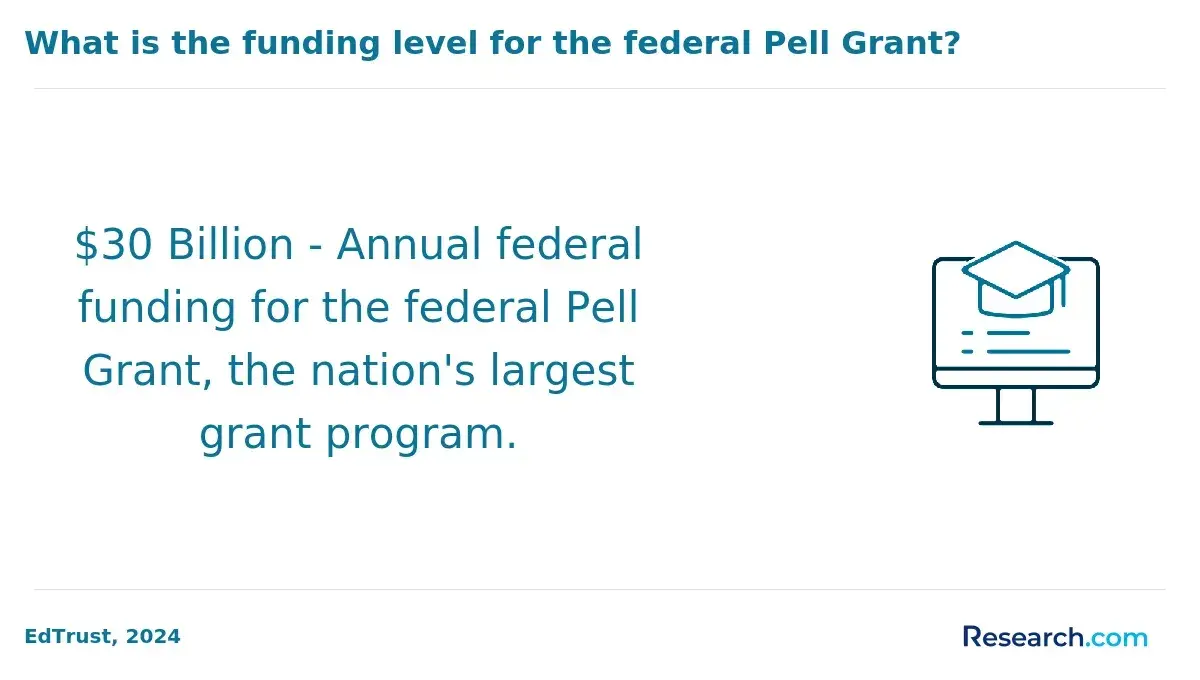
- Federal Pell Grants: Need-based aid for eligible undergraduate students that generally does not need to be repaid.
- Federal student loans: Borrowed funds that must be repaid with interest, so compare total debt to likely career benefit.
- State grants: Aid programs that may depend on residency, enrollment intensity, or school participation.
- Institutional scholarships: School-funded awards based on merit, need, transfer status, military service, or adult-learner criteria.
- Employer tuition assistance: A strong option for working adults if the degree supports advancement with the current employer.
- Credit for prior learning: Not financial aid, but it can reduce cost by lowering the number of credits you must buy.
The table below highlights cost factors that are easy to overlook when comparing online programs.
| Cost factor | Why it matters | Question to ask |
| Per-credit tuition | Determines the base price of remaining coursework | Is the online tuition rate different from campus tuition? |
| Transfer-credit acceptance | Can reduce both time and total tuition | How many of my credits apply to degree requirements? |
| Mandatory fees | Technology, distance learning, graduation, and student service fees can add up | What is the total cost per term after fees? |
| Books and materials | Some programs use low-cost or open educational resources | Are materials included, optional, or separately billed? |
| Course repetition | Failed or withdrawn courses can increase total cost | What academic support is available before students fall behind? |
If affordability is your top priority, compare total completion cost with options listed in guides to a cheap online bachelor degree, but do not choose on price alone. Accreditation, transfer fit, graduation support, and career alignment are part of the return-on-investment calculation.
What careers can you pursue with an online general studies degree?
A general studies degree can support many careers, especially when combined with work experience, a focused concentration, internships, certifications, or industry knowledge. It is usually strongest for roles that value communication, organization, critical thinking, customer service, leadership, and adaptable problem-solving.
The degree is not a shortcut into every profession. Some careers require a specific major, licensure, clinical training, technical portfolio, or graduate degree. The best approach is to pair general studies with a clear career narrative: what you studied, what skills you built, and how your prior experience connects to the role.
The table below shows common career directions and how general studies coursework may support them.
| Career direction | Possible roles | Useful preparation | Important limitation |
| Business operations | Operations coordinator, office manager, project assistant, account coordinator | Management, communication, data literacy, project management | Advanced finance, accounting, or analytics roles may need specialized coursework. |
| Human services | Program assistant, community outreach coordinator, case support specialist | Psychology, sociology, public administration, ethics | Licensed counseling or social work roles usually require specific degrees and state licensure. |
| Healthcare administration support | Clinic coordinator, patient services supervisor, medical office manager | Health services, leadership, compliance basics, communication | Clinical roles require separate licenses or credentials. |
| Sales and customer success | Sales representative, customer success associate, client services coordinator | Communication, business, writing, presentation skills | Technical sales may require product or industry expertise. |
| Public sector and nonprofit work | Administrative specialist, program coordinator, grants assistant | Public administration, writing, budgeting basics, social science | Some government roles require exams, veteran preference rules, or specific experience. |
| Training and workforce development | Training coordinator, learning support specialist, onboarding assistant | Communication, adult learning, leadership, technology tools | Instructional design roles may prefer a portfolio or specialized software experience. |
AI and automation are changing many entry-level administrative tasks, but they also increase the value of workers who can communicate clearly, coordinate people, interpret information, and adapt tools to business needs. General studies students should treat digital literacy as essential, not optional.
To make the degree more career-ready, consider adding stackable credentials in project management, spreadsheets, data visualization, customer relationship management systems, human resources, healthcare administration, or technical writing. These additions can make a broad degree easier for employers to interpret.
What salary ranges and job outlook can general studies graduates expect?
Salary outcomes for general studies graduates vary because the degree leads to many different occupations rather than one licensed job title. Experience, location, industry, concentration, technical skills, and management responsibility can matter as much as the major itself.
BLS reported a median annual wage of $49,500 for all U.S. workers in May 2024. For general studies students, that figure is a useful baseline rather than a prediction: the degree may help qualify for roles requiring a bachelor's degree, but salary depends on the job family and the graduate's skill profile.
The table below provides salary and outlook context using broad U.S. occupational groups that commonly overlap with general studies pathways. Use this as a market comparison, not as a guarantee of individual earnings.
| Occupational area | Common fit for general studies graduates | 2023-2033 BLS outlook context | What improves competitiveness |
| Business and financial operations | Project coordination, administrative analysis, account support, operations support | Projected to grow faster than the all-occupation average | Business coursework, Excel, data tools, budgeting, and industry experience |
| Management | Frontline supervision, office management, program management | Projected growth is tied to organizational expansion and replacement needs | Leadership experience, measurable achievements, and people-management skills |
| Community and social service support | Program coordination, outreach, case support, nonprofit services | Demand varies by public funding, community need, and employer type | Human services coursework, field experience, bilingual skills, and documentation ability |
| Office and administrative support | Administrative specialist, coordinator, office supervisor | Some roles face pressure from automation and software adoption | Technology fluency, process improvement, customer service, and supervisory ability |
| Sales and client services | Account coordination, customer success, business development support | Outlook varies by industry and product type | Communication skills, CRM experience, product knowledge, and performance metrics |
The strongest salary strategy is to avoid treating general studies as a generic credential. Choose a concentration, build a portfolio of workplace accomplishments, and target roles where your prior experience gives the degree immediate relevance.
Busy professionals should also think about internal promotion. If your employer requires a bachelor's degree for supervisor or manager tracks, finishing a general studies degree can remove a credential barrier. However, you should confirm that the employer accepts the major before enrolling if the degree is intended for a specific promotion requirement.
How can busy professionals choose the best online general studies program for their goals?
The best online general studies program is the one that helps you finish an accredited bachelor's degree with the least wasted time, a manageable cost, and a concentration that supports your next career move. Rankings can be useful, but they should not replace a personal fit analysis.
Use the following steps to compare programs in a practical order. This sequence keeps you focused on completion, credibility, and return on investment.
- Start with your goal: Identify whether you need the degree for promotion, career change, graduate school, salary growth, or personal completion.
- Verify accreditation: Confirm institutional accreditation before discussing tuition, transfer credits, or enrollment dates.
- Request a transfer evaluation: Compare how each school applies your previous credits to actual degree requirements.
- Choose a concentration intentionally: Select a focus area that matches job postings, employer expectations, or graduate program prerequisites.
- Calculate total cost: Include tuition, fees, books, repeated courses, lost time, and the number of credits left to complete.
- Evaluate support services: Look for online tutoring, advising, library access, career coaching, writing help, and technical support.
- Check course scheduling: Make sure required courses are offered often enough for your planned graduation date.
- Ask about outcomes: Request information on retention, graduation, career services use, and alumni pathways when available.
Before enrolling, ask admissions and advising teams direct questions. Clear answers are a sign of a student-centered program; vague answers are a warning sign.
- How many of my transfer credits apply to the degree, not just to the transcript?
- What courses do I still need, and when are they offered?
- Can I complete the entire program online without campus visits?
- What happens if I need to stop out for a term because of work or family obligations?
- Are there extra fees for online courses, technology, graduation, or transcript evaluation?
- Will this degree meet requirements for my employer, graduate program, or professional goal?
Some students should choose a more specialized degree instead. If your goal requires licensure, deep technical preparation, or a specific professional curriculum, general studies may be too broad. For example, students comparing flexible degrees with technical programs can look at a cheap online engineering degree to understand how specialized programs differ in prerequisites, rigor, and career alignment.
The biggest mistakes are enrolling before seeing a degree audit, choosing the fastest advertised program without checking workload, ignoring accreditation, and selecting a concentration with no connection to the job market. The smarter approach is to make the degree broad enough to fit your life but focused enough to make sense to employers.
Other Things You Should Know About General Studies
Yes, many online general studies programs accept transfer credits from previous college coursework. This can shorten the time to earn your degree and reduce costs. However, each institution has its own transfer credit policy, so it's essential to confirm specific credit transfer details with the university you are interested in.
Most online general studies degrees require about 120 semester credits, including 30 to 40 credits of general education. Common requirements include English composition, college algebra, science with lab, humanities, social sciences, and often a capstone course in the final term.
Yes, if the degree is from an accredited institution and you meet the graduate program's prerequisites. However, some graduate programs require specific undergraduate courses, test scores, portfolios, or work experience, so check requirements early.
References
- Online Bachelor Of Arts In General Studies - Spartanburg Methodist College https://www.smcsc.edu/academics/spartanburg-methodist-college-online-degree-programs/online-bachelor-in-general-studies/
- How to Choose the Best Online Degree Based on Your Career Goals https://careerambit.com/blog/how-to-choose-the-best-online-degree-based-on-your-career-goals
- General Studies Degree Jobs: 10 Careers + Salaries (2026) | Extern https://www.extern.com/post/general-studies-degree-jobs-career-guide
- Types of Financial Aid for Online Colleges https://www.umassglobal.edu/blog-news/types-financial-aid-online-colleges
- Future Career Outlook: General Studies Degree | ALU https://alu.edu/alublog/future-career-outlook-general-studies-degree-alu/
- How long does it take to get a bachelor's degree? | edX https://www.edx.org/resources/how-long-does-it-take-to-get-a-bachelors-degree
- Online Classes or On Campus: Which is Right for You? - Graduate Programs for Educators https://www.graduateprogram.org/blog/online-classes-or-on-campus-which-is-right-for-you/
- Online General Studies Degree -BA - Illinois - Aurora University https://online.aurora.edu/online-degrees/general-studies-bachelors/
- Online Bachelor's Degree: General Studies https://www.umgc.edu/online-degrees/bachelors/general-studies
- What are General Education Courses? Its Purpose and Benefits https://www.edvisorly.com/student-guides/general-education-courses-overview