2027 Online General Studies Degrees That Prepare Students for Promotion and Career Mobility

Co-Founder and Chief Data Scientist
If you have college credits, work experience, or a promotion goal but no completed degree, an online general studies program can turn scattered learning into a credential employers recognize. BLS 2024 earnings data shows bachelor's degree holders had median weekly earnings of $1,543, compared with $930 for workers with only a high school diploma.
This guide is for working adults, transfer students, military learners, and career changers who need a flexible degree. You will learn how these programs work, what they cost, how to compare schools, and when general studies is-or is not-the right investment.
Key Things You Should Know
- An online general studies degree is usually most valuable for adults who already have credits or experience and need a regionally accredited associate or bachelor's credential to meet promotion, management, or degree-completion requirements.
- College Board's 2024-25 pricing data lists average published tuition and fees at $11,610 for in-state public four-year colleges and $43,350 for private nonprofit four-year colleges, so transfer credit and tuition policy can change total cost substantially.
- General studies supports broad career mobility, but it is not the best fit for licensed or highly technical careers that require a specific major, such as nursing, engineering, accounting licensure, or teacher certification.
What is an online general studies degree and how does it support career mobility?
An online general studies degree is an interdisciplinary college program that lets students combine courses from several areas, such as business, communication, social science, technology, humanities, and leadership.
At the associate level, it often helps students complete lower-division credits and prepare for transfer. At the bachelor's level, it is commonly designed as a degree-completion pathway for adults who have previous college credits but did not finish a major.
The career mobility value comes from flexibility. Many employers use a bachelor's degree as a screening requirement for supervisory, administrative, training, operations, sales, or public-sector roles. A general studies program can help a worker move past that credential barrier while tailoring coursework to the skills needed for advancement.
That flexibility has limits. General studies is strongest when the target role values communication, problem-solving, management readiness, and experience. It is weaker when the job requires a prescribed curriculum, state licensure, or technical accreditation.
For example, a general studies graduate may be competitive for an operations coordinator role, but the same degree would not replace an accredited engineering, nursing, or education program where licensure rules apply.
Students should think of the degree as a strategic completion tool, not a generic fallback. The best outcomes usually come when the student connects electives, projects, internships, or prior work experience to a clear career direction.
How do online general studies programs compare with campus-based degrees for working adults?
For working adults, the biggest difference between online and campus-based general studies programs is not academic legitimacy; it is schedule design.
A reputable online program from a regionally accredited institution can cover the same degree requirements as a campus program, but the delivery model affects pacing, access to support, and how easily school fits around work and family responsibilities.
The table below compares common decision factors for adults choosing between online and campus-based study. Use it to identify the format that matches your schedule, learning preferences, and need for in-person services:
| Decision factor | Online general studies degree | Campus-based general studies degree |
| Best fit | Working adults, caregivers, military learners, students outside commuting distance | Students who want in-person instruction, campus activities, or local networking |
| Schedule | Often asynchronous or evening-friendly, with weekly deadlines | Usually fixed class times, though evening and hybrid options may exist |
| Transfer-credit use | Often designed for degree completion and generous transfer evaluation | Varies by institution and may be less flexible for nontraditional credits |
| Support services | Virtual advising, tutoring, library access, career services, and technical support | In-person advising, labs, tutoring centers, student groups, and local employer events |
| Main trade-off | Requires self-direction and reliable technology | Requires commuting time and more schedule availability |
Online learning has also become more normalized. NCES distance education data released in 2024 shows online course-taking remains a mainstream part of U.S. higher education, which matters because employers are increasingly familiar with online credentials from accredited colleges. Still, students should confirm that the school, not just the format, has a strong reputation and student support system.
Choose online if flexibility is the deciding factor and you can manage deadlines independently. Choose campus or hybrid study if you need face-to-face accountability, hands-on campus resources, or local networking that is hard to replicate virtually.
What careers and promotion opportunities can a general studies degree help unlock?
A general studies degree can help unlock roles where a degree strengthens candidacy but the employer does not require a narrow major. This often includes coordinator, specialist, supervisor, assistant manager, training, customer success, nonprofit administration, government, and operations roles. The degree is especially useful for workers who already know an industry and need a credential to move into a higher band.
The following table summarizes career paths where general studies can be relevant. Salary figures are national BLS May 2024 medians for the occupation, not promises for new graduates or for every region:
| Career direction | Typical responsibilities | How general studies can help | Relevant BLS May 2024 median pay |
| Office or administrative supervision | Coordinate staff, schedules, records, customer service, and office workflow | Combines communication, leadership, and organizational coursework with workplace experience | $65,510 for first-line supervisors of office and administrative support workers |
| Human resources support or specialist roles | Support recruiting, onboarding, employee records, benefits coordination, and workplace policies | Pairs well with electives in psychology, business, communication, and employment relations | $72,910 for human resources specialists |
| Training and development | Create employee training, facilitate workshops, track learning outcomes, and support onboarding | Works well when students add adult learning, communication, leadership, or instructional technology courses | $65,850 for training and development specialists |
| Project coordination | Track timelines, coordinate stakeholders, prepare reports, and support process improvement | Can be strengthened with business, data, communication, and project management electives | $100,750 for project management specialists |
| Operations or general management | Oversee budgets, teams, workflows, vendor relationships, and performance goals | Most useful for experienced workers moving from frontline roles into supervisory responsibility | $102,950 for general and operations managers |
The strongest promotion cases usually combine the degree with proof of performance. For example, a retail supervisor who completes a bachelor's in general studies with business and data electives may be able to compete for district operations, training, or corporate support roles. A military veteran may use the degree to translate leadership experience into civilian management opportunities.
Students should be cautious about assuming the degree alone will change their career level. Employers often look for measurable achievements, industry knowledge, software skills, supervisory experience, and communication ability alongside the credential.
How can students choose an accredited, reputable online general studies program?
Accreditation should be the first filter. For most students, the safest choice is a school with institutional accreditation recognized by the U.S. Department of Education or the Council for Higher Education Accreditation. Regional institutional accreditation is especially important for transfer credit, employer tuition reimbursement, graduate school admission, and federal financial aid eligibility.
After confirming accreditation, compare programs based on how they treat adult learners. The best affordable online general studies degree programs are usually not just low-cost; they also provide clear transfer policies, flexible scheduling, advising, and realistic degree maps.
Use the following steps before applying. They focus on the details that most often affect completion time, cost, and career usefulness:
- Verify the institution's accreditation through an official accreditor or federal database rather than relying only on marketing language.
- Request a preliminary transfer-credit evaluation before committing, especially if you have credits from multiple colleges, military training, exams, or workplace learning.
- Ask whether the program accepts credit for prior learning, CLEP exams, DSST exams, ACE-reviewed training, or portfolio assessment.
- Review the course catalog to make sure electives can be grouped around your career goal, such as business, technology, public administration, communication, or leadership.
- Check online student services, including tutoring, library access, career coaching, disability services, and after-hours technical support.
- Compare total program cost, not just tuition per credit, including online fees, books, graduation fees, residency requirements, and repeated-course policies.
Red flags include unclear accreditation claims, aggressive enrollment pressure, vague graduation requirements, no written transfer estimate, poor credit acceptance, or promises of guaranteed jobs. A reputable school should be able to explain exactly how many credits you need, what they will cost, and how the curriculum connects to your goal.
What are the typical admission requirements for online general studies degrees?
Admission requirements for online general studies degrees are usually accessible, especially in adult-focused programs. However, requirements vary by degree level and institution, so students should confirm deadlines, GPA rules, transfer limits, and documentation before applying.
The table below outlines typical requirements by program type. It can help you estimate how much preparation you need before submitting an application:
| Program type | Common admission requirements | Best fit |
| Online associate in general studies | High school diploma or GED, application, transcripts, placement assessment or self-placement process at some colleges | Students starting college, rebuilding academic momentum, or preparing to transfer |
| Online bachelor's in general studies | High school diploma or GED, official transcripts from all colleges attended, minimum GPA requirement at some schools | Adults with some college credit who want a flexible bachelor's completion route |
| Bachelor's completion program | Often requires a minimum number of transferable credits, such as completed general education or lower-division coursework | Students who already completed substantial college work and want the fastest path to graduation |
| Military- or prior-learning-friendly program | Standard admission materials plus military transcripts, training records, certifications, or portfolio documentation | Veterans, active-duty learners, public safety workers, and experienced professionals |
Standardized tests are usually not the main barrier for adult online students. Many institutions are test-optional or do not require SAT or ACT scores for transfer or adult-degree applicants. The more important issue is transcript history: unpaid balances, missing transcripts, low GPA, or repeated withdrawals can slow admission or limit transfer credit.
Before enrolling, students with older credits should ask whether credits expire. General education and humanities credits often transfer more easily than rapidly changing technical courses, but each school sets its own rules.
What core courses and concentrations are offered in online general studies programs?
Online general studies programs usually include general education, interdisciplinary electives, writing-intensive coursework, and a capstone or portfolio. The goal is to build a broad academic foundation while giving students room to focus on career-relevant skills.
Common course areas include the following. These categories matter because they show whether the degree can be shaped into a coherent professional story rather than a random collection of credits:
- Communication and writing: Professional writing, public speaking, workplace communication, research writing, and digital communication.
- Business and leadership: Management principles, organizational behavior, supervision, entrepreneurship, and workplace ethics.
- Social science and human behavior: Psychology, sociology, political science, diversity, and community studies.
- Technology and data literacy: Information systems, spreadsheet analysis, business analytics, digital tools, and introductory cybersecurity concepts.
- Humanities and critical thinking: History, philosophy, literature, ethics, and cultural analysis.
- Capstone or portfolio: A final project that connects coursework, work experience, and career goals.
Concentrations vary widely. Common options include business, applied leadership, communication, public administration, social science, healthcare administration, information technology, criminal justice, and interdisciplinary studies. A concentration is useful when it helps employers understand your direction quickly.
Students should also consider whether a specialized degree would be better. For example, someone aiming for technical design, licensure-linked engineering roles, or advanced engineering graduate study should compare general studies with online engineering degree programs before choosing the more flexible route.
AI and automation are also changing what "general" skills mean. Employers increasingly value workers who can write clearly, evaluate information, use data tools, adapt to new software, and coordinate across teams. A strong general studies plan should include digital literacy and applied projects, not only broad survey courses.
How long do online general studies degrees take and what do they cost to complete?
Completion time depends mainly on how many credits you transfer, whether you study full time or part time, and whether the school offers accelerated terms. A bachelor's degree generally requires about 120 credits, while an associate degree usually requires about 60 credits. Students entering with substantial transfer credit may finish much faster than first-time students.
Cost varies even more than time. College Board's 2024-25 data lists these average published tuition and fee benchmarks, which are useful starting points when comparing public, private, and community college pathways:
- $4,050 for in-district public two-year colleges.
- $11,610 for in-state public four-year colleges.
- $30,780 for out-of-state public four-year colleges.
- $43,350 for private nonprofit four-year colleges.
Online students should treat those figures as benchmarks, not final bills. Some online programs charge the same tuition to all distance learners regardless of state residency, while others add online course fees or require a minimum number of credits to be taken through the home institution.
Comparing affordable online colleges can help students identify lower-cost options, but affordability should be weighed alongside credit transfer, advising quality, and graduation requirements.
The table below summarizes the cost and timeline factors that most often affect adult learners. Review each item before choosing a program because the lowest tuition rate is not always the lowest total cost:
| Factor | Why it matters | What to ask |
| Transfer credit | Accepted credits reduce the number of courses you must pay for and complete | How many credits will apply to the degree, not just transfer to the institution? |
| Residency requirement | Some schools require a set number of credits to be completed with them | What is the minimum number of credits I must take at this school? |
| Prior learning credit | Military, workplace, exam, or portfolio credit may reduce time to completion | Which prior learning options are accepted, and what fees apply? |
| Term structure | Eight-week or competency-based formats can accelerate progress for organized students | Can I pause or reduce course load without losing good academic standing? |
| Fees and materials | Technology fees, books, exams, and graduation fees can change the total cost | What is the estimated total cost to graduate based on my transfer evaluation? |
Students using federal financial aid should complete the FAFSA and confirm that the program is eligible before enrolling. Those using employer tuition assistance should ask whether reimbursement requires a grade minimum, job-related coursework, or continued employment after completion.
What salary ranges and earning potential are associated with general studies graduates?
General studies graduates do not have one fixed salary path because the degree is broad and outcomes depend heavily on experience, industry, location, and chosen electives. The most responsible way to evaluate earning potential is to compare the degree with target occupations and the credential level employers commonly request.
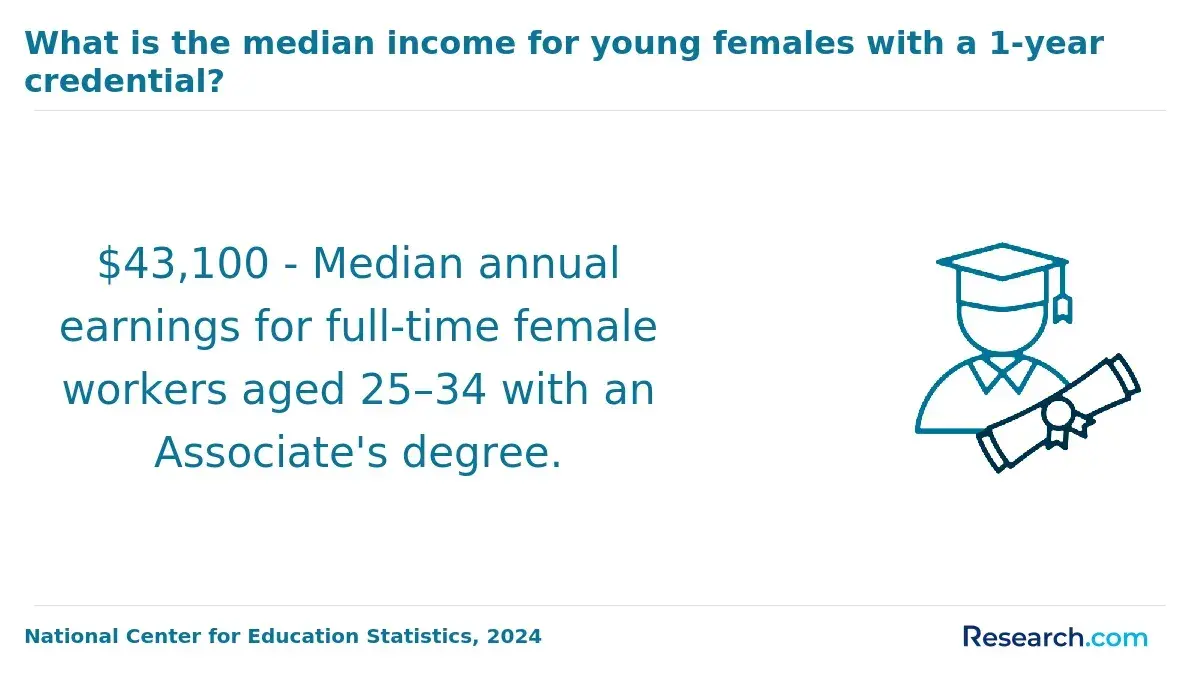
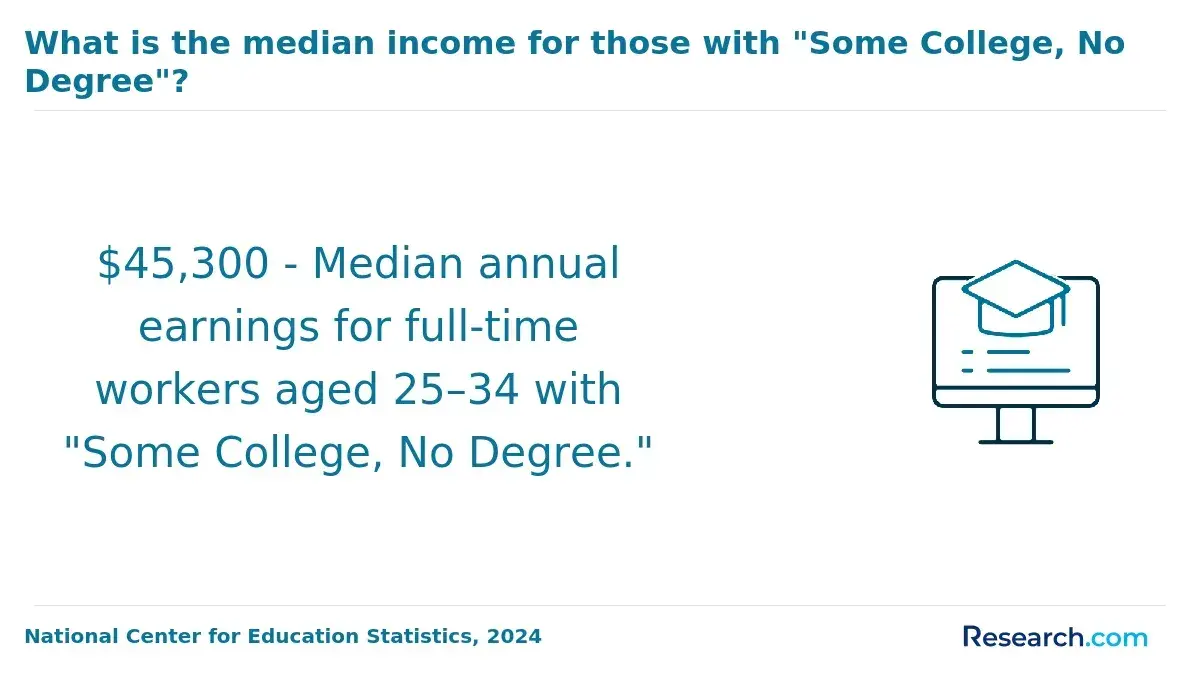
BLS 2024 education data shows that workers with a bachelor's degree had median weekly earnings of $1,543, while workers with an associate degree had median weekly earnings of $1,099. This does not mean every student will see that increase, but it shows why completing a bachelor's degree can matter in workplaces that use degree level to determine eligibility for professional or supervisory roles.
The table below gives a practical salary context for common career directions connected to general studies. These are national occupational medians, so local pay may be higher or lower:
| Career area | Possible entry or advancement role | Relevant national pay context |
| Administration | Administrative coordinator, office supervisor, operations assistant | $65,510 median for first-line supervisors of office and administrative support workers |
| Human resources | HR assistant, recruiting coordinator, HR specialist | $72,910 median for human resources specialists |
| Training | Training coordinator, learning specialist, onboarding specialist | $65,850 median for training and development specialists |
| Project support | Project coordinator, implementation associate, program specialist | $100,750 median for project management specialists |
| Management | Assistant manager, operations manager, department supervisor | $102,950 median for general and operations managers |
ROI is strongest when the degree removes a specific barrier. For example, if your employer requires a bachelor's degree for promotion to manager, completing an affordable online bachelor's program may have a clearer payoff than earning a broad degree without a target role. ROI is weaker when students borrow heavily without verifying whether their desired jobs accept general studies as relevant preparation.
Students should evaluate salary potential by reviewing job postings in their region. Look for repeated requirements such as "bachelor's degree in any field," "business or related field," "degree preferred," specific software skills, supervisory experience, or industry certifications.
How does a general studies degree fit into long-term education and career pathways?
A general studies degree can be a practical midpoint in a longer education plan. For some students, it is the final credential needed for promotion. For others, it is a bridge to graduate study, teacher preparation, public administration, business, counseling, law, or a specialized certificate.
The best pathway depends on age, credits earned, work history, and career goal. Adults returning after a long break may want to compare degree-completion options with resources for college degrees for seniors, especially if they need flexible pacing, transfer-friendly policies, or programs designed for learners balancing retirement, caregiving, or encore careers.
The table below shows how general studies can fit into different long-term goals. It is useful for deciding whether to stop at the degree, add a certificate, or continue to graduate education:
| Long-term goal | How general studies fits | What to add next |
| Promotion with current employer | Completes a degree requirement and documents broad professional skills | Internal leadership training, performance portfolio, supervisor recommendation |
| Career change | Provides a bachelor's foundation while electives introduce the new field | Targeted certificate, internship, volunteer work, or entry-level role in the new industry |
| Graduate school | Can meet bachelor's degree eligibility if prerequisites are satisfied | Prerequisite courses, strong GPA, writing sample, entrance exam if required |
| Public-sector advancement | May satisfy degree requirements for administrative, compliance, or program roles | Government experience, policy coursework, civil service exam preparation if applicable |
| Entrepreneurship | Builds communication, management, and problem-solving skills | Accounting, marketing, analytics, legal basics, and industry-specific training |
Students aiming for graduate school should speak with admissions advisors before choosing electives. Some graduate programs require specific prerequisites, such as statistics, research methods, accounting, biology, or psychology. A flexible undergraduate degree can work well, but only if the student plans backward from the next credential.
What strategies help working professionals leverage a general studies degree for advancement?
Working professionals get the most value from a general studies degree when they use it as part of a career plan before graduation, not after. The degree should help you tell a sharper story: what you know, what problems you solve, and why you are ready for the next level.
The following strategies can help turn the credential into advancement evidence. They are especially important because broad degrees require students to make the connection between coursework and workplace value explicit:
- Choose electives around a promotion target, such as supervision, HR, data reporting, training, operations, or public administration.
- Build a portfolio with class projects, work samples, process improvements, presentations, reports, and measurable achievements.
- Tell your manager early that you are completing the degree and ask what skills or results would strengthen your promotion case.
- Use the capstone project to solve a real workplace problem if your program allows it.
- Add one marketable skill outside the degree, such as spreadsheet analysis, project management software, HR systems, customer relationship management tools, or business writing.
- Update your resume before graduation so the degree, concentration, projects, and accomplishments support the role you want next.
Common mistakes include choosing random electives, waiting until the final semester to use career services, assuming the degree alone will overcome weak work history, ignoring software skills, or borrowing more than the likely career benefit can justify. A better approach is to align every elective and project with a job posting you would realistically pursue.
Professionals should also prepare for skills-based hiring. Some employers are reducing rigid degree requirements for certain roles, but many still use degrees for advancement, leadership tracks, and salary bands. That means the smartest strategy is not "degree or skills"; it is degree plus evidence of skills.
Other Things You Should Know About General Studies
Most institutions do not distinguish between online and on-campus degrees on diplomas. In 2027, completing an online General Studies degree provides the same quality of education and diploma recognition as traditional on-campus programs, supporting career mobility and promotions.
Most bachelor’s programs accept up to 90 transfer credits toward a 120-credit degree, with at least 30 credits earned from the degree-granting school. Transfer work usually needs regional accreditation and a grade of C or better to count.
Sometimes. Some schools allow minors, certificates, or structured concentrations, while others limit add-ons in degree-completion programs. Ask whether adding a minor will increase credits, cost, or time to graduation.
References
- A General Studies Degree Is a Launchpad for Career Changers https://www.tuw.edu/gen-ed/general-studies-degree-benefits/
- Best Online Colleges for Working Adults [2026] https://www.straighterline.com/blog/degree-completion-best-online-colleges-for-working-adults
- General Studies Degree Jobs: 10 Careers + Salaries (2026) | Extern https://www.extern.com/post/general-studies-degree-jobs-career-guide
- General Studies: Brilliant Strategy or Dumb Idea? - College Search & Lists - College Confidential Forums https://talk.collegeconfidential.com/t/general-studies-brilliant-strategy-or-dumb-idea/1709144
- Online Degree vs. Traditional: Choosing the Right Path https://beal.edu/online-degree-vs-traditional/
- What Can You Do With a General Studies Degree? https://www.calcoast.edu/news/what-can-you-do-with-a-general-studies-degree