
2027 Fastest Way to Become a Counselor in Kentucky

Co-Founder and Chief Data Scientist
If you want to become a counselor in Kentucky as quickly as possible, the key decision is not whether to “skip” requirements—you cannot—but how to complete the required education, paperwork, supervision, and exam steps without avoidable delays. Kentucky’s counseling pathway can lead to work in clinical mental health, schools, substance abuse treatment, rehabilitation, community agencies, healthcare, and private practice, but the right route depends on your current education level, target role, budget, and tolerance for an intensive schedule.
This guide explains the fastest practical path to counseling licensure in Kentucky, what you can do with only a bachelor’s degree, how online and full-time programs may shorten your timeline, and where fast-track students often run into problems. It also compares counseling specializations, salary expectations, employer concerns, and common mistakes so you can choose a route that is both efficient and professionally sound.
Quick Answer: Fastest Path to Becoming a Counselor in Kentucky
The fastest route to becoming a licensed professional counselor in Kentucky is to complete a CACREP-accredited master’s program, apply for the Licensed Professional Counselor Associate credential as soon as you are eligible, begin supervised clinical work promptly, complete Kentucky’s required supervised experience, and pass the National Counselor Examination. A bachelor’s degree can help you enter related support roles, but independent counseling practice requires graduate-level preparation and licensure.
- Best route for full licensure: A CACREP-accredited counseling master’s program followed by LPCA supervised practice and LPCC requirements.
- Fastest academic option: A full-time or online master’s program that can be completed in about two years, when available and appropriate.
- Best short-term entry point: Bachelor’s-level roles such as behavioral health technician, case manager, or substance abuse counselor assistant.
- Important salary reference: The average counselor salary in Kentucky is around $65,474, though pay varies by specialty, employer, region, and experience.
- What is the fastest way to become a licensed counselor in Kentucky?
- What counseling careers can you pursue in Kentucky with only a bachelor’s degree?
- Are there accelerated counseling degree programs in Kentucky?
- Are online counseling programs in Kentucky faster than traditional ones?
- What challenges do fast-track counseling students face?
- How do employers in Kentucky view fast-track counselors?
- Are fast-track and online counseling programs in Kentucky more affordable?
- How can I specialize in substance abuse counseling in Kentucky?
- How can I transition to a school counseling role in Kentucky?
- What are the LPC license requirements in Kentucky?
- What are the key differences between counseling and social work educational paths in Kentucky?
- Is there a demand for counselors in Kentucky?
- How much do counselors get paid in Kentucky?
- Is taking the fast route to become a counselor in Kentucky worth it?
What is the fastest way to become a licensed counselor in Kentucky?
The fastest credible path is to plan backward from Kentucky’s licensure rules. You cannot bypass the graduate degree, supervised experience, examination, or background check, but you can avoid delays by choosing the right program, preparing documents early, securing supervision quickly, and treating exam preparation as part of the licensure timeline rather than an afterthought.
| Step | What to do | How to avoid delays |
| 1. Choose the right graduate program | Enroll in a CACREP-accredited master’s program in counseling. | Confirm accreditation before applying, and ask whether the curriculum meets Kentucky licensure expectations. |
| 2. Prepare for LPCA paperwork | Apply for the Licensed Professional Counselor Associate credential after finishing the degree. | Gather transcripts, forms, and background check materials before graduation whenever possible. |
| 3. Use official state instructions | Follow Kentucky Office of Occupations and Professions guidance for forms and documentation. | Check requirements directly instead of relying only on program summaries or informal advice. |
| 4. Start supervised practice efficiently | Complete supervised counseling hours under qualified supervisors who understand Kentucky requirements. | Ask potential employers about supervision before accepting a position. |
| 5. Pass the required exam | Prepare for the National Counselor Examination for the LPCC stage. | Use structured review materials, practice exams, and a test date that fits your supervision plan. |
For most students, the biggest time savings come from administrative discipline: applying early, choosing a licensure-aligned program, confirming supervisor eligibility, and keeping records clean. If you are still comparing counseling pathways, Research.com’s guide on how to become a counselor explains the broader career steps before you specialize in Kentucky requirements.
What counseling careers can you pursue in Kentucky with only a bachelor’s degree?
A bachelor’s degree can help you enter Kentucky’s behavioral health and human services workforce, but it does not qualify you for independent licensed counseling practice. These roles are useful if you want client-facing experience, need income before graduate school, or want to test whether counseling is the right long-term profession.
| Bachelor’s-level role | Typical setting | What you may do | Best fit for |
| Substance abuse counselor assistant or technician | Recovery programs, rehabilitation centers, community agencies | Support group programming, help implement treatment plans, and assist licensed staff. | Students interested in addiction counseling or recovery services. |
| Behavioral health technician | Hospitals, residential programs, crisis or behavioral health facilities | Observe clients, document progress, assist with daily routines, and support therapeutic activities. | People who want direct mental health experience before graduate study. |
| Case manager or care coordinator | Social service agencies, nonprofits, healthcare organizations | Connect clients to services, help coordinate care, and support goal planning. | Students interested in advocacy, systems navigation, and community-based work. |
| Academic advisor or youth support staff | Schools, youth programs, education nonprofits | Help students with academic planning, personal support, and referrals to appropriate resources. | Future school counselors or youth-focused professionals. |
These jobs can strengthen your graduate school application and help you build interviewing, documentation, crisis response, and referral skills. However, they usually come with limits: you may work under supervision, you may not diagnose or provide independent therapy, and advancement may require a master’s degree or additional credentials. If your long-term target is clinical mental health counseling, review what the mental health counselor career path typically requires before deciding whether to work first or start graduate school immediately.
The graph below shows how the number of CACREP graduates has changed over time.
Are there accelerated counseling degree programs in Kentucky?
Kentucky counseling programs are not always advertised as “accelerated,” but some can still shorten your route if you study full time, take courses in a structured sequence, and avoid breaks between terms. The fastest option is usually not the program with the boldest marketing language; it is the program that meets licensure requirements while letting you complete coursework, practicum, and internship efficiently.
| Program option mentioned | Format or pace | Key facts to verify |
| Spalding University | CACREP-accredited Master of Arts in Clinical Mental Health Counseling that can be completed in as little as two years with full-time study. | Confirm current course sequencing, field placement expectations, and full-time availability. |
| University of Kentucky | Master of Arts in Counseling offered fully online, with about a two-year full-time timeline. | Tuition is about $753 per credit hour; with 60 credits required, the total is around $45,180. |
| Eastern Kentucky University and Asbury Theological Seminary | CACREP-accredited counseling programs with more traditional timelines. | Ask whether summer courses, transfer policies, or full-time scheduling can shorten completion. |
When comparing programs, do not focus only on the published completion time. Ask whether classes are offered often enough to stay on schedule, how field placements are arranged, whether online students receive placement support, and whether the program aligns with Kentucky licensure documentation. Research.com’s state-by-state resource on counseling certification and licensure requirements can help you compare Kentucky rules with other states if you may move later.
Are online counseling programs in Kentucky faster than traditional ones?
Online counseling programs can be faster for some Kentucky students, but not because the clinical training is easier or the licensure standards are lower. The advantage usually comes from flexibility: fewer commute hours, more control over study time, and sometimes more start dates or course options.
| Online program advantage | How it may shorten the timeline | What to check before enrolling |
| Flexible course loads | You may be able to take a heavier schedule when your work and family obligations allow. | Ask whether full-time enrollment is guaranteed each term. |
| No campus commute | Time previously spent driving can be redirected to readings, papers, supervision planning, or exam review. | Confirm whether any campus visits, residencies, or synchronous sessions are required. |
| Asynchronous coursework | Recorded lectures and online assignments can fit around employment or caregiving. | Make sure the format matches your learning style and self-discipline level. |
| Multiple start dates | Programs with several entry points may reduce waiting time before the first semester. | Ask whether later start dates affect practicum or internship timing. |
Online learning is not automatically the best option. Counseling is a relationship-based profession, so you still need strong faculty access, meaningful feedback, ethical training, and supervised field experience. A former Kentucky teacher who moved into counseling through an online program described the biggest benefit as reclaimed time: no commuting, fewer schedule conflicts, and the ability to study around work and family responsibilities. The trade-off was the need for stronger self-management because there were fewer in-person reminders and informal check-ins.
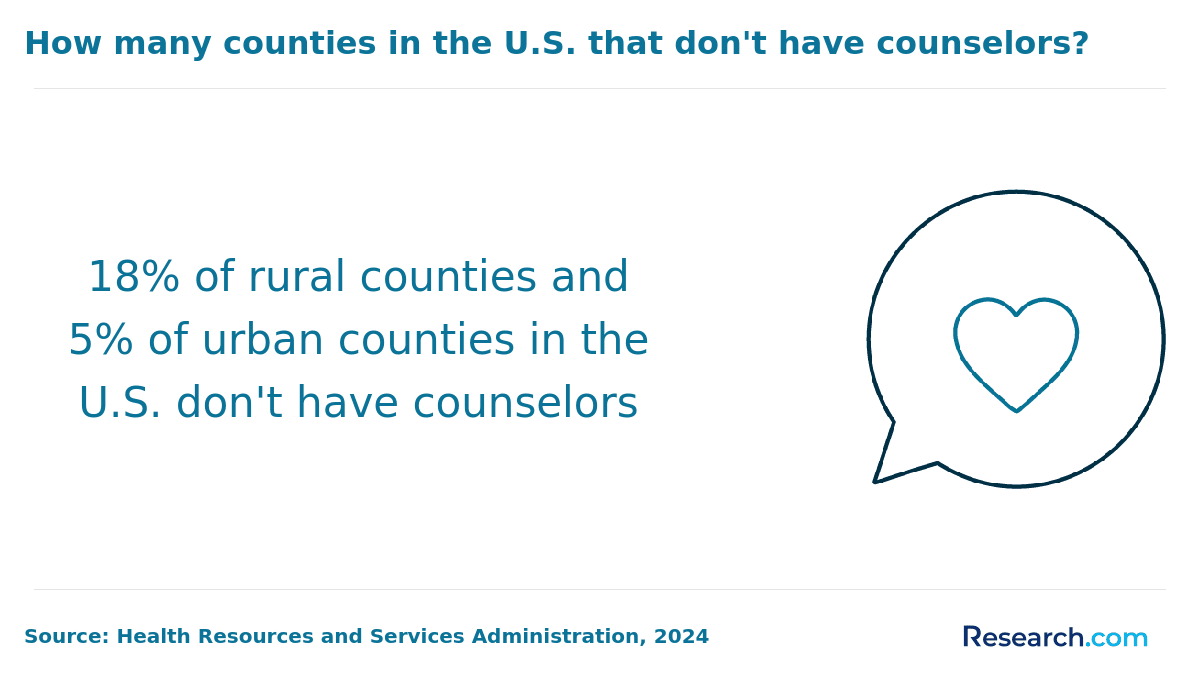
To better understand where counselors remain urgently needed, the following image highlights U.S. counties with no licensed counselors.
What challenges do fast-track counseling students face?
Fast-tracking can help you enter the workforce sooner, but it also compresses academic, clinical, emotional, and administrative demands into a shorter period. Students who underestimate the intensity may save time on paper while creating stress, weaker clinical preparation, or delayed licensure paperwork later.
- Heavy academic load: Completing a graduate counseling curriculum quickly often means more reading, writing, skills practice, and assessment work in each term.
- Limited recovery time: Intensive schedules can reduce breaks between courses, practicum responsibilities, work, and family obligations.
- Field placement pressure: Practicum and internship hours must be completed in real settings, so your progress depends partly on site availability and supervisor capacity.
- Fewer networking opportunities: Moving quickly can make it harder to build deep relationships with faculty, peers, supervisors, and local employers.
- Supervision requirements: Kentucky requires 4,000 hours of supervised counseling experience after the degree, including 1,600 direct client hours, so the post-degree stage still takes planning even if the academic program is completed quickly.
- Exam preparation squeeze: Passing the national exam and completing background check requirements can become stressful if you leave them until the end.
| Common fast-track mistake | Why it causes problems | Better approach |
| Choosing speed over accreditation | A fast program is not helpful if it does not support licensure eligibility. | Verify CACREP accreditation and Kentucky alignment before applying. |
| Assuming online means easier | Online programs still require clinical skill development and fieldwork. | Evaluate faculty access, supervision support, and placement processes. |
| Ignoring field placement logistics | Delayed practicum or internship placement can extend graduation. | Ask about placement timelines before enrolling. |
| Waiting to find a supervisor | Post-degree hours cannot move efficiently without qualified supervision. | Begin researching supervised employment options before graduation. |
| Studying for the exam too late | Exam delays can slow full licensure progress. | Create an exam plan while completing supervised work. |
How do employers in Kentucky view fast-track counselors?
Kentucky employers generally care less about the phrase “fast-track” and more about whether a candidate is clinically prepared, properly credentialed, ethical, and ready to work with the populations the organization serves. Because all candidates must meet the same licensure requirements, an accelerated or online background is not automatically a disadvantage. The concern is whether the person gained enough supervised experience, feedback, and practical judgment along the way.
Some hiring managers may question whether a compressed program allowed enough time for skills practice, crisis exposure, documentation habits, and professional identity development. This can matter in roles involving complex trauma, addiction, school systems, corrections, rural outreach, or clients with multiple service needs.
At the same time, fast-track students can bring strengths employers value. Many are career changers from teaching, healthcare, social services, ministry, military service, or community work. Their prior experience may translate into stronger communication, resilience, cultural awareness, and time management. To be competitive, emphasize not only how quickly you finished but how well you were trained.
| What employers may ask | How to answer well |
| Why did you choose an accelerated or online route? | Explain your timeline, but focus on program quality, accreditation, supervised training, and fit with your career goals. |
| How much direct client experience do you have? | Describe practicum, internship, supervised work, populations served, and the types of interventions you practiced. |
| How did you handle feedback and supervision? | Give examples of how supervision changed your clinical judgment, documentation, ethics, or treatment planning. |
| Are you prepared for rural, school, addiction, or crisis-related needs? | Connect coursework and field experience to the employer’s specific setting. |
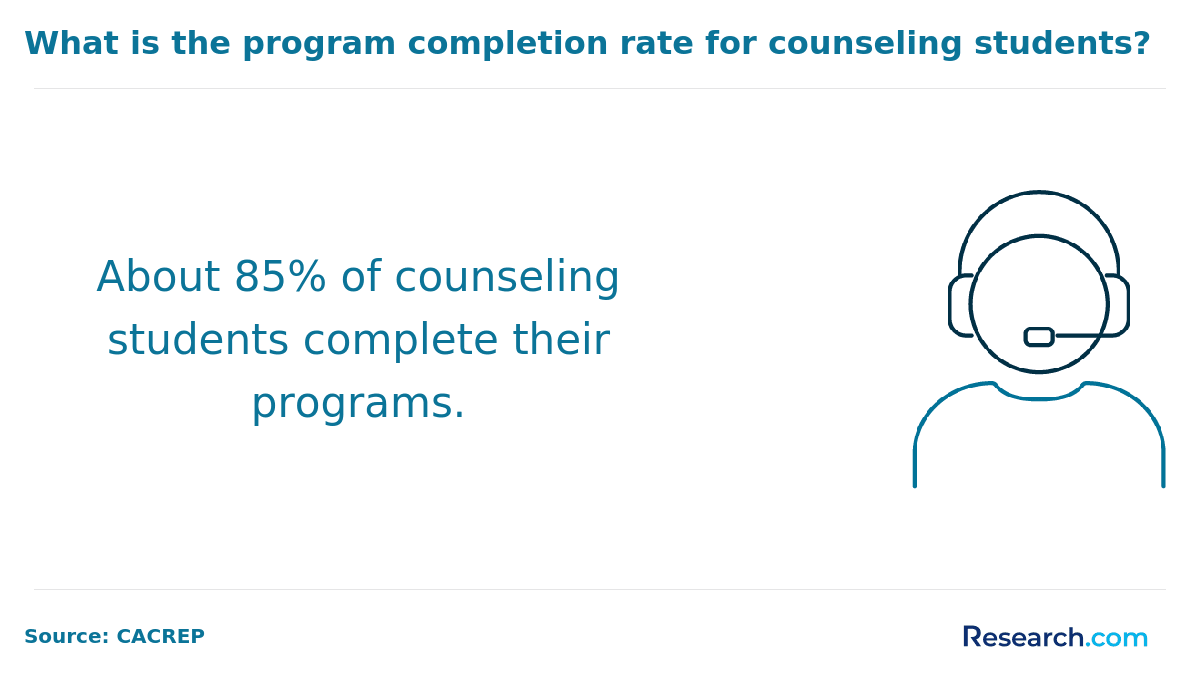
To better understand student outcomes in these programs, the following image shows counseling student program completion rates.
Are fast-track and online counseling programs in Kentucky more affordable?
Fast-track and online counseling programs can reduce total costs, but they are not automatically cheaper for every student. The real cost depends on tuition per credit, total credits, fees, books, technology requirements, field placement costs, lost work time, travel, and how long you remain enrolled.
| Cost factor | How it affects affordability | Question to ask |
| Tuition per credit | Lower per-credit tuition can reduce the total degree cost. The University of the Cumberlands offers online master’s courses at $449 per credit, which is lower than schools such as Eastern Kentucky University or Lindsey Wilson College. | What is the current tuition per credit, and are there separate online fees? |
| Time to completion | Finishing sooner can mean fewer semesters of fees and a quicker move into paid supervised work. | Can students realistically complete the program on the advertised timeline? |
| Ability to keep working | Flexible online courses may allow students to maintain income while studying. | Are classes asynchronous, synchronous, evening-based, or mixed? |
| Commuting and housing | Online study can reduce travel, parking, relocation, dorm, and meal plan costs. | Are any campus visits or residency sessions required? |
| Financial aid and residency pricing | Online students may be eligible for aid, and Kentucky residents may have in-state options at some schools. | What aid, scholarships, employer support, or in-state tuition policies apply? |
Do not compare programs by tuition alone. A cheaper program that delays graduation, provides weak placement support, or does not align with licensure can cost more in the long run. The best value is usually a program that combines accreditation, clear licensure preparation, manageable cost, strong supervision support, and a schedule you can complete without burning out.
How can I specialize in substance abuse counseling in Kentucky?
Substance abuse counseling is one of the most practical specialization options for students who want to work in recovery programs, community mental health, rehabilitation settings, correctional environments, or integrated behavioral health. In Kentucky, this path typically requires counseling education plus focused training and supervised experience related to addiction, relapse prevention, group work, co-occurring concerns, ethics, and referral coordination.
If this is your target field, choose graduate electives, practicum sites, and supervisors that expose you to substance use treatment rather than waiting until after graduation to specialize. You can also review Research.com’s dedicated guide on how to become a substance abuse counselor in Kentucky for a more focused route.
How can I transition to a school counseling role in Kentucky?
School counseling is a different professional environment from clinical mental health counseling. Instead of focusing only on individual therapy, school counselors often work across academic planning, student support, family communication, crisis response, referrals, career readiness, and collaboration with teachers and administrators.
If you want to move into a Kentucky school counseling role, look for a program and field placement that specifically prepare you for education settings, child and adolescent development, school-based ethics, student records, classroom systems, and collaboration with families. For a role-specific roadmap, see Research.com’s guide on how to become a school counselor in Kentucky.
What are the LPC license requirements in Kentucky?
Kentucky’s professional counseling route generally requires a CACREP-accredited master’s degree, supervised clinical experience, a required examination, a background check, and complete documentation submitted through the proper state process. The associate credential allows graduates to build supervised experience before qualifying for full independent practice.
The most important rule for students is simple: confirm requirements before you enroll, not after you graduate. Licensure boards evaluate whether your degree, coursework, supervision, and documentation satisfy state rules. For a detailed breakdown of the process, review Research.com’s guide to LPC license requirements in Kentucky.
What are the key differences between counseling and social work educational paths in Kentucky?
Counseling and social work both support mental health and human services, but they are not the same academic or licensure path. Counseling programs usually emphasize counseling theory, diagnosis, assessment, therapeutic skills, ethics, and supervised clinical practice. Social work education more often combines direct service with systems-level practice, advocacy, case management, policy, and community resources.
| Path | Typical educational focus | Common work emphasis | Best fit for |
| Counseling | Counseling theories, clinical skills, assessment, ethics, supervised counseling practice | Individual, group, family, school, addiction, or mental health counseling roles | Students who want a therapy-centered professional identity. |
| Social work | Human behavior, policy, advocacy, social systems, case management, direct practice | Client support, resource coordination, community practice, clinical or nonclinical service roles | Students who want a mix of client work, advocacy, and systems navigation. |
If you are deciding between the two, compare licensure requirements, field placements, salary expectations, daily responsibilities, and whether you prefer therapy-focused work or broader systems-based support. Research.com’s guide to Kentucky social worker educational requirements can help you compare that route with counseling.
Is there a demand for counselors in Kentucky?
Yes. Kentucky shows strong need for counseling professionals, particularly in substance abuse, behavioral disorders, and mental health services. Between 2018 and 2028, these jobs are projected to grow by nearly 22%, moving from around 4,350 to more than 5,300 positions.
Demand also extends beyond clinical mental health counseling. School and career counselors are expected to see about 3% job growth by 2025, while marriage and family therapists are projected to grow by roughly 4.5%. Substance abuse and behavioral disorder counselors are especially needed, with more than 1,400 job openings expected each year across the state.
The need is shaped by addiction and mental health challenges, rural and underserved communities, and the ongoing demand for accessible behavioral health services. Still, job availability varies by region, employer, license level, and specialty. If you are weighing the graduate school investment, Research.com’s guide on whether a master’s in counseling is worth it can help you evaluate career outcomes and trade-offs.
The chart below shows the estimated counselor shortage by 2037.
How much do counselors get paid in Kentucky?
The average counselor salary in Kentucky is about $65,474, but actual compensation depends on license level, specialty, employer type, location, years of experience, and whether the role is clinical, school-based, administrative, or community-based.
| Counseling area | Salary information stated | What can affect pay |
| Mental health counseling | Mental health counselors usually earn between $57,000 and $65,000 annually, with many near $60,000. Entry-level roles may be closer to $50,000, while experienced counselors may reach around $70,000. | Licensure level, clinical setting, caseload, specialization, and years of experience. |
| Substance abuse counseling | Reported pay ranges from about $33,970 for entry-level positions to up to $89,690 for experienced or leadership roles. | Urban versus rural location, treatment setting, credentials, and supervisory responsibilities. |
| School counseling | School counselors often fall between $55,000 and $65,000 depending on district and experience, though exact Kentucky figures are not always available. | District salary schedules, education level, years of service, and school system policies. |
Salary should be considered alongside cost of attendance, debt, supervised-hour requirements, employer benefits, and long-term advancement. If you are comparing graduate degree options, Research.com’s explanation of the MA versus MS in counseling can help you understand how degree structures may differ.
Is taking the fast route to become a counselor in Kentucky worth it?
A faster route can be worth it if the program is accredited, the schedule is realistic, supervision is lined up, and you can maintain strong clinical learning while moving quickly. It is not worth it if speed leads you to choose a weak program, ignore licensure details, overload yourself, or enter practice without enough preparation.
| A fast route may be worth it if... | A slower route may be better if... |
| You can study full time without sacrificing performance or health. | You need to keep a demanding job or significant caregiving responsibilities. |
| You already have experience in education, healthcare, social services, or behavioral health. | You are new to human services and need more time to build foundational skills. |
| You have identified practicum, internship, and supervised employment options early. | You are unsure which counseling specialization fits your goals. |
| You are comfortable with online or intensive learning formats. | You learn best through frequent in-person structure and informal faculty access. |
| You have a financial plan that accounts for tuition, fees, lost income, and supervision-stage realities. | You would need to borrow heavily without a clear career or licensure plan. |
The advantage of moving efficiently is that you may begin paid supervised work sooner after earning the master’s degree and LPCA credential. That stage helps you build clinical judgment, understand Kentucky communities, identify a specialty, and move toward the LPCC credential after completing the required supervised experience. The risk is that rushing can weaken the very skills employers and clients need most: ethical judgment, cultural humility, documentation quality, and the ability to manage complex cases.
What Counselors in Kentucky Say About Their Careers
- Taking a quicker route into counseling helped me start working sooner, and the stability in Kentucky has made the decision feel worthwhile. The salary range is meaningful, but the bigger value is knowing the work is needed in my community. – Aaron
- Building a counseling career here has required flexibility. Rural needs, urban caseloads, and different service settings all come with challenges, but the professional support available in Kentucky has helped me keep growing. – Paul
- Accelerating my training gave me momentum, but continuing education has been just as important. Workshops, supervision, and specialized credentials keep my practice current and help me serve clients more effectively. – Heidi
Key Insights
- The fastest legitimate path still requires full preparation. Kentucky counseling licensure involves graduate education, supervised experience, examination, background checks, and documentation. Speed comes from planning, not skipping steps.
- A CACREP-accredited master’s program is the safest starting point for LPCA and LPCC planning. Before enrolling, confirm accreditation, course sequencing, practicum support, and Kentucky licensure alignment.
- Bachelor’s-level roles can be useful stepping stones. Jobs such as behavioral health technician, case manager, and substance abuse counselor assistant can build experience, but they do not replace graduate licensure requirements.
- Online programs may save time, but only for disciplined students. Flexibility can reduce commute time and scheduling delays, but clinical training, fieldwork, and supervision still require structure and accountability.
- Affordability depends on total cost, not just tuition. Compare credit cost, fees, program length, work flexibility, placement support, and financial aid before choosing a program.
- Employers care about readiness. A fast-track background can be respected when paired with strong supervised experience, ethical practice, documentation skills, and clear specialization.
- Kentucky demand is real, especially in mental health and substance abuse services. Growth projections and yearly openings suggest opportunity, but local hiring depends on specialty, license level, and location.
Related Articles for Nearby States
- 2027 Fastest Way to Become a Counselor in Indiana
- 2027 Fastest Way To Become a Counselor in Ohio
- 2027 Fastest Way To Become a Counselor in Tennessee
- 2027 Fastest Way To Become a Counselor in West Virginia
- 2027 Fastest Way To Become a Counselor in Virginia
- 2027 Fastest Way To Become a Counselor in Illinois
- 2027 Fastest Way To Become a Counselor in Missouri
- 2027 Fastest Way To Become a Counselor in North Carolina
- 2027 Fastest Way to Become a Counselor in Georgia
- 2027 Fastest Way To Become a Counselor in Mississippi
References:
- All Psychology Schools. (n.d.). Kentucky substance abuse counselor earnings overview. https://www.allpsychologyschools.com/substance-abuse-counseling/salary/kentucky
- Avvo. (n.d.). Legal response about ministers and life coaching registration. https://www.avvo.com/legal-answers/can-a-minister-be-registered-as-a-life-coach--2856653.html
- CACREP. (2024). CACREP 2023 vital statistics report. https://www.cacrep.org/wp-content/uploads/2024/06/CACREP-2023-Vital-Statistics-Report.pdf
- CareerExplorer. (n.d.). Kentucky school counselor salary information. https://www.careerexplorer.com/careers/school-counselor/salary/kentucky
- CounselingSchools.com. (n.d.). Kentucky counseling licensure and accredited degree guide. https://www.counselingschools.com/licenses/kentucky
- GoodTherapy. (n.d.). Legal differences between psychotherapy and coaching. https://www.goodtherapy.org/blog/Psychotherapy-vs-Coaching-Legal-Distinction
- Life Coach Training. (n.d.). Kentucky life coach certification overview. https://lifecoachtraining.co/life-coach-training-kentucky
- University of Kentucky – College of Education. (n.d.). Master of Arts in Counseling program information. https://education.uky.edu/edsce/counselor-education-masters
- University of Kentucky – Online. (n.d.). Online MAC in Counselor Education. https://online.uky.edu/masters/counselor-education/mac
- US BLS. (2024). Mental health-related employment growth projections. Bureau of Labor Statistics. https://www.bls.gov/opub/ted/2024/strong-growth-projected-in-mental-health-related-employment.htm
- Western Kentucky University. (n.d.). CACREP-accredited Clinical Mental Health Counseling program. https://www.wku.edu/counseling/cmhc.php
- World Insurance Associates LLC. (n.d.). Insurance considerations for life coaches when state licensing is not required. https://www.worldinsurance.com/blog/why-do-i-need-life-coach-insurance-when-state-licensing-isnt-required
- ZipRecruiter. (2025). Licensed mental health counselor salary in Kentucky. https://www.ziprecruiter.com/Salaries/Licensed-Mental-Health-Counselor-Salary--in-Kentucky
Other Things You Need to Know About the Fastest Way to Become a Counselor in Kentucky
Kentucky requires post-degree supervised experience before full licensure. For licensed professional counselor candidates, the Kentucky Board of Licensed Professional Counselors typically requires 4,000 hours of supervised practice, including 100 hours of face-to-face supervision, before independent licensure is granted.
In 2027, aspiring counselors in Kentucky must pass the National Counselor Examination (NCE) to qualify for state licensure. This exam tests knowledge and skills crucial for counseling practice, and is administered by the National Board for Certified Counselors (NBCC).


