2027 Military-Friendly Online Applied Psychology Master's Degree Programs: Benefits, Accreditation & Career Outcomes

Co-Founder and Chief Data Scientist
Choosing an online applied psychology master’s degree as a service member, veteran, spouse, or military-connected student is not just a question of academic fit. The program must work around deployments, Permanent Changes of Station, benefit rules, transfer-credit limits, and changing family or duty responsibilities. If it does not, even a strong curriculum can become difficult to finish.
This guide explains how to evaluate military-friendly online applied psychology master’s programs with a practical lens: accreditation, GI Bill and Tuition Assistance coverage, admissions, scheduling flexibility, military credit, student support, and career-relevant curriculum. It is designed to help you separate genuine military support from marketing language and choose a program that protects your time, benefits, and long-term goals.
Key Things to Know About Military-Friendly Online Applied Psychology Master's Degree Programs
- Military-friendly online applied psychology master's programs offer flexible scheduling and tailored support services accommodating deployments and relocations common to military life.
- Accreditation by regional bodies and the American Psychological Association ensures program quality and eligibility for federal aid and licensure.
- Federal benefits like the GI Bill and military tuition assistance often cover substantial tuition costs, easing financial burdens for service members and veterans pursuing advanced degrees.
What Makes an Online Applied Psychology Master's Degree Program Truly Military-Friendly?
A military-friendly online applied psychology master’s program is one that is built to accommodate service obligations, not simply one that mentions veterans on its website. The strongest programs combine academic quality with policies that protect students when duty schedules change.
Look for features that affect completion, cost, and administrative stress:
- Asynchronous coursework: Courses that do not require weekly live attendance are easier to manage during deployments, shift work, training cycles, and time-zone changes.
- Documented military leave and deferral policies: Students should be able to pause enrollment for military obligations without unnecessary academic or financial penalties.
- DoD MOU compliance: Schools that participate in Department of Defense Tuition Assistance must follow standards related to ethical recruiting, transparent costs, and refund policies. This helps protect students from high-pressure enrollment practices and excessive financial penalties.
- No campus residency requirement: Fully online delivery is especially important for students who may face frequent Permanent Changes of Station (PCS) or overseas assignments.
- Rolling or frequent admissions: Multiple start dates can help students begin when their duty schedule allows instead of waiting for a single annual intake.
- Clear per-credit tuition: Per-credit pricing helps students estimate costs more accurately when using GI Bill benefits, Military Tuition Assistance, scholarships, or loans.
- Dedicated military advising: A knowledgeable point of contact can help with VA certification, Tuition Assistance approvals, deployment interruptions, and benefit coordination.
Students should also verify whether the degree supports their intended outcome. Applied psychology programs can prepare graduates for roles in research, organizational development, human services, behavioral support, or related fields, but they do not automatically lead to clinical licensure. If your goal is counseling, therapy, or independent clinical practice, confirm the exact licensure pathway before enrolling.
For students considering future doctoral study, it may also be useful to compare master’s options with longer-term academic pathways such as the easiest PhD to get, while still checking accreditation, admissions standards, and professional requirements carefully.
What Type of Accreditation Should an Online Applied Psychology Master's Program Hold?
An online applied psychology master’s program should be offered by an institution that holds recognized institutional accreditation. This is the baseline requirement for credibility, federal financial aid eligibility, and use of many military education benefits. Institutional accreditation applies to the entire college or university and is granted by agencies recognized by the U.S. Department of Education (ED) or the Council for Higher Education Accreditation (CHEA).
Military-affiliated students should treat accreditation as a non-negotiable screening factor. Without recognized accreditation, students may encounter problems with benefit eligibility, credit transfer, employer recognition, doctoral admissions, and some professional pathways.
Institutional vs. programmatic accreditation
Institutional accreditation evaluates the university as a whole. Programmatic or specialized accreditation evaluates a specific department, school, or degree program. In psychology, specialized accreditation can matter greatly for certain clinical or professional pathways. However, applied psychology master’s degrees vary in purpose, and no single exclusive accrediting body currently governs all applied psychology graduate programs.
Because of that variation, students should not assume that “psychology” in the degree title means the program meets licensure requirements. Instead, ask the program directly whether it is designed for licensure, non-licensure applied practice, organizational psychology, research support, human factors, or another career track.
| Accreditation question | Why it matters for military students |
| Is the institution accredited by an ED- or CHEA-recognized agency? | Supports eligibility for federal aid, military education benefits, credit transfer, and employer recognition. |
| Does the program have specialized accreditation or professional alignment? | May affect licensure preparation, doctoral admissions, or recognition in specific psychology-related fields. |
| Does the program disclose licensure outcomes clearly? | Helps students avoid enrolling in a non-licensure program if their goal is counseling or clinical practice. |
| Are credits transferable to other graduate programs? | Important for students who may relocate, change goals, or later pursue doctoral education. |
Before committing, verify accreditation through the ED’s Database of Accredited Postsecondary Institutions and Programs (DAPIP) at ope.ed.gov and the CHEA database at chea.org. Do not rely only on a school’s marketing page. If the program claims to support licensure, request written confirmation showing which state requirements it is designed to meet.
Students comparing flexible degree options may also review an easy university, but ease should never replace proper accreditation, transparent outcomes, and a curriculum aligned with the student’s career goal.
How Does the Post-9/11 GI Bill Cover Tuition for an Online Applied Psychology Master's Program?
The Post-9/11 GI Bill can help pay for an online applied psychology master’s program when the student and school meet eligibility rules. Veterans and active-duty members who served at least 90 days after September 10, 2001, may qualify, with benefit levels tied to length of service and up to 100% coverage for 36 months or more. Under the Forever GI Bill, those whose service ended on or after January 1, 2013, have benefits that never expire.
For graduate students, the benefit generally supports three major cost areas:
- Tuition and fees: Payments are made directly to the school, subject to the applicable limits for public, private, or out-of-state enrollment.
- Monthly housing allowance: For online learners, the amount depends on VA rules and is especially important for students planning a household budget while enrolled.
- Books and supplies: A yearly stipend of up to $1,000 can help cover course materials.
The Yellow Ribbon Program can help when tuition and fees exceed standard GI Bill limits, which may occur at some graduate programs. Participation varies by institution and program, so students should check the VA’s GI Bill Comparison Tool and confirm directly with the school’s VA Certifying Official.
According to recent VA data, over one million veterans benefit from the Post-9/11 GI Bill every year, with a growing share enrolling in online graduate programs due to convenience and military-tailored options.
Questions to ask before using GI Bill benefits
- Is the university approved for VA education benefits?
- How will online enrollment affect housing allowance calculations?
- Does the program participate in the Yellow Ribbon Program?
- How many months of entitlement will the master’s program likely use?
- What happens to benefits if deployment, illness, or duty obligations require withdrawal?
A military professional who pursued an online applied psychology master’s degree shared that the benefit paperwork felt overwhelming at first, but once the certification process was in place, the GI Bill reduced much of the financial pressure. He noted that the monthly housing payments helped with budgeting and that the Yellow Ribbon Program was useful when tuition costs increased. His main advice was to start the process early and stay in regular contact with the school’s certifying official.
Can Active-Duty Service Members Use Military Tuition Assistance for a Applied Psychology Master's Degree?
Yes. Active-duty service members can often use Military Tuition Assistance (TA) for an online applied psychology master’s degree, provided the school, program, course timing, and student eligibility meet branch requirements. TA may cover up to 100% for courses costing $250 or less per semester credit hour, or $166 per quarter hour.
Each branch sets its own annual limits, approval process, and degree-level restrictions. For example, the Army’s limit is 39 semester hours or completion of a master’s degree, whichever happens first. Because policies vary by branch and are updated yearly, students should confirm current rules with their Education Center before applying or registering.
How to use TA without delaying enrollment
- Confirm that the school participates in the required military education systems and meets DoD MOU standards.
- Ask the program for a degree plan showing required courses, credit hours, and expected completion sequence.
- Submit the TA request through the correct branch portal before the course start date.
- Check whether the tuition exceeds the TA cap and whether any balance will remain.
- Ask how withdrawals, deployments, and incomplete grades affect TA repayment obligations.
When tuition is higher than TA limits, the Tuition Assistance Top-Up (TATU) program may help cover the difference for students who are also eligible for MGIB-AD or the Post-9/11 GI Bill. Because Top-Up uses VA entitlement, it should be considered carefully in relation to long-term education plans.
Enrollment in graduate online programs has grown steadily by over 7% annually, reflecting increasing access for military students seeking advanced degrees remotely. Students comparing flexible graduate paths may also review EMBA programs if their goals are more business- or leadership-focused than psychology-focused.
How Can Military Experience and Training Count as Credit Toward a Applied Psychology Master's Degree?
Military experience may reduce the number of credits a student needs to complete, but transfer credit at the graduate level is never automatic. The key is whether the program determines that prior military training, coursework, or occupational learning matches graduate-level applied psychology requirements.
The American Council on Education (ACE) Military Guide is the main tool many colleges use to evaluate military learning. It is updated daily and provides credit recommendations for military courses and occupations across branches. For members of the Army, Marine Corps, Navy, and Coast Guard, the Joint Services Transcript (JST) is the official record used to document ACE-reviewed training and experience.
Students should understand the difference between a credit recommendation and accepted credit. ACE may recommend credit, but each graduate school decides whether to accept it, how much to accept, and where it applies in the degree plan. Some programs may count approved credit only as electives, while others may not accept prior learning toward graduate psychology coursework.
How to improve your chances of receiving credit
- Request your JST or other official military transcript before applying.
- Ask whether the program accepts graduate-level transfer or prior learning credit.
- Request a written transfer-credit evaluation before enrolling, if available.
- Clarify whether accepted credit reduces tuition, shortens completion time, or only satisfies elective requirements.
- Keep copies of training descriptions, certificates, leadership evaluations, and relevant duty documentation.
One professional who completed an applied psychology master’s online said the process was confusing at first because she did not know which parts of her service record might apply. After working with admissions and submitting detailed documentation, she received credit that reduced both time and tuition. Her experience shows why military students should start credit evaluation early instead of waiting until after they have already registered for courses.
What Are the Typical Admission Requirements for a Military-Friendly Online Applied Psychology Master's Program?
Most military-friendly online applied psychology master’s programs require the same academic foundation as other graduate programs: a bachelor’s degree from an accredited institution and official transcripts. What makes the admissions process more military-friendly is how the school evaluates professional experience, service records, testing requirements, and schedule constraints.
- Bachelor’s degree: Applicants typically need an undergraduate degree from an accredited college or university. Some programs may prefer prior coursework in psychology, statistics, research methods, or social science.
- Official transcripts: Schools use transcripts to verify degree completion, GPA, prerequisites, and transfer eligibility.
- Minimum GPA: A minimum GPA often hovers around 3.0, though some programs allow provisional admission or waivers based on military, leadership, or professional experience.
- GRE or GMAT policy: Many programs waive standardized tests like the GRE or GMAT, especially for applicants with relevant professional or military experience.
- Personal statement: Applicants may be asked to explain their career goals, interest in applied psychology, and readiness for graduate study.
- Letters of recommendation: Military supervisors, commanders, civilian managers, or faculty members may be appropriate depending on the program’s requirements.
- Military documentation: Some schools consider the JST, service records, evaluations, or training documentation as part of a holistic review.
Military-affiliated applicants should contact admissions before applying to ask about application-fee waivers, transcript substitutions, provisional admission, deployment-related timeline flexibility, and whether military leadership experience can strengthen the file. Military-affiliated student enrollment in online programs has risen by over 15%, reflecting growing support and access.
How Is the Curriculum Structured in a Military-Friendly Online Applied Psychology Master's Program?
Online applied psychology master’s programs commonly require 30 to 36 credit hours. A military-friendly format usually combines a structured curriculum with enough scheduling flexibility for students who may be working full time, serving on active duty, or managing family responsibilities.
The curriculum typically includes core courses, electives, and a final applied requirement. Core courses may cover psychological theory, research methods, assessment, ethics, behavior, organizational systems, or data-informed decision-making. Electives allow students to focus on career interests such as trauma-informed practice, organizational psychology, leadership, human factors, or community and human services settings.
Common curriculum components
| Component | Purpose |
| Core coursework | Builds the theoretical, ethical, and research foundation of applied psychology. |
| Electives or concentration courses | Allows students to align the degree with career goals in areas such as organizations, human services, trauma, or human factors. |
| Capstone, thesis, or practicum | Gives students a way to apply research and theory to a real-world problem, professional setting, or academic project. |
| Asynchronous modules | Helps military students keep progressing despite duty schedules and time-zone changes. |
Many programs use accelerated eight-week modules delivered asynchronously. Optional live sessions may be offered for discussion, faculty interaction, or project guidance, but students should confirm whether attendance is required. Required synchronous sessions can be difficult for deployed students or those working irregular schedules.
Prospective students should review sample syllabi, course descriptions, assignment types, and capstone expectations. It is also important to ask whether the program is licensure-oriented. Applied psychology programs often prepare students for non-clinical or applied professional roles, while licensure as a counselor, therapist, or psychologist may require a different degree structure, supervised hours, exams, or doctoral education depending on the state and profession.
Verifying whether curricula are reviewed or endorsed by professional organizations like the American Psychological Association can provide additional context about program quality and career alignment. Enrollment in online graduate programs has increased by over 20% in recent years, reflecting growing acceptance of flexible digital learning among military students.
How Flexible Are the Enrollment and Scheduling Options for Military Students in a Applied Psychology Master's Program?
Scheduling flexibility is one of the most important factors for military students in an online applied psychology master’s program. A program may be online, but that does not automatically mean it is flexible enough for deployments, duty changes, field training, overnight work, or relocation.
The most flexible programs offer asynchronous coursework, multiple start dates, part-time enrollment, and clear policies for stopping and restarting. Self-paced elements can help, but students should still confirm assignment deadlines, exam windows, group project expectations, and whether any live attendance is required.
Policies that matter most
- Deployment deferral: Allows students to pause enrollment during qualifying military obligations and return without starting over.
- Military withdrawal: Provides a formal process for leaving a course or term because of duty requirements, ideally with reduced transcript and financial harm.
- Re-enrollment rights: Clarifies whether students can return without submitting a new application.
- Per-credit tuition: Helps students control cost when taking one or two courses at a time.
- Credit validity: Explains how long completed credits remain usable if the student takes a break for six months or longer.
- Incomplete grade options: Can help students finish a course after unexpected service-related disruption.
Military students should review these policies in the academic catalog or student handbook, not only in admissions emails. Ask the advisor to point to the official policy language. Research indicates over 70% of military-connected students prioritize flexible scheduling and financial accommodations when choosing an online degree, underscoring the importance of these protections.
Cost planning also matters. Students should compare psychology degree cost options, benefit limits, refund rules, and the effect of part-time enrollment before choosing a program.
What Financial Aid Options Beyond GI Bill Are Available for a Applied Psychology Master's Degree?
Military-affiliated students may be able to combine several forms of aid for an online applied psychology master’s degree, but the rules depend on student status, school policy, benefit eligibility, and the order in which funds are applied. The best approach is to build a funding plan before enrollment rather than trying to solve gaps after tuition is due.
Common options beyond the GI Bill include:
- FAFSA-based federal aid: Graduate students may qualify for Direct Unsubsidized Stafford Loans and Graduate PLUS Loans. These can help cover remaining tuition, fees, and living expenses, but they must be repaid with interest.
- Institutional scholarships: Some universities offer awards for veterans, active-duty service members, spouses, public-service professionals, or graduate psychology students.
- Veteran-specific fellowships and grants: Veteran service organizations such as the American Legion, Veterans of Foreign Wars (VFW), and branch-specific education foundations may provide education funding.
- Military Tuition Assistance: Active-duty students may use TA when eligible and approved by their branch.
- Tuition Assistance Top-Up (TATU): This may help cover costs above TA limits for students who also qualify for MGIB-AD or the Post-9/11 GI Bill.
- Yellow Ribbon Program: This can help with costs that exceed GI Bill limits at participating schools and programs.
Students should ask the financial aid office and military student services office how benefits “stack.” In some cases, scholarships may reduce the amount billed before VA or federal aid is applied. In other cases, funds may be applied differently. A written cost estimate can prevent misunderstandings.
Online graduate enrollment among military veterans increased nearly 10% from 2019 to 2023, illustrating rising demand for flexible education. Students exploring other specialized online options may also compare programs such as game design online masters, while keeping funding rules and career fit in mind.
What Student Support Services Should a Military-Friendly Applied Psychology Master's Program Provide?
A military-friendly applied psychology master’s program should provide support that is available online, responsive across time zones, and knowledgeable about military benefits. Support services are not extras; they can determine whether a student stays enrolled during a deployment, resolves a benefit issue, or gets help before falling behind.
- Dedicated military or veteran services: Advisors should understand VA education benefits, Tuition Assistance, military withdrawals, deployment deferrals, and documentation requirements.
- VA Certifying Official access: Students need a reliable contact for enrollment certification, benefit changes, and recertification after schedule adjustments.
- Academic advising: Advisors should help students plan course loads around duty schedules and avoid taking courses in an order that delays graduation.
- Online tutoring and writing support: Graduate work often requires research writing, statistics, and APA-style formatting, so remote academic help is important.
- Digital library access: Applied psychology students need access to scholarly databases, journals, research guides, and librarian support.
- Career counseling: Career staff should help students translate military experience into civilian resumes, federal applications, leadership roles, or psychology-adjacent career paths.
- Technology support: Around-the-clock or extended-hour help is valuable for students studying from different time zones or while stationed overseas.
- Peer connection: Veteran student groups, mentoring, and faculty familiar with military culture can reduce isolation in an online program.
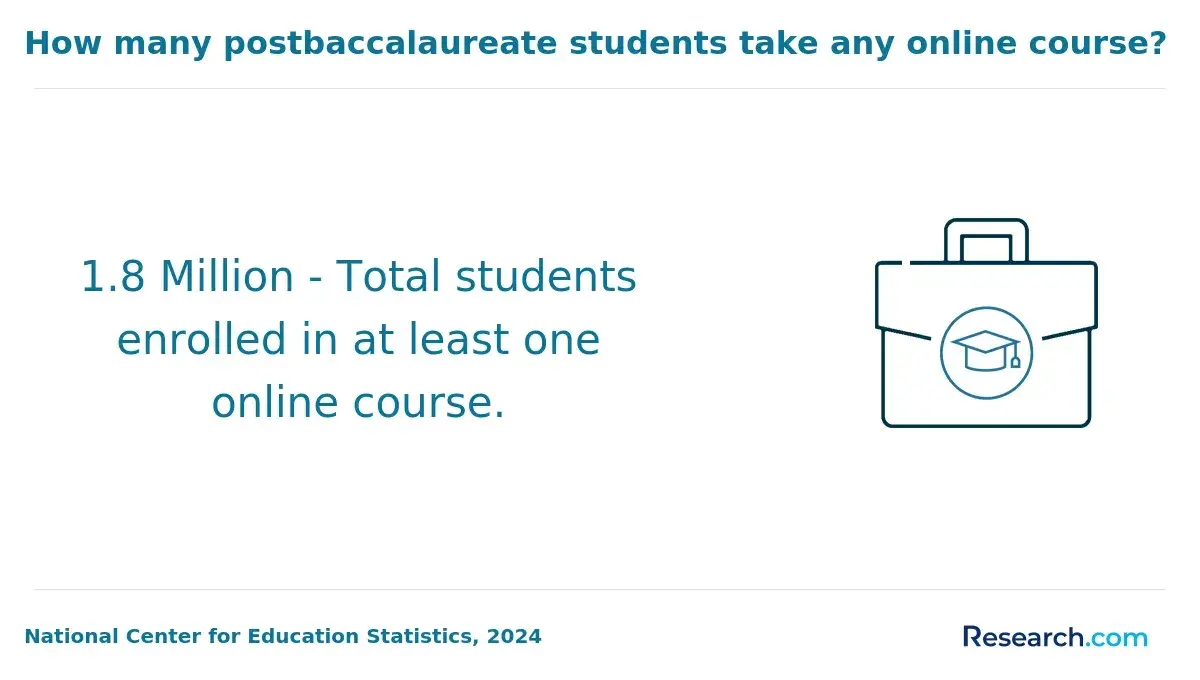
Prospective students should ask how quickly advisors respond, whether support is available outside standard business hours, and who handles urgent issues during deployment or PCS. According to the National Center for Education Statistics, 74% of graduate students took at least one online course in fall 2022, making strong online support essential rather than optional.
How Do Online Applied Psychology Master's Programs Accommodate Deployments or Permanent Changes of Station?
Strong online applied psychology programs accommodate deployments and Permanent Changes of Station through written policies, flexible course delivery, and staff who understand military timelines. The goal is to prevent students from losing academic progress or paying unnecessary costs when service obligations interrupt a term.
A deployment deferral usually allows a student to pause coursework for a defined period while preserving academic standing. A military withdrawal is different: it formally removes the student from one or more courses. Under the Department of Defense (DoD) memorandum of understanding (MOU), institutions accepting military Tuition Assistance (TA) must return unearned tuition on a pro-rated basis through at least 60% of the term.
Useful accommodations may include:
- asynchronous assignments that can be completed before or after travel periods;
- incomplete grades with extended deadlines when disruption occurs late in a term;
- temporary enrollment pauses without a new application;
- remote access to advising, library resources, and faculty support;
- clear recertification procedures for VA benefits after a return to enrollment;
- protection for completed credits during an approved stop-out period.
Before enrolling, request the school’s military activation policy in writing. Confirm whether completed credits remain valid after a pause, whether there is a maximum stop-out period, and how quickly students can re-enter the next available course sequence. Military students should also make sure the VA Certifying Official understands how benefit recertification works after deployment or PCS.
Over 30% of students in online graduate programs have military ties, highlighting the need for policies that reflect real service obligations rather than traditional campus assumptions.
What Graduates Say About Their Military-Friendly Online Applied Psychology Master's Degree Program
-
: "I chose the military-friendly online applied psychology master's degree program because it fit my schedule while I was still active duty. The dedicated student support team made a real difference, especially when I needed help staying on track during demanding parts of the coursework. Since graduating, I have been able to move forward in my counseling career with more confidence and credibility.
— Eddie"
-
: "What stood out most was the flexibility. I could balance family, work, and school without feeling forced into a rigid schedule that ignored my responsibilities. The guidance from instructors and staff helped me stay motivated, and earning the master's in applied psychology opened doors to leadership roles I had not expected before.
— Sage"
-
: "Enrolling in this military-friendly online applied psychology program was a deliberate step toward expanding my professional skill set. The curriculum and support systems helped me apply what I learned to real challenges in mental health services. The degree changed my career path and helped me become more effective in my field.
— John"
Other Things You Should Know About Applied Psychology Degrees
In 2027, military veterans with an online Applied Psychology master’s degree can pursue careers in mental health counseling, organizational psychology, and research roles. Average salaries typically range from $50,000 to $80,000 annually, depending on the position and geographic location, with higher earnings potential in specialized fields.
Yes, military personnel can access specific scholarships for online Applied Psychology master's programs. Many institutions offer financial assistance for veterans and active-duty service members, covering part or all tuition costs, to support their educational advancement in 2027.
A military-friendly online applied psychology master’s program should come from a regionally accredited university, and the program itself should be accredited or aligned with recognized standards when applicable. For applied psychology, check the school’s institutional accreditor and confirm the degree meets licensure or employer requirements in the state where you plan to work.
References
- Online College for Military Veterans and Personnel https://online.sbu.edu/military-friendly-college
- Support Services and Resources for Military Students and Their Families https://www.militarysupportivecolleges.com/blog/support-services-and-resources-for-military-students-and-their-families/
- VA educational benefits https://www.liverpool.ac.uk/student-administration/fees-and-finance/financial-aid-for-students-from-the-usa-and-canada/students-from-the-usa/va-educational-benefits/
- Navigating the Post-9/11 GI Bill as an Active Duty or Military Veteran https://www.pointloma.edu/resources/business-leadership/navigating-post-911-gi-bill-active-duty-or-military-veteran
- PgCert | PgDip | MSc Applied Psychology https://www.rgu.ac.uk/study/courses/954-pgcert-pgdip-msc-applied-psychology
- Home https://www.husson.edu/online/online-degrees/master-of-science-in-applied-psychology
- Graduate Credits for Your Military Training and Experience https://www.iup.edu/admissions/graduate/military-credits/index.html
- Best Master's in Psychology Online: APA-Accredited Programs https://www.onlinemastersdegrees.org/best-programs/psychology/apa-accredited/
- From Theory to Practice: How Applied Psychology Master's Degree Programs Prepare You for the Workforce https://www.snu.edu/blog/from-theory-to-practice-how-applied-psychology-masters-degree-programs-prepare-you-for-the-workforce
- Financial Aid For Military & Veterans | Psychology.org https://www.psychology.org/resources/military-and-veterans-financial-aid/