
2027 Gifted Education Teacher Careers: Skills, Education, Salary & Job Outlook

Co-Founder and Chief Data Scientist
Becoming a gifted education teacher is not just a general teaching choice; it is a specialized career decision that requires the right license, strong instructional judgment, and a clear understanding of how advanced learners develop. The path can feel complicated because gifted education sits at the intersection of curriculum design, child development, assessment, equity, and state certification rules.
This guide is for future teachers, licensed educators considering a specialization, and career changers who want to know whether gifted education is a practical fit. You will learn what gifted education teachers actually do, what skills and credentials matter, how salary and job outlook should be interpreted, and which advancement or alternative career paths may offer the best long-term fit.
The career can be stable and meaningful, with median salaries near $59,000 and some career summaries citing a 4-5% job growth rate through 2031. At the same time, hiring depends heavily on state policy, school budgets, district priorities, and whether gifted education is delivered through full-time classes, pull-out programs, enrichment models, or consultation. The best approach is to understand both the rewards and the constraints before investing in additional credentials.
Key Things You Should Know About Gifted Education Teacher Career
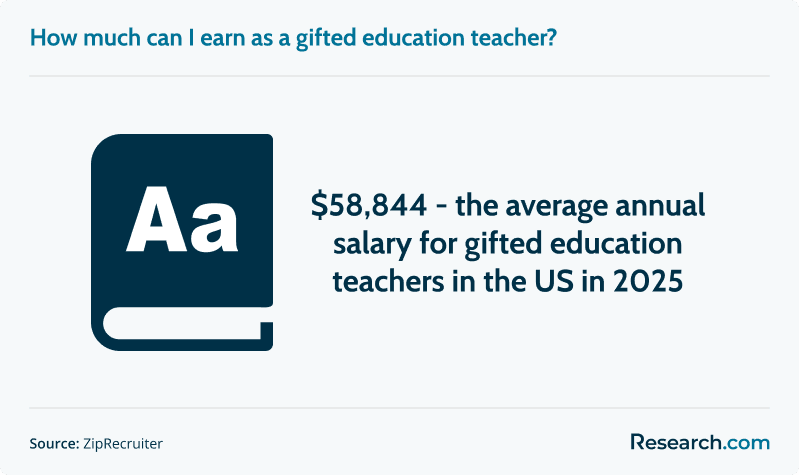
- The typical earning potential for a gifted education teacher is around $58,844 per year, with most salaries ranging between $50,000 and $64,000, and top earners making about $72,000 annually.
- This field shows limited hiring activity and modest demand, indicating that it is stable but not rapidly growing or expanding.
- To get started, a standard teaching certification is usually required, along with specialized training or coursework in gifted education, often completed through rigorous online programs.
- Success hinges on skills like differentiated instruction, designing curriculum for advanced learners, assessing gifted students, and addressing their unique social-emotional needs.
- Advancement opportunities are few, with limited pay increases; potential paths include roles as a gifted program coordinator, curriculum specialist, or district-level gifted education administrator.
What do gifted education teachers do?
Gifted education teachers design and deliver instruction for students who need academic challenge beyond the standard grade-level curriculum. Their work is not limited to assigning harder worksheets or moving students ahead faster. Effective gifted education combines advanced content, creative problem-solving, independent inquiry, acceleration when appropriate, and support for social-emotional needs that often accompany high ability.
Depending on the school model, a gifted education teacher may teach a dedicated gifted class, run a pull-out enrichment program, support advanced learners across multiple classrooms, or consult with general education teachers. In some districts, the role includes screening students for gifted services; in others, assessment decisions are handled by psychologists, coordinators, or district committees.
A typical day in the role
A gifted education teacher’s day often includes direct instruction, small-group seminars, project coaching, lesson planning, student progress monitoring, and collaboration with families or classroom teachers. The work may shift quickly from guiding an advanced research project to helping a student manage perfectionism, boredom, underachievement, or frustration with group work.
The role is strongest when it balances academic rigor with student well-being. Gifted learners may process complex ideas early, but they still need age-appropriate guidance, executive-function support, peer connection, and encouragement to take intellectual risks without fear of failure.
What are the key responsibilities of gifted education teachers?
Gifted education teachers are responsible for helping advanced learners receive instruction that is appropriately challenging, equitable, and developmentally sound. The exact duties vary by state and district, but most roles combine teaching, curriculum planning, assessment support, consultation, and advocacy.
- Identify and support gifted learners: Participate in referral, screening, observation, and assessment processes used to determine eligibility for gifted services.
- Differentiate instruction: Adapt content, pacing, assignments, questioning, and assessment so students can work at a level that matches their readiness and potential.
- Provide enrichment and acceleration: Design independent research, advanced coursework, competitions, seminars, problem-based learning, and other experiences that extend beyond the standard curriculum.
- Collaborate with teachers and specialists: Help general education teachers adjust instruction, plan extensions, co-teach lessons, or better understand gifted students’ academic and emotional profiles.
- Monitor progress: Use student work, assessments, observations, and learning plans to document growth and communicate clearly with families, administrators, and other educators.
- Advocate for appropriate services: Explain why gifted students need more than occasional extra work and help schools create fair, consistent access to advanced learning opportunities.
The most challenging responsibilities
The hardest part of the job is often not the academic content; it is meeting a wide range of needs with limited time, staffing, and program resources. One gifted class may include students who are advanced in one subject but not another, students who are twice-exceptional, students who underperform because they are bored or anxious, and students from backgrounds that have historically been underidentified for gifted services.
Gifted education teachers may also serve multiple grade levels or schools. That can make scheduling, communication, and continuity difficult. Strong organization and careful documentation matter because families and administrators often need clear evidence that services are appropriate and effective.
The most rewarding responsibilities
The most rewarding moments often come when students move from compliance to real intellectual engagement. A student who was coasting may learn to struggle productively. A perfectionist may begin taking creative risks. A quiet student may discover that advanced work gives them a place to belong.
For aspiring educators still building an academic foundation, a fast-track associate degree online may be one early option to explore before moving toward the bachelor’s degree and teacher preparation requirements typically needed for licensure.
What are the key skills for gifted education teachers?
Gifted education teachers need more than strong subject knowledge. They must know how to design advanced learning experiences, interpret student needs, manage uneven development, and communicate with families and colleagues who may have different assumptions about what gifted education should look like.
Technical skills
- Curriculum differentiation: Adjusting depth, complexity, pacing, and product expectations for advanced learners.
- Gifted identification methods: Understanding referrals, observations, assessment data, and the limitations of relying on a single measure of ability.
- Instructional design: Creating units that emphasize inquiry, creativity, advanced problem-solving, and authentic products rather than simple extra work.
- Progress monitoring: Using student performance data, portfolios, rubrics, and formative assessments to guide instruction.
- Educational technology: Using tools such as Google Suite and Microsoft tools to support research, collaboration, presentation, and feedback.
Soft skills
- Active listening: Understanding what students need academically and emotionally, especially when behavior masks boredom, anxiety, or frustration.
- Adaptability: Adjusting instruction quickly when students master material faster than expected or need a different type of challenge.
- Critical thinking: Evaluating whether a student needs acceleration, enrichment, support, or a different instructional environment.
- Communication: Explaining gifted services to parents, administrators, and colleagues in clear, non-defensive language.
- Equity-minded practice: Recognizing that giftedness can appear differently across cultures, languages, income levels, disabilities, and classroom behaviors.
The overlooked skill that separates strong teachers from average ones
One of the most important but underestimated skills is understanding the social-emotional development of gifted learners. A student may be years ahead in reading or mathematics but still need age-appropriate help with frustration tolerance, peer relationships, perfectionism, or motivation.
For example, a gifted student who refuses to submit work may not be lazy. They may fear that anything less than perfect will change how others see them. A skilled gifted education teacher can separate the academic issue from the emotional barrier and respond with structure, challenge, and reassurance rather than simply lowering expectations.
This whole-child expertise is especially valuable in the educational support services industry, identified here as the highest paying sector for gifted education teachers. If you are still exploring flexible academic starting points, easy online college courses may help you build early confidence before committing to a full teacher preparation pathway.
Gifted Education Teacher Careers: A Step-by-Step Guide to Getting Started
The path to becoming a gifted education teacher usually starts with general teacher preparation and then adds specialization in gifted education. Requirements differ by state, so you should always confirm licensing rules with your state education agency before choosing a degree, endorsement, or graduate certificate.
- Earn a bachelor’s degree: Most candidates begin with a bachelor’s degree in education or a related field that meets state teacher preparation requirements.
- Complete a teacher preparation program: Choose a state-approved program that includes pedagogy, classroom management, assessment, and supervised field experience.
- Finish supervised teaching experience: Student teaching helps you demonstrate that you can plan lessons, manage a classroom, assess learning, and respond to diverse student needs.
- Pass required state exams: Candidates typically need to pass state certification exams before receiving an initial teaching credential.
- Gain classroom experience: Many gifted education roles favor teachers who already understand general education settings and have experience working with varied learners.
- Pursue gifted education preparation: Add a gifted education endorsement, certificate, or graduate-level coursework if required or preferred in your state or district.
- Build a portfolio of advanced instruction: Save examples of differentiated lessons, enrichment projects, student work, assessment plans, and collaboration with colleagues.
The safest strategy is to qualify first as a licensed teacher, then specialize. This keeps your employment options broader while you build the expertise needed for gifted education roles.
What education, training, or certifications are required?
Most gifted education teachers begin with a Bachelor of Arts (B.A.) or Bachelor of Science (B.S.) in Education and a state-approved teacher preparation program. Some states accept related bachelor’s degrees when candidates complete the required certification route. Because teacher licensure is state-regulated, the exact combination of degree, exams, student teaching, and endorsements can vary significantly.
Common credentials include a state teaching license, such as a Multiple or Single Subject Teaching Credential, followed by a Gifted Education Endorsement or Certification. Gifted education endorsements are often add-ons that involve graduate-level coursework and are managed by state education departments or accredited bodies like the National Association for Gifted Children.
Practical training matters. Teacher preparation programs usually require supervised student teaching, and gifted education certification programs may require a practicum or internship focused on gifted learners. There is generally no formal residency model specific to gifted education, but districts may provide mentoring, coaching, or professional development for teachers entering the specialty.
Are advanced degrees or niche certifications worth the investment?
Advanced credentials can be worthwhile when they align with your state’s requirements and your career goals. A Master of Education or Graduate Certificate in Gifted Education may improve your qualifications for gifted classroom roles, program coordination, curriculum leadership, or district-level specialist positions. These credentials may also strengthen your understanding of assessment, twice-exceptionality, curriculum compacting, acceleration, and equity in gifted identification.
The trade-off is cost and time. A shorter certificate may be faster and more affordable, while a graduate degree may carry more value for leadership roles. Before enrolling, compare the credential against job postings in your target districts, salary schedules, endorsement requirements, and tuition costs. Do not assume that every gifted education program automatically leads to licensure or a pay increase.
If you are still at the earliest stage of college planning, reviewing the quickest way to get associate's degree can help you understand faster foundational options before progressing toward teacher licensure.
What is the earning potential for gifted education teachers?
The median salary for gifted education teachers is $58,844 per year. This is a useful benchmark, but actual pay can vary widely by district salary schedule, state funding, union agreements, years of experience, education level, grade level, and whether the role includes leadership duties.
Entry-level positions generally start around $50,000 per year. Senior-level salaries can rise to approximately $72,000 annually, especially for teachers with additional credentials, advanced degrees, leadership responsibilities, or experience in higher-paying districts.
What affects salary most?
- Location: Educators in cities like San Francisco or New York may earn notably more than those in Miami, although local cost of living should also be considered.
- Experience: Public school salary schedules often reward years of service, so earnings may rise predictably over time.
- Education level: Graduate credits, a master’s degree, or an endorsement may affect salary depending on the district’s pay structure.
- Role design: A full-time gifted education specialist, lead teacher, or coordinator may have different compensation than a classroom teacher who provides gifted services part time.
- School level: Whether a teacher works in elementary or middle school settings can further affect earnings.
When comparing offers, look beyond base pay. Planning time, caseload size, number of school sites, professional development support, and whether gifted education is well funded can affect job satisfaction as much as salary.
What is the job outlook for gifted education teacher?
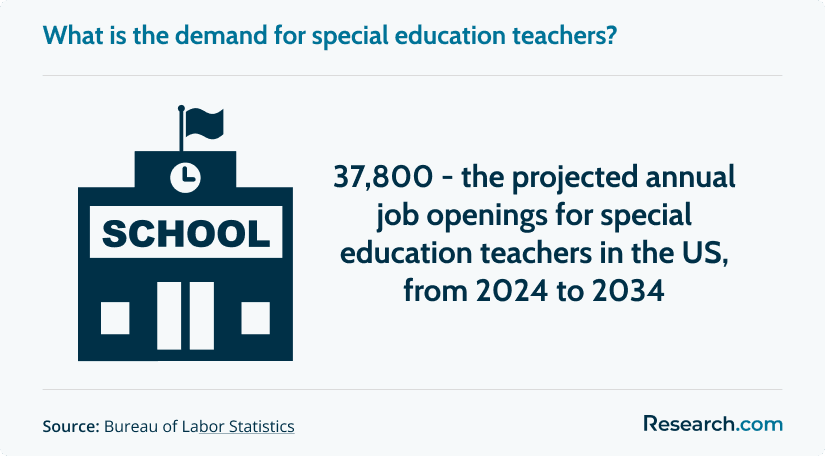
Employment for special education teachers, including gifted education teachers, is projected to experience no growth (0%) until 2032. This is slower than the average growth of 3% to 5% expected across all occupations. That does not mean there will be no openings; rather, overall employment levels are expected to remain relatively flat while retirements, turnover, budget changes, and local program needs create position-by-position opportunities.
What shapes demand for gifted education teachers?
Demand depends heavily on state policy, district funding, and how strongly a school system prioritizes gifted services. Some districts maintain dedicated gifted programs, while others expect general education teachers to differentiate within regular classrooms. In under-resourced districts, mandated services and budget limitations may both influence hiring.
Improved early diagnosis and identification of learning differences and giftedness can also sustain demand for specialized instruction. However, identification practices vary, and gifted education positions may be vulnerable when districts reduce enrichment programs or reorganize staffing.
How to improve your job prospects
- Earn the gifted education endorsement or certification required in your state.
- Develop experience with twice-exceptional learners, culturally responsive identification, and differentiated curriculum.
- Build evidence of collaboration with general education teachers, families, and specialists.
- Stay flexible about program models, including pull-out services, cluster grouping, enrichment, acceleration, or district-wide consulting.
- Consider related teaching roles if full-time gifted education positions are limited in your area.
If you are comparing education careers with faster or more flexible training routes, fast school programs that pay well may help you evaluate other efficient pathways alongside gifted education.
What is the typical work environment for gifted education teachers?
Gifted education teachers usually work in public or private elementary and secondary schools. Over 90% of gifted education teachers are employed in these settings, while smaller portions work in educational support services or individual and family services. In schools with established gifted programs, teachers may have a dedicated classroom, resource room, or enrichment space. In other districts, they may travel between classrooms or schools.
The role is both independent and collaborative. Teachers need focused planning time to design advanced lessons, but they also work closely with classroom teachers, administrators, counselors, psychologists, parents, and district coordinators. Collaboration is especially important when students need both academic challenge and support for behavior, executive functioning, anxiety, or peer relationships.
The typical gifted education teacher daily schedule follows a traditional Monday-to-Friday school calendar during the academic year, with summers and holidays off. However, planning, family communication, professional development, academic competitions, enrichment events, and after-school meetings can extend the work beyond regular classroom hours. Remote work opportunities are rare because the job is primarily classroom-centered and student-facing.
What are the pros and cons of gifted education teacher careers?
Gifted education can be highly fulfilling for teachers who enjoy intellectual challenge, creative curriculum design, and close attention to individual student growth. It can also be frustrating when programs are underfunded, misunderstood, or treated as optional rather than necessary for students who need advanced learning opportunities.
Pros
- Meaningful student growth: Teachers often see students become more engaged, confident, and willing to take intellectual risks.
- Creative curriculum work: The role allows teachers to design rich projects, seminars, research experiences, and advanced problem-solving tasks.
- Strong relationships with curious learners: Many gifted students thrive when they finally receive instruction that matches their pace and depth of thinking.
- Whole-child impact: Teachers can help students manage perfectionism, motivation, social connection, and self-advocacy as well as academics.
- Leadership potential: Experienced gifted education teachers may move into coordination, curriculum design, professional development, or consulting roles.
Cons
- Limited resources: Some schools provide minimal funding, small amounts of service time, or unclear program expectations.
- Complex differentiation: Gifted students are not all advanced in the same way, so one lesson rarely fits everyone.
- Misunderstanding from others: Colleagues or parents may assume gifted students do not need support because they perform well academically.
- Emotional demands: Students may struggle with anxiety, perfectionism, boredom, underachievement, or social isolation.
- Variable job availability: Full-time gifted education positions depend on district priorities and local funding.
This career is a good fit if you enjoy designing challenging learning experiences and advocating for students whose needs may be overlooked because they appear capable. If you are comparing education with other practical career routes, resources such as the best trade colleges online can help you weigh different training and employment options.
What are the opportunities for advancement for gifted education teachers?
Gifted education teachers can advance by moving into leadership roles, developing specialized expertise, or shifting into curriculum, assessment, consulting, or administration. Advancement often depends on graduate education, state credentials, district experience, and a demonstrated ability to improve gifted services beyond one classroom.
Common advancement paths
- Lead gifted teacher: Mentors colleagues, models differentiated instruction, and supports schoolwide gifted programming.
- Gifted program coordinator: Oversees identification procedures, service models, curriculum alignment, compliance, and family communication.
- District-level specialist: Influences policy, teacher training, equity initiatives, and advanced learning opportunities across multiple schools.
- Curriculum specialist: Designs or evaluates advanced curriculum, enrichment models, acceleration plans, and assessment tools.
- Administrator: Moves into school or district leadership with responsibility for gifted education, advanced academics, or student services.
- Consultant or university instructor: Uses advanced expertise to train teachers, advise districts, or teach gifted education coursework.
Specializations that can strengthen advancement
- Twice-exceptional learners
- Equitable gifted identification
- Acceleration and curriculum compacting
- STEM enrichment and advanced problem-based learning
- Creativity, talent development, and independent study
- Social-emotional support for gifted students
- Gifted programming for underrepresented populations
The best advancement strategy is to document results. Keep evidence of student growth, successful programming, teacher training, family engagement, and improved access to gifted services. These examples are useful when applying for leadership roles or making the case for program expansion.
What other careers should you consider?
If you are interested in gifted education but unsure about a full-time classroom role, several related careers allow you to use similar strengths in curriculum design, assessment, coaching, and learner support. These options may also appeal if gifted education jobs are limited in your location.
- Educational Consultant: Advises schools or families on instructional strategies, program design, enrichment, acceleration, and support for advanced learners.
- Instructional Designer: Creates differentiated curriculum, assessments, online modules, and learning experiences for schools, organizations, or education companies.
- School/Child Psychologist: Assesses student needs, supports learning plans, and helps schools understand cognitive, emotional, and behavioral factors affecting gifted children.
- Homeschool Consultant: Helps families design personalized learning plans for gifted students who need flexibility, acceleration, or specialized enrichment outside traditional classrooms.
- Corporate Trainer: Applies instructional design and facilitation skills to adult learning, leadership development, and professional training environments.
To choose among these paths, compare how much you want to teach directly, design curriculum, conduct assessments, advise families, or work at a systems level. Gifted education is a strong fit for educators who want sustained student interaction; consulting, instructional design, and training may suit professionals who prefer program development or adult collaboration.
Here's What Professionals Say About Their Gifted Education Teacher Careers
- Liana: "Half of my role is focused on academics, but the other half is all about addressing the social and emotional struggles my gifted students face. Right at the start of the school year, I make it a point to discuss topics like anxiety, perfectionism, and insomnia, because these are so common among the kids I teach. Seeing their relief when they realize someone truly understands their challenges is incredibly powerful. It's not just about getting through the curriculum-it's about helping them grow into their fullest selves."
- Amir: "One thing I quickly learned working with gifted students is that their emotional maturity can vary dramatically, even if their academic abilities are advanced. I have to really understand each student individually to find the right balance of challenge and support so they don't get bored or frustrated. When they aren't productively engaged, their energy can turn into a distraction, which makes the classroom harder for everyone. It's a constant tuning process, but it's rewarding to see them succeed on their own terms."
- Sophia: "I find it incredibly fulfilling when a student who's struggled with perfectionism finally starts to believe in themselves. I remember one student who initially avoided creative assignments because of self-doubt, but over time, they threw themselves into a project with real passion and excitement. Watching them come to class eager to share their work was a reminder of why I do this job. Those moments make all the effort worth it."
Key Findings
- Gifted education teachers provide advanced, differentiated instruction for students who need more depth, pace, complexity, or creative challenge than the standard curriculum provides.
- Most candidates need a bachelor’s degree, a state-approved teacher preparation program, supervised teaching experience, state licensure, and, in many cases, a gifted education endorsement or certification.
- The median salary is $58,844 per year, with entry-level positions generally around $50,000 per year and senior-level salaries reaching approximately $72,000 annually.
- Employment for special education teachers, including gifted education teachers, is projected to experience no growth (0%) until 2032, so job availability may depend strongly on local funding and district priorities.
- The strongest candidates combine curriculum differentiation, assessment knowledge, collaboration, equity-minded practice, and social-emotional expertise.
- Advancement opportunities include lead teacher, gifted program coordinator, district-level specialist, curriculum specialist, administrator, consultant, or university instructor.
- This career is best suited for educators who enjoy intellectual rigor, individualized instruction, advocacy, and supporting gifted students as whole people, not just high academic performers.
Other Things You Should Know About Gifted Education Teacher
In 2027, the salary range for gifted education teachers is expected to be between $50,000 and $80,000 annually, depending on factors like location, level of education, and years of experience. Areas with a higher cost of living tend to offer higher salaries to compensate.
In 2027, job prospects for gifted education teachers are favorable, driven by increased recognition of the need for specialized programs. Growth is expected in urban districts and areas with high academic achievements, as reported by recent educational labor market studies.
Gifted education teachers must hold a state teaching license or certification, often with a specialization in gifted education. Some states require specific endorsements or additional coursework. Advanced degrees, such as a Master's in Education or Gifted Education, may enhance job prospects and salary potential.
References
- Gifted/Talented Teacher https://www.topschooljobs.org/jobs/gifted-talented-teacher/
- Gifted Education Frequently Asked Questions - Frederick County Public Schools https://www.frederickcountyschoolsva.net/learning/gifted-education/gifted-education-frequently-asked-questions
- Hard Skills vs. Soft Skills: Definitions and 50+ Examples | EdgePoint Learning https://www.edgepointlearning.com/blog/hard-skills-vs-soft-skills/
- Frequently Asked Questions about Gifted Education https://www.nagc.org/frequently-asked-questions-about-gifted-education
- Gifted and Talented Teacher Career Guide https://www.teachercertificationdegrees.com/careers/gifted-talented-teacher/
- Artwork of a gum leaf symbolising ‘welcome’ and acknowledging diverse countries, environments, communities, cultures, beliefs, and history. https://www.seek.com.au/gifted-education-teacher-jobs
- Pros and Cons of Gifted Learning Programs in Schools - Education Corner https://www.educationcorner.com/gifted-education-pros-cons/
- Advice for Teachers Considering a Position in Gifted | Education World https://www.educationworld.com/blog/advice-teachers-considering-position-gifted-0
- Advice for New Gifted Education Specialists (Opinion) https://www.edweek.org/education/opinion-advice-for-new-gifted-education-specialists/2013/01
- Bridging gifted education and school culture: the mediating role of personality in shaping school culture and teachers’ opinions towards gifted education https://pmc.ncbi.nlm.nih.gov/articles/PMC12492572/


