2027 Online General Studies Degrees That Help Build Critical Thinking Skills

Co-Founder and Chief Data Scientist
Choosing an online general studies degree is often a practical question: Can one flexible major build skills employers actually value? It can, if the program is accredited, writing-intensive, and designed around analysis, evidence, and communication.
The payoff matters because BLS data published in 2024 shows bachelor's degree holders had median weekly earnings of $1,543, well above workers whose highest credential was a high school diploma. This guide helps transfer students, working adults, and undecided majors compare programs, costs, courses, and career outcomes before enrolling.
Key Things You Should Know
- Most online general studies bachelor's programs require about 120 credits, but transfer-friendly students may finish faster if prior college, military, or approved experiential credits are accepted.
- Critical thinking is strongest in programs that require research writing, quantitative reasoning, ethics, social science methods, and a capstone project rather than only open-ended electives.
- College Board data published in 2024 lists average tuition and fees at $11,610 for in-state public four-year students and $43,350 for private nonprofit four-year students, so total cost and transfer policy can matter as much as tuition rate.
What is an online general studies degree and how does it develop critical thinking?
An online general studies degree is an interdisciplinary bachelor's program that lets students combine courses from fields such as humanities, social sciences, business, communication, science, technology, and public policy.
It is not usually designed for one licensed occupation. Instead, it helps students finish a broad undergraduate degree while building transferable skills: reasoning, writing, research, problem-solving, collaboration, and decision-making.
The critical-thinking value depends on program design. A strong general studies curriculum does more than let students "pick random electives." It asks them to compare evidence across disciplines, evaluate arguments, interpret data, and explain decisions clearly. That is why capstone projects, research seminars, applied problem-solving courses, and portfolio assignments are especially important.
The table below shows how common parts of a general studies curriculum can translate into critical-thinking skills. Use it to look beyond the major name and evaluate whether a program is structured enough to support your goals.
| Program component | How it builds critical thinking | What to look for |
| Research and writing courses | Teach students to assess sources, build arguments, and communicate conclusions | Multiple writing-intensive courses, not just one composition requirement |
| Quantitative reasoning | Builds comfort with data, probability, basic statistics, and evidence-based decisions | Statistics, data literacy, or quantitative analysis options |
| Humanities and ethics | Strengthens interpretation, perspective-taking, and ethical judgment | Courses in philosophy, history, literature, ethics, or cultural studies |
| Social science methods | Helps students understand behavior, organizations, policy, and research design | Psychology, sociology, political science, or public administration coursework |
| Capstone or portfolio | Requires students to integrate learning and solve a complex problem | A final project reviewed by faculty, ideally tied to career goals |
A general studies degree is usually a good fit for students with previous credits, adults returning to school, military learners, and students whose career goals require a bachelor's degree but not a specific major. It may be a weaker fit for students pursuing regulated fields such as nursing, engineering licensure, accounting CPA eligibility, or teacher certification unless the program is carefully aligned with those requirements.
How do online general studies programs compare to campus-based options for skill building?
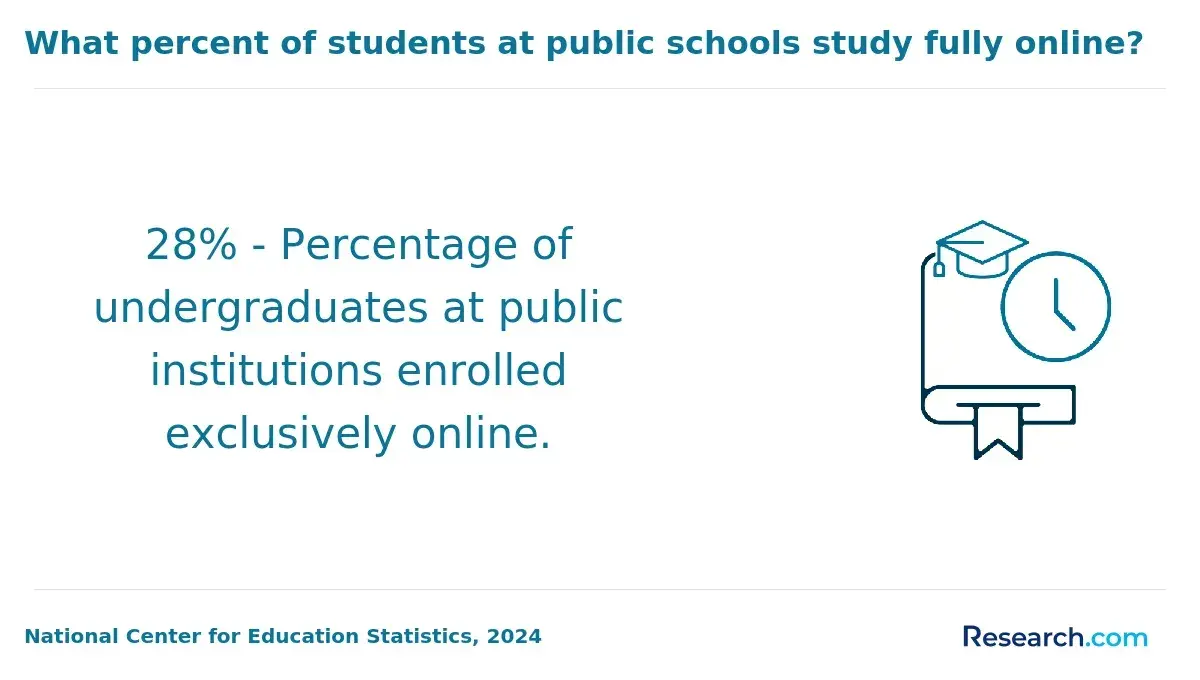
Online and campus-based general studies programs can build the same core skills when they use comparable faculty standards, accredited curricula, and meaningful assignments. The main difference is not quality by default; it is how learning happens. Online students need stronger self-management, while campus students may have more spontaneous access to in-person discussions, labs, clubs, and advising.
For critical thinking, the best format is the one that gives you regular feedback and enough time to reflect. Asynchronous online courses can be excellent for writing, research, and discussion because students must explain ideas in text. Synchronous or campus courses may be better for students who learn best through live debate, presentations, and immediate classroom interaction.
The comparison below summarizes practical trade-offs. It can help you decide whether online learning supports the way you actually build skills, not just the schedule you prefer.
| Factor | Online general studies | Campus-based general studies | Best fit |
| Flexibility | Often designed for working adults and transfer students | Usually follows fixed class times and campus calendars | Online for students balancing work, caregiving, or military service |
| Discussion | Often uses written forums, video meetings, and peer review | Uses live discussion and in-person group work | Online for reflective writers; campus for students who thrive in live debate |
| Faculty feedback | Can be strong if courses include drafts, rubrics, and instructor comments | Can be strong through office hours and classroom interaction | Either format, if feedback is frequent and specific |
| Networking | Depends on virtual events, alumni systems, and career services | May include more informal networking and campus activities | Campus for students who want immersive networking; online for self-directed networkers |
| Skill evidence | Often portfolio-friendly because work is created digitally | May include presentations, service learning, or campus projects | Online for digital portfolios; campus for in-person leadership experiences |
A common mistake is assuming online means easier. In many reputable programs, online students write more, document participation more carefully, and manage deadlines with less external structure. If you struggle with time management, look for an online program with success coaching, predictable course calendars, tutoring, and proactive advising.
Which accredited schools offer reputable online general studies degrees in the United States?
Reputable online general studies programs are offered by public universities, private nonprofit institutions, and some private institutions with established online divisions. The first filter should always be institutional accreditation from an accreditor recognized by the U.S. Department of Education or the Council for Higher Education Accreditation. Program names vary, so also search for "liberal studies," "interdisciplinary studies," "integrated studies," and "university studies."
The schools below are examples of U.S. institutions with online bachelor's options related to general, interdisciplinary, or liberal studies. They are not ranked here, and students should verify current program names, tuition, transfer limits, and state authorization before applying.
| School | Example online degree area | Institutional accreditation | Why it may appeal to general studies students |
| Arizona State University | Liberal studies or interdisciplinary-style online bachelor's options | Higher Learning Commission | Large online course catalog and broad elective choices |
| Indiana University Online | Bachelor of General Studies | Higher Learning Commission | Designed for students combining prior credits with flexible academic interests |
| Penn State World Campus | Multidisciplinary studies or related flexible bachelor's pathways | Middle States Commission on Higher Education | Established online division and recognizable public university system |
| University of North Dakota | General studies or interdisciplinary bachelor's options | Higher Learning Commission | May suit students seeking a public university with online completion pathways |
| Southern New Hampshire University | General studies | New England Commission of Higher Education | Built around online adult learners and transfer-friendly degree planning |
If affordability is your first screening factor, Research.com's guide to an online general studies degree affordable enough for budget-conscious students can help you build an initial shortlist. After that, compare each school's accreditation, transfer-credit policy, course requirements, and student support rather than choosing on price alone.
Be cautious with programs that make vague claims about being "nationally recognized" but do not clearly list institutional accreditation. Also confirm whether online students in your state are eligible to enroll; state authorization rules can affect access even when the school itself is accredited.
Employer Confidence in Online vs. In-Person Degree Skills, Global 2024

What courses in general studies most effectively strengthen critical thinking and problem-solving?
The strongest courses are usually those that require students to defend a conclusion, analyze evidence, compare perspectives, or solve an applied problem. Electives can still be valuable, but a degree plan built only around convenience may not produce the same skill growth as one built around a coherent theme.
When reviewing a curriculum, look for courses that force you to practice reasoning in different ways. The following course areas are especially useful because they create evidence you can later discuss in interviews, portfolios, or graduate school applications:
- Research writing and argumentation: Helps you identify credible sources, structure claims, respond to counterarguments, and write persuasively.
- Statistics or data literacy: Builds the ability to interpret charts, question assumptions, and avoid weak conclusions based on incomplete information.
- Logic, ethics, or philosophy: Strengthens careful reasoning, moral analysis, and the ability to distinguish opinion from argument.
- History or political science methods: Teaches context, causation, source evaluation, and the limits of evidence.
- Psychology, sociology, or organizational behavior: Helps explain how people, groups, and institutions make decisions.
- Communication and rhetoric: Develops persuasive speaking, audience analysis, and message design.
- Project management or systems thinking: Connects analysis to planning, trade-offs, deadlines, and measurable outcomes.
- Capstone seminar: Pulls multiple disciplines together in a final research, policy, community, business, or workplace problem.
A practical way to choose courses is to build a theme around your career target. For example, a student interested in nonprofit work might combine sociology, grant writing, public administration, ethics, and data analysis. A student interested in business operations might combine communication, statistics, organizational behavior, project management, and information systems.
What are typical admission requirements for online general studies bachelor's degree programs?
Admission requirements vary by school, but online general studies programs are often designed for transfer students and adults who have some previous college credit. Many programs accept first-year applicants, while others operate as degree-completion programs requiring a minimum number of transferable credits before entry.
Most applicants should be ready to provide several standard materials. These requirements help schools confirm academic readiness and determine how many credits can apply toward the degree.
- High school transcript, GED, or equivalent completion record for first-year applicants.
- Official transcripts from every college previously attended, even if credits were earned years ago.
- Minimum GPA, often with separate standards for first-year and transfer applicants.
- Application form and fee, though some online programs waive fees during admissions events.
- English proficiency documentation for applicants whose prior education does not meet the school's language criteria.
- Military transcripts, professional training records, or prior learning documentation if the school evaluates nontraditional credit.
- Personal statement or goal essay if the program asks students to explain how interdisciplinary study supports their plans.
Standardized tests are less common for adult-focused online bachelor's programs than they once were, but policies still vary. If you have a low GPA, ask whether the school offers conditional admission, academic renewal, probationary entry, or a limited course trial before full admission.
The most important admissions question for transfer students is not simply "Will I get in?" It is "How many credits will count toward the degree, and which requirements will they satisfy?" A school that accepts 60 credits as electives may still require many additional major, residency, or upper-division credits, which can change both cost and completion time.
How long do online general studies degrees take to complete, and what do they cost?
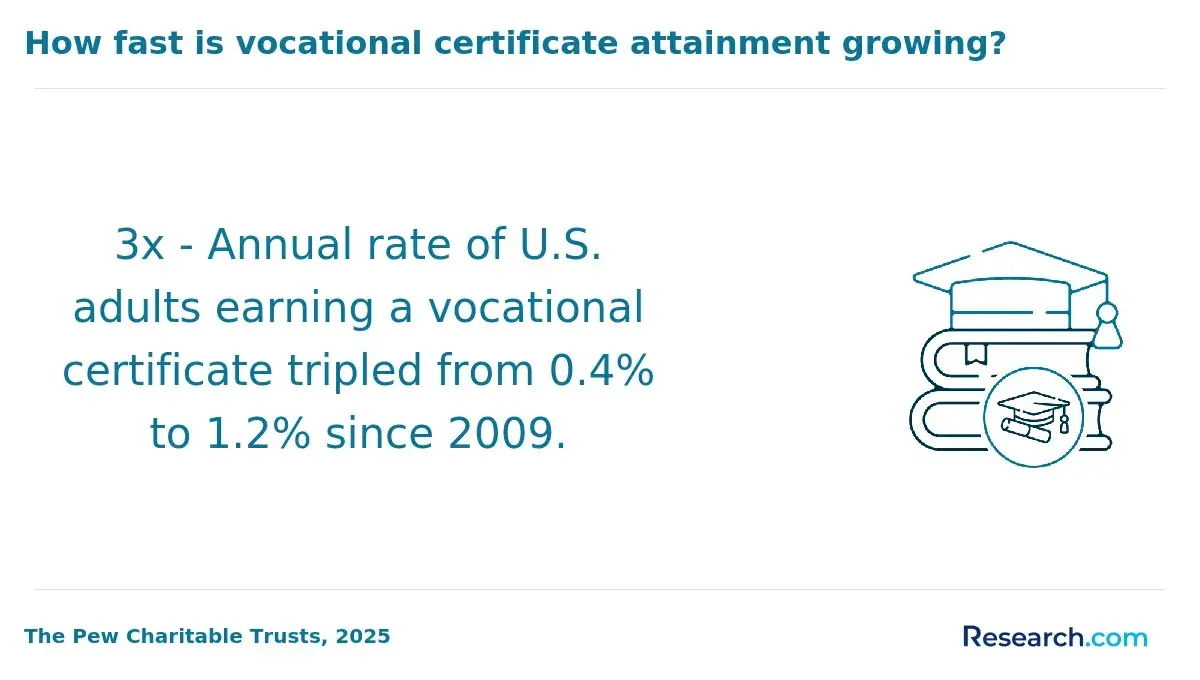
A standard bachelor's degree usually requires about 120 credits. Full-time first-year students often need four academic years, while transfer students may finish in one to three years depending on how many credits apply. Students with substantial prior credits may also consider an accelerated bachelor's degree pathway, but acceleration works best when the student has time for intensive coursework and a clear degree audit.
Costs vary widely by residency status, institution type, transfer credit, fees, and course load. College Board data published in 2024 provides a useful national benchmark for tuition and fees at four-year institutions, though online program pricing may differ from campus rates.
- Average published in-state tuition and fees at public four-year institutions: $11,610 for one academic year.
- Average published out-of-state tuition and fees at public four-year institutions: $30,780 for one academic year.
- Average published tuition and fees at private nonprofit four-year institutions: $43,350 for one academic year.
Those figures are not the same as your net price. Grants, scholarships, employer tuition assistance, military education benefits, transfer credits, and lower-cost community college credits can reduce what you actually pay. On the other hand, technology fees, online course fees, books, prior learning assessment fees, and graduation fees can raise the total.
Before enrolling, ask for a written degree plan that includes accepted transfer credits, remaining credits, estimated tuition, required fees, and expected completion date. A program with a slightly higher per-credit rate may be cheaper overall if it accepts more previous coursework and prevents you from retaking classes.
What careers can you pursue with a general studies degree that emphasizes critical thinking?
A general studies degree can support careers where employers value a bachelor's degree, communication ability, judgment, adaptability, and problem-solving. It is especially useful for roles that are not locked to a single undergraduate major. However, it is not a shortcut into licensed fields or highly technical jobs that require specific coursework, clinical preparation, or professional exams.
The best career strategy is to pair the degree with a concentration, minor, certificate, internship, work experience, or portfolio. The table below shows examples of career directions that can align with interdisciplinary study and critical-thinking skills.
| Career direction | Typical responsibilities | Helpful degree focus | Extra preparation that can improve fit |
| Administrative or operations coordinator | Coordinate schedules, documents, workflows, vendors, and internal communication | Communication, business, project management | Spreadsheet skills, project tools, internship or office experience |
| Human resources assistant or specialist pathway | Support recruiting, onboarding, employee records, training, or policy communication | Psychology, communication, organizational behavior | HR internship, SHRM-aligned coursework, employment law basics |
| Marketing or market research support | Analyze customers, prepare reports, support campaigns, and interpret survey data | Statistics, communication, consumer behavior | Portfolio, analytics tools, writing samples |
| Nonprofit program coordinator | Support community programs, track outcomes, communicate with stakeholders, and manage logistics | Sociology, public administration, ethics | Volunteer work, grant writing, data reporting experience |
| Training and development support | Create learning materials, coordinate training, and evaluate employee development needs | Education, communication, psychology | Presentation experience, instructional design tools |
| Public service or policy support | Research issues, prepare summaries, assist programs, and communicate with the public | Political science, history, public policy | Government internship, writing samples, data literacy |
Some graduates later specialize through graduate study. For example, students who discover a strong interest in historical analysis, archival work, teaching preparation, or public history may compare an online masters in history after completing the bachelor's degree, though graduate admission requirements vary by institution.
Students should consider a different major if they already know they need a specific credential. Accounting, nursing, engineering, computer science, social work licensure, and teacher certification usually require carefully sequenced coursework that a broad general studies plan may not satisfy.
What salary ranges and earning potential are common for general studies degree graduates?
There is no single "general studies salary" because graduates enter many fields. Salary depends on industry, location, experience, internships, technical skills, and whether the job requires a specific major. The most useful approach is to compare occupations that commonly value broad bachelor's-level skills such as communication, analysis, coordination, and problem-solving.
The table below uses BLS May 2024 median annual wage data for selected U.S. occupations that may align with a critical-thinking-focused general studies background. These medians describe occupations, not guaranteed outcomes for any individual degree holder.
| Occupation | Median annual wage | How a general studies graduate can become more competitive |
| Human resources specialists | $72,910 | Add HR coursework, employment law basics, internship experience, and strong documentation skills |
| Market research analysts and marketing specialists | $76,950 | Build statistics, survey, spreadsheet, writing, and analytics experience |
| Training and development specialists | $65,850 | Develop presentation, adult learning, communication, and instructional technology skills |
| Social and community service managers | $78,240 | Gain nonprofit, public service, program evaluation, or grant reporting experience |
| Management analysts | $101,190 | Usually requires experience; strengthen data analysis, process improvement, and industry knowledge |
Use salary data as a planning tool, not a promise. A new graduate in an entry-level coordinator role may earn less than an occupational median, while experienced workers with specialized skills, supervisory responsibility, or industry expertise may earn more. The degree can help open doors, but internships, work history, software skills, and a focused portfolio often determine how strong the first job offer is.
How strong is the job outlook for careers that value general studies critical thinking skills?
The job outlook is strongest when graduates connect their broad degree to a specific function such as HR, operations, marketing analytics, training, nonprofit administration, or policy support. BLS projections for 2024 to 2034 show the overall U.S. labor market growing more slowly than many analysis-heavy and people-focused roles, which makes specialization within a general studies degree important.
The table below highlights selected BLS employment projections for occupations where critical thinking, communication, and interdisciplinary problem-solving can be useful. These projections are national estimates and may differ by region and industry.
| Occupation | Projected growth, 2024 to 2034 | What the outlook means for students |
| Management analysts | 9% | Demand is tied to organizations improving efficiency, but entry often requires experience and analytical proof |
| Market research analysts | 7% | Data interpretation and consumer insight skills can make a broad degree more marketable |
| Social and community service managers | 8% | Program leadership roles may grow, especially for students with nonprofit or public service experience |
| Training and development specialists | 6% | Workplace learning remains relevant as employers update employee skills |
| Human resources specialists | 5% | HR roles value communication and judgment, but candidates benefit from specific HR knowledge |
AI and automation are changing the skill mix rather than eliminating the need for human judgment. Routine writing, scheduling, and basic research tasks may become more automated, but employers still need workers who can verify information, ask better questions, interpret ambiguous situations, and communicate recommendations responsibly.
A general studies student should therefore graduate with both broad reasoning skills and practical tools such as spreadsheets, presentation software, project platforms, or basic analytics systems.
How can prospective students choose a trustworthy, high-quality online general studies program?
The smartest choice is not always the cheapest, fastest, or most advertised program. A high-quality online general studies degree should be accredited, transparent about costs, generous but honest about transfer credits, and structured enough to build a coherent skill set. Students comparing broader affordability options can also review Research.com's guide to the best affordable online colleges before narrowing the list by major and curriculum.
Use a step-by-step review process before applying. These checks can help you avoid programs that look convenient but do not support your academic or career goals:
- Verify institutional accreditation through official accreditation databases or the school's accreditation page.
- Request a preliminary transfer-credit evaluation before committing, especially if you have prior college or military credits.
- Review the degree map to confirm that courses build a theme rather than only filling elective space.
- Ask whether online students receive the same diploma wording, faculty access, library resources, tutoring, and career services as other students.
- Compare total estimated cost, including fees, books, technology requirements, and remaining credits after transfer.
- Look for a required capstone, portfolio, internship option, or applied project that produces evidence of your skills.
- Check whether the program offers concentrations, minors, or certificates that match your target career.
- Ask career services for examples of common job titles, employer partners, internship access, and support for adult online learners.
Several red flags should make you slow down or keep looking. These do not always mean a program is poor, but they deserve direct questions before you enroll.
- The school is unclear about institutional accreditation or uses accreditation language that is difficult to verify.
- Admissions staff promise unusually fast completion before reviewing your transcripts.
- The program accepts many credits but cannot explain which requirements they satisfy.
- The curriculum has no capstone, research requirement, writing-intensive work, or applied project.
- Total cost is discussed only as a per-credit rate, with fees and remaining credits left unclear.
- The program claims broad career outcomes without explaining what additional experience, certifications, or skills may be needed.
A good final test is whether you can explain the degree in one sentence: "I am completing a general studies degree focused on communication, data literacy, and organizational problem-solving." If your planned courses do not support that sentence, revise the plan before you enroll.
Other Things You Should Know About General Studies
Enhancing your 2027 online general studies degree with a certificate or minor can provide specialized knowledge, potentially increasing your marketability and job opportunities. Consider fields like business, communications, or technology, which complement general studies and sharpen critical thinking skills, aligning with your career goals.
Many 2027 online general studies programs require a capstone in the final term, usually worth 3 to 4 credits. It often includes a research paper, portfolio, or problem-based project that demonstrates analysis, synthesis, and evidence-based reasoning before graduation.
Often, yes. General studies can be useful for students with credits from multiple majors because more courses may apply toward the degree. The key is getting a formal degree audit so you know exactly what still remains.
References
- What Can You Do With a General Studies Degree? https://www.calcoast.edu/news/what-can-you-do-with-a-general-studies-degree
- Are Online Courses Better Than Community College? https://www.straighterline.com/blog/online-courses-better-than-community-colleges
- 12 Best Online Critical Thinking Classes in 2026 https://criticalthinkedu.com/online-critical-thinking-classes/
- 2025 List of Accredited Online Degree Programs https://www.onlineu.com/degrees
- Critical Thinking Majors That Lead to a Positive Career and Job Outlook - University of the Potomac https://potomac.edu/critical-thinking-majors-that-lead-to-a-positive-career-and-job-outlook/
- Online Bachelor's Degree: General Studies https://www.umgc.edu/online-degrees/bachelors/general-studies
- How to Improve Student Critical Thinking Skills - Graduate Programs for Educators https://www.graduateprogram.org/blog/how-to-improve-students-critical-thinking-skills/
- How does a college degree improve graduates’ employment and earnings potential? - APLU https://www.aplu.org/our-work/4-policy-and-advocacy/publicuvalues/employment-earnings/