2027 Best Online Associate Degrees in General Studies With the Best Fit for Busy Adults

Co-Founder and Chief Data Scientist
Choosing an online associate degree in general studies is often a practical question: Can you earn flexible college credit without locking yourself into the wrong major? For many adults, the answer depends on transfer goals, cost, schedule, and employer expectations.
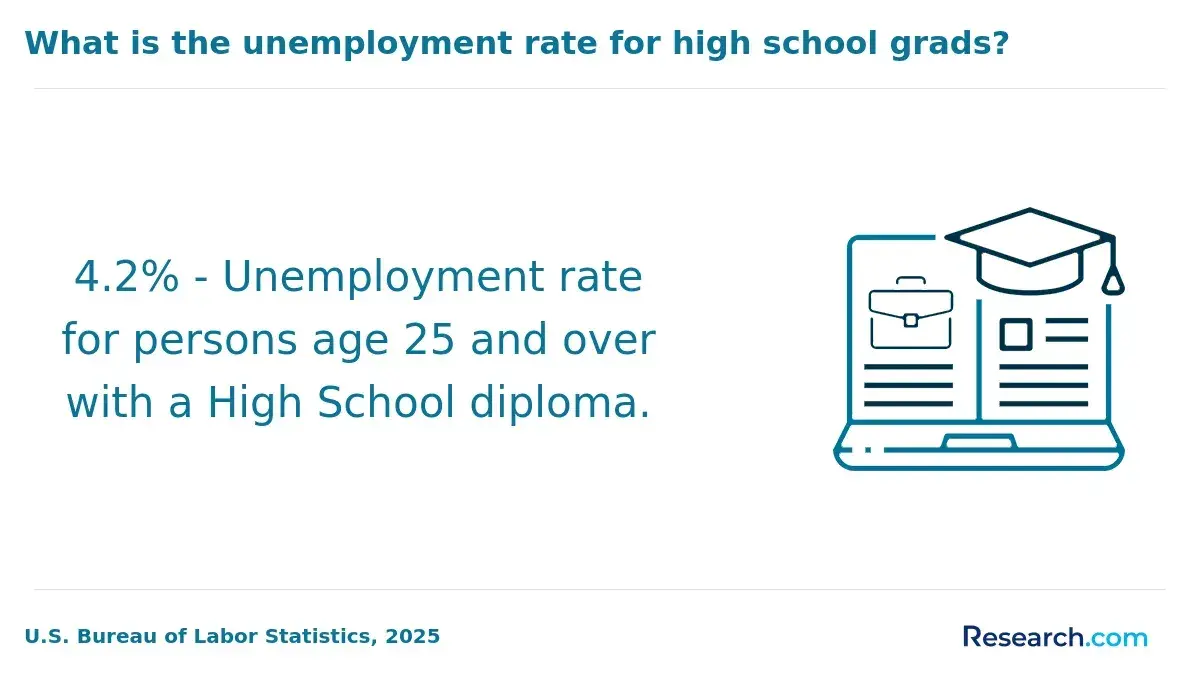
The U.S. Bureau of Labor Statistics reported median weekly earnings of $1,099 for workers with an associate degree in 2024, compared with $930 for those with only a high school diploma. This guide explains how to compare accredited programs, avoid weak options, and decide whether general studies fits your next step.
Key Things You Should Know
- An online associate in general studies usually requires about 60 credits and is strongest for adults who want flexible transfer credit, a broad academic foundation, or a faster way to finish a previously started degree.
- Cost varies widely, but College Board's 2024 pricing data placed average published tuition and fees for public two-year in-district colleges at $4,050 for the 2024-25 academic year, before books, technology, fees, and aid.
- Career outcomes depend heavily on the courses, electives, work experience, and next credential you pair with the degree; BLS May 2024 wage data shows related roles ranging from about $39,680 for customer service representatives to $61,550 for computer support specialists.
What is an online associate degree in general studies and who is it best for?
An online associate degree in general studies is a two-year undergraduate program built around broad college-level coursework rather than one narrow technical major. Most programs include general education classes in writing, math, social science, humanities, natural science, and technology, plus electives that let students shape the degree around transfer plans or career interests.
The degree is commonly offered as an Associate of Arts, Associate of Science, or Associate in General Studies. The exact title matters because it can affect how credits transfer. An Associate of Arts often aligns with liberal arts, business, communication, education, or social science bachelor's programs.
An Associate of Science may include more math, science, or technical electives. A more career-focused associate option may be better if you want immediate preparation for a specific occupation.
This degree is often a strong fit for adults who need flexibility more than a rigid major sequence. It can work especially well for people returning to college with old credits, working adults who need asynchronous classes, military-connected students with training credits, and parents comparing flexible education options such as online courses for stay at home moms.
It may not be the best choice if your target job requires a specific accredited program, state-approved curriculum, clinical placement, lab sequence, or licensure pathway. Nursing, dental hygiene, engineering technology, radiologic technology, accounting licensure, and teacher certification usually require more structured course planning than a general studies degree provides by itself.
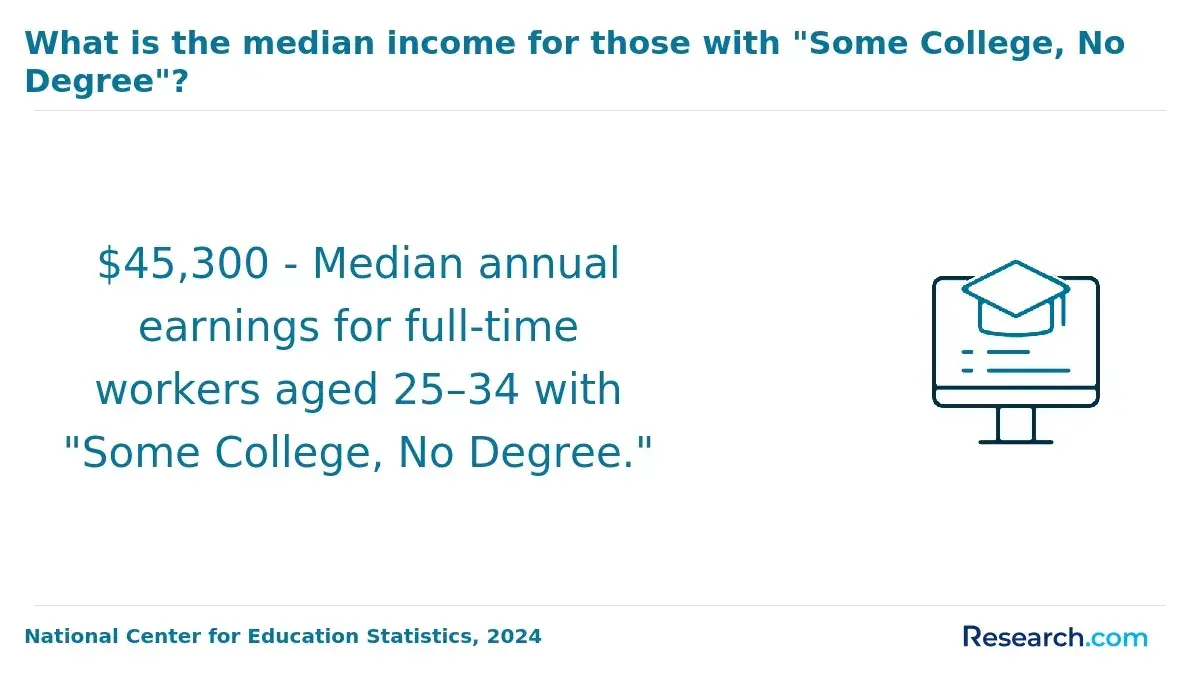
The best way to think about general studies is as a flexible academic platform. It can help you finish an associate degree, prepare for bachelor's transfer, document college-level skills, or meet "some college" and "associate degree preferred" employer requirements. It is less effective when chosen without a clear next step.
Are online general studies associate degrees respected and properly accredited?
Online general studies associate degrees can be respected when they come from properly accredited U.S. institutions and appear on transcripts the same way as comparable campus-based degrees. Employers and transfer universities usually care less about whether courses were online and more about institutional accreditation, course quality, credit applicability, and whether the degree matches the student's goal.
The accreditation check is especially important because a low-quality or unaccredited program can leave students with credits that do not transfer, limited financial aid eligibility, and weaker employer recognition. For an associate degree, the most important baseline is institutional accreditation from an agency recognized by the U.S. Department of Education or the Council for Higher Education Accreditation.
Before enrolling, adults should confirm the following accreditation and transfer details directly with the school and, when relevant, the target bachelor's institution:
- The college is institutionally accredited by a recognized accrediting agency.
- The online program is offered by the same accredited college that awards the transcript and diploma.
- The credits are semester or quarter credits that can be evaluated by other U.S. colleges.
- The program has written transfer agreements, articulation pathways, or a public transfer equivalency tool.
- The school is authorized to enroll online students in the student's state, if state authorization applies.
A common mistake is assuming that "nationally advertised" means "widely transferable." Some legitimate institutions serve specific career or vocational markets, but their credits may not move smoothly into public universities. If your goal is a bachelor's degree, ask the receiving university-not only the associate-granting school-how the courses will transfer.
| Quality signal | Why it matters | Red flag to avoid |
| Recognized institutional accreditation | Supports financial aid eligibility, transfer review, and employer trust | The school claims vague "approval" but does not name a recognized accreditor |
| Clear transfer pathways | Helps adult learners avoid losing credits when moving into a bachelor's program | No public articulation agreements or transfer guidance |
| Transparent online student services | Improves access to advising, tutoring, library help, and tech support | Support is available only during weekday campus hours |
| Published tuition and fees | Allows realistic cost comparison before applying | Tuition is clear, but technology, course, or proctoring fees are hard to find |
How do online general studies associate programs compare with on-campus options for adults?
Online and on-campus general studies associate programs can lead to the same credential, but the student experience is different. For busy adults, the best option is usually the one that fits work hours, caregiving responsibilities, commuting limits, and preferred learning style.
Online programs are often more convenient because many courses are asynchronous, meaning students can watch lectures, complete assignments, and participate in discussions outside scheduled class times. On-campus programs may be better for students who want face-to-face interaction, structured class meetings, in-person tutoring, or access to campus labs and study spaces.
The comparison below summarizes the trade-offs adults should weigh before choosing a format. It is not about which format is universally better; it is about which format reduces the risk of stopping out.
| Factor | Online general studies associate | On-campus general studies associate |
| Schedule flexibility | Strong fit for shift workers, parents, military students, and adults with unpredictable schedules | Better for students who can attend at set times each week |
| Commute and location | No regular campus commute, though exams or labs may occasionally require proctoring | Requires travel but may offer easier access to physical resources |
| Peer and instructor contact | Often through discussion boards, video meetings, email, and learning platforms | More natural face-to-face interaction before and after class |
| Self-management demands | Higher; students must track deadlines and stay engaged without classroom routines | More built-in structure through scheduled meetings |
| Technology requirements | Reliable internet, computer access, learning platform skills, and sometimes webcam proctoring | Technology still matters, but fewer courses may rely entirely on remote delivery |
Adult learners should be honest about their study habits. An accelerated online course can be convenient, but it may compress 15 weeks of work into 7 or 8 weeks. That can be manageable for one course at a time, but risky if paired with full-time work and family obligations.
A good online program for adults should offer more than recorded lectures. Look for academic advising outside normal business hours, mobile-friendly course access, online tutoring, digital library support, clear assignment calendars, and instructors who respond within a published timeframe.
What classes and concentrations are typically offered in a general studies associate program?
General studies programs are broad by design, but they should not feel random. A well-planned associate curriculum helps students satisfy lower-division requirements while choosing electives that support a future bachelor's major, promotion goal, or career change.
Most programs include a mix of core requirements and elective areas. The exact course names vary by college, but adults can usually expect several of the following categories:
- College composition, research writing, and workplace communication
- College algebra, quantitative reasoning, statistics, or another approved math course
- Biology, environmental science, astronomy, chemistry, or another natural science option
- U.S. history, psychology, sociology, political science, or economics
- Humanities courses such as literature, philosophy, ethics, art history, or music appreciation
- Computer applications, digital literacy, information systems, or introductory programming
- Career exploration, student success, leadership, or professional development electives
Some colleges allow informal concentrations or advising tracks even if the diploma still says general studies. These tracks matter because they make the degree more purposeful and can reduce credit loss during transfer.
| Common advising track | Useful course choices | Best fit |
| Business and administration | Accounting, business law, economics, management, communication | Adults seeking office, supervisory, operations, or transfer pathways in business |
| Human services and social science | Psychology, sociology, human services, ethics, statistics | Students considering counseling support, social services, public administration, or psychology transfer |
| STEM transfer preparation | College algebra, precalculus, statistics, biology, chemistry, computer science | Students who may later enter science, technology, health, or quantitative bachelor's programs |
| Communication and humanities | Public speaking, literature, writing, media studies, foreign language | Students considering education, communication, writing, nonprofit, or liberal arts pathways |
If you already know your intended bachelor's major, choose electives backward from that goal. For example, a student considering a mathematics degree online should not fill electives only with unrelated survey courses; they should prioritize algebra, precalculus, calculus readiness, statistics, and any science or programming courses required by the transfer institution.
The biggest curriculum mistake is treating flexibility as permission to choose the easiest courses. Easy electives can help with workload, but too many unrelated credits may delay transfer or force you to retake lower-division prerequisites later.
What are the admission requirements and application steps for online general studies degrees?
Admission requirements for online general studies associate degrees are usually more accessible than selective bachelor's programs. Many community colleges and open-access institutions accept students with a high school diploma or GED, though placement requirements and financial aid documentation still matter.
Busy adults should not confuse "open admission" with "instant enrollment." The steps can take time, especially if you need old transcripts, transfer credit evaluation, FAFSA processing, placement review, or residency documentation for in-district tuition.
A typical application process includes the following steps:
- Confirm the school is accredited and authorized to enroll students in your state.
- Submit the online application and select general studies, liberal studies, or the closest associate pathway.
- Send high school, GED, military, industry training, and previous college transcripts.
- Complete placement steps for math and English unless prior coursework, test scores, or GPA waivers apply.
- File the FAFSA if you plan to use federal, state, or institutional aid.
- Meet with an advisor to map courses to your transfer or career goal before registering.
- Register for a manageable first term, especially if you have not taken online classes before.
Application requirements vary, but adults should prepare several common documents before deadlines. Having these ready can reduce delays and prevent being placed into the wrong course level.
| Requirement | What adults should check | Why it affects fit |
| Prior college transcripts | Whether credits transfer as general education, electives, or major prerequisites | Can shorten the degree and reduce cost |
| Placement review | Whether math or English placement can be waived based on prior coursework | Can prevent unnecessary remedial or prerequisite classes |
| Residency status | Whether online students qualify for in-district, in-state, or separate online tuition | Can change the total cost substantially |
| Technology readiness | Computer, internet, webcam, software, and learning platform requirements | Can affect success in fully online courses |
One practical move is to ask for an unofficial degree audit before enrolling if you have previous college credits. The audit should show how many credits apply, which requirements remain, and whether any transferred credits will still count if you later move into a bachelor's program.
How long does it take to earn an online associate in general studies and what does it cost?
Most online associate degrees in general studies require about 60 semester credits. Full-time students may finish in about two academic years, while part-time adults commonly take longer depending on transfer credits, course availability, work hours, and family responsibilities.
Cost should be evaluated as total cost, not tuition alone. College Board's 2024 data reported average published tuition and fees of $4,050 for public two-year in-district students in 2024-25. That figure is useful as a national benchmark, but your actual cost may differ because online fees, books, technology, residency status, and course load vary by college.
The table below shows major cost factors adults should compare before choosing a program. It can help you spot programs that look affordable at first but become more expensive after fees and credit-transfer limits are included.
| Cost factor | What to compare | Why it matters |
| Tuition rate | In-district, in-state, out-of-state, and online-only rates | Two programs with similar names can have very different pricing |
| Mandatory fees | Technology, course, student services, proctoring, graduation, and transcript fees | Fees can add cost even when tuition appears low |
| Books and materials | Open educational resources, digital access codes, lab kits, and subscriptions | Low-textbook programs can reduce out-of-pocket expenses |
| Transfer credit acceptance | Prior college, military, CLEP, AP, industry training, and portfolio credit policies | Accepted credits can reduce both time and tuition |
| Financial aid eligibility | Federal Pell Grant, state aid, scholarships, employer tuition assistance, and payment plans | A lower net price matters more than the sticker price |
Adults should also compare pacing. A standard full-time schedule might include 12 to 15 credits per term. A working adult may do better with 6 to 9 credits, or even one accelerated course at a time. The "fastest" option is not always the best fit if it increases the chance of withdrawal or failed courses.
To estimate your personal timeline, start with your remaining credits and divide by the number of credits you can realistically complete each term. Then add time for prerequisites, course rotations, and any life constraints. If a program advertises completion in 12 months, ask whether that timeline assumes transfer credits, summer enrollment, or full-time study.
What careers, transfer pathways, and bachelor's degrees can a general studies associate support?
A general studies associate degree can support several next steps, but it is usually strongest as a transfer and advancement credential rather than a direct pipeline into one specific occupation. The degree signals college-level writing, quantitative reasoning, digital literacy, and broad problem-solving skills, which can be useful in administrative, customer-facing, human services, and technical support environments.
Career outcomes depend on the electives you choose and the experience you already have. A student with retail management experience may use the degree to move toward office administration or operations.
A student who chooses computer courses may be better positioned for help desk or technical support roles. A student planning a bachelor's degree can use the associate to complete lower-division requirements before specializing.
The table below connects common goals with practical pathways. Use it to decide whether general studies is enough for now or whether you should choose a more specialized associate program.
| Goal | How general studies can help | When to choose a different path |
| Transfer to a bachelor's program | Completes general education and lower-division electives when carefully aligned | If the bachelor's major has strict prerequisites not built into the plan |
| Move into office or administrative roles | Builds writing, software, communication, and organization skills | If the employer expects accounting, HR, medical office, or legal coursework |
| Enter human services support roles | Provides psychology, sociology, ethics, and communication foundations | If the role requires a state-approved credential, supervised fieldwork, or a bachelor's degree |
| Prepare for technical support | Allows electives in information systems, networking, or programming basics | If you need intensive hands-on IT training or industry certifications quickly |
| Explore multiple majors | Lets undecided students sample disciplines while earning transferable credit | If exploration leads to excess credits that do not apply to a degree plan |
Transfer planning is where the degree can create the most value. Students considering business, psychology, communication, education, public administration, criminal justice, information technology, or liberal arts bachelor's programs may be able to apply many general studies credits. Students considering highly sequenced majors such as engineering should be more cautious and compare prerequisite maps for engineering degrees before selecting electives.
Employers are also paying more attention to skills and credentials beyond the degree title. AI tools, workplace automation, and digital platforms are changing entry-level office and support roles. Adults can improve the usefulness of a general studies degree by adding coursework or certificates in spreadsheet analysis, customer relationship management systems, data literacy, writing with AI tools, cybersecurity basics, or project coordination.
What salary ranges and job outlook can graduates with a general studies associate expect?
Salary expectations for general studies associate graduates should be handled carefully because the degree does not map to one occupation. Pay depends on job function, location, industry, prior experience, technical skills, and whether the graduate continues into a bachelor's program or adds a certificate.
BLS May 2024 wage data is useful for setting realistic expectations across roles that may be accessible with an associate degree, some college, related experience, or additional training. The figures below are occupational medians, not promises for any individual graduate.
| Related role | Typical connection to general studies | Median annual wage, May 2024 | Job outlook context, 2023-2033 |
| Customer service representative | Communication, problem-solving, software use, and service experience | $39,680 | Projected decline as automation and self-service tools expand |
| Bookkeeping, accounting, and auditing clerk | Business, spreadsheet, and accounting electives can help | $49,210 | Projected decline, with stronger prospects for workers who use accounting software well |
| Social and human service assistant | Psychology, sociology, ethics, and human services electives are relevant | $44,240 | Projected growth is stronger than many office support roles |
| Paralegal or legal assistant | Writing and research skills help, but legal coursework or a paralegal certificate may be expected | $61,010 | Projected growth is limited, so specialized training can matter |
| Computer support specialist | Technology electives, troubleshooting skills, and IT certifications can strengthen readiness | $61,550 | Projected growth reflects ongoing demand for technical support |
The main takeaway is that a general studies associate can improve access to roles that value college-level communication and problem-solving, but income potential rises when the degree is paired with marketable skills. For example, data tools, bookkeeping software, help desk platforms, bilingual communication, healthcare administration basics, or HR systems can make a broad degree more job-relevant.
Job outlook also varies by role. Office support jobs are more exposed to automation, while human services and technical support roles may offer more durable demand. Adults should review current job postings in their local area and note whether employers ask for an associate degree, a bachelor's degree, certifications, software skills, or industry experience.
How can busy adults choose the best-fit online general studies associate program?
The best-fit online general studies associate program is the one that helps you finish efficiently while preserving your next options. Rankings can be useful starting points, but adult learners should make the final decision based on accreditation, transfer alignment, total cost, schedule, support, and career relevance.
Use the following steps to compare programs in a practical way before applying. The goal is to avoid paying for credits that do not move you toward employment, transfer, or personal advancement.
- Define your primary goal: finish an associate degree, transfer to a bachelor's program, qualify for promotion, change careers, or explore majors.
- Check institutional accreditation using official accreditor or federal databases, not only marketing pages.
- Request a transfer credit review before committing if you have prior college, military, exam, or workplace learning credits.
- Compare the full net cost after fees, books, financial aid, employer reimbursement, and accepted transfer credits.
- Ask whether online courses are asynchronous, synchronous, accelerated, self-paced, or term-based.
- Review student support hours for advising, tutoring, library help, disability services, career services, and technical support.
- Match electives to your next credential or job target instead of choosing courses only by convenience.
- Confirm transfer rules with the bachelor's institution if a four-year degree is part of your plan.
Adult learners should also watch for common mistakes that can make a flexible degree less valuable. These problems are avoidable when you ask specific questions early.
- Choosing a program because it is fast without checking whether the pace fits your weekly study time
- Looking only at tuition and ignoring fees, books, proctoring, and lost transfer credits
- Assuming every online course is asynchronous when some require live attendance
- Taking electives that do not satisfy bachelor's prerequisites or career requirements
- Waiting until the final semester to ask about transfer pathways
- Ignoring withdrawal, repeat, and satisfactory academic progress rules that can affect financial aid
- Assuming an associate degree alone will qualify you for licensed or regulated occupations
A strong program should make answers easy to find. If admissions staff cannot clearly explain accreditation, transfer credit, course format, total cost, and student support, that is a sign to slow down and compare other options.
| Question to ask | Strong answer looks like | Weak answer looks like |
| How will my previous credits apply? | A written audit showing accepted credits and remaining requirements | A general promise that credits "should transfer" |
| Which bachelor's programs accept this degree? | Named transfer partners, articulation agreements, or course equivalency tools | No documented pathways |
| What is the total estimated cost? | Tuition, fees, books, technology costs, and aid options explained together | Only per-credit tuition is provided |
| How are online classes delivered? | Clear distinction between asynchronous, live, hybrid, and accelerated formats | All courses are simply described as "flexible" |
Are there licenses, certifications, or further education requirements after a general studies associate?
A general studies associate degree does not usually lead directly to a professional license. It is a broad academic credential, so licensing and certification requirements depend on the career you pursue afterward. This distinction matters because some students mistakenly assume any associate degree will satisfy regulated career requirements.
Licensure is most relevant in fields such as education, healthcare, law enforcement, counseling, insurance, real estate, and some technical trades. In those areas, requirements may include a specific major, state-approved coursework, background checks, exams, supervised experience, clinical hours, or continuing education. Always check the state licensing board or employer requirements before relying on a general studies pathway.
For many adults, optional certifications can make the degree more practical. Depending on your goals, you might consider credentials in areas such as:
- Project management fundamentals or agile project support
- Microsoft Office, Excel, bookkeeping software, or data analytics tools
- Google, CompTIA, or other entry-level IT support certifications
- Customer service, sales operations, or CRM platforms
- Medical office administration or billing basics, if aligned with local employer requirements
- Paralegal studies certificates, if your target employers prefer legal-specific training
Further education is often the most important next step if you want higher-paying or more specialized roles. A general studies associate can support transfer into business, psychology, communication, education, criminal justice, information technology, public administration, or liberal studies bachelor's programs.
If your long-term goal includes bilingual communication, teaching, translation support, or international business, comparing a Spanish degree online may help you decide whether to specialize after the associate level.
The smartest approach is to treat the associate degree as phase one. Before your first term ends, identify whether phase two is a job search, certificate, bachelor's transfer, promotion conversation, or licensure-track program. That plan will help you choose electives that make the degree more than a general credential.
Other Things You Should Know About General Studies
They are similar but not always identical. Liberal arts usually emphasizes humanities, social science, communication, and broad academic inquiry. General studies is often more flexible and may allow more career, technical, or transfer electives depending on the college.
Most programs require about 15 to 18 credits each in English composition, college mathematics, and social or behavioral sciences, plus 6 to 9 credits in humanities or natural sciences. Many schools also require 60 total semester credits for graduation, with at least 15 earned at the institution.
Some colleges award credit for prior learning, military training, professional certifications, exams, or portfolios. Policies vary widely, and credit may apply only as electives. Ask for written details about fees, limits, and transferability before using this option.
References
- General Studies https://www.trine.edu/online/degrees/general-studies/online-general-studies-associate.aspx
- Which program type is best for your adult degree completers? https://eab.com/resources/blog/adult-education-blog/program-adult-degree/
- Benefits of earning an Online Associate of Arts in General Studies Degree https://www.tuw.edu/school-news/benefits-of-online-associate-degree-general-studies/
- General Studies Degree Jobs: 10 Careers + Salaries (2026) | Extern https://www.extern.com/post/general-studies-degree-jobs-career-guide