2027 Best Careers After a General Studies Degree

Co-Founder and Chief Data Scientist
A general studies degree can feel flexible and uncertain at the same time: it opens doors, but it does not point to one obvious job title. That matters because the BLS reported a $49,500 median annual wage for all U. S. occupations in May 2024, while many business, management, healthcare, and technology-adjacent roles pay above that level. This guide is for students, adult learners, military-affiliated learners, and recent graduates who want practical career options, salary context, specialization paths, and resume strategies for turning a broad degree into a focused career plan.
Key Things You Should Know
- A general studies degree is strongest when paired with a career target, internship, certificate, minor, or portfolio; by itself, it usually competes best for broad-entry roles in administration, sales, customer success, operations, public service, and business support.
- Realistic higher-paying paths often require experience or added specialization; BLS May 2024 wage data places roles such as management analysts, project management specialists, and administrative services managers near or above the six-figure median range, but these are not automatic first jobs.
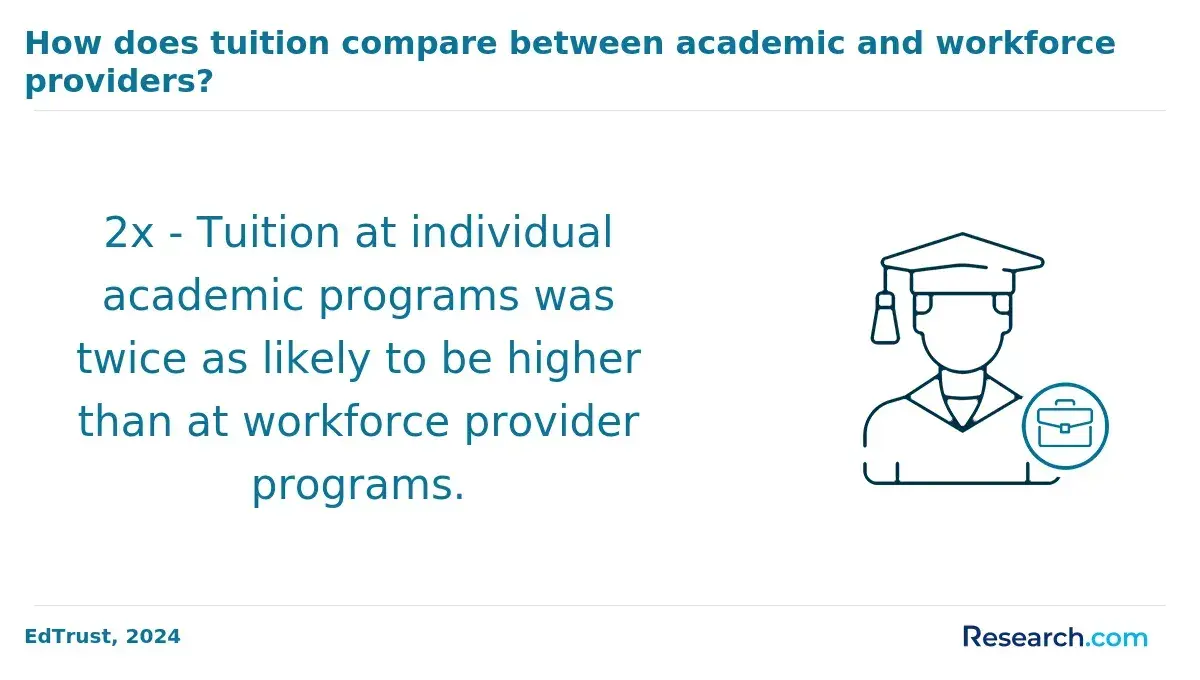
- The best return usually comes from using transfer credits wisely, keeping costs low, and building marketable proof of skills; College Board's 2024 pricing data shows published tuition and fees vary widely by institution type, making program cost a major ROI factor.
What careers can you pursue with a general studies degree in the United States?
A general studies degree is an interdisciplinary credential that lets students combine courses across areas such as humanities, social sciences, business, communication, technology, public administration, and natural sciences. Employers rarely hire for "general studies" as a job title; they hire for skills, work experience, software ability, communication, and evidence that a candidate can solve real workplace problems.
The most practical way to evaluate careers after a general studies degree is to group them by the kind of work they involve. The table below shows common U.S. career directions, what graduates typically do in those roles, and what makes each path a good or weak fit.
| Career direction | Common job titles | Typical responsibilities | Best fit for graduates who |
| Business operations | Operations coordinator, project coordinator, business support specialist | Track workflows, coordinate teams, prepare reports, support process improvements | Like organizing people, timelines, and information |
| Administration and office management | Administrative assistant, office coordinator, executive assistant | Manage schedules, records, communications, purchasing, and office systems | Want a stable entry point into many industries |
| Sales and customer success | Sales representative, account coordinator, customer success associate | Build client relationships, explain products, track accounts, resolve customer issues | Communicate well and are comfortable with performance goals |
| Human resources | HR assistant, recruiting coordinator, training assistant | Support hiring, onboarding, employee records, benefits coordination, and training logistics | Enjoy workplace communication, policies, and employee support |
| Public service and nonprofit work | Program assistant, case aide, community outreach coordinator | Coordinate services, assist clients, prepare grant or program documents, track outcomes | Want mission-driven work and can handle documentation-heavy roles |
| Education support | Admissions counselor, academic advisor assistant, student services coordinator | Help students navigate enrollment, records, programs, and campus resources | Have strong advising, communication, and service skills |
| Technology-adjacent roles | Help desk coordinator, implementation assistant, data entry analyst | Support software users, document issues, maintain records, assist with reporting | Can add technical certificates or software experience |
The strongest career choices are usually those that turn the degree's breadth into a workplace advantage. For example, a graduate who studied psychology, communication, and business may be well positioned for recruiting, customer success, or training roles because those jobs require both people skills and organizational judgment.
Which high-paying jobs are realistic for general studies graduates?
High-paying jobs are realistic for general studies graduates, but they usually require a sequence: enter a relevant field, build specialized skills, document measurable results, and then move into analyst, manager, consultant, or senior specialist roles. The degree can satisfy the bachelor's requirement for many employers, but experience and specialization often determine whether a candidate reaches the higher-paying tier.
The table below highlights higher-paying career targets that can be realistic over time. Salary figures should be used as occupational benchmarks, not promises, because pay varies by region, industry, employer size, experience, and performance.
| Career target | Why it can fit a general studies graduate | Common bridge experience | Salary context |
| Project management specialist | Interdisciplinary graduates often understand communication, timelines, documentation, and stakeholder needs | Project coordinator, operations assistant, Scrum or project management certificate | BLS May 2024 data places this occupation around the six-figure median range |
| Management analyst | The role rewards broad problem-solving, research, writing, and process improvement | Business analyst assistant, operations role, data analysis coursework | BLS May 2024 data reports a median wage above the overall U.S. median |
| Administrative services or facilities manager | Office, vendor, records, compliance, and people coordination experience can lead upward | Office manager, executive assistant, facilities coordinator | BLS May 2024 data places experienced manager roles above many entry-level business jobs |
| Human resources specialist or manager | General studies coursework in communication, psychology, business, and writing can transfer well | HR assistant, recruiting coordinator, HR certificate | Specialist roles can be mid-wage; manager roles generally require more experience |
| Training and development specialist | Graduates who can write, teach, present, and evaluate learning outcomes can build into this path | Trainer assistant, instructional support, LMS experience | Pay improves with industry knowledge and learning technology skills |
| Sales manager or account manager | Performance-based advancement can reward communication, persuasion, and customer insight | Sales representative, customer success associate, CRM experience | Compensation can vary significantly because commissions and bonuses may be involved |
The main mistake is aiming immediately for senior roles that require a specialized employment record. A stronger approach is to choose an entry role in the same job family, then build evidence of outcomes such as reduced processing time, improved customer retention, higher event attendance, cleaner data, or completed projects.
How does a general studies degree compare to specialized majors for career opportunities?
A general studies degree offers breadth, while specialized majors offer clearer signaling. That difference matters in hiring: a degree in accounting, nursing, computer science, or engineering tells employers exactly what technical preparation the applicant has completed, while general studies requires the candidate to explain the connection between coursework and the job.
The comparison below can help students decide whether a general studies path is enough or whether a specialized program would be a better investment. This is especially important for learners considering transfer credits, career changes, or an online business administration degree as a more targeted alternative.
| Factor | General studies degree | Specialized major | Decision guidance |
| Career clarity | Flexible but less obvious to employers | Usually aligned with specific job families | Choose general studies if your goal is broad; choose specialization if a role requires technical preparation |
| Transfer credit efficiency | Often friendly to previously earned credits | May have stricter major prerequisites | General studies can be efficient for adult learners with varied credits |
| Licensure preparation | Usually not designed for licensed fields | Often required for teaching, nursing, counseling, engineering, or accounting licensure | Check state and professional rules before enrolling |
| Employer signaling | Requires a stronger resume narrative | Signals field-specific preparation more directly | General studies graduates should use certificates, projects, and internships to reduce ambiguity |
| Career flexibility | Can pivot across industries | Can be powerful but narrower | Flexibility helps career changers but can slow first-job targeting |
General studies is most attractive when it helps a student finish a bachelor's degree efficiently, especially after changing majors, transferring schools, returning to college as an adult, or combining military, community college, and university credits. It is less ideal for careers with strict prerequisites, such as registered nursing, K-12 teaching licensure, clinical counseling, architecture, engineering, or CPA-track accounting.
What entry-level jobs are available immediately after earning a general studies degree?
Immediately after graduation, most general studies graduates should target roles that value communication, organization, customer service, writing, research, and basic business software. These jobs may not be the final destination, but they can provide the industry experience needed for advancement.
The following entry-level roles are common starting points because they usually evaluate a combination of bachelor's completion, transferable skills, internships, part-time work, and software familiarity rather than one narrow major.
- Administrative coordinator: Supports scheduling, records, purchasing, correspondence, meetings, and office workflows; this is often a practical gateway into healthcare, education, government, finance, and corporate operations.
- Project coordinator: Tracks deadlines, updates task lists, prepares meeting notes, and helps project managers keep teams aligned; strong spreadsheet and documentation skills are important.
- Customer success associate: Helps clients use products or services, resolves issues, and tracks customer accounts; CRM software experience can strengthen applications.
- Recruiting coordinator: Schedules interviews, communicates with candidates, maintains applicant tracking systems, and supports onboarding; coursework in communication or psychology can be useful.
- Program assistant: Supports nonprofit, education, government, or community programs through event coordination, data tracking, outreach, and reporting.
- Sales development representative: Identifies prospects, communicates product value, schedules meetings, and documents interactions; this role can lead to account management or sales leadership.
- Admissions or student services assistant: Helps students with applications, records, advising appointments, and campus resources; this can be a good fit for graduates interested in education administration.
- Help desk or technology support coordinator: Documents support requests, assists users, and escalates technical issues; adding IT fundamentals or software certificates can make this route more competitive.
Applicants who are still finishing a bachelor's program may also compare flexible completion options, including an easiest online bachelor degree path, but the important question is not whether a program is easy. The better question is whether it helps you finish affordably while building a clear career story.
How can general studies graduates specialize their careers through certificates or further education?
Specialization is the main way general studies graduates convert a broad academic background into a sharper career identity. This can be done through certificates, minors, graduate programs, bootcamps, employer training, professional exams, or targeted continuing education.
Cost should be part of the specialization decision. College Board's 2024 pricing data shows average published tuition and fees for 2024-25 were far lower at public two-year colleges than at private nonprofit four-year colleges, which means a short certificate or community college credential may be a lower-risk way to test a field before committing to graduate school.
| Career goal | Useful specialization | When it makes sense | Watch out for |
| Human resources | HR certificate, recruiting tools, employment law basics | You want people operations, recruiting, benefits, or training work | Assuming a certificate replaces experience for manager roles |
| Project management | Project management certificate, Agile or Scrum training, spreadsheet dashboards | You already coordinate tasks, events, teams, or operations | Paying for advanced credentials before meeting experience requirements |
| Data and business analysis | Excel, SQL, Tableau, Power BI, business analytics certificate | You like reporting, patterns, budgets, and process improvement | Building certificates without portfolio projects |
| Healthcare administration | Medical terminology, healthcare compliance, health information basics | You want nonclinical healthcare roles | Confusing administrative jobs with licensed clinical roles |
| Public service or nonprofit | Grant writing, public administration, program evaluation | You want community programs, government, or mission-driven work | Ignoring salary differences between nonprofit sectors and private employers |
| Education and advising | Student affairs, academic advising, counseling prerequisites | You want student support, advising, or later graduate study | Assuming advising support roles are the same as licensed counseling |
Language skills can also be a valuable specialization for public service, healthcare administration, education, tourism, customer support, and international business roles. Military-affiliated learners, for example, may find Spanish programs online for veterans useful when pairing a general studies background with bilingual service or administrative roles.
Before choosing any certificate or graduate program, take these steps to avoid wasting money on credentials that do not match your target job.
- Choose one target job family before enrolling, such as HR, project coordination, healthcare administration, sales operations, or education support.
- Review 20 to 30 real job postings in your region and note recurring software, certificates, years of experience, and degree requirements.
- Compare the credential's total cost, time to completion, employer recognition, and whether it produces portfolio-ready work.
- Ask whether credits can transfer into a future degree if you later continue your education.
- Avoid programs that advertise broad career promises but do not publish curriculum details, accreditation status, student support services, or employer-relevant outcomes.
What industries most frequently hire graduates with a general studies background?
General studies graduates are hired most often in industries where broad communication, coordination, documentation, and service skills matter. The degree can be especially useful in organizations that need adaptable employees who can learn internal systems quickly.
The table below summarizes industries that frequently hire broadly educated graduates and the kinds of roles that tend to be realistic entry points. Use this as a targeting tool for job searches rather than a guarantee that every employer will accept a general studies major.
| Industry | Why general studies can fit | Common roles | Growth or stability factor |
| Healthcare administration | Large systems need nonclinical staff for scheduling, records, compliance, patient support, and operations | Patient services coordinator, administrative assistant, program coordinator | An aging population and complex healthcare systems support ongoing administrative demand |
| Education | Schools, colleges, and training providers need advising, admissions, records, and student support staff | Admissions assistant, student services coordinator, academic support specialist | Demand varies by enrollment trends and institutional budgets |
| Government and public administration | Public agencies value documentation, policy awareness, communication, and service delivery | Program assistant, eligibility worker, administrative analyst trainee | Hiring can be stable but may involve civil service exams or lengthy application processes |
| Nonprofit and community services | Organizations need staff who can coordinate programs, communicate with stakeholders, and track outcomes | Outreach coordinator, volunteer coordinator, grant assistant | Funding cycles can affect job stability |
| Business services | Employers need versatile staff in operations, customer service, HR, and sales support | Operations associate, HR assistant, account coordinator | Experience and measurable results can lead to advancement |
| Technology companies and software vendors | Nontechnical roles require customer communication, documentation, training, and implementation support | Customer success associate, support coordinator, implementation assistant | AI and automation are changing tasks, making software fluency more important |
AI is reshaping these industries by automating routine writing, scheduling, data entry, and customer support tasks. That does not eliminate opportunities, but it raises the bar: graduates who can use AI tools responsibly, verify outputs, protect confidential information, and improve workflows will be more competitive than those who only list general communication skills.
What is the typical salary range and earning growth for general studies majors?
Salary outcomes for general studies majors vary more than outcomes for many specialized majors because graduates scatter across different industries. A graduate entering office support may start below the national median, while a graduate who moves into project management, sales leadership, healthcare administration, or business analysis may eventually exceed it.
BLS May 2024 data reported a $49,500 median annual wage across all U.S. occupations. For general studies graduates, that figure is a useful baseline: early jobs below it may still be worthwhile if they build experience in a higher-upside field, while jobs above it may require stronger specialization or prior work history.
| Career stage | Typical role level | Salary pattern | What usually drives growth |
| First job after graduation | Assistant, coordinator, associate, representative | Often near entry-level pay for the industry | Internships, software skills, customer-facing experience, and a focused resume |
| Early career | Specialist, senior coordinator, account manager, analyst assistant | Can move toward or above the national median depending on field | Owning projects, improving processes, tracking metrics, and gaining certificates |
| Midcareer | Manager, analyst, consultant, program lead | Can become substantially stronger in business, healthcare, technology, or government roles | Leadership experience, budget responsibility, industry expertise, and measurable outcomes |
| Advanced career | Director, senior manager, administrator, entrepreneur | Highly variable and tied to industry, employer, and scope of responsibility | Strategic decision-making, staff supervision, revenue responsibility, or graduate education |
The key salary lesson is that the degree is not the only variable. Location, internships, networking, work history, certificates, industry choice, and willingness to start in a stepping-stone role can matter as much as the major title on the diploma.
What skills from general studies programs are most valued by employers?
General studies programs are valuable when they build transferable skills that employers can see and verify. The challenge is that many graduates describe those skills too vaguely, using phrases such as "good communicator" or "fast learner" without proof.
Employers tend to value the following skills because they apply across departments, industries, and job levels. Each one should be supported by a concrete example on a resume, portfolio, or interview response.
- Written communication: Preparing reports, client emails, policy summaries, grant materials, meeting notes, or research briefs that are clear and accurate.
- Oral communication: Presenting information, leading meetings, explaining procedures, supporting customers, or coordinating across teams.
- Critical thinking: Comparing options, identifying risks, interpreting information, and making recommendations instead of simply repeating facts.
- Research and information literacy: Finding credible sources, organizing findings, checking assumptions, and summarizing what matters for a business or community decision.
- Digital fluency: Using spreadsheets, databases, collaboration platforms, presentation tools, customer relationship management systems, and responsible AI tools.
- Cross-cultural awareness: Working with diverse clients, students, patients, customers, or community members in a respectful and practical way.
- Project coordination: Tracking tasks, deadlines, files, stakeholders, and follow-ups until work is completed.
- Adaptability: Learning new systems and moving between responsibilities without losing accuracy or professionalism.
The strongest candidates translate broad skills into employer language. Instead of saying "interdisciplinary coursework," say that you analyzed data, wrote policy briefs, coordinated team projects, presented findings, or used software to solve an operational problem.
How can general studies graduates build competitive resumes and portfolios for job searches?
A competitive resume for a general studies graduate must answer the employer's unspoken question: "What can this person do for this specific role?" Because the major is broad, your application needs a tighter career focus than a specialized major might require.
Use the following sequence to build a resume and portfolio that make your degree easier for employers to understand.
- Pick one target role family for each resume version, such as HR, operations, admissions, sales support, public service, or healthcare administration.
- Create a headline that connects your degree to the role, such as "General Studies graduate focused on project coordination and business operations."
- Move relevant coursework, certificates, internships, military experience, volunteer work, and part-time jobs near the top if your full-time experience is limited.
- Replace generic duties with measurable outcomes, such as number of events supported, records processed, customers assisted, reports prepared, or team projects completed.
- Build a small portfolio with writing samples, dashboards, presentations, process maps, training materials, research summaries, or project plans.
- Customize keywords from the job posting, especially software, reporting, scheduling, customer service, compliance, CRM, Excel, data entry, or project coordination terms.
- Prepare short interview stories that show problem-solving, conflict resolution, organization, and follow-through.
Common mistakes can weaken otherwise qualified candidates. Watch for these red flags before applying.
- Listing "general studies" without explaining a career focus, concentration, minor, certificate, or relevant coursework.
- Applying to every type of job with the same resume instead of tailoring each application to a role family.
- Assuming a bachelor's degree alone will overcome missing software skills or lack of experience.
- Using AI-generated cover letters without checking accuracy, tone, employer names, or specific job details.
- Ignoring internships, volunteer work, military experience, family business work, or campus leadership that could demonstrate transferable skills.
- Choosing graduate school mainly to avoid the job search rather than because a target role requires advanced education.
A general studies graduate does not need a massive portfolio. Three to five strong samples that show writing, analysis, presentation, organization, and software use can be enough to make a broad degree feel job-ready.
What are the long-term career advancement and leadership opportunities for general studies alumni?
Long-term advancement for general studies alumni often depends on how quickly they specialize after graduation. The degree may help satisfy bachelor's requirements for promotions, but leadership opportunities usually require field knowledge, measurable performance, staff supervision, budgeting, compliance awareness, or graduate-level preparation.
These advancement paths are common for graduates who start in broad support roles and then build direction over time.
- Administration to operations leadership: An administrative assistant can become an office manager, operations coordinator, operations manager, or director of administrative services by taking on process improvement, vendor management, budgets, and staff supervision.
- Customer service to customer success or sales leadership: A customer support role can lead to account management, implementation, sales operations, or sales management when the graduate develops product expertise and client relationship skills.
- Program support to nonprofit or public administration: A program assistant can move into program coordinator, grant manager, community engagement manager, or public administration roles by learning funding, reporting, and compliance systems.
- HR support to people operations: A recruiting coordinator or HR assistant can move toward HR specialist, benefits analyst, training coordinator, or HR manager roles with employment law knowledge and HR systems experience.
- Education support to advising or student affairs: Admissions and student services roles can lead to academic advising, retention, student success, or higher education administration, sometimes with a graduate degree.
- Generalist to counseling-adjacent leadership: Graduates interested in school or student support should distinguish advising from licensed counseling and compare options such as the most affordable online school counseling degrees only if that path fits state requirements and career goals.
Graduate school can be worthwhile when it unlocks a specific role, such as public administration, business leadership, higher education administration, counseling, social work, or healthcare administration. It is less likely to pay off when chosen without a target occupation, cost plan, accreditation check, or understanding of licensing rules.
Other Things You Should Know About General Studies
Yes. Many federal, state, and local government roles accept a bachelor's degree in any field, though some require specific coursework, exams, security clearance, or experience. Read each posting carefully because requirements vary by agency and job series.
It can be a good fit for adult learners who have transfer credits from multiple schools, military training, prior majors, or work experience. The main advantage is flexibility, but adult learners should still choose electives and certificates that support a specific career goal.
Professional certifications can improve hiring prospects for general studies graduates in fields like project coordination, office administration, and customer support. Common options include CAPM from PMI, Google Project Management certificates, and Microsoft Office Specialist credentials. Many employers also value CPR, SHRM, or bookkeeping certificates for specific roles.
References
- How to Build a Job-Search Portfolio Before Graduation https://spanisam.co.za/blog/build-job-search-portfolio-before-graduation
- Career earnings by college major - The Hamilton Project https://www.hamiltonproject.org/data/career-earnings-by-college-major/
- General Studies Degree Jobs: 10 Careers + Salaries (2026) | Extern https://www.extern.com/post/general-studies-degree-jobs-career-guide
- Top Degrees in Demand for the Future: 2026 & Beyond https://skillifysolutions.com/blogs/career-growth/top-degrees-in-demand-for-the-future/
- How does a college degree improve graduates’ employment and earnings potential? - APLU https://www.aplu.org/our-work/4-policy-and-advocacy/publicuvalues/employment-earnings/
- Getting Job-Ready: Web-Based Portfolio & Tools for Recent Graduates - Name.com Blog https://www.name.com/blog/getting-job-ready-web-based-portfolio-tools-for-recent-graduates
- Federal occupations by college major https://help.usajobs.gov/working-in-government/unique-hiring-paths/students/federal-occupations-by-college-major
- A General Studies Degree Is a Launchpad for Career Changers https://www.tuw.edu/gen-ed/general-studies-degree-benefits/
- What Can You Do With a General Studies Degree? https://www.calcoast.edu/news/what-can-you-do-with-a-general-studies-degree