
2027 Gerontology Nurse Practitioner Salary by State

Co-Founder and Chief Data Scientist
Adult-gerontology nurse practitioners (AGNPs) are integral in today’s healthcare system. These advanced practice registered nurses provide primary and specialized care to young adults and the elderly. However, with the growing U.S. aging population, the demand for the gerontology nurse practitioner workforce increasingly rises.
According to the Census Bureau, the number of Americans aged 65 and older grew by 3.1% between 2023 and 2024 alone. This demographic shift highlights the importance of gerontology NPs in addressing the unique health needs of older adults.
In this guide, we will examine how gerontology nurse practitioner salaries vary by state. We will also explore the factors that influence pay and identify the top-paying locations to help you better understand your earning potential across the U.S.
Key Things You Should Know About Gerontology Nurse Practitioner Salaries
- A gerontology nurse practitioner can earn as much as $120,000 yearly, with variations based on location and employer type.
- Entry-level GNPs earn less than seasoned practitioners, but salaries rise steadily with years of practice, advanced certifications, and specialized training.
- Primary care AGNPs earn from $110,000 to $137,000, while acute care AGNPs make between $116,000 to $156,000.
- What is the gerontology nurse practitioner salary by state? State Wages
- What factors affect the gerontology nurse practitioner salary? Salary Factors
- What are the top-paying states for a gerontology nurse practitioner? Top-Paying States
- What are the lowest-paying states for a gerontology nurse practitioner? Lowest-Paying States
- What is the highest-paying region for a gerontology nurse practitioner? Top-Paying Regions
- Which industries pay a gerontology nurse practitioner the most? Top-Paying Industries
- How can a gerontology nurse practitioner increase their income? How can a gerontology nurse practitioner increase their income?
- Can further education and certifications expand career opportunities? Can further education and certifications expand career opportunities?
- How does a gerontology nurse practitioner salary compare to other NPs? How does a gerontology nurse practitioner salary compare to other NPs?
- What are the prerequisites to become a gerontology nurse practitioner? What are the prerequisites to become a gerontology nurse practitioner?
- What is the job outlook for a gerontology nurse practitioner? Job Outlook
- What challenges does a gerontology nurse practitioner face? What challenges does a gerontology nurse practitioner face?
Gerontology Nurse Practitioner Salary by State: 2026 Guide
Gerontology nurse practitioner pay is one of the biggest questions for nurses deciding whether to specialize in adult and older-adult care. The answer is not as simple as one national average. Salaries change by state, practice setting, certification, scope-of-practice rules, cost of living, and whether the role is focused on primary care or acute care.
This guide explains how much adult-gerontology nurse practitioners can earn, where pay is highest and lowest, which industries pay more, how AGNP compensation compares with other nurse practitioner specialties, and what steps can improve long-term earning potential. It is written for registered nurses, BSN graduates, MSN and DNP students, and practicing NPs comparing career or relocation options.
Quick answer: How much does a gerontology nurse practitioner make?
The U.S. Bureau of Labor Statistics does not publish a separate wage category for gerontology nurse practitioners. It reports nurse practitioner pay overall, with a salary of $132,000. The American Association of Nurse Practitioners reports national compensation of $119,000 for adult-gerontology primary care NPs and $125,000 for adult-gerontology acute care NPs.
State-level data from ZipRecruiter shows gerontology nurse practitioner wages ranging from $100,413 in Florida to $152,186 in Washington. BLS nurse practitioner state data shows a broader NP range, with California at $173,190 and Tennessee at $108,180. Because these sources measure different categories, the figures are best used as benchmarks rather than guaranteed earnings.
Gerontology nurse practitioner salary by state
The table below compares ZipRecruiter’s gerontology nurse practitioner annual wage estimates with BLS annual wages for nurse practitioners overall. Use both columns together: ZipRecruiter gives a more specific gerontology-focused estimate, while BLS provides a government-reported comparison point for the wider NP occupation.
| State | GNP Annual Wages (ZipRecruiter) | NP Annual Wages (BLS) |
| Alabama | $121,790 | $109,650 |
| Alaska | $144,708 | $142,340 |
| Arizona | $125,217 | $132,920 |
| Arkansas | $111,110 | $116,030 |
| California | $132,609 | $173,190 |
| Colorado | $141,291 | $127,610 |
| Connecticut | $127,823 | $141,140 |
| Delaware | $134,485 | $130,190 |
| District of Columbia | $151,840 | $137,600 |
| Florida | $100,413 | $128,340 |
| Georgia | $113,459 | $125,490 |
| Hawaii | $139,604 | $135,020 |
| Idaho | $126,427 | $131,380 |
| Illinois | $130,207 | $128,880 |
| Indiana | $127,861 | $126,520 |
| Iowa | $126,208 | $133,020 |
| Kansas | $119,837 | $127,900 |
| Kentucky | $116,703 | $116,930 |
| Louisiana | $114,902 | $124,850 |
| Maine | $130,096 | $127,750 |
| Maryland | $130,410 | $127,100 |
| Massachusetts | $146,747 | $145,140 |
| Michigan | $117,115 | $127,200 |
| Minnesota | $131,603 | $128,120 |
| Mississippi | $127,257 | $122,930 |
| Missouri | $126,039 | $124,600 |
| Montana | $123,330 | $131,560 |
| Nebraska | $128,114 | $127,950 |
| Nevada | $136,829 | $148,670 (2023) |
| New Hampshire | $130,675 | $133,660 |
| New Jersey | $136,416 | $140,470 |
| New Mexico | $130,213 | $136,620 |
| New York | $147,004 | $148,410 |
| North Carolina | $122,115 | $124,830 |
| North Dakota | $142,173 | $121,200 |
| Ohio | $127,744 | $121,250 |
| Oklahoma | $124,067 | $127,120 |
| Oregon | $142,066 | $148,030 |
| Pennsylvania | $134,692 | $126,730 |
| Rhode Island | $131,589 | $139,600 |
| South Carolina | $124,688 | $113,950 |
| South Dakota | $134,369 | $122,300 |
| Tennessee | $121,956 | $108,180 |
| Texas | $125,185 | $130,930 |
| Utah | $122,326 | $131,680 |
| Vermont | $142,868 | $130,580 |
| Virginia | $133,216 | $122,180 |
| Washington | $152,186 | $143,620 |
| West Virginia | $104,024 | $122,140 |
| Wisconsin | $135,626 | $130,490 |
| Wyoming | $129,158 | $126,060 |
These numbers should be interpreted carefully. A higher state salary does not automatically mean a better financial outcome if housing, taxes, commuting, malpractice coverage, or relocation costs are also higher. It is also useful to compare adult-gerontology pay with adjacent NP roles. For example, acute care nurse practitioner compensation is commonly discussed in the $120,000–$130,000 average range, which helps explain why gerontology NP salaries can be competitive in both primary care and acute care settings.
What factors affect the gerontology nurse practitioner salary?
Adult-gerontology NP earnings depend on more than geography. Two nurses with the same certification can earn different salaries if they work in different clinical settings, treat different patient populations, or practice under different state rules. The most important salary drivers are listed below.
- State and local market: Pay tends to rise in areas with higher healthcare labor demand, higher living costs, larger hospital systems, or shortages of advanced practice providers. Rural areas may offer lower base salaries, though some employers may add incentives to recruit clinicians.
- Experience level: New AGNPs usually enter at the lower end of an employer’s pay band. Compensation may improve with stronger diagnostic skills, chronic disease management experience, supervisory duties, or specialty expertise.
- Education and credentials: Graduate preparation, national certification, and specialty training can strengthen negotiating power. MSN- and DNP-prepared nurses generally qualify for advanced practice roles that pay more than BSN-level registered nursing positions.
- Primary care versus acute care focus: Adult-gerontology primary care NPs often manage prevention, chronic illness, medication review, and long-term wellness. Adult-gerontology acute care NPs may work with more medically complex patients in hospitals or specialty units, which can affect salary and shift structure.
- Employer type: Hospitals, specialty practices, outpatient care centers, long-term care organizations, community clinics, research settings, and academic institutions may all use different compensation models.
- Schedule and workload: Evening shifts, weekend coverage, call requirements, overtime, high patient volume, or per diem assignments can increase total income, but they may also increase burnout risk.
- Scope-of-practice environment: State practice rules influence how independently NPs can work. In more restrictive environments, NPs may have fewer opportunities to open practices, bill independently, or negotiate based on autonomous clinical responsibilities.
- Specialty competition: The AANP reports that 68.7% of NPs specialize in family care and 15.1% specialize in adult and geriatric care, making adult-gerontology one of the largest NP specialty areas. Comparing AGNP pay with family nurse practitioner salary and career paths can help nurses decide whether a broad lifespan role or an adult-gerontology focus fits their goals better.
- Total compensation: Base pay is only part of the offer. Retirement contributions, health insurance, paid time off, loan repayment, CME funding, bonuses, malpractice coverage, and relocation assistance can meaningfully change the value of a job.
Salary decision checklist
| Question to ask | Why it matters |
| Is the salary adjusted for cost of living? | A high salary in an expensive metro area may not stretch as far as a lower salary in a lower-cost region. |
| Does the offer include call, nights, weekends, or high patient volume? | Extra pay may come with schedule demands that affect work-life balance. |
| Are benefits competitive? | Strong retirement, insurance, CME, and paid leave can offset a lower base salary. |
| Does the role match AGPCNP or AGACNP training? | Practicing outside the intended population focus or setting can create credentialing and employment problems. |
| What are the state’s NP practice rules? | Practice authority can affect autonomy, job options, and long-term earning potential. |
What are the top-paying states for a gerontology nurse practitioner?
ZipRecruiter’s gerontology nurse practitioner data lists the following states and jurisdictions as the highest-paying locations:
- Washington: $152,186
- District of Columbia: $151,840
- New York: $147,004
- Massachusetts: $146,747
- Alaska: $144,708
BLS data for nurse practitioners overall produces a different top-five list because it measures the full NP occupation rather than gerontology NPs specifically:
- California: $173,190
- New York: $148,410
- Oregon: $148,030
- Massachusetts: $145,140
- Washington: $143,620
New York, Massachusetts, and Washington appear as strong-paying locations across both sets of figures. These states often have large healthcare systems, high demand for advanced practice nurses, and higher living costs. That combination can push salaries upward, but it can also mean higher housing prices, heavier patient demand, and more competitive hiring standards.
Before relocating for pay, compare the full employment package. A role in a high-paying state may be attractive if it also offers manageable workload, loan repayment, schedule flexibility, strong benefits, and a clear advancement path. It may be less attractive if salary gains are absorbed by rent, taxes, transportation, or licensing expenses.
Pay patterns also differ by healthcare occupation. For example, the highest-paying states for dental assistants may not match NP salary patterns because each profession responds to different labor markets, reimbursement structures, education requirements, and employer needs.
What are the lowest-paying states for a gerontology nurse practitioner?
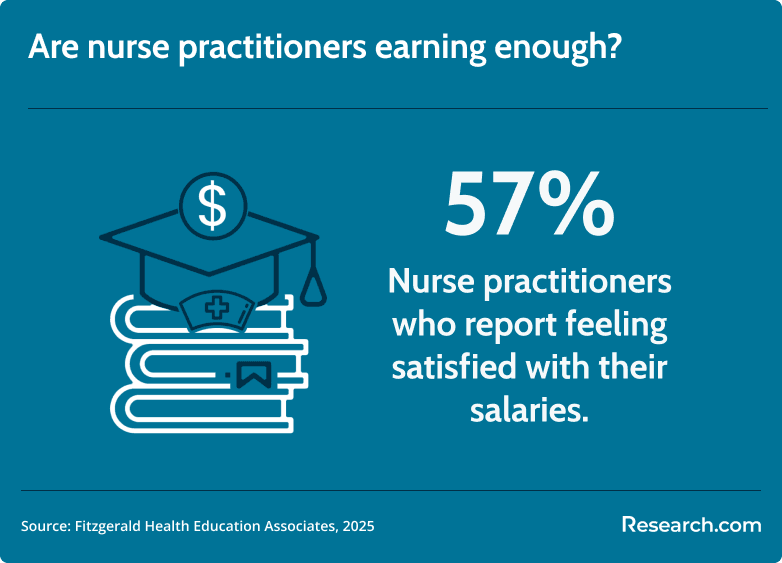
Lower salary states can still be viable career choices, especially when living costs are lower or when employers offer strong benefits. Fitzgerald Health Education Associates reported in a 2025 survey that 57% of NPs said they were satisfied with their current salary, showing that compensation satisfaction depends on more than the paycheck alone.
According to ZipRecruiter, the lowest-paying states for gerontology nurse practitioners are:
- Florida: $100,413
- West Virginia: $104,024
- Arkansas: $111,110
- Georgia: $113,459
- Louisiana: $114,902
Using BLS data for nurse practitioners overall, the lowest-paying states are:
- Tennessee: $108,180
- Alabama: $109,650
- South Carolina: $113,950
- Arkansas: $116,030
- Kentucky: $116,930
Several of these states are in the South, where wages may be lower but living expenses may also be lower. Salary should therefore be compared with cost of living, local demand, commuting burden, health system size, and opportunities for advancement.
Scope-of-practice rules and reimbursement patterns also matter. In states where NPs face more restrictive practice environments, earning potential may be limited by supervision requirements, narrower autonomy, or fewer independent practice opportunities. Nurses who want more flexibility may also compare AGNP roles with non-bedside nursing career options, particularly if their main goal is better work-life balance rather than maximum salary.
What is the highest-paying region for a gerontology nurse practitioner?
Regional compensation can reveal patterns that state-by-state lists do not. According to AANP regional data, Region 2, which includes New York, New Jersey, and Puerto Rico, reports the highest wages for adult-gerontology primary care NPs at $137,000.
For adult-gerontology acute care NPs, AANP identifies Region 9 as the highest-paying region, with compensation around $156,000. Region 9 includes Arizona, California, Hawaii, New Mexico, and Nevada.
Several forces can explain these regional differences. Large metropolitan healthcare systems may compete more aggressively for experienced NPs. States with high living costs may need higher wages to recruit and retain clinicians. Regions with large older-adult populations, major teaching hospitals, and specialized care networks may also create stronger demand for adult-gerontology expertise.
However, a high-paying region is not automatically the best fit for every nurse. Candidates should compare compensation with clinical expectations, patient complexity, state licensure requirements, housing costs, and the availability of positions that match their certification. Students considering faster educational routes, including 12-month NP program options, should also verify whether the program’s population focus aligns with the type of role they want after graduation.
The chart below summarizes estimated AGNP salaries across U.S. regions.
Which industries pay a gerontology nurse practitioner the most?
Gerontology nurse practitioners work across many settings, and each setting pays differently. An AGNP in a primary care clinic may spend much of the day managing chronic conditions, medication regimens, preventive screenings, and care coordination. An AGNP in a hospital may manage acutely ill older adults, post-operative complications, complex diagnoses, and interdisciplinary discharge planning.
Program selection can influence which settings a nurse is prepared to enter. Students comparing accessible NP pathways, including nurse practitioner degree programs, should confirm whether the curriculum prepares them for adult-gerontology primary care, adult-gerontology acute care, or another NP population focus.
BLS data shows the following annual wages for nurse practitioners in selected industries:
- Residential Intellectual and Developmental Disability, Mental Health, & Substance Abuse Facilities: $163,000
- Scientific Research and Development Services: $155,150
- Psychiatric and Substance Abuse Hospitals: $144,860
- Other Ambulatory Health Care Services: $144,240
- Outpatient Care Centers: $143,600
- Specialty Hospitals: $142,270
- Individual and Family Services: $139,070
- General Medical and Surgical Hospitals: $138,340
- Offices of Dentists: $137,170
- Health and Personal Care Retailers: $133,490
The highest-paying industries are not always the easiest to enter or the best fit for every clinician. Some higher-paying roles may involve complex behavioral health needs, specialized populations, research protocols, or higher patient acuity. More common settings, such as hospitals and outpatient care centers, may provide broader job availability, structured onboarding, and clearer advancement ladders.
Industry pay trade-offs for AGNPs
| Work setting | Potential advantage | Trade-off to consider |
| Outpatient care centers | Predictable focus on chronic disease, prevention, and follow-up care | Patient volume and documentation demands can be high |
| General medical and surgical hospitals | Strong exposure to complex cases and interdisciplinary care | May require shifts, weekends, call, or high-acuity work |
| Specialty hospitals | Opportunity to build expertise in focused areas such as cardiology, oncology, or rehabilitation | Roles may require prior specialty experience |
| Research and development services | May offer strong pay and nontraditional career growth | Clinical responsibilities may differ from direct patient-care roles |
| Residential care and behavioral health settings | High need for providers who can manage complex long-term conditions | Cases may involve substantial coordination, behavioral health needs, and family communication |
How can a gerontology nurse practitioner increase their income?
AGNP salary growth is usually the result of deliberate career choices. The most effective strategies combine clinical depth, smart job selection, negotiation, and credentials that match employer demand.
- Earn the right national certification: Adult-gerontology primary care and adult-gerontology acute care credentials lead to different clinical roles. Matching certification to the desired setting is essential for employability and compensation.
- Develop expertise in high-need areas: Older adults often need support with chronic illness, polypharmacy, dementia-related concerns, fall risk, palliative care, rehabilitation, and care transitions. Skill in these areas can make an AGNP more valuable to employers.
- Consider leadership roles: Moving into care management, quality improvement, clinical supervision, education, or operations can increase responsibility and pay. Some NPs compare this route with clinical nurse leader career paths when deciding whether to stay in direct advanced practice or move toward systems-level leadership.
- Evaluate relocation carefully: Working in a higher-paying state can raise income, but licensing, relocation, cost of living, and family considerations should be included. Among traveling nurses, 70% cite higher pay as a reason for choosing travel work, but travel and multistate practice can create additional administrative demands.
- Explore research or academic settings: Some AGNPs move into teaching, clinical research, curriculum development, or program leadership. These roles can expand influence beyond direct patient care.
- Use per diem, overtime, or extra shifts strategically: Additional shifts can increase short-term earnings. The risk is fatigue, especially in high-acuity geriatric practice, so this approach should be balanced with long-term sustainability.
- Negotiate total compensation, not only salary: Ask about loan repayment, CME allowance, paid conference time, malpractice coverage, retirement match, bonus eligibility, paid leave, and schedule flexibility.
Practical steps before accepting a higher-paying AGNP job
- Confirm certification fit. Make sure the role aligns with adult-gerontology primary care or adult-gerontology acute care preparation.
- Compare the full offer. Look at base pay, benefits, call pay, productivity expectations, PTO, retirement, insurance, and CME funding.
- Check state practice rules. Scope-of-practice laws can affect autonomy, supervision, and long-term career options.
- Estimate real take-home value. Factor in housing, taxes, commuting, licensing, and relocation costs.
- Ask about patient load. Higher pay may be tied to higher volume, more complex cases, or less administrative support.
- Review advancement pathways. A job with modest starting pay but clear promotion potential may outperform a higher-paying role with no growth track.
Can further education and certifications expand career opportunities?
Further education can improve career mobility, but it should be chosen with a clear goal. For RNs who do not yet hold a bachelor’s degree, BSN completion can be an important step before graduate-level NP preparation. Flexible options such as online RN-to-BSN programs may help working nurses build the academic foundation needed for later MSN or DNP study.
For current or aspiring AGNPs, the most valuable education is usually aligned with the intended practice setting. A nurse who wants to manage long-term adult primary care needs different preparation from a nurse who wants to treat acutely ill adults in hospitals. Certification, clinical hours, preceptor quality, and program accreditation matter more than convenience alone.
Education and credential options for AGNP career growth
| Option | Best for | What to verify |
| RN-to-BSN | Registered nurses who need a bachelor’s degree before graduate school | Transfer credit policies, accreditation, clinical requirements, and employer tuition support |
| MSN with adult-gerontology focus | Nurses seeking entry into advanced practice | Population focus, certification eligibility, clinical placement support, and state authorization |
| DNP with adult-gerontology focus | Nurses seeking advanced clinical, leadership, quality, or systems-level roles | Accreditation, practicum expectations, project requirements, and cost |
| Post-graduate certificate | NPs adding a new population focus or specialty credential | Eligibility rules, required clinical hours, board certification pathway, and state licensure fit |
How does a gerontology nurse practitioner salary compare to other NPs?
Gerontology NP salaries sit within the broader advanced practice nursing market. Some NP specialties pay more because they involve higher acuity, shortages, inpatient coverage, or specialized prescribing and treatment responsibilities. Others may pay less but offer schedules or patient populations that better match a nurse’s interests.
- Pediatric Nurse Practitioners ($104,066): PNPs care for infants, children, and adolescents. Their work often emphasizes preventive care, developmental monitoring, acute childhood illness, and family education.
- Women’s Health Nurse Practitioners ($106,280): WHNPs provide reproductive, gynecologic, prenatal, and preventive care. They may work in outpatient clinics, community health organizations, and specialty practices.
- Family Nurse Practitioners ($120,000): FNPs treat patients across the lifespan. Their broad training can support work in primary care, urgent care, retail health, and community-based settings.
- Neonatal Nurse Practitioners ($120,171): NNPs manage high-risk newborns, often in neonatal intensive care units. Their work can involve premature infants and medically fragile newborns.
- Home Health Nurse Practitioners ($130,295): These NPs deliver advanced care in patients’ homes, often supporting chronic disease management, recovery, mobility limitations, or end-of-life care. Comparing AGNP pay with home health nurse salary and career pathways can be helpful for nurses drawn to community-based care.
- Psychiatric-Mental Health Nurse Practitioners ($135,000): PMHNPs diagnose and manage mental health conditions, prescribe medications where permitted, and provide treatment planning for issues such as depression, anxiety, and substance use disorders.
Adult-gerontology can be a strong choice for nurses who want to care for adults and older adults over time, manage medically complex patients, and respond to the needs of an aging population. It may not be the best choice for nurses who want to treat children, provide full-family primary care, or focus exclusively on psychiatric care.
The chart below compares salaries across selected advanced practice nurse practitioner roles.
What are the prerequisites to become a gerontology nurse practitioner?
To become a gerontology nurse practitioner, a nurse typically needs an active RN license, a nursing education foundation, graduate-level NP preparation, supervised clinical experience, and national certification in the appropriate adult-gerontology population focus.
The usual pathway begins with RN licensure and often a Bachelor of Science in Nursing. From there, nurses enter an accredited graduate program with adult-gerontology coursework and clinical rotations. Some students pursue an MSN, while others choose a DNP pathway. Flexible doctoral options, including online DNP programs, may support working nurses, but students should never choose a program only because it appears convenient.
Typical pathway to an AGNP role
- Earn RN licensure. Candidates must first qualify as registered nurses and maintain an active license.
- Complete undergraduate nursing preparation. Many graduate programs expect a BSN or equivalent nursing foundation.
- Select the correct AGNP track. Adult-gerontology primary care and adult-gerontology acute care prepare nurses for different work environments.
- Complete graduate coursework and clinical hours. Programs should include advanced assessment, pharmacology, pathophysiology, geriatric care, and supervised practice.
- Pass national certification requirements. Certification requirements vary by role and credentialing body.
- Apply for state APRN licensure. State boards determine practice authority, prescriptive authority, and renewal requirements.
- Maintain continuing education. AGNPs must keep credentials current and stay updated on changes in geriatric care, prescribing, and regulations.
Common program selection mistakes
- Choosing a program without checking accreditation: Accreditation affects certification eligibility, licensure, employer recognition, and financial aid access.
- Assuming every online program meets state requirements: Online delivery does not guarantee approval for practice in every state.
- Ignoring clinical placement support: A program may be academically sound but difficult to complete if students must find preceptors without adequate support.
- Confusing AGPCNP and AGACNP preparation: Primary care and acute care tracks are not interchangeable.
- Focusing only on tuition: Fees, travel, lost work hours, exam costs, and clinical logistics can change the real cost of a program.
What is the job outlook for a gerontology nurse practitioner?
The employment outlook for nurse practitioners remains very strong, and gerontology-focused NPs are well positioned because older adults often require ongoing primary care, chronic disease management, medication review, care coordination, and acute care support.
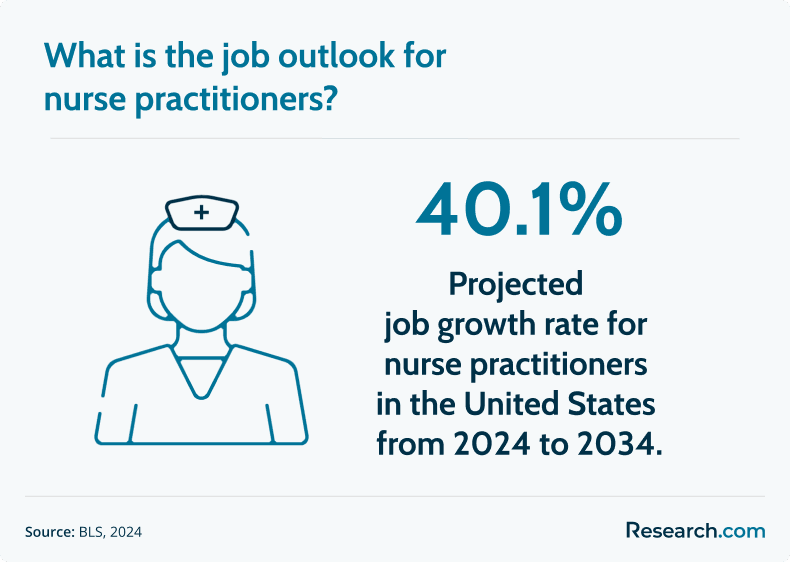
The BLS projects 40.1% growth in NP employment from 2024 to 2034, making nurse practitioner one of the fastest-growing occupations and the third fastest-growing occupation nationwide. BLS projections also indicate around 29,500 annual openings and an estimated 128,400 new practitioners entering the workforce over the decade.
Several trends support demand for AGNPs. The population is aging, chronic conditions are common among older adults, and physician shortages continue to shift more care responsibilities toward advanced practice nurses. In states with broader NP practice authority, AGNPs may have more opportunities to provide care independently or in expanded clinical roles.
Workforce distribution is also important. Research has identified disparities in geriatric workforce availability between urban and rural counties (Xue et al., 2024). That matters because rural and nonmetropolitan communities may need clinicians who can manage complex older-adult care with fewer local specialty resources.
The outlook is not limited to direct patient care. Experienced gerontology NPs may move into leadership, population health, education, informatics, quality improvement, policy, consulting, or care model design. These pathways can extend a career while allowing nurses to influence how older-adult care is delivered.
What challenges does a gerontology nurse practitioner face?
Gerontology nursing can offer strong pay and long-term demand, but the work is not without challenges. Older-adult care often requires clinical judgment, patience, family communication, medication expertise, and coordination across multiple specialists and care settings.
- Reimbursement pressure: Medicare and Medicaid reimbursement can be lower than private insurance reimbursement. That can affect employer budgets and salary flexibility, especially in organizations heavily serving older adults.
- Complex patient needs: AGNPs often care for patients with multiple chronic conditions, functional limitations, cognitive changes, and extensive medication lists. These cases can require more time than standard appointment templates allow.
- Scope-of-practice restrictions: Some states limit NP autonomy. Reduced independence can affect practice ownership, billing opportunities, and negotiating leverage.
- Physician and specialist shortages: The Health Resources and Services Administration projects a 78% shortage of geriatricians by 2037. This may create more demand for AGNPs, but it may also increase workload if health systems rely on NPs to fill major gaps.
- Burnout risk: High patient complexity, documentation burden, caregiver communication, and care coordination can make the role emotionally and administratively demanding.
- Uneven salary growth: Demand for gerontology expertise does not always translate into equal pay increases across every employer or state.
AGNPs can manage these challenges by choosing supportive employers, negotiating workload expectations, building specialty expertise, and pursuing credentials that strengthen mobility. For some nurses, the benefits of a graduate certificate in areas such as leadership, informatics, education, or policy can also expand options beyond a single clinical role.
Questions to ask before choosing gerontology NP as a career
- Do I want to focus primarily on adults and older adults?
- Am I more interested in long-term primary care or acute hospital-based care?
- Can I manage complex medication, chronic disease, cognitive, and caregiver issues?
- Does my target state allow the level of NP practice autonomy I want?
- Will my chosen program qualify me for the certification and license I need?
- Does the salary justify the cost of graduate education, clinical hours, certification, and licensure?
- Do I want to remain in direct care, or eventually move into leadership, teaching, research, or policy?
References
- American Association of Nurse Practitioners. (2025, February). Facts about NPs. Retrieved September 5, 2025, from https://npweek.aanp.org/np-facts
- American Association of Nurse Practitioners. (2024). Regional Compensation Brief. https://storage.aanp.org/www/documents/no-index/research/Regional_Compensation_Briefs.pdf
- Fitzgerald Health Education Associates. (2025). 2025 Nursing Practitioner Salary Guide. https://www.fhea.com/salary-guide
- Nurse.com. (2024). 2024 Nurse Salary and Job Satisfaction Report. https://www.nurse.com/solutions/resources/reports/2024-nurse-salary-and-job-satisfaction-report
- PayScale. (2025, August 9). Average Women's Health Nurse Practitioner (NP) Salary. Retrieved September 5, 2025, from https://www.payscale.com/research/US/Job=Women%27s_Health_Nurse_Practitioner_(NP)/Salary
- U.S. Bureau of Labor Statistics. (2024). Nurse practitioners [Interactive data]. Occupational Employment and Wage Statistics (OEWS) Profiles. Retrieved September 5, 2025, from https://data.bls.gov/oesprofile
- U.S. Bureau of Labor Statistics. (2025, April 18). Occupational projections, 2023–33, and worker characteristics, 2023 (Numbers in thousands). Employment Projections. https://www.bls.gov/emp/tables/occupational-projections-and-characteristics.htm
- U.S. Census Bureau. (2025, June 26). Older Adults Outnumber Children in 11 States and Nearly Half of U.S. Counties. https://www.census.gov/newsroom/press-releases/2025/older-adults-outnumber-children.html
- ZipRecruiter. (n.d.). What Is the Average Gerontology Nurse Practitioner Salary by State. Retrieved September 5, 2025, from https://www.ziprecruiter.com/Salaries/What-Is-the-Average-Gerontology-Nurse-Practitioner-Salary-by-State
Key Insights
- Gerontology NP salary data requires context. BLS reports nurse practitioner pay overall at $132,000, while AANP reports $119,000 for adult-gerontology primary care NPs and $125,000 for adult-gerontology acute care NPs.
- State pay varies widely. ZipRecruiter lists Washington at $152,186 and Florida at $100,413 for gerontology nurse practitioners, while BLS NP data identifies California at $173,190 and Tennessee at $108,180.
- Highest salary does not always mean best financial outcome. Cost of living, benefits, taxes, workload, call requirements, and relocation costs can change the real value of an offer.
- Industry choice matters. Some less traditional settings, including residential care and research-related industries, report higher NP wages, but may also involve specialized populations or different responsibilities.
- Certification fit is critical. Adult-gerontology primary care and adult-gerontology acute care prepare nurses for different roles. Choosing the wrong track can limit job options.
- The job outlook is strong. BLS projects 40.1% NP employment growth from 2024 to 2034, with around 29,500 annual openings and an estimated 128,400 new practitioners over the decade.
- Smart career planning can raise earnings. AGNPs can improve income potential through specialty expertise, leadership roles, strategic relocation, per diem work, advanced education, and careful negotiation of total compensation.
Other Things You Should Know About Gerontology Nurse Practitioner Salaries
The Adult-Gerontology Primary Care Nurse Practitioner certification from the ANCC or AANP can support higher pay, especially in hospitals and specialty clinics. Employers often value national certification, an active RN license, and state APRN licensure, and many roles require a master’s or DNP degree.
Certification requirements, including state-specific credentials and exams like the AGNP certification, can impact salary levels for gerontology nurse practitioners. States with more rigorous criteria may offer higher salaries to attract qualified professionals capable of meeting these standards.


