2027 Nevada Nursing License Requirements

Co-Founder and Chief Data Scientist
Getting a Nevada nursing license is the step that turns nursing education into legal authority to practice. For new graduates, nurses moving into Nevada, LPN candidates, RN-to-BSN students, and nurses considering advanced practice, the main challenge is not only passing the NCLEX. It is understanding which license fits the career goal, which documents the Nevada State Board of Nursing expects, how renewal works, and how Nevada’s nonparticipation in the Nurse Licensure Compact affects mobility.
This guide explains the Nevada nursing license process in practical terms. You will learn the main license types, education and exam requirements, application steps, renewal expectations, endorsement rules for out-of-state nurses, continuing education obligations, advancement options, and common mistakes to avoid before investing time and money in a nursing pathway.
Quick answer: How do you become a licensed nurse in Nevada?
To become licensed as a nurse in Nevada, you generally need to complete an approved nursing program, apply through the Nevada State Board of Nursing, submit required documents and fees, complete fingerprinting and a criminal background check, and pass the appropriate NCLEX exam. RN applicants take the NCLEX-RN, while practical nursing applicants take the NCLEX-PN. Nurses already licensed in another state usually apply by endorsement instead of retaking the NCLEX.
Nevada nursing graduates performed strongly on the licensure exam, with a total NCLEX-RN pass rate of 91.5% throughout 2023. That result reflects the importance of choosing a program that prepares students for both classroom learning and hands-on clinical decision-making.
Key things you should know about Nevada nursing licenses
- Licensing authority: The Nevada State Board of Nursing (NSBN) regulates nursing licensure, nursing practice standards, applications, renewals, and disciplinary compliance in the state.
- Required exam: RN candidates must pass the NCLEX-RN, while practical nursing candidates must pass the NCLEX-PN before they can be licensed.
- Education requirement: Applicants must graduate from an accredited or state-approved nursing program that includes classroom instruction and supervised clinical training. RN candidates commonly complete an Associate Degree in Nursing (ADN) or a Bachelor of Science in Nursing (BSN).
- Application basics: Applicants submit a nursing license application, pay a fee of approximately $100, and provide proof of education, exam eligibility or completion, and other required records to the Nevada State Board of Nursing.
- Background review: Fingerprinting and a criminal background check are required. Applicants must disclose prior convictions, which may affect eligibility depending on the facts of the case.
- Nevada nursing license overview
- Nevada nursing license types
- Nevada nursing license requirements
- How to apply for a Nevada nursing license
- Nevada nursing license renewal
- Nurse Licensure Compact status in Nevada
- Advanced nursing training options
- RN to BSN online programs without clinicals
- Future trends for Nevada nurses
- Paramedic to RN transition options
- Nevada nursing license fees and timelines Fee planning details
- LPN requirements in Nevada
- Medical billing and coding career add-ons
- Financial aid for Nevada nursing students
- Nurse midwife certification in Nevada
- LVN pathway information
- Licensure by endorsement for out-of-state nurses
- Continuing education support in Nevada
- Career advancement for Nevada nurses Endorsement guidance
- Nursing schools in Nevada
- NCLEX preparation tips and resources
What is a Nevada nursing license and why is it necessary?
A Nevada nursing license is the state-issued credential that permits a person to practice nursing in Nevada. It shows that the nurse has met minimum education, examination, and background requirements and is accountable to the Nevada State Board of Nursing for safe professional conduct.
The Nevada State Board of Nursing is the main regulator for nursing licensure in the state. It reviews applications, verifies qualifications, enforces nursing rules, manages disciplinary matters, and protects patients by ensuring that only eligible individuals are authorized to provide nursing care.
A nursing license matters for three practical reasons:
- Patient protection: Licensing screens applicants for education, exam readiness, and professional fitness before they can care for patients.
- Consistent practice standards: State licensure defines the baseline knowledge and skills expected of nurses across hospitals, clinics, long-term care facilities, community health settings, and other practice environments.
- Professional accountability: Licensed nurses are responsible for their clinical decisions, documentation, communication, delegation, and adherence to state rules.
Licensure also affects career flexibility. A current Nevada license can support employment in traditional staff nursing roles, specialty positions, leadership tracks, and travel assignments. Nurses comparing mobility and compensation should also review how travel contracts work and what affects pay in different states; Research.com’s guide on travel nurse salary by state can help with that broader career planning.
| Why licensure matters | What it means for nurses | What it means for patients and employers |
| Legal authority to practice | You cannot independently work as a nurse in Nevada without the appropriate state license. | Employers can verify that the nurse has met Nevada’s entry requirements. |
| Public safety oversight | Your practice is subject to state rules, renewal standards, and discipline if standards are violated. | Patients receive care from professionals who meet minimum education and competency expectations. |
| Career eligibility | Licensure is required for most RN, LPN, APRN, and specialty nursing jobs. | Healthcare organizations can hire staff who are legally qualified for assigned duties. |
What types of nursing licenses are available in Nevada?
Nevada offers several nursing licensure pathways. The right option depends on how quickly you want to enter the workforce, how much responsibility you want, whether you plan to specialize, and whether you are willing to complete graduate-level education later.
| License or role | Typical education route | Required exam or certification | Best fit for |
| Licensed Practical Nurse (LPN) | State-approved practical nursing program, often designed as a shorter entry pathway | NCLEX-PN | Students who want a faster route into bedside support roles under RN or physician supervision |
| Registered Nurse (RN) | ADN, BSN, or qualifying nursing diploma program with clinical training | NCLEX-RN | Students seeking broader patient care responsibilities, care coordination duties, and more advancement options |
| Nurse Practitioner (NP) | Graduate nursing education at the master’s or doctoral level after RN preparation | National certification exam in the specialty area | RNs who want advanced clinical authority, including diagnosis, treatment planning, and prescribing responsibilities where permitted |
An RN license is often the central credential for long-term nursing mobility. It can lead to bedside nursing, public health, case management, specialty certification, administration, education, and graduate study. Nurses who want to move from RN practice into advanced practice can review Research.com’s explanation of how to go from RN to nurse practitioner.
Advanced practice may offer more autonomy and specialization, but it also requires more education, higher academic commitment, and a larger scope of responsibility. Nurse practitioners are projected to see a 38% increase in employment from 2022 to 2032, but applicants should still evaluate program cost, clinical placement expectations, certification rules, and whether the specialty fits their preferred patient population.
Which Nevada nursing license should you pursue?
- Choose the LPN pathway if your priority is entering nursing sooner and you are comfortable working in a more supervised practical nursing role.
- Choose the RN pathway if you want stronger long-term flexibility, broader clinical responsibility, and a foundation for specialty or graduate education.
- Choose an NP or APRN pathway if you are already committed to graduate school and want advanced clinical practice in a defined population or specialty area.

What are the requirements for a Nevada nursing license?
The Nevada nursing license process is designed to confirm that applicants have the education, clinical preparation, exam readiness, and background clearance needed for safe practice. The exact requirements depend on whether you are applying as an LPN, RN, APRN, new graduate, out-of-state nurse, or internationally educated nurse.
| Requirement | What applicants should prepare | Why it matters |
| Nursing education | LPN candidates complete a practical nursing certificate or program. RN candidates complete a qualifying degree or diploma program. | Nursing programs provide the theory, lab practice, clinical judgment, and supervised patient care experience needed before licensure. |
| Clinical preparation | Clinical experiences are built into approved nursing programs and may occur in hospitals, clinics, long-term care facilities, and other settings. | Clinical training helps students apply classroom concepts to real patient care under supervision. |
| Licensure examination | RN candidates take the NCLEX-RN. Practical nursing candidates take the NCLEX-PN. | The NCLEX measures whether a candidate is prepared for safe entry-level nursing practice. |
| Application documents | Applicants submit the Nevada Nurse Portal application, fee, official transcript showing degree and graduation date, and any other required materials. | Complete documentation helps the Board verify eligibility and avoid processing delays. |
| Fingerprinting and background check | Applicants provide a fingerprint card or complete the required fingerprinting process. | The background check supports public safety and professional accountability. |
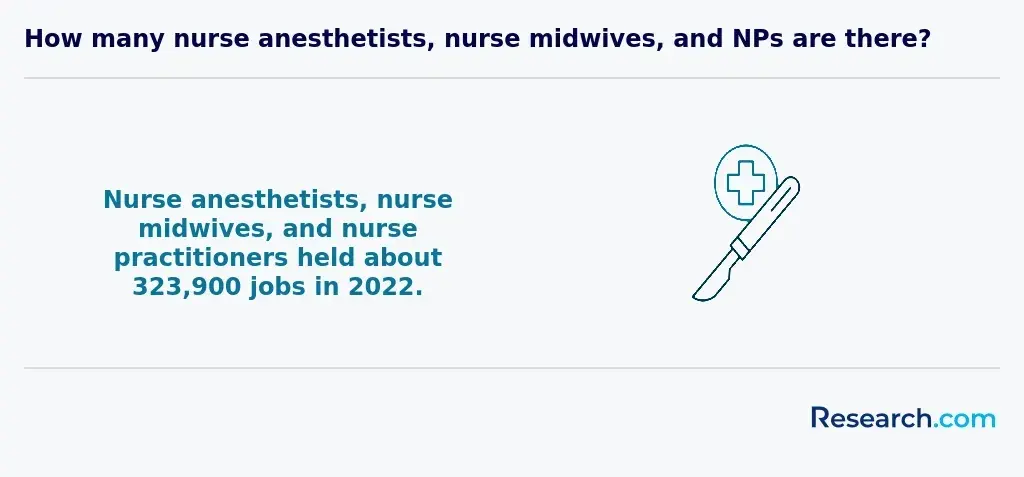
Nationally, nurse anesthetists, nurse midwives, and nurse practitioners held approximately 323,900 jobs in 2022. In Nevada, the U.S. Bureau of Labor Statistics reported around 25,890 RNs and 2,040 NPs. These figures show that nursing is not a single-track occupation; licensure can support multiple levels of clinical practice and specialization.
If you are already a nurse and want to add an advanced specialty, graduate certificates may be relevant. For example, Research.com reviews online post master's nurse practitioner programs for nurses who already hold graduate preparation and want a focused family nurse practitioner route.
Questions to ask before choosing a Nevada nursing program
- Is the program approved or properly accredited for Nevada licensure preparation?
- Does the curriculum include the clinical experiences required for your intended license?
- What is the program’s recent NCLEX preparation record?
- Will the school send official transcripts directly to the Nevada State Board of Nursing if required?
- Does the program support students with exam review, tutoring, simulation labs, and clinical placement guidance?
- If the program is online, does it meet Nevada’s licensure expectations and clinical requirements?
How do you apply for a nursing license in Nevada?
Applying for a Nevada nursing license is a document-driven process. Delays often happen when transcripts are missing, fingerprints are incomplete, fees are not submitted correctly, or the applicant uses the wrong application type. Start by confirming whether you are applying by examination, endorsement, renewal, or advanced practice recognition.
- Select the correct application route. New graduates usually apply by examination. Nurses already licensed in another state typically apply by endorsement.
- Complete the Nevada Nurse Portal application. Enter accurate personal, education, and professional information and review it before submitting.
- Pay the required fees. Fees can change, so applicants should confirm the current amount with the Nevada State Board of Nursing before budgeting.
- Submit fingerprinting and background check materials. Follow the Board’s instructions carefully, including location, format, and timing requirements.
- Send official education records. Applicants generally need official transcripts from the nursing program showing the degree and graduation date.
- Register for the NCLEX if applying by examination. RN candidates prepare for the NCLEX-RN; practical nursing candidates prepare for the NCLEX-PN.
- Monitor application status. Check for Board requests and respond quickly if additional documentation is needed.
Students still comparing schools or trying to reduce educational cost can review Research.com’s list of affordable online nursing programs, but cost should not be the only deciding factor. Licensure alignment, clinical support, accreditation, and NCLEX preparation are just as important.
The nursing workforce has continued to expand in advanced roles. The number of nurse practitioners in the U.S. more than doubled from approximately 91,000 to 190,000 between 2010 and 2017. Most U.S. nurses are RNs, with 95% of the workforce holding this credential, and many APRN pathways require RN licensure before graduate practice.
The chart below shows how nursing license types are distributed across the U.S. workforce.
How often do you need to renew your nursing license in Nevada?
Nevada nursing licenses must be renewed every two years. Renewal is not the same as initial licensure: nurses do not repeat the entire first-time application process, but they must meet continuing education, fee, and status reporting requirements to keep the license active.
| Renewal step | What to do | Common risk |
| Track your renewal date | Know when your two-year cycle ends and begin renewal preparation early. | Waiting until the deadline can lead to missed CE documentation or late fees. |
| Complete continuing education | Meet the required continuing education hours for your license type and renewal period. | Taking courses that do not qualify can leave you short of required hours. |
| Submit renewal application | Complete the renewal process online when available and report required updates. | Incorrect personal or employment information can trigger follow-up requests. |
| Pay renewal fees | Budget for the renewal cost before the deadline. | Assuming fees are unchanged without checking the Board’s current schedule can cause problems. |
Continuing education is not only a compliance task. It can help nurses stay current on medication safety, infection control, opioid-related issues, emerging health concerns, technology changes, and specialty practice expectations. Nurses who plan to move into psychiatric advanced practice may also compare options such as affordable online psychiatric nurse practitioner programs.
The World Health Organization has predicted a significant shortage of healthcare professionals by 2030. For Nevada nurses, maintaining an active license and building updated competencies can support both employability and patient care quality as workforce needs evolve.
Can a Compact Nurse practice in Nevada?
The Nurse Licensure Compact (NLC) allows eligible RNs and LPN/VNs to practice in multiple compact states with one multistate license. The compact was enacted in 2018 to improve nurse mobility, simplify cross-state practice, and help address staffing needs.
As of now, 42 states participate in the NLC. Nevada is not one of them. Even though a 2022 Board survey found that 92% of Nevada nurses support enacting the NLC, nurses who hold compact licenses from other states still need Nevada authorization before practicing in Nevada.
In practical terms, a compact license does not automatically permit practice in Nevada. Nurses moving to Nevada or taking Nevada-based assignments should apply for licensure by endorsement and wait for proper authorization before beginning work.
What advanced training options can boost your nursing specialization in Nevada?
Advanced training can help Nevada nurses move from general practice into specialty, leadership, and advanced clinical roles. Options may include specialty certification preparation, graduate nursing programs, leadership training, informatics coursework, emergency care education, chronic disease management training, or advanced practice preparation.
For nurses who want expanded clinical authority in primary care or specialty care, Nevada-based graduate pathways may be worth comparing. Research.com’s overview of nurse practitioner programs in Nevada can help RNs evaluate program options connected to advanced practice goals.
When advanced training makes sense
- You want to qualify for roles that require specialty certification or graduate education.
- You are ready for greater responsibility in assessment, care planning, patient education, leadership, or diagnosis and treatment.
- Your employer offers tuition support or advancement opportunities tied to higher credentials.
- You have confirmed that the program aligns with Nevada licensure, certification, or employer expectations.
Are flexible RN to BSN online programs without clinicals a viable option for Nevada nurses?
RN to BSN programs can be useful for licensed RNs who want a bachelor’s degree without leaving the workforce. Some online programs emphasize leadership, evidence-based practice, population health, quality improvement, and professional development rather than traditional bedside clinical placements.
Programs described as “no clinicals” should be reviewed carefully. Nurses should confirm whether the curriculum includes projects, community-based assignments, practicum-style work, or employer-based learning activities, and whether the program is properly accredited and accepted by employers or graduate schools. Research.com’s guide to RN to BSN online programs with no clinicals can help Nevada RNs compare flexible completion options.
| RN to BSN format | Potential advantage | What to verify before enrolling |
| Online with no traditional clinicals | May be easier to complete while working as an RN | Accreditation, project requirements, employer acceptance, and graduate school recognition |
| Online with practicum or field projects | Can connect coursework to current workplace problems | Whether your employer or local setting can support required activities |
| Campus or hybrid RN to BSN | May offer more direct faculty contact and local networking | Schedule fit, commuting time, tuition, and transfer credit policies |
What future trends should Nevada nurses be aware of?
Nevada nurses should expect continued change in how care is delivered, documented, coordinated, and staffed. Telehealth, digital charting, remote monitoring, data-informed care management, and team-based practice are reshaping daily nursing responsibilities. These shifts do not replace core nursing judgment, but they do require stronger comfort with technology, patient education, and interdisciplinary communication.
Regulatory awareness also matters. Because Nevada is not currently part of the Nurse Licensure Compact, nurses should monitor any future compact-related legislative changes and confirm practice authority before accepting cross-state or telehealth work. New graduates who want a step-by-step overview of the full career path can use Research.com’s guide on how to become a nurse in Nevada.
How can paramedics transition to RN roles in Nevada?
Paramedics who want to become RNs may be able to use bridge-style nursing programs that recognize prior emergency care experience while adding the nursing theory, clinical judgment, patient care planning, and broader scope required for RN practice. These programs are not shortcuts around licensure; graduates still need to meet Nevada requirements and pass the NCLEX-RN.
A paramedic to RN bridge program can be a strong fit for experienced emergency responders who want to move into hospital nursing, emergency department nursing, critical care pathways, or broader patient care roles. Before enrolling, paramedics should verify program approval, transfer credit rules, clinical placement expectations, and NCLEX-RN preparation support.
What are the licensing fees and processing timelines for Nevada nursing licenses?
Nevada nursing applicants should plan for more than one cost. The process can include an application fee, fingerprinting and background check costs, document verification expenses, transcript fees, NCLEX-related costs, and renewal fees later. The original application fee is approximately $100, but applicants should always confirm the current fee schedule with the Nevada State Board of Nursing because fees may change.
Processing time varies based on application type, document completeness, background check processing, transcript receipt, and Board workload. Initial applications commonly take longer than straightforward renewals because more documents must be verified. The best way to avoid delays is to submit a complete application, use the correct application category, and respond quickly to any Board request.
Healthcare professionals comparing other licensed roles in Nevada may also find Research.com’s guide on how to become a licensed pharmacist in Nevada useful for understanding how another regulated healthcare pathway handles education, licensing, and professional requirements.
What are the requirements to become a LPN in Nevada?
To become an LPN in Nevada, candidates must complete a state-approved practical nursing program, build foundational skills in patient care and pharmacology, complete required supervised clinical learning, apply to the Nevada State Board of Nursing, pass the NCLEX-PN, and satisfy background check requirements.
LPN roles can be a practical entry point for students who want to begin nursing work sooner than a traditional RN route may allow. However, LPNs work within a more limited scope and often under RN or physician supervision. Students who want broader responsibility or future graduate study should compare LPN, ADN, BSN, and bridge pathways before choosing. For a focused state-specific breakdown, see Research.com’s guide on how to become an LPN in Nevada.
Can pursuing medical billing and coding certification boost your career in Nevada?
Medical billing and coding is not a substitute for a nursing license, but it can expand a nurse’s understanding of documentation, reimbursement, compliance, insurance claims, and healthcare operations. This can be especially useful for nurses interested in case management, utilization review, clinic administration, revenue cycle support, quality improvement, or non-bedside healthcare roles.
Nurses considering administrative or hybrid clinical-business roles can explore medical billing and coding certification in Nevada to see whether the credential fits their career goals. The strongest reason to add this skill is not simply to collect another certificate, but to support a clear move into healthcare operations or documentation-heavy positions.
Are there financial aid options and scholarship opportunities for Nevada nursing students?
Nursing school can involve tuition, fees, books, uniforms, equipment, transportation, exam costs, background checks, and lost work hours during clinical rotations. Nevada nursing students should compare federal aid, institutional scholarships, state-specific awards, employer tuition reimbursement, professional association scholarships, and school-based payment plans before borrowing.
Financial aid decisions should be tied to program quality and licensure fit. A low-cost program is not a good investment if it does not support Nevada licensure, provide adequate clinical preparation, or prepare students for the NCLEX. Students comparing distance learning options can review Research.com’s list of online nursing programs in Nevada and then confirm financial aid details directly with each school.
Ways to reduce nursing education costs
- Ask whether prerequisite credits can transfer before enrolling.
- Compare total program cost, not just per-credit tuition.
- Check whether clinical travel, lab fees, testing fees, and uniforms are included.
- Ask employers about tuition assistance if you already work in healthcare.
- Apply early for scholarships with deadlines before the academic year begins.
- Confirm that online program eligibility matches your state residency and licensure plans.
What are the certification requirements for becoming a nurse midwife in Nevada?
Nurse midwifery is an advanced practice pathway. Candidates generally need an active RN license, graduate education in nurse-midwifery from an appropriately accredited program, required clinical preparation, and successful completion of a nationally recognized certification exam. State-specific requirements should be verified with the Nevada State Board of Nursing before enrollment.
This pathway is best suited for nurses who want to focus on reproductive health, pregnancy, childbirth, postpartum care, and related patient education. Because it requires graduate-level preparation, students should compare program accreditation, clinical placement support, certification outcomes, and state practice requirements. Research.com provides more detail in its guide to nurse midwife education requirements in Nevada.
How can I transition to an LVN role in Nevada?
The term LVN is commonly used in some states, while Nevada uses the LPN designation for practical nursing. If you are researching LVN roles in Nevada, make sure you are looking at Nevada’s practical nursing requirements rather than assuming terminology from another state applies automatically.
The practical nursing route generally involves completing an approved vocational or practical nursing program, passing the required standardized exam, and meeting Nevada Board application and background requirements. For a focused explanation, see Research.com’s guide on how to become an LVN in Nevada.
How can nurses licensed in other states obtain a license in Nevada?
Nurses who already hold a license in another state usually apply for a Nevada license by endorsement. Endorsement allows qualified nurses to seek Nevada authorization without retaking the NCLEX, provided they meet the Board’s requirements.
- Submit the endorsement application. Use the Nevada State Board of Nursing application for nurses licensed in another jurisdiction.
- Provide proof of active licensure. Applicants must verify their current out-of-state license and show that they are in good standing.
- Complete license verification. The issuing state board or verification system confirms the applicant’s license history.
- Complete fingerprinting and background review. Applicants must follow Nevada’s background check process.
- Submit any additional documents requested. Missing or inconsistent records can slow approval.
Internationally educated nurses may have added requirements. They may need a credential evaluation from a recognized agency to confirm that their nursing education meets Nevada standards. Non-native English speakers may also need to show English proficiency through an accepted test such as the TOEFL.
Because Nevada is not currently part of the NLC, nurses coming from compact states should not assume they can practice in Nevada using a multistate license. They should obtain Nevada authorization first.
The chart below compares the highest-paying industries for RNs in the U.S.
How does Nevada support the continuing education of nurses?
Continuing education helps Nevada nurses maintain current knowledge, meet renewal rules, and respond to changing patient needs. The Nevada State Board of Nursing requires licensed nurses to complete CE as part of license renewal. Most RNs in the state must complete 30 contact hours of CE during the two-year renewal period, with certain required topics addressing current health concerns such as opioid abuse and infectious diseases.
Nurses can meet CE needs through approved courses, employer training, professional organizations, conferences, academic programs, and specialized workshops. Organizations such as the Nevada Nurses Foundation may offer free or lower-cost CE opportunities, while Nevada institutions such as the University of Nevada, Las Vegas, provide nursing education and professional development options.
For RNs considering advanced practice, CE planning can connect to a larger education strategy. Nurses evaluating graduate study can start with Research.com’s guide on how much it costs to become a nurse practitioner in Nevada and then compare tuition support, employer reimbursement, and program timelines.
What are the career advancement opportunities for nurses in Nevada?
Nevada nurses can advance by deepening clinical expertise, earning higher degrees, moving into leadership, or shifting toward education, research, policy, or administrative roles. The best path depends on whether you want more direct patient care, more autonomy, a non-bedside role, or influence over systems and teams.
| Advancement path | What it involves | Who should consider it |
| Specialty nursing | Focused practice in areas such as oncology, pediatrics, emergency care, psychiatric nursing, or critical care | Nurses who enjoy bedside or clinical work and want deeper expertise with a defined patient group |
| Advanced practice | Graduate education and certification for roles such as NP or certified nurse midwife | RNs who want expanded clinical responsibility and are prepared for graduate study |
| Leadership and administration | Roles such as nurse manager, director of nursing, or chief nursing officer | Nurses with strong communication, staffing, quality improvement, and operations skills |
| Nursing education | Teaching students, orienting new nurses, developing training programs, or working in academic settings | Nurses who enjoy mentoring, curriculum, simulation, and professional development |
| Research and policy | Evidence-based practice, clinical research, public health programs, or healthcare policy work | Nurses interested in improving systems, outcomes, and standards beyond individual patient assignments |
What nursing schools in Nevada can help you achieve your nursing career goals?
The best nursing school for you is the one that fits your license goal, budget, schedule, learning style, and long-term career plan. A strong program should be properly approved or accredited, transparent about costs, realistic about clinical expectations, and serious about NCLEX preparation.
Students comparing options can start with Research.com’s list of the best nursing schools in Nevada. Use rankings as a starting point, not the final decision. Contact each school to confirm admissions requirements, transfer credit rules, clinical placement policies, graduation support, and how the program prepares students for Nevada licensure.
Common mistakes to avoid when pursuing a Nevada nursing license
- Choosing a program without checking approval or accreditation. A program must support your intended license and future education plans.
- Comparing only tuition. Fees, books, clinical travel, exam costs, lost work time, and retake expenses can change the real cost.
- Assuming online programs automatically meet Nevada rules. Always verify state authorization, clinical requirements, and Board acceptance.
- Waiting too long to submit fingerprints or transcripts. These items often cause avoidable delays.
- Ignoring renewal requirements until the deadline. CE hours should be tracked throughout the two-year cycle.
- Assuming a compact license works in Nevada. Nevada is not currently an NLC state, so endorsement may be required.
- Expecting salary outcomes to be guaranteed. Pay depends on role, setting, experience, shift, location, specialty, and employer demand.
What tips and resources can help you through the licensing exam in Nevada?
NCLEX preparation should begin before graduation, not after. The strongest candidates use their nursing program’s resources, identify weak content areas early, complete practice questions consistently, and learn how the exam tests clinical judgment rather than memorized facts alone.
- Use the Nevada State Board of Nursing website. Review application instructions, exam requirements, fingerprinting guidance, and status updates directly from the Board.
- Create a study calendar. Divide preparation into content review, question practice, rationales, and readiness assessment.
- Practice with NCLEX-style questions. Focus on why each answer is right or wrong, not just the score.
- Review safety and prioritization topics. Delegation, infection control, medication safety, and patient assessment are core exam areas.
- Join a structured review or study group if needed. Peer accountability can help, but the group should stay organized and exam-focused.
- Do not submit incomplete licensure paperwork. Passing the exam is only one part of becoming licensed; application documents must also be complete.
Professional nursing organizations can also help with mentorship, continuing education, networking, and review resources. Students should use these supports strategically, especially if they are balancing work, clinical rotations, family responsibilities, and exam preparation.
Related Articles for Nearby States
- 2027 California Nursing License Requirements
- 2027 Oregon Nursing License Requirements
- 2027 Idaho Nursing License Requirements
- 2027 Arizona Nursing License Requirements
- 2027 Utah Nursing License Requirements
- 2027 Washington Nursing License Requirements
- 2027 Montana Nursing License Requirements
- 2027 Wyoming Nursing License Requirements
- 2027 Colorado Nursing License Requirements
- 2027 New Mexico Nursing License Requirements
References:
- National Council of State Boards of Nursing. (2024). Nurse Licensure Compact. https://www.nursecompact.com/index.page#map
- Nevada Board of Nursing. (n.d.). Forms/FAQs/Application Instructions. Retrieved July 2024, from https://nevadanursingboard.org/faq-2
- U.S. Bureau of Labor Statistics. (2024, April 3). May 2023 state occupational employment and wage estimates - Nevada. Occupational Employment and Wage Statistics. https://www.bls.gov/oes/current/oes_nv.htm
- Tacy, J. W., McElwain, S., & Fletcher, A. (2023). Strategies for success that led to 99.98% school of nursing retention. Journal of Nursing Education and Practice, 13(5). https://www.sciedupress.com/journal/index.php/jnep/article/view/23266
Key insights
- A Nevada nursing license is required before practicing as an RN or LPN in the state, and the Nevada State Board of Nursing controls the application, renewal, and compliance process.
- New RN candidates typically complete an ADN, BSN, or qualifying diploma program and pass the NCLEX-RN; practical nursing candidates complete an approved LPN program and pass the NCLEX-PN.
- Nevada licenses renew every two years, and most RNs must complete 30 contact hours of continuing education during the renewal cycle.
- Nevada is not currently part of the Nurse Licensure Compact, so nurses licensed in other states generally need licensure by endorsement before practicing in Nevada.
- The best nursing pathway depends on your goal: LPN for faster entry, RN for broader opportunities, BSN for long-term mobility, and graduate education for advanced practice roles.
- Before choosing a school, verify approval or accreditation, clinical requirements, NCLEX support, total cost, transfer policies, and whether online coursework meets Nevada licensure expectations.
Other Things You Should Know About Nursing Licenses in Nevada
To obtain a nursing license in Nevada in 2027, candidates must graduate from an accredited nursing program, pass the NCLEX-RN exam, and complete a fingerprint-based background check. Additionally, applicants need to provide proof of U.S. citizenship or lawful permanent residency and complete an application through the Nevada State Board of Nursing.
In 2027, obtaining a nursing license in Nevada typically takes 4 to 6 weeks after submitting a complete application. This timeline includes processing the application, verifying credentials, and completing any necessary background checks.